
Buying high-value agricultural machinery without stepping foot in the factory is a daunting prospect for any procurement manager. When we invite potential partners to tour our facilities in Xi’an and Chengdu, we often notice their initial hesitation dissolves once they realize that a structured video audit can be just as revealing structured video audit 1, if not more rigorous, than a physical walkthrough.
You can evaluate a supplier remotely by requesting a live, interactive video tour of their assembly line, quality control stations, and flight testing areas. Use tools like Zoom or Teams to verify real-time equipment operations, inspect component inventory for authenticity, and demand unedited flight demonstrations to confirm performance stability.
To ensure you are partnering with a legitimate manufacturer rather than a middleman, follow these specific inspection protocols during your next virtual audit.
What specific production areas should I ask to see during a live video factory tour?
Overlooking critical storage or assembly zones often leads to receiving batches plagued by dust contamination or faulty wiring. In our daily operations, we prioritize cleanliness and organization because we know that disordered workshops inevitably lead to supply chain delays, so we encourage auditors to scrutinize the corners of the factory that usually stay hidden.
During a live tour, insist on seeing the raw material warehouse to check component stock, the clean-room assembly area for sensitive electronics, and the battery safety storage facility. Visualizing these specific areas confirms the factory’s capacity, organization, and adherence to safety standards for hazardous materials required in agricultural drone production.
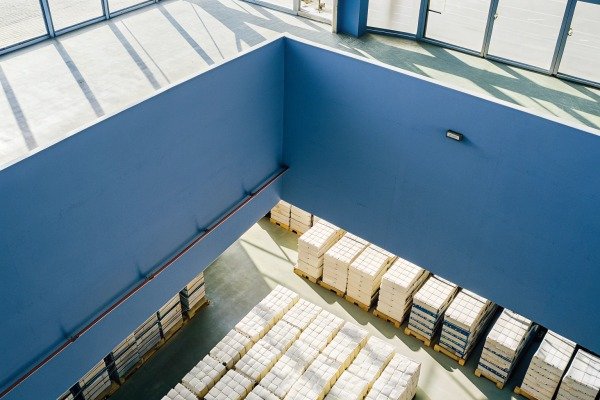
When you conduct a remote audit, you must direct the camera operator. Do not let them give you a rehearsed “tourism” video. You need to see the gritty details that prove they have the infrastructure to fulfill your order. Based on verified auditing standards, here are the critical zones you must inspect. verified auditing standards 2
The Raw Material Warehouse
The state of the warehouse tells you everything about a supplier's financial health and production capacity. You should ask the camera operator to walk into the storage aisles. Look for clearly labeled bins containing critical components like carbon fiber tubes, propellers, and motors. Hobbywing ESCs 3
- Inventory Depth: Ask them to open a box of motors. If the box is empty or they hesitate, they might not have stock on hand. Real manufacturers keep a consistent stock of high-value parts to avoid delays.
- Component Authenticity: Zoom in on the labels. If they claim to use Hobbywing ESCs or T-Motor T-Motor propulsion systems 4 propulsion systems, the branding on the boxes in the warehouse must match their spec sheets.
The Electronic Assembly and Soldering Stations
Agricultural drones rely on precise flight controllers and GPS modules. These components are sensitive to static and dust.
- ESD Protection: Look at the floor. Is it standard concrete, or is it coated with anti-static green epoxy? Are the workers wearing ESD wrist straps? We enforce these standards strictly because static discharge can damage a flight controller in a way that only shows up months later as a mid-flight failure.
- Cleanliness: Soldering stations should be free of clutter. Ask to see a worker soldering a power distribution board in real-time. This verifies that skilled labor is present and not just hired for the day of the audit.
Battery and Chemical Tank Storage
Agricultural drones carry heavy loads of liquid pesticides and high-voltage lithium batteries. pesticides 5
- Safety Protocols: Ask to see where the batteries are charged and stored. There should be fireproof cabinets and explosion-proof boxes. If batteries are piled loosely on a wooden table, this is a major safety violation.
- Tank Inspection: Request a close-up of the translucent tanks. Check for uniform thickness and proper sealing gaskets. You want to ensure the facility handles these plastic components with care to prevent micro-cracks before shipping.
Visual Audit Checklist
Use this table to score the facility during your video call:
| Factory Area | Positive Sign (Pass) | Red Flag (Fail) |
|---|---|---|
| Warehouse | High shelves, labeled bins, computerized inventory system visible. | Empty shelves, unmarked cardboard boxes, dust accumulation on stock. |
| Assembly Line | Workers wearing uniforms/ESD straps, organized tools, clear workflow instructions. | Workers in street clothes, cluttered workbenches, food/drink near electronics. |
| Testing Area | Designated "cages" or netted areas for indoor flight testing. | No safety nets, testing drones in open office spaces or hallways. |
| Packaging | Custom foam inserts, branded boxes ready for shipment. | Loose bubble wrap, generic unbranded boxes, lack of protective foam. |
How do I verify the quality control and flight testing procedures for agricultural drones remotely?
A drone that sprays unevenly or drifts due to poor calibration can destroy a farmer’s crop and ruin your reputation instantly. When we validate our spraying systems, we perform wet tests that many lower-tier suppliers skip, so requesting these specific demonstrations live helps you separate serious engineering from mere assembly.
Verify quality control by demanding live video evidence of active flight simulation rigs and waterproof testing for spraying mechanisms. Ask the supplier to perform a real-time hover test with a full payload to demonstrate stability and request close-up video inspection of the nozzle flow rate calibration logs.
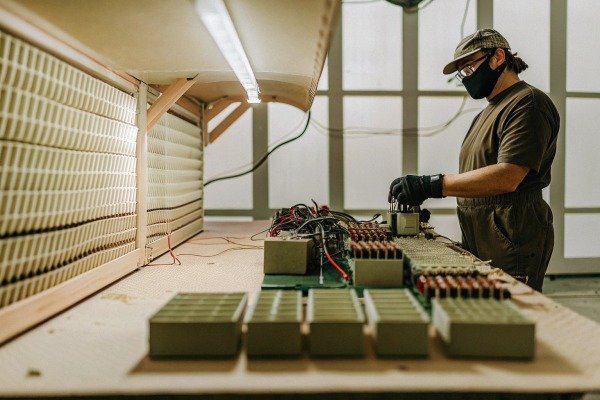
Quality control (QC) for agricultural drones is more demanding than for camera drones. These machines must endure water, dust, and heavy vibrations. A remote audit allows you to witness these stress tests as they happen.
Real-Time Flight Stability Demonstration
Never accept a pre-recorded video file. Anyone can edit a video to make a drone look stable.
- The Hover Test: Ask the operator to fly the drone in their test cage or outdoor lot. Request that they make the drone hover in one spot at eye level for 2 minutes. Watch for drift. A well-tuned industrial drone should sit in the air like a rock.
- Payload Test: Ask them to load the tank with water (or a dummy weight) and fly it. The motors sound different under load. You want to hear a smooth hum, not high-pitched struggling or oscillating sounds.
- Obstacle Avoidance: Ask them to walk toward the drone while it is hovering (safely). The drone’s radar should detect them and back away or brake automatically.
Spray System Calibration
The core function of these drones is spraying.
- Flow Rate Verification: Ask to see the test rig where they calibrate the pumps. They should have a setup where nozzles spray into measuring cylinders to ensure equal output.
- Waterproofing (IP Rating) Check: Ask, "How do you verify water resistance?" A good factory will have a rain test chamber or a high-pressure water jet station. If they just wipe it with a cloth, they are not testing for IP67 standards properly. IP67 standards 6
Vibration and Stress Testing
Before a drone leaves the factory, it must be shaken.
- Vibration Table: Ask to see the vibration testing machine. They should strap the folded drone onto a shaking table to simulate transport and flight vibrations. This ensures screws don't come loose.
- Aging Tests: Look for a rack where drones are powered on with propellers removed. We run our systems for hours to ensure the electronics don't overheat. If you don't see an "aging rack" with blinking lights, they might be skipping the burn-in process.
Required QC Documentation
During the call, ask the Quality Manager to hold these documents up to the camera:
| Document Type | What to Look For | Why It Matters |
|---|---|---|
| Flight Log Sheet | Handwritten signatures, dates, specific serial number of the unit. | proves each specific drone was actually flown, not just batch tested. |
| Spray Calibration Report | Flow rate data points (L/min) for each nozzle. | Ensures the farmer gets even pesticide application. |
| Waterproof Test Record | Pass/Fail stamp with the inspector's ID. | Confirms the electronics won't short circuit in the rain. |
| Battery Cycle Log | Voltage readings before and after charging cycles. | Verifies the battery cells are balanced and healthy. |
How can I distinguish between a real manufacturer and a trading company during a virtual audit?
Middlemen often disguise themselves as factories to add a markup, but they lack the technical ability to support you when problems arise. We frequently host video calls where we prove our identity by walking continuously from our sales office directly onto the noisy production floor, a transition that trading companies simply cannot replicate.
Distinguish manufacturers from traders by asking the host to walk seamlessly from the office to the production floor in one continuous shot. Request to see specific machinery like CNC cutters or injection molds operating in real-time and ask operators technical questions about the current batch being assembled.

Trading companies are experts at “staging” an office to look like a factory HQ. However, they usually cannot fake the heavy infrastructure required to build industrial drones. Here is how to spot the difference.
The "One-Shot" Walkthrough Challenge
This is your most powerful tool. Trading companies often work in commercial office buildings, while factories are in industrial parks. injection molds 7
- The Request: Ask the sales representative: "Can you please take your phone and walk from your desk to the assembly line right now, without hanging up?"
- The Result: A real manufacturer will walk down a hall and open a door into a noisy workshop. A trading company will make excuses ("The factory is in another building," "The connection is bad," "We need a permit"). If they cannot show you the link between the office and the floor, be suspicious.
Inspect the Heavy Machinery
Assembly is easy to fake; manufacturing is not.
- CNC Machines: Agricultural drones use carbon fiber arms and aluminum mounts. CNC cutters 8 Ask to see the CNC machines cutting these parts. Ask them to turn the machine on or open the safety door to show the cutting head.
- Molds: If the drone has a plastic body, there must be injection molds. These are huge, heavy blocks of steel. Ask to see the mold storage area. Traders never own molds; they only buy finished plastic parts.
Evaluate the Workforce
Look at the people working in the background.
- Uniforms: Do the workers on the line wear vests with the company logo? Or are they wearing street clothes? In legitimate factories, uniforms are standard for safety and discipline.
- Technical Knowledge: Ask the person guiding the tour to stop a worker and ask, "What are you assembling right now?" A trader won't know the staff or might be afraid to interrupt because it's not their factory. A factory manager knows their team.
Real-Time Branding Check
Ask the camera operator to find a random component on the line—a motor, a flight controller, or a frame arm.
- The Test: Ask them to zoom in on the serial number or logo. Does it match the brand you are buying?
- The Trap: Traders often hold up a "sample" that is perfect, but the goods on the line might be generic. Random spot checks prevent this bait-and-switch.
What technical questions should I ask to assess the engineering team's R&D capabilities online?
Purchasing outdated technology puts you at a disadvantage, so you need a supplier who can innovate, not just assemble. Our engineering team actually enjoys when clients ask tough questions about firmware protocols and SDKs because it allows us to demonstrate capabilities that simple assembly shops cannot match.
Assess R&D capability by asking specific questions about flight controller SDK openness, nozzle customization options, and recent firmware update logs. Request an interview with a lead engineer to discuss how they handle thermal management in the motors or signal interference challenges in complex agricultural environments.
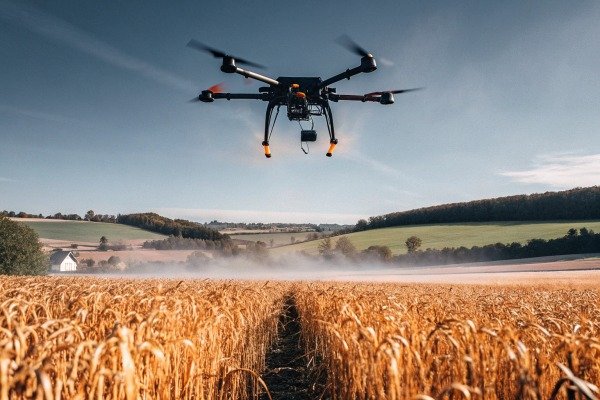
Agricultural drones are software robots, not just hardware Agricultural drones are software robots 9. You need to verify that the supplier understands the code running the machine. If they outsource all their tech, they won’t be able to help you when a firmware update bugs out. thermal management 10
Software and Firmware Customization
Many "manufacturers" use generic flight controllers (like JIYI or VK) without knowing how to tune them.
- The Question: "Can we modify the spray width parameters in the app, or is that locked?"
- The Test: Ask them to open the ground control software (the App) on a tablet and screen-share it. Ask them to change a parameter live. If they struggle or say "we have to ask the software provider," they lack in-house R&D.
Structure and Hardware Engineering
Agricultural environments are harsh. The design must be robust.
- Thermal Management: Ask, "How does your design cool the ESCs (Electronic Speed Controllers) during continuous operation?" A real engineer will explain the airflow design or heat sink placement.
- Maintenance Design: Ask, "If a motor fails, how long does it take to swap it?" Ask them to demonstrate a motor swap on video. Good engineering means modular design where parts can be replaced in minutes.
The Engineering Interview
Request 10 minutes with the Chief Engineer or Technical Director during the video call. Salespeople can memorize scripts; engineers speak from knowledge.
Technical Q&A Assessment Guide
Use this table to evaluate the quality of their answers:
| Topic | Question to Ask | Good Answer (Manufacturer) | Bad Answer (Trader/Assembler) |
|---|---|---|---|
| Data Security | "Where is the flight log data stored?" | "We have a local server option, or we use AWS with encryption. You can opt-out of cloud sync." | "It goes to the cloud." (Vague, no details on privacy). |
| Customization | "Can we integrate a 3rd party spectral camera?" | "Yes, we have UART/CAN ports available and can share the protocol documentation." | "I think so, but we need to check with the factory." |
| Interference | "How does the drone handle high-voltage tower interference?" | "We use dual-antenna RTK for magnetic immunity and have shielded cables." | "It is very stable, don't worry." (Dismissive). |
| Troubleshooting | "How do I diagnose a 'Compass Error' remotely?" | "Our App exports a black box log file. Send it to us, and our engineer analyzes it." | "Just restart the drone and calibrate it again." |
Conclusion
Remote factory evaluations are no longer just a cost-saving measure; they are a strategic tool for high-precision sourcing. By demanding live demonstrations of flight stability, inspecting the "unseen" corners of the warehouse, and grilling the engineering team on technical specifics, you can filter out 90% of unqualified suppliers without leaving your office. A genuine partner will welcome your scrutiny, as it proves their quality, while a pretender will crumble under the pressure of a live lens.
Footnotes
1. ISO 19011 provides international standards for auditing management systems, including specific guidelines for conducting remote and virtual audits. ↩︎
2. ISO 9001 is the global benchmark for quality management and factory auditing procedures. ↩︎
3. Official product documentation for industrial drone electronic speed controllers mentioned in the text. ↩︎
4. Manufacturer site for verifying the authenticity and specs of high-end drone motors and propellers. ↩︎
5. FAO guidelines on the safe and efficient application of pesticides using agricultural technology. ↩︎
6. The International Electrotechnical Commission defines the IP ratings for dust and water resistance. ↩︎
7. Explains the industrial process and infrastructure required for producing plastic drone components. ↩︎
8. Background information on computer numerical control machinery used in drone frame manufacturing. ↩︎
9. The FAO outlines the role of advanced robotics and software-driven UAV technology in modernizing sustainable agriculture. ↩︎
10. Academic overview of heat dissipation challenges in high-power electronic systems like drone motors. ↩︎

 English
  Español de México
  Deutsch
  Français
  Русский
  العربية
