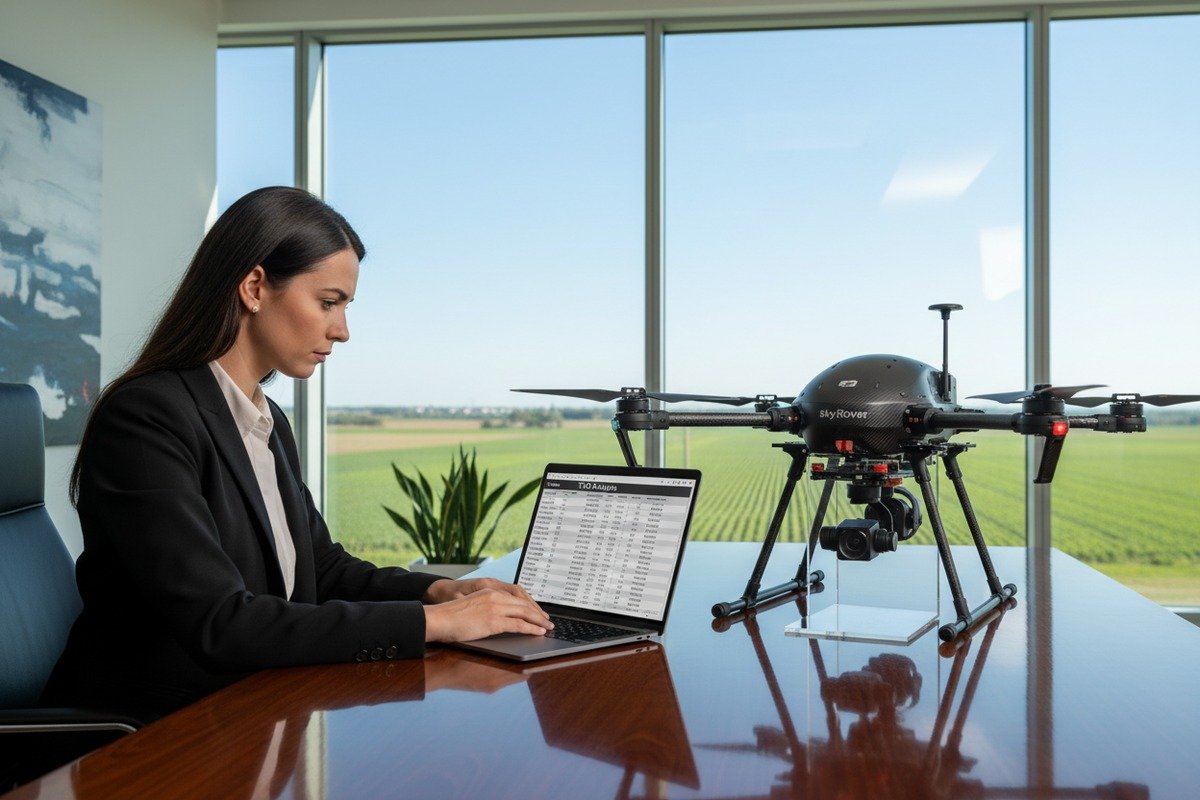
Every week at our production facility, we hear the same story from buyers. They focus on the sticker price. Then six months later, they call asking why costs keep piling up.
Total Cost of Ownership for agricultural drones includes initial purchase price, annual maintenance, battery replacements, software subscriptions, insurance, pilot training, and depreciation over a 2-5 year lifespan. A proper TCO calculation requires adding all fixed and variable costs, then dividing by total acres covered to determine true cost-per-acre efficiency.
The following sections break down each cost category. You will learn practical formulas. You will see real numbers from the field. Let’s dive into what really drives your long-term investment.
How do I calculate the long-term maintenance and repair costs for my agricultural drone fleet?
When our service team reviews returned units, patterns emerge fast. Farmers who skip scheduled maintenance face repair bills three times higher than those who follow protocols.
Long-term maintenance costs typically run 20-25% of the original purchase price annually after warranty expires. For a $25,000 agricultural spraying drone, budget $5,000-$6,250 yearly for repairs, parts, and servicing. Track flight hours, environmental exposure, and component wear to forecast costs accurately.

Breaking Down Maintenance Cost Categories
Maintenance falls into three buckets. Scheduled maintenance covers routine checks. Unscheduled repairs happen when parts fail. Consumable replacements include items that wear out predictably.
Our engineering data shows that flight controllers last about 2,000 flight hours. Motors need replacement around 1,500 hours. Propellers should be swapped every 200-300 hours depending on crop conditions.
Common Repair Costs for Agricultural Drones
| Component | Average Replacement Cost | Expected Lifespan |
|---|---|---|
| Servo motors | $1,200 – $1,500 | 1,500 flight hours |
| Carbon fiber arms | $350 – $450 each | 2-3 years |
| Spray nozzles | $80 – $150 per set | 500 flight hours |
| Flight controller | $800 – $1,200 | 2,000 flight hours |
| GPS module | $400 – $600 | 3-4 years |
| Landing gear | $200 – $350 | 1-2 years |
Building Your Maintenance Budget
Start with the manufacturer's recommended service schedule. Add 15% for unexpected issues. Environmental factors matter too. Drones operating in dusty conditions need more frequent motor cleanings. Units spraying corrosive chemicals require additional pump maintenance.
A simple formula works well:
Annual Maintenance 1 Cost = (Purchase Price × 0.25) + (Flight Hours × Per-Hour Parts Cost)
For a fleet of five drones valued at $125,000 total, expect $31,250 in annual maintenance. This assumes 500 flight hours per unit. Spread costs across your projected acreage to get per-acre maintenance figures.
Reducing Long-Term Repair Expenses
Keep detailed flight logs. Our clients who track every sortie catch problems early. Store drones properly between seasons. Clean units after each spray session. These habits cut repair costs by 30-40% over five years.
What impact does product durability have on my total cost of ownership over several years?
In our testing lab, we run drones through 5,000 simulated flight cycles. The difference between durable and cheap construction becomes obvious fast. Frames crack. Motors burn out. Electronics fail.
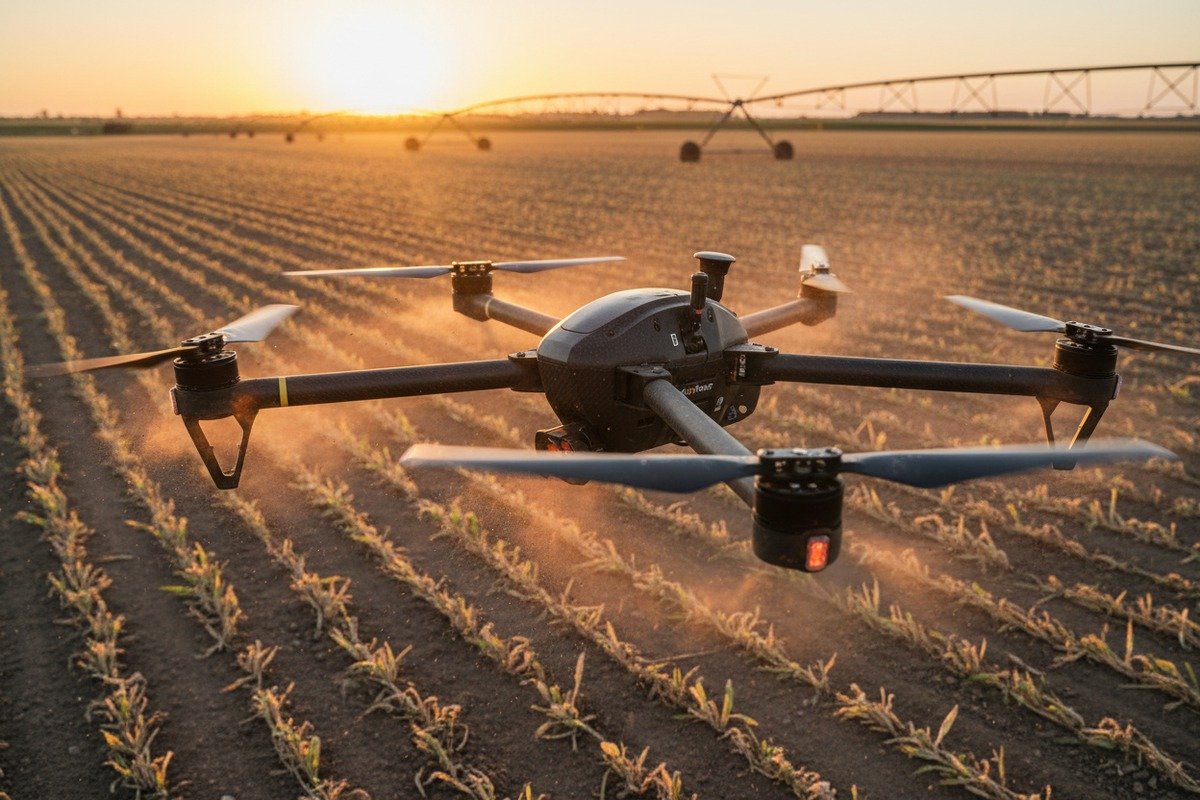
Product durability directly determines replacement frequency and total lifecycle cost. A durable drone lasting 5 years at $30,000 costs $6,000 annually. A cheaper $15,000 unit lasting 2 years costs $7,500 annually. Factor in reduced downtime and lower repair rates, and durable drones often cost 40% less over their full lifecycle.
How Durability Affects Depreciation
Depreciation hits agricultural drones hard. Technology advances quickly. But physical durability determines whether you get 2 years or 5 years from your investment.
Our carbon fiber frames outlast aluminum alternatives by 60%. This matters for TCO. A drone that survives five seasons spreads its purchase cost across more acres.
Durability vs. Initial Price Comparison
| Drone Category | Purchase Price | Expected Lifespan | Annual Depreciation | 5-Year Total Cost |
|---|---|---|---|---|
| Budget model | $15,000 | 2 years | $7,500 | $37,500 (2.5 units) |
| Mid-range model | $25,000 | 3 years | $8,333 | $41,665 (1.67 units) |
| Premium durable model | $35,000 | 5 years | $7,000 | $35,000 (1 unit) |
Key Durability Factors to Evaluate
Frame material tops the list. Carbon fiber composites handle stress better than plastics or aluminum. Motor quality comes second. Brushless motors with proper sealing resist dust and moisture.
Weather sealing matters for agricultural work. Drones encounter morning dew, chemical spray drift, and sudden rain. IP ratings 2 indicate protection levels. Look for IP54 or higher for serious agricultural applications.
Battery housing design affects longevity too. Heat dissipation prevents premature battery degradation. Poor thermal management shortens battery life by 30-40%.
Calculating Durability's TCO Impact
Use this approach:
- Estimate realistic lifespan based on build quality
- Divide purchase price by expected years
- Add annual maintenance (higher for cheaper builds)
- Calculate per-acre cost based on annual coverage
A farmer covering 2,000 acres annually sees dramatic differences. Premium drones at $35,000 over 5 years equal $3.50 per acre for depreciation alone. Budget drones at $15,000 over 2 years equal $3.75 per acre. Add higher repair costs for budget models, and the gap widens.
Real-World Durability Testing
Ask potential suppliers about their testing protocols. We stress-test every batch with vibration testing, thermal cycling, and extended flight simulations. Request test data before purchasing. Durable construction shows up in the numbers.
How should I account for technical support and software development costs in my drone budget?
Our software team releases updates monthly. Flight algorithms improve. New crop protocols get added. But this ongoing development costs money. Someone has to pay for it.
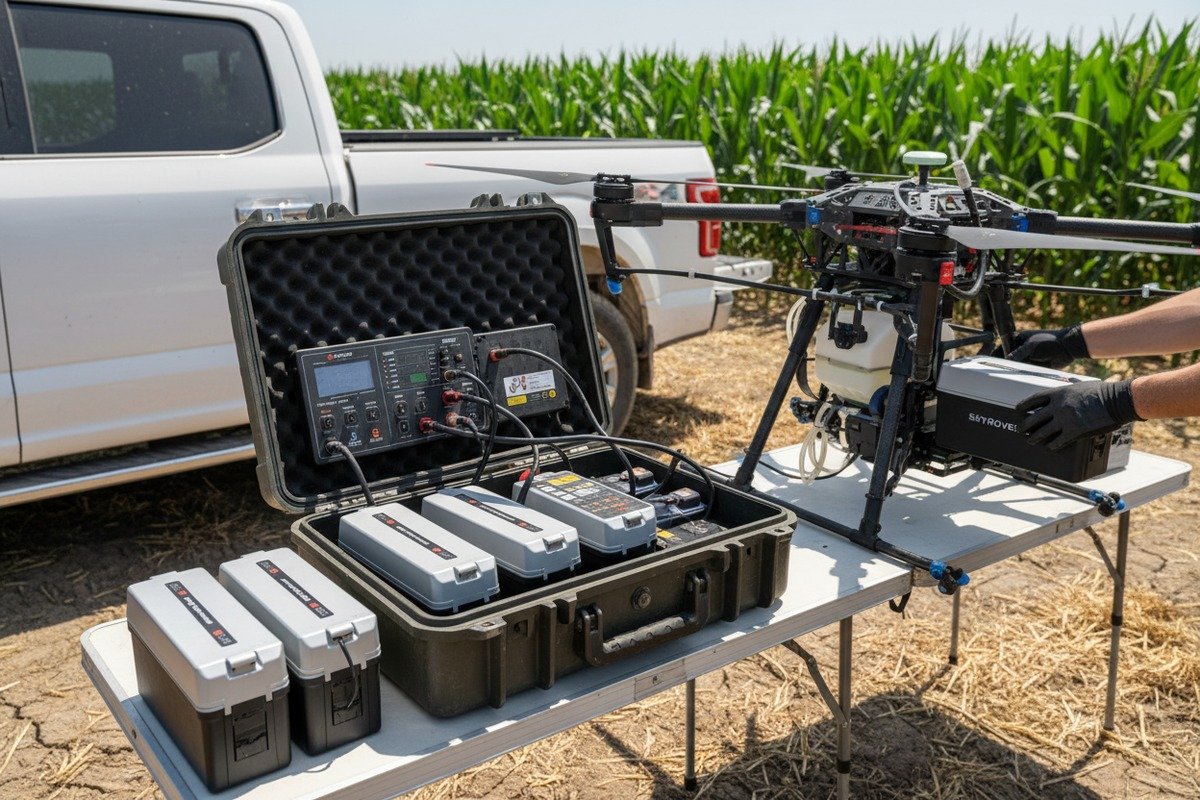
Technical support and software costs add $1,500-$5,000 annually to agricultural drone ownership. This includes mapping software subscriptions ($300-$1,250/year), firmware updates, remote diagnostics, and technical hotline access. Budget 5-10% of purchase price yearly for these services to maintain peak operational efficiency.
Software Cost Categories
Flight planning software runs $200-$500 annually for basic packages. Advanced analytics with AI-powered crop detection costs $1,000-$2,500 yearly. Mapping and terrain software like professional-grade platforms runs $1,250-$3,400 depending on licensing terms.
Many buyers overlook data processing costs. Raw flight data needs conversion into actionable farm insights. This requires processing power and specialized software.
Technical Support Pricing Models
| Support Level | Annual Cost | Includes |
|---|---|---|
| Basic warranty | $0-$300 | Email support, 48-72 hour response |
| Standard support | $500-$1,000 | Phone support, 24-hour response, remote diagnostics |
| Premium support | $1,500-$3,000 | Priority response, on-site visits, dedicated technician |
| Enterprise support | $3,000-$5,000 | 24/7 hotline, guaranteed uptime, spare unit program |
Hidden Software Costs
Integration expenses surprise many buyers. Connecting drone data to existing farm management platforms 4 requires configuration. Sometimes custom development. Budget $500-$2,000 for initial integration work.
Training costs belong here too. Operators need software proficiency beyond basic flight skills. Professional training runs $500-$1,500 per operator. Recurrent training every 1-2 years maintains proficiency.
Evaluating Support Quality
Response time matters during spray season. A drone down for three days during a narrow application window costs more in lost productivity than any support contract. Calculate your daily revenue potential. Compare against support costs.
We guarantee 24-hour response for premium clients. This matters when corn needs fungicide treatment within a specific growth window. Fast support pays for itself.
Calculating Software and Support TCO
Add these line items to your annual budget:
- Flight planning software: $300-$1,250
- Analytics platform: $500-$2,500
- Support contract: $500-$3,000
- Training and recertification: $300-$500
- Data storage and processing: $200-$400
Total: $1,800-$7,650 annually depending on operation size and support needs.
For a 2,000-acre operation, this adds $0.90-$3.80 per acre. Larger operations spread costs more efficiently.
When we ship units to American distributors, paperwork matters as much as product quality. One missing certificate delays customs for weeks. Wrong tariff codes trigger unexpected duties.
Hidden import costs add 15-35% to agricultural drone purchase prices. This includes import duties (0-25% depending on classification), freight charges ($500-$2,000 per unit), customs brokerage fees ($150-$400), and insurance (1-2% of value). Request landed cost quotes to avoid budget surprises.

Import Duty Structures
Tariff classification determines duty rates. Agricultural drones may fall under different HTS codes depending on primary function. Spray drones face different rates than survey drones. Some classifications qualify for reduced agricultural equipment rates.
Recent trade policies affect China-origin drones specifically. Additional tariffs may apply. Work with experienced customs brokers who understand drone classifications.
Complete Landed Cost Breakdown
| Cost Category | Typical Range | Notes |
|---|---|---|
| Base FOB price | 100% | Factory gate price |
| International freight | 3-8% | Air freight for drones |
| Marine insurance | 1-2% | Required for financing |
| Import duties 6 | 0-25% | Varies by classification |
| Section 301 tariffs | 7.5-25% | China-origin products |
| Customs brokerage | $150-$400 flat | Per shipment |
| Port handling | $100-$300 | Documentation and inspection |
| Domestic delivery | $200-$500 | Final mile delivery |
| FDA/FCC compliance | $0-$500 | If applicable |
Strategies to Minimize Import Costs
Proper classification saves money. Drones used primarily for agricultural spraying may qualify for favorable treatment under agricultural equipment provisions. Document intended use thoroughly.
Consolidate shipments when possible. Fixed costs like brokerage spread across multiple units reduce per-unit expense. We help clients plan quarterly shipments to optimize logistics costs.
Free Trade Zone strategies work for larger importers. Defer duties until goods enter commerce. Useful for distributors holding inventory.
Documentation Requirements
Prepare these documents before shipment:
- Commercial invoice with accurate values
- Packing list with weights and dimensions
- Certificate of origin 7
- Technical specifications
- FCC compliance documentation
- Any required import permits
Missing documents cause delays. Delays cost money. Storage fees accumulate. Seasonal windows close.
Calculating True Landed Cost
Use this formula:
Landed Cost = FOB Price + Freight + Insurance + Duties + Tariffs + Brokerage + Handling + Delivery
For a $25,000 drone:
- FOB: $25,000
- Freight: $1,500 (6%)
- Insurance: $375 (1.5%)
- Duties: $2,500 (10%)
- Tariffs: $3,750 (15%)
- Brokerage: $250
- Handling: $200
- Delivery: $300
Total landed cost: $33,875 (35.5% above FOB)
Factor this into TCO calculations from the start. The $25,000 drone actually costs $33,875 to put in your warehouse.
Conclusion
Calculating agricultural drone TCO requires looking beyond the purchase price. Add maintenance, durability factors, software costs, and import fees. Only then can you make accurate comparisons and smart purchasing decisions.
Footnotes
1. Provides general guidelines for budgeting equipment maintenance costs. ↩︎
2. Defines a crucial standard for equipment durability and environmental protection. ↩︎
3. Replaced with an authoritative explanation of Total Cost of Ownership from IBM, the original domain. ↩︎
4. Replaced with a comprehensive overview of farm management software and platforms from Farmonaut. ↩︎
5. Discusses recurring costs for essential drone operational software. ↩︎
6. Replaced with an authoritative government source (.gov) from the International Trade Administration, explaining import duties and tariffs. ↩︎
7. Identifies a key document for international shipping and customs clearance. ↩︎

 English
  Español de México
  Deutsch
  Français
  Русский
  العربية
