
Every week, our production line assembles hundreds of lithium-ion battery packs 1 for agricultural drones. We see firsthand how battery waste becomes a growing concern for farmers worldwide who want sustainable operations but struggle to find clear recycling solutions from their suppliers.
When purchasing agricultural drones, ask suppliers directly about their battery take-back programs, partnerships with certified recyclers like Ecobat, recycling costs, logistics procedures, and compliance with international disposal standards. Request documentation proving their end-of-life management meets local regulations.
The questions you ask today determine your environmental footprint tomorrow ISO 14001 environmental certification 2. Let me walk you through exactly what to ask and why each question matters for your farm’s sustainability goals.
How can I verify that my drone supplier complies with international battery recycling and disposal standards?
When we ship our SkyRover agricultural drones to the US and Europe, we encounter strict battery regulations that vary dramatically by region UN38.3 transport test reports 3. Many buyers assume all suppliers follow the same rules. They discover compliance gaps only after facing fines or disposal problems dangerous goods documentation 4.
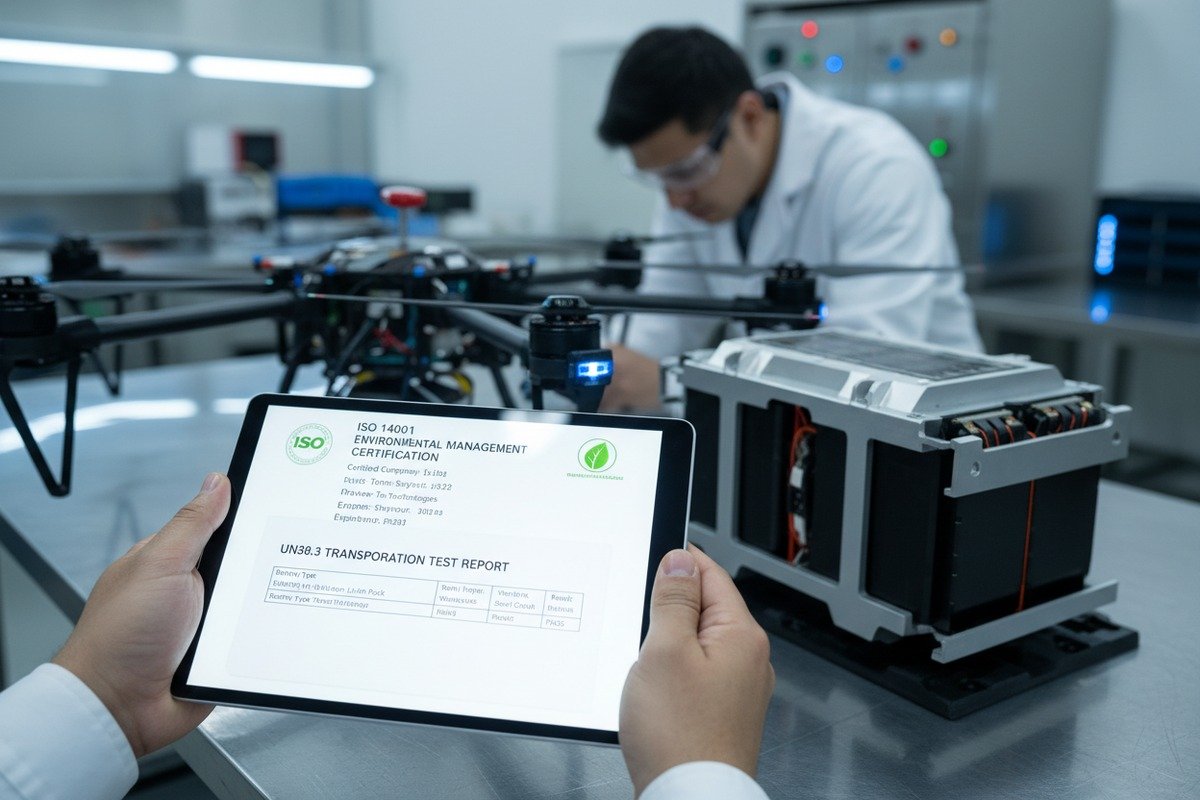
To verify compliance, request copies of your supplier's ISO 14001 environmental certification, UN38.3 transport test reports, and documentation showing partnerships with licensed recyclers. Ask for proof of adherence to EU Battery Directive or EPA guidelines depending on your location.
Understanding Key International Standards
Battery recycling regulations differ across markets. Your supplier should demonstrate familiarity with standards relevant to your operation.
| Standard/Regulation | Region | Key Requirements |
|---|---|---|
| EU Battery Directive 5 2006/66/EC | Europe | Producers must finance collection and recycling; minimum recovery rates apply |
| EPA Universal Waste Rules 6 | United States | Proper labeling, storage limits, transport documentation required |
| UN38.3 | Global | Safety testing certification for lithium battery transport |
| ISO 14001 | Global | Environmental management system certification |
| RoHS Directive | Europe | Restricts hazardous substances in electrical equipment |
What Documents to Request
Start by asking for specific paperwork. A legitimate supplier will provide these without hesitation.
First, request their environmental management certification. ISO 14001 shows they have systems for handling waste responsibly. Second, ask for their UN38.3 test summary. This proves their batteries passed safety testing for transport.
Third, demand evidence of recycler partnerships. Names like Ecobat, Redwood Materials, or ABTC should appear. Our engineering team works directly with certified facilities to ensure materials get processed correctly.
Red Flags to Watch For
Be cautious if suppliers give vague answers. Phrases like "we handle disposal properly" without specifics signal potential problems. Legitimate manufacturers name their recycling partners and explain processes clearly.
Watch for suppliers who claim recycling is "not their responsibility." Under extended producer responsibility laws 7 in many regions, manufacturers must participate in end-of-life management.
Asking the Right Questions
Use these direct questions during procurement discussions:
- Can you provide your ISO 14001 certificate number?
- Which certified recycling facilities process your returned batteries?
- How do you document chain of custody for recycled materials?
- What percentage of your batteries get recycled versus landfilled?
Our team at SkyRover maintains records showing over 85% material recovery rates through our Ecobat partnership. Your supplier should offer similar transparency.
What specific logistics and shipping procedures should I follow when returning used batteries to my supplier?
In our experience exporting to Europe and the US, we have seen shipments delayed for weeks because buyers did not follow proper battery return protocols. Damaged batteries sitting in warehouses create fire hazards and regulatory violations.
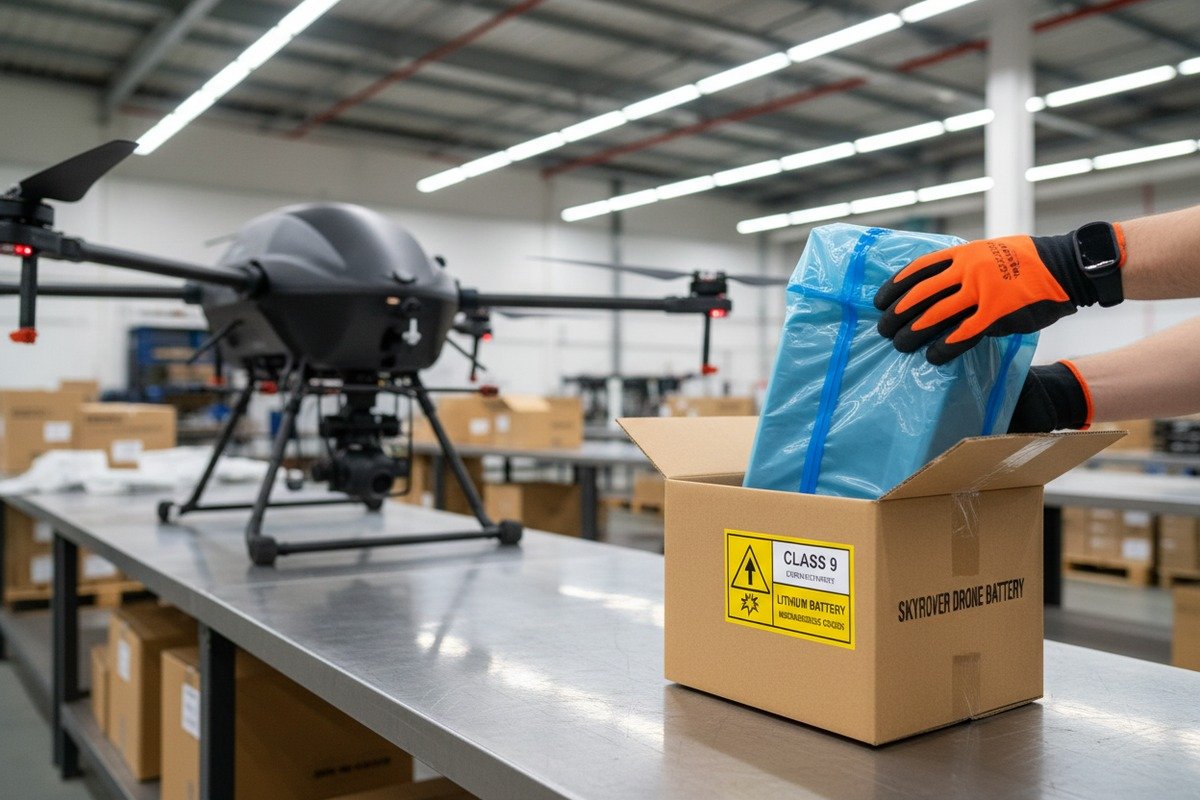
Safe battery return requires proper discharge to below 30% capacity, individual packaging in non-conductive materials, UN-approved shipping containers, completed dangerous goods documentation, and coordination with your supplier's designated logistics partner for collection scheduling.
Pre-Shipment Preparation Steps
Before packaging batteries for return, complete these safety steps. Improper preparation causes most shipping rejections and delays.
Discharge batteries to 30% state of charge or less. Fully charged batteries pose higher fire risks during transport. Use your drone's normal operation to reduce charge levels safely.
Inspect each battery visually. Look for swelling, cracks, leaking electrolyte, or burn marks. Damaged batteries require separate handling procedures that your supplier must specify.
Packaging Requirements
| Packaging Element | Requirement | Purpose |
|---|---|---|
| Inner packaging | Non-conductive material (foam, plastic) | Prevents short circuits |
| Terminal protection | Tape or caps on all terminals | Eliminates contact hazards |
| Outer container | UN-rated fiberboard or plastic | Meets transport regulations |
| Cushioning | Prevents movement inside package | Reduces impact damage |
| Labeling | UN3481 lithium battery marks | Identifies contents to handlers |
Documentation You Need
Proper paperwork prevents border delays and ensures legal transport. Request templates from your supplier.
The shipper's declaration for dangerous goods must accompany every battery return shipment. This document describes contents, quantities, and handling instructions.
Include a packing list with battery model numbers, serial numbers, and approximate state of charge. This helps recyclers process materials efficiently.
When our clients return batteries to us, we provide pre-filled documentation and arrange pickup through our logistics partners. Ask if your supplier offers similar support.
Working With Carriers
Not all shipping companies accept lithium batteries. Your supplier should recommend carriers experienced with dangerous goods.
Ground transport within your country typically faces fewer restrictions than air or ocean freight. For international returns, confirm your supplier accepts the shipping method you plan to use.
Some suppliers partner with reverse logistics companies that specialize in battery collection. These services simplify the process significantly by handling packaging, documentation, and transport together.
Handling Damaged or Swollen Batteries
Damaged batteries require extra precautions. Never ship batteries showing physical damage through normal channels.
Contact your supplier immediately if batteries swell, leak, or show heat damage. They should provide specific instructions for these situations. Some suppliers arrange special pickups for damaged units.
Store damaged batteries outdoors or in fire-resistant containers while awaiting collection instructions. Keep them away from flammable materials and buildings.
Can I negotiate a trade-in or credit program for my old agricultural drone batteries during the procurement process?
When we discuss pricing with our distributors, battery lifecycle costs always enter the conversation. Smart buyers negotiate trade-in terms before signing purchase agreements. Waiting until batteries fail gives you no leverage.
Yes, negotiate trade-in programs during initial procurement by requesting credit per returned battery, tiered discounts for bulk returns, guaranteed buyback prices, or Battery-as-a-Service leasing arrangements that include end-of-life management in the original contract.

Types of Trade-In Programs
Suppliers offer various structures for battery returns. Understanding options helps you negotiate better terms.
| Program Type | How It Works | Best For |
|---|---|---|
| Fixed credit per battery | Set dollar amount credited toward new purchase | Predictable budgeting |
| Percentage discount | Discount on new batteries based on returns | Large fleet operators |
| Guaranteed buyback | Supplier purchases batteries at agreed price | Maximizing recovery value |
| Battery-as-a-Service | Lease batteries, supplier handles all lifecycle | Avoiding ownership hassles |
| Material recovery share | Percentage of recovered material value | High-volume operations |
Negotiation Strategies
Timing matters significantly. Negotiate trade-in terms before finalizing your drone purchase, not after.
Start by asking what programs already exist. Many suppliers have standard trade-in offers they do not advertise publicly. Our sales team, for example, offers returning customers credit toward new battery purchases.
Quantify your expected returns. If you plan to buy 50 drones, estimate how many batteries you will return annually. Larger volumes justify better per-unit credits.
Request written terms in your purchase agreement. Verbal promises about future trade-ins have little value. Include specific credit amounts, qualifying conditions, and program duration.
Calculating True Value
Battery trade-ins provide both direct and indirect value. Consider all factors when evaluating offers.
Direct value includes credits, discounts, or cash received. Indirect value includes avoided disposal costs, reduced compliance burden, and simplified logistics.
A $50 per battery credit might seem small. But avoiding $30 in disposal fees plus hours of paperwork makes total value closer to $100 per unit.
Battery-as-a-Service Models
This emerging approach eliminates ownership entirely. You pay monthly fees to use batteries. The supplier handles maintenance, replacement, and recycling.
For operators wanting zero end-of-life responsibility, BaaS makes sense despite higher monthly costs. Ask suppliers if they offer this option.
Our engineering team developed BaaS specifically for clients prioritizing sustainability. Monthly fees include guaranteed recycling through certified facilities.
Building Long-Term Relationships
Trade-in programs work best within ongoing supplier relationships. Demonstrate commitment to get better terms.
Commit to purchasing replacement batteries from the same supplier. This gives them incentive to offer generous return credits.
Share your sustainability goals openly. Suppliers increasingly value partnerships with environmentally conscious buyers. We prioritize relationships with clients who participate in our recycling programs.
How do I ensure my supplier provides the necessary certifications to support my local battery recycling regulations?
Our quality control team spends considerable time helping US and European clients navigate certification requirements. Each region demands different documentation. Suppliers unfamiliar with your market create compliance headaches.
Ensure certification support by requesting your supplier's battery chemistry documentation, safety data sheets, transport certifications, recycler authorization letters, and confirmation that their documentation format meets your local regulatory agency requirements for hazardous waste tracking.

Essential Certifications by Region
Different markets require different proof of compliance. Know what your local authorities expect.
| Region | Required Certifications | Issuing Authority |
|---|---|---|
| United States | EPA ID number, DOT shipping certification | EPA, Department of Transportation |
| European Union | CE marking, Battery Directive compliance | Notified Bodies |
| California | DTSC registration, Prop 65 compliance | CA Dept of Toxic Substances Control |
| Canada | TDG certification, provincial permits | Transport Canada |
| Australia | UN certification, state EPA licenses | State Environmental Agencies |
Battery Chemistry Documentation
Recycling facilities need detailed information about battery composition. Your supplier must provide complete chemistry data.
Request material safety data sheets 8 for each battery model. These documents list chemical components, hazards, and handling procedures that recyclers require.
Ask for exact chemistry type. NMC, NCA, LFP, and LMO batteries require different recycling processes. Facilities like Ecobat adjust procedures based on this information.
Our batteries ship with complete chemistry documentation. We update these documents whenever formulations change.
Working With Local Recyclers
Your supplier's certifications must satisfy your local recycler's requirements. Verify compatibility before purchasing.
Contact recycling facilities in your area before buying drones. Ask what documentation they need from battery manufacturers. Share this list with potential suppliers.
Some suppliers partner directly with regional recyclers. These partnerships simplify compliance because documentation formats already match facility requirements.
Tracking and Reporting Requirements
Many jurisdictions require detailed tracking of battery movements from purchase through disposal.
Ask suppliers if they provide chain of custody documentation. This tracks batteries from manufacturing through recycling, proving proper handling at each stage.
Some regions require annual reporting on battery quantities purchased and recycled. Your supplier should provide data formats compatible with these reporting requirements.
Verifying Certification Authenticity
Unfortunately, fraudulent certifications exist. Take steps to verify documents your supplier provides.
Check certificate numbers against issuing authority databases when possible. ISO certifications can be verified through the certification body's website.
Request contact information for your supplier's recycling partners. Call facilities directly to confirm partnership status and terms.
When we certify our batteries, we provide certification body contact details for verification. Legitimate suppliers welcome this level of scrutiny.
Building a Compliance File
Maintain organized records of all supplier certifications. Auditors and regulators expect quick access to documentation.
Create digital and physical copies of every certificate. Update files whenever suppliers provide revised documents.
Include correspondence showing you requested and verified certifications. This demonstrates due diligence if compliance questions arise later.
Conclusion
Asking the right questions about battery recycling transforms your agricultural drone purchase into a sustainable investment. Verify compliance standards, understand logistics procedures, negotiate trade-in programs, and demand proper certifications before signing any agreement. Your farm's environmental responsibility starts with informed procurement decisions today.
Footnotes
1. Wikipedia page explaining lithium-ion battery technology and uses. ↩︎
2. Official ISO page for the environmental management system standard. ↩︎
3. US DOT PHMSA guidance on lithium battery shipping regulations and UN38.3. ↩︎
4. US DOT PHMSA guidance on shipping papers for hazardous materials. ↩︎
5. Official text of the European Union’s directive on batteries and accumulators. ↩︎
6. Official EPA information on universal waste regulations, including batteries. ↩︎
7. Official EPA explanation of extended producer responsibility (EPR) policy. ↩︎
8. Official OSHA guidance on Safety Data Sheets (SDSs) for hazardous chemicals. ↩︎

 English
  Español de México
  Deutsch
  Français
  Русский
  العربية
