
When we first started developing fleet management systems 1 for our firefighting drones, procurement teams kept asking the same questions. They felt lost in a sea of subscription options, hidden fees, and confusing technical terms cybersecurity protocols 2. Without the right questions, you risk overpaying or getting software that cannot grow with your fleet.
To properly evaluate firefighting drone fleet software subscriptions, ask suppliers about total cost of ownership, CAD system integration, update frequency, scalability options, OEM branding support, offline capabilities, and cybersecurity protocols. Request detailed pricing breakdowns and trial periods before signing any contract.
This guide breaks down exactly what to ask, when to push back, and how to negotiate terms that protect your department’s budget and operational needs API access fees 3. Let us dive into each critical area.
Every week, our sales team fields calls from frustrated buyers who signed software contracts without understanding the full price tag OEM branding support 4. The base subscription looked affordable. Then came the surprise invoices for data storage, premium support, and mandatory hardware upgrades.
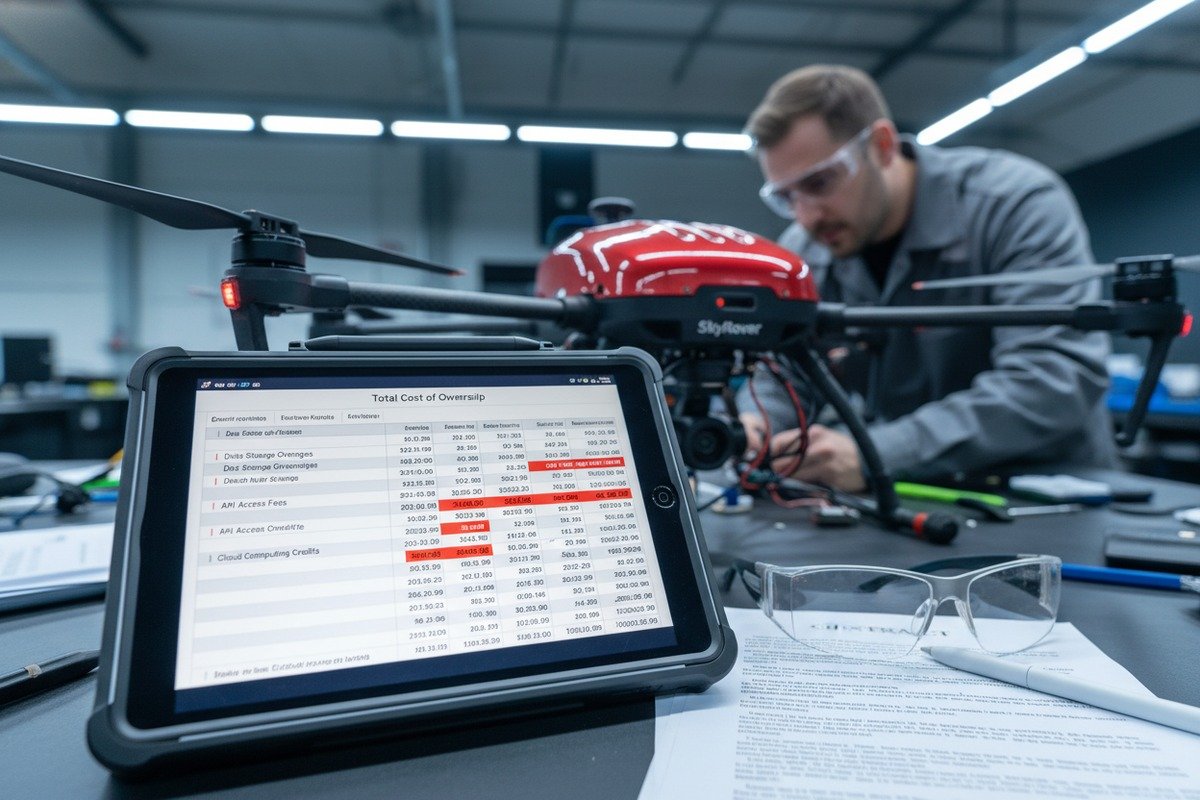
Ask suppliers to itemize every potential charge beyond the base fee, including data storage overages, API access fees, premium support tiers, training costs, hardware compatibility requirements, and early termination penalties. Demand a written Total Cost of Ownership estimate covering three to five years of operation.
Break Down the Subscription Tiers
Most drone fleet software uses tiered pricing. The entry-level tier often lacks critical features flexible user or drone licensing 5. You may need to upgrade just to access basic fleet tracking or compliance documentation.
Ask these direct questions:
- What features are excluded from each tier?
- Are there per-user or per-drone fees?
- What happens if I exceed data limits?
Understand Data and Storage Fees
Firefighting operations generate massive amounts of data. Thermal imaging, flight logs, and video footage add up quickly. Many suppliers charge extra once you pass certain storage thresholds.
| Cost Category | Common Hidden Fees | Questions to Ask |
|---|---|---|
| Data Storage | Overage charges per GB | What is the storage limit? What is the cost per additional GB? |
| API Access | Per-call or monthly fees | Is API access included? Are there call limits? |
| Training | Per-person or per-session fees | How many training sessions are included? |
| Support | Premium tier required for 24/7 | What response time is guaranteed at my tier? |
| Updates | Major versions may cost extra | Are all software updates included? |
Watch for Hardware Lock-In
Some software only works with specific drone models. If your fleet uses mixed hardware, you may face compatibility fees or be forced to upgrade equipment.
Our engineering team has seen cases where buyers purchased software only to learn their existing drones needed expensive firmware modifications. Always ask for a hardware compatibility list before signing.
Request a Multi-Year TCO Estimate
A three-year Total Cost of Ownership 6 estimate reveals the true investment. Include subscription fees, training, support, storage, and any anticipated price increases.
| Year | Base Subscription | Training | Support Upgrade | Storage | Total |
|---|---|---|---|---|---|
| 1 | $12,000 | $3,000 | $0 | $500 | $15,500 |
| 2 | $12,600 | $1,000 | $2,400 | $800 | $16,800 |
| 3 | $13,230 | $500 | $2,400 | $1,200 | $17,330 |
This table shows how costs can creep upward. Suppliers often increase prices by 5-10% annually. Lock in rates when possible.
How do I verify if the software subscription supports the OEM branding my company requires?
On our production line, we customize flight controllers and ground stations for partners who resell under their own brand. But the software side often creates problems. Not all fleet management platforms allow white-labeling, and those that do may charge significant premiums.
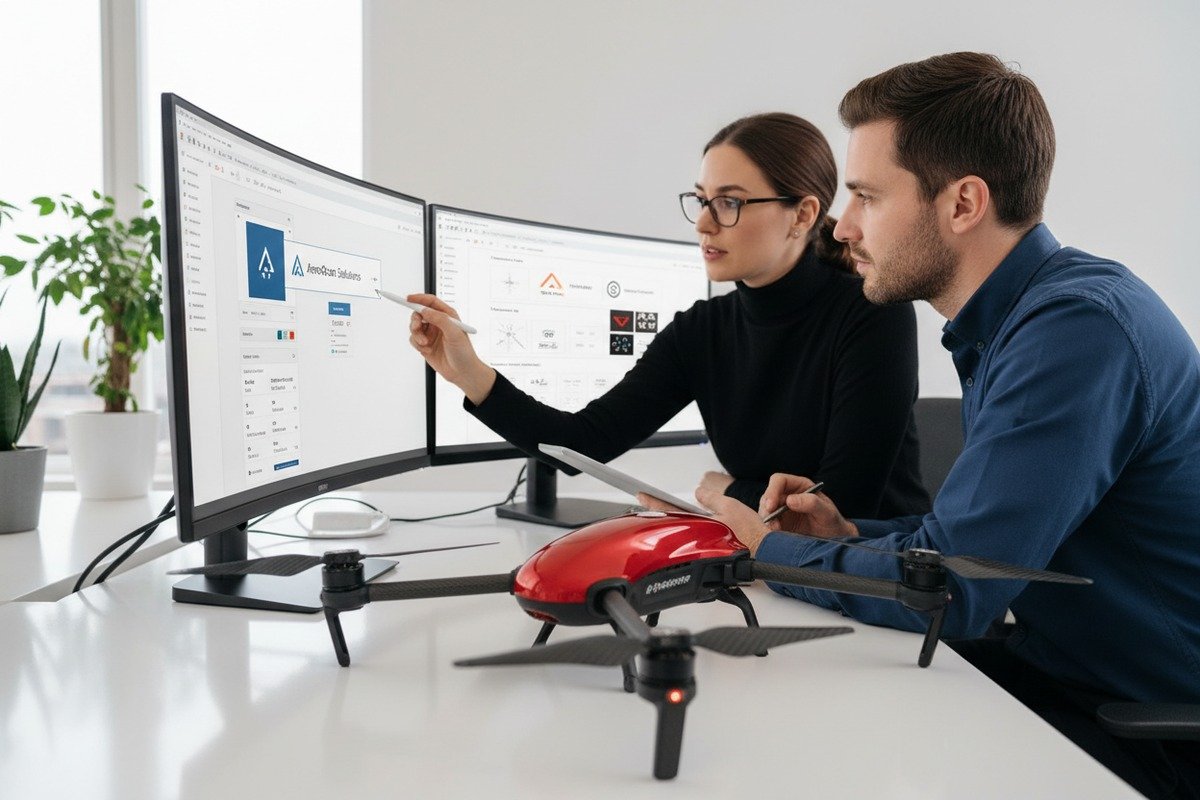
Verify OEM branding support by asking if the software allows custom logos, branded user interfaces, white-label mobile apps, and custom domain hosting. Request sample screenshots of branded deployments and confirm whether branding customization is included in your subscription tier or requires additional fees.
Define Your Branding Requirements First
Before contacting suppliers, list exactly what you need. Do you need your logo on the dashboard? Custom colors? A fully white-labeled mobile app? Each requirement may have different pricing.
Common branding elements include:
- Dashboard logos and color schemes
- Custom login pages
- Branded pilot mobile applications
- Custom PDF report headers
- Personalized email notifications
Ask for Live Demonstrations
Do not trust marketing materials alone. Request a live demo of an existing white-labeled deployment. Ask to see how the branding appears across all user touchpoints.
Our partners often discover that "full branding support" means only a logo swap on the main dashboard. Dig deeper. Ask if end-users will ever see the original supplier's name or logo.
Clarify Branding Costs and Restrictions
Some platforms include basic branding at higher subscription tiers. Others charge one-time setup fees or ongoing monthly premiums. Get these numbers in writing.
| Branding Feature | Typical Pricing Model | Questions to Ask |
|---|---|---|
| Logo on Dashboard | Often included at Pro tier | Is this included in my tier? |
| Custom Color Scheme | May require setup fee | What is the one-time customization cost? |
| White-Label Mobile App | Usually premium add-on | Is there an annual fee for the branded app? |
| Custom Domain | Often extra monthly fee | Can I use my own domain? What is the cost? |
| Branded Reports | May require enterprise tier | Are PDF exports branded with my logo? |
Check for Brand Exposure Clauses
Some contracts include clauses allowing the supplier to display "Powered by [Supplier Name]" somewhere in the interface. If your business model requires complete brand independence, negotiate removal of these clauses.
When we work with distribution partners, we ensure our manufacturing relationship stays invisible to their end customers. Demand the same from your software supplier if brand purity matters.
What technical support and update frequency should I demand in my fleet management contract?
When we calibrate flight controllers at our facility, we know that even small software bugs can ground an entire fleet. For firefighting operations, downtime is not just inconvenient. It can cost lives. Your support and update terms must reflect this reality.
Demand 24/7 technical support with guaranteed response times under four hours for critical issues. Require quarterly software updates at minimum, with immediate patches for security vulnerabilities. Insist on documented service level agreements specifying uptime guarantees of 99.5% or higher and compensation clauses for failures.
Establish Clear Response Time Expectations
Not all support requests are equal. A login issue differs from a fleet-wide communication failure during an active fire. Your contract should define priority levels with corresponding response times.
| Priority Level | Issue Type | Expected Response Time |
|---|---|---|
| Critical | Fleet-wide outage during operations | Under 1 hour |
| High | Single drone communication failure | Under 4 hours |
| Medium | Feature malfunction affecting workflow | Under 24 hours |
| Low | Cosmetic issues or feature requests | Under 72 hours |
Require Documented Update Schedules
Software updates fix bugs, add features, and patch security holes. Ask suppliers how often they release updates and whether you have control over update timing.
Firefighting software cannot update during active incidents. Ensure you can schedule updates during planned maintenance windows. Also confirm whether major version upgrades are included in your subscription or billed separately.
Negotiate Uptime Guarantees
Cloud-based platforms should guarantee 99.5% uptime or better. Calculate what 0.5% downtime means in practice. That is roughly 44 hours per year your fleet management could be unavailable.
For firefighting operations, even short outages are unacceptable. Push for:
- 99.9% uptime guarantees 7
- Service credits for any downtime
- Real-time status monitoring dashboard
- Advance notice of scheduled maintenance
Evaluate Offline Capabilities
Wildfires and structure fires often occur in areas with poor connectivity. Your software must function offline. Ask how the system handles:
- Local data caching during connectivity loss
- Automatic synchronization when connection resumes
- Edge processing for real-time analytics without cloud access
Our drones are designed for remote operations. We always recommend software that can operate independently when internet access fails.
Secure Training and Documentation
Good support includes more than phone lines. Request comprehensive documentation, video tutorials, and initial training sessions. Ask how many training hours are included and what ongoing education options exist.
How can I negotiate a flexible subscription model that scales as my firefighting fleet grows?
In our experience exporting to the US market, we have watched small fire departments grow into regional operations managing dozens of drones. The software contract they signed for five drones becomes a problem when they need fifty. Scalability must be built into your agreement from day one.
Negotiate volume discount triggers, flexible user or drone licensing, and quarterly scaling options without long-term commitment penalties. Request pay-as-you-grow pricing that adjusts automatically as fleet size increases, and secure price locks for any scaling tiers you expect to reach within your contract period.
Start with Your Growth Projections
Before negotiating, map your expected growth. How many drones will you operate in one year? Three years? Five years? These projections give you leverage to request tiered pricing.
Share your growth plans with suppliers. They want long-term customers. Use your projected scale to negotiate better rates at higher tiers before you reach them.
Request Flexible Licensing Models
Some platforms charge per drone. Others charge per user or per station. Understand which model fits your operations best.
| Licensing Model | Best For | Watch Out For |
|---|---|---|
| Per Drone | Small fleets with many users | Costs spike with fleet expansion |
| Per User | Large fleets with few operators | Limited by headcount, not hardware |
| Per Station | Multi-location departments | May require separate instances |
| Unlimited | Rapidly growing operations | Higher base cost, lower marginal cost |
Negotiate Scaling Triggers
Build automatic discounts into your contract. For example, if you exceed twenty drones, your per-drone rate drops by fifteen percent. These triggers reward growth without requiring contract renegotiation.
Our distribution partners often secure tiered pricing that becomes more favorable as they scale. The same approach works for fire departments building drone programs.
Avoid Long-Term Lock-In
Scalability means nothing if you are locked into a vendor who cannot meet your future needs. Negotiate reasonable termination clauses. Aim for:
- Annual contract terms rather than multi-year commitments
- Data export capabilities in standard formats
- Thirty to sixty day termination notice periods
- No penalties for downsizing if budget constraints arise
Consider Equitable Pricing Models
Some firefighting-specific platforms like FireBot offer equitable pricing. Larger departments pay more, which subsidizes smaller stations. This model promotes accessibility but may frustrate large buyers seeking cost efficiency.
Ask whether your pricing subsidizes other users. Understand the trade-offs before committing.
Secure Price Protection
Software prices typically increase annually. Lock in your rates for the contract duration. If multi-year commitments are required, negotiate caps on annual increases. Five percent maximum annual escalation is reasonable.
| Contract Length | Price Lock | Recommended Cap |
|---|---|---|
| 1 Year | Full lock | Not applicable |
| 2 Years | First year locked | 5% increase Year 2 |
| 3 Years | First year locked | 5% cap per year |
Conclusion
Smart questioning separates successful drone fleet investments from costly mistakes. By asking about hidden costs, OEM branding, support terms, and scalability, you protect your department and your budget. Take these questions to every supplier conversation, and demand answers in writing before you sign.
Footnotes
1. Provides a comprehensive definition and overview of fleet management systems and their components. ↩︎
2. Details common cybersecurity protocols and their significance in protecting systems and data. ↩︎
3. Discusses various API pricing models, including those that involve access fees based on usage. ↩︎
4. Clarifies the definitions and operational mechanisms of OEM and white-label branding in products. ↩︎
5. Outlines various flexible software licensing models, including concurrent and token-based approaches. ↩︎
6. Replaced with an authoritative Wikipedia page defining Total Cost of Ownership. ↩︎
7. Explains system uptime guarantees as contractual assurances of platform operational availability. ↩︎
8. Defines service level agreements (SLAs) as contracts outlining service expectations and performance. ↩︎

 English
  Español de México
  Deutsch
  Français
  Русский
  العربية
