
Seeing our black quadcopters with their bright orange housings hover over a training site in Xi'an fills us with pride, but we know that getting these tools into the hands of American firefighters requires more than just good manufacturing. You see the potential for high-volume sales in your territory, yet you worry about competitors undercutting your hard work after you have educated the market. The solution lies in securing an exclusive distributorship, but this partnership demands more than just a signed contract.
To qualify as an exclusive distributor for our firefighting drones in the US, you must demonstrate significant financial liquidity for inventory stocking, commit to strict annual sales quotas, provide a local engineering team for immediate technical support, and possess deep expertise in FAA regulations and grant procurement processes to assist municipal buyers.
Understanding these prerequisites is the first step toward building a protected and profitable territory.
What minimum annual sales volume must I commit to for exclusive rights?
When we calculate production schedules at our factory in Chengdu, we rely on the accuracy of our partners' forecasts to maintain efficiency and cost-effectiveness. You might feel anxious about committing to a large number before your first sale, but exclusivity is a mutual investment that requires tangible proof of your market reach.
Exclusive distributors must typically agree to a tiered annual purchase target that often exceeds $500,000 in the first year, ensuring aggressive market penetration. These quotas are based on the population density of your specific territory and require documented proof of access to cooperative purchasing contracts like Sourcewell to guarantee consistent government orders.

Understanding Volume Commitments and Territory Potentials
Securing exclusive rights is not merely about buying a few units to test the waters; it is about dominating a specific region. From our perspective as an exporter, locking a territory for one partner means we are saying "no" to every other potential buyer in that area. Therefore, the opportunity cost must be balanced by guaranteed volume.
For a standard exclusive agreement covering a major US state or region, we generally look for partners who can demonstrate a clear path to volume sales rather than one-off purchases. This often involves a commitment to move a specific number of airframes—specifically our mid-to-high-end firefighting models—within a fiscal year. firefighting models 1
The Role of Cooperative Purchasing
In the US market, volume is often driven by procurement vehicles rather than individual sales pitches. Fire departments rarely issue new Requests for Proposals (RFPs) for every purchase due to the administrative burden. Instead, they rely on cooperative purchasing agencies like Sourcewell. cooperative purchasing agencies like Sourcewell 2
If you want to be our exclusive distributor, we need to see that you are an awarded vendor on these platforms or have a solid plan to become one. Access to these contracts allows 50,000+ North American agencies to buy our drones without a lengthy bid process. This capability is often a non-negotiable requirement for high-volume exclusivity because it proves you have the infrastructure to handle bulk government orders.
Sales Quotas by Distributor Tier
We structure our exclusive agreements based on the level of commitment and the size of the territory. A "wait and see" approach does not work for exclusivity. Below is a breakdown of how we typically categorize distributor targets for our industrial line.
Table 1: Distributor Tiers and Annual Requirements
| Distributor Tier | Annual Sales Target (Est.) | Inventory Commitment | Marketing Requirement | Exclusivity Scope |
|---|---|---|---|---|
| Regional Exclusive | $500,000 – $1M | 15% of annual target | Local trade shows, demos | Single State or Region |
| National Partner | $2M+ | 20% of annual target | National expo presence (e.g., FDIC) | Multiple States / National |
| Distributeur agréé | No fixed minimum | Order on demand | Website listing | Non-exclusive |
Financial Proof and Market Access
Beyond just promising a number, you must prove you can finance the purchasing cycle. Government agencies often pay Net 30 or Net 60. We need to know that your company has the liquidity to pay us for the shipment before you receive payment from the fire department. This financial buffer is critical. If you cannot front the cost for a batch of 50 drones while waiting for a municipal check, the supply chain breaks, and the exclusivity deal becomes a liability for both of us.
Am I required to have an in-house engineering team for local technical support?
Our engineers spend months perfecting the flight stability of our cross-shaped frames, but we cannot be there when a propeller gets damaged during a training exercise in California. You may worry that hiring technical staff is too expensive, but selling mission-critical equipment without immediate support is a recipe for failure in the public safety sector.
Yes, exclusive distributors must maintain an in-house technical team certified to perform Level 1 and Level 2 repairs, including motor replacements and gimbal calibration. This ensures that US fire departments receive a 48-hour turnaround on critical hardware issues without shipping units back to our factory in China.

The Necessity of Localized Technical Service
In the firefighting industry, a drone is not a toy; it is a life-saving tool. If our drone is grounded due to a technical glitch or a hard landing, the fire department cannot wait three weeks for the unit to be shipped back to Xi'an for repairs. They need it back in the air immediately. This is why we insist that our exclusive distributors act as a functional extension of our factory floor.
Levels of Repair Capability
We do not expect you to redesign the motherboard, but we do require you to handle the mechanical and modular repairs. This capability builds trust with your customers. When a fire chief knows that you can fix the drone locally, they are far more likely to sign a contract.
- Level 1 Support: This involves basic troubleshooting, firmware updates, and replacing easily accessible parts like propellers, landing gear legs, and batteries. Your sales team should be able to handle this.
- Level 2 Support: This requires a dedicated workbench. You must be able to replace motors, swap out the orange housing if it cracks, replace an arm on the symmetrical frame, and re-calibrate the gimbal.
- Level 3 Support: Deep circuit board repairs or core software debugging. These issues are rare and typically involve sending the unit back to us or us sending you specific replacement modules.
Integration with Public Safety Software
Technical support is not just about fixing broken plastic. US fire departments use complex software ecosystems like Computer-Aided Dispatch (CAD) and incident command platforms (e.g., DroneSense or Axon). incident command platforms 3
As an exclusive distributor, your engineering team must understand how to integrate our hardware with these US-specific software platforms. Our R&D team in China provides the SDK (Software Development Kit) and API access Kit de développement logiciel 4, but your team must be the bridge that helps the local department connect our thermal imaging feed into their command truck's screens. thermal imaging feed 5 If you cannot solve these integration headaches for the client, the hardware sale will likely fall through.
Training as a Support Function
Technical support also encompasses operator training. The US market heavily values standardized training, such as that provided by TEEX (Texas A&M Engineering Extension Service). Texas A&M Engineering Extension Service 6 TEEX (Texas A&M Engineering Extension Service) 7 We look for distributors who can offer "Train the Trainer" programs. Your team should know the equipment well enough to teach a fire captain how to fly it safely. If you rely 100% on our manuals, which may have translation nuances, your customers will struggle. Your local engineering expertise is the filter that translates our technology into their operational success.
Do I need to maintain a specific inventory of spare parts and demo units?
We strive to offer door-to-door delivery, but international logistics can be unpredictable, and a fire department in the middle of a wildfire season cannot tolerate a shipping delay. You might prefer a dropshipping model to reduce risk, but that approach rarely works for high-stakes government contracts where immediate availability is paramount.
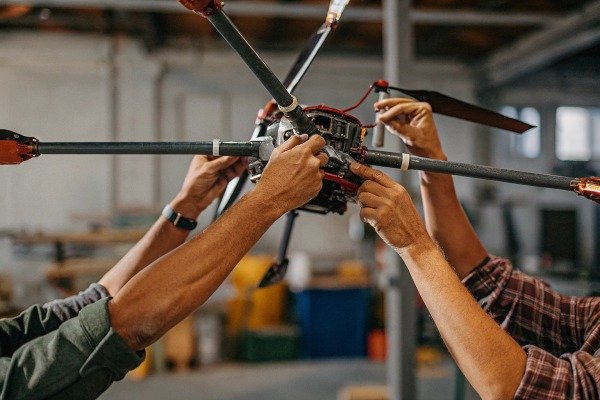
You are required to stock a comprehensive inventory of high-wear spare parts, such as propellers, motors, and landing gear, equal to at least 10% of your total hardware value. Additionally, you must maintain a fleet of dedicated demo units to conduct on-site flight demonstrations for agencies before they purchase.
The Economics of Spare Parts Availability
When a fire department buys a drone, they are buying uptime. The most common feedback we receive from US customers is frustration when simple parts are out of stock. A $10,000 system becomes a paperweight if a $50 propeller is on backorder.
To protect our brand reputation in your exclusive territory, we require you to hold "safety stock." This is not just about having boxes on a shelf; it is about analyzing the consumption rate of components. Since our drone features a prominent orange housing and slender landing gear, these specific parts are prone to cosmetic and structural damage during rugged field use. You must have them ready to ship overnight.
The "Try Before You Buy" Culture
In the US public safety market, virtually no agency buys a drone without flying it first. This is distinct from consumer markets. A fire chief needs to see the thermal camera resolution with their own eyes. They want to feel how the controller handles in the wind.
You need to budget for a "Demo Fleet." These are units that will get scratched, dirty, and used heavily. You cannot sell these as new. This is a marketing expense you must absorb. If you tell a potential client, "I can order one for you to look at," you will lose the sale to a competitor who pulls a case out of their trunk right there in the parking lot.
Managing Inventory Risks
We understand that holding inventory ties up cash. However, for exclusive distributors, we often offer better payment terms or partial credit for demo units to help share this burden. The goal is to ensure that your warehouse in the US looks like a miniature version of our warehouse in China.
Table 2: Essential Inventory Checklist for Firefighting Distributors
| Catégorie de composants | Specific Items to Stock | Quantity Recommendation | Reason for Stocking |
|---|---|---|---|
| Consommables | Propellers (CW/CCW), Batteries | 4 sets per drone sold | High wear, frequent replacement needed |
| Structural Parts | Landing gear legs, Motor arms | 1 set per 5 drones sold | Prone to damage during rough landings |
| Electronics | Replacement Motors, ESCs | 1 unit per 10 drones sold | Critical failure points after long use |
| Demo Equipment | Full drone kits, Tablet monitors | 1 demo unit per sales rep | Essential for agency evaluations |
| Accessories | Hard transport cases, Chargers | Buffer stock of 5-10 | Often requested as add-ons last minute |
Handling Logistics and Customs
Since we provide door-to-door delivery, we handle the export from China. However, once the goods arrive at your US warehouse, the internal logistics are your responsibility. You need an inventory management system that tracks batch numbers. If we identify a firmware issue with a specific batch of flight controllers, you must be able to instantly locate which agencies received those units. This level of traceability is a requirement for maintaining exclusivity.
What certifications or business licenses do I need to import and sell these drones?
Navigating the web of US regulations can feel overwhelming, especially when importing advanced technology from China, but ignoring these rules is the fastest way to have your inventory seized or your contracts voided. You need to be the expert your customers rely on to cut through the red tape of aviation compliance.
Distributors must hold valid general business import licenses and carry specific aviation liability insurance for high-risk operations. Crucially, you must verify NDAA compliance status for federal clients and possess a mastery of FAA Part 107 and Certificate of Authorization (COA) processes to guide fire departments through legal deployment.

The Compliance Landscape: FAA and NDAA
The United States market is unique due to its strict regulatory environment. As a distributor, you are not just selling hardware; you are selling a legal capability.
Navigating NDAA (National Defense Authorization Act)
This is the most critical topic for a distributor of Chinese-manufactured drones. The NDAA restricts federal agencies (and often state/local agencies using federal grants) from purchasing drones made in China or containing critical Chinese components.
Since our products are manufactured in China, you must be transparent about where you can and cannot sell.
- Federal Market: You may face barriers selling to the Department of Interior or Department of Defense unless the specific model is cleared (which is rare for non-Blue UAS).
- State/Local Market: Many local fire departments can still purchase our drones if they use local funds rather than federal grants. Your job as an exclusive distributor is to identify these "safe" funding pockets. You must not mislead customers about compliance. You need to understand the supply chain deeply—down to the chipset level—so you can answer the tough questions procurement officers will ask.
FAA Part 107 and COA Assistance
Fire departments operate under two main FAA authorities: Part 107 (commercial rules) or a Public Aircraft Operations (PAO) Certificate of Authorization (COA). Public Aircraft Operations (PAO) 8 Part 107 9
- Part 107: Requires a certified pilot.
- COA: Allows for self-certification and special activities.
Exclusive distributors often provide value-added services by helping departments fill out this paperwork. If you can hand a fire chief a template for a COA application along with the drone invoice, you become a partner, not just a vendor. We expect our exclusive partners to have this knowledge in-house or partner with a regulatory consultant.
Insurance and Liability
Standard general liability insurance is not enough. When a drone is used in an active fire zone, the liability risks are massive. You need Aviation Products Liability Insurance. This protects you (and us) if a drone malfunctions and causes injury or property damage. US agencies will often demand to see your certificate of insurance with high limits (often $1M to $2M) before they allow you to demo the product on their property.
Grant Expertise (AFG)
Finally, money is always tight for fire departments. The Assistance to Firefighters Grant (AFG) is a major funding source. Subvention d'aide aux pompiers (AFG) 10 However, AFG rules often mirror federal bans. You must understand which grants allow for the purchase of our specific category of drones. Helping a department write a grant narrative that justifies the purchase of our cost-effective, high-performance units over more expensive domestic options is a key skill we look for.
Table 3: Regulatory and Business Compliance Checklist
| Requirement Type | Specific Action Item | Importance Level | Target Audience Impact |
|---|---|---|---|
| Federal Law | NDAA Compliance Verification | Critique | Determines eligibility for federal/grant funds |
| Aviation Law | FAA Part 107 / COA Knowledge | Haut | Essential for legal operation by the client |
| Assurance | Aviation Product Liability ($1M+) | Obligatoire | Required for demos and contract bidding |
| FCC | Radio Transmission Certification | Obligatoire | Legal requirement to operate radio equipment |
| Funding | Grant Writing Assistance (AFG) | High Value-Add | Helps clients afford the purchase |
Conclusion
Becoming the exclusive US distributor for our SkyRover firefighting drones is a lucrative opportunity, but it is reserved for partners who are ready to scale. It requires more than just a warehouse; it demands a financial commitment to inventory, a technical infrastructure for local repairs, and a sophisticated understanding of the regulatory landscape. If you can prove your ability to navigate the complexities of NDAA restrictions while delivering top-tier support to fire departments, we are ready to discuss how we can dominate the market together.
Notes de bas de page
1. NFPA standard for small unmanned aircraft systems used by public safety entities. ︎
2. Official site for Sourcewell, a major cooperative purchasing agency for US government procurement. ︎
3. Official site for DroneSense, a leading incident command software for public safety drones. ︎
4. Wikipedia entry explaining the concept of a Software Development Kit for technical integration. ︎
5. Wikipedia entry providing technical background on thermal imaging technology used in firefighting. ︎
6. Official site for TEEX, providing standardized emergency response and drone training. ︎
7. Official website of the specific training organization mentioned in the text. ︎
8. Official FAA guidance on Public Aircraft Operations for public safety agencies. ︎
9. Official FAA guidance for commercial drone operations under Part 107 regulations. ︎
10. Official FEMA page for the specific grant program cited as a funding source. ︎

 English
  Spanish
  German
  French
  Dutch
Dutch  Arabic
