
Watching our heavy-lift quadcopters leave the assembly line in Xi’an gives us a sense of pride, but the silence that follows delivery is often where the real anxiety begins. Many procurement managers we work with treat the arrival of the goods as the finish line, yet failing to audit the post-purchase phase leaves them vulnerable to repeating costly mistakes in logistics or technical support. If you do not systematically review the gap between our promised performance and your actual operational reality, your next budget request will lack the data needed to secure better equipment.
To optimize your next strategy, you must conduct a comprehensive audit that compares the actual Total Cost of Ownership (TCO) against your initial budget and verifies field performance against the RFP specifications. Documenting these variances creates a data-driven feedback loop, allowing you to refine technical requirements, adjust contract terms, and select suppliers who deliver long-term value rather than just the lowest hardware price.
Below, we break down the specific metrics and review processes you should implement to transform your recent purchase into a strategic asset.
How do I evaluate the after-sales support and technical responsiveness of my supplier?
We often tell our engineering team that the true test of our product isn’t the test flight in China, but the frantic support ticket filed by a customer at 2 AM. When you face a firmware glitch or a payload integration error, a supplier who ghosts you causes operational paralysis. If you ignore the friction experienced during these critical moments, you risk locking yourself into a long-term relationship with a vendor who cannot scale with your department’s needs.
You should evaluate support by tracking the Mean Time to Repair (MTTR) and the resolution rate of remote troubleshooting sessions without requiring hardware returns. Analyze whether the supplier provided direct access to engineers for complex integration issues and if they maintained a sufficient inventory of spare parts to minimize your operational downtime.
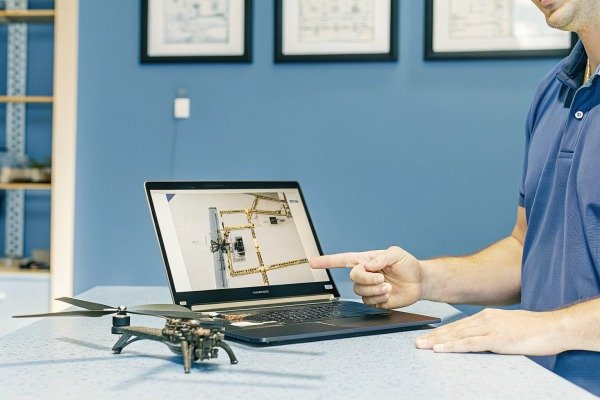
Assessing the Human Element of Technical Support
When reviewing the procurement journey, the "soft skills" of a hardware supplier are often undervalued until a crisis occurs. In our experience exporting to the US, the most common friction point isn't the hardware failure itself, but the communication gap that follows. You need to analyze the logs of your interactions. Did you speak to a sales representative who acted as a slow middleman, or were you connected directly to a technical engineer who understood the flight controller architecture?
For high-end industrial drones, the complexity requires a "Tiered Support Audit." You should categorize every support interaction you had during the initial deployment phase.
H3 – The Support Responsiveness Matrix
Use the following table to audit your recent supplier's performance. If the majority of your interactions fall into the "Low Performance" column, your next procurement strategy must mandate Service Level Agreements (SLAs) with financial penalties for Accords de niveau de service (SLA) 1 non-compliance.
| Support Aspect | Low Performance Indicator | High Performance Indicator | Impact on Future Strategy |
|---|---|---|---|
| Temps de réponse | > 24 hours for critical issues | < 4 hours (or real-time chat) | Prioritize vendors with 24/7 global support coverage. |
| Resolution Method | Frequently requires shipping drone back to factory | Remote diagnosis & firmware patches | Demand modular designs that allow user-swappable parts. |
| Pièces détachées | "Out of stock" or > 2 weeks lead time | In-country warehousing or < 5 day express | Require a "Safety Stock" clause in the purchase contract. |
| Language/Communication | Heavy reliance on translation tools; misunderstanding technical terms | Fluent technical English; clear video tutorials | Verify engineering team's language proficiency before signing. |
H3 – Evaluating Remote Diagnostic Capabilities
Another critical angle is the effectiveness of remote assistance. We invest heavily in software that allows us to read flight logs remotely because shipping a large drone back to China for a sensor calibration is inefficient for everyone.
In your review, ask: Did the supplier have the tools to diagnose the problem over the cloud? If your team had to manually export logs, convert formats, and email large zip files, that is a workflow bottleneck. Future procurements should prioritize platforms with seamless, secure data egress that allows the manufacturer to "see" what the drone sees in real-time for troubleshooting. This capability dramatically reduces the Total Cost of Ownership by eliminating unnecessary shipping costs and reducing the time your equipment sits grounded in a hangar.
What data confirms the real-world durability and stability of the firefighting drones?
While we rigorously test our frames in wind tunnels and climate chambers, we know that a controlled lab environment never perfectly mimics the chaos of a wildfire. If you rely solely on the spec sheet’s “max wind resistance” or “IP rating” without validating it against your actual mission logs, you are flying blind. Failing to capture this real-world data means you cannot hold the manufacturer accountable for performance gaps in your next negotiation.
Confirm durability by analyzing flight logs for stability errors during high-wind operations and assessing thermal sensor clarity in heavy smoke conditions. Review your maintenance records to calculate the actual Mean Time Between Failures (MTBF) for critical components like motors and batteries, comparing this data against the manufacturer’s laboratory claims to identify discrepancies.
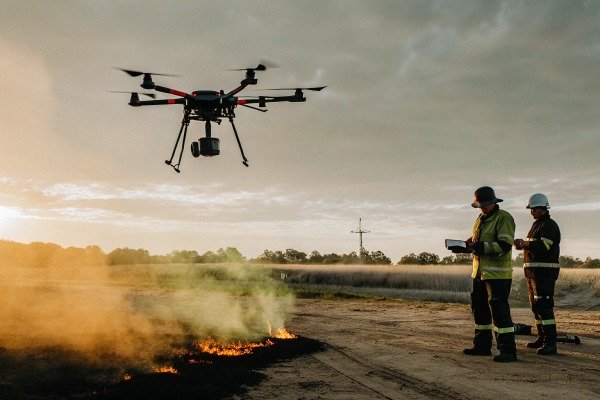
Bridging the Gap Between Lab Specs and Field Reality
There is often a "datasheet delta"—the difference between what a drone is rated to do and what it sustains in the field. For firefighting drones, heat and particulate matter are the silent drones de lutte contre les incendies 2 killers. In your review, you must look beyond the basic "did it fly?" question.
You need to extract data regarding the flight controller's compensation efforts. For example, if the log shows that the motors were working at 85% capacity just to maintain a hover in 15 mph winds, the drone is underpowered, even if the spec sheet claims it handles 25 mph winds. This data indicates that the propulsion system is stressed, leading to premature failure.
H3 – Analyzing Component Degradation Rates
Firefighting environments accelerate wear. High temperatures degrade battery chemistry faster than agricultural use. You should compile a "Component Lifespan Report" based on your first year of ownership.
- Battery Health: Did the internal resistance of the battery cells increase faster than expected?
- Motor Bearings: Did smoke particles ingress into the motors, causing gritty sounds or friction?
- Plastic/Carbon Fiber: Did heat exposure cause any warping of the arms or landing gear?
If you find that you replaced propellers or motors twice as often as the manual suggested, your next strategy must focus on higher Ingress Protection (IP) ratings or sealed Indices de protection contre les agressions (IP) 3 propulsion systems, rather than just flight time.
H3 – Thermal Sensor Performance Under Duress
The thermal camera is the eyes of the operation. caméra thermique 4 However, spec sheets rarely mention how sensors perform when the drone's internal temperature rises.
| Fonctionnalité | Lab Expectation | Potential Field Reality | Review Action |
|---|---|---|---|
| Refresh Rate | 30Hz or 60Hz stable | Drops/lags when processor overheats | Check video recordings for stuttering during active fires. |
| Temperature Accuracy | ±2°C | Drifts significantly (>±5°C) in high ambient heat | Require "radiometric calibration" validation in next RFP. |
| Image Clarity | Crystal clear | "Washed out" due to smoke interference | Prioritize sensors with specific "smoke penetration" algorithms. |
By documenting these specific technical shortcomings, you move from vague complaints ("it didn't look good") to actionable engineering requirements ("Must maintain <50mK sensitivity at 40°C ambient temperature") for your next purchase.
How should I analyze the efficiency of the shipping and customs clearance process?
Packing a precision instrument into a crate and sending it halfway across the world involves complex logistics, and we often see clients surprised by the bureaucratic friction at customs. If you ignore the delays caused by improper HS codes or dangerous goods documentation, you cannot accurately forecast deployment timelines. A disorganized shipping process turns an urgent safety acquisition into a logistical nightmare.
Analyze efficiency by auditing the total timeline from factory dispatch to final delivery, identifying specific bottlenecks caused by compliance documentation or customs hold-ups. Evaluate whether the agreed Incoterms successfully protected your agency from unexpected liability and if the packaging quality prevented transit damage, ensuring the equipment arrived ready for immediate deployment.
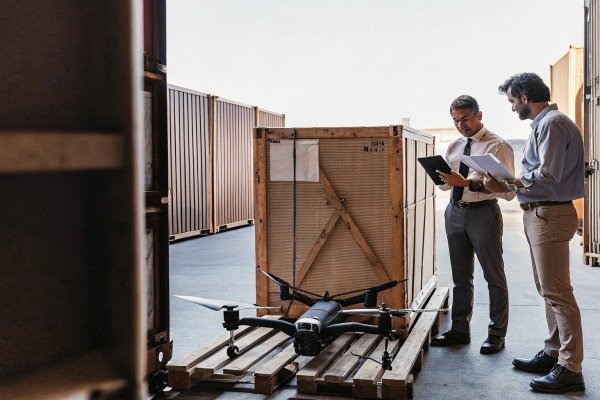
The Hidden Costs of International Logistics
For a procurement manager like Olivia, "Door-to-Door" service is a standard requirement, but the reality is often "Door-to-Customs-to-Door." When reviewing the purchase, you must scrutinize the handover points. Firefighting drones use high-capacity lithium batteries (Class 9 piles au lithium 5 Dangerous Goods), which are Classe 9 Marchandises dangereuses 6 the most common cause of shipping delays.
Did your supplier provide the MSDS (Material Safety Data Sheet) and UN38.3 UN38.3 test reports 7 Fiche de données de sécurité 8 test reports immediately? If your shipment sat in a warehouse for a week waiting for a PDF from the manufacturer, that is a process failure. In your next strategy, you should require these documents avant the shipment leaves the factory.
H3 – Evaluating Incoterms and Liability
The specific Incoterm used (e.g., DAP vs. DDP) defines specific Incoterm 9 who pays for tariffs and who handles the paperwork.
- DAP (Delivered at Place): The seller ships to you, but you handle import duties.
- DDP (Delivered Duty Paid): The seller handles everything, including duties.
If you found yourself fielding calls from FedEx or DHL asking for tax ID numbers or duty payments, your supplier likely used DAP while you expected DDP. This creates administrative overhead. Your review should calculate the "Administrative Hours" spent managing logistics. If this number is high, your next strategy should be strict: "DDP Terms Only," forcing the supplier to handle the complexity.
H3 – Packaging Integrity Audit
Industrial drones are heavy but fragile. We have seen cases where the outer box looks fine, but the gimbal vibration dampeners are sheared off due to internal resonance during transit.
Review the condition of the goods upon arrival:
- Crate Quality: Was it a reusable flight case or a disposable cardboard box?
- Internal Foam: Was it high-density EVA foam (good) or cheap Styrofoam (bad)?
- Sensor Protection: Were the camera gimbals locked in place?
If the packaging was insufficient, you are starting your ownership experience with potentially compromised hardware. Your next purchase order must specify "MIL-SPEC transit cases" to ensure the drone is protected from the factory to the fire station.
How can I use the total cost of ownership results to optimize my next order?
We know that the initial invoice is just the tip of the iceberg, yet many departments fixate on the unit price while ignoring the cumulative costs of operation. If you fail to account for battery cycles, software subscriptions, and replacement parts, your budget will bleed dry long before the drone’s service life ends. Understanding the true financial footprint of your equipment is the only way to negotiate a smarter contract next time.
Optimize your next order by calculating the actual cost per flight hour, aggregating expenses from battery replacements, shipping for repairs, software licensing, and pilot training. Use this comprehensive TCO data to negotiate bundled service packages, volume discounts on consumables, or extended warranty terms that align with your department’s actual consumption patterns.
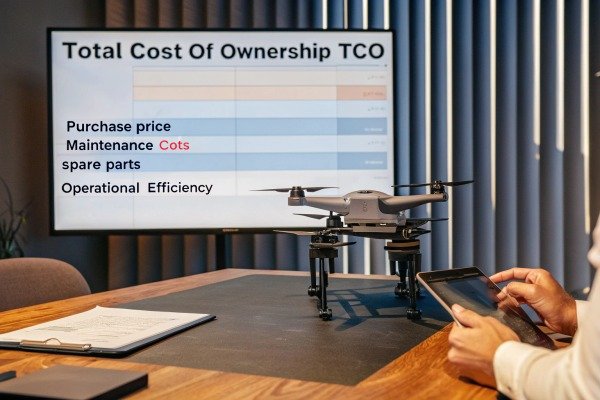
Moving From CapEx to OpEx Analysis
In government procurement, Capital Expenditure (CapEx) often gets the most scrutiny, but Operational Expenditure (OpEx) is where the surprises hide. Your review needs to consolidate every invoice related to the drone program over the last 12-18 months.
You might find that you spent 20% of the drone's value just on shipping batteries back and forth for warranty claims. Or perhaps you spent thousands on proprietary software licenses that could have been avoided with a drone that supports open-source protocols (like MAVLink). MAVLink 10
H3 – The Hidden Consumables Trap
Batteries are the fuel of the electric drone world. They are not one-time purchases; they are consumables. Firefighting missions, which often involve max-throttle ascents and heavy payloads, drain battery health faster than surveillance missions.
| Catégorie de coût | Estimated Budget | Actual Spend | Variance Cause | Strategy for Next Order |
|---|---|---|---|---|
| Piles | $2,000 / year | $4,500 / year | Faster degradation due to rapid charging | Negotiate a "Battery Subscription" or bulk buy upfront. |
| Hélices | $200 / year | $600 / year | Minor strikes during training | Include 10 sets of props in the initial bundle. |
| Data Software | $0 (Included) | $1,200 / year | "Free trial" expired after 6 months | Demand perpetual licenses or check open-source compatibility. |
H3 – Leveraging Data for Negotiation
Once you have this TCO data, you wield power. When approaching us or any other manufacturer for your next fleet upgrade, you can say: "Our data shows we consume 4 battery sets per drone per year. We want a contract that includes 8 sets upfront at a 20% discount."
Furthermore, review the "Training to Proficiency" cost. If it took your team 4 weeks to learn the system because the interface was counter-intuitive, that is a cost in man-hours. Use this to demand better training materials or an on-site trainer as part of the purchase package. The goal is to shift the risk from your budget back to the supplier's deliverables.
Conclusion
Reviewing your firefighting drone procurement is not simply about checking boxes; it is a strategic exercise in gathering intelligence. By rigorously auditing technical support responsiveness, verifying field durability against lab claims, analyzing logistics friction, and calculating the true Total Cost of Ownership, you transform hindsight into foresight. This data empowers you to demand better terms, stricter durability standards, and more comprehensive support packages in your next negotiation. At SkyRover, we believe that an educated buyer pushes the entire industry forward, ensuring that the technology protecting your community is as reliable as the firefighters deploying it.
Notes de bas de page
1. General definition of this standard business contract term. ︎
2. Authoritative industry association covering standards for drones in fire safety. ︎
3. International standards body defining the specific IP code classifications. ︎
4. Leading manufacturer documentation explaining thermal sensor applications in firefighting. ︎
5. Academic overview of lithium battery technology, chemistry, and degradation factors. ︎
6. Official US government regulations regarding the transport of hazardous lithium batteries. ︎
7. Major testing certification body explaining the mandatory battery transport standard. ︎
8. Official government standards for safety documentation required for hazardous materials. ︎
9. The official organization that publishes and maintains international commercial trade terms. ︎
10. Official documentation for the open-source drone communication protocol mentioned. ︎

 English
  Spanish
  German
  French
  Dutch
Dutch  Arabic
