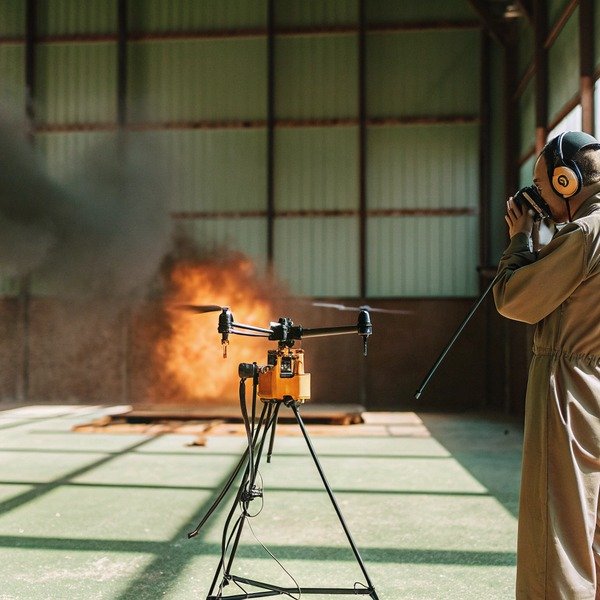
In our testing facility, we often simulate the deafening roar of wildfires to ensure our equipment performs when lives are at stake. A loudspeaker that sounds loud in a quiet warehouse often fails completely against the noise of rotor blades and crackling flames.
To evaluate a firefighting drone loudspeaker, you must verify a Sound Pressure Level (SPL) of 120-130dB at one meter and test the effective intelligibility range, which is often 50% less than the maximum audible distance. Additionally, prioritize systems with a frequency response of 1kHz-4kHz and low-latency integration with flight control software.
Let’s break down the technical metrics you need to check before signing that procurement order.
What specific decibel levels should I look for in a professional firefighting drone loudspeaker?
Our engineers frequently remind clients that high wattage ratings on a spec sheet do not automatically guarantee that a message will be heard over a fire. We see many buyers misled by power consumption figures rather than actual acoustic output.
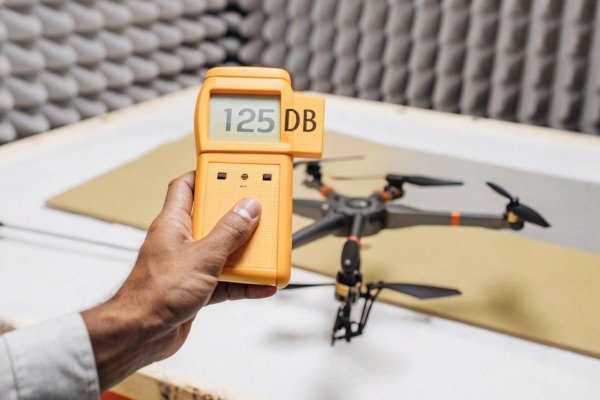
You should specifically look for a Sound Pressure Level (SPL) of at least 120dB to 130dB measured at a one-meter distance. This high baseline intensity is strictly necessary to overcome the rapid decay of sound over distance and the competing noise from the drone’s own propellers and the fire itself.
Understanding SPL vs. Watts
When we design payloads at SkyRover, we focus on efficiency. A common mistake procurement managers make is judging a speaker by its wattage (e.g., 100W vs. 10W). Wattage only tells you how much battery power the speaker consumes, not how loud it is. The metric that matters for your operation is Sound Pressure Level (SPL), measured in decibels (dB). Sound Pressure Level 1
The physics of sound is unforgiving. For every doubling of distance, sound pressure drops by approximately 6dB. This is known as the Inverse Square Law. Inverse Square Law 2 If a speaker produces 120dB at 1 meter, it will be significantly quieter at an operational altitude of 50 or 100 meters. If you start with a low SPL, your message will vanish before it reaches the ground.
The Noise Floor of a Fire Scene
A quiet office has a background noise of about 40dB. A disaster site is entirely different. You must account for the "noise floor" you are trying to overcome. noise floor 3
- Drone Rotors: 85-95dB directly under the drone.
- Burning Structures: 80-90dB depending on intensity.
- Sirens and Equipment: 90-110dB.
To be intelligible, the voice from the drone must be at least 10-15dB louder than this background noise at the target location. If the fire is roaring at 90dB, your drone speaker needs to deliver at least 100-105dB at the target's ear, not just at the source. This is why starting with a massive 130dB at the source is non-negotiable for professional applications.
Calculating Real-World Performance
We use the following reference table when calibrating our systems to help clients estimate performance drops.
Table 1: Estimated Sound Pressure Level Drop-off over Distance
| Distance from Drone | Theoretical Drop (Free Field) | Estimated SPL (Starting at 130dB) | Operational Status |
|---|---|---|---|
| 1 meter | 0 dB | 130 dB | Painfully Loud |
| 10 meters | -20 dB | 110 dB | Very Loud |
| 50 meters | -34 dB | 96 dB | Clearly Audible |
| 100 meters | -40 dB | 90 dB | Audible but competes with fire noise |
| 200 meters | -46 dB | 84 dB | Hard to distinguish words |
Note: This table assumes a "free field" without wind or thermal barriers. In real fire scenarios, you should expect an additional loss of 5-10dB.
How can I ensure the drone loudspeaker remains clear during high-noise rescue operations?
When we deploy our drones for field trials in windy conditions, we quickly learn that volume is useless if the sound is distorted. Many generic speakers become unintelligible “mud” when cranked to maximum volume.
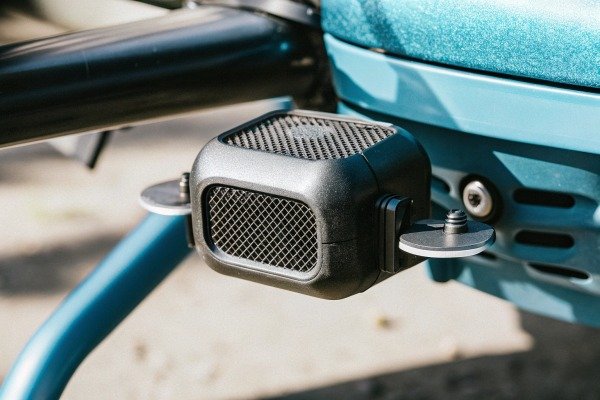
To ensure clarity, verify that the loudspeaker emphasizes the frequency range between 1kHz and 4kHz, which is critical for human vocal intelligibility. Furthermore, the system must utilize digital noise reduction and a directional horn design to focus sound energy downward and minimize scattering in the wind.
The Importance of Frequency Response
Human speech intelligibility relies heavily on consonant sounds, which mostly live in the 2kHz to 4kHz frequency range. Human speech intelligibility 4 Low frequencies (bass) carry power but add muddiness, while very high frequencies dissipate quickly in the air.
In a fire environment, smoke and heat create "thermal layers." These layers can refract sound waves, causing them to bend upwards away from the ground. Lower frequencies struggle to penetrate these layers. When we select components for our SkyRover series, we tune the drivers to boost the "presence region" (1kHz-4kHz). This makes the voice sound sharp and cutting, rather than deep and booming. A speaker that sounds "tinny" in a room often performs better outdoors than a high-fidelity music speaker because that "tinny" sound cuts through engine noise.
Directionality and Horn Design
Omnidirectional speakers waste energy by sending sound sideways and upwards. For a drone, you want all that acoustic energy focused in a tight cone towards the ground. acoustic energy 5
- Narrow Beam Width: Look for speakers with a dispersion angle of 60 to 90 degrees.
- Horn Shape: A physical horn (trumpet shape) naturally amplifies sound and directs it. Flat panel speakers often lack this physical amplification and require more power for less throw.
Noise Cancellation Technology
The drone itself is the biggest enemy of clarity. The microphone on the remote controller or the drone itself (for two-way audio) can pick up wind and rotor noise.
- Anti-Howling: If the operator is standing near the drone during takeoff, feedback loops (screeching) can occur. Good systems have digital feedback suppression.
- Propeller Filtering: Advanced systems use Digital Signal Processing (DSP) to filter out the specific frequency of the drone's propellers Digital Signal Processing 6, ensuring the broadcast voice is clean.
Table 2: Feature Checklist for Audio Clarity
| Fonctionnalité | Fonction | Why it is Critical for Firefighting |
|---|---|---|
| DSP (Digital Signal Processing) | Cleans audio signal | Removes static and rotor hum before broadcasting. |
| 1kHz-4kHz Boost | EQ Tuning | Maximizes speech intelligibility over long distances. |
| Directional Horn | Physical Design | Focuses energy downward; reduces wasted power. |
| High-Temp Diaphragm | Component Material | Prevents speaker failure near high-heat fires. |
What methods can I use to test the effective audio transmission distance of the drone?
We advise our distribution partners to look beyond the “maximum range” listed on the box, which is often measured under perfect conditions. In our experience, real-world utility is often half of the marketed specification.
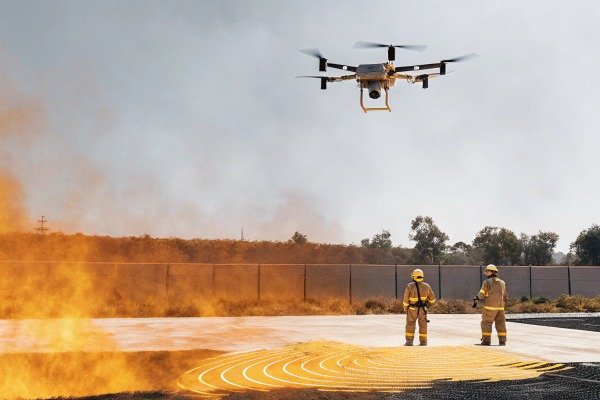
You should test effective transmission by distinguishing between “audible range” and “intelligibility range.” Establish a field test where a ground observer must correctly transcribe random words broadcast from the drone at operational altitude, typically reducing the manufacturer’s claimed distance by 30% to 50%.
Designing a Realistic Field Test
Do not rely on a simple "can you hear a noise?" test. A siren is easy to hear; specific evacuation instructions are hard to understand. We recommend the "Random Word List" method for our clients.
- Setup: Place a team member at the target distance (e.g., 300 meters).
- Flight: Hover the drone at a realistic rescue altitude (e.g., 50-100 meters).
- The Test: The operator broadcasts a list of random, phonetically balanced words (not simple sentences like "Can you hear me?").
- Verification: The ground member writes down what they hear. If they get less than 80% correct, the system has failed at that distance.
The Speech Transmission Index (STI)
While professional audio engineers use a machine to measure the Speech Transmission Index (STI), you can approximate this. Speech Transmission Index 7 STI measures how much the original signal is preserved. Wind, echoes, and distance degrade this index.
- STI > 0.6: Excellent clarity.
- STI 0.45 – 0.6: Good for standard PA systems.
- STI < 0.3: Unintelligible.
For firefighting, if you cannot distinguish "West" from "Best" at 200 meters, the system is dangerous. Misheard commands can lead crews into hazards.
Weather Factors to Simulate
Your test day should not be a perfect sunny day.
- Wind Test: Fly on a day with 15-20 mph winds. Wind creates physical noise on the listener's ears and drifts the sound wave.
- Background Noise Simulation: If you cannot test at a real fire, park a fire truck nearby and run the engine and pump. This simulates the 85dB+ noise floor you will face in reality.
Table 3: Recommended Testing Protocol
| Test Parameter | Recommended Setting | Critères de réussite |
|---|---|---|
| Altitude | 50m – 100m AGL | Sound must be focused, not scattered. |
| Slant Distance | 200m – 500m | 80% word recognition accuracy. |
| Background Noise | 80dB – 90dB (Engine noise) | Voice cuts through the engine rumble. |
| Message Type | Random phonetic words | Listener correctly identifies words. |
Which technical features guarantee voice clarity for drone broadcasts in emergency situations?
Our software team spends months optimizing data packets because we know that in a panic, a delayed voice confuses everyone. We have found that seamless integration with the flight controller is just as important as the speaker hardware itself.
Key features for clarity include low-latency transmission (under 200ms) to prevent operator speech jamming, and native Text-to-Speech (TTS) integration. TTS is superior in emergencies as it provides a standardized, calm, and clear voice that is unaffected by the operator’s stress or breathing.

The Danger of Latency (Delayed Auditory Feedback)
One of the most overlooked issues is latency. When an operator speaks into the remote controller, and the drone broadcasts it 500 milliseconds (0.5 seconds) later, the operator hears their own voice bouncing back with a delay.
This creates a psychological effect called "Delayed Auditory Feedback." It causes the speaker to stutter, slur words, or stop speaking entirely. It is mentally impossible to speak clearly against your own delayed echo.
- Requirement: Look for systems using dedicated digital transmission channels (like DJI's PSDK or equivalent) that keep latency below 200ms.
- Alternative: "Push-to-Record, Release-to-Broadcast" modes. This records the message first, then sends it, avoiding the echo problem entirely.
Text-to-Speech (TTS) Capabilities
In a high-stress environment, human voices tremble. They speak too fast. They shout, which actually distorts the microphone signal (clipping).
We strongly recommend systems with native Text-to-Speech. native Text-to-Speech 8
- Consistency: The computer voice is perfectly level and phonetically optimized.
- Bandwidth: TTS sends text data, not heavy audio files, ensuring the command reaches the drone even with a weak signal connection.
- Looping: You can type "Evacuate South Zone Immediately" and set it to loop automatically. This frees the pilot to focus on flying rather than shouting the same phrase repeatedly.
Integration with Flight Software
A standalone speaker that requires a separate remote control is a logistical nightmare. The best systems integrate into the main flight app (like DJI Pilot 2). DJI Pilot 2 9
- One Screen: The pilot sees the camera view and the audio controls on the same screen.
- Audio Files: The ability to upload MP3 warning sounds (sirens) beforehand. A siren sound is scientifically proven to travel further than voice because of its consistent frequency and volume.
Thermal Management
High-power speakers (100W+) generate immense heat in their magnetic coils. In a wildfire, the ambient air is already hot.
- Cooling Design: Look for casings made of aluminum alloy that act as a heat sink. heat sink 10
- Protection: Good systems have thermal throttling—they will slightly lower volume to save the speaker from blowing out, rather than shutting down completely. Plastic casings insulate heat and lead to failure.
Conclusion
When selecting a loudspeaker for firefighting drones, prioritize high SPL (130dB) to overcome fire noise, and validate the effective intelligibility range through rigorous field testing. Ensure the system offers low latency and robust Text-to-Speech features to guarantee clear communication when it matters most.
Notes de bas de page
1. Official health and safety guidelines regarding sound pressure and noise exposure from NIOSH. ︎
2. Academic explanation of the physical law governing sound intensity over distance. ︎
3. Regulatory definition of noise floor in the context of signal interference and communication. ︎
4. Scientific research on the frequency components necessary for clear vocal communication. ︎
5. Industry standards and research on acoustic energy distribution and loudspeaker design. ︎
6. General background on the technology used to filter and enhance audio signals. ︎
7. International standard for the objective rating of speech intelligibility in sound systems. ︎
8. Overview of speech synthesis technology used for automated emergency broadcasts. ︎
9. Official documentation for the flight control software mentioned in the article. ︎
10. Technical explanation of thermal management and heat sink functionality in electronic components. ︎

 English
  Spanish
  German
  French
  Dutch
Dutch  Arabic
