
When we engineer flight controllers in our Xi’an facility contrôleurs de vol 1, we realize that static specs quickly become obsolete, leaving buyers with outdated fleets and missed operational capabilities.
To stay updated, establish a formal communication cadence that includes quarterly technology roadmap reviews, subscription to technical bulletins for firmware updates, and assigning a dedicated Key Account Manager. This structure ensures you receive immediate notifications on regulatory shifts, new payload integrations, and critical supply chain alerts.
Establishing this flow of information requires a structured approach to ensure you never miss a critical upgrade.
What are the most effective ways to structure ongoing communication with my firefighting drone supplier?
Navigating complex export logistics to the US has taught our team export logistics 2 that unstructured emails often lead to missed critical data points regarding payload compatibility or firmware patches.
The most effective structure involves a multi-tiered approach: weekly operational check-ins for active orders, monthly newsletters for product updates, and quarterly strategic reviews for long-term planning. Utilize shared digital portals for real-time documentation access and define specific Key Performance Indicators (KPIs) for supplier responsiveness.

Establishing Formal Channels
A casual email relationship is insufficient for the high-stakes environment of firefighting equipment procurement. In our experience working with distributors, the most successful partnerships are built on formal communication tiers. You should move away from ad-hoc messaging and establish a Dedicated Key Account Manager (KAM). This individual serves as your single point of truth. Instead of emailing a generic support inbox where your query might get lost, the KAM navigates our internal engineering and production teams to get you accurate answers.
We recommend implementing a "Middleware Compatibility Check" protocol. This is a formal agreement where your supplier must brief your IT team on how upcoming API changes or firmware updates will interact with your existing command center software. This prevents the nightmare scenario where a drone update breaks your live video transmission link during an emergency operation.
Tools for Transparency
Modern communication goes beyond phone calls. You should request access to a Client Portal. While we send emails, a portal allows you to log in and view the real-time status of production, download the latest technical manuals, and see upcoming "End of Life" (EOL) notices for parts. If your supplier does not offer a portal, a shared project management board (like Trello or Asana) can bridge the gap for ongoing OEM development projects.
Structured Meeting Cadence
To keep information flowing without overwhelming your schedule, you need a tiered meeting structure. This ensures that tactical issues are resolved quickly while strategic goals remain in focus.
Communication Tier Structure
| Tier Level | Fréquence | Participants | Primary Agenda Items |
|---|---|---|---|
| Opérationnel | Weekly / Bi-Weekly | Procurement Lead, KAM | Order status, shipping logistics, immediate technical support tickets. |
| Tactical | Mensuel | Fleet Manager, Technical Support | Firmware patch notes, minor hardware revisions, spare parts inventory health. |
| Stratégique | Quarterly (QBR) | Procurement Director, Supplier VP | Future product roadmap, regulatory compliance strategy, long-term contract negotiation. |
| Emergency | Ad-Hoc | On-Duty Commander, Technical Lead | Critical failure analysis, safety recalls, urgent "grounding" notices. |
How often should I schedule reviews to ensure I stay updated on the latest drone technologies and market trends?
Our R&D team in Chengdu releases minor software tweaks weekly, yet we notice many clients only ask for updates annually, missing out on significant performance optimizations.
Schedule comprehensive business reviews on a quarterly basis to align with typical R&D cycles and firmware release schedules. Supplement these with bi-annual strategic deep dives to assess major hardware innovations, while maintaining monthly touchpoints for immediate supply chain health checks and minor software patch notifications.

The Importance of Quarterly Business Reviews (QBRs)
In the industrial drone sector, technology evolves at a blistering pace. Waiting for an annual contract renewal to discuss technology is too slow. By the time a year passes, battery energy density may have improved by 10% battery energy density 3, or a new thermal sensor might have hit the market. thermal sensor 4 We find that Quarterly Business Reviews (QBRs) are the sweet spot. They are frequent enough to catch trends but substantial enough to warrant a deep discussion.
During a QBR, you should not just look at past performance. You must force a forward-looking conversation. Ask your supplier to present their "Rolling 12-Month Roadmap." This document should detail what features are currently in alpha testing (internal only), beta testing (select partners), and final release. This allows you to budget for upgrades before they are even announced to the public.
Balancing Frequency with Relevance
Meeting too often can lead to "update fatigue," where critical alerts are ignored. Conversely, meeting too rarely leaves you exposed to obsolescence. The key is to align your review schedule with the natural rhythm of the manufacturing cycle. For example, hardware revisions typically happen every 6-12 months, while software features can roll out every 4-8 weeks.
Managing Software vs. Hardware Updates
Hardware and software follow different lifecycles. Your review schedule needs to account for this decoupling. While you might only buy new drone airframes every few years, the software inside them changes constantly. We often see clients operating hardware that is capable of much more than they realize, simply because they haven't enabled the latest software features.
Recommended Review Agenda Breakdown
| Review Type | La durée | Key Discussion Points | Outcome Goal |
|---|---|---|---|
| Tech Spec Audit | 45 Mins | Review current fleet specs vs. market standard. | Identify underperforming units for upgrade or replacement. |
| Supply Chain Health | 30 Mins | Analyze lead times for batteries and motors. | Adjust safety stock levels to prevent operational downtime. |
| Regulatory Sync | 30 Mins | Discuss changes in FAA/EASA rules and remote ID. | Ensure fleet remains legal and compliant. |
| Software Briefing | 60 Mins | Demo new AI tracking or flight automation features. | Plan training sessions for pilots on new capabilities. |
During our collaborative design sessions for custom OEM projects, we find that partners who ask about upcoming thermal sensor integration early often gain a significant competitive edge.
Request regular updates on payload capacity improvements, battery chemistry advancements, and specific “fire-hardening” features like heat resistance. Crucially, ask for insights into upcoming regulatory compliance changes in your region and roadmap details regarding AI-driven autonomy features that could impact your future operational tactics.

Moving Beyond the Spec Sheet
Standard brochures only tell you what a product does today. To make smart procurement decisions, you need to know what it will do tomorrow. When we speak with procurement managers, we appreciate those who ask about the "physics" of our R&D. You should specifically ask for data on Battery Chemistry Evolution. Currently, the shift from standard Lithium-Polymer to Solid-State or Hydrogen fuel cells Hydrogen fuel cells 5 Hydrogen fuel cells 6 is a major R&D focus. Knowing when your supplier plans to integrate these can save you from buying a fleet of batteries that will be obsolete in six months.
Fire-Specific Innovation Requests
For firefighting, generic industrial specs are not enough. You need to demand insights into Environmental Hardening. Ask your supplier to share internal test data regarding high-temperature operation. We test our airframes against smoke ingress and radiant heat, but this data often stays in the engineering lab unless a client specifically requests it. By asking for "Mean Time Between Temps moyen entre les défaillances 7 Failures" (MTBF) data specifically in high-heat environments, you can better predict maintenance costs.
AI and Autonomy Roadmaps
The biggest shift in the market is AI. You should ask your manufacturer: "What is your roadmap for non-GPS navigation?" In a fire scenario, smoke often blocks GPS signals. Drones that rely solely on GPS may become uncontrollable. We are seeing a massive push towards Visual Inertial Odometry (VIO) and SLAM (Simultaneous Localization and Mapping) technology. Simultaneous Localization and Mapping 8 If your supplier cannot articulate their plan for GPS-denied flight, you may need to look for a partner who can.
Critical R&D Metrics to Monitor
| Technology Area | What to Ask For | Why It Matters for Firefighting |
|---|---|---|
| Payload Capacity | "What is your roadmap for heavy-lift (100kg+) systems?" | Determines ability to carry suppression material (foam/water) vs. just sensors. |
| Thermal Imaging | "When will you integrate higher radiometric resolution sensors?" | Higher resolution allows for more accurate hotspot detection through thick smoke. |
| Transmission des données | "Are you developing mesh networking capabilities?" | Essential for swarm operations where drones communicate with each other in remote areas. |
| Sécurité des batteries | "Do you have data on battery thermal runaway prevention?" | Ensures the drone itself does not become a fire hazard during storage or charging. |
How can I leverage a strong supplier relationship to anticipate changes in the industrial drone market?
We prioritize our long-term partners when allocating limited stocks of new high-torque motors, proving that a close relationship often grants access to pre-market advantages.
Leverage your relationship by negotiating entry into Beta Partner Programs and Customer Advisory Boards to access pre-release technology. Use joint development projects to influence feature roadmaps and request transparent supply chain forecasts, allowing you to anticipate component shortages or price fluctuations before the broader market reacts.
Joining the Inner Circle
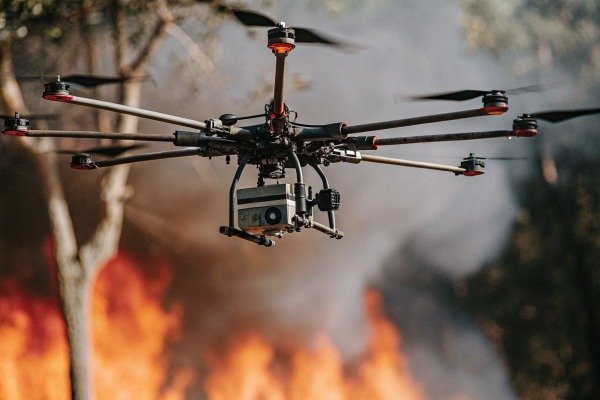
Suppliers often have an "inner circle" of trusted clients who get information first. You want to be in that circle. The best way to achieve this is by requesting to join a Customer Advisory Board (CAB). In these forums, we often share confidential 3-5 year strategic plans that are never released to the public. Being part of a CAB gives you a voice in the design process. If you need a specific quick-release mechanism for a fire retardant ball, a strong relationship allows you to influence the engineering pipeline to get that feature built.
The Power of Beta Programs
Don't wait for the official product launch. Negotiate entry into Beta Partner Programs. This allows your team to test pre-production units in real-world scenarios. Not only does this give you early access to technology, but it also ensures that the final product is compatible with your specific workflow. We often rely on feedback from these beta testers to calibrate our flight algorithms. If you are the one providing the data, the drone is effectively optimized for your specific environment.
Supply Chain Transparency as a Strategic Asset
In the current global climate, supply chains are volatile. supply chains 9 A transactional buyer finds out about a shortage when their order is delayed. A strategic partner finds out months in advance. You should demand "Supply Chain Health" reports. These reports analyze the availability of critical components like chipsets and high-performance magnets. If we know that a specific microcontroller is facing a global shortage specific microcontroller 10, we tell our strategic partners to stock up on spare parts immediately. This insider knowledge is invaluable for maintaining fleet readiness.
Benefits of Strategic Alignment
| Relationship Level | Access Type | Strategic Advantage |
|---|---|---|
| Standard Buyer | Public Website & Sales Rep | Receives information at the same time as competitors. Reactive. |
| Preferred Partner | Dedicated KAM & Quarterly Reviews | Gets priority on inventory and faster support. proactive maintenance. |
| Strategic Ally | Beta Program & Advisory Board | Shapes the product roadmap. Access to pre-market tech. First right of refusal on new stock. |
Conclusion
Regular communication transforms suppliers into strategic partners. By structuring reviews, demanding R&D transparency, and leveraging your relationship for early access, you secure fleet readiness and stay ahead in the rapidly evolving firefighting drone market.
Notes de bas de page
1. General definition of the core technical component mentioned. ︎
2. Official US government resource for international trade regulations. ︎
3. Authoritative source on battery technology and performance metrics. ︎
4. NFPA standard for thermal imagers used by fire services to ensure operational safety and performance. ︎
5. Background information on hydrogen fuel cell technology as an alternative energy source for drones. ︎
6. Official Department of Energy page explaining fuel cell technology. ︎
7. IEEE standard definition and methodology for calculating Mean Time Between Failures in electronic equipment. ︎
8. General background on SLAM technology used for navigating in GPS-denied environments. ︎
9. Government standards for managing supply chain risks. ︎
10. Product documentation for industrial microcontrollers used in flight controllers and drone systems. ︎

 English
  Spanish
  German
  French
  Dutch
Dutch  Arabic
