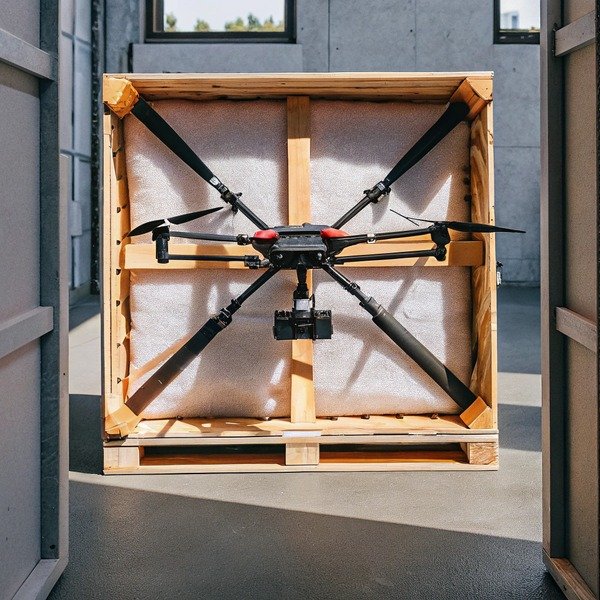
Watching a fifty-thousand-dollar octocopter leave our Xi’an testing facility is satisfying, but knowing it faces a turbulent journey to the U.S. creates anxiety about potential shipping damage. If that specialized thermal payload arrives shattered, vague agreements can leave you holding a very expensive bill.
You determine supplier liability by strictly defining Incoterms in your purchase agreement, which dictate exactly when risk transfers from us to you DDP (Delivered Duty Paid) (livrés droits acquittés) 1. Additionally, specific contract clauses regarding packaging standards, impact indicators, and insurance coverage requirements explicitly clarify who pays for repairs if your firefighting drone arrives broken.
Let’s break down the specific mechanisms—from legal terms to physical sensors—that protect your investment during transport.
How do Incoterms determine who is liable for drone damage during international shipping?
We often see confusion when US clients request quotes without realizing how three letters can shift the financial burden of a smashed gimbal entirely onto their budget. If the terms aren’t clear before the shipment leaves our loading dock, resolving a claim becomes nearly impossible.
Incoterms legally define the precise geographic point where risk transfers from the seller to the buyer. Under under Incoterms rules 2 EXW (Ex Works), you assume full liability once the drone is picked up from our factory. Conversely, DDP (Delivered Duty Paid) holds the supplier responsible until the unit reaches your door, meaning we cover any transit damage.
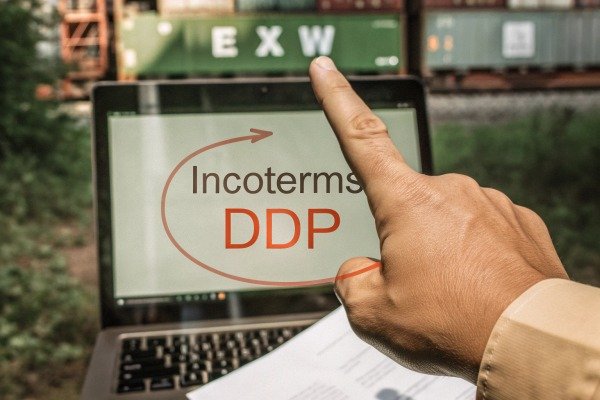
The Risk Transfer Point
In the world of international trade, the transfer of risk 3 "transfer of risk" is the most critical concept for a procurement manager to understand. When we export our SkyRover units to Europe or the United States, the Incoterm selected effectively draws a line on the map. Before the goods cross that line, any damage—whether it is a crushed landing gear or water damage from a leaking container—is our problem. After the goods cross that line, it becomes your problem.
Many buyers assume that because they paid us for the product, we are responsible until it arrives. This is a dangerous misconception. If you agree to FOB (franco à bord) Shenzhen, our liability ends the moment the crate is lifted onto the ship or loaded onto the aircraft. If the crate is dropped five minutes later by the stevedores, you are liable for the loss. Given the delicate nature of firefighting avionics, this gap in coverage can be financially devastating.
Why DDP is Safer for Buyers
For high-value equipment like our firefighting drones, we often recommend DDP (Delivered Duty Paid) (livrés droits acquittés) ou DAP (Delivered at Place) for our clients who want to minimize risk. Under DDP, we, as the manufacturer, bear all risks and costs, including shipping, insurance, and duties, until the drone is delivered to your specified location.
If a forklift driver at the Port of Los Angeles punctures the crate, we have to replace the unit because the risk has not yet transferred to you. This incentivizes us to use the highest quality logistics partners and packaging materials. However, keep in mind that DDP quotes will be higher because we are pricing in that risk and the insurance premiums.
The Hidden Danger of Ex Works (EXW)
On the other end of the spectrum is EXW (Ex Works). We see many distributors request this to save money on freight by using their own forwarders. While this gives you control over the logistics, it places 100% of the liability on you from the moment the goods leave our factory floor in China. If the truck carrying your drones gets into an accident on the way to the airport in Shanghai, you still owe us the full payment for the goods. For complex machinery like industrial drones, EXW is rarely the best choice unless you have a highly sophisticated logistics team.
Comparison of Liability by Incoterm
To help you decide which term offers the protection you need, here is a breakdown of the three most common terms we use:
| Incoterm | Point de transfert de risque | Buyer Liability for Damage | Manufacturer Liability for Damage |
|---|---|---|---|
| EXW (Ex Works) | Manufacturer's Factory | High. Buyer is liable for everything from the factory loading dock onwards. | None. Once picked up, we have no responsibility for transit damage. |
| FOB (franco à bord) | Port of Origin (Export) | Medium. Buyer is liable once goods are loaded on the vessel/plane. | Limited. We are only liable for damage occurring during transport to the export port. |
| DDP (Delivered Duty Paid) (livrés droits acquittés) | Buyer's Destination | None. Buyer is only liable after successful delivery and unloading. | High. We remain liable for all damage until the goods arrive at your facility. |
What specific terms should I include in the contract to define the supplier's responsibility for breakage?
Standard contracts rarely cover the sensitive calibration of thermal cameras, so relying on generic templates often leaves you with a non-functional unit and no recourse. We encourage clients to be specific, as vague language about “good condition” is open to interpretation once a dispute arises.
Your contract must specify packaging standards, such as Mil-Spec crating, and mandate the use of impact indicators 4 ShockWatch sensors to detect mishandling. Include a “Conditional Acceptance” clause that delays final sign-off until a successful power-on and hover test is completed, ensuring internal sensors are fully functional despite pristine exterior packaging.
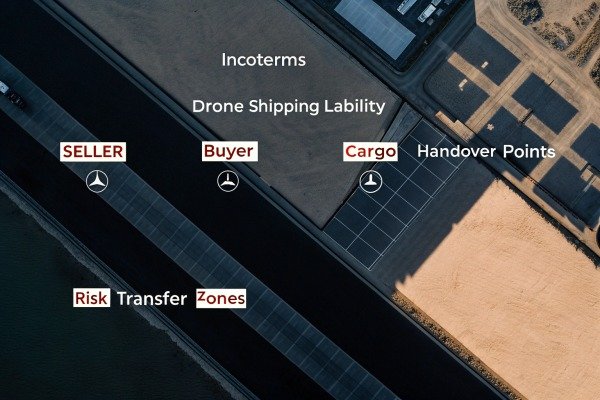
Packaging Specifications as a Legal Requirement
When we draft contracts with our experienced partners, they don't just ask for "safe packaging." They define the packaging engineering. Firefighting drones carry heavy optical payloads and fragile gimbals. If a contract only states "standard export packaging," and the drone arrives with a drift in the IMU (Inertial Measurement Unit) due to vibration Unité de mesure inertielle 5, it is difficult to prove the supplier was negligent.
You should include a clause requiring custom-cut high-density foam (EVA) et hard-shell flight cases rather than just cardboard and bubble wrap. The contract should explicitly state: "Supplier is liable for any damage resulting from packaging that fails to meet ATA 300 Category 1 standards." This shifts the burden of proof. If the drone breaks, and we didn't use the specified case, we are automatically at fault for breach of contract, regardless of how the carrier handled it.
The "ShockWatch" Mandate
One of the most effective ways to pin liability on the supplier (or their carrier) is to contractually mandate the use of impact indicators like ShockWatch ou TiltWatch labels on the exterior of the crate. These stickers turn red if the crate is dropped or tilted beyond a certain degree.
Your contract should state: "If the ShockWatch indicator is triggered upon arrival, the goods are presumed damaged, and the Supplier retains liability until a full diagnostic is performed." This prevents the "he-said-she-said" scenario. If the sticker is red, we have to prove the drone isn't broken, rather than you proving it is.
Conditional Acceptance and "Power-On" Clauses
A major issue with industrial drones is that they can look perfect on the outside but have internal damage. A drop might not crack the carbon fiber frame but could shatter the ceramic core of a thermal sensor or detach a soldered connection on the flight controller.
Standard shipping terms often imply that signing the delivery receipt constitutes "acceptance" of the goods. You must override this with a Conditional Acceptance Clause. This clause should state that acceptance of the goods (and the transfer of liability for hidden defects) only occurs after a "Power-On Self-Test" (POST) and a successful hover test performed within 48 to 72 hours of delivery. This gives your engineering team time to verify that the avionics are calibrated and the motors are spinning correctly before you legally "accept" the shipment.
Essential Clauses for High-Value Drone Contracts
| Clause Name | Objectif | Consequence of Omission |
|---|---|---|
| Packaging Compliance | Defines exact materials (e.g., Hard Case, EVA Foam). | Supplier may use cheap cardboard; damage is harder to blame on negligence. |
| Impact Indicator Mandate | Requires ShockWatch/TiltWatch stickers. | No visual proof of rough handling; harder to claim concealed damage. |
| Conditional Acceptance | Delays liability transfer until functional testing. | Signing the delivery receipt might waive your right to claim internal electronic damage. |
| RMA Logistics | Defines who pays for returning damaged goods. | Buyer might be stuck paying thousands to ship a broken drone back to China. |
Should I rely on the supplier's insurance or buy my own coverage for firefighting drone shipments?
While we insure our shipments, carrier policies often calculate payouts by weight, which is disastrously insufficient for lightweight, high-value carbon fiber avionics and optical payloads. Relying on the default coverage is a gamble that rarely pays off in the event of a total loss.
Relying solely on supplier-provided insurance is risky unless you verify their policy limits explicitly cover the full invoice value plus shipping costs. We recommend buyers secure their own “All-Risk” cargo Marine Cargo Insurance 6 insurance, as standard carrier liability is often capped by weight and ignores the high value of specialized payloads.
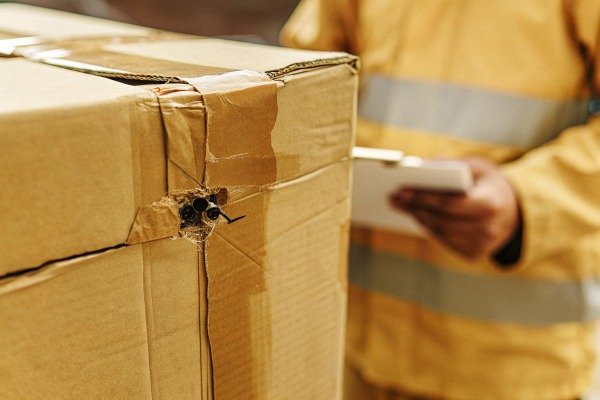
The Trap of Carrier Liability
There is a massive difference between "Carrier Liability" and actual Cargo Insurance. When we book a shipment through a major courier like DHL, FedEx, or a freight forwarder, their standard liability is often limited by international conventions (like the Montreal Convention 7 Montreal Convention for air freight).
This liability is typically calculated by weight, often around $20 to $25 per kilogram. Our firefighting drones are designed to be lightweight to maximize flight time. A complete system might weigh only 15 kilograms but cost $50,000. If the carrier loses or destroys that crate, their standard liability payout would be roughly $300 to $375. That covers perhaps one propeller blade, leaving you with a $49,600 loss. Never rely on the carrier's standard liability.
Supplier-Provided Insurance (CIF/CIP)
If you buy under CIF (coût, assurance et fret) terms, we are required to purchase insurance for the goods. However, under Incoterms rules, we are only required to purchase Institute Cargo Clauses (C), which provides minimum cover. This might cover catastrophic events like the plane crashing or the ship sinking, but it often excludes rough handling, theft, or water damage from rain.
As a buyer, if you agree to CIF, you should demand that the contract specifies Institute Cargo Clauses (A), which is "All-Risk" coverage. Furthermore, you need to verify the insured value. It should be 110% of the invoice value to cover the cost of the goods plus the freight and the administrative effort of replacing them.
Why You Should Control the Policy
For our professional clients in the US, we often suggest they purchase their own Marine Cargo Insurance policy (floating policy) that covers all their imports. This puts you in control. If a drone arrives damaged:
- Claim Speed: You deal with your own local broker, not a Chinese insurance company that might require documents in Mandarin or have different payout standards.
- Coverage Specifics: You can ensure the policy covers "delicate electronics" and "war/strikes" clauses, which are relevant in global logistics.
- Deductibles: You choose the deductible that makes sense for your cash flow.
If you rely on our insurance, and we have a dispute, the claim money goes to us first, and then we refund you. If you have your own insurance, the check goes directly to you, allowing you to re-order immediately without waiting for us to process the claim.
Insurance Payout Scenarios
| Scenario | Type de couverture | Estimated Payout on $50,000 / 15kg Drone |
|---|---|---|
| Standard Carrier Liability | Default courier/airline liability (Weight-based). | ~$350 (Calculated at ~$22/kg). Financial Disaster. |
| Supplier Minimum Insurance | Incoterm CIF Standard (Clauses C). | $0 (Unless the plane/ship crashed; rough handling not covered). |
| Buyer "All-Risk" Insurance | Institute Cargo Clauses A (Value-based). | $55,000 (110% of value). Full Recovery. |
What documentation do I need to submit to prove the supplier is at fault for transit damage?
When a client emails us about a broken arm on a hexacopter, the claim often fails immediately because the delivery receipt was signed without noting visible box damage. In the eyes of the law and insurance adjusters, if you didn’t document it at the moment of handover, it happened in your warehouse.
To prove supplier fault, you must submit high-resolution photos of the damage and the packaging immediately upon arrival. Crucially, note any box damage on the Bill of Lading before signing, and provide the serial numbers and triggered impact indicator readings to validate that the damage occurred during transit.
The Critical "Bill of Lading" Notation
The single most important step in proving liability happens on the receiving dock. Lettre de voiture 8 When the truck driver hands over the clipboard or tablet for a signature, your receiving staff must be trained to stop and inspect. If there is tous visible damage to the crate—a dent, a hole, a crushed corner, or even a missing strap—it must be written on the Bill of Lading (BOL) or Proof of Delivery (POD) before signing.
You should write: "Received with visible damage to exterior packaging. Subject to inspection." If you sign a "clean" BOL, you are legally stating the goods arrived in good condition. If you later open the box and find the drone crushed, the supplier and the carrier can claim you dropped it in your warehouse after delivery. A clean signature is the number one reason we see claims denied.
The Photographic Evidence Chain
If damage is found, you need to build a forensic case. We recommend a standardized photo protocol for our customers:
- The Wide Shot: Take a photo of the crate on the truck if possible, or immediately upon unloading.
- The Label: A clear photo of the shipping label and tracking number on the damaged box to prove it is the specific shipment in question.
- The Impact Indicators: A close-up of the ShockWatch or TiltWatch sensor. If it's red, photograph it.
- Layer-by-Layer Unpacking: Do not just rip the box open. Photograph the outer foam, the inner case, and then the drone itself. This proves that the internal packaging was (or was not) sufficient.
- The Damage: High-resolution macro photos of the specific breakages.
Serial Numbers and Data Logs
For high-tech products like our firefighting drones, physical damage isn't the only proof. We track every component by serial number. Your claim must list the serial number of the chassis, the flight controller, and the payload.
Furthermore, if the drone powers on but has errors, you should export the black box data logs (if accessible without voiding warranty) or screenshots of the ground control station showing IMU failure messages. This technical data proves that the issue is a hardware failure consistent with transit shock, rather than a user configuration error.
Handling Dangerous Goods (DG) Returns
One specific complication with firefighting drones is the Lithium Polymer (LiPo) batteries. Batteries au lithium-polymère (LiPo) 9 If the batteries are damaged in transit, do not attempt to ship them back. Damaged lithium batteries are classified as strictly prohibited hazardous materials. Damaged lithium batteries 10
Documentation here is vital. You must provide photos of the damaged battery casing. Based on this, we usually issue a credit or replacement without requiring the physical return of the battery, as shipping it back is illegal and dangerous. If you try to ship a swollen or punctured battery back to China and it catches fire on a plane, you (the shipper) are criminally liable. Always document battery damage and demand a "field destroy" authorization from the supplier.
Conclusion
Securing liability for firefighting drones requires clear Incoterms, robust contracts, and verified insurance. By enforcing strict documentation and inspection protocols, you protect your budget and ensure operational readiness. Don't leave your $50,000 investment to chance—define the terms before the propeller turns.
Notes de bas de page
1. Official definition of the Delivered Duty Paid rule from the International Chamber of Commerce. ︎
2. Comprehensive overview of international commercial terms used in global trade and logistics. ︎
3. Official ICC rules defining risk transfer points in international trade. ︎
4. Manufacturer of the specific ShockWatch and TiltWatch indicators mentioned. ︎
5. Technical explanation of inertial sensors used in drone navigation and stabilization systems. ︎
6. Industry guidance on the types and importance of marine cargo insurance for international shipping. ︎
7. Official IATA page explaining the international liability convention mentioned. ︎
8. Legal background on the bill of lading as a document of title and contract. ︎
9. Federal safety regulations and guidelines for the transport of lithium-based batteries. ︎
10. Official IATA guidance on shipping dangerous lithium battery cargo. ︎

 English
  Spanish
  German
  French
  Dutch
Dutch  Arabic
