
When we ship our heavy-lift firefighting drones from our facility in Xi’an to international clients, we understand the anticipation you feel. You have invested in high-performance equipment to save lives, but the complexity of port logistics can turn that excitement into anxiety. A delay at customs does not just cost money; it stalls your operational readiness. We ensure every unit leaving our factory is perfectly compliant, but your proactive involvement upon arrival is the final key to unlocking a smooth delivery.
To ensure smooth customs cooperation, immediately provide your broker with accurate Commercial Invoices and Packing Lists that match the physical cargo. Respond quickly to requests for technical datasheets regarding dual-use dual-use technologies 1 technology and ensure all battery certifications (UN38.3) are accessible for hazardous materials verification.
Here is a guide to navigating the specific inspection procedures you will face when your equipment touches down.
What documentation must I prepare to ensure a smooth customs inspection for my firefighting drones?
We often see shipments get held up simply because the paperwork does not mirror the precision of our engineering. In our experience exporting to the US and Europe, a single digit error on a serial number list can trigger a full audit. You want to avoid this scrutiny by having your document package ready before the vessel even docks.
You must prepare a precise Commercial Invoice, a detailed Packing List, and the Bill of Lading. Additionally, include the manufacturer’s End-User Statement and technical datasheets to prove the drones are for civil emergency use, preventing misclassification under military or dual-use export controls.
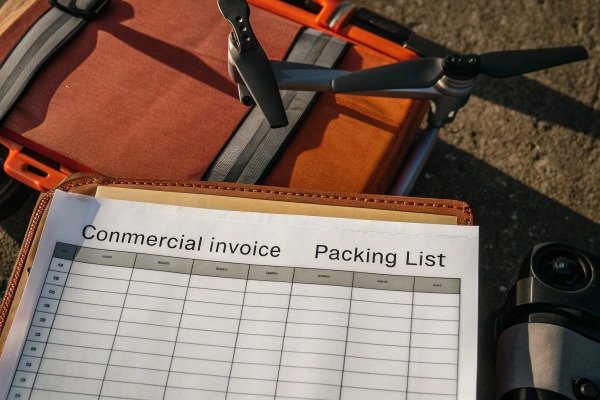
The Foundation of Clearance: Core Documents
When your firefighting drone arrives, customs officers do not see the advanced flight controller or the sturdy X-shaped landing gear immediately. They see paper. Your primary line of defense against delays is the accuracy of three core documents: the Commercial Invoice, the Packing List, and the Bill of Lading.
The Commercial Invoice must be exhaustive. It cannot simply say "Drone." It should list the specific model (e.g., SkyRover SR-Series), the country of origin, and a breakdown of the value of the airframe, the gimbal, and the ground control station. Customs officers use this to assess duties. If the value seems artificially low or vague, they will flag the shipment for valuation review.
The Packing List must match the physical reality of the pallet exactly. If we ship a unit with a bright orange, ribbed central body and four black propeller arms, the packing list should verify the presence of these specific components. Discrepancies here are the most common cause of "intensive exams," where officers physically unload the container to count boxes.
Proving Civil Use and Classification
Firefighting drones occupy a complex regulatory space. They are powerful machines that share technology with military equipment. To clear customs quickly, you must prove the intended use is strictly civil.
You should prepare an End-User Statement (EUS). End-User Statement (EUS) 2 This document, signed by your organization, declares that the equipment will be used solely for fire suppression, search and rescue, or agricultural applications. It explicitly states the drone will not be used for tactical military operations or re-exported to sanctioned entities.
Furthermore, correct classification is vital. You need to provide your broker with the correct Harmonized System (HS) code. Harmonized System (HS) code 3 For most unmanned aircraft, this falls under heading 8806. Using the wrong code to get a lower duty rate is a serious offense that can lead to fines and seizure.
H3 – Essential Documentation Checklist
We have compiled a list of documents you should have on hand to prevent common inspection triggers.
| Nom du document | Objectif | Détail critique à vérifier |
|---|---|---|
| Facture commerciale | Évaluation et estimation des droits | Ensure values for the drone, payload, and batteries are itemized separately if required. |
| Liste de colisage | Physical Verification | Must match the Bill of Lading and actual cargo count exactly (gross vs. net weight). |
| End-User Statement | Export Control Compliance | Explicitly state "Civil Use Only" (Firefighting/Rescue) to avoid dual-use holds. |
| Fiche technique | Product Classification | Include specs for thermal cameras (Hz rate) and transmission range. |
| Lettre de voiture | Title and Transport | Consignee details must match your importer registration perfectly. |
By having these documents digitized and sent to your broker days before arrival, you shift the process from reactive to proactive. This preparation allows officers to "pre-clear" the paperwork, meaning the physical inspection—if required—is just a formality rather than an investigation.
How should I handle questions from customs regarding the technical certifications and compliance of my imported drones?
Our engineers spend months testing radio transmission modules to ensure they meet global standards. However, customs officers are not engineers; they are enforcers. When they see a powerful transmitter, they will ask questions about frequency legality. You need to bridge this gap by having the right technical answers ready immediately.
Submit valid FCC or CE certifications immediately to prove your drone’s radio transmission frequencies are legal. For thermal imaging components, provide technical specifications confirming they meet civil use standards, and ensure you have an NDAA compliance statement if the buyer is a government entity.
Navigating Radio Frequency Regulations
The most frequent technical question customs will ask concerns the radio frequencies used by the drone's remote controller and data link. In the United States, the Federal Communications Commission (FCC) regulates these devices. Federal Communications Commission (FCC) 4 In Europe, it is the CE RED (Radio Equipment Directive).
When we manufacture the SkyRover units, we affix a label with the FCC ID or CE mark on the chassis. However, during a paperwork inspection, the officer cannot see the drone. You must provide a digital copy of the Grant of Equipment Authorization. If the officer suspects the drone operates on a restricted military frequency, they will hold the shipment. You must definitively prove that the device operates on standard industrial bands (like 2.4 GHz or 5.8 GHz) and falls within legal power transmission limits.
Addressing Dual-Use Concerns
Firefighting drones often carry high-tech payloads, such as thermal imaging cameras. thermal imaging cameras 5 These cameras are sensitive items. Customs authorities, particularly in the US and EU, monitor "dual-use" technologies—items that have both civil and military applications.
A thermal camera with a frame rate higher than 9Hz or 30Hz may be subject to strict export controls (like the Wassenaar Arrangement). Wassenaar Arrangement 6 Wassenaar Arrangement 7 If customs asks about the camera, you cannot just say "it's for finding hot spots." You must provide a specific technical datasheet showing the sensor resolution, frame rate, and manufacturing origin. If the camera is subject to restrictions, you will need to produce an export license from the supplier country or an import permit.
H3 – Handling Specific Technical Inquiries
When customs sends a "Request for Information" (CBP Form 28 in the US), it often targets specific technical capabilities. Here is how to respond.
| Inquiry Type | Common Customs Question | How You Should Respond |
|---|---|---|
| Radio Transmission | "Does this device interfere with protected emergency frequencies?" | Submit the FCC Grant or CE Declaration of Conformity showing allowed bands. |
| Thermal Payload | "Is this camera military-grade or subject to ITAR/EAR?" | Provide the sensor datasheet proving it meets civil export specifications (e.g., <60Hz uncooled). |
| Data Security | "Does this drone transmit data to unauthorized foreign servers?" | Provide a data security statement confirming local data storage (SD card) and no auto-cloud upload. |
| Origin of Parts | "Does this unit contain prohibited microchips?" | Supply a certificate of origin for key components if facing specific trade sanctions (e.g., NDAA section 889). |
Data Security and Government Procurement
For our clients procuring on behalf of government fire departments, questions about data security are becoming standard. Customs may ask if the drone hardware is compliant with bans on certain foreign telecommunications equipment (like Section 889 in the US). Section 889 8
Even if we are a Chinese manufacturer, our international models are often designed to operate offline to meet these security needs. You should be prepared to explain that the drone system is a "closed loop," meaning it does not automatically connect to the internet or transmit flight logs to external servers without user action. Clarifying this upfront can alleviate concerns about national security risks, which is a major bottleneck for government imports.
What specific procedures do I need to follow if customs requests a physical examination of the drone batteries?
We pack our high-capacity lithium batteries with extreme care, ensuring they are isolated and fire-proof. Yet, we know that the “Class 9 Dangerous Goods” label on the box Classe 9 Marchandises dangereuses 9 is a magnet for inspectors. If they flag your shipment for a battery check, you must know exactly how to manage the safety protocols to avoid costly rejection.
When a physical exam occurs, provide the UN38.3 test summary and the Material Safety Data Sheet (MSDS) for the lithium batteries. Ensure the batteries are packed in separate dangerous goods containers with correct labeling, and authorize your broker to facilitate the safe opening of hazardous cargo.
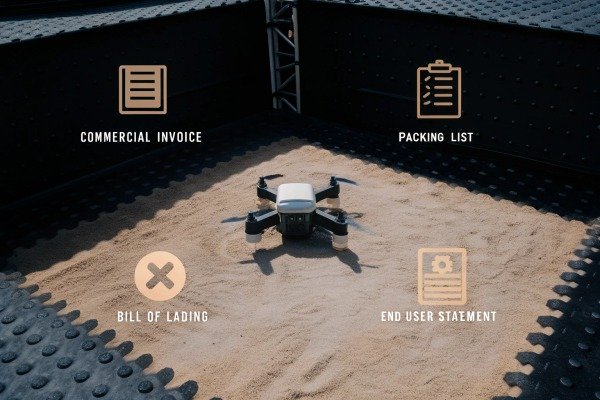
Understanding the Hazardous Materials (HazMat) Hold
Lithium-ion batteries are the lifeblood of your firefighting drone, but to port authorities, they are a potential fire hazard. Large industrial drone batteries exceed the standard 100 Watt-hour (Wh) limit, placing them in a stricter regulatory category.
When customs requests a physical exam, they are looking for three things: damage, correct labeling, and undeclared excess. If the batteries are installed à l'intérieur the drone, the regulations differ (UN3481) compared to batteries packed séparément (UN3480). Our standard procedure is often to pack batteries separately to ensure safety, which requires distinct Class 9 labeling on the outer carton.
If an exam is called, do not panic. It is routine. However, you must ensure that the warehouse personnel performing the exam have the MSDS (Material Safety Data Sheet). This document tells them how to handle a leak or fire. If this document is missing, the port may refuse to open the container, leading to instant demurrage fees.
The UN38.3 Test Summary
Since 2020, a new requirement has tightened inspections: the UN38.3 Test Summary. UN38.3 Résumé du test 10 This is not just a safety certificate; it is a mandatory document that proves the battery design has passed rigorous shock, vibration, and short-circuit tests.
Customs officers verify that the battery model number on the physical casing matches the model number on the UN38.3 report. We ensure these match perfectly before leaving our factory. If you, as the importer, cannot produce this summary within hours of the request, the cargo will sit. You should keep a digital copy of this test summary on your phone or laptop whenever a shipment is inbound.
H3 – Physical Examination Protocols
During a physical inspection, you are generally not allowed to be present. The "exam site" is a secure zone. You must rely on your instructions to the broker.
- Do Not Attempt to Open: Never try to open the container yourself at the port.
- Label Visibility: We place the "Class 9" diamond label and the cargo aircraft only label on the side of the box facing the door.
- Watt-Hour Markings: The physical battery case must have the Watt-hour rating printed on it. Inspectors will read this. If it rubs off or is missing, the battery is deemed non-compliant.
| Facteur de risque | Customs Action | Prevention Strategy |
|---|---|---|
| Missing UN38.3 Summary | Indefinite Hold / Rejection | Request the test summary from us (the manufacturer) before the ship sails. |
| Damaged Packaging | Immediate HazMat Incident Report | Ensure we use reinforced, UN-rated fiberboard boxes (4G) for shipping. |
| Undeclared Spare Batteries | Seizure and Fines | Ensure the Packing List explicitly counts every single battery, including spares. |
| Incorrect Labeling | Shipment Returned to Origin | verify photos of the pallet labeling before it leaves the factory in China. |
By treating the batteries as the most sensitive part of your shipment, you align with the customs officer's priority: safety. A well-documented HazMat shipment clears faster than a vague one because it reassures the officer that the risk is managed.
How can I effectively coordinate with my freight forwarder to address unexpected customs inquiries about the shipment?
We advise every client to treat their freight forwarder not just as a courier, but as a strategic partner. When our logistics team hands over the cargo in Chengdu or Xi’an, we lose direct control. From that point on, your forwarder is your eyes and ears. If they remain silent during a crisis, your project fails.
Establish a predefined communication protocol with your forwarder and customs broker before the ship arrives. Grant them Power of Attorney to answer routine questions on your behalf, and ensure they have 24/7 access to your technical team for clarifying specific payload capabilities or software versions.
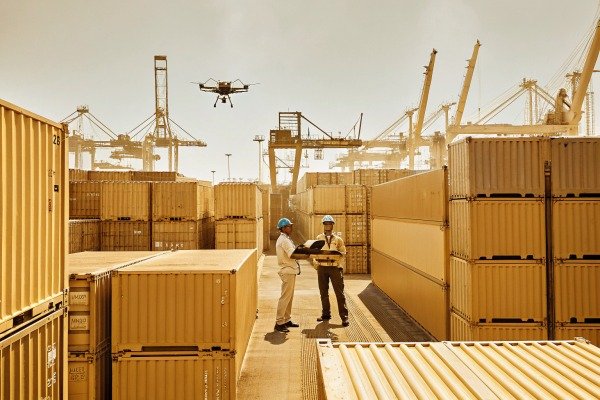
The Triangle of Communication
Successful customs clearance relies on a communication triangle between You (the Importer), Us (the Manufacturer), and the Freight Forwarder/Broker. The breakdown usually happens when the forwarder receives a "Notice of Action" from customs but waits 24 hours to tell you. In port logistics, 24 hours can mean hundreds of dollars in storage fees.
You must instruct your forwarder to notify you immediately upon any status change. Do not accept "still processing" as an answer. Ask for the specific status code. If there is a hold, ask for the "Hold Code." A code for "USDA Agriculture Hold" (checking for bugs in the wood pallet) requires a totally different response than a "CBP Intensive Exam" (security check).
Empowering Your Broker with Power of Attorney
To speed up the process, you must grant your customs broker a Customs Power of Attorney (POA). This legal document allows them to sign documents and make declarations on your behalf. Without it, they have to email you for a signature for every minor correction, wasting hours.
However, a POA does not mean you can check out. You need to equip your broker with a "Cheat Sheet" about your product. This sheet should explain in simple English what the drone does. For example: "This is a civil firefighting tool. It sprays water. It takes pictures. It uses standard batteries." This simple language helps the broker explain the product to an officer who might otherwise think it is a military weapon.
H3 – Troubleshooting Common Delays
Unexpected inquiries are inevitable. The difference between a 2-day delay and a 2-week delay is how you coordinate the response.
| Scenario | Forwarder's Role | Your Role | Manufacturer's Role (Us) |
|---|---|---|---|
| Value Discrepancy | Alert you to the "Request for Information" (CF 28). | Provide proof of payment (wire transfer receipt) to prove transaction value. | Provide the original commercial invoice and sales contract. |
| Missing HS Code | Ask for product description to determine classification. | Provide the specific HS code (e.g., 8806.22) and description. | Confirm technical specs (weight, payload) to support the code. |
| Wood Packaging Hold | Coordinate with port for fumigation check. | authorize costs for the exam immediately. | Ensure all pallets used were ISPM-15 heat-treated and stamped. |
| X-Ray Anomaly | Schedule the container for Non-Intrusive Inspection (NII). | Wait patiently; do not harass the officer. | Explain the density of the object (e.g., "That dense block is the motor magnet"). |
The "Arrival Notice" is Your Trigger
The most critical moment is when your forwarder sends the Arrival Notice. This usually happens 3-5 days before the vessel docks. Do not just file this email away.
This is your signal to verify that the ISF (Importer Security Filing) was filed correctly (for US imports) and that the entry summary is ready. Ask your forwarder: "Are there any flags on the manifest?" If they say yes, you have 3 days to fix it before the boat lands. Being proactive here prevents the goods from ever going into the costly "General Order" warehouse.
Conclusion
Cooperating with customs is not about passivity; it is about active, precise management of information. From ensuring your Commercial Invoices match the physical reality of our orange-ribbed drones, to having UN38.3 battery summaries ready for immediate inspection, your preparation dictates the speed of delivery. By coordinating closely with your freight forwarder and keeping technical proofs like FCC certifications on hand, you transform a potential logistical bottleneck into a seamless step toward deploying your fleet. We build the drones to perform in emergencies; you must build the documentation to perform at the port.
Notes de bas de page
1. General background on the concept of technologies with both civil and military applications. ︎
2. Official guidance on End-User Statements for export compliance. ︎
3. Official definition from the World Customs Organization. ︎
4. Official website of the US regulator for radio frequencies. ︎
5. Technical explanation of thermal imaging technology from a leading industry manufacturer. ︎
6. Official site of the international export control regime. ︎
7. Official site for the multilateral export control regime for dual-use goods and technologies. ︎
8. News coverage regarding the implementation of Section 889 restrictions on Chinese telecommunications equipment. ︎
9. Authoritative IATA regulations for shipping dangerous goods by air. ︎
10. IATA provides the global standards for shipping lithium batteries, including UN38.3 requirements. ︎

 English
  Spanish
  German
  French
  Dutch
Dutch  Arabic
