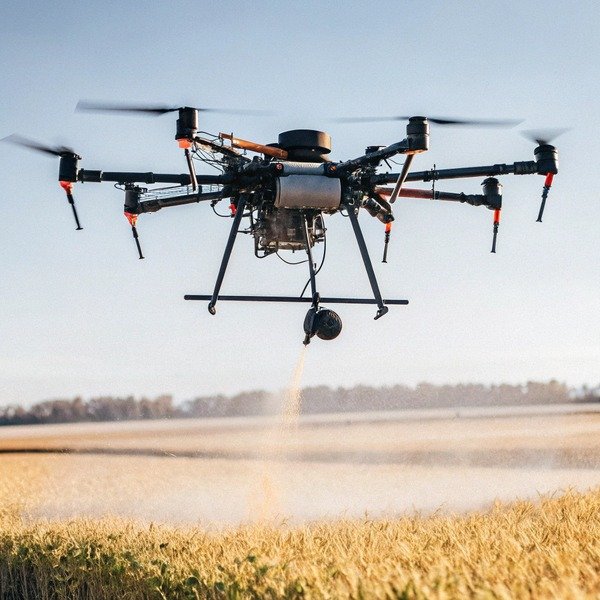
When our engineering team tests new flight controllers at our Xi’an facility, we often find that on-paper specifications do not always translate to field performance. Precision agriculture relies entirely on accuracy Precision agriculture 1; if your drone cannot adjust its flow rate instantly based on prescription maps, you are wasting chemicals and risking crop health.
To verify VRA effectiveness, you must conduct static flow calibration tests to match meter flow meter 2 readings with actual output and perform dynamic field flights using water-sensitive paper over zone boundaries. Additionally, verify response latency by analyzing log files against prescription maps to ensure the drone reacts to rate changes within acceptable distance limits.
Testing these systems requires a methodical approach to ensure hardware and software work in perfect synchronization.
What specific field tests should I conduct to measure the flow rate accuracy of the drone?
We advise our clients to look beyond the brochure numbers because fluid dynamics change drastically under field conditions compared to lab benches. If the flow rate data on your controller does not match reality, your entire yield analysis will be flawed.
You should perform a static bucket test to confirm that the physical volume discharged matches the digital flow meter reading over a set time. Follow this with a dynamic “step-response” test, flying the drone across a sharp transition zone to measure the distance required for the flow rate to stabilize at the new target level.
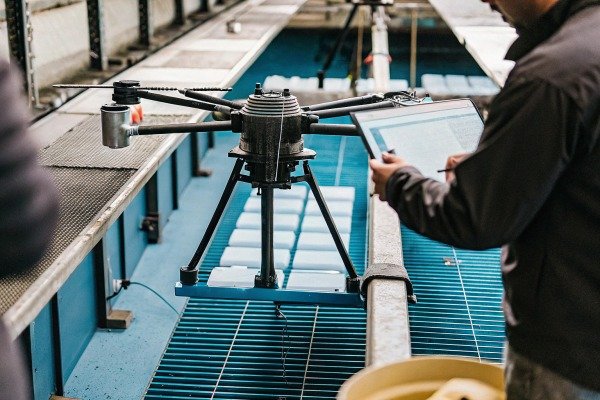
Static and Dynamic Verification Protocols
Verifying flow rate accuracy is the foundation of trust in any variable rate application (VRA) system. In our factory testing protocols, we separate this into two distinct phases: static calibration and dynamic response. Many buyers skip the dynamic phase, which is a critical mistake. A pump might be accurate when hovering in place but fail to adjust quickly when the drone is moving at 6 meters per second.
The Static Bucket Test
This is the baseline test. You need to verify that the digital brain of the drone knows exactly how much liquid is leaving the tank.
- Setup: Place the drone on a level surface. Remove the propellers for safety.
- Collection: Place measuring beakers under each nozzle.
- Execution: Command the drone to spray at a specific rate (e.g., 2 liters per minute) for exactly 60 seconds.
- Verification: Compare the total liquid collected in the beakers against the "total volume sprayed" shown on the remote controller or flight app.
- Tolerance: In our high-end SkyRover models, we aim for a deviation of less than ±2%. If you see a deviation greater than 5%, the flow meter requires calibration, or the pump voltage curves are incorrect.
The Dynamic Step-Response Test
This test measures "lag." In precision agriculture, lag equals missed weeds or untreated crop zones. Create a test map with two distinct zones: Zone A (0 flow) and Zone B (Maximum flow).
- Flight Path: Program the drone to fly from Zone A into Zone B at operational speed.
- Observation: Use a separate camera drone or ground observer to mark exactly where the spray begins.
- Measurement: Measure the distance from the digital boundary line to the physical start of the spray.
- Calculation: If the drone flies at 5 m/s and the spray starts 2 meters past the line, you have a 0.4-second system latency. Lower is always better.
Analyzing Flow Stability
It is not enough for the flow to just turn on. It must be stable. We often see pumps that "pulse" or oscillate when trying to hold a specific low flow rate. This causes striping in the field.
Comparison of Testing Methods
The following table outlines the differences between standard calibration and the advanced verification you should require.
| Test Method | Objective | Target Metric | Panneau d'avertissement |
|---|---|---|---|
| Static Bucket Test | Verify volumetric accuracy | ±2% volume deviation | Pump produces different volumes at same voltage |
| Step-Response Test | Measure system latency | < 1 second response time | Spray starts >3 meters past zone boundary |
| Ramp Test | Check linearity | Smooth transition | Pump "stutters" or surges during rate increase |
| End-of-Tank Test | Check low-liquid performance | Consistent pressure | Pressure drops significantly before tank is empty |
How do I confirm that the flight control software accurately interprets my prescription maps?
We have spent years refining our software SDKs to ensure compatibility with global standards global standards 3, yet we still see users struggling with data formats. A prescription map is useless if the drone’s flight controller “translates” the data incorrectly or simplifies the zones too aggressively.
Confirm accuracy by comparing the “as-applied” data logs generated by the drone after a flight against the original prescription map to identify spatial mismatches. Ensure the software natively reads standard shapefiles or ISOXML without data corruption and verify that coordinate systems like WGS84 are perfectly aligned to prevent zone shifting.
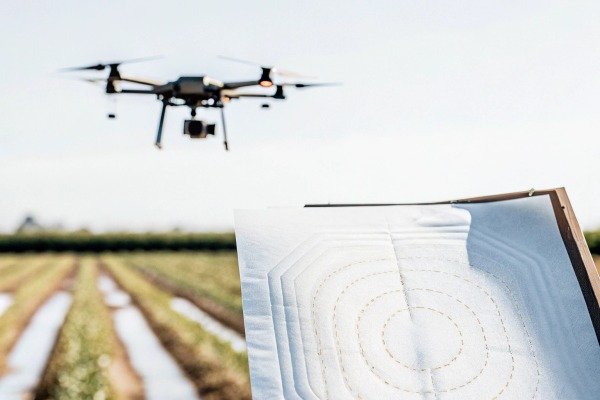
validating the Digital Workflow
The bridge between your agronomist’s computer and the drone’s nozzle is the software. Even the most robust hardware fails if the instructions are garbled. When we collaborate with US software developers, we emphasize that the "As-Applied" map is the ultimate truth source.
The "As-Applied" Map Comparison
Most professional agricultural drones generate a log file during flight. This file records the GPS position, altitude, speed, and actual flow rate at every second (or millisecond).
- Export the Log: After the flight, pull the log file from the drone.
- Overlay Data: Import this log into your GIS software (like QGIS or SMS Advanced).
- Visual Check: Overlay the flight path points on top of your original prescription map.
- Discrepancy Analysis: Check if the flow rate changes happened exactly at the polygon borders. A common software bug is "look-ahead" failure, where the drone waits until it is à l'intérieur the zone to calculate the new rate, rather than pre-calculating it.
File Format Integrity
Different drones prefer different file flavors. The industry standard is shifting towards ISOXML, but many legacy systems use Shapefiles legacy systems use Shapefiles 4 (.shp).
- Polygon Complexity: We have seen flight controllers crash or freeze when a prescription map has too many small polygons (high resolution). Stress test the system by uploading a complex map with hundreds of small zones.
- Coordinate Systems: Ensure the drone software automatically handles coordinate projection. If your map is in a local datum (like NAD83) and the drone expects WGS84, your spray zones could be shifted by several meters.
H3: Troubleshooting Software Latency
Software processing time contributes to total system lag. If the CPU is overloaded processing obstacle avoidance data, it might delay sending the signal to the pump.
- Tip: Try a "dry run" simulation. Many advanced ground station software options allow you to simulate the flight on the computer screen. Watch the virtual flow rate. Does it change instantly as the virtual drone crosses a line? If it lags in the simulation, it will definitely lag in the field.
Common Software Integration Errors
| Error Type | Symptôme | Root Cause | Solution |
|---|---|---|---|
| Zone Shifting | Spray occurs parallel to the target zone but offset by meters | Coordinate System Mismatch | Standardize all maps to WGS84 before upload |
| Data Smoothing | Small variation zones are ignored or averaged out | Aggressive Simplification Algorithm | Adjust software settings to "High Precision" mode |
| Rate Stepping | Flow changes in large jumps rather than smooth gradients | Low Resolution DAC | Check flight controller hardware specs |
| Boundary Lag | Spray starts late entering a zone and stops late leaving it | Look-Ahead Failure | Increase "Look-Ahead Time" setting in software |
Which hardware components are critical for ensuring rapid response times in variable spraying?
In our supply chain management, we select components specifically to minimize the delay between an electronic signal and physical action. A standard water pump is often too sluggish for the split-second adjustments required in modern precision farming modern precision farming 5.
The critical components are high-frequency PWM solenoid valves effectively placed near the nozzles, brushless magnetic drive pumps that allow for rapid RPM changes, and high-precision turbine flow meters. These elements work together to ensure that pressure stabilizes instantly when the software commands a rate change.
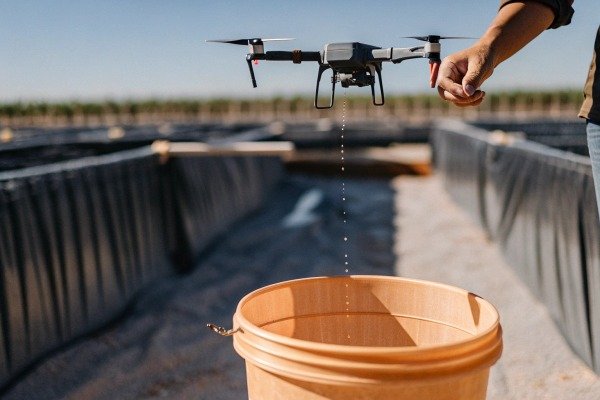
The Hardware Behind the Precision
You cannot fix hardware latency with software updates. When evaluating a drone for VRA, you must inspect the plumbing. The distance between the valve and the nozzle, the type of pump, and the control method all dictate performance.
Solenoid Valves vs. Pump Control
There are two ways to control flow:
- Pump Control: Speeding up or slowing down the pump motor. This is simple but slow. It takes time for a motor to spin down. This is often acceptable for blanket spraying but poor for VRA.
- Valve Control (PWM): The pump runs at a constant pressure, and fast-acting solenoid valves at the nozzles solenoid valves 6 open and close rapidly (Pulse Width Modulation) to control the output Pulse Width Modulation 7. This is the gold standard for high-speed VRA.
- Why it matters: If your map has small zones (e.g., spot spraying weeds), you need PWM valves. They can switch from 0% to 100% flow in milliseconds. Pump control systems may take 1-2 seconds to stabilize.
The Role of Flow Meters
A flow meter acts as the "eyes" of the spray system.
- Turbine Meters: Common and effective, but they can get clogged with thick suspensions.
- Electromagnetic Meters: More expensive but contain no moving parts and are instant.
- Placement: The closer the flow meter is to the nozzles, the more accurate the reading. If the meter is near the tank and the hose is 2 meters long, the "measured" fluid hasn't actually left the drone yet.
Pump Technology
We utilize brushless diaphragm pumps in our SkyRover series. Brushed motors wear out quickly under the constant RPM changes of VRA. Brushless motors offer finer torque control, allowing the flight controller to make micro-adjustments to pressure without overheating the system.
Thermal Stability in VRA
Variable rate application is hard on hardware. Rapidly pulsing valves generate heat.
- The Stress Test: Run the system at variable rates for 20 minutes continuously on the ground. Touch the solenoid valves (carefully). If they are too hot to touch, they may fail mid-flight or stick in the open/closed position.
- Voltage Sag: Rapid pump acceleration draws high current. Check if the drone's battery voltage sags significantly during aggressive flow increases. This indicates a weak power distribution unit.
Component Checklist for VRA Readiness
| Composant | Entry-Level Standard | Professional VRA Standard | Why Upgrade? |
|---|---|---|---|
| Pump Motor | Brushed DC | Brushless (BLDC) | Faster RPM response and longer lifespan |
| Flow Control | Pump Speed Only | PWM Solenoid Valves | Instant start/stop and precise rate control |
| Flow Meter | Paddle Wheel | High-Freq Turbine or Mag | Higher data resolution for the flight controller |
| Nozzles | Ventilateur plat standard | Air Induction / PWM Ready | Compatible with pulsing flow without pattern collapse |
How can I evaluate the uniformity of droplet distribution under different flight speeds?
We constantly test aerodynamic interactions in our development phases because rotor rotor downwash 8 downwash fundamentally changes how droplets rotor downwash 9 land. Speed is the enemy of uniformity; as the drone accelerates, the relationship between downwash and wind shear shifts, potentially ruining coverage.
Evaluate uniformity by placing water-sensitive paper at fixed intervals across the flight path and flying at varying speeds while maintaining a constant application rate. Analyze the papers to calculate the Coefficient of Variation (CV); a CV below 15% indicates excellent uniformity, while anything above 30% suggests poor coverage stability.
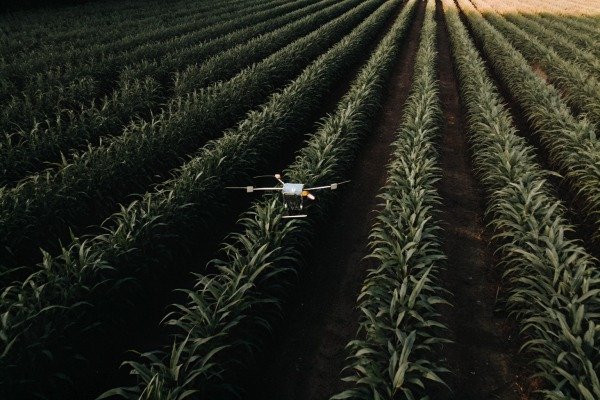
Mastering the Coefficient of Variation (CV)
Uniformity is challenging because agricultural drones are not ground sprayers; they create their own weather system (downwash). When the drone moves faster, the "curtain" of air protecting the spray weakens.
The Speed vs. Pressure Paradox
In a VRA system, if the drone speeds up, it must increase the flow rate to keep the dosage (Gallons Per Acre) constant.
- Le problème : Increasing flow usually means increasing pressure. Higher pressure creates smaller droplets (fines).
- Le risque : Small droplets are prone to drift. Conversely, if the drone slows down, pressure drops, and droplet size increases, potentially leading to poor coverage or "streaking."
- Verification: You need to confirm that the drone maintains a consistent droplet spectrum even when the flow rate changes. This is where PWM nozzles shine—they can change flow without changing pressure.
Field Testing Methodology
To visualize this, you need a physical medium.
- Layout: Arrange water-sensitive papers in a line perpendicular to the flight path. Use a spacing of 50cm for a total width of 10 meters.
- Flight 1 (Slow): Fly at 3 m/s with a target rate of 1 GPA.
- Flight 2 (Fast): Fly at 6 m/s with the same target rate (system must double the flow).
- Analysis: Collect the papers.
- Visual Check: Does the density look the same?
- Digital Check: Use a smartphone app (like SnapCard or similar) to scan the papers. The app will calculate the coverage percentage.
- Drift Check: Look at the papers on the far edges. At higher speeds, did the spray drift further out?
Rotor Downwash Effects
At low speeds, the downwash pushes the crop canopy open, allowing deep penetration. At high speeds, the drone "outruns" its downwash.
- Critical Threshold: For most multi-rotors, once you exceed 7-8 m/s, the spray is mostly driven by gravity and wind, not downwash. This drastically changes uniformity.
- Verification: If you plan to fly fast (for efficiency), verify that your nozzle tips are angled correctly (usually slightly backward) to compensate for forward velocity.
Interpreting Coverage Data
| Flight Scenario | Expected Outcome (Good System) | Failure Indicator (Bad System) |
|---|---|---|
| Low Speed (3 m/s) | High penetration, large droplets possible | Nozzles "weep" or drip due to low pressure |
| High Speed (7 m/s) | Consistent coverage, minimal drift | Mist formation (fines), drifting off-target |
| Turning/Cornering | Flow reduces instantly on inner turn | Inner turn gets burned (over-dosed) |
| Deceleration | Flow drops in sync with speed | Heavy pooling at the end of the run |
Conclusion
Verifying the effectiveness of a variable rate spraying system is not just about trusting the manufacturer's spec sheet; it requires rigorous validation of flow accuracy, software logic, hardware response, and spray uniformity. By performing these static and dynamic tests, you ensure that your investment delivers the precision required for modern agriculture modern agriculture 10. At SkyRover, we encourage these rigorous checks because they validate the engineering quality we build into every unit.
Notes de bas de page
1. General background on the core concept of the article. ︎
2. ISO standard for liquid flow measurement relevant to drone calibration. ︎
3. International organization setting the standards mentioned. ︎
4. Official documentation for the common geospatial data format mentioned. ︎
5. Official government overview of the technology. ︎
6. Leading manufacturer documentation for high-speed solenoid valves used in VRA. ︎
7. Explains the technical mechanism used for high-speed valve flow control. ︎
8. Technical research on rotor aerodynamics and downwash effects on spray. ︎
9. Authoritative educational resource on the aerodynamic physics. ︎
10. Major international organization overseeing agricultural development. ︎

 English
  Spanish
  German
  French
  Dutch
Dutch  Arabic
