We know that sending a large payment overseas without seeing the product creates significant anxiety. When our clients in the US or Europe place orders but cannot visit our factory in Chengdu, the fear of receiving substandard equipment is real. This lack of visibility often leads to sleepless nights and operational risks. operational risks 1
To remotely monitor product quality, buyers should demand real-time access to cloud-based production logs, request live-streamed flight performance tests of specific serialized units, and review digital diagnostic data like “first-boot” telemetry logs. Implementing these digital verification steps ensures the agricultural drones meet specifications before they ever leave the factory floor.
Here is how you can effectively supervise the manufacturing process from your office.
What methods allow me to track the production progress of my agricultural drone order?
We understand the frustration of vague email updates like "production is going well." In our experience exporting to North America, silence or generic updates often hide delays or supply chain issues. supply chain issues 2 You need granular data, not empty promises, to plan your distribution schedule accurately.
You can track production progress by requesting access to the manufacturer’s digital Enterprise Resource Planning (ERP) system or shared project management dashboards. These tools provide real-time status updates on component sourcing, assembly milestones, and quality control checkpoints for your specific batch of drones, eliminating the uncertainty of manual reporting.
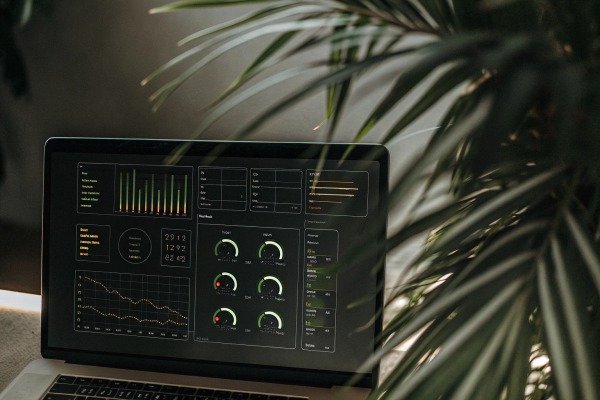
The days of relying solely on weekly email summaries are over. To truly ensure your agricultural drone order is on track, you must integrate your monitoring into the digital workflow of the factory. When we set up production runs, every step is logged, yet many buyers fail to ask for this data.
The Problem with "Black Box" Manufacturing
In traditional sourcing, the time between the deposit and the shipping notice is a "black box." You have no idea if the motors are stuck in customs or if the flight controllers failed the initial bench test. This opacity prevents you from reacting to problems until it is too late.
To solve this, you must demand transparency through digital tools. Modern drone manufacturing involves complex supply chains. complex supply chains 3 By the time a drone reaches the assembly line, its components have already passed through several checkpoints.
Implementing a Milestone-Based Tracking System
If the supplier cannot grant direct ERP access due to security reasons, you should establish a milestone-based reporting structure ERP access 4 that requires photographic and data proof at specific stages. This is not just about seeing a picture of a drone; it is about seeing your drone.
Here is a breakdown of the critical milestones you should monitor and the verification data you should request:
Table 1: Production Milestone Verification Protocol
| Production Stage | What Usually Happens (Low Visibility) | What You Should Demand (High Visibility) |
|---|---|---|
| Approvisionnement en composants | "Materials ordered." | Photos of motor/battery labels with date codes and brand verification. |
| Assembly | "Assembly in progress." | Video walk-through of the specific line section with a reference to your Order ID. |
| Bench Testing | "Testing passed." | Screenshots of the diagnostic software showing "Pass" status for specific serial numbers. |
| Packaging | "Ready to ship." | Photo of the packing list placed inside the box before sealing, showing accessories. |
Serialized Component Tracking
A critical strategy we recommend is serialized tracking. Every high-value component on an agricultural drone—specifically the motors, the spray pump, and the flight controller—has a unique serial number.
Ask your supplier to create a shared spreadsheet or "Digital Ledger." As each drone is assembled, the technician must scan or log the serial numbers of these key components against the drone's main chassis number.
This serves two purposes:
- Proof of Activity: It is impossible to fake a list of 50 unique motor serial numbers without actually having the inventory.
- Future Support: If a motor fails six months later, you can trace it back to the specific production batch to see if other units are at risk.
By enforcing this level of detail, you shift the dynamic from trust to verification. You are no longer asking "how are things going?" You are checking the data to see exactly where your investment stands.
Can I request live video streaming to verify flight performance and spraying capabilities?
Many of our clients worry that the "golden sample" video they saw during the sales pitch is not representative of the final bulk order. You have likely seen impressive demos, but the fear remains: will the specific units shipped to your warehouse perform with that same stability and precision?
Yes, you should absolutely request live video streaming to verify the flight stability and spraying consistency of your specific units. By directing the test in real-time—asking the pilot to perform specific maneuvers or zoom in on the spray nozzles—you confirm the hardware works as promised and is not pre-recorded footage.

Live streaming is the ultimate truth-teller in remote quality assurance. However, simply asking for a "live stream" is not enough. To get value from this, you need to structure the session like a formal inspection.
Moving Beyond the "Demo Reel"
A pre-recorded video can be edited. It can hide vibration vibration levels 5 issues, unstable hovering, or inconsistent spray pressure. When we conduct internal tests, we look for minute details that marketing videos often smooth over. You need to adopt this engineering mindset.
When you arrange a live stream (using Zoom, WhatsApp, or WeChat), do not let the manufacturer run the show entirely. You must be the director. If they refuse to deviate from a script, that is a red flag.
H3: The Live Inspection Protocol
To ensure the drone you are watching is actually one of yours, ask the operator to show the drone's serial number sticker close to the camera before takeoff. Match this against your packing list.
Once the drone is in the air, focus on these critical performance indicators:
- Hover Stability (GPS Lock): Ask the pilot to let go of the sticks. The drone should remain perfectly still. If it "drifts" or "toilets" (circles around a point), the compass or GPS module is not calibrated correctly.
- Pump Pressure: Ask them to turn the spray system on and off rapidly. The cut-off should be instant. Dripping nozzles indicate cheap valves or air leaks in the system.
- Return-to-Home (RTH): Force a "lost connection" simulation. The drone should rise and return to the takeoff point autonomously.
H3: Assessing Vibration and Sound
Video compression can make it hard to see vibration, but you can look for "jello" in the video feed. If the manufacturer is streaming the video directly from the drone's onboard camera, wavy lines in the image usually mean high-frequency vibration from unbalanced propellers or motors.
Also, listen to the sound. While audio over the internet is imperfect, a grinding noise or an oscillating "revving" sound usually points to ESC (Electronic Speed Controller) issues or bad tuning.
Table 2: Live Stream Inspection Checklist
| Test Maneuver | What to Watch For | Potential Defect Indicator |
|---|---|---|
| Rapid Ascent | Drone stays level; no tilting. | One motor is weaker than others (ESC/Motor fault). |
| Yaw (Spinning) | Drone spins on a fixed axis without drifting. | Center of gravity is off or IMU is poorly calibrated. |
| Spray Test | Even mist across all nozzles. | Clogged lines or weak pump pressure. |
| Load Test | Tank filled with water (weight simulation). | Significant battery sag or inability to maintain altitude. |
Critical Thinking: The Latency Factor
Be aware of latency. If the video lags, you might miss micro-stutters in the flight. Ask the manufacturer to record the live session locally in high definition and send you the raw file immediately after the call ends. This allows you to review the footage frame-by-frame without internet compression artifacts, confirming what you saw live.
Which quality assurance documents should I review before final payment?
We often see procurement managers rush the final payment to meet shipping deadlines, neglecting the paperwork that proves the equipment's health. Without reviewing these documents, you risk importing drones that may face customs rejection or lack the data history needed for future troubleshooting.
Before releasing the final balance, you must review the individual Certificate of Conformity (CoC), battery cycle logs, and the flight telemetry data for every unit. These documents provide empirical evidence that each drone has passed safety checks and that the batteries are new and balanced, protecting you from receiving refurbished or defective goods.
Documentation is often viewed as a formality, but in the industrial drone sector, it is your insurance policy. Papers can be forged, but data logs are much harder to fake convincingly at scale.
The Hierarchy of Documentation
There is a difference between generic certification and unit-specific data. A generic "CE" or "FCC" certificate tells you the design is approved. It does not tell you if the specific unit in your box was built correctly. You need to verify the individual health of the machines you are buying.
H3: Analyzing Flight Telemetry Logs
Modern agricultural drones possess a "black box" flight controller. drones agricoles 6 During the factory test flight, this box records everything: vibration levels, motor output, GPS signal strength, and battery voltage.
You should request the "First Boot" and "Test Flight" logs (often in .BIN or .DAT format). You don't need to be an engineer to check these basics using free viewer software:
- Vibration Analysis: High vibration levels in the logs mean the mechanical assembly is loose or parts are unbalanced.
- GPS Health: Check how fast the satellite lock was achieved. Slow locks imply poor shielding or bad antenna placement.
H3: Battery Cycle Data
Batteries are the most expensive consumable on an agricultural drone. most expensive consumable 7 We have seen suppliers slip in "test batteries" that have high cycle counts, or batteries that have been sitting on a shelf for a year.
Request a digital readout of the battery management system (BMS) for every battery in your order.
- Cycle Count: Should be near zero (0-3 cycles is normal for testing).
- Cell Deviation: All cells should be at the same voltage. A deviation of more than 0.05V in a new battery is a major safety risk.
Table 3: Essential Pre-Payment Document Checklist
| Nom du document | Objectif | What to Look For (Red Flags) |
|---|---|---|
| Certificate of Conformity (CoC) | Certifies the unit meets specs. | Missing serial numbers or generic signatures. |
| Flight Log Data | Proof of test flight. | File dates that do not match the reported test date. |
| Battery Health Report | Verifies battery condition. | High cycle counts or large voltage gaps between cells. |
| Bill of Materials (BOM) | Lists installed components. | Part numbers that differ from your contract (e.g., cheaper motors). |
Regulatory Compliance Documents
Depending on where you are importing to, you may need specific radio transmission certifications. For the US, verify the FCC ID. For Europe, the CE declaration. Ensure these documents are not just Photoshop jobs. You can verify FCC IDs online. Importing a drone with non-compliant radio modules can lead to seizure by customs, a total loss that quality checks on the drone itself cannot prevent.
By insisting on this packet of documents avant the final wire transfer, you maintain leverage. Once the money is sent, your ability to demand these logs evaporates.
How do I ensure the customized components meet my specifications without an on-site visit?
Customization is where most errors happen; we have seen projects delayed because a tank mount was a few millimeters off or the software language was not set correctly. If you ordered custom branding, specific nozzles, or modified software, trusting standard QC procedures is dangerous because standard protocols might not cover your unique changes.
To verify customized components remotely, you should require digital caliper measurements of physical parts via video, overlay verification of CAD files against photos, and specific firmware checksums. These precise validation methods ensure that your bespoke requirements are physically and digitally present before the product is crated for shipment.
When you order "off-the-shelf," the factory knows exactly what to build. When you customize, you introduce variables. Remote verification of these variables requires a mix of digital engineering tools and simple visual confirmation.
H3: Digital Validation of Physical Specs
For hardware changes—like a larger liquid tank or a custom camera mount—do not rely on a wide-shot photo. Ask for a "measurement verification video."
Instruct the factory engineer to take a digital caliper, zero it out on camera, and then measure the critical dimensions of the custom part. This is undeniable proof. If you ordered a 5mm carbon fiber arm thickness, and the caliper reads 3mm, you catch the cost-cutting immediately. carbon fiber 8
H3: Firmware and Software Customization
For agricultural drones, software customization often involves flight controller tuning for specific crop types or default language settings.
- Screenshots are not enough. Ask for a video of the system booting up.
- Checksum Verification: If you requested custom code or security features, ask for the firmware checksum (a string of characters that acts as a digital fingerprint). Match this against the version your engineering team approved. This ensures they haven't flashed an older, buggy version to save time.
H3: Stress Testing Custom Parts
Standard parts have been tested thousands of times. Your custom part has not. Therefore, you must define a specific stress test for your modification.
If you requested a higher-pressure pump for fruit trees, standard testing (usually for low crops) won't reveal leaks. You must dictate the test parameter: "Run the pump at 100% duty cycle for 10 minutes."
The Role of Third-Party Inspection
Sometimes, the customization is too complex to verify via Zoom. in these cases, hiring a third-party inspection agency (like SGS or Bureau Veritas) SGS or Bureau Veritas 9 in China is a viable "remote" option. You are still remote, but you have eyes on the ground.
However, generic inspectors often lack drone expertise. If you go this route, you must provide them with a specific "Inspection Checklist" derived from your customization requirements. Do not let them use their standard template.
Table 4: Custom Component Remote Verification Strategy
| Type de personnalisation | Remote Verification Method | Why Standard QC Fails |
|---|---|---|
| Physical Dimensions | Live caliper measurement video. | Visual estimation cannot detect millimeter discrepancies. |
| Branding/Logo | High-res photo with color code card. | "Red" can vary wildly; you need to see it against a reference. |
| Software Settings | Boot sequence video & menu walkthrough. | Factory resets often revert custom settings to default Chinese. |
| Custom Payload | Load-bearing flight test video. | Standard tests use standard weights, not your unique payload distribution. |
Conclusion
Remote monitoring of agricultural drone manufacturing requires a shift from passive trust to active, data-driven verification. By leveraging cloud-based tracking for production milestones, directing live flight inspections for stability checks, reviewing deep-level telemetry data, and rigorously données télémétriques 10 validating custom components, you can virtually step onto the factory floor. These measures not only ensure the quality of your current order but also establish a standard of accountability that signals to us, the manufacturers, that you are a sophisticated buyer who expects precision.
Notes de bas de page
1. Link to the international standard for risk management. ︎
2. News coverage of current challenges in the aerospace manufacturing supply chain. ︎
3. International standards for quality management systems in manufacturing processes. ︎
4. Overview of software systems used to manage manufacturing and supply chains. ︎
5. Technical research on drone telemetry and vibration analysis for performance. ︎
6. FAA regulations and identification requirements for unmanned aircraft systems. ︎
7. Manufacturer documentation on intelligent battery management and safety protocols. ︎
8. Technical background on carbon fiber materials used in drone construction. ︎
9. Official website of the major inspection agency mentioned. ︎
10. Definition of the technology by a major industry leader. ︎

 English
  Spanish
  German
  French
  Dutch
Dutch  Arabic
