
Seeing clients struggle with crashed drones on steep hills breaks my heart, especially when our flight data analysis often reveals these accidents were entirely preventable with the right sensor configuration.
To select a drone for complex terrain, prioritize models equipped with millimeter-wave radar or LiDAR specifically designed for ground emulation. Ensure the system utilizes RTK positioning for centimeter-level vertical accuracy and verify that the flight controller supports pre-mapped 3D terrain models to handle gradients exceeding 30 degrees safely.
Let’s break down the specific hardware specifications and software features you need to handle these challenging environments effectively.
What specific radar technologies should I look for to ensure accurate terrain following on steep slopes?
When we test new radar modules at our Chengdu facility, we intentionally fly over jagged rocks and dense brush to see if the signal holds steady or gets confused by vegetation.
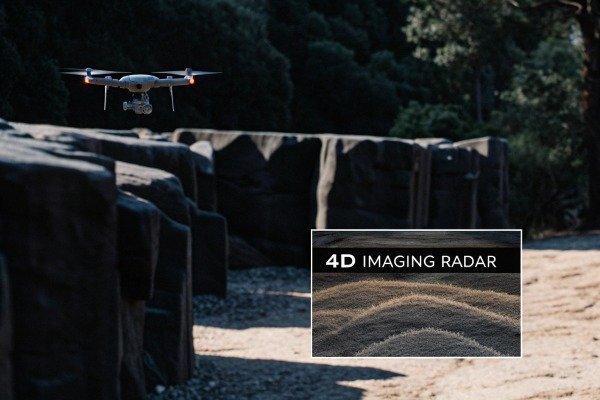
You should prioritize drones utilizing 4D Imaging Radar or Millimeter-wave radar with a high refresh rate. These technologies penetrate dust and dense foliage better than visual sensors, offering real-time height adjustments on steep slopes where barometric sensors often fail due to rapid atmospheric pressure changes during ascent.

Understanding Radar Types for Agriculture
In the world of industrial drones, not all "altitude sensors" are created equal. We have found that many entry-level drones rely heavily on barometers. rely heavily on barometers 1 While barometers are fine for flat fields in Kansas, they are disastrous for hilly terrain. As a drone climbs a slope, the air pressure changes. A barometer might think the drone has gained altitude when the ground has actually risen to meet it. This lag causes crashes.
For complex terrain, you need active sensing. This is where Millimeter-wave (mmWave) radar shines. Unlike optical cameras, which can be blinded by bright sunlight or confused by shadows in a valley, mmWave radar sends out radio waves that bounce off the ground. It calculates the time it takes for the wave to return. This happens thousands of times per second.
The Importance of Ground Emulation
"Ground emulation" is a specific term we use in engineering. It means the drone mimics the shape of the terrain below it. A standard drone flies in a straight line (A to B). A terrain-following drone flies a curve that matches the hill. To do this, the radar must have a narrow beam for precision but a wide enough field of view to see the slope coming before it arrives.
We recommend looking for "Phased Phased Array 2 Array" radar systems. These can steer the radar beam electronically without moving parts. This allows the drone to look slightly ahead, not just straight down. If the drone only looks straight down, it might be too late to climb by the time it detects a cliff face.
Sensor Comparison for Procurement Managers
If you are sourcing drones for diverse environments, this table compares the reliability of different sensors we have integrated over the years.
| Sensor Technology | Meilleur cas d'utilisation | Performance on Steep Slopes | Limitation |
|---|---|---|---|
| Barometric Altimeter | Flat, open fields | Pauvre – prone to drift and lag | Affected by wind and weather pressure changes. |
| Ultrasonic (Sonar) | Indoor or low altitude | Fair – limited range | Sound waves scatter on soft grass or leaves. |
| Binocular Vision | Obstacle avoidance | Bon – requires light | Fails in low light, dust, or direct sun glare. |
| Radar à ondes millimétriques | Complex, hilly terrain | Excellent – consistent data | Can struggle over water or extremely deep snow. |
The Dust Factor
One critical detail often overlooked in specs is environmental interference. During harvest or dry seasons, a drone kicks up a lot of dust. Optical sensors (cameras) get dirty or blocked. Radar works on a wavelength that passes right through dust clouds. When we design our SkyRover units for export to dusty regions, we always default to radar for this specific reason. It ensures the drone knows exactly where the ground is, even if the pilot cannot see through the dust.
How do I determine if the drone's response speed is fast enough for my farm's complex topography?
During our flight stability tests, we measure how many milliseconds it takes for the motors to physically react to a sudden rise in ground level detected by the onboard computer.
Check the drone’s control Control Loop Latency 3 loop latency, which should ideally be under 20 milliseconds for steep terrain. Additionally, review the thrust-to-weight ratio; a higher ratio ensures the propulsion system has enough power to ascend instantly when the radar detects a sudden incline, preventing ground impact during high-speed operations.

The Physics of Reaction Time
It is not enough for the drone to voir the hill; it must be able to move fast enough to avoid it. This is a common pain point we see in cheaper models. The sensor sees the ground rising, but the drone is too heavy or the computer is too slow to pull up in time.
In engineering terms, we call this "Control Loop Latency." This is the time delay between the sensor seeing the obstacle and the motors spinning up. For flat land, a delay of 100 milliseconds is fine. For a 45-degree slope, 100 milliseconds is the difference between a successful flight and a broken propeller.
Analyzing Thrust-to-Weight Ratio
When you look at a spec sheet, look at the Max Takeoff Weight versus the Maximum Thrust. Max Takeoff Weight 4 If a drone is fully loaded with 40 liters of pesticide, it is heavy. If it needs to climb a hill, it must fight gravity plus the downward momentum.
We recommend a thrust-to-weight ratio of at least 1.8 to 1 thrust-to-weight ratio 5 for hilly terrain. This means the motors can generate nearly double the thrust needed just to hover. This excess power is what allows the drone to "punch out" and climb vertically when the terrain changes abruptly.
Flight Speed vs. Terrain Complexity
There is a trade-off between speed and safety. Even the best SkyRover drone cannot climb a vertical wall at 10 meters per second. The flight controller needs to be smart enough to slow down.
We program our flight controllers to calculate the "Slope Gradient." If the slope is steep, the drone automatically reduces its forward speed. This gives the motors more time to lift the drone. When evaluating a supplier, ask if their software has "Adaptive Speed Control" based on terrain data.
Recommended Operational Speeds
We provide this guide to our distributors to help them set expectations for end-users.
| Terrain Slope Gradient | Recommended Max Speed | Required Pilot Action | Risk Level |
|---|---|---|---|
| 0° – 10° (Flat) | 8 – 10 m/s | Monitor normally | Faible |
| 10° – 25° (Rolling) | 5 – 7 m/s | Keep hand on controls | Modéré |
| 25° – 45° (Steep) | 2 – 4 m/s | Pre-map terrain (3D) | Haut |
| > 45° (Vertical) | Not Recommended | Use manual mode only | Très élevé |
Battery Draw Implications
Procurement managers should also note that terrain following drains batteries faster. Climbing consumes significantly more energy than cruising. When we calculate flight times for clients in mountainous regions, we usually reduce the estimated flight time by 20% compared to flat-land specs. You must factor this into your purchase of spare batteries. If you normally need four batteries for a job, on a hill, you might need five or six.
Will a drone with terrain-following capabilities also effectively manage obstacle avoidance in orchards?
We often hear from orchard owners who mistakenly assume terrain radar automatically stops the drone from hitting a tree branch, but that is rarely the case in practice.
Terrain following and obstacle avoidance are separate functions; terrain sensors look down, while avoidance sensors look forward. For orchards, you need an omnidirectional radar system or binocular vision sensors that work simultaneously with the terrain module to detect protruding branches, poles, and guy wires.
Two Different Systems Working Together
It is vital to understand that "Height" and "Obstacles" are processed differently.
- Terrain Following (Height): Uses downward-facing radar to keep the drone 3 meters above the ground.
- Obstacle Avoidance (Safety): Uses forward or 360-degree sensors to stop the drone from hitting a wall or tree.
In an orchard, the ground might be flat, but the trees are obstacles. Or, the ground might be sloped et there are trees. If you buy a drone with only terrain following, it will maintain a perfect altitude right until it flies sideways into a tree trunk.
The "Canopy" Problem
Orchards are tricky because the "ground" is not always clear. If the downward radar hits the top of a dense apple tree, it might think the tree top is the ground. The drone might suddenly jump up 4 meters to clear the "ground," causing inconsistent spraying.
To fix this, we use advanced algorithms that filter out "vegetation noise." The drone needs to know the difference between the hard soil and the soft canopy. This usually requires pre-mapping the field.
Pre-Mapping vs. Real-Time Sensing
For complex orchards, we strongly advise against relying solely on real-time sensing. Real-time sensors can miss thin wires or leafless branches in winter.
The best workflow we see from our successful US clients involves two steps:
- Mapping Mission: Fly a small survey drone (or the ag drone without a tank) to create a 3D High-Definition map of the orchard.
- Path Planning: The software generates a flight path that weaves between the trees and follows the slope.
Obstacle Avoidance Sensor Types
When reading the brochure, check for "Omnidirectional" sensing. Old drones only looked forward. If the drone drifts sideways due to wind in a narrow vineyard row, a forward-looking sensor won't save it.
Integration of Systems
| Fonctionnalité | Terrain Following Only | Obstacle Avoidance Only | Integrated System (Recommended) |
|---|---|---|---|
| Main Sensor | Downward Radar | Forward Vision/Radar | 360° Radar + Downward Radar |
| Behavior | Maintains height | Stops at objects | Maintains height AND avoids objects |
| Orchard Risk | High (hits trees) | High (crashes into ground) | Low (navigates fully) |
| Night Ops | Works | Fails (if visual) | Works (if all radar) |
The "Wire" Threat
A final note on safety: Radar is great for trees, but thin utility wires are the enemy of all drones. Even the best millimeter-wave radar can miss a single thin wire. We always advise operators to manually mark poles and wires as No-Fly Zones 6 "No-Fly No-Fly Zones 7 Zones" in the app before flying. Do not trust the robot to see a 5mm wire at 50 meters away.
How much does the quality of the terrain-following module impact the uniformity of my crop spraying?
Our agronomy team has analyzed spray patterns extensively and found that even a one-meter spray patterns 8 altitude error can ruin the application coverage on a slope, leading to streaks and waste.
The quality of the terrain module directly dictates spray width consistency; if a drone drifts too high, the spray evaporates or drifts, and if it drifts too low, it causes chemical burn. High-precision terrain following ensures the nozzle height remains constant relative to the crop canopy, guaranteeing uniform droplet deposition across uneven fields.

The Accordion Effect
Imagine painting a wall with a spray can. If you move your hand closer, the paint gets thick and runs. If you move back, the paint is thin and goes everywhere.
Drones work the same way. The spray width is determined by physics. If the drone is set to spray a 5-meter width at a 3-meter height, that geometry is fixed.
- Drift High (4m): The spray width expands, but the density drops. The wind catches the droplets, blowing them onto neighboring crops (drift).
- Drift Low (2m): The spray width shrinks. You get "striping"—bands of heavy chemical and bands of zero chemical. This burns the crop and leaves pests alive in the gaps.
On a hill, if the drone lags in terrain following, it will constantly be too high (when the ground drops) or too low (when the ground rises). This creates an "accordion" pattern of uneven application.
Variable Rate Application (VRA)
Advanced terrain following allows for Variable Rate Application 9 Variable Rate Application. On a hill, the drone naturally slows down to climb. If the pump keeps spraying at the same speed, you will overdose the crop on the uphill climb because the drone is moving slower.
Smart drones connect the flight speed to the pump flow rate.
- Climbing (Slow): Pump slows down.
- Descending (Fast): Pump speeds up.
This flow control must be synced with the terrain radar. If the radar is laggy, the speed perception is wrong, and the flow rate will be wrong.
Economic Impact of Poor Terrain Following
We often discuss ROI with procurement managers. A cheap drone saves money upfront but costs money in chemicals.
| Spray Scenario | Altitude Error | Consequence | Financial Impact |
|---|---|---|---|
| Perfect Following | +/- 10 cm | Uniform Coverage | Optimized Yield |
| Laggy Ascent | – 1.0 meter | Chemical Burn (Overdose) | Crop Loss |
| Laggy Descent | + 1.5 meter | Drift / Evaporation | Wasted Chemical & Re-spraying |
Nozzle Technology and Height
The type of nozzle you use also dictates how good type of nozzle 10 your terrain following needs to be.
- Centrifugal Nozzles: These are popular now. They create a mist. They are very sensitive to height. If you are too high, the mist just floats away.
- Pressure Nozzles: These create heavier drops. They are more forgiving, but still require consistency.
Software Calibration
Finally, when you receive your drones, check if the manufacturer allows "Height Calibration." In our SkyRover software, we allow the user to zero-out the height sensor on the actual crop canopy, not just the bare ground. This is crucial for crops like corn or sugarcane, which add 2 meters to the ground height. The radar needs to know if it should follow the soil or the tassels.
Conclusion
Selecting the right drone for complex terrain is about more than just motor power; it requires a synergy of rapid-response mmWave radar, high-torque propulsion, and intelligent software that can distinguish between ground and canopy. By prioritizing these specific sensor technologies and validating the control loop latency, you ensure your fleet operates safely and your crops receive uniform treatment.
Notes de bas de page
1. General background information on the function and limitations of barometric sensors. ︎
2. Product specifications for a major agricultural drone utilizing phased array radar systems. ︎
3. Educational resource from MIT explaining feedback control systems and latency in engineering. ︎
4. EASA regulatory framework defining drone categories based on weight specifications. ︎
5. Authoritative physics definition from NASA regarding lift and gravity. ︎
6. Official FAA information regarding drone safety and restricted areas. ︎
7. FAA resources regarding airspace restrictions and safety zones for drone operators. ︎
8. EPA guidelines on factors influencing pesticide spray drift and deposition patterns. ︎
9. Educational resource explaining the precision agriculture technology. ︎
10. University extension guide on sprayer nozzle selection. ︎

 English
  Spanish
  German
  French
  Dutch
Dutch  Arabic
