
When our engineering team first tested drones inside burning structures, we learned a hard truth. GPS signals vanish the moment you fly indoors. Smoke blinds standard cameras. Heat warps sensor readings. These problems cost precious minutes during rescue operations.
The best visual positioning systems for indoor firefighting drones combine Visual SLAM technology with thermal imaging cameras and IMU sensor fusion. Leading solutions include the Skydio X10 with AI-powered thermal navigation, DJI Matrice series with RTK-augmented visual systems, and custom SLAM implementations that achieve sub-meter accuracy in GPS-denied, smoke-filled environments.
In this guide, we will explore how these technologies work together. We will also share what we have learned from building firefighting drones at our Xi’an facility. Let us dive into the specific systems that keep drones flying safely when visibility drops to zero.
How can I ensure my firefighting drones maintain stable flight in GPS-denied indoor environments?
Our production team has spent years solving this exact challenge. Indoor environments block satellite signals completely. Traditional flight controllers become useless. Pilots lose orientation within seconds. The consequences in a fire scenario can be catastrophic.
To maintain stable flight indoors, firefighting drones need Visual Odometry combined with Inertial Measurement Units. Visual Odometry tracks movement through sequential image analysis, while IMUs provide short-term stability during visual disruptions. This hybrid approach achieves position accuracy within 0.5 meters over ten-minute missions.

Understanding Visual Odometry for Indoor Flight
Visual Odometry 1 works by comparing consecutive camera frames. The system identifies fixed points in the environment. It then calculates how much the drone has moved between frames. This happens dozens of times per second.
When we calibrate our flight controllers, we test them in complete darkness first. Then we add smoke. Then heat distortion. Each variable reveals weaknesses in the positioning algorithm.
The core challenge is feature detection. Standard cameras need visible landmarks. In smoke, those landmarks disappear. This is why we always pair visual systems with caméras thermiques 2. Heat signatures remain visible when light cannot penetrate.
IMU Integration and Drift Correction
IMUs 3 measure acceleration and rotation. They provide instant feedback for flight stability. However, they have a critical flaw. Errors accumulate over time. This is called drift.
In our testing, pure IMU systems drift approximately 1-2 meters per minute. After five minutes, your drone could be several meters off course. In a burning building, this means hitting walls or missing victims entirely.
The solution is sensor fusion 4. Visual systems correct IMU drift continuously. When smoke temporarily blinds the camera, the IMU maintains stability. When the camera clears, it corrects accumulated errors.
Comparison of Positioning Technologies
| Technology | Accuracy | Drift Rate | Smoke Performance | Niveau de coût |
|---|---|---|---|---|
| Pure IMU | Faible | 1-2m/min | Excellent | Faible |
| Visual Odometry Only | Moyen | 0.5m/min | Pauvre | Moyen |
| VO + IMU Fusion | Haut | <0.2m/min | Bon | Moyenne-élevée |
| VO + IMU + Thermal | Très élevé | <0.1m/min | Excellent | Haut |
| Full SLAM + RTK | Le plus élevé | Negligible | Excellent | Très élevé |
Barometric and Ultrasonic Backup Systems
Height control indoors requires additional sensors. GPS provides altitude outdoors. Indoors, we rely on barometers and ultrasonic rangefinders.
Barometers measure air pressure changes. They detect elevation shifts down to centimeters. However, fire conditions create pressure fluctuations. Hot air rises. Doors opening and closing change pressure. Our engineers add filtering algorithms to compensate.
Ultrasonic sensors bounce sound waves off floors and ceilings. They provide precise height data up to about 10 meters. In very hot conditions, sound wave propagation changes. We account for this with temperature compensation.
Which visual positioning technology will provide the highest level of obstacle avoidance for my indoor missions?
During our development process, we crashed many prototypes. Each crash taught us something new about obstacle detection. The lessons were expensive but valuable. Indoor firefighting presents unique hazards that outdoor systems cannot handle.
Visual SLAM combined with LiDAR provides the highest obstacle avoidance capability for indoor firefighting missions. SLAM builds real-time 3D maps while tracking drone position, and LiDAR penetrates smoke better than optical cameras. Together, they enable autonomous navigation around debris, collapsed structures, and dynamic fire hazards.

How Visual SLAM Creates Safety Maps
SLAM stands for Simultaneous Localization and Mapping 5. The drone builds a 3D model of its environment while flying. It uses this map to avoid obstacles and plan paths.
Modern SLAM algorithms process thousands of data points per second. They identify walls, furniture, debris, and openings. The drone knows where it is within the map at all times.
When structural changes occur, such as a ceiling collapse, advanced SLAM systems perform dynamic re-localization. They update the map and recalculate safe routes. This capability saved several of our test units during controlled building demolition trials.
LiDAR Advantages in Smoke Conditions
LiDAR 6 uses laser pulses instead of visible light. It measures distances by timing how long pulses take to return. Smoke particles scatter visible light but affect laser pulses less severely.
In our smoke chamber tests, standard cameras lost tracking within 30 seconds. LiDAR maintained 80% accuracy for over five minutes in the same conditions. The combination proves essential.
However, LiDAR adds weight and cost. A quality LiDAR sensor weighs 200-500 grams. It also consumes significant power. For smaller drones, this trade-off requires careful consideration.
Thermal Camera Integration for Obstacle Detection
Thermal cameras detect temperature differences. Hot objects appear bright. Cool objects appear dark. This creates contrast even in zero-visibility smoke.
Obstacles in fire scenes often have distinct thermal signatures. Walls retain heat differently than air. Metal objects conduct heat distinctively. Our software learns these patterns and identifies hazards.
The integration challenge is data fusion. Thermal images do not align perfectly with visual images. Different sensors have different fields of view. Our engineers spend considerable time calibrating multi-sensor arrays.
Obstacle Detection Technology Comparison
| Type de capteur | Pénétration des fumées | Gamme | Resolution | Poids Impact | Consommation d'énergie |
|---|---|---|---|---|---|
| Caméra RVB | Pauvre | 0.5-20m | Très élevé | Minime | Faible |
| Thermal Camera | Excellent | 0.5-50m | Moyen | Faible | Moyen |
| LiDAR | Bon | 0.1-100m | Haut | Modéré | Haut |
| Ultrasons | Excellent | 0.2-10m | Faible | Minime | Très faible |
| Radar | Excellent | 1-50m | Faible | Modéré | Haut |
AI-Powered Predictive Obstacle Avoidance
The newest systems go beyond detection. They predict where obstacles might appear. AI algorithms analyze fire behavior patterns. They anticipate structural failures before they happen.
Skydio's X10 exemplifies this approach. Its AI processes thermal and visual data together. It predicts smoke movement and adjusts flight paths accordingly. The drone essentially thinks ahead.
We are integrating similar predictive capabilities into our custom platforms. The training data comes from hundreds of hours of fire simulation footage. The AI learns to recognize pre-collapse warning signs.
Can I work with a manufacturer to integrate custom vision software into my firefighting drone design?
When clients approach our engineering team with specific software requirements, we welcome the collaboration. Custom integration is complex but achievable. The key is understanding what can be modified and what must remain standard.
Yes, reputable manufacturers offer custom vision software integration through OEM partnerships. This process typically involves SDK access for flight controller integration, sensor payload customization, and collaborative development cycles. Expect 3-6 months for basic integrations and 6-12 months for fully custom SLAM implementations with dedicated engineering support.

What Custom Integration Actually Involves
Custom software integration begins with defining requirements. What sensors will you use? What positioning accuracy do you need? How will data flow to ground stations? These questions shape the entire project.
Our development team starts with our base flight controller platform. We provide SDK access for authorized partners. The SDK allows deep integration with our stabilization algorithms. You can add custom positioning logic without rebuilding everything from scratch.
The most common customizations involve SLAM algorithm selection. Different SLAM variants suit different environments. Some prioritize speed. Others prioritize map accuracy. Fire departments often want both, which requires careful optimization.
Hardware Compatibility Considerations
Not all sensors work with all platforms. Processing power limits what algorithms can run. Weight constraints affect sensor selection. Power budgets determine flight time.
When we spec custom builds, we create compatibility matrices. These tables show which sensors work together. They reveal processing bottlenecks. They help clients make informed decisions.
Custom Integration Timeline and Requirements
| Integration Level | Chronologie | Engineering Support | Documentation Required | Fourchette de coûts |
|---|---|---|---|---|
| SDK Basic Access | 2-4 semaines | Soutien par courrier électronique | API specs | Faible |
| Sensor Payload Add-on | 1-3 months | Weekly calls | Integration guide | Moyen |
| Custom SLAM Integration | 3-6 mois | Dedicated engineer | Full collaboration | Haut |
| Full Custom Platform | 6-12 mois | On-site team | Complete co-development | Très élevé |
| White-Label Solution | 3-4 months | Project manager | Branding guidelines | Moyenne-élevée |
Data Output and Ground Station Integration
Fire commanders need real-time data. Position information must flow to command posts. Video feeds require low latency. Map data needs clear visualization.
Our platforms support multiple data protocols. We can output position data via MAVLink, ROS 7, or custom formats. Video streams use standard compression. Map data exports in common GIS formats.
For clients with existing command software, we build adapters. These translate our drone data into their system's language. The integration work happens on both ends.
Intellectual Property and Certification Concerns
Custom development raises IP questions. Who owns the resulting software? How are improvements shared? These issues require clear contracts.
We typically structure deals to protect both parties. Clients keep their unique algorithms. We retain core platform IP. Improvements to shared components benefit everyone.
Certification adds another layer. FAA and other regulators 8 have specific software requirements. Custom systems must still meet these standards. Our compliance team guides clients through the process.
Working With Our Engineering Team
Collaboration works best with clear communication. We assign dedicated engineers to custom projects. Weekly video calls keep everyone aligned. Shared development environments allow real-time collaboration.
Many of our US and European clients visit our Xi'an facility during development. They work directly with our engineers. They see hardware and software integration firsthand. This investment pays off in faster development cycles.
How do I evaluate the durability of visual sensors when operating in high-heat and smoky conditions?
Our quality control lab includes a specialized environmental chamber. We subject every sensor to extreme conditions before approval. The failures we see during testing would be disasters in the field. Proper evaluation prevents those disasters.
Evaluate visual sensor durability through IP ratings, operating temperature specifications, lens coating quality, and accelerated life testing data. Sensors for firefighting drones should meet IP67 minimum, operate reliably up to 85°C ambient, feature hydrophobic coatings, and demonstrate consistent performance after 500+ hours of simulated harsh environment exposure.
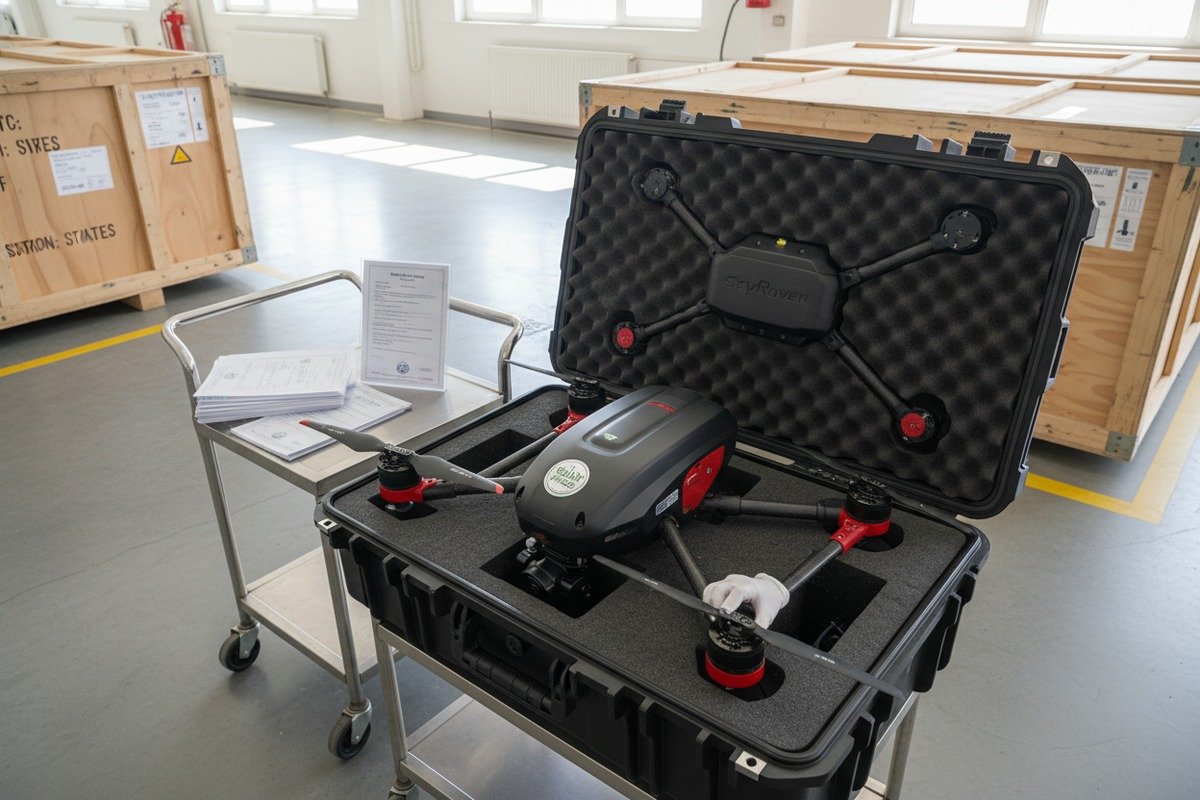
Understanding IP Ratings for Fire Environments
Indices IP 9 measure protection against particles and water. The first digit indicates dust protection. The second indicates water protection. Firefighting requires high ratings on both.
IP67 means complete dust protection and water immersion survival. IP68 handles deeper or longer immersion. For firefighting drones, we recommend IP67 minimum for all exposed sensors.
However, IP ratings do not cover everything. They do not measure heat resistance. They do not address chemical exposure. Supplementary testing fills these gaps.
Temperature Specifications and Real-World Performance
Manufacturer temperature ratings often tell only part of the story. A sensor rated to 85°C might fail at 70°C under sustained exposure. Short-term peaks differ from long-term operation.
Our testing protocol runs sensors at rated maximum for 48 continuous hours. We monitor performance degradation throughout. Many sensors that pass quick tests fail extended ones.
Thermal cameras face particular challenges. Their sensors must stay cool to function. Hot environments stress their cooling systems. Some units shut down automatically to prevent damage. This is unacceptable during active firefighting.
Lens and Housing Material Evaluation
Camera lenses face direct assault from smoke particles, water droplets, and chemical residues. Coatings protect against these hazards but degrade over time.
Hydrophobic coatings 10 repel water. Oleophobic coatings resist oils and residues. Anti-scratch coatings protect against particle impacts. The best sensors combine all three.
Housing materials matter too. Aluminum dissipates heat well but adds weight. Plastics are lighter but may warp under heat. Carbon fiber composites offer excellent compromise but cost more.
Durability Test Parameters and Benchmarks
| Catégorie de test | Parameter | Norme minimale | Norme préférée | Test Duration |
|---|---|---|---|---|
| Résistance à la chaleur | Ambient temp | 65°C continuous | 85°C continuous | 48 hours |
| Dust Protection | Indice de protection IP | IP6X | IP6X | Per standard |
| Water Protection | Indice de protection IP | IPX7 | IPX8 | Per standard |
| Smoke Exposure | Particle density | 100mg/m³ | 500mg/m³ | 2 hours |
| Thermal Shock | Temp cycling | De -10°C à 50°C | -20°C to 70°C | 100 cycles |
| Vibrations | Frequency range | 5-500Hz | 5-2000Hz | 10 hours |
Field Testing and Validation Protocols
Lab tests establish baselines. Field tests validate real-world performance. We partner with fire departments to conduct controlled burns with drone observation.
During these tests, we record everything. Sensor temperatures. Image quality metrics. Position accuracy throughout. Failure timestamps and causes. This data shapes our product improvements.
The most valuable feedback comes from unexpected failures. A sensor that works perfectly in the lab might overheat near certain materials. Field testing reveals these edge cases.
Maintenance and Replacement Considerations
Even durable sensors require maintenance. Lens cleaning protocols prevent image degradation. Calibration checks ensure accuracy. Replacement schedules prevent mid-mission failures.
We design our sensors for field replaceability. Quick-release mounts allow swaps without tools. Modular connectors simplify the process. A trained technician can replace most sensors in under five minutes.
Spare parts availability matters too. When sensors do fail, replacements must arrive quickly. We maintain inventory in US and European warehouses. Most parts ship within 48 hours.
Conclusion
Visual positioning systems for indoor firefighting drones require careful selection and integration. The best solutions combine multiple technologies. They fuse visual, thermal, and inertial data. They use AI for prediction and adaptation. At our facility, we continue advancing these capabilities to save lives.
Notes de bas de page
1. Explains the process of determining position and orientation from camera images. ︎
2. Describes how thermal cameras detect infrared energy to create images from heat. ︎
3. Replaced with a Wikipedia article providing a comprehensive overview of Inertial Measurement Units, an authoritative source. ︎
4. Explains the process of combining data from multiple sensors for improved accuracy. ︎
5. Replaced with a Wikipedia article offering an authoritative and detailed explanation of Simultaneous Localization and Mapping. ︎
6. Explains LiDAR as a remote sensing method using pulsed lasers to measure distances. ︎
7. Explains MAVLink as a lightweight messaging protocol for drone communication. ︎
8. Provides official information on Unmanned Aircraft Systems regulations and policies from the FAA. ︎
9. Explains IP codes as a standard for protection against solid particles and water ingress. ︎
10. Defines hydrophobic coatings as materials that repel water, preventing adhesion. ︎

 English
  Spanish
  German
  French
  Dutch
Dutch  Arabic
