
When our engineering team tests each drone before shipment, firmware stability 1 is the first checkpoint. Many buyers focus only on hardware specs. They overlook software. This creates dangerous gaps in high-stakes firefighting missions where reliability means everything.
When purchasing firefighting drones, you should verify the pre-installed firmware version stability, check compatibility with your existing command systems, confirm the manufacturer’s update support timeline, assess cybersecurity protocols, and ensure the software architecture supports future hardware upgrades and sensor integrations for long-term operational flexibility.
Software is the brain of your drone. It controls everything from flight stability to thermal imaging accuracy Computer-Aided Dispatch systems 2. Let me walk you through the critical checkpoints our team has identified after years of exporting industrial drones to fire departments worldwide.
How do I verify that the pre-installed firmware is stable enough for my high-stakes firefighting missions?
Our quality control engineers run extensive firmware stability tests before any firefighting drone leaves our facility. Yet we still receive questions from procurement managers who worry about receiving outdated or beta firmware versions. This concern is valid. Unstable firmware has caused mission failures that cost lives and property.
To verify firmware stability, request the exact version number from your supplier, check the manufacturer's release notes for known bugs, confirm the firmware has passed at least 90 days of field testing, and ask for documentation showing the firmware meets aviation safety standards including Remote ID compliance.
Understanding Firmware Version Numbering
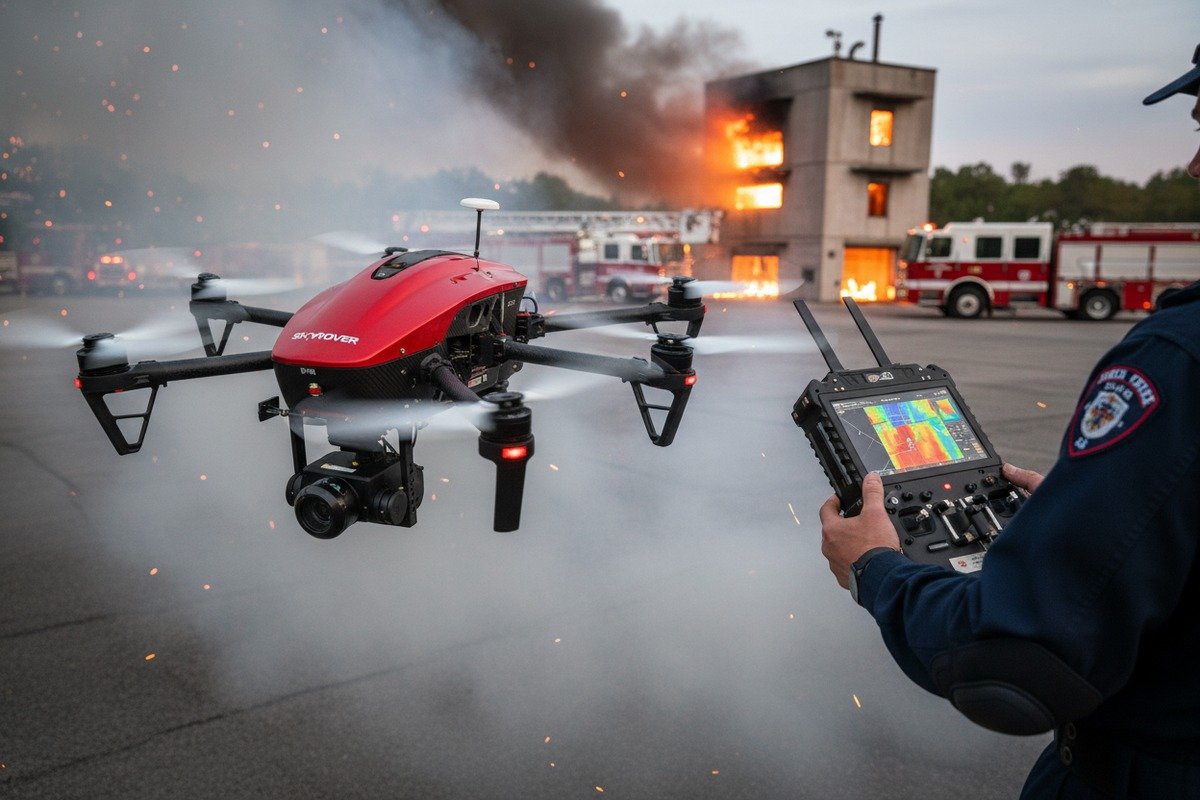
Firmware versions typically follow a standard format. Most manufacturers use semantic versioning 3 like "v4.2.1" where the first number indicates major releases, the second shows minor updates, and the third represents bug fixes. When we ship our SkyRover firefighting drones, we always include a firmware certificate showing the exact version and its testing history.
You should avoid purchasing drones with firmware versions ending in "-beta" or "-rc" (release candidate). These are test versions not ready for critical missions. Our recommendation is to request firmware that has been publicly available for at least three months.
Key Stability Indicators to Request
| Indicateur | What to Ask | Drapeau rouge |
|---|---|---|
| Release Date | When was this firmware version released? | Less than 60 days old |
| Known Issues | Does the release note list any unresolved bugs? | Critical flight control bugs listed |
| Field Testing | How many flight hours has this version logged? | Under 1,000 hours of testing |
| Rollback Option | Can I revert to previous stable version? | No rollback procedure available |
| Patch History | How many patches were needed after release? | More than 3 patches in first month |
Testing Firmware Before Deployment
Before deploying any new drone to active duty, conduct your own stability tests. Run at least 10 hours of flight time in controlled conditions. Test all thermal imaging functions. Verify GPS accuracy and RTK positioning 4 if equipped. Our team provides a pre-deployment checklist with every shipment that covers these essential tests.
Pay special attention to how the drone behaves during communication interruptions. Stable firmware should enable smooth return-to-home functions when signal is lost. Unstable versions may cause erratic behavior or crashes during these critical moments.
Can I customize the drone's software interface to match my company's branding and specific operational needs?
When we work with distributors across Europe and the United States, software customization requests come up in nearly every conversation. Our development team has built a flexible software architecture specifically because we understand that one-size-fits-all interfaces rarely work for specialized firefighting operations.
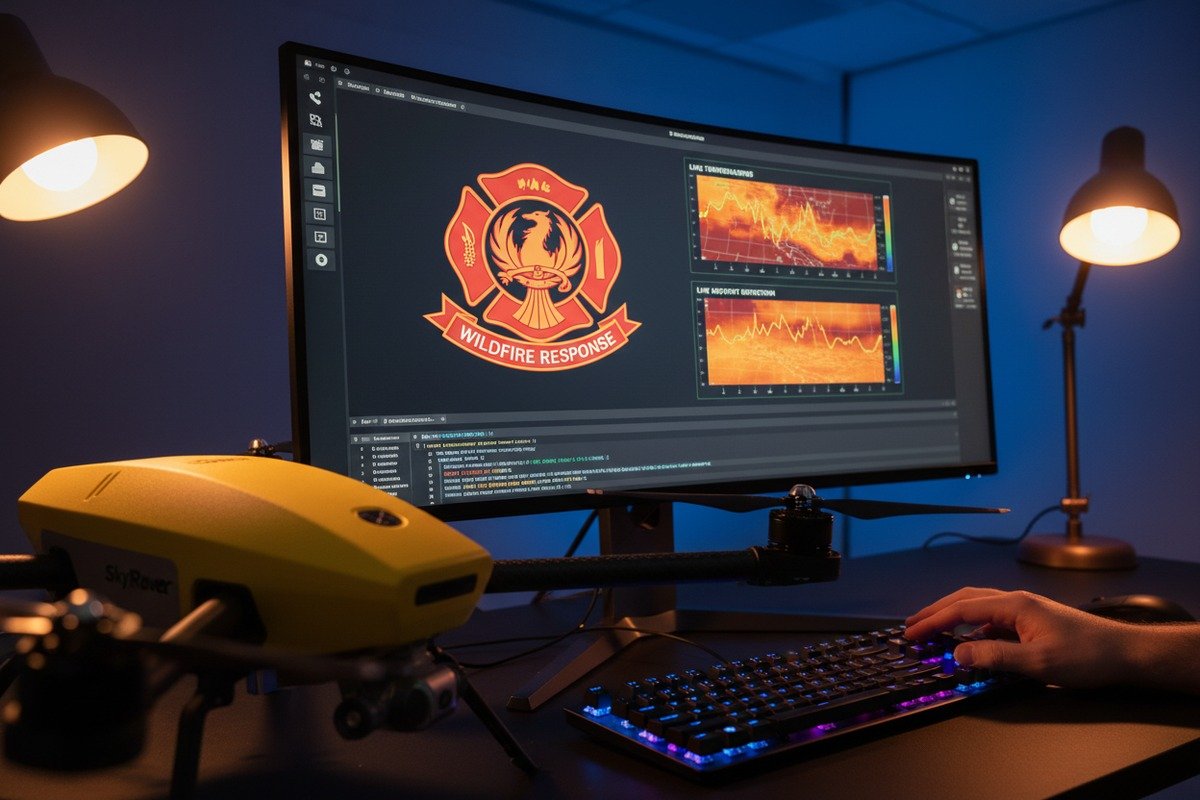
Yes, most industrial firefighting drones support software customization through APIs and SDKs. You can typically modify the user interface colors and logos, create custom flight mission templates, integrate with your existing dispatch systems, and develop specialized data visualization tools that match your operational workflows.
Levels of Software Customization Available
Software customization ranges from simple branding changes to deep functional modifications. Understanding these levels helps you communicate your needs clearly to suppliers.
| Niveau de personnalisation | What's Included | Calendrier type | Exigences techniques |
|---|---|---|---|
| Basic Branding | Logo, colors, splash screen | 1-2 semaines | Minime |
| Interface Layout | Menu structure, button placement, display options | 3-4 semaines | Low to moderate |
| Workflow Integration | Custom mission templates, automated reports | 4-8 semaines | Modéré |
| System Integration | API connections to dispatch, GIS, CMMS systems | 8-12 weeks | Haut |
| Full Custom Development | Proprietary features, AI algorithms, specialized sensors | 12-24 weeks | Very high |
API and SDK Availability
Ask your supplier directly about API documentation and SDK access. Our SkyRover platform provides comprehensive APIs that allow integration with popular systems like ArcGIS, WebEOC, and various Computerized Maintenance Management Systems. Without proper API access, you will face expensive workarounds or be locked into the manufacturer's ecosystem.
The SDK determines how deeply you can modify the drone's behavior. Some manufacturers restrict SDK access to protect proprietary technology. Others, like our team, believe open development leads to better products. We provide SDK documentation and technical support for custom development projects.
Integration with Command Center Systems
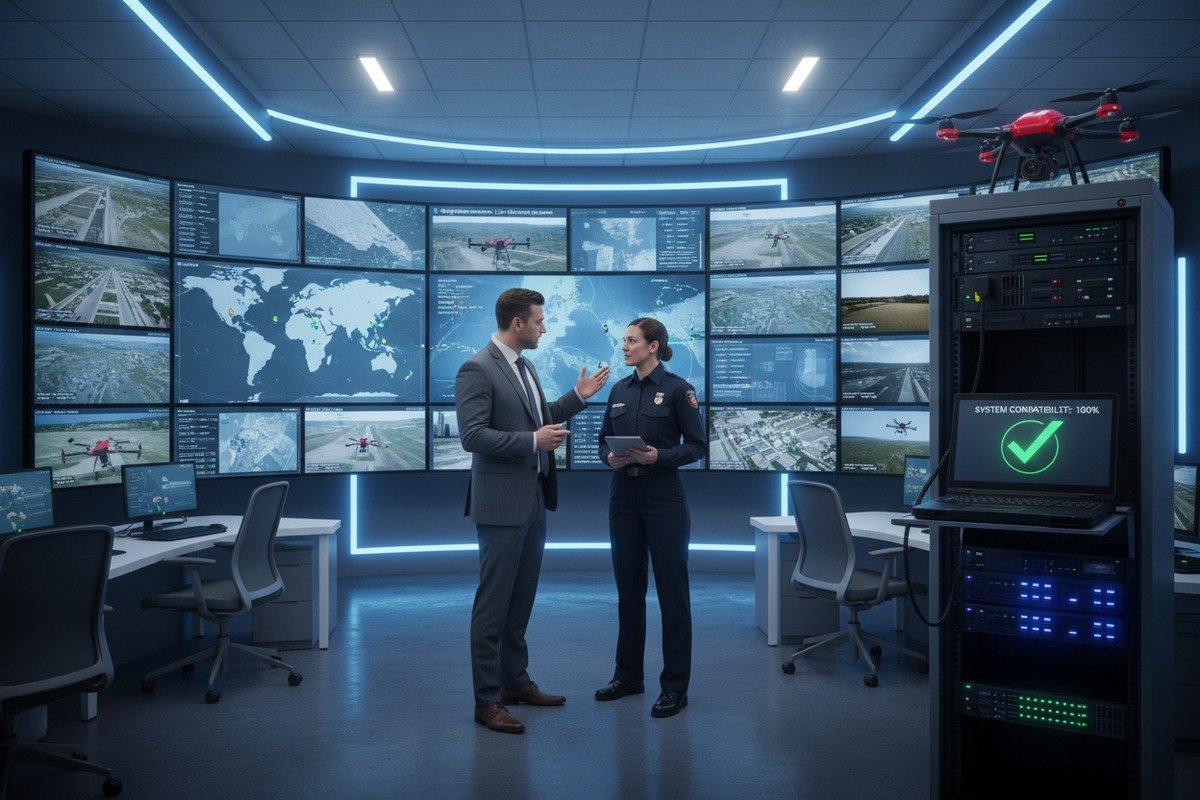
For fire departments, seamless integration with existing command infrastructure is critical. Your drone software should communicate with:
- Geographic Information Systems 5 for real-time mapping
- Computer-Aided Dispatch systems for resource coordination
- Incident Command System software for unified operations
- Evidence management platforms for post-incident documentation
When we design custom integrations for our clients, we start by auditing their existing technology stack. This audit reveals potential compatibility issues before they become expensive problems during actual emergencies.
Branding and White-Label Options
Many distributors need white-label solutions. Our OEM services include complete rebranding of the ground control station software, mobile apps, and even startup sequences. We can remove all SkyRover branding and replace it with your company identity. This creates a professional appearance for your customers while you maintain control over the supply chain.
What is the process for receiving and installing critical firmware updates on my industrial drone fleet?
Managing firmware updates across a fleet of firefighting drones presents unique challenges. In our experience exporting to US fire departments, we have seen poorly managed updates ground entire fleets during peak fire season. This is preventable with proper planning and the right supplier relationship.
The firmware update process typically involves receiving manufacturer notifications, downloading update packages to your ground control station, connecting each drone individually, running the update installation, verifying successful installation through test flights, and documenting the update in your fleet management system for compliance tracking.
Update Delivery Methods
Different manufacturers use different update delivery systems. Understanding your options helps you plan maintenance schedules effectively.
| Delivery Method | Pour | Cons | Meilleur pour |
|---|---|---|---|
| Transmission par voie hertzienne (OTA) | Automatic, convenient | Requires internet, security concerns | Small fleets with good connectivity |
| USB/SD Card | Offline capable, secure | Manual process, time-consuming | Remote operations, high-security environments |
| Ground Control Station | Centralized, trackable | Requires computer setup | Medium to large fleets |
| Cloud Platform | Fleet-wide management, scheduling | Connectivity dependent | Enterprise operations |
| Manufacturer Service | Professional installation | Cost, scheduling delays | Critical updates, complex installations |
Planning Update Schedules Around Operations
Fire season timing is critical. You should never schedule major firmware updates during peak operational periods. Our recommended approach involves updating during off-season maintenance windows and testing thoroughly before high-risk periods begin.
Create an update calendar at the start of each year. Identify low-risk periods for major updates. Reserve critical patches for immediate deployment regardless of timing. Document everything for regulatory compliance.
Handling Update Failures and Rollbacks
Update failures happen. Your supplier should provide clear rollback procedures 6. Before any update, back up your current configuration settings. Keep a record of the previous stable firmware version.
When we develop firmware for SkyRover drones, we build in automatic rollback capability. If an update fails mid-installation, the drone reverts to its previous working state. Not all manufacturers offer this protection. Ask specifically about rollback procedures before purchasing.
Fleet Management Software Integration
For fleets larger than five drones, manual update tracking becomes impractical. Invest in fleet management software that tracks firmware versions across all aircraft. Good platforms show which drones need updates, schedule installations, and generate compliance reports.
Our drones integrate with popular fleet management systems including Airdata and similar platforms. This integration automates much of the update tracking burden. You receive alerts when updates are available and can schedule deployments across your entire fleet from one dashboard.
Security Considerations During Updates
Firmware updates are potential vulnerability points. Use only official manufacturer channels for downloads. Verify file integrity before installation. Never update using public WiFi networks. Our update packages include cryptographic signatures that verify authenticity.
How do I ensure the software version I'm buying will support future hardware upgrades and sensor integrations?
When we calibrate our flight controllers for new sensor payloads, software compatibility is the first consideration. Many buyers have purchased drones only to discover their software cannot support the thermal cameras or LiDAR systems they planned to add later. This expensive mistake is avoidable with proper due diligence.
To ensure future compatibility, verify the software uses modular architecture, request the manufacturer's hardware compatibility roadmap, confirm API availability for third-party sensor integration, check that the platform supports industry-standard communication protocols, and obtain written documentation of the manufacturer's backward compatibility policy for at least three years.
Understanding Modular Software Architecture
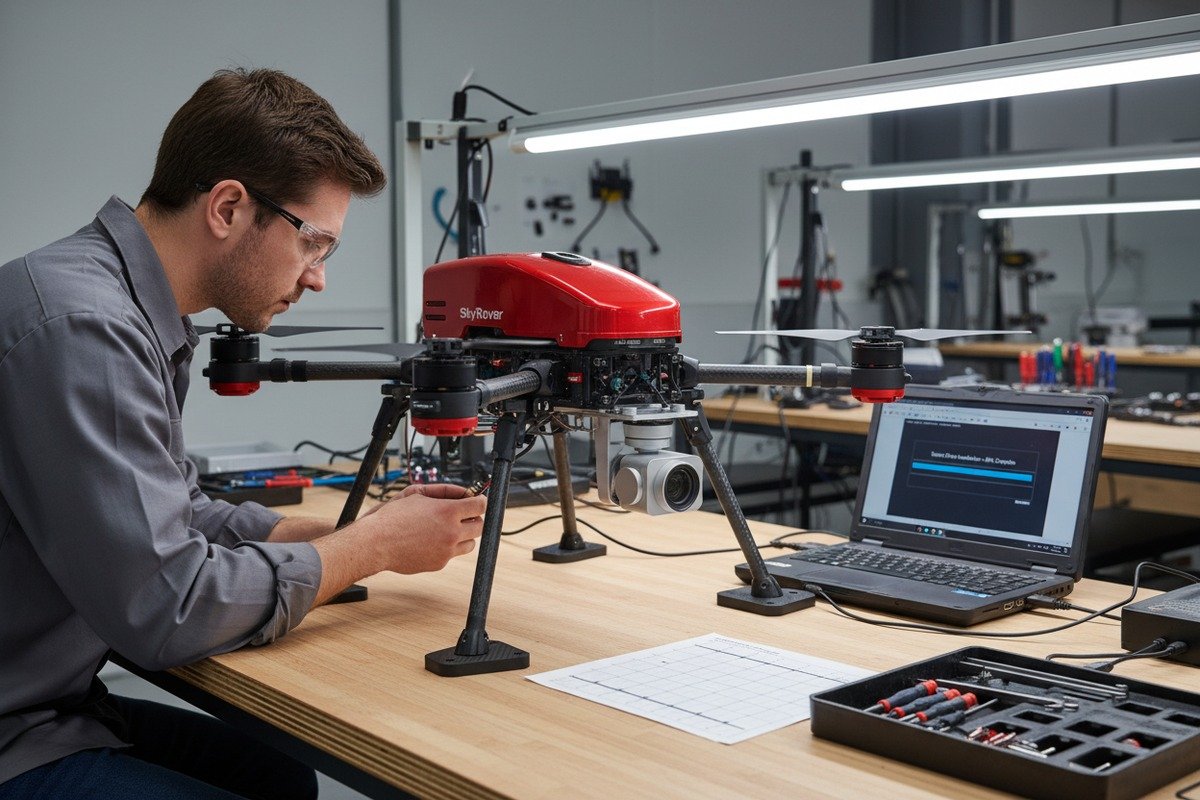
Modular software separates core flight functions from payload management and data processing. This separation allows upgrades without rebuilding the entire system. When our team designs drone software, we use modular architecture specifically to support future expansion.
Ask your supplier if their software architecture is monolithic or modular. Monolithic systems require complete overhauls for major changes. Modular systems allow targeted upgrades while maintaining core stability.
Hardware Compatibility Roadmaps
Reputable manufacturers publish compatibility roadmaps showing planned support for upcoming hardware. This roadmap reveals the manufacturer's long-term commitment to the platform. A company without a roadmap may discontinue support without warning.
Request documentation showing:
- Currently supported sensors and payloads
- Planned hardware additions for the next 2-3 years
- End-of-life timeline for current software versions
- Migration path for transitioning to newer platforms
Sensor Integration Protocols
Different sensors communicate using different protocols. Your drone software should support industry standards like MAVLink 7 for flight control and common video streaming protocols for camera payloads.
| Protocol | Objectif | Importance for Firefighting |
|---|---|---|
| MAVLink | Flight control communication | Essential for autopilot integration |
| RTSP | Video streaming | Required for real-time thermal feeds |
| NMEA | GPS data | Standard for position reporting |
| ONVIF | Camera control | Important for multi-vendor camera support |
| Bus CAN | Payload communication | Critical for sensor integration |
Evaluating Long-Term Manufacturer Support
Your software investment extends beyond the initial purchase. Evaluate your supplier's track record for long-term support. How long have they supported previous product generations? Do they offer migration assistance when platforms change? What is their policy on security patches for older systems?
Our SkyRover drones come with a five-year software support commitment. This includes security patches, bug fixes, and compatibility updates for new sensors. We believe long-term support builds trust and reduces total cost of ownership for our customers.
Protecting Your Investment Through Contracts
Document software support commitments in your purchase agreement. Include specific clauses for update frequency, support duration, and compatibility guarantees. This documentation protects your investment if the manufacturer changes ownership or discontinues the product line.
When we negotiate with distributors, we provide written guarantees covering software support timelines, update availability, and technical support access. These guarantees should be standard practice across the industry.
Conclusion
Software and firmware are the foundation of reliable firefighting drone operations. By verifying firmware stability, ensuring customization options, planning update processes, and confirming future compatibility, you protect both your investment and the lives depending on your equipment. Choose suppliers who understand these priorities and commit to long-term support.
Notes de bas de page
1. ISO standard defines software product quality, including reliability and stability. ︎
2. Describes Computer-Aided Dispatch (CAD) systems used by emergency services for incident management. ︎
3. Provides the official specification for semantic versioning, a standard for software releases. ︎
4. Found a comprehensive explanation of RTK technology, including its application in drones, from a relevant industry source. ︎
5. Defines Geographic Information Systems (GIS) and their use in mapping and spatial data analysis. ︎
6. Explains the concept of rollback in software and data management, crucial for recovery from failed updates. ︎
7. Provides official documentation for MAVLink, a widely used communication protocol for unmanned vehicles. ︎
8. Describes modular architecture as a software design approach that enhances flexibility and maintainability. ︎

 English
  Spanish
  German
  French
  Dutch
Dutch  Arabic
