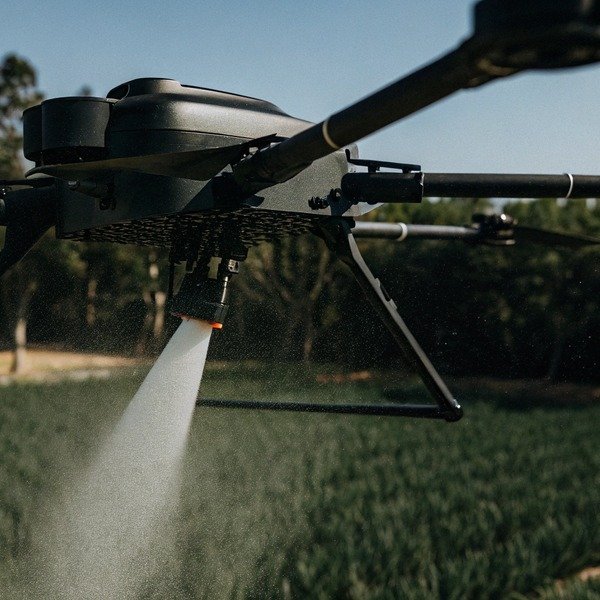
We frequently see buyers struggle to judge build quality through screens, risking their harvest on unproven equipment that looks perfect in videos but fails during critical field operations Harmonized System (HS) Code 1.
The main pitfalls when sourcing agricultural drones virtually include verifying manufacturing legitimacy without site visits, identifying uncalibrated sensor specifications, overlooking gaps in local technical support, and failing to confirm DDP shipping capabilities for hazardous lithium batteries.
Let’s examine how to avoid these costly mistakes and secure a partner who delivers reliable results always push for DDP 2.
How do I verify a supplier's manufacturing capacity and certifications without a physical visit?
When we audit our own supply chain, we know that glossy brochures often hide empty warehouses, leaving you with delayed shipments and no recourse when deadlines loom Harmonized System (HS) Code 3.
Verify a supplier remotely by requesting live video factory tours that show specific production lines in real-time, checking for verifiable ISO 9001 certifications on official registrar databases, and demanding client references that confirm actual delivery volumes.
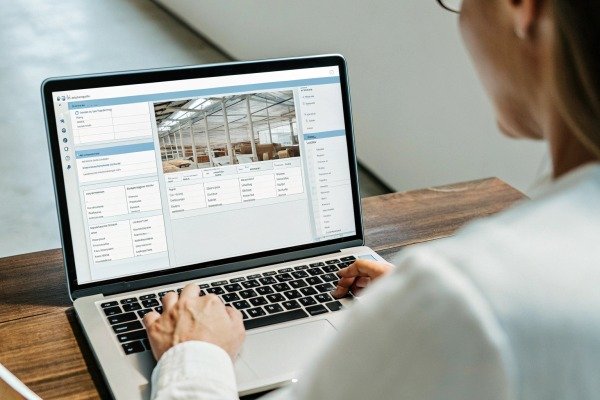
Identifying a genuine manufacturer in a virtual environment is difficult. Virtual booths often look identical, whether the company is a massive factory or a small trading office. You need to look past the marketing materials to find the truth.
The Live Video Audit
Never rely on pre-recorded factory tours. Anyone can hire a video team to film a rented facility for a day. Instead, request a live video call via Zoom or WhatsApp during your initial negotiations. Ask the sales representative to walk onto the factory floor. Ask them to show you specific machines, such as the CNC stations where drone frames are cut or the assembly line where flight controllers are installed. contrôleurs de vol 4
A legitimate manufacturer will be happy to show you their operations. If they refuse or make excuses about "trade secrets," this is a major warning sign. It often means they do not own the factory or have no stock.
Analyzing Supplier Types
It is crucial to know if you are dealing with a factory or a middleman. Both have pros and cons, but you must know who you are paying.
Table: Factory vs. Trading Company Signals
| Fonctionnalité | Genuine Manufacturer (Factory) | Trading Company (Reseller) |
|---|---|---|
| Gamme de produits | Focuses on a specific niche (e.g., only ag drones) | sells everything (drones, toys, cables, cameras) |
| Personnalisation | Can change frame design or software features | Can only add a logo sticker |
| Technical Answers | Engineers verify details quickly | Answers take days (they must ask the factory) |
| Video Proof | Can show live assembly lines instantly | Refuses live calls or shows office space only |
Verifying Certifications
Do not accept a PDF file as proof. Many certificates are faked. If a supplier claims to have ISO 9001 management certification, ask for the license number. ISO 9001 management certification 5 ISO 9001 management certification 6 Go to the issuing body’s website and verify it. For agricultural drones, look for specific certifications like CE, FCC, and RoHS. If you are in the US or Europe, these are non-negotiable for import. A supplier who cannot provide verifiable documents puts you at risk of having your goods seized by customs.
What specific technical questions reveal if the agricultural drone performance matches the specs?
Our engineers spend weeks calibrating spray nozzles, yet many virtual vendors claim impossible flow rates that lead to uneven crop coverage and wasted chemical inputs.
Ask for unedited flight logs showing battery voltage sag under full payload, specific nozzle flow rate data at varying pressures, and proof of obstacle avoidance testing in dusty, high-interference environments rather than clean lab settings.

Technical specifications on a website often represent the "best case scenario." In the field, conditions are never perfect. To find the truth, you must ask questions that dig deeper than the brochure.
Scrutinizing Battery Performance
The most common lie in the drone industry concerns flight time. A spec sheet might say "25 minutes flight time," but this is often measured while hovering with an empty tank. You need to know the "flight time at full payload."
Ask the supplier for a voltage curve chart. This shows how the battery performs when the drone is carrying a full tank of liquid. If the voltage drops too quickly (voltage sag), the drone may fall out of the sky before the job is done.
Spray System Accuracy
Agricultural drones are precision tools. If the flow rate is inconsistent, you will burn crops or fail to kill pests. Do not just ask "what is the flow rate?" Ask for the deviation percentage.
- Pump Type: Ask if they use peristaltic pumps or diaphragm pumps. Peristaltic pumps are generally more durable for corrosive chemicals.
- Nozzle Calibration: Ask how they calibrate the flow meter. A good supplier will have a specific protocol for this.
Software and Geofencing
Hardware is only half the battle. Many drones sold at virtual shows come with generic software that may not work in your region.
Table: Technical Reality Check
| Spécifications | Marketing Claim | The Question You Must Ask |
|---|---|---|
| Temps de vol | "Up to 30 minutes" | "What is the flight time with a full 30L tank at 5 meters/second speed?" |
| Gamme | "5km Control Range" | "What is the stable transmission distance at 3 meters altitude in a cornfield?" |
| Évitement des obstacles | "360-degree Radar" | "Does the radar detect thin power lines and dead branches, or just large walls?" |
| Étanchéité | "IP67 Rated" | "Is the entire drone IP67, or just the flight controller box?" |
The Field Test Video Request
Ask the supplier to record a specific test for you. For example, ask them to fly the drone in a straight line, spray water, and then return to home automatically. This proves the software works and the GPS is stable. If they send a generic marketing video instead, be very cautious.
How can I ensure the supplier offers reliable after-sales support and spare parts availability?
We maintain a dedicated parts inventory because we know downtime destroys farm profits, while many virtual sellers disappear the moment a rotor arm breaks during the season.
Ensure reliable support by verifying the supplier has a documented spare parts inventory list with guaranteed lead times, offers English-language technical manuals, and provides direct access to engineering staff rather than just general sales representatives.
In agriculture, timing is everything. If your drone breaks during the spraying window, you cannot wait three weeks for a replacement part from China. You need a supplier who understands the urgency of your business.
The "Harvest Window" Test
Ask the supplier this specific question: "If a motor fails on a Tuesday, how fast can you ship a replacement to my location?" If their answer is "we will check with the factory," walk away. A professional supplier keeps key parts in stock and can ship them via DHL or FedEx immediately.
Spare Parts Availability
You should buy a "crash kit" along with your drone. This kit includes the parts that are most likely to break. By purchasing this upfront, you test the supplier's ability to supply parts before you even need them.
Table: Essential Spare Parts Checklist
| Composant | Pourquoi vous en avez besoin | Recommended Quantity |
|---|---|---|
| Hélices | They are the first to break in a crash. | 2 Full Sets (CW/CCW) |
| Train d'atterrissage | Takes high stress during rough landings. | 1 Set |
| Spray Nozzles | Clog easily with thick chemicals. | 10+ Units |
| Esc/Motor | Can overheat or fail after heavy use. | 1 Spare Unit |
| Pompes | Wear out over time due to chemicals. | 1 Spare Unit |
Technical Documentation and Training
Request a copy of the user manual before you buy. If the manual is in Chinese or poorly translated English, you will have serious trouble fixing problems later.
Ask if they offer video tutorials. Good suppliers have a library of YouTube videos showing how to replace a pump, how to calibrate the compass, and how to update firmware. If they only offer a PDF, you will struggle when repairs are needed.
Remote Engineering Support
Ask if their technicians can help remotely. Some advanced drone systems allow engineers to look at flight logs remotely to diagnose issues. Ask, "Can I send you the flight log file for analysis if the drone flies erratically?" A supplier who says "yes" has a real engineering team. A supplier who says "just send the drone back" will cost you thousands in shipping and months of time.
What red flags indicate a supplier might struggle with international shipping and customs clearance?
Our logistics team navigates complex dangerous goods regulations daily, whereas inexperienced suppliers often face seizure at customs due to improper battery labeling or missing documentation.
Watch for suppliers who cannot provide specific HS codes for agricultural drones, lack UN38.3 battery transport test reports, or refuse to offer DDP shipping terms that place the risk of customs clearance on them.
Shipping huge drones with high-capacity lithium batteries is not like shipping a t-shirt. It involves dangerous goods (DG) regulations, complex tariffs, and strict import rules. dangerous goods (DG) regulations 7 A supplier who treats shipping as an afterthought is a major red flag.
The Battery Shipping Trap
Agricultural drones use massive Lithium Polymer (LiPo) batteries. Batteries au lithium-polymère (LiPo) 8 Batteries au lithium-polymère (LiPo) 9 These are classified as Class 9 Dangerous Goods. They cannot simply be put in a cardboard box. They require:
- UN38.3 Certification: Proof the battery is safe to fly.
- DG Packaging: Special boxes with warning labels.
- Specialized Carriers: Standard mail cannot take them.
If a supplier says, "We will mark it as a toy to save shipping costs," do not do business with them. This is illegal and will result in your drone being destroyed by customs.
Understanding Incoterms
The terms of shipping define who takes the risk.
- FOB (Free on Board): The supplier puts it on the ship, and then it is your problem. If it gets stuck in US Customs, you have to fix it.
- DDP (Delivered Duty Paid): The supplier handles everything, including customs and duties, and delivers it to your door.
For a new buyer, always push for DDP. It forces the supplier to take the risk. If they refuse DDP, it might mean they are not confident in their ability to clear customs in your country.
Hidden Costs and Tariffs
Virtual suppliers often quote a low price that excludes import duties. In the US, drones from China may be subject to Section 301 tariffs. Droits de douane au titre de l'article 301 10 You need to know the Harmonized System (HS) Code.
- Ask the supplier: "What HS code will you use for the invoice?"
- Check this code against your local customs database.
- If the supplier does not know what an HS code is, they likely have little experience exporting to your region.
Documentation Accuracy
Customs clearance requires a Commercial Invoice and a Packing List. These must match exactly. If the invoice says "Agricultural Sprayer" but the box says "UAV," customs will hold it. Ask to see a sample invoice from a previous shipment (with private info redacted). This proves they know how to prepare the paperwork correctly.
Conclusion
Virtual sourcing demands vigilance. By validating production capacity, testing specs remotely, and securing logistics, you ensure your fleet performs when it matters most. Choose partners who value transparency.
Notes de bas de page
1. Global standard for classifying traded products for customs purposes. ︎
2. Explanation of international commercial terms for shipping and delivery. ︎
3. The World Customs Organization governs the international HS nomenclature system. ︎
4. Technical documentation for industrial-grade flight control systems from a market leader. ︎
5. Official ISO page defining the 9001 quality management standard. ︎
6. Official standard for quality management systems used to verify manufacturing legitimacy. ︎
7. IATA sets the global standards for transporting dangerous goods by air. ︎
8. General background on the battery technology used in agricultural drones. ︎
9. Authoritative technical overview of Lithium Polymer battery technology. ︎
10. Official USTR resource detailing Section 301 tariff actions. ︎

 English
  Spanish
  German
  French
  Dutch
Dutch  Arabic
