
Every week, our engineering team fields calls from US distributors confused about drone import rules Part 107 certification requirements 1. They want firefighting drones. They need them fast. But the regulatory maze stops them cold.
FAA import regulations for firefighting drones primarily involve Remote ID compliance, Part 107 certification requirements, and registration for drones over 250 grams. However, the FCC’s December 2025 ban on foreign drone components now intersects with FAA rules, requiring buyers to verify Blue UAS List status or domestic component thresholds before importing.
Let me walk you through exactly what you need to know Blue UAS List status 2. This guide covers verification steps, required certifications, OEM legality, and essential customs documents.
How do I verify that my imported firefighting drones meet current FAA Remote ID standards?
Our production line now integrates Remote ID modules into every unit before export FCC Part 15 compliance 3. Still, many buyers struggle to confirm compliance once drones reach US soil. The verification process confuses even experienced procurement managers Declaration of Compliance list 4.
To verify Remote ID compliance, check that your drone broadcasts its serial number, location, velocity, and control station position. The drone must use either Standard Remote ID (built-in module) or a Remote ID Broadcast Module. Verify the module appears on the FAA's Declaration of Compliance list before purchase.

Understanding Remote ID Requirements
Remote ID acts like a digital license plate for drones. Since September 2023, the FAA requires most drones over 250 grams to broadcast identification data. For firefighting drones, this rule applies to nearly every model because payload capacity demands larger frames.
The broadcast must include:
- Drone serial number or session ID
- Latitude and longitude
- Geometric altitude
- Velocity
- Control station location
- Time mark
- Situation d'urgence
Two Paths to Compliance
| Compliance Method | Comment ça marche | Meilleur pour |
|---|---|---|
| Standard Remote ID | Built into drone firmware | New purchases, OEM orders |
| Broadcast Module | External device attached to drone | Retrofitting existing fleet |
When we calibrate our flight controllers at the factory, we configure Standard Remote ID as the default. This method proves more reliable for emergency operations. External modules can detach during aggressive firefighting maneuvers.
Étapes de vérification avant l'achat
First, ask your supplier for the FAA Declaration of Compliance (DOC) number. The FAA maintains a public list of approved Remote ID systems. Cross-reference this number against the official database.
Second, request a test flight video showing the Remote ID broadcast. Several smartphone apps can detect these signals. OpenDroneID and DroneScout work well for verification.
Third, confirm the Remote ID system broadcasts on both Bluetooth and Wi-Fi. Some modules only use one protocol. Firefighting operations near structures may experience signal interference. Dual-protocol systems offer backup.
Common Compliance Failures
Many imported drones fail verification for simple reasons. Firmware updates sometimes disable Remote ID. GPS antenna placement affects broadcast accuracy. Battery-saving modes may reduce broadcast frequency below FAA minimums.
Our quality control team tests every unit for these issues. We run 30-minute simulated flights and verify consistent broadcasts throughout. This step catches problems before shipping.
What specific FAA certifications should I require from my Chinese supplier before placing a bulk order?
In our experience exporting to the US market, certification gaps cause the biggest delays. Buyers assume one document covers everything. Reality proves more complex. Multiple agencies require separate approvals.
Require these certifications from your Chinese supplier: FCC Part 15 compliance for radio equipment, FAA Remote ID Declaration of Compliance, and Blue UAS List inclusion or NDAA compliance documentation. For firefighting-specific operations, also verify the drone supports Part 107 waiver applications for BVLOS and night operations.

The Certification Stack
Importing firefighting drones requires a layered certification approach. No single certificate suffices. Each agency controls different aspects.
| Agency | Certification | Objectif |
|---|---|---|
| FCC | Part 15 Grant | Radio frequency equipment approval |
| FAA | Remote ID DOC | Identification broadcast compliance |
| DoD | Blue UAS List | Security-vetted drone models |
| CBP | Country of Origin | Import duty classification |
FCC Part 15: The Gatekeeper
The December 2025 FCC ban changed everything. New drones with Chinese communication components face import blocks. However, grandfathering provisions exist.
Our engineering team redesigned our communication modules last year. We now offer two variants: one with original components for pre-ban inventory, and one with compliant alternatives for post-ban orders. Ask your supplier about their component sourcing.
The FCC requires specific documentation:
- Equipment Authorization Grant
- Test reports from accredited labs
- Component source declarations
- RF exposure assessments
Blue UAS List Considerations
The Defense Contract Management Agency manages the Blue UAS List. Drones on this list receive security vetting for government use. Private buyers benefit too. Blue UAS status signals thorough component review.
Currently, the list includes primarily US-allied manufacturers: Skydio, Parrot, Wingtra, and others. Chinese manufacturers face steep barriers. However, joint ventures and component substitution may qualify some models.
If your supplier cannot achieve Blue UAS listing, demand NDAA compliance documentation 5 instead. This proves the drone contains no components from banned entities like Huawei or ZTE.
Part 107 Waiver Support
Standard Part 107 rules limit operations to:
- Daylight hours
- Visual line of sight
- Below 400 feet AGL
- Away from people
Firefighting requires breaking all these rules. Your supplier should provide drones configured to support waiver applications. This means enhanced lighting systems, detect-and-avoid sensors, and robust telemetry.
When we design firefighting models, we include these features by default. Night-vision-compatible lighting helps with after-dark operations. Our detect-and-avoid systems use ADS-B receivers and radar to track manned aircraft. These features strengthen waiver applications.
Documentation Checklist for Bulk Orders
Request these documents before placing your order:
- Autorisation d'équipement accordée par la FCC
- FAA Remote ID Declaration of Compliance certificate
- NDAA compliance statement with component origin list
- Part 107 compatibility assessment
- Flight controller security audit report
- Data transmission encryption specifications
Can I legally import and sell OEM-branded firefighting drones without a US-based FAA Type Certificate?
Our OEM partners often ask this question. They want their brand on the drone. They worry about certification requirements. The answer depends on how you define "Type Certificate."
Yes, you can legally import and sell OEM-branded firefighting drones without a traditional FAA Type Certificate. Unlike manned aircraft, small UAS under 55 pounds do not require Type Certificates. However, you must ensure the drone meets Remote ID requirements, and your OEM agreement should transfer FCC authorization responsibilities clearly.
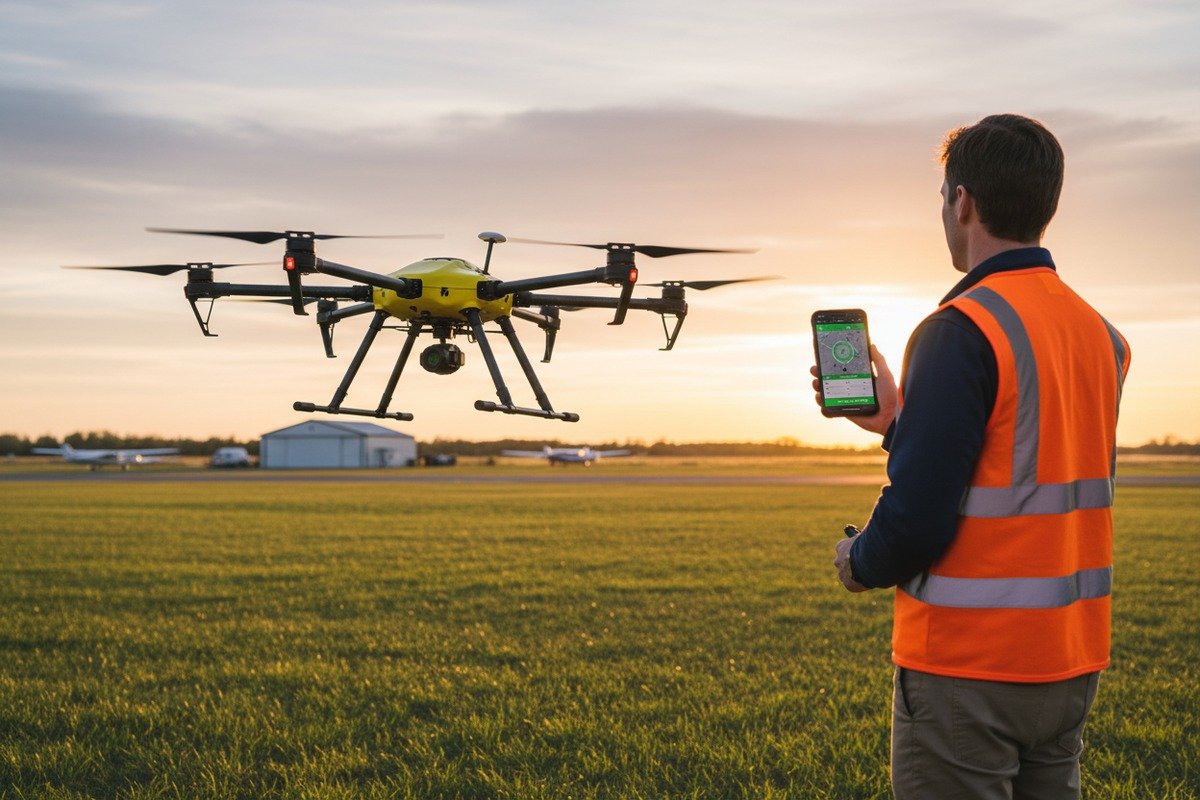
Type Certificates vs. Small UAS Rules
Le FAA Type Certificate system 6 governs manned aircraft. It requires extensive design review, manufacturing oversight, and continued airworthiness monitoring. This process costs millions and takes years.
Small UAS operate under different rules. Part 107 governs commercial drone operations without requiring Type Certificates. This regulatory approach treats drones more like consumer electronics than traditional aircraft.
What OEM Branding Requires
| Exigence | Manufacturer Responsibility | OEM Partner Responsibility |
|---|---|---|
| Remote ID DOC | List both parties or transfer | Verify listing accuracy |
| FCC Grant | May require new application | Confirm authorization transfer |
| Manuel de l'utilisateur | Provide master document | Localize and rebrand |
| Warranty | Define coverage terms | Honor terms to end users |
| Compliance | Maintain original specs | Report modifications |
When our clients request OEM services, we handle the technical compliance. They handle market positioning. This division works well when documented properly.
The FCC Transfer Challenge
FCC Equipment Authorization presents the trickiest element. The original grant names the responsible party. OEM branding may require:
- Amendment to existing grant (adding your company)
- New grant application under your name
- Contractual transfer of responsibility
Option three proves most common. We maintain the FCC grant. Our OEM contract specifies liability allocation. Your legal team should review these provisions carefully.
Import Documentation for OEM Products
Customs and Border Protection examines importer identity closely. OEM products may trigger additional scrutiny. Prepare these items:
- OEM agreement showing manufacturing authorization
- Letter from original manufacturer confirming relationship
- FCC grant showing either party name
- Bill of materials with country of origin per component
Risk Mitigation Strategies
OEM arrangements create shared liability. Protect yourself with these steps:
First, require quality certificates for every batch. Our factory provides SGS inspection reports. Third-party verification protects both parties.
Second, establish clear modification boundaries. Any change to radio systems, flight controllers, or safety features may void certifications. Document approved modification scope.
Third, maintain traceability. Serial numbers should link to production batches. If recalls occur, you need rapid identification capability.
Part 137 Considerations for Hazmat Operations
If your firefighting drones carry fire retardant or water with additives, Part 137 rules may apply. This agricultural aircraft operations regulation covers aerial application of hazardous materials.
Standard Part 107 prohibits hazardous materials. But Part 137 exemptions exist. The certification path differs significantly:
- Requires Commercial Pilot Certificate
- Demands aircraft airworthiness certificate
- Needs EPA-compliant application equipment
Our heavy-lift octocopter models can be configured for Part 137 compliance. The additional documentation burden increases costs but opens new market segments.
When we ship firefighting drones to US ports, documentation determines clearance speed. Missing papers cause delays. Wrong formats trigger inspections. Our logistics team has refined this process over hundreds of shipments.
Essential documents for customs clearance include: Commercial Invoice with HTS code 8806.29, FCC Equipment Authorization Grant, Remote ID Declaration of Compliance, Country of Origin Certificate, and NDAA compliance statement. For firefighting drones specifically, include end-use documentation showing emergency response application.

The Document Stack for Smooth Clearance
Your customs broker needs a complete package. Partial documentation triggers holds. CBP officers lack drone-specific expertise. Clear paperwork answers their questions before they ask.
| Document | Autorité de délivrance | Objectif |
|---|---|---|
| Facture commerciale | Exporter | Value declaration, classification |
| FCC Grant | FCC | Radio equipment authorization |
| Remote ID DOC | FAA | Flight compliance verification |
| Liste de colisage | Exporter | Contents verification |
| Country of Origin | Chamber of Commerce | Tariff determination |
| NDAA Statement | Fabricant | Security compliance |
| End-Use Certificate | Importer | Application verification |
HTS Code Selection Matters
Harmonized Tariff Schedule codes 7 determine duty rates. Drones fall under multiple possible classifications:
- 8806.21: Under 250 grams (unlikely for firefighting)
- 8806.22: 250 grams to 7 kg
- 8806.23: 7 kg to 25 kg
- 8806.24: 25 kg to 150 kg
- 8806.29: Other unmanned aircraft
Most firefighting drones classify under 8806.23 or 8806.24. Payload capacity pushes weight higher. Misclassification triggers penalties and delays.
FCC Documentation Details
The FCC Grant must match shipped equipment exactly. Model numbers, FCC IDs, and frequency ranges all require verification. Any mismatch raises red flags.
Include these FCC documents:
- Grant of Equipment Authorization (primary)
- Test reports (supporting)
- Block diagram showing radio architecture
- Frequency allocation table
Our quality assurance team verifies FCC ID labels before shipping. Photos documenting correct labeling help if questions arise.
NDAA Compliance Proof
Post-2019, NDAA Section 889 restricts government procurement of telecommunications equipment from certain Chinese companies. Even private imports face scrutiny because end users may include government agencies.
Your NDAA statement should declare:
- No covered telecommunications equipment present
- No covered video surveillance equipment present
- Component supplier audit completed
- No Huawei, ZTE, Hytera, Hikvision, or Dahua components
End-Use Documentation
Firefighting drones receive favorable treatment when properly documented. Emergency response applications align with national interests. Your end-use certificate should specify:
- Intended application: Wildfire detection, thermal mapping, emergency assessment
- End users: Fire departments, emergency management agencies, forestry services
- Geographic scope: Domestic US operations only
- No re-export intent
Working With Your Customs Broker
Choose a broker experienced with aerospace imports. General merchandise brokers lack context. They may not recognize FAA documents or understand FCC requirements.
Provide your broker with:
- Complete document package before shipping
- Contact information for your supplier's export team
- Prior entry numbers for similar shipments
- Photographs of labeled equipment
Our logistics department maintains direct communication channels with our US partners' brokers. This coordination prevents miscommunication across time zones.
Common Clearance Delays
Based on our shipping history, these issues cause most delays:
- FCC ID mismatch between documents and labels
- Weight discrepancy affecting HTS classification
- Missing NDAA declaration
- Country of origin questioning component sources
- Conformité de l'expédition des piles (UN38.3 test reports 8)
Lithium batteries deserve special attention. UN38.3 certification proves battery safety for air transport. Without this document, shipments may be rejected by carriers before reaching customs.
Conclusion
Importing firefighting drones requires navigating FAA, FCC, and CBP requirements simultaneously. Conformité de l'identification à distance 9, proper certifications, OEM documentation, and complete customs packages all demand attention. Work with experienced partners who understand this regulatory landscape. Your firefighting operations depend on getting these details right.
Notes de bas de page
1. Details the FAA’s Part 107 requirements for drone pilots. ︎
2. Provides the official list of secure drones for government use. ︎
3. Explains FCC regulations for electronic device emissions. ︎
4. Provides the official FAA list of approved Remote ID systems. ︎
5. Outlines requirements for National Defense Authorization Act Section 889. ︎
6. Describes the FAA’s aircraft type certification process. ︎
7. Defines the Harmonized Tariff Schedule for imported goods. ︎
8. Explains UN38.3 testing for safe lithium battery transport. ︎
9. Explains FAA Remote ID requirements for drones. ︎

 English
  Spanish
  German
  French
  Dutch
Dutch  Arabic
