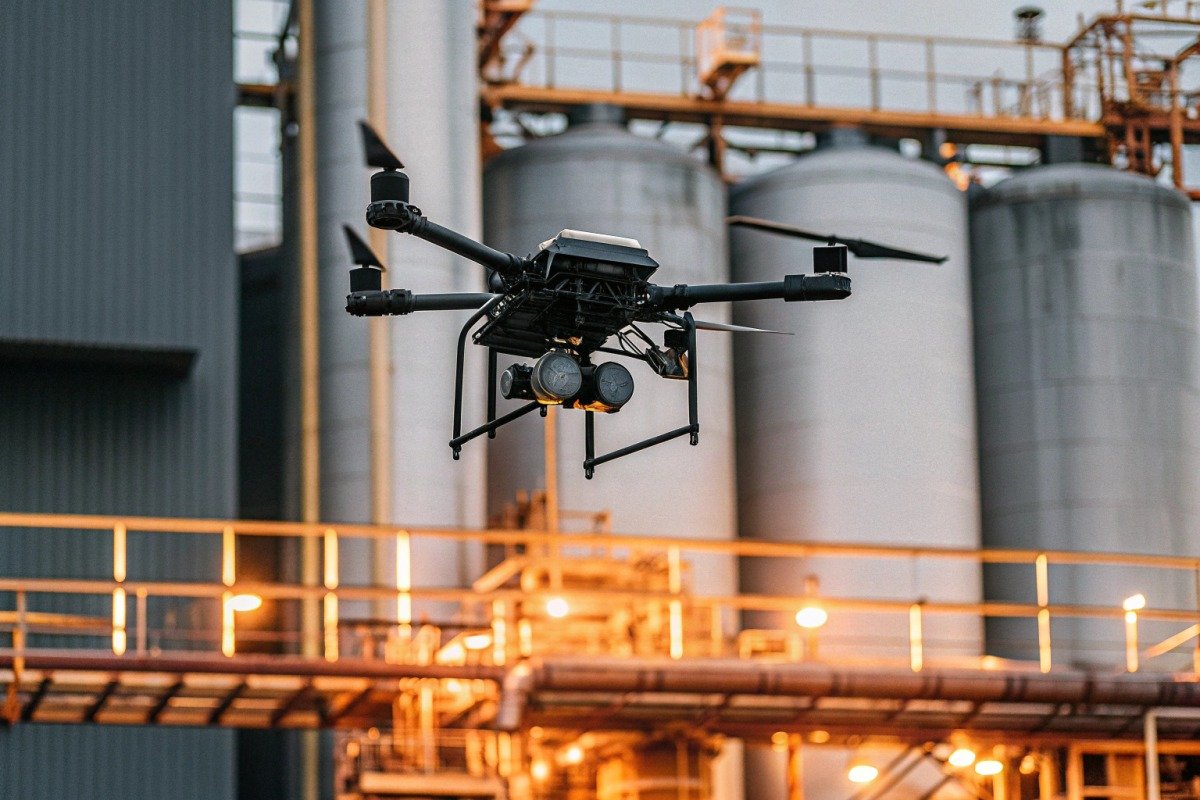
A single spark in a chemical park can trigger catastrophic losses. Our production team has spent years testing drone components in simulated hazardous environments, and we know the stakes are enormous.
Chemical park firefighting drones require ATEX or IECEx certifications for European and international markets, and NEC/CEC Class I Division 1 or 2 ratings for North America. These certifications verify that all drone components—including batteries, motors, cameras, and sensors—cannot ignite explosive gases or dusts during operation.
Navigating these certifications can feel overwhelming. This guide breaks down exactly what you need, how to verify compliance, and how to customize drones for your specific chemical park risks.
Which international explosion-proof certifications should I prioritize when sourcing firefighting drones for hazardous chemical zones?
When our engineering team designs drones for chemical parks, certification requirements drive every decision. Choosing the wrong certification standard wastes months and thousands of dollars.
Prioritize ATEX and IECEx certifications for global markets, and NEC/CEC Class/Division ratings for North America. ATEX covers European Union requirements, while IECEx provides international recognition across 35+ countries. For US and Canadian operations, Class I Division 1 (C1D1) certification is essential for zones with continuous explosive atmospheres.
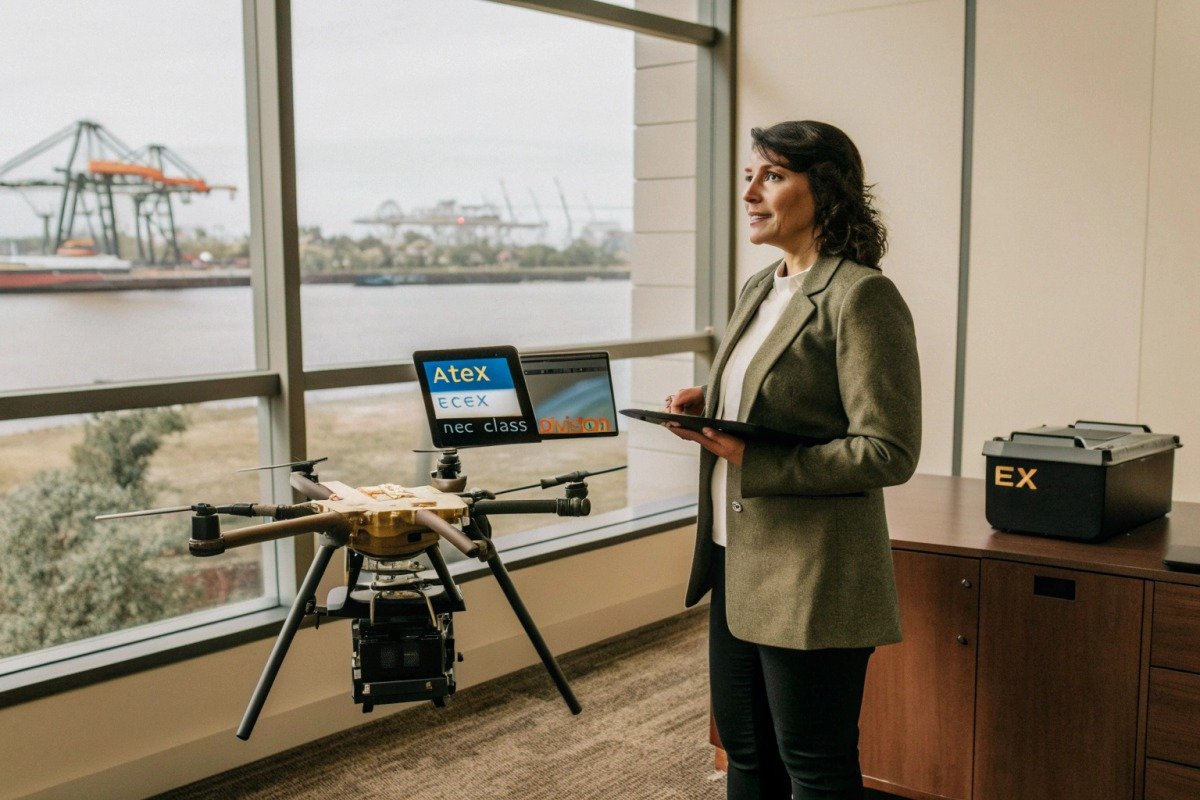
Understanding Zone Classifications
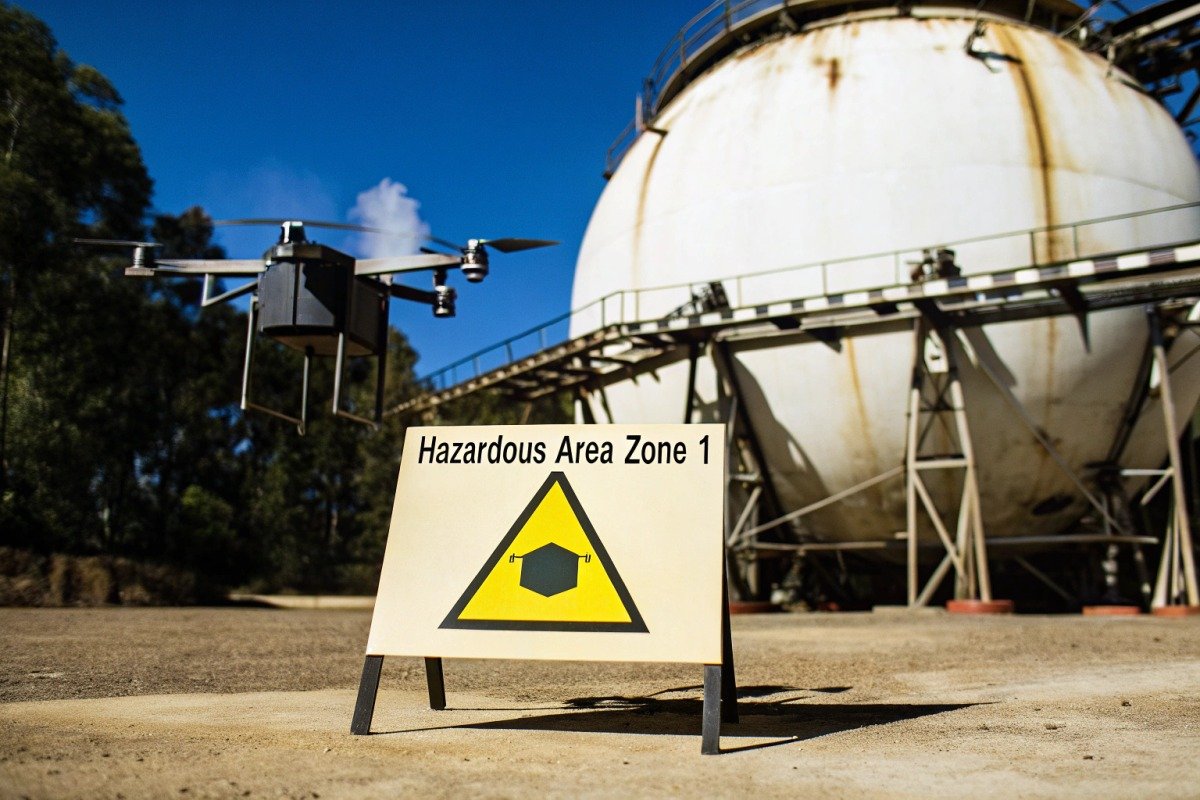
Chemical parks contain different hazard levels. Zone classifications 1 tell you which certification level you need.
Zone 0 means explosive atmospheres exist continuously. Zone 1 means explosions are likely during normal operations. Zone 2 means explosions are unlikely and short in duration. Most chemical park firefighting operations fall into Zone 1 or Zone 2 categories.
Our experience exporting to European chemical facilities shows that Zone 1 certification covers most active firefighting scenarios. Zone 2 certifications work well for routine patrols and monitoring tasks.
Regional Certification Comparison
| Region | Primary Standard | Zone System | Typical Requirement |
|---|---|---|---|
| Union européenne | ATEX Directive 2014/34/EU | Zones 0, 1, 2 (gases) / 20, 21, 22 (dusts) | Zone 1 or Zone 2 for firefighting drones |
| International (35+ countries) | IECEx | Zones 0, 1, 2 / 20, 21, 22 | Zone 1 for near-leak operations |
| États-Unis | NEC Article 500 | Class I/II, Division 1/2 | Class I Division 1 for active firefighting |
| Canada | CEC | Class I/II, Division 1/2 | Class I Division 1 or 2 |
Protection Methods You Should Know
Certifications also specify how equipment prevents ignition. The main methods include:
Intrinsic Safety (Ex i): Limits electrical energy so it cannot cause ignition. Intrinsic Safety 2 Our flight controllers use this method.
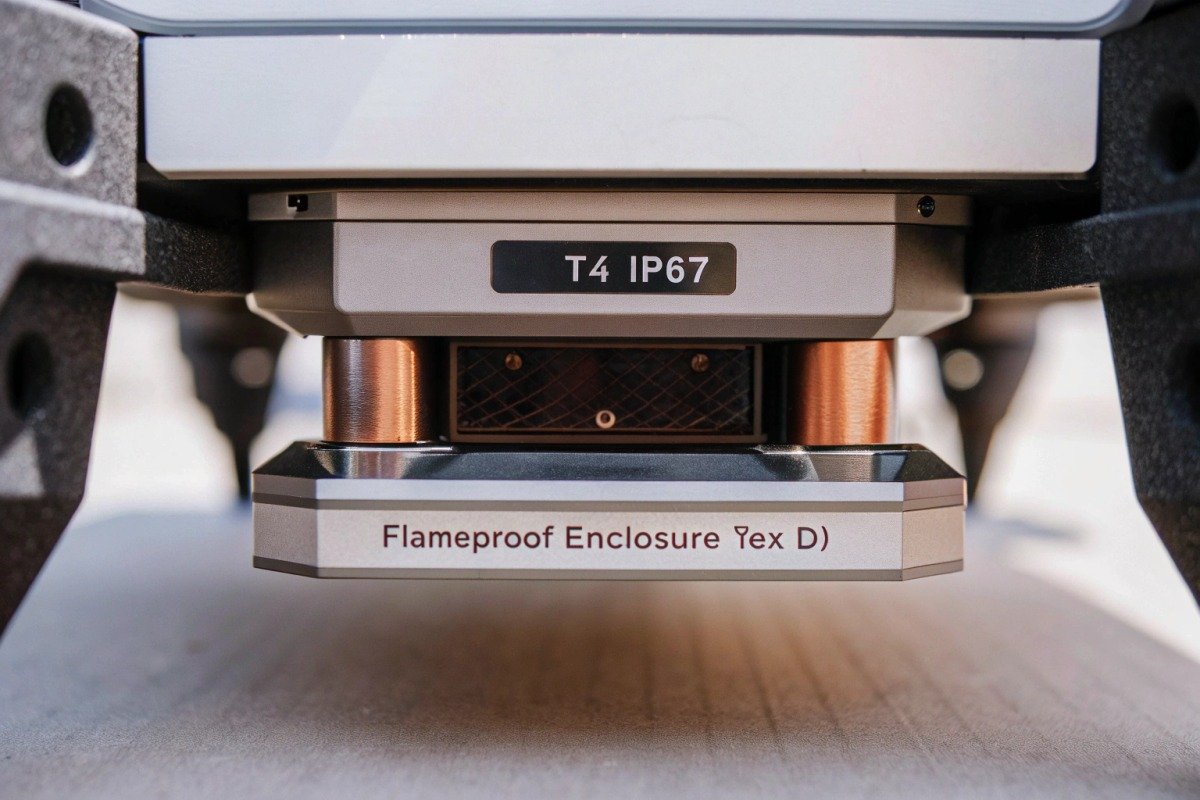
Flameproof Enclosures (Ex d): Contains any internal explosion and prevents it from spreading. Flameproof Enclosures 3 Common for motors and batteries.
Pressurization (Ex p): Maintains positive pressure with clean air to keep hazardous gases out of enclosures.
Most certified firefighting drones combine multiple protection methods. When we calibrate our systems, we ensure each component uses the appropriate method for its function.
Key Specifications to Verify
Always check these specifications when evaluating certified drones:
- Temperature class (T4 rating means surface temperatures stay below 135°C)
- Indice de protection IP 4 (IP65 or higher for dust and water protection)
- Gas group compatibility (Groups A-D for gases, Groups E-G for dusts)
- Equipment protection level (EPL Ga/Gb for Zone 0/1, Gc for Zone 2)
How do I verify that my drone supplier's explosion-proof ratings meet the specific safety requirements of my local government fire departments?
We receive this question constantly from procurement managers. Local fire departments often have requirements beyond standard certifications. Verifying compliance protects your investment and your reputation.
Request original certification documents with certificate numbers, verify them against the issuing body's online database, and cross-reference with your local fire department's approved equipment list. Contact the certification body directly if any documentation appears inconsistent or incomplete.
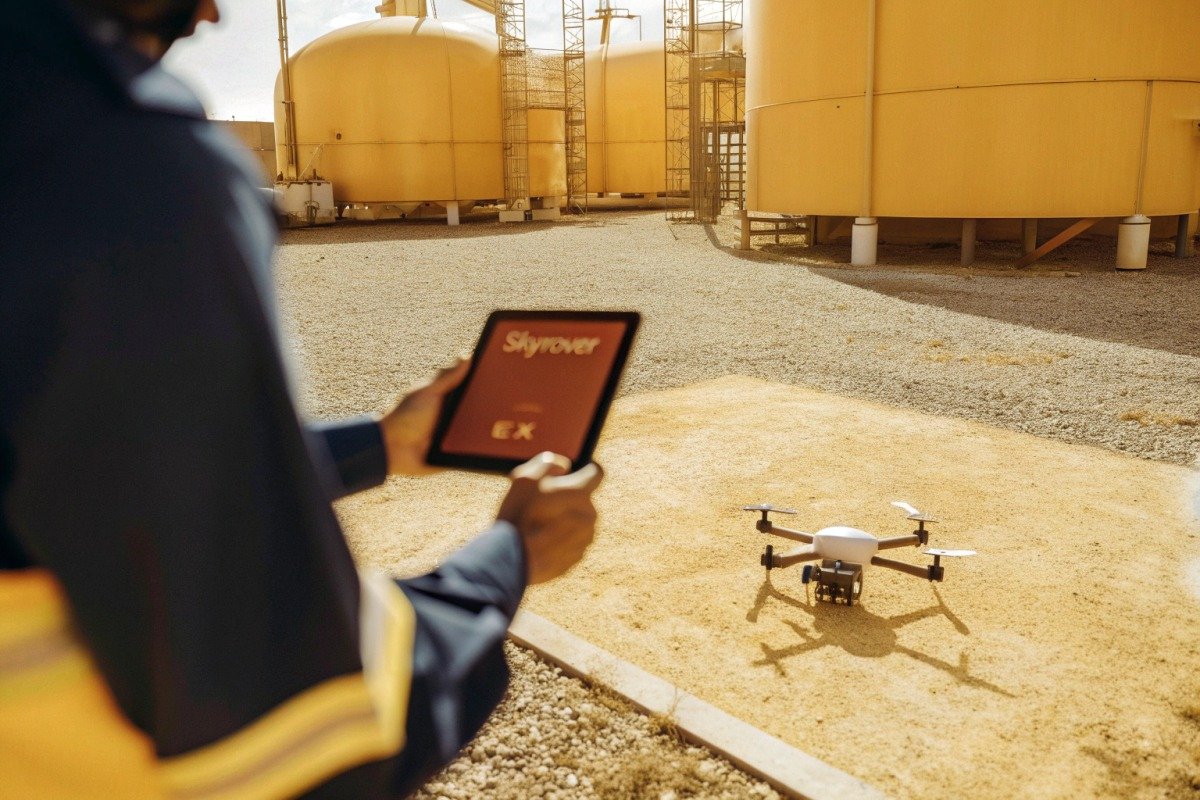
Processus de vérification étape par étape
Start by requesting complete documentation from your supplier. Our sales team provides certification packages that include everything buyers need.
Step 1: Obtain the original certificate with the certificate number, issuing body name, and expiration date.
Step 2: Visit the certification body's official website. ATEX certificates can be verified through notified body 5 databases. IECEx maintains an online certificate system at iecex.com.
Step 3: Compare the certificate details with the exact drone model and configuration you plan to purchase.
Step 4: Confirm that all payloads and accessories are listed on the certificate. A drone certified without its thermal camera may not be legal to operate with that camera attached.
Documentation Checklist
| Document | Objectif | Méthode de vérification |
|---|---|---|
| Type Examination Certificate | Proves design meets standards | Check issuing body's database |
| Déclaration de conformité | Manufacturer's legal declaration | Verify signature and date |
| Technical File Summary | Details construction and testing | Compare with actual product |
| Quality Assurance Notification | Confirms production monitoring | Verify QAN number |
| Rapports d'essais | Shows specific test results | Request from manufacturer |
Working With Local Fire Departments
Fire departments often maintain approved equipment lists. Before purchasing, contact your local fire marshal or equipment approval office.
In our experience working with US distributors, some fire departments require additional documentation beyond standard certifications. These may include:
- Pilot training certificates for hazardous location operations
- Maintenance and inspection protocols
- Emergency shutdown procedures
- Communication encryption standards for secure operations
Les signaux d'alerte à surveiller
Be cautious if suppliers cannot provide:
- Original certificates (not photocopies without verification codes)
- Certificate numbers that match online databases
- Documentation for every component and accessory
- Clear expiration dates and renewal records
Some manufacturers modify consumer drones and claim explosion-proof status. These modifications rarely meet certification standards. Our factory builds explosion-proof features into the original design, ensuring every component passes certification testing.
What documentation do I need from my manufacturer to ensure my industrial drones comply with ATEX or IECEx standards during import?
Customs clearance for explosion-proof equipment requires precise documentation. Missing paperwork causes delays, storage fees, and sometimes seizure. Our export team handles these shipments weekly.
You need the EU Declaration of Conformity, ATEX or IECEx Type Examination Certificate, technical file summary, quality assurance notification, and product marking photos showing the Ex symbol and certification details. Additional customs forms depend on your destination country's specific import requirements.
Essential ATEX Documentation
For European imports, ATEX Directive 2014/34/EU governs equipment for explosive atmospheres. The required documents include:
EU Declaration of Conformity: This is the manufacturer's formal statement that the product meets ATEX requirements. It must include the manufacturer's name and address, product identification, applicable directives, harmonized standards 6 used, notified body information, and an authorized signature.
Type Examination Certificate: Issued by a notified body after testing the drone design. The certificate describes the exact product, its classification, and any conditions of use.
Technical File: Contains detailed drawings, component lists, risk assessments, and test reports. Customs may request a summary rather than the complete file.
Essential IECEx Documentation
IECEx documentation follows a similar structure but uses different terminology:
| Document | Description | Issuing Body |
|---|---|---|
| Certificate of Conformity (CoC) | Confirms product meets IEC standards | ExCB (Certification Body) |
| Rapport d'essai | Details all testing performed | ExTL (Testing Laboratory) |
| Quality Assessment Report | Verifies manufacturing controls | ExCB |
| Mark License | Authorizes use of IECEx mark | IECEx Secretariat |
Import Process Timeline
When we ship certified drones to US or European customers, proper documentation cuts clearance time significantly. Here is a typical timeline:
Pre-shipment (2-4 weeks): Gather all certificates, translate if necessary, and prepare customs declarations.
In transit (1-3 weeks): Documents sent separately or with shipment depending on courier requirements.
Customs clearance (1-7 days): Proper documentation means 1-2 days. Missing documents can extend this to weeks.
Post-clearance: Keep copies of all import documentation for at least 10 years for regulatory audits.
Country-Specific Requirements
Different countries add requirements beyond base certifications:
United States: May require FCC compliance for radio equipment, FAA registration 7, and state-level permits.
Germany: Requires German-language operating instructions and safety data sheets for any hazardous materials.
Australia: Accepts IECEx but may require additional RCM marking for electrical safety.
Our documentation packages include all standard requirements. Custom requests, like translated manuals, are available with advance notice.
Can I customize the explosion-proof features of my firefighting drones to match the unique gas and dust risks of my chemical park project?
Every chemical park has different hazards. Some face methane risks. Others deal with fine metal dusts. Our design team works with clients to match drone specifications to specific site conditions.
Yes, explosion-proof features can be customized, but each modification requires recertification. You can specify gas groups, temperature classes, and protection methods to match your site's hazards. However, expect 6-12 months for certification testing after any significant design change.
Understanding Customization Options
Customization happens at multiple levels. Some changes are simple. Others trigger full recertification.
Low-impact changes include software updates, paint colors, and branding. These typically do not affect certification status.
Medium-impact changes include camera upgrades to certified alternatives, battery capacity changes within the same family, and antenna modifications.
High-impact changes include adding gas detection sensors, changing motor types, modifying enclosure designs, and adding foam dispensing systems. These require full recertification.
Gas Group Matching
Different gases require different protection levels. When designing for a specific chemical park, we identify which gas groups are present:
| Gas Group | Example Substances | Required Protection Level |
|---|---|---|
| Group IIA | Propane, Ammonia, Methane | Standard Ex d or Ex i |
| Group IIB | Ethylene, Hydrogen Sulfide | Enhanced sealing required |
| Group IIC | Hydrogen, Acetylene | Highest protection level |
Most chemical parks contain Group IIA or IIB substances. Group IIC requires the most robust protection and is more expensive to certify.
Dust Hazard Customization
Chemical parks processing powders or granules face dust explosion risks. Dust groups use different classifications:
Group IIIA: Combustible flyings (fibers, lint)
Group IIIB: Non-conductive dusts (grain, plastic)
Group IIIC: Conductive dusts (metal powders, carbon)
When our engineering team designs for dust environments, we focus on preventing dust ingress and controlling surface temperatures. IP6X ratings prevent dust entry. Temperature class T4 or better keeps surfaces below dust ignition points.
The Recertification Reality
Customization sounds appealing, but timelines matter. Based on our factory's experience:
- Minor component swaps: 3-6 months
- New sensor integration: 6-9 months
- Major design changes: 9-12 months
- New protection method: 12+ months
Costs range from $15,000 for minor modifications to $150,000+ for major redesigns including testing fees.
Practical Customization Approach
We recommend this approach for clients with unique requirements:
Step 1: Conduct a site hazard assessment 8. Identify all gas and dust types, zone classifications, and operational scenarios.
Step 2: Compare site requirements with existing certified drone configurations. Often, a standard model already meets your needs.
Step 3: If customization is necessary, prioritize changes that do not trigger recertification. Software modifications and payload swaps within certified families are fastest.
Step 4: For major customizations, budget for 12+ months and work closely with certification bodies from the start.
Our OEM services include support throughout this process. We help clients determine which customizations are feasible within their timeline and budget constraints.
Conclusion
Explosion-proof certifications protect lives and investments in chemical parks. Prioritize ATEX, IECEx, or NEC standards based on your market. Verify all documentation thoroughly. Plan ahead if customization is needed.
Notes de bas de page
1. Explains the different hazard levels and their definitions. ︎
2. Provides a detailed explanation of this critical explosion protection method. ︎
3. Describes how this method prevents explosions from spreading to hazardous atmospheres. ︎
4. Defines the international standard for ingress protection against solids and liquids. ︎
5. Explains the role of organizations authorized to assess conformity to EU directives. ︎
6. Provides information on standards that offer a presumption of conformity with EU law. ︎
7. Outlines the mandatory registration process for drones operating in the United States. ︎
8. Explains the process of identifying and evaluating potential hazards at a location. ︎

 English
  Spanish
  German
  French
  Dutch
Dutch  Arabic
