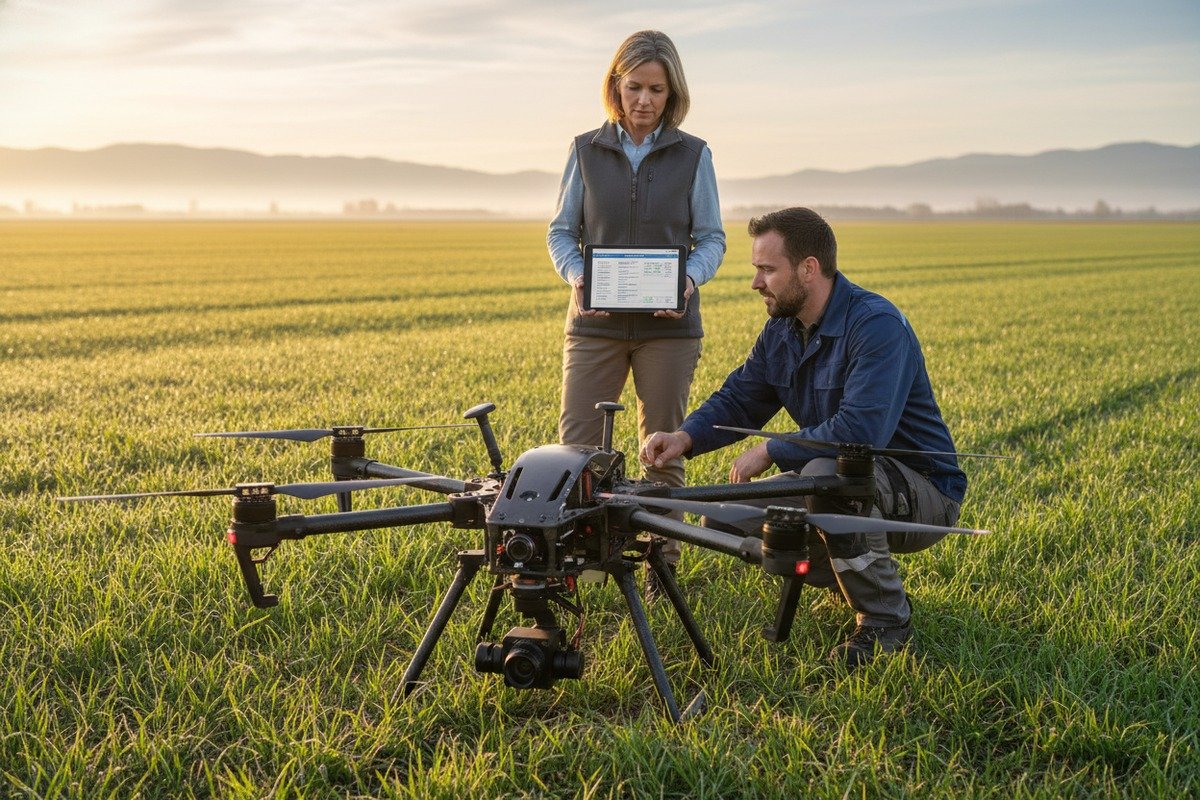
Every season, our production floor ships hundreds of drones agricoles 1 to farms worldwide. Yet we’ve learned that the real test begins not in our factory, but in the field. Buyers often struggle to separate marketing claims from actual performance—a problem that costs time, money, and crop yields.
To verify on-site commissioning and demos for agricultural drones, prepare a detailed checklist covering hardware inspection, calibration tests, and regulatory compliance. Monitor spraying accuracy through flow rate, swath width, and deposition uniformity. Evaluate supplier engineering depth, and request documented test results for quality assurance.
This guide breaks down each verification step. You’ll learn exactly what to check, measure, and document before signing off on any agricultural drone purchase.
How do I prepare a comprehensive checklist for my agricultural drone on-site commissioning?
When we ship our hexacopter sprayers to North American distributors, one question comes up repeatedly: "What should I check first?" The truth is, most commissioning failures trace back to skipped pre-flight steps regulatory compliance 2. A rushed setup leads to calibration errors, safety risks, and wasted chemicals.
A comprehensive commissioning checklist covers three areas: hardware inspection (propellers, motors, batteries, sensors), software verification (firmware, GPS, RTK positioning), and environmental assessment (weather, obstacles, takeoff zones). Include payload calibration, regulatory documents, and emergency protocols to ensure safe, accurate field operations.
Hardware Inspection Essentials
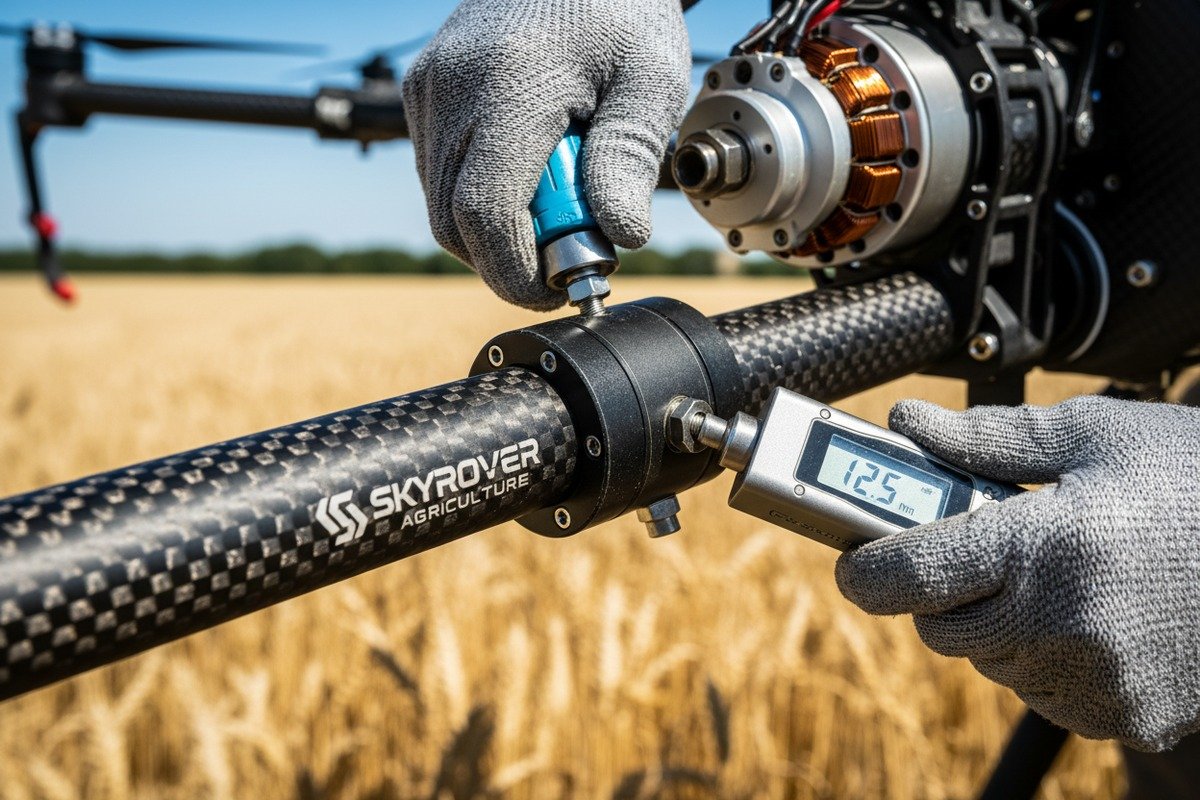
Start with the physical drone. Check each propeller for cracks or warping. Inspect motor mounts for loose bolts. Examine the carbon-fiber frame for stress fractures supplier engineering depth 3. Our engineering team recommends using a torque wrench on all critical fasteners—over-tightening causes failures just as often as under-tightening.
Battery security matters more than most buyers realize. Ensure locking tabs engage fully. Test voltage under load, not just resting voltage. A battery showing 24V at rest might drop below safe thresholds during aggressive maneuvers.
Software and Calibration Verification
Firmware updates should happen before field arrival, not during the demo. Verify the flight controller version matches the manufacturer's current stable release. Check GPS signal strength—we recommend at least 12 satellites locked before any test flight.
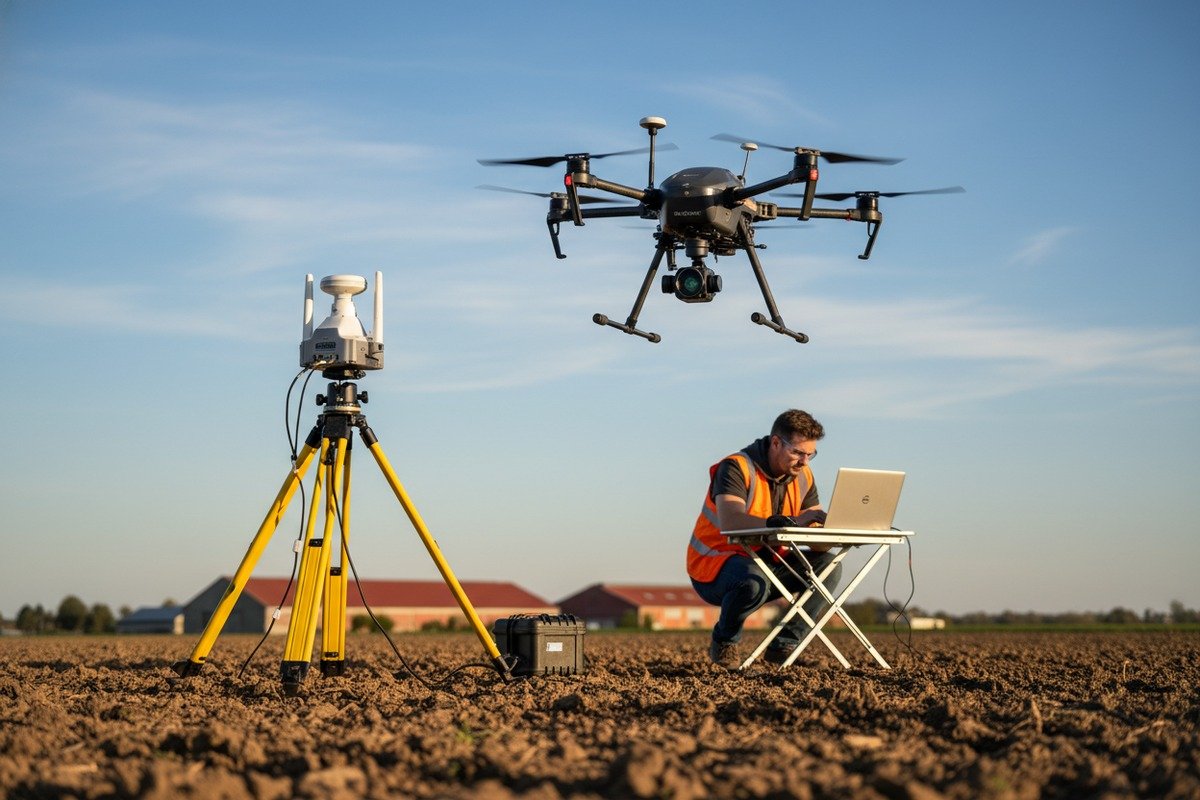
RTK positioning accuracy 4 separates professional agricultural drones from consumer models. Confirm the base station connects properly. Test positioning drift over 10 minutes; drift exceeding 2cm indicates setup problems.
| Inspection Category | Key Items | Pass Criteria |
|---|---|---|
| Hélices | Cracks, balance, mounting | No visible damage, secure fit |
| Moteurs | Spin test, heat check | Smooth rotation, no overheating |
| Piles | Voltage, locking tabs, swelling | Full charge, secure connection |
| GPS/RTK | Satellite count, drift test | ≥12 satellites, <2cm drift |
| Sensors | LiDAR, obstacle avoidance | Responsive at rated distances |
Environmental and Regulatory Readiness
Walk the test area before unpacking equipment. Note power lines, trees, and buildings. Identify wind patterns. Our field technicians always check weather forecasts three times: morning, midday, and one hour before flight.
Bring printed copies of FAA Part 107 certification 5, Part 137 agricultural aircraft operator certificate, and any required exemptions. Some buyers forget pesticide labels—these are legally required for chemical application flights.
Emergency Protocol Review
Know the return-to-home behavior. Test the manual override. Identify the kill switch location. Every person on site should know the emergency landing procedure. We've seen demos fail not because equipment malfunctioned, but because operators panicked without clear protocols.
What specific performance metrics should I monitor during the live demo to verify the drone's spraying accuracy?
In our experience exporting to European agricultural cooperatives, buyers often watch demos without knowing what to measure. A drone flying smoothly means nothing if spray distribution fails. Accurate spraying saves chemicals, protects crops, and determines your return on investment.
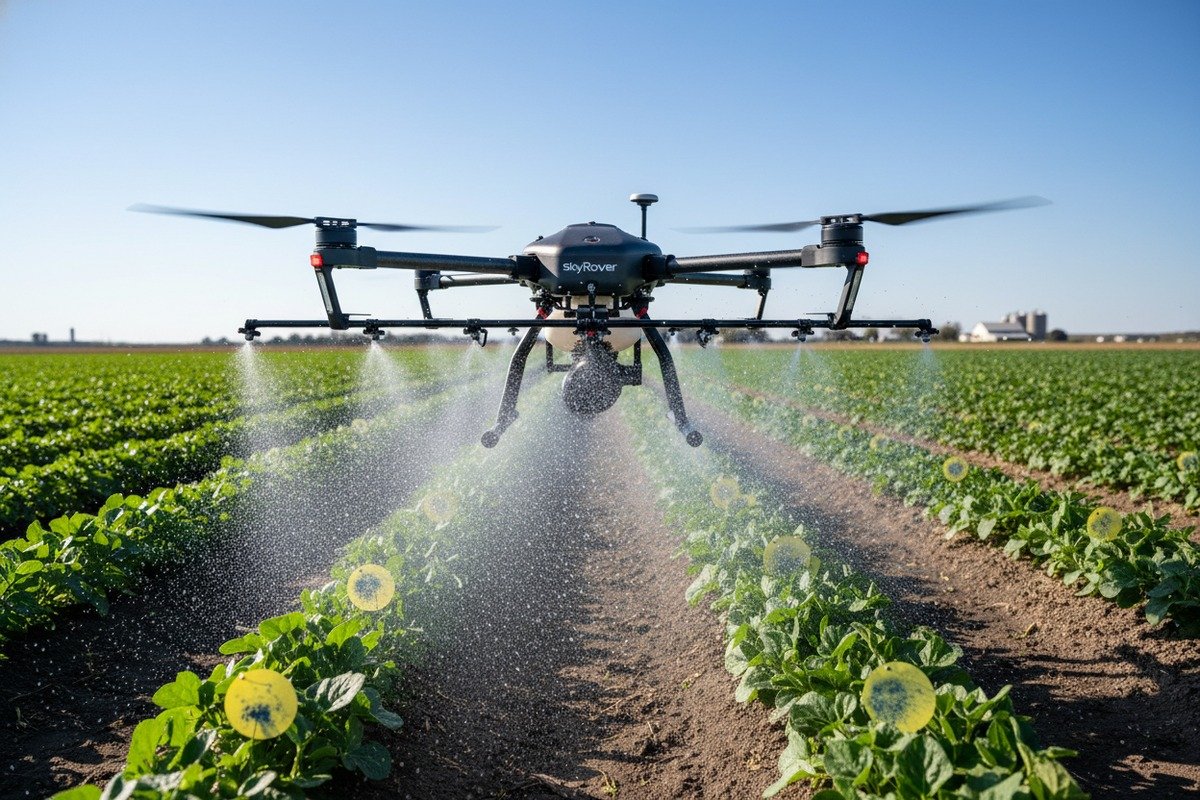
Monitor five key metrics during spray demos: swath width consistency, flow rate accuracy (±5% tolerance), deposition uniformity across the spray pattern, altitude stability (±0.5m), and overlap precision between passes. Use water-sensitive paper or collection trays at marked intervals to ground-truth aerial application claims.
Setting Up the Test Course
Mark a 200-meter flight line with flags every 50 meters. Place water-sensitive paper 6 or collection trays at each flag position. Extend sampling points 2 meters beyond the claimed swath width on each side. This setup reveals both pattern accuracy and edge performance.
Our calibration team uses a simple rule: if the demo doesn't include ground sampling, the accuracy claims are unverified. Never accept spray performance based solely on visual observation or manufacturer specifications.
Flow Rate and Pressure Monitoring
Request real-time flow rate data during the demo. Compare displayed values against pre-calibrated targets. Flow rates should remain within ±5% of the set value throughout the pass. Fluctuations indicate pump inconsistency or nozzle blockage.
Spray pressure requires separate verification. Some drones display flow rate accurately while pressure varies, causing droplet size changes. Ask about auxiliary pressure gauges or camera systems that show nozzle output during flight.
| Métrique | Target Value | Acceptable Range | Measurement Method |
|---|---|---|---|
| Swath Width | As specified | ±10% | Ground markers + collection |
| Flow Rate | Set application rate | ±5% | Onboard telemetry |
| Deposition CV | <15% coefficient of variation | <20% | Lab analysis of samples |
| Flight Altitude | Set height | ±0.5m | RTK data logging |
| Overlap | 0-10% as programmed | ±5% | GPS track analysis |
Interpreting Deposition Patterns
Collect samples immediately after the demo flight. Graph the relative deposition across the swath width. A proper pattern shows a central plateau with 50% deposition at the edges. Peaks and valleys indicate height problems or nozzle failures.
Repeat the test flight at least twice. Consistent patterns prove system reliability. Variations between passes suggest calibration instability or environmental sensitivity that will cause problems during actual operations.
Altitude and Speed Stability
Review flight logs after the demo. Check altitude variance throughout the spray pass. Terrain-following systems should maintain height within 0.5 meters over undulating ground. Speed variations affect application rate—look for consistent ground speed data.
Ask to see the flight path overlay on a map. Compare planned versus actual routes. GPS track analysis reveals whether the drone maintains programmed overlap percentages between adjacent passes.
How can I evaluate the supplier's engineering support and technical depth during the on-site process?
When we train distributor technicians at our Xi'an facility, we emphasize that equipment quality means nothing without support depth. A supplier who disappears after the sale leaves you stranded during critical spray seasons. The demo period reveals support capabilities that sales calls cannot.
Evaluate supplier engineering depth by testing their technicians' troubleshooting skills, asking detailed questions about system architecture, requesting customization examples, and verifying remote support infrastructure. Strong suppliers provide clear technical documentation, demonstrate firmware modification capabilities, and offer defined response time guarantees.
Testing Technical Knowledge
Ask the demo technician to explain the flight controller logic. How does terrain-following work? What triggers obstacle avoidance? Vague answers indicate shallow technical depth. Our engineers can explain every system interaction because they designed them.
Present a hypothetical problem: "The drone drifts left during spraying. What would you check?" Competent technicians list specific causes—compass interference, motor imbalance, payload asymmetry. Generic responses suggest limited real-world experience.
Customization and Development Capability
Request examples of previous customization projects. Can they modify spray patterns for specific crop geometries? Have they developed custom software integrations for farm management systems? Suppliers with OEM experience demonstrate this through documented case studies.
Ask about SDK access and API documentation. Serious agricultural operations need data integration with existing platforms. Suppliers who offer only closed systems limit your operational flexibility and long-term technology investments.
| Support Indicator | Strong Supplier | Weak Supplier |
|---|---|---|
| Troubleshooting Response | Specific diagnostic steps | "Send it back for repair" |
| Technical Documentation | Complete system manuals | Marketing brochures only |
| Customization History | Documented OEM projects | No examples available |
| Remote Support | Video call capability, screen sharing | Email only |
| Disponibilité des pièces | Stocked inventory, 48-hour shipping | 4-6 week lead times |
| Mises à jour des microprogrammes | Regular releases, changelog provided | Infrequent, undocumented |
Remote Support Infrastructure
Test the remote support system during the demo. Ask the supplier to connect remotely and access flight logs. Can they diagnose issues from their office? Our support team uses screen sharing and telemetry upload to resolve 80% of field problems without on-site visits.
Verify time zone coverage. A supplier 12 hours ahead provides support during your night—useless for daytime emergencies. Ask about guaranteed response times and escalation procedures for critical failures during spray season.
Parts and Repair Ecosystem
Examine the spare parts inventory. Are common wear items—nozzles, pumps, propellers—available for immediate shipping? Long lead times on basic components indicate supply chain weaknesses that will cause downtime.
Ask about repair authorization. Can local technicians perform component-level repairs, or must everything return to the factory? We provide repair training and parts kits because downtime during spray windows costs more than equipment itself.
Formation et transfert de connaissances
Evaluate the training offer. Does the supplier provide comprehensive operator certification? What about maintenance training for your technical staff? Written manuals without hands-on training leave knowledge gaps that cause accidents and equipment damage.
Request references from existing customers in your region. Contact them directly. Ask about real support experiences—not sales promises, but actual problem resolution during field operations.
What documentation and test results should I request after the demo to ensure the drone meets my quality standards?
Our quality control team reviews every unit before export, but we've learned that buyers need their own documentation for customs, insurance, and operational compliance. The demo proves capability; documentation proves consistency and provides legal protection.
Request flight logs with GPS tracks, spray calibration certificates, third-party inspection reports, regulatory compliance documents (FAA certificates, exemptions), warranty terms, and maintenance schedules. Obtain serial numbers, firmware versions, and sensor calibration dates. This documentation package ensures traceability, supports quality claims, and satisfies import requirements.

Flight Log Analysis Requirements
Demand complete flight logs from all demo flights. These should include timestamped GPS coordinates, altitude data, speed profiles, and system status codes. Flight logs prove the demo occurred under stated conditions and provide baseline performance data.
Review the log format. Can you open files with standard software, or do you need proprietary tools? Our systems export industry-standard formats compatible with common analysis platforms. Locked data formats indicate either technical limitations or deliberate opacity.
Calibration and Test Certificates
Request spray system calibration certificates dated within 30 days of the demo. These documents should list flow rates at multiple settings, pressure readings, and nozzle output verification. Certificates signed by identified technicians carry more weight than generic company stamps.
Ask for sensor calibration records. When were LiDAR units, compass modules, and IMUs last calibrated? Sensors drift over time. Recent calibration dates indicate active quality management rather than ship-and-forget operations.
| Type de document | Key Information | Méthode de vérification |
|---|---|---|
| Flight Logs | GPS tracks, timestamps, system codes | Cross-reference with demo observations |
| Calibration Certificate | Flow rates, pressure, nozzle output | Compare to demo performance |
| Third-Party Inspection | Component testing, safety verification | Contact certifying body |
| FAA Certificates | Part 107, Part 137, exemptions | FAA database lookup |
| Warranty Documentation | Coverage period, exclusions, process | Legal review |
| Maintenance Schedule | Interval requirements, parts lists | Operational planning |
Third-Party Validation Reports
Strong suppliers provide third-party inspection reports 8 from recognized bodies like Bureau Veritas or ABS. These independent assessments verify that drone systems meet stated specifications. Third-party validation matters especially for high-value agricultural applications.
Ask whether data quality—not just hardware—has been certified. Modern certification approaches verify that drone-collected information meets accuracy standards equivalent to traditional methods. This matters for precision agriculture applications where data drives treatment decisions.
Regulatory Compliance Package
Compile all regulatory documents in one package. For US operations, this includes FAA Part 107 remote pilot certificates, Part 137 agricultural aircraft operator certificates, and any exemptions for specific operations. Missing documents create legal liability.
Verify certificate numbers against FAA databases. We've seen cases where buyers discovered invalid certificates after purchase. The extra verification step takes minutes but prevents significant problems.
Warranty and Support Documentation
Review warranty terms carefully. What's covered? What's excluded? How long is the coverage period? Our warranty documents specify component coverage, labor inclusion, and claim procedures. Vague warranty language often hides limited actual coverage.
Request the maintenance schedule with parts lists and recommended intervals. This document helps you budget for ongoing operational costs and identifies supplier commitment to long-term support rather than one-time sales.
Data Security and Privacy Protocols
Ask for documentation of data handling procedures. How is flight data transmitted? Where is it stored? Who has access? Agricultural operations generate valuable information about field conditions, treatment patterns, and operational efficiency. Protect this data as a business asset.
Verify cybersecurity measures 9 for drone software and communications. Request information about encryption, authentication, and update security. These concerns grow as drones become networked components of larger farm management systems.
Conclusion
Verifying agricultural drone commissioning requires systematic preparation, precise measurement, honest supplier evaluation, and thorough documentation. Use this guide as your framework. Check every item. Measure actual performance. Demand proof. Your crops—and your investment—depend on getting this right.
Notes de bas de page
1. Wikipedia provides a comprehensive overview of agricultural drones and their applications. ︎
2. Michigan Farm Bureau offers a good overview of drone regulations relevant to agriculture. ︎
3. Dewin provides insights into evaluating a supplier’s engineering capabilities and technical expertise. ︎
4. CHCNAV explains how RTK technology enhances positioning accuracy in precision agriculture. ︎
5. Replaced with an official FAA page detailing how to become a certificated remote pilot under Part 107. ︎
6. Sprayers 101 provides a detailed explanation of water-sensitive paper for spray coverage assessment. ︎
7. Purdue University Extension offers guidance on calibrating spray drones for pattern uniformity. ︎
8. V-Trust offers third-party inspection services for drone manufacturing and quality control. ︎
9. CISA provides authoritative cybersecurity best practices for Unmanned Aircraft Systems (UAS). ︎

 English
  Spanish
  German
  French
  Dutch
Dutch  Arabic
