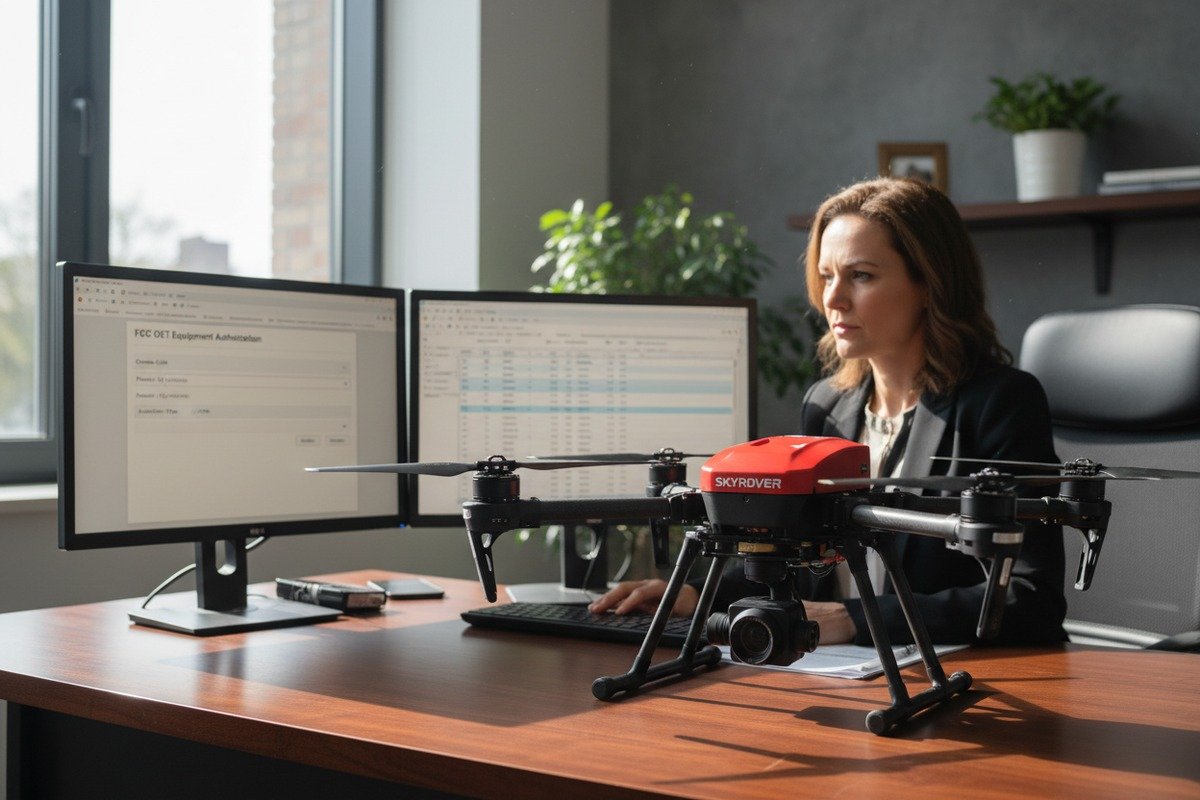
When our engineering team ships firefighting drones overseas, we often hear the same concern from US buyers FCC OET Equipment Authorization database 1. They worry about FCC compliance 2. The stakes are high. An uncertified drone can trigger fines, import seizures, and legal trouble.
To verify FCC certifications for Chinese firefighting drones, search the FCC OET Equipment Authorization database using the drone’s FCC ID, cross-reference the manufacturer’s grantee code, confirm the certification date precedes December 22, 2025, and check if the model appears on the FCC Covered List for restrictions.
This guide walks you through each verification step Telecommunications Certification Body 3. We cover database searches, supplier documentation checks, hardware matching, and distribution risks. Let us help you stay compliant and protect your business.
How do I verify that a Chinese firefighting drone's FCC ID is authentic and active?
Our quality control team deals with FCC documentation daily Customs and Border Protection 4. We see buyers struggle with fake or expired IDs. The problem is serious. One wrong ID can halt your entire shipment at customs product liability lawsuits 5.
To verify a Chinese firefighting drone's FCC ID is authentic and active, access the FCC OET database, enter the FCC ID (grantee code plus product code), review the grant details, confirm the equipment class matches drone specifications, and ensure the authorization date falls before the December 2025 Covered List deadline.
Understanding the FCC ID Structure
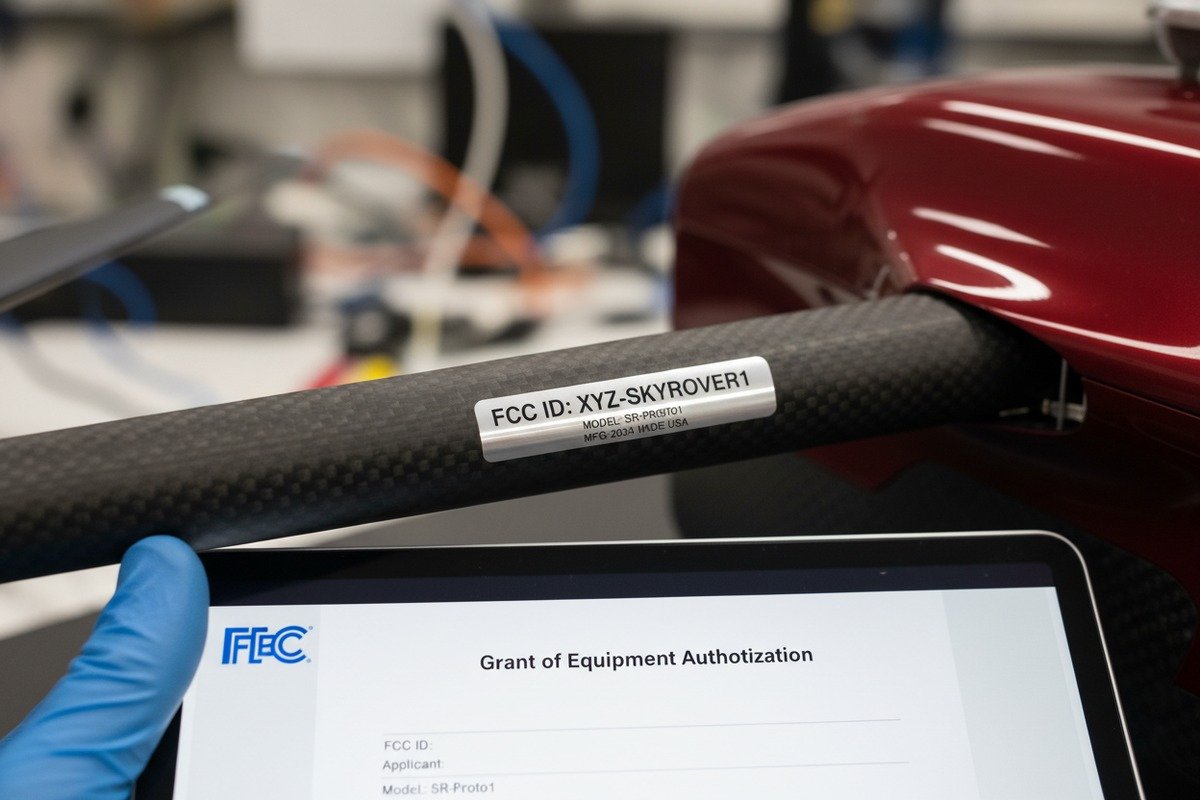
Every FCC ID contains two parts. The first three to five characters form the grantee code 6. This identifies the company that holds the certification. The remaining characters form the product code. This identifies the specific device model.
For example, an FCC ID like "ABC12-FIRE500" breaks down as follows. "ABC12" is the grantee code. "FIRE500" is the product code. When we prepare export documentation, we always highlight both parts clearly.
Step-by-Step Database Search
The FCC Office of Engineering and Technology maintains the Equipment Authorization System. Here is how to use it effectively:
- Go to the FCC Equipment Authorization Search page
- Select "FCC ID" as your search type
- Enter the grantee code in the first field
- Enter the product code in the second field
- Click search and review the results
The database shows grant dates, equipment types, and authorization status. Look for "Grant of Equipment Authorization" in the results. This confirms active certification.
Informations clés à vérifier
| Field | Ce qu'il faut rechercher | Drapeau rouge |
|---|---|---|
| Grant Date | Before Dec 22, 2025 | Dates after this mean no valid FCC authorization |
| Equipment Class | Part 15 or Part 87 devices | Mismatched class indicates wrong certification |
| Grantee Name | Matches your supplier's manufacturer | Different company names suggest fraud |
| Product Description | Matches drone model specifications | Vague or generic descriptions are suspicious |
| Authorization Status | Active/Granted | Revoked or expired status |
Grandfathering Rules You Must Know
Chinese firefighting drones certified before December 22, 2025 remain legal. These are "grandfathered" models. Our production line includes several models that received FCC grants in 2023 and 2024. These can still be legally imported and sold.
However, any new model seeking FCC authorization after this date cannot receive approval if it contains Chinese components. This affects new product launches significantly.
Common Verification Mistakes
Many buyers make these errors. They accept supplier-provided FCC IDs without checking the database. They confuse CE marks with FCC certification. They assume all Chinese drones are banned, missing grandfathered opportunities.
We recommend printing database search results. Keep them with your import documentation. This proves due diligence if questions arise later.
What steps should I take to confirm my supplier's FCC documentation meets US public safety requirements?
In our experience exporting to the US market, we have learned that documentation requirements go beyond basic FCC certification. Public safety agencies face stricter scrutiny. Federal funding rules add another layer of compliance.
To confirm supplier FCC documentation meets US public safety requirements, verify the drone is not on the FCC Covered List, check Blue UAS Cleared List status if required for federal projects, request complete test reports from the Telecommunications Certification Body, and confirm compliance with the American Security Drone Act of 2023.

The American Security Drone Act Impact
Le American Security Drone Act of 2023 7 changed everything for public safety procurement. Federal agencies cannot purchase drones from certain foreign manufacturers. This includes most Chinese companies.
When our sales team works with US distributors serving fire departments, we discuss these restrictions upfront. Buyers need to know if their end customers include federal agencies or state agencies with similar rules.
Blue UAS Cleared List Explained
The Department of Defense maintains the Blue UAS Cleared List 8. Drones on this list have passed rigorous security vetting. No Chinese manufacturers currently appear on this list.
If your firefighting drone sales target federal contractors or military bases, Blue UAS clearance matters. For purely private sector sales, this requirement may not apply.
Documentation Checklist for Public Safety Sales
| Type de document | Objectif | Qui l'émet ? |
|---|---|---|
| Autorisation d'équipement accordée par la FCC | Proves RF compliance | FCC via TCB |
| Test Report Summary | Details RF emission testing | Accredited Test Lab |
| Déclaration de conformité | Manufacturer's compliance statement | Drone Manufacturer |
| Component Origin Certificate | Tracks critical component sources | Fabricant |
| Buy American Act Compliance Form | Proves domestic content percentage | Importer/Assembler |
Critical Component Scrutiny
The FCC defines "critical components" for drones. These include flight controllers, cameras designed for drones, communication systems, and certain motors. Even if the drone is assembled elsewhere, Chinese critical components trigger restrictions.
Our engineering team tracks component origins carefully. We maintain detailed bills of materials. This helps our distribution partners answer compliance questions from their customers.
State-Level Restrictions
Some states have enacted their own drone restrictions. Florida has banned Chinese drones for government use. Other states are considering similar laws. Public safety buyers must check both federal and state requirements.
We advise our US partners to research their specific state regulations. A drone legal for private use in Texas might face restrictions for government contracts in Florida.
Working with Your Supplier
Request these items from any Chinese drone supplier:
- Original FCC grant certificate (not just the FCC ID number)
- TCB test report with laboratory accreditation proof
- Bill of materials showing component origins
- Declaration stating no post-December 2025 certification attempts
- Written confirmation of grandfathered status if claimed
Reputable suppliers provide this documentation without hesitation. We send complete compliance packages with every shipment. Resistance to documentation requests is a warning sign.
How can I cross-reference a manufacturer's FCC grant with the actual hardware I am purchasing?
When we calibrate our flight controllers during production, each unit receives unique identifiers. These must match FCC records exactly. Mismatches cause serious problems. Customs can seize misidentified equipment.
To cross-reference an FCC grant with actual hardware, locate the FCC ID label on the physical drone, compare it character-by-character with grant documents, verify the label placement matches FCC requirements, check internal components against test report photos, and confirm firmware versions match certified configurations.

Finding the FCC ID Label
FCC regulations require clear labeling. The FCC ID must appear on the device exterior. For drones, common label locations include:
- Bottom of the drone body
- Inside the battery compartment
- On the main electronics housing
- Etched into the frame
Some manufacturers use electronic displays for FCC information. This is permitted if the display is easily accessible without special tools.
Label Verification Process
| Étape de vérification | Ce qu'il faut vérifier | Action if Mismatch |
|---|---|---|
| Character matching | Every letter and number matches exactly | Reject the unit |
| Label permanence | Cannot be easily removed or altered | Request explanation |
| Legibility | Clearly readable without magnification | Document condition |
| Placement | Matches original certification filing | Compare with test reports |
| Additional marks | No unauthorized modifications | Investigate source |
Internal Component Verification
FCC certification covers specific hardware configurations. Changing components can void certification. When our production team assembles firefighting drones, we document every component for traceability.
Request internal component photos from your supplier. Compare these with FCC test report photos if available. Major differences indicate potential compliance issues.
Firmware and Software Considerations
RF characteristics depend on software settings. FCC certification covers specific firmware versions. Updates can change RF behavior. Some updates require new FCC testing.
Ask your supplier about firmware versions. Certified firefighting drones should run the same firmware version tested during certification. Unauthorized firmware modifications can create illegal RF emissions.
Suivi du numéro de série
Reputable manufacturers tie serial numbers to FCC compliance records. Our tracking system links each drone's serial number to its production batch. Each batch has documented FCC compliance verification.
Request serial number documentation from your supplier. This creates an audit trail. If compliance questions arise later, you can trace back to manufacturing records.
Inspection Protocol
When receiving shipments, follow this inspection protocol:
- Photograph the shipping container and seals before opening
- Document the FCC ID label on each unit
- Compare labels against your purchase order specifications
- Check for signs of label tampering or replacement
- Test power-on to verify electronic ID display if applicable
- Store photos with your compliance records
Handling Discrepancies
If you find mismatches between FCC grants and hardware, do not import the units. Contact your supplier immediately. Document everything in writing. Legitimate suppliers will resolve issues or explain discrepancies.
Our customer support team handles such queries regularly. Sometimes differences result from model variations within a product family. Each variation needs its own FCC ID. Clarification prevents unnecessary delays.
What are the risks to my business if I distribute industrial drones without valid FCC certification?
Our compliance team has seen partners face serious consequences for certification shortcuts. The risks are real and expensive. One distributor lost six figures in seized inventory. Another faced ongoing legal battles.
Distributing industrial drones without valid FCC certification exposes your business to import seizure by Customs and Border Protection, FCC enforcement fines up to $100,000 per violation, product liability lawsuits if RF interference causes accidents, exclusion from government contracts, and lasting reputational damage with customers and partners.

FCC Enforcement Actions
The FCC actively enforces equipment authorization rules. Penalties escalate with violation severity. First offenses may receive warnings. Repeat violations trigger significant fines.
| Violation Type | Potential Penalty | Additional Consequences |
|---|---|---|
| Importing uncertified equipment | Up to $100,000 per violation | Equipment seizure |
| Marketing uncertified devices | Up to $10,000 per day | Cease and desist orders |
| Operating non-compliant RF devices | Up to $10,000 per violation | Criminal referral possible |
| Repeat violations | Penalties multiply | Business license review |
Customs and Border Protection Role
CBP works with the FCC to identify non-compliant imports. Officers can inspect shipments and verify FCC compliance. Non-compliant equipment faces seizure or destruction.
When our shipping department prepares exports to the US, we include all FCC documentation. This speeds customs clearance. Missing documentation triggers holds and inspections.
Product Liability Exposure
Uncertified drones can cause RF interference. This interference might affect emergency communications, aircraft navigation, or medical equipment. If interference causes harm, you face product liability claims.
Firefighting drones operate in critical environments. Emergency responders depend on clear radio communications. A malfunctioning drone disrupting emergency frequencies could contribute to tragedy. The legal exposure is enormous.
Government Contract Exclusion
Public safety contracts require FCC compliance. Bidding on government work with non-compliant products risks fraud charges. Even if you win initially, discovery of compliance failures ends contracts and invites investigation.
Our partners serving government customers maintain meticulous compliance records. They cannot afford the exclusion that follows compliance failures.
Insurance and Financing Impacts
Business insurance policies often exclude coverage for regulatory violations. If uncertified drones cause problems, your insurer may deny claims. Banks and investors also scrutinize regulatory compliance. Violations can trigger loan covenant defaults.
Reputational Damage
The drone industry is small. Word spreads quickly about compliance problems. Customers, especially public safety agencies, avoid suppliers with FCC issues. Rebuilding reputation takes years.
We protect our brand by maintaining strict compliance. Our distribution partners benefit from our track record. They can confidently represent our products to demanding customers.
Protecting Your Business
Implement these safeguards:
- Verify FCC compliance before ordering from any supplier
- Include FCC compliance warranties in purchase contracts
- Conduct incoming inspection on all shipments
- Maintain compliance documentation for seven years minimum
- Train staff on FCC requirements and red flags
- Build relationships with compliance-focused suppliers
- Consider third-party compliance audits for high-value orders
Post-December 2025 Vigilance
Le FCC Covered List 9 makes verification more critical. New Chinese drone models cannot receive authorization. Some unscrupulous suppliers may attempt to pass off non-compliant new models. Increased vigilance protects your business.
We work with our partners to identify compliant inventory. Our grandfathered models are clearly documented. We refuse to manufacture models that cannot achieve compliance.
Conclusion
Verifying FCC certifications protects your business and customers. Use the FCC database, demand complete supplier documentation, inspect hardware carefully, and understand distribution risks. Compliance is not optional for success in the US public safety market.
Notes de bas de page
1. Provides direct access to the official equipment authorization search. ︎
2. Explains the general regulatory framework for electronic devices. ︎
3. Explains the role of organizations authorized to certify telecommunications equipment. ︎
4. Official source for border security and import regulations. ︎
5. Defines legal claims against manufacturers for defective products. ︎
6. Defines the unique identifier for companies in FCC certification. ︎
7. Provides the legislative text and summary of the drone security act. ︎
8. Official roster of drones approved for US Department of Defense use. ︎
9. Details equipment and services posing national security risks. ︎

 English
  Spanish
  German
  French
  Dutch
Dutch  Arabic
