
Every year, our production floor sees countless inquiries from international buyers who have been burned by unreliable suppliers. They order drones de lutte contre les incendies 1 expecting premium quality, only to receive units that fail mid-flight or lack proper documentation.
To verify Chinese firefighting drone suppliers, place small-batch trial orders of 1-5 units, then test flight stability, payload accuracy, OEM responsiveness, export documentation, and after-sales support. This approach reveals supplier reliability before committing to large purchases, minimizing financial risk while validating real-world performance.
The following sections break down exactly how to evaluate each critical aspect of a supplier through strategic trial orders. We will cover flight testing protocols, OEM benchmarks, export compliance checks, and communication quality assessments.
How can I evaluate the flight stability and payload accuracy of a firefighting drone during my first trial order?
When we calibrate our flight controllers at our Xi'an facility, we run over 50 test cycles before any drone leaves the factory. Yet we still recommend buyers conduct their own rigorous testing. The difference between a specification sheet and real-world performance can determine mission success or failure.
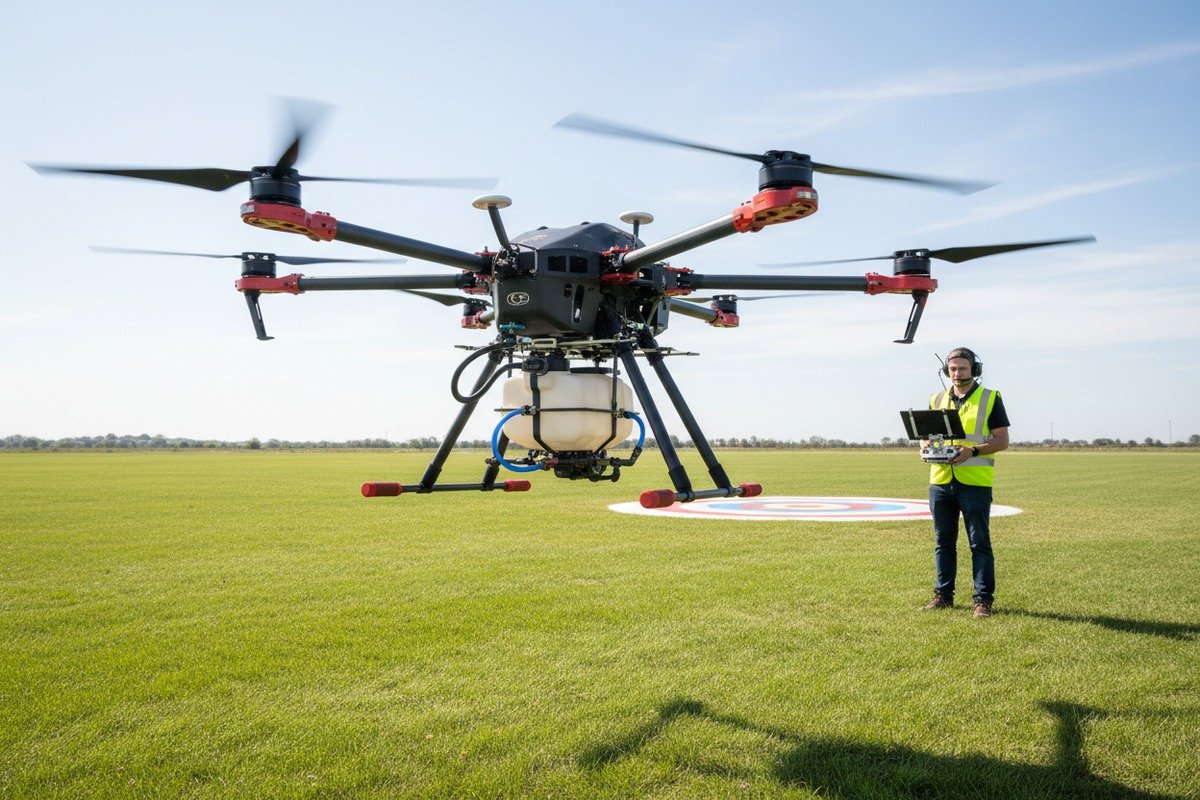
Evaluate flight stability by testing hover precision, wind resistance up to 12 m/s, and GPS return-to-home accuracy within 1 meter. For payload accuracy, conduct multiple water or powder drops from 50-meter heights, measuring dispersion patterns against target zones. Document all results with video evidence and flight logs.
Setting Up Your Flight Stability Test Protocol
Before testing, ensure you have clear weather with winds below 15 m/s. Choose an open area away from electromagnetic interference 2. Our engineers recommend testing at three different times of day to account for thermal variations.
Start with basic hover tests. A quality firefighting drone like our SkyRover models should maintain position within 0.5 meters horizontally and 0.3 meters vertically when stationary. Use a measuring tape and record deviation every 30 seconds for a 5-minute hover.
Next, test wind resistance. Chinese firefighting drones typically claim 10-12 m/s wind tolerance. Use an anemometer to verify actual conditions during flight. Push the drone into wind at full speed, then stop abruptly. Quality units stabilize within 2 seconds.
Payload Drop Accuracy Testing
Payload accuracy 3 separates premium drones from cheap alternatives. Set up a target zone with 5-meter radius circles marked on the ground. Load the drone with its rated payload capacity.
| Test Parameter | Fourchette acceptable | Drapeau rouge |
|---|---|---|
| Drop accuracy from 30m | Within 3m of target | Beyond 5m consistently |
| Drop accuracy from 50m | Within 5m of target | Beyond 8m consistently |
| Payload release time | Under 2 seconds | Delayed or inconsistent |
| Repeat accuracy (5 drops) | 80% within target | Below 60% success rate |
For firefighting applications, we recommend testing both water tank releases and dry powder dispensers. The HZH SF50 model claims 25L capacity with 80m³ coverage. Verify these numbers yourself.
Recording and Documentation
Document everything. Use multiple cameras from different angles. Record GPS coordinates and timestamps. Our quality control team requires flight log exports from every test unit.
Compare your results against supplier specifications. If a drone claims 75-minute endurance, test it to actual depletion. Many suppliers quote maximum theoretical times, not real operational limits.
What specific benchmarks should I use to test a supplier's OEM customization and engineering support on a small batch?
Our development team works daily with international partners who need custom branding, modified software, or specialized payload configurations. Through these collaborations, we have learned what separates responsive OEM partners from suppliers who simply resell generic products.
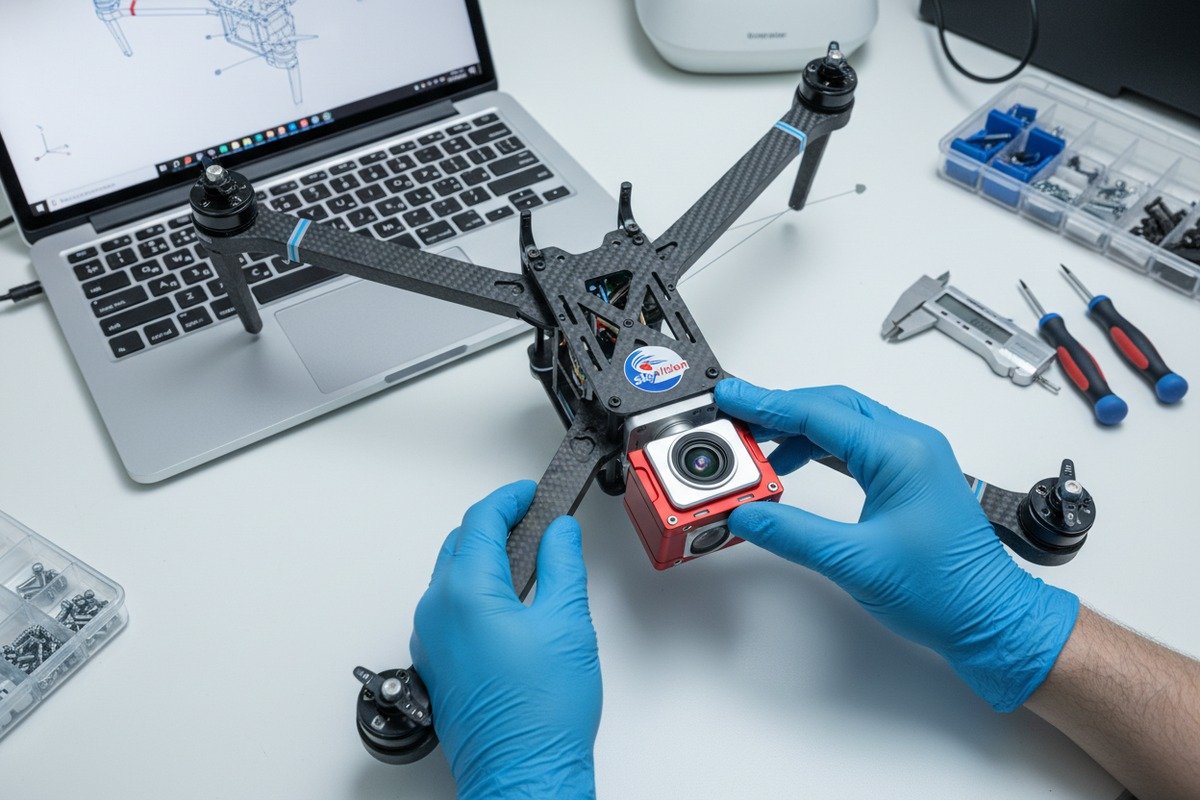
Test OEM capabilities by requesting specific modifications: custom logo placement, firmware parameter adjustments, and payload mounting changes. Benchmark engineering support by measuring response time to technical queries, availability of English documentation, and willingness to share CAD files or API access. Quality suppliers respond within 24 hours with actionable solutions.
Defining Your OEM Test Requirements
Before placing your trial order, prepare a list of specific customization requests. These should range from simple to complex.
Simple requests test basic responsiveness:
- Custom logo on drone body
- Modified packaging with your branding
- English user manual
Medium complexity tests production flexibility:
- Adjusted flight parameter defaults
- Custom color scheme on housing
- Modified remote controller labels
Advanced requests reveal true engineering depth:
- API access 4 for command center integration
- Custom payload release mechanism
- Firmware modifications for specific regulations
Engineering Support Response Benchmarks
| Métrique de soutien | Excellent Supplier | Acceptable | Avoid |
|---|---|---|---|
| Initial response time | Under 4 hours | Under 24 hours | Over 48 hours |
| Technical depth of response | Detailed with solutions | General guidance | Vague or deflecting |
| English communication | Fluent, clear | Understandable | Poor or machine-translated |
| Documentation quality | Complete with diagrams | Basic but usable | Missing or outdated |
| Video call availability | Same week | Within 2 weeks | Refuses or delays repeatedly |
Request a video call with the engineering team, not just sales. At our facility, we assign dedicated engineers to international accounts. They should be able to discuss millimeter radar obstacle avoidance, RTK positioning accuracy 5, and thermal imaging integration without hesitation.
Practical OEM Testing Process
During your trial order, submit one customization request per week. Track response times and solution quality. This simulates real partnership conditions.
Ask for sample CAD drawings of mounting brackets. Quality suppliers protect full designs but share enough for integration planning. Request sample firmware update procedures. They should provide clear documentation.
Test their supply chain transparency. Ask about component origins for flight controllers, motors, and batteries. Legitimate manufacturers know their supply chain. Resellers often cannot answer these questions.
Our approach at SkyRover includes sharing component specifications with partners while protecting proprietary algorithms. This balance demonstrates confidence in product quality while maintaining competitive advantages.
How do I verify a Chinese manufacturer's export compliance and door-to-door delivery efficiency through a sample shipment?
In our experience exporting to the United States and Europe, documentation errors cause more shipment delays than any other factor. We have refined our export processes over years of international shipping, and we know exactly what buyers should demand from any Chinese supplier.
Verify export compliance by requesting complete documentation packages: commercial invoices, packing lists, certificates of origin, CE/FCC certifications, and battery safety reports (UN38.3). Test delivery efficiency by tracking a sample shipment door-to-door, measuring actual transit time against quoted estimates. Quality suppliers deliver within 5 days of quoted timeframes.

Essential Export Documentation Checklist
Before your trial shipment leaves China, request all documentation in advance. Review it carefully.
| Document | Objectif | Red Flag if Missing |
|---|---|---|
| Facture commerciale | Customs valuation | Undervalued amounts invite scrutiny |
| Liste de colisage | Contents verification | Vague descriptions cause delays |
| Certificat d'origine 6 | Tariff determination | May indicate non-Chinese assembly |
| CE Marking Certificate | EU market access | Cannot legally sell in Europe |
| FCC Certification | US radio frequency compliance | May face customs seizure |
| UN38.3 Battery Report 7 | Lithium battery air transport | Airlines will refuse cargo |
| MSDS for any chemicals | Hazmat compliance | Delays at port inspection |
Our export team prepares documentation packages three days before shipment. We use standardized templates that customs agents recognize quickly. Ask your supplier for samples of their standard export documents before ordering.
Testing Door-to-Door Delivery
Request door-to-door delivery for your trial order. This tests the supplier's full logistics capability.
Track every milestone:
- Order confirmation to production start
- Production completion to warehouse handover
- Warehouse to port departure
- Customs clearance at origin
- Transit time (sea or air)
- Arrival at destination port
- Destination customs clearance
- Final delivery to your door
Compare actual times against supplier quotes. At our facility, we quote 15-20 days for air freight to major US cities. Sea freight takes 35-45 days. Legitimate suppliers quote realistic ranges, not impossibly fast times.
Customs Compliance Verification
Your trial shipment tests real customs performance. Watch for these issues:
HS codes must match product descriptions exactly. Firefighting drones typically classify under 8806.10 or similar UAV categories. Incorrect codes cause delays and potential penalties.
Declared values must reflect actual transaction prices. Some suppliers deliberately undervalue shipments to reduce duties. This creates legal liability for importers.
Battery shipping requires special handling. Lithium batteries above certain capacities require dangerous goods documentation. Our engineering team designs battery compartments for easy removal during shipping when regulations require it.
Request tracking information daily during your trial shipment. Quality suppliers provide proactive updates. They notify you of potential delays before you ask.
Can a small-batch purchase effectively reveal the quality of a supplier's long-term technical support and communication?
When we onboard new international partners, our support team establishes direct communication channels immediately. We have seen partnerships fail not because of product issues, but because of poor communication during critical moments. A trial order creates opportunities to test this before commitment.
Yes, small-batch purchases effectively reveal support quality when buyers deliberately test communication channels during the trial period. Request technical assistance for setup, ask detailed operational questions, and simulate a warranty claim. Quality suppliers respond within 24 hours with specific solutions, provide remote troubleshooting, and offer clear warranty procedures.

Designing Communication Tests
Your trial period should include deliberate communication challenges. These reveal true support capability.
Contact the supplier through every available channel:
- Email response time
- WhatsApp or WeChat responsiveness
- Phone call availability
- Video conference scheduling
Ask technical questions that require engineering knowledge. For example: "What is the maximum crosswind component for safe payload release?" A knowledgeable supplier answers specifically. A trading company gives vague responses.
Long-Term Support Indicators
| Indicator | Strong Supplier | Weak Supplier |
|---|---|---|
| Spare parts availability | Quoted price and lead time | "Contact us later" |
| Firmware update process | Clear procedure documented | Vague or unavailable |
| Warranty claim process | Written policy, clear steps | Unclear or avoided topic |
| Time zone accommodation | Flexible meeting times | Only available their hours |
| Technical documentation | Complete, updated regularly | Outdated or incomplete |
| Remote diagnostics | Offered proactively | Not available |
Request the supplier's spare parts price list. Quality manufacturers maintain parts inventory. Ask specifically about motor replacements, propeller sets, and battery packs. Our parts warehouse stocks components for every model we have shipped in the past five years.
Simulating Long-Term Partnership Conditions
During your trial, simulate a support scenario. Report a minor issue and track the response:
Day 1: Send detailed issue report with photos
Day 2: Follow up if no response
Day 3: Request escalation to engineering
Day 5: Evaluate solution quality
This timeline reveals true support culture. Some suppliers respond immediately to new customers but slow down after purchase. Testing during the trial period exposes this pattern.
Ask about training resources. Quality suppliers offer operation manuals, video tutorials, and sometimes on-site training for large accounts. Our team provides remote training sessions for every new partner.
Discuss future product roadmaps. Engaged suppliers share development directions. They want long-term partnerships, not single transactions. Ask about 2026 autonomous operation features, command center integration plans, and upcoming certification additions.
Évaluer la qualité de la communication
Language clarity matters for technical products. Miscommunication about flight parameters or payload specifications creates safety risks.
Test technical vocabulary understanding. Use terms like "RTK positioning accuracy," "obstacle avoidance response time," and "payload release mechanism." Qualified suppliers understand immediately. Unqualified ones ask for clarification repeatedly or provide irrelevant answers.
Request references from existing customers in your market. Legitimate suppliers with strong support provide contacts. They have nothing to hide.
Conclusion
Small-batch trial orders remain the most effective method for verifying Chinese firefighting drone suppliers. Test flight stability 8, OEM capabilities, export compliance, and technical support systematically. Document everything, compare results against specifications, and trust verified performance over promises.
Notes de bas de page
1. Provides an overview of firefighting drone functions, advantages, and use cases. ︎
2. Authoritative explanation of EMI. ︎
3. Details the importance and steps for testing drone payload accuracy. ︎
4. Describes how APIs enable integration and control of drone systems. ︎
5. Provides information on RTK technology for centimeter-level drone positioning accuracy. ︎
6. Essential guide for international shipping. ︎
7. Explains UN 38.3 testing requirements for safe lithium battery transportation. ︎
8. Explains factors influencing drone flight stability and control mechanisms. ︎

 English
  Spanish
  German
  French
  Dutch
Dutch  Arabic
