
When our engineering team first developed explosion-proof drones 1 for European chemical plants, we quickly learned that one small certification mistake could cost clients everything. A single spark from an uncertified drone rotor can ignite volatile gases, causing catastrophic explosions that destroy facilities and lives. ATEX explosion-proof certification 2
To verify ATEX explosion-proof certification for firefighting drones, inspect the physical ATEX marking code on the drone, review the Declaration of Conformity and technical files, confirm certification by an EU Notified Body, and match the drone’s category to your facility’s hazardous zone classification.
This guide walks you through each verification step. We will cover how to read ATEX markings, what documents to request, and how to avoid common certification pitfalls that procurement managers face when sourcing industrial drones.
How can I verify that a firefighting drone's ATEX certificate is authentic and up to date?
In our experience exporting to European markets, we have seen buyers receive fraudulent certificates that looked perfect on paper. The consequences of deploying a fake-certified drone in a Zone 1 chemical plant can be deadly.
Verify ATEX certificate authenticity by checking the Notified Body number on the certificate, contacting that body directly to confirm issuance, reviewing the Declaration of Conformity for correct directive references, and ensuring the certificate covers the exact drone model and serial number you purchased.
Understanding the ATEX Certification Framework
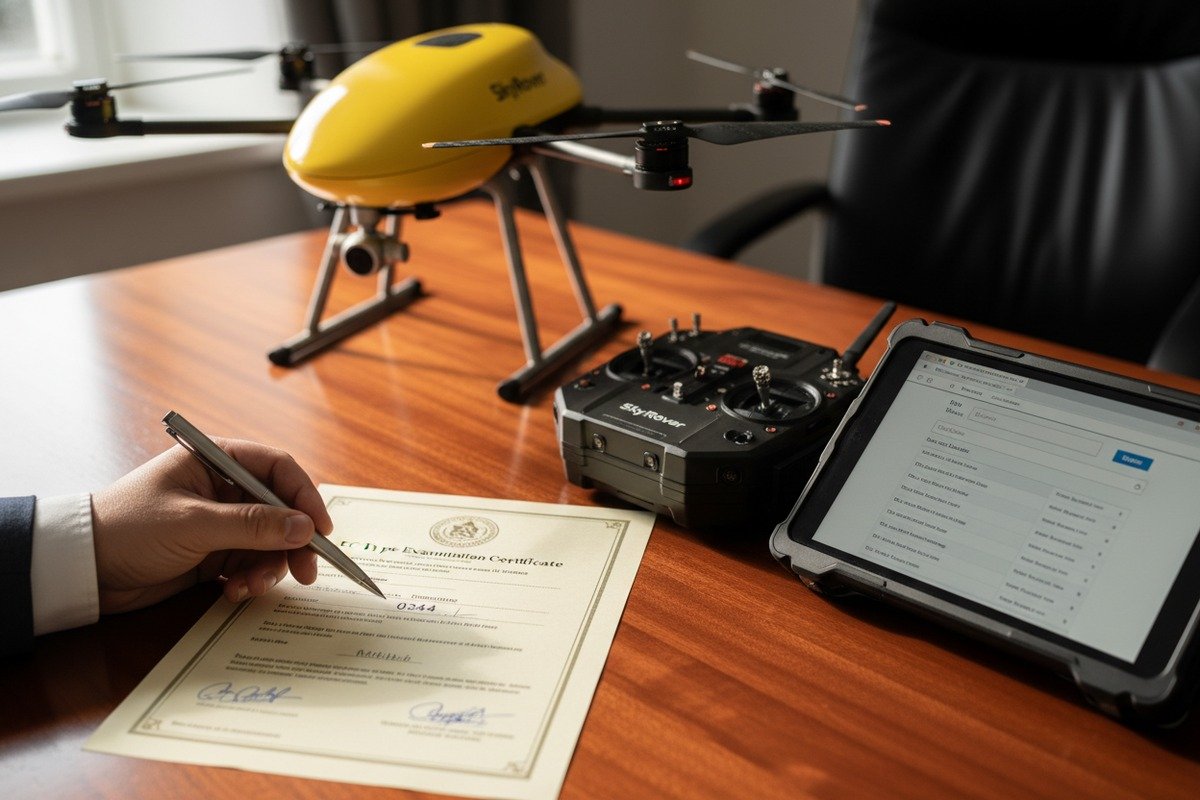
ATEX certification comes from EU Directive 2014/34/EU 3, also called ATEX 114. This directive mandates that all equipment used in explosive atmospheres must meet strict safety standards. For drones, this includes both electrical components like batteries and non-electrical parts like rotors that can generate static electricity.
The certification process involves a Notified Body. EU Notified Body 4 These are independent organizations authorized by EU member states to assess equipment compliance. Each Notified Body has a unique four-digit number.
Step-by-Step Certificate Verification
First, locate the certificate number on the document. It should reference the Notified Body number and a unique certificate identifier. Our quality control team always cross-references this with the EU NANDO database 5, which lists all authorized Notified Bodies.
Second, contact the Notified Body directly. Ask them to confirm the certificate was issued for your specific drone model. Provide the serial number and model designation. Legitimate bodies will respond within days.
Third, check the certificate expiration date. ATEX certificates are not permanent. Many require renewal or can be suspended if the manufacturer changes components without re-certification.
Key Documents to Request
| Document | Objectif | Drapeaux rouges |
|---|---|---|
| Déclaration de conformité 6 (DoC) | Legal statement that product meets ATEX requirements | Missing directive number, unsigned, wrong company name |
| Type Examination Certificate | Proof that Notified Body tested the design | Expired date, wrong model number listed |
| Quality Assessment Notification | Confirms ongoing production quality audits | No audit dates, missing Notified Body stamp |
| Technical File Summary | Shows risk assessments and test results | Incomplete hazard analysis, missing component list |
Common Fraud Indicators
Watch for certificates that list a Notified Body number not found in the NANDO database. Some suppliers create fake certificates with invented numbers. Also check that the manufacturer name on the certificate matches the actual company selling you the drone.
When we prepare certification packages for our clients, we always include direct contact information for the Notified Body. This transparency builds trust and allows buyers to verify independently.
What specific explosion-proof markings should I look for on the drone and its components?
Our production line stamps every certified unit with precise ATEX codes. These markings are not decorative. Each letter and number tells you exactly where that drone can safely operate.
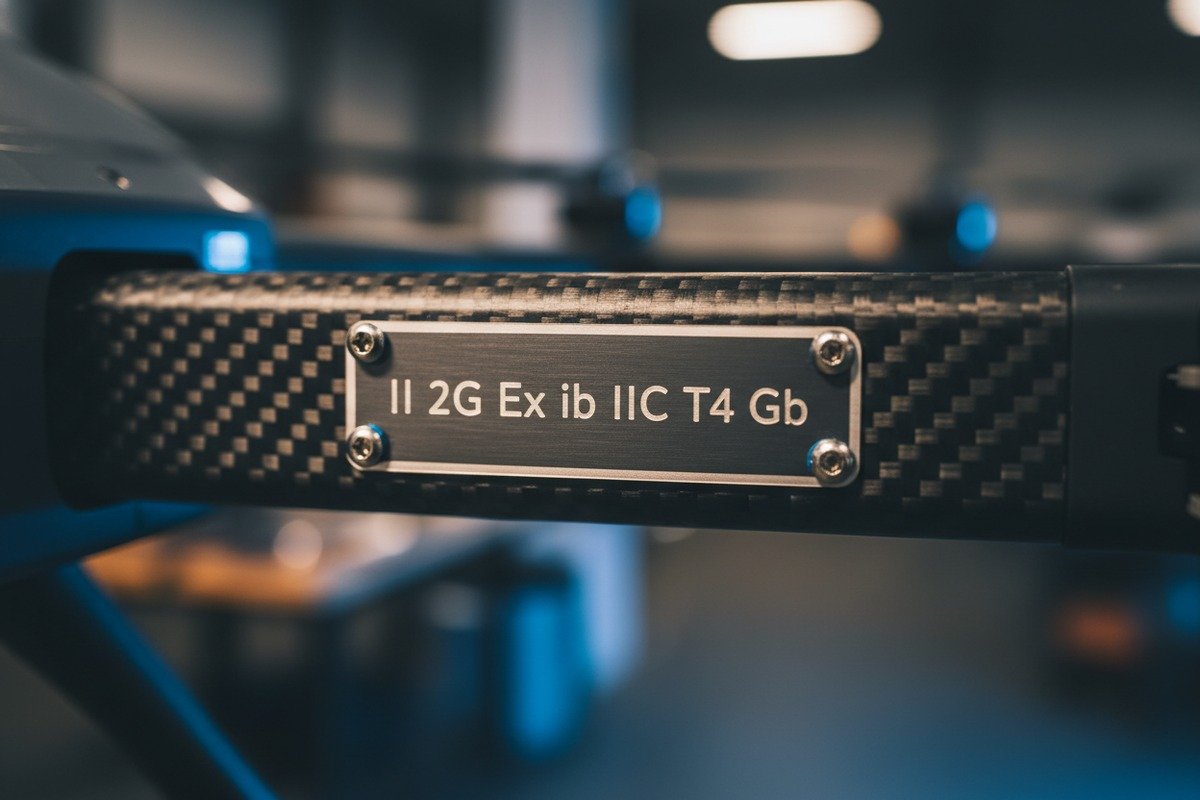
Look for the ATEX marking format "II 2G Ex ib IIC T4 Gb" on the drone nameplate. This code indicates equipment group (II for surface industries), category (2 for Zone 1), protection type (Ex ib for intrinsic safety), gas group (IIC for hydrogen), and temperature class (T4 for max 135°C surface temperature).
Decoding the ATEX Marking String
The ATEX marking appears on a metal nameplate attached to the drone body. Our engineering team ensures this plate is permanently fixed and cannot be removed without visible damage. This prevents tampering.
The marking follows a strict format defined by EN 60079-0 7. Let us break down each element using the example "II 2G Ex ib IIC T4 Gb":
| Code Element | Meaning | Options |
|---|---|---|
| II | Equipment Group | I = Mining, II = Surface industries (chemical plants) |
| 2 | Catégorie | 1 = Zone 0/20, 2 = Zone 1/21, 3 = Zone 2/22 |
| G | Atmosphere Type | G = Gas/vapor, D = Dust |
| Ex | Explosion protection | Standard prefix for all certified equipment |
| ib | Protection Type | ia/ib = Intrinsic safety, d = Flameproof, p = Pressurized |
| IIC | Gas Group | IIA = Propane, IIB = Ethylene, IIC = Hydrogen (most dangerous) |
| T4 | Temperature Class 8 | T1 (450°C) to T6 (85°C), T4 = 135°C max surface temp |
| Gb | Equipment Protection Level | Ga = Zone 0, Gb = Zone 1, Gc = Zone 2 |
Component-Level Markings
A drone has many parts. Each component that could cause ignition must be separately certified. When we assemble our firefighting drones, we verify markings on batteries, motors, flight controllers, cameras, and payload systems.
The battery is critical. Lithium batteries store enormous energy. Look for ATEX markings directly on the battery housing, not just the drone body. The battery certification must match or exceed the drone's overall certification level.
Propellers deserve special attention. Carbon fiber blades can build static charge during rotation. Our propellers use anti-static coatings and are tested per ATEX 153 for non-electrical equipment. Look for certification stamps on propeller hubs.
Liste de contrôle de l'inspection physique
Walk through these checks when you receive a drone:
The nameplate must be permanent. Stickers can be faked. Certified equipment uses engraved or riveted metal plates.
All markings must be legible. Worn or damaged markings may indicate used or refurbished equipment sold as new.
Serial numbers must match. The serial on the nameplate should match the certificate and the Declaration of Conformity.
Check enclosure integrity. IP65 9 or higher ingress protection is standard. Look for proper seals on all openings.
Understanding Temperature Classes
Chemical plants contain different flammable substances. Each has an auto-ignition temperature. The drone's surface must never reach that temperature, even during a fault.
| Temperature Class | Max Surface Temp | Common Substances |
|---|---|---|
| T1 | 450°C | Acetone, Ammonia, Methane |
| T2 | 300°C | Butane, Ethanol |
| T3 | 200°C | Gasoline, Diesel |
| T4 | 135°C | Acetaldehyde, Ethyl ether |
| T5 | 100°C | Carbon disulfide |
| T6 | 85°C | Carbon disulfide (special conditions) |
Most chemical plants require T4 or better. Our standard firefighting drones carry T4 certification, meaning all surfaces stay below 135°C even under maximum load.
How do I ensure the drone's certification level matches the hazardous zone requirements of my facility?
When we work with chemical plant buyers, zone classification is always the first conversation. A drone certified for Zone 2 will cause problems in Zone 1 areas. Getting this wrong is not just a compliance issue. It is a safety failure.
Match drone certification to facility zones by first obtaining your facility's zone classification map, then selecting a drone with Category 2 certification for Zone 1 gas areas or Category 1 for Zone 0 areas. The drone's "G" or "D" suffix must match your atmosphere type, whether gas or dust.
Zone Classification Basics
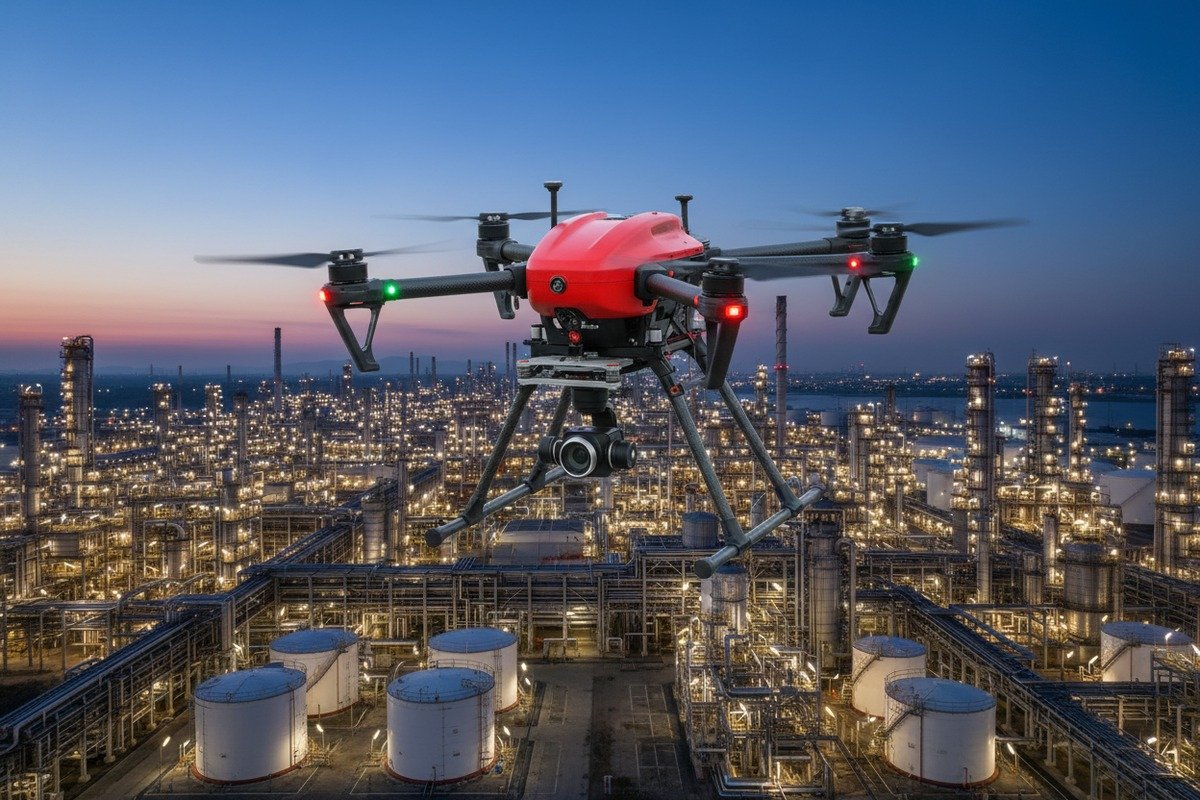
Chemical plants divide areas into zones based on how often explosive atmospheres occur. hazardous zone classification 10 This classification determines what equipment can operate there safely.
For gases and vapors:
Zone 0 has explosive atmosphere continuously or for long periods. This is rare in accessible areas.
Zone 1 has explosive atmosphere likely to occur during normal operations. This includes areas near valves, pumps, and processing equipment.
Zone 2 has explosive atmosphere unlikely during normal operations but possible briefly. Storage areas and outdoor spaces often fall here.
For combustible dusts, the equivalent zones are 20, 21, and 22.
Matching Categories to Zones
ATEX equipment categories directly correspond to zones:
| Equipment Category | Approved Zones (Gas) | Approved Zones (Dust) | Protection Level |
|---|---|---|---|
| Category 1 | Zone 0, 1, 2 | Zone 20, 21, 22 | Very high (continuous hazard) |
| Category 2 | Zone 1, 2 | Zone 21, 22 | High (likely hazard) |
| Category 3 | Zone 2 only | Zone 22 only | Normal (unlikely hazard) |
Our firefighting drones typically carry Category 2 certification. This covers Zone 1 operations, which is where most chemical plant incidents require drone response. For buyers needing Zone 0 capability, we offer Category 1 configurations at higher cost due to additional safety features.
Facility Assessment Process
Before ordering drones, obtain your facility's hazardous area classification document. This map shows every zone boundary. Your safety officer or process engineer should have this.
Identify where firefighting drones will operate. Emergency response often requires flying through multiple zones. The drone must be certified for the most dangerous zone on its flight path, not just the destination.
Consider worst-case scenarios. During a fire, Zone 2 areas may become Zone 1 as gases escape. Select drones with safety margins.
Gas Group Compatibility
Chemical plants process different substances. Each has different ignition properties. The gas group rating must cover your most dangerous substances.
IIC is the most stringent rating, covering hydrogen and acetylene. A drone rated for IIC can operate around any industrial gas.
IIB covers ethylene and similar substances. It does not protect against hydrogen.
IIA covers propane and common hydrocarbons. It is the minimum rating but insufficient for many chemical plants.
When we configure drones for chemical plant clients, we default to IIC rating. This provides maximum flexibility and safety margin.
Dual Atmosphere Considerations
Some facilities have both gas and dust hazards. Look for drones with dual ratings showing both "G" and "D" suffixes. The marking might read "II 2G 2D" indicating Category 2 protection for both atmosphere types.
Dust protection adds requirements for sealed enclosures and surface temperature limits. Combustible dust ignites more easily at lower temperatures than many gases.
What supporting technical files should I request from my manufacturer to guarantee full compliance?
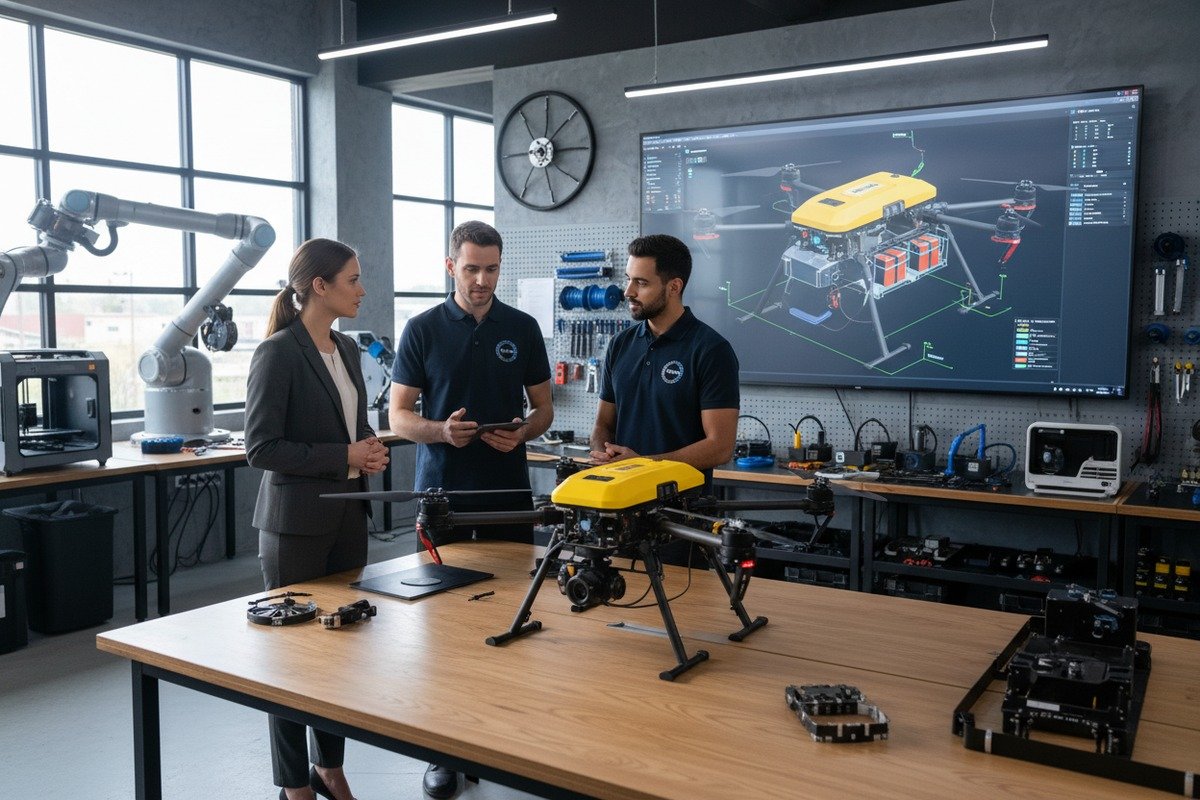
Our compliance team prepares comprehensive documentation packages because we know that during audits, inspectors examine papers as carefully as hardware. Missing documents can halt operations even with properly certified equipment.
Request these essential documents: the EU Declaration of Conformity referencing Directive 2014/34/EU, the Type Examination Certificate from the Notified Body, the technical file summary including risk assessments and test reports, the quality assurance notification confirming production audits, and component-level certifications for batteries and payloads.
The Declaration of Conformity
This one-page document is legally binding. The manufacturer declares their product meets all applicable directives. For ATEX equipment, it must reference Directive 2014/34/EU.
Check these elements on every DoC:
The manufacturer's legal name and address must be correct. A PO box or unclear address is a red flag.
The product description must match exactly what you purchased, including model numbers and configurations.
The relevant directives must be listed with correct numbers. ATEX is 2014/34/EU. EMC is 2014/30/EU. Often both apply.
The signature must include a name and position of a responsible person. Anonymous signatures are not valid.
Technical File Contents
The technical file is extensive. Manufacturers keep full files confidential but should provide summaries. Request these specific items:
Risk assessment documents showing how each ignition risk was identified and addressed. This should cover electrical, thermal, mechanical, and static discharge risks.
Test reports from accredited laboratories. These prove the drone passed required tests for its protection type.
Component specifications for certified parts. Battery chemistry, motor ratings, and material specifications should be documented.
Assembly and quality control procedures. These ensure production units match the tested prototype.
Quality Assurance Evidence
ATEX Directive requires ongoing quality management for Category 2 equipment. Two main compliance paths exist:
Module D covers production quality assurance. The Notified Body audits the factory periodically. Request evidence of recent audits and their results.
Module E covers product quality assurance. Each unit or batch is tested. Request test certificates for your specific units.
Component Traceability
Every certified component should be traceable. This matters when you need replacement parts later.
| Composant | Required Documentation | Traceability Data |
|---|---|---|
| Battery Pack | ATEX certificate, test reports | Serial number, manufacture date, cell origin |
| Contrôleur de vol | EMC test reports, ATEX compliance | Firmware version, board revision |
| Moteurs | Thermal test results, ATEX marking | Part number, winding specifications |
| Camera/Sensors | Individual ATEX certificates if applicable | Model designation, calibration date |
| Hélices | Static discharge test results | Material batch, coating certification |
Post-Incident Documentation Requirements
After any crash or hard landing, the certification status is questionable. Request procedures for re-inspection. Our policy includes detailed inspection checklists that trained personnel can follow.
Keep records of all flights in hazardous zones. Inspectors may request flight logs during audits. Document any incidents, repairs, or component replacements.
Recertification is required after unauthorized modifications. Adding a new sensor or changing the payload configuration typically voids existing certification. Always confirm with the manufacturer and Notified Body before making changes.
Software and Firmware Documentation
Modern drones depend on software. Flight controllers, navigation systems, and payload controls all run code. ATEX certification must consider software failure modes.
Request firmware version documentation showing which software versions are covered by the certification. Updates may require re-assessment.
Functional safety assessments should address what happens when software fails. Safe shutdown procedures prevent thermal runaway or uncontrolled operation.
Cybersecurity documentation matters for chemical plants. Unauthorized access to drone controls could create safety hazards. Ask for evidence of security testing and secure communication protocols.
Conclusion
Verifying ATEX certification protects your facility, your workers, and your investment. Check physical markings, validate certificates with Notified Bodies, match equipment categories to your zones, and demand complete technical documentation. When you need assistance with certification verification or compliant drone specifications, our engineering team is ready to help.
Notes de bas de page
1. Provides a definition and context for ATEX certified inspection drones. ︎
2. Official EU page explaining the ATEX directive and certification process. ︎
3. Provides the official legal text of the ATEX Directive 2014/34/EU. ︎
4. Provides a direct link to the list of Notified Bodies authorized for ATEX. ︎
5. Direct link to the official NANDO database homepage for notified bodies. ︎
6. Authoritative source from the European Union explaining the EU Declaration of Conformity. ︎
7. Provides information on the international standard for equipment in explosive atmospheres. ︎
8. Details the meaning and importance of temperature classes in ATEX environments. ︎
9. Explains IP65 rating, referencing the international standard IEC 60529. ︎
10. Authoritative source from the Health and Safety Executive explaining hazardous area classification. ︎

 English
  Spanish
  German
  French
  Dutch
Dutch  Arabic
