
When our production line ships hundreds of industrial drones overseas each month, we see a recurring nightmare for our US partners: discovering that their exclusive supplier has quietly sold identical units to competing distributors down the road. This betrayal destroys pricing power, erodes market share, and wastes years of brand-building investment.
To prevent suppliers from selling to other US distributors, stipulate breach of contract liability through enforceable exclusivity clauses, liquidated damages provisions, termination rights, and injunctive relief mechanisms. These contractual tools create pre-defined penalties that deter unauthorized sales and provide clear remedies when breaches occur.
Below, we break down exactly how to draft these protective clauses, what financial penalties work best, how to monitor compliance, and how to secure your custom designs from unauthorized resale.
How can I draft enforceable exclusivity clauses to protect my drone distribution rights in the US?
Our engineering team invests months customizing flight controllers and payload systems for each US partner. When that partner's competitor suddenly offers the same drone at a lower price, we know someone broke the deal. Exclusivity clauses 1 exist precisely to prevent this scenario.
Draft enforceable exclusivity clauses by clearly defining the exclusive territory, specifying prohibited sales activities, establishing a reasonable duration, and including consideration that benefits both parties. Courts uphold these clauses when they are geographically specific, time-limited, and supported by legitimate business interests.

Define Your Exclusive Territory Precisely
Vague language kills enforceability. Do not write "exclusive rights in America." Instead, specify "exclusive distribution rights within the fifty states of the United States of America, excluding Puerto Rico and US territories."
Include street addresses for any carve-outs. If your supplier already has a relationship with a California buyer, name that buyer explicitly. Ambiguity invites disputes.
Specify What "Exclusive" Actually Means
Your clause should list every prohibited action:
| Prohibited Activity | Pourquoi c'est important |
|---|---|
| Direct sales to other US distributors | Prevents channel conflict |
| Sales through third-party platforms (Amazon, eBay) | Blocks gray market leakage |
| Sales to US end-users without distributor involvement | Protects your customer relationships |
| Licensing the product design to US competitors | Guards your OEM investments |
| Allowing sub-distributors without written consent | Maintains supply chain control |
Set a Reasonable Duration
Courts disfavor perpetual exclusivity. We recommend two to five years with renewal options. Tie renewals to performance metrics like minimum purchase quantities 2.
A sample clause might read: "This exclusive arrangement shall remain in effect for thirty-six months from the Effective Date, automatically renewing for successive twelve-month periods unless either party provides ninety days written notice of non-renewal."
Include Meaningful Consideration
Exclusivity must benefit both sides. The distributor typically commits to minimum order quantities, marketing investments, or territory development obligations. Without these commitments, courts may view the clause as one-sided and unenforceable.
Our contracts often require distributors to purchase at least 200 units in year one, increasing by fifteen percent annually. This creates mutual dependency that strengthens enforceability.
Add a Non-Compete Reinforcement
Layer your exclusivity clause with a supplier non-compete provision 3. This prevents the manufacturer from establishing a US subsidiary or partnering with another importer during the contract term.
What specific financial penalties should I include in my contract if my supplier sells directly to other US distributors?
In our experience exporting to the US market, we have witnessed distributors lose hundreds of thousands of dollars when suppliers quietly diverted products to competitors. The only effective deterrent is a financial penalty that hurts more than the profit gained from cheating.
Include liquidated damages clauses set at 150-300% of the contract value for proven unauthorized sales, termination rights with refund obligations, payment offset provisions allowing distributors to withhold amounts owed, and indemnification requirements covering lost profits and legal fees.
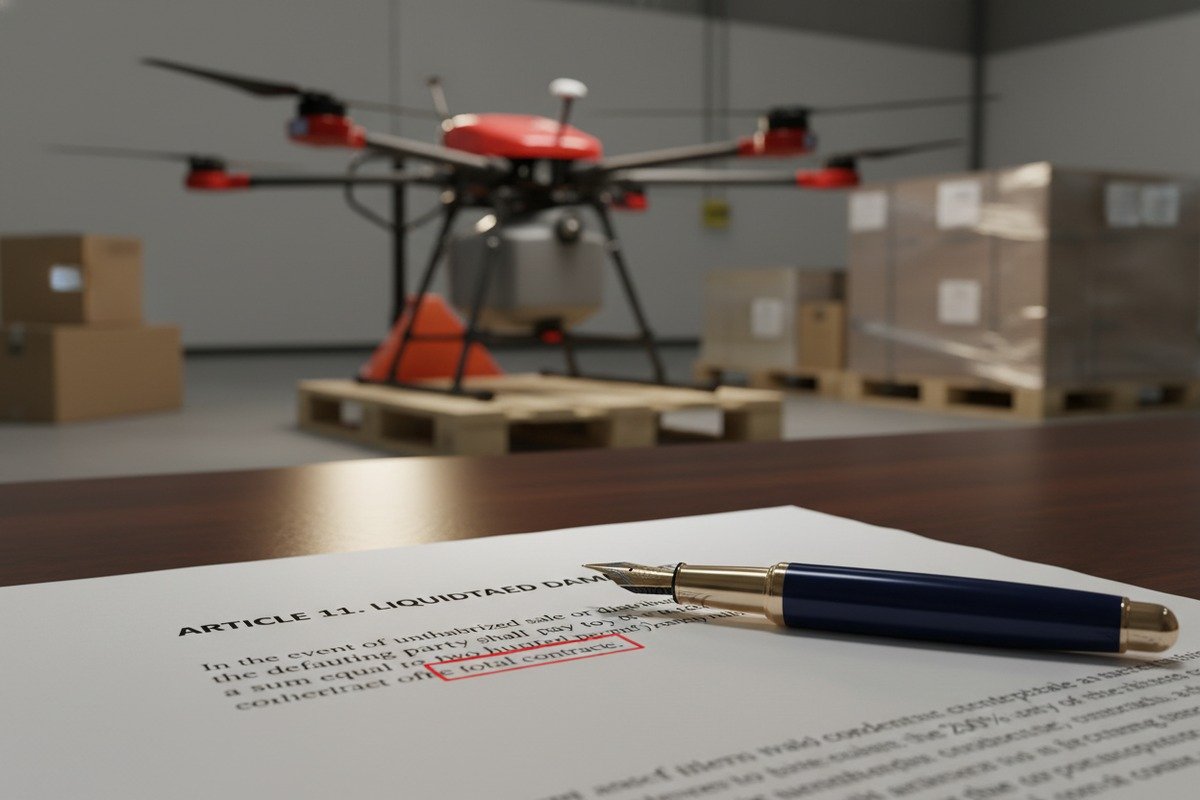
Liquidated Damages: The Primary Deterrent
Liquidated damages clauses 4 pre-define the penalty for specific breaches. They eliminate the need to prove actual losses in court, which saves time and legal fees.
However, courts will not enforce penalties they consider "punitive." Your liquidated damages must reasonably estimate anticipated harm at the time of contracting.
| Breach Type | Recommended Liquidated Damages | Justification |
|---|---|---|
| Sale to competing US distributor | 200% of wholesale value of diverted units | Covers lost margin plus market damage |
| Direct sale to distributor's existing customer | 300% of transaction value | Addresses relationship destruction |
| Licensing design to US competitor | $50,000 per occurrence plus royalties | Protects R&D investment |
| Failure to provide sales records | $5,000 per month of non-compliance | Encourages transparency |
Structure a Remedies Ladder
Do not jump straight to termination. Create escalating consequences:
- Written Notice: Identify the breach and demand cure within ten business days
- Payment Offset: Withhold amounts owed to supplier equal to estimated damages
- Suspension: Halt future orders until resolution
- Termination: End the contract and demand full damages
- Injunctive Relief: Seek court order blocking further unauthorized sales
This ladder demonstrates reasonableness to courts and creates multiple pressure points.
Include Indemnification Provisions
Your supplier should indemnify you against all losses flowing from their breach. Indemnification Provisions 5 This includes:
- Lost profits from diverted sales
- Damage to brand reputation
- Legal fees incurred in enforcement
- Costs of market restoration efforts
Sample language: "Supplier shall indemnify, defend, and hold harmless Distributor against any and all claims, damages, losses, costs, and expenses arising from Supplier's breach of exclusivity obligations."
Cap Liability Strategically
Suppliers will negotiate liability caps. Accept reasonable caps on consequential damages but refuse caps on liquidated damages for exclusivity breaches. The whole point is deterrence—caps undermine that purpose.
How can I effectively monitor my supplier's export activities to ensure they aren't bypassing our agreement?
When we calibrate our flight controllers for specific market conditions, we generate serial numbers and firmware signatures that can track every unit. Yet many distributors never leverage these built-in monitoring tools. They discover breaches only when competitors undercut their prices.
Monitor supplier export activities through mandatory sales reporting requirements, independent compliance audits, serial number tracking systems, customs data analysis, and marketplace surveillance tools. Combine contractual reporting obligations with technological monitoring to detect unauthorized sales before they damage your market position.
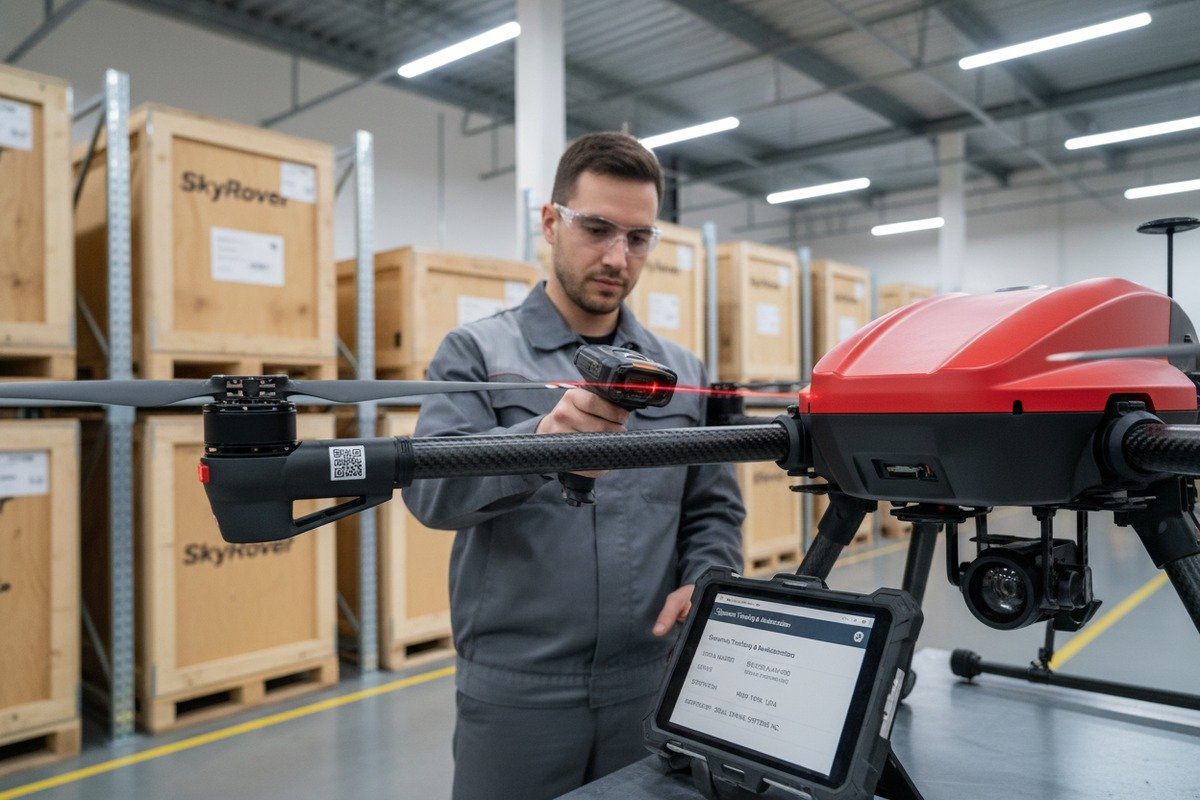
Contractual Reporting Requirements
Your agreement should mandate quarterly reports from the supplier including:
- Total units produced
- Units shipped to each destination country
- Customer names and addresses for all US-bound shipments
- Serial numbers of all exported units
- Copies of export documentation
Require these reports within fifteen days of each quarter's end. Late reports trigger the financial penalties discussed earlier.
Independent Compliance Audits
Reserve the right to audit your supplier's records annually. Hire a third-party accounting firm in the supplier's country to examine:
| Domaine d'audit | Ce qu'il faut examiner |
|---|---|
| Production records | Units manufactured vs. units reported |
| Shipping logs | Destination addresses, freight forwarder names |
| Financial accounts | Payments received from unknown US sources |
| Customer database | Any US contacts not disclosed to you |
| Email communications | Suspicious inquiries from US buyers |
Cover audit costs yourself for routine annual reviews. Make the supplier pay if the audit reveals breaches.
Serial Number Tracking Systems
Every drone leaving our factory carries a unique serial number encoded in firmware. Serial Number Tracking Systems 6 We recommend requiring suppliers to:
- Register serial numbers with you before shipment
- Provide real-time access to their serial number database
- Report any warranty claims or service requests, including customer location
When a drone appears for service in Texas but was supposedly shipped to Germany, you have evidence of diversion.
Customs Data Analysis
US Customs and Border Protection data is partially accessible through commercial databases like ImportGenius or Panjiva. Monitor:
- Your supplier's company name in US import records
- Your product's HS codes showing entry through unexpected importers
- Shipments from your supplier's address to unknown US consignees
This data lags by weeks but catches systematic cheating over time.
Online Marketplace Surveillance
Set up automated alerts for your product names, model numbers, and distinctive features on:
- Amazon
- eBay
- Alibaba
- Industry-specific platforms
When unauthorized sellers offer your products, trace the supply chain back to identify the leak.
How do I secure my custom drone designs so my manufacturer doesn't sell my OEM products to other US buyers?
Our R&D team spends eighteen months developing custom payload systems for major US distributors. When those designs appear on a competitor's product six months later, everyone loses—except the manufacturer who sold the same work twice. Protecting your OEM investment requires layered contractual safeguards.
Secure custom drone designs through intellectual property assignment clauses, confidentiality agreements with specific remedies, design escrow arrangements, tooling ownership provisions, and non-disclosure obligations extending to supplier employees and subcontractors. Register copyrights and patents in both countries for additional protection.

Intellectual Property Assignment
Your contract must clearly state who owns what. Intellectual Property Assignment 7 For custom designs you fund:
| IP Element | Recommended Ownership | Contract Language |
|---|---|---|
| Product design drawings | Distributor | "All design documents created under this agreement are works made for hire owned exclusively by Distributor" |
| Custom firmware | Distributor | "Source code and compiled firmware shall be Distributor's property upon payment" |
| Tooling and molds | Distributor | "All molds, dies, and tooling purchased for this project remain Distributor's property" |
| Manufacturing processes | Fournisseur | "Supplier's general manufacturing know-how remains Supplier's confidential information" |
| Pre-existing supplier technology | Supplier with license | "Distributor receives perpetual license to pre-existing technology incorporated in products" |
Confidentiality with Teeth
Standard NDAs fail because they lack meaningful remedies. Your confidentiality provisions should include:
- Specific definition of confidential information: List design files, specifications, customer data, pricing, and sales volumes
- La durée: Confidentiality survives contract termination by five to seven years
- Employee obligations: Supplier must bind all employees working on your products
- Subcontractor restrictions: No sharing with third parties without written consent
- Liquidated damages: Pre-defined penalty of $100,000 per disclosure incident
- Injunctive relief: Explicit acknowledgment that monetary damages are inadequate, entitling you to court injunctions
Design Escrow Arrangements
Consider depositing your most sensitive design files with a neutral third party. The supplier accesses files only through controlled releases tied to specific production orders. If the relationship ends, the escrow agent destroys or returns all materials.
Tooling Control Strategies
When you fund custom molds and tooling, maintain physical control:
- Keep tooling at a facility you control, shipping to the manufacturer only for production runs
- If tooling stays with the manufacturer, require monthly photo documentation showing location and condition
- Include contract language requiring immediate return of tooling upon termination
- Mark all tooling with your company name and "Property of [Your Company]"
Register Your IP Formally
Contractual protection means little without registration:
- File design patents 8 in the US and China
- Register copyrights for firmware and design documentation
- Document creation dates with timestamp services
- Consider trade dress protection for distinctive visual elements
Formal registration dramatically strengthens enforcement options if breaches occur.
Conclusion
Protecting your US distribution rights requires more than handshake agreements. By drafting precise exclusivity clauses, establishing meaningful financial penalties, implementing robust monitoring systems, and securing your intellectual property through formal assignments, you create layered defenses against supplier betrayal. These contractual tools transform vague expectations into enforceable obligations backed by real consequences.
Notes de bas de page
1. Explains the legal enforceability and purpose of exclusivity clauses in contracts. ︎
2. Defines minimum order quantity and its importance in sales contracts. ︎
3. Discusses the enforceability of non-compete provisions and restrictive covenants in agreements. ︎
4. Explains what liquidated damages are and when they are enforceable in contracts. ︎
5. Details the function and importance of indemnification clauses in commercial contracts. ︎
6. Discusses the use of serial number tracking for inventory management and traceability. ︎
7. Clarifies the legal process and importance of intellectual property assignment agreements. ︎
8. Replaced with a direct and highly authoritative definition of design patents from the United States Patent and Trademark Office (USPTO). ︎

 English
  Spanish
  German
  French
  Dutch
Dutch  Arabic
