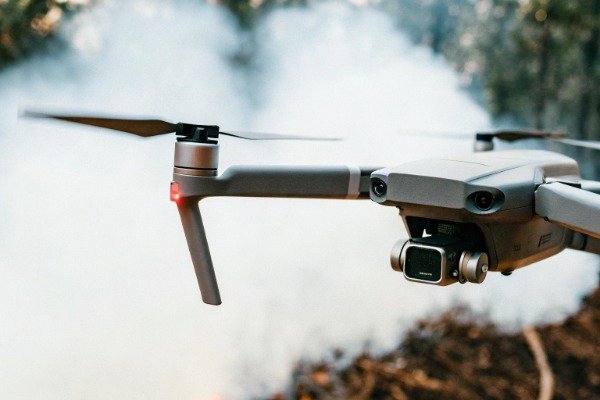
At SkyRover, we know that thick smoke blinds standard sensors, risking crashes during critical rescues. You need a system that sees what pilots cannot to ensure mission success.
To evaluate performance, test sensor fusion capabilities across varying smoke densities using the obscuration per meter metric. Verify that the drone integrates Millimeter-Wave Radar and thermal imaging to penetrate particulates, while measuring the false discovery rate to ensure the system distinguishes between solid structures and drifting smoke plumes.
Let’s break down the specific sensor technologies and testing protocols you must prioritize for your fleet.
Do visual sensors fail in thick smoke or low-light conditions?
Our engineers often see standard cameras struggle when smoke density spikes, leaving pilots flying blind. Relying solely on optics is a dangerous gamble that endangers your equipment.
Visual sensors almost always fail in thick smoke because light scatters off particulates, creating a "whiteout" effect. In low-light conditions, optical cameras lack the contrast needed for depth perception. Therefore, reliable obstacle avoidance requires supplementary sensors like LiDAR or thermal imaging to function when visual data becomes unusable.

When we design drones for high-risk environments, we assume visual sensors will fail. In a fire scenario, smoke particles scatter visible light. This phenomenon, known as Mie scattering, causes the camera feed to turn completely white or gray. It is similar to driving a car with high beams on in heavy fog. The sensor sees the smoke as a solid wall rather than a medium to fly through.
Mie scattering 1
The Problem of Soot Accumulation
Beyond immediate visibility loss, you must consider long-term degradation. During our field tests, we observe "Soot Accumulation Degradation." Oily residues and carbon particulates stick to camera lenses within minutes of exposure. This physical blockage reduces the sensor’s sensitivity. Even if the smoke clears momentarily, the lens remains dirty. This renders optical flow algorithms useless because they cannot track pixel movement accurately.
Thermal Refractive Index
Heat also distorts light. Fire creates extreme temperature gradients. These gradients bend light waves, causing the "Thermal Refractive Index" effect. Objects appear to shift positions, or the drone detects "ghost obstacles" that do not exist. A visual camera might tell the flight computer that a wall is two meters away when it is actually five. This leads to erratic braking or dangerous flight path deviations.
Comparing Sensor Reliability
To help you understand why visual sensors are insufficient on their own, we have compiled a comparison of how different sensors react to environmental stressors common in firefighting.
| Type de capteur | Reaction to Thick Smoke | Reaction to Low Light | Susceptibility to Heat Distortion |
|---|---|---|---|
| Caméra visuelle | High Failure (Whiteout) | High Failure (No Contrast) | High (Image Warping) |
| LiDAR | Moderate Failure (Reflection) | No Impact | Faible |
| Caméra thermique | Low Failure (Penetrates) | No Impact | Moderate (Thermal Saturation) |
| Radar mmWave | No Failure (Penetrates) | No Impact | Aucun |
Is millimeter-wave radar necessary for reliable obstacle avoidance in smoke?
We integrate radar into our high-end models because optical systems often report false obstacles in heavy smoke. You cannot afford a drone that freezes mid-air during a rescue.
Millimeter-wave (mmWave) radar is absolutely necessary for reliable operation in dense smoke. Unlike LiDAR or cameras, radar wavelengths easily penetrate smoke, fog, and dust without significant signal attenuation. This technology ensures the drone detects solid structures rather than reacting to smoke plumes, preventing dangerous false stops during missions.

In our experience, relying on optical or laser-based systems alone is a recipe for failure in active fire zones. Millimeter-wave radar operates on a different principle. It uses radio waves that are much longer than light waves. These waves pass through smoke particles as if they were not there. This capability is non-negotiable for professional firefighting drones.
Radar à ondes millimétriques 3
Reducing False Discovery Rates (FDR)
One of the biggest complaints we hear from customers using consumer-grade drones is the "freezing" problem. The drone detects a thick plume of black smoke, interprets it as a concrete wall, and refuses to move forward. This is a high False Discovery Rate (FDR). Radar solves this. It reflects off dense materials like brick, steel, and concrete, but passes through gaseous smoke. This ensures the drone keeps moving when it needs to, only stopping for actual physical dangers.
Dynamic Sensor Weighting
Advanced flight controllers use a technique called "Dynamic Sensor Weighting." We program our systems to monitor the confidence level of each sensor. In clear air, the visual cameras might have 80% authority over navigation. However, as soon as the sensors detect smoke obscuration, the algorithm shifts. It might give the radar 90% authority. This seamless transition is critical. If you are evaluating a new drone, ask the vendor how their software prioritizes sensor data in real-time.
Wavelength Penetration Analysis
The table below illustrates why radar is superior for object detection in particulate-heavy environments.
| Technologie | Wavelength | Interaction with Smoke Particles | Reliability Score (1-10) |
|---|---|---|---|
| Visual Light | ~400-700 nm | Blocked/Scattered | 1 |
| Near Infrared (LiDAR) | ~900-1550 nm | Partially Scattered | 4 |
| Long-Wave IR (Thermal) | ~8-14 µm | Mostly Penetrates | 7 |
| Radar mmWave | ~1-10 mm | Fully Penetrates | 10 |
What is the detection range required for safe operation near buildings?
When we test drones near skyscrapers, short-range sensors often trigger too late. Insufficient reaction time leads to catastrophic collisions with facades or hidden wires.
ghost obstacles 4
For safe operation near buildings, a detection range of at least 30 to 50 meters is required to account for braking distance and latency. This buffer allows the flight controller to calculate Time to Collision (TTC) and execute evasive maneuvers, even when prop-wash turbulence or wind gusts affect stability.

Speed kills, especially when reaction time is limited. Firefighting drones often fly fast to reach the scene. If a drone is moving at 10 meters per second, a sensor that only sees 5 meters ahead is useless. The drone will hit the wall before the computer processes the stop command.
Time to Collision 6
Calculating Time to Collision (TTC)
We focus heavily on "Time to Collision" accuracy. The system needs to detect an obstacle, process the data, and physically reverse the motors. This entire loop takes time. In a smoky environment, the drone might need to brake harder because the air is turbulent. A detection range of 30 to 50 meters gives the drone roughly 3 to 5 seconds of warning at moderate speeds. This is the minimum safety margin we recommend for industrial operations.
The Impact of Prop-Wash Turbulence
You must also consider the air the drone creates itself. This is called "prop-wash turbulence." When hovering near a building fire, the drone’s rotors churn up smoke and soot. This creates a localized blind spot right in front of the sensors. A longer detection range allows the drone to see obstacles avant it enters this turbulent zone. If the sensors are short-range only, the prop-wash might obscure the wall just as the drone gets close, causing a crash.
Braking Distance Requirements
Different flight speeds require different detection ranges. We use the following benchmarks when calibrating our flight controllers.
| Drone Speed (m/s) | Minimum Braking Distance (m) | Recommended Detection Range (m) | Reason for Buffer |
|---|---|---|---|
| 5 m/s (Slow) | 2-4 m | 15 m | Precision maneuvering |
| 10 m/s (Moderate) | 8-12 m | 30 m | Standard approach speed |
| 15 m/s (Fast) | 18-25 m | 50+ m | Emergency response approach |
Can the obstacle avoidance system be manually overridden if needed?
Our clients frequently ask if they can take control when automation misinterprets a chaotic fire scene. Total lockout creates panic during edge cases and risks mission failure.
Dynamic Sensor Weighting 7
Yes, the obstacle avoidance system must allow for manual override to handle edge cases where sensors might prevent necessary maneuvers. Pilots need the ability to disable avoidance temporarily to navigate narrow gaps or land in complex zones, provided they have access to a clear FPV or thermal feed.

Autonomy is great, but it is not perfect. There are times when the pilot knows better than the machine. We believe that a human operator must always have the final say.
gradients bend light waves 9
The Risk of "Ghost Obstacles"
In intense fires, we sometimes see "ghost obstacles." This happens when heat waves or drifting embers confuse the sensors. The drone thinks it is trapped in a box and refuses to move in any direction. If the pilot cannot turn off the obstacle avoidance, the drone is stuck. It might run out of battery and fall into the fire. A manual override switch allows the pilot to say, "I see the path is clear," and force the drone to fly through the interference.
Navigating Narrow Gaps
Firefighting often requires flying into tight spaces, like between two buildings or through a broken window. These gaps might be narrower than the safety buffer programmed into the drone. If the obstacle avoidance is set to keep a 2-meter distance, the drone will refuse to enter a 1.5-meter window. By engaging manual mode, a skilled pilot can carefully thread the needle.
Training for Manual Takeover
We advise all our customers to train for this specific scenario. It is stressful to switch from full autonomy to manual control in a high-pressure environment. Pilots need to practice flying using only the thermal camera feed. This ensures they are ready to take over if the obstacle avoidance system becomes too conservative or malfunctions due to smoke density.
Conclusion
To ensure safety, evaluate sensors rigorously under real-world conditions. Prioritize radar fusion and manual overrides to ensure your fleet survives the heat.
optical flow algorithms 10
Notes de bas de page
- Explains the physical phenomenon causing light scattering in smoke. ︎
- Defines the imaging technology used for manual navigation. ︎
- Provides technical details on the radar technology mentioned. ︎
- Describes false targets caused by interference or reflections. ︎
- Explains the aerodynamic disturbance created by drone rotors. ︎
- Explains the safety metric used to calculate braking distance. ︎
- Links to the concept of prioritizing data from different sensors. ︎
- Defines the statistical metric for false positive detections. ︎
- Explains how temperature differences cause light refraction. ︎
- Defines the computer vision technique used for motion estimation. ︎

 English
  Español de México
  Deutsch
  Français
  Русский
  العربية
