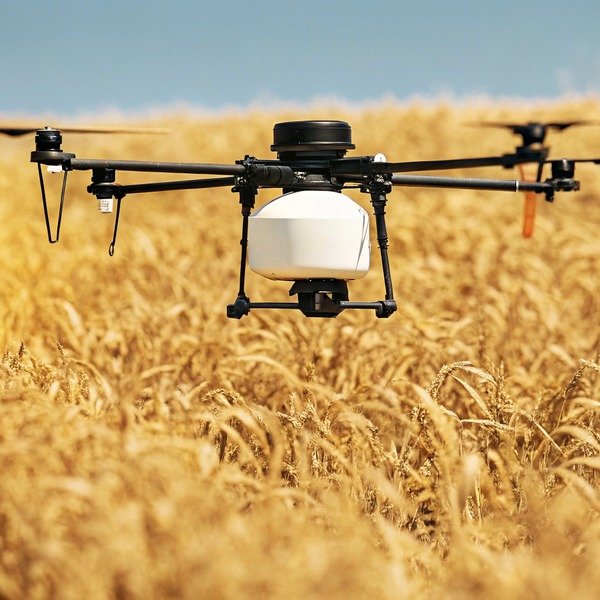
When we test spray systems at our flight facility, we see how quickly costs spiral if the output isn’t precise. You need to know exactly how much chemical lands on your crops to prevent waste and ensure compliance.
You must ask specific questions about the error margin percentage, usually seeking a variance of ±2% to ±5% across the full flow range. Furthermore, inquire if the system supports manual calibration offsets for different liquid viscosities and whether the flow meter integrates directly with the flight controller for real-time speed compensation.
To ensure you get the reliable performance your operation needs, let’s break down the technical details you should demand from your supplier.
Which specific flow meter technologies offer the highest precision for crop spraying?
Our engineering team has evaluated dozens of sensor types, and we find that basic turbine models often struggle with thick fluids. thick fluids 1 Choosing the right core technology is the first step toward reliability.
The highest precision usually comes from electromagnetic flow meters or high-quality turbine sensors with ceramic bearings. Electromagnetic options are superior because they have no moving parts to clog, offering distinct advantages for thick fertilizers, while advanced turbine sensors provide a cost-effective balance of accuracy and durability for standard herbicides.

Understanding the Hardware Inside Your Drone
When you are negotiating with a supplier, it is crucial to understand what is happening inside the black box of the spray system. Most entry-level drones on the market use simple mechanical turbine flow meters 2 mechanical turbine flow meters. These work like a small windmill inside the pipe. As liquid passes through, it spins a rotor. A magnet on the rotor sends a pulse signal to the flight controller.
However, we often advise our clients to look deeper. The problem with basic mechanical turbines is friction and debris. If you are spraying a suspension concentrate or a thick fertilizer, the physical particles can slow down the rotor. This tells the computer that flow is low, so the pump speeds up, leading to severe over-application.
Electromagnetic vs. Turbine Sensors
For high-end applications, we are seeing a shift toward electromagnetic (mag) meters 3 electromagnetic (mag) meters. electromagnetic (mag) meters 4 These sensors use a magnetic field to measure the velocity of the conductive liquid flowing through the pipe. Because there is no physical rotor to spin, there is no friction to overcome. This results in significantly higher accuracy, especially at the lower flow rates used in Ultra-Low Volume (ULV) spraying.
Below is a comparison of the technologies we frequently test in our lab:
| Fonctionnalité | Mechanical Turbine Meter | Electromagnetic (Mag) Meter | Ultrasonic Meter |
|---|---|---|---|
| Mécanisme principal | Spinning rotor with Hall effect sensor | Magnetic field induction | Sound wave time-of-flight |
| Accuracy (Standard) | ±3% to ±5% | ±0.5% to ±1% | ±1% to ±2% |
| Clog Risk | Moderate (debris can jam rotor) | Very Low (unobstructed path) | Faible |
| Viscosity Impact | High (thick fluids slow rotor) | Low (measures velocity directly) | Faible |
| Implication des coûts | Low ($10 – $30 component cost) | High ($100+ component cost) | Haut |
Why Sampling Frequency Matters
Another technical angle you must query is the sampling frequency 5 sampling frequency. This refers to how many times per second the sensor reports data to the flight controller. In our flight tests, a drone flying at 6 meters per second needs to adjust its pump pressure instantly if it encounters a headwind. If the flow meter has a high latency or low sampling frequency, the drone will have traveled several meters before the pump adjusts. This lag results in "streaking" in your field—stripes of under-application followed by over-application. Always ask if the sensor provides real-time data compatible with high-speed flight algorithms PID algorithms 6.
What error margin percentages should I accept when evaluating drone flow meter performance?
We often see spec sheets listing “high accuracy” without numbers, which usually hides poor performance. In our export documentation, we always clarify these figures to protect our clients’ bottom lines.
You should accept a maximum error margin of ±5% for general spraying, but insist on ±2% to ±3% for high-value crops or concentrated chemicals. Be wary of specifications listing absolute values like “±10ml” without context, as this error becomes significant when spraying at low flow rates common in drone operations.

Decoding the Specs Sheet
It is common industry practice for some manufacturers to present data in a way that looks impressive but means little in the field. A common trick is to state accuracy as a fixed volume, such as "accuracy: < 10 ml." On the surface, 10 milliliters sounds precise. However, you must ask: "10 ml per what?"
If the drone is pumping 5 liters per minute, a 10 ml error is negligible. But agricultural drones often fly low and slow for spot spraying, sometimes pushing only 200 ml per minute. In that scenario, a 10 ml variance is a 5% error. If the error is actually higher, say 50 ml, you are suddenly looking at a 25% deviation. This is unacceptable for modern farming.
The Financial Impact of Percentage Error
When we discuss system design with procurement managers, we translate these percentages into dollars. If your flow meter reads 5% lower than the actual output, you are applying 5% more chemical than necessary. Over a season covering thousands of acres, this phantom loss destroys profit margins.
Calculating the Acceptable Range
When evaluating a drone, request a test report that shows accuracy at different flow rates. A meter might be accurate at full speed (high flow) but terrible at low speed (low flow). This is the "linearity" of the sensor.
Here is a breakdown of acceptable error margins based on application type:
| Spraying Operation | Acceptable Error Margin | Pourquoi c'est important |
|---|---|---|
| Broadacre Herbicide | ±51% | Minor overlaps are usually tolerated by the crop. |
| Fungicide/Insecticide | ±3% | Coverage needs to be exact to prevent resistance build-up. |
| Desiccation | ±2% to ±3% | Over-application burns the crop; under-application delays harvest. |
| Variable Rate (VRA) | ±21% | The entire purpose of VRA is precision; high error negates the tech. |
Asking About "Total System Error"
Remember that the flow meter is just one part of the chain. You should ask the supplier about the "Total System Error." This includes the flow meter accuracy, the pump response time, and the flight controller's processing speed. Even if the flow meter is perfect, a slow pump driver will cause error. We ensure our flight controllers use advanced PID algorithms 7 PID algorithms to smooth out these variations, but not all systems do. You need to verify that the flow meter readings actually result in precise pump adjustments.
How difficult is the calibration process for the flow meter on my agricultural drone?
Many of our US clients worry that calibration requires a laboratory setup, but we design our systems to be field-ready. We believe maintenance should never be a bottleneck during the busy harvest season.
The calibration process should be simple, typically involving a “catch-and-weigh” test where you capture spray output for a set time and enter the actual volume into the app. Avoid systems that require factory return for recalibration or lack software features to adjust the “K-factor” for different fluid viscosities.

The Necessity of Field Calibration
No flow meter is "plug and play" forever. Vibration, wear, and changing liquids will alter readings. When we train operators, we emphasize that calibration is a standard pre-flight check, not a repair procedure. If a supplier tells you their sensor "never needs calibration," be very skeptical. This usually means their software does not allow you to adjust it, which is a major limitation.
The "K-Factor" Explained
The most critical question you can ask regarding calibration is: "Does your software allow me to adjust the K-factor 8 adjust the K-factor?"
The K-factor is a value that tells the flight controller how many electronic pulses equal one liter of liquid. Water is thin and flows easily. A thick suspension fertilizer is heavy and moves differently. If you use the calibration settings for water while spraying thick fertilizer, your drone will report the wrong data.
A Standard Calibration Workflow
You should look for a drone system that supports a workflow similar to this:
- Fill the tank with a known amount of the actual mix you intend to spray (not just water).
- Disconnect the hose from the boom or place a measuring jug under a nozzle.
- Run the pump via the app for a set time (e.g., 60 seconds) or until the app thinks it has pumped 1 liter.
- Measure the actual liquid in the jug.
- Input the real value into the app.
- Automatic adjustment: The software calculates the new error ratio and updates the internal K-factor automatically.
Intégration logicielle
Ask to see screenshots or a video of the calibration interface. Is it intuitive? Does it allow for "manual offsets"? A manual offset allows you to tweak the reading by +1% or -1% on the fly if you notice the tank is draining faster or slower than expected during a flight. This feature is a lifesaver in the field when you don't have time for a full bucket test.
Will the flow meter maintain accuracy after long-term exposure to corrosive pesticides and fertilizers?
We source materials specifically to withstand harsh chemical environments, as we know standard plastics degrade quickly. A sensor that fails mid-season causes downtime that costs far more than the part itself.
You must confirm that the flow meter’s wetted parts are constructed from chemically resistant materials like ceramic, stainless steel, or high-grade polypropylene. Ask specifically about the sensor’s rating for common agricultural corrosives and whether the internal seals are made of Viton or similar resistant rubber to prevent swelling and drift.
Material Science in Flow Meters
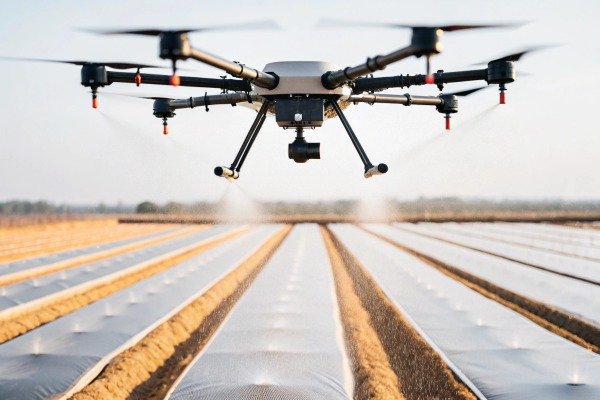
Agriculture is chemical warfare on equipment. Pesticides, herbicides, and especially liquid fertilizers can be highly acidic or alkaline. We have seen instances where customers used generic flow meters intended for water cooling systems; within weeks, the internal impellers swelled up, causing friction and massive measurement errors.
When inquiring about durability, ask for the "Bill of Materials" (BOM) regarding wetted parts—the parts that actually touch the liquid.
Key Materials to Look For
- Shafts and Bearings: Ceramic is the gold standard here. Unlike stainless steel, ceramic does not corrode and is incredibly hard, meaning it won't wear down from the abrasive particles found in wettable powders.
- Body Housing: High-density Polypropylene (PP) or Nylon is standard. Avoid simple ABS plastics if you use harsh solvents.
- Seals (O-Rings): This is the most common failure point. Standard rubber rings will swell when exposed to diesel-based carriers or certain oils. You want Viton (FKM) seals, which offer broad chemical resistance. Joints en Viton (FKM) 9
Chemical Resistance Guide
Use the following table to quiz your supplier about their component choices:
| Chemical Group | Matériau recommandé | Material to Avoid | Warning Signs of Failure |
|---|---|---|---|
| Nitrogen Fertilizers | Stainless Steel (316), Polypropylene | Brass, Aluminum | White corrosion deposits, seized sensors. |
| Acidic Herbicides | Ceramic, Viton, Teflon | Carbon Steel, Natural Rubber | Leaking seals, sensor body cracking. |
| Poudres mouillables | Ceramic Shafts | Plastic Shafts | Rotor wears down, reading lower volume than actual. |
| Oil-Based Sprays | Viton, Nylon | EPDM Rubber | Rubber seals swell, stopping the flow. |
Electronics Isolation
Finally, ask how the electronics are isolated from the chemistry. In a drone, the flow meter is often right next to the pump, vibrating intensely. If the potting (the resin sealing the electronics) is cheap, chemical mist can penetrate the sensor housing. This causes short circuits or "floating" signal values. Ask if the sensor has an IP rating (Ingress Protection), ideally IP67 or higher Protection contre les intrusions 10, specifically for the electronic housing block, ensuring that even if the pipe leaks, the sensor brain survives.
Conclusion
Asking the right questions about flow meter accuracy prevents costly application errors and downtime. By demanding specific error margins, verifying calibration ease, and ensuring chemical resistance, you secure a drone that delivers precise ROI, not just chemicals.
Notes de bas de page
1. Engineering resource explaining the behavior and measurement of viscous fluids. ︎
2. Technical overview of how turbine flow meters operate. ︎
3. Authoritative explanation of electromagnetic flow meter technology. ︎
4. Technical overview of electromagnetic flow meter principles and industrial applications. ︎
5. Definition of sampling rate in data acquisition contexts. ︎
6. Comprehensive explanation of PID control loops used in automated system stabilization. ︎
7. Technical explanation of PID control loops used for pump adjustments. ︎
8. Industry definition of K-factor for flow meter calibration. ︎
9. Official manufacturer page for Viton fluoroelastomers. ︎
10. Official IEC standard defining protection levels for electronic equipment against dust and water. ︎

 English
  Español de México
  Deutsch
  Français
  Русский
  العربية
