At SkyRover, we see many departments struggle with costs. You want to save lives, but limited funds often ground your plans before takeoff.
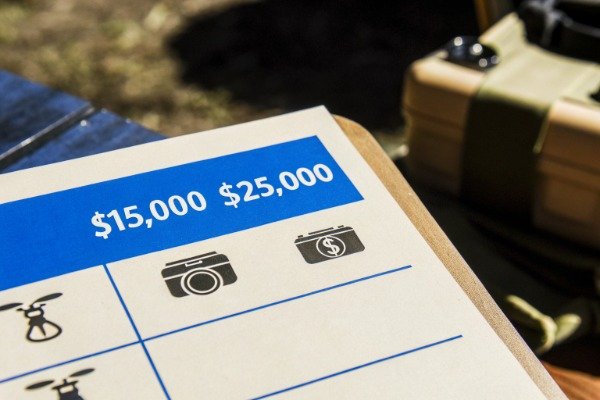
A realistic preliminary budget for a beginner firefighting drone typically ranges from $15,000 to $25,000. This allocation should cover 60% for the aircraft and thermal sensors, 25% for essential payloads like spotlights or drop mechanisms, and 15% for extra batteries, pilot training, and maintenance parts.
Let’s break down exactly where every dollar goes so you can secure approval without hidden surprises.
What Essential Accessories Must Be Included in the Initial Budget?
We often ship drones that sit idle because clients forgot critical add-ons. Don’t let a missing cable or sensor halt your emergency response mission.
Your initial budget must include a high-resolution radiometric thermal camera for hotspot detection and a high-intensity spotlight for night operations. Additionally, prioritize a ruggedized transport case, a multi-port rapid charging station, and a remote controller with a high-brightness screen for visibility in direct sunlight.
Prioritizing Mission-Critical Hardware
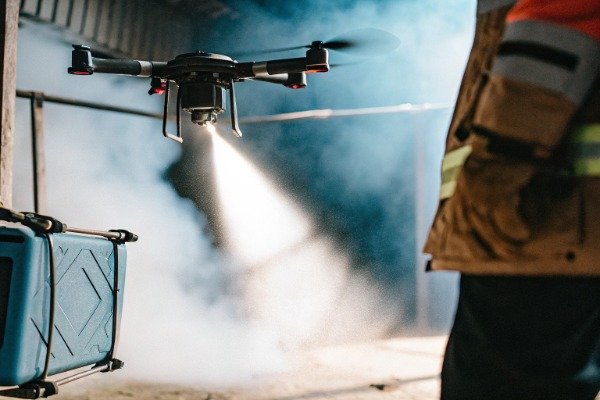
When we collaborate with procurement managers like yourself, we emphasize that the "drone" is just the delivery vehicle; the accessories are what actually perform the work. For a beginner unit, you are likely looking at a situational awareness tool rather than a heavy-lift suppression aircraft. However, even for scouting, the accessories dictate the price.
situational awareness tool 1
The most expensive and vital component is the sensor. You cannot compromise here. A standard RGB camera is useless in heavy smoke. You need a radiometric thermal sensor. Unlike basic thermal cameras that just show heat contrast, a radiometric sensor measures the specific temperature of a pixel. This allows your team to identify the exact core of a fire or monitor the heat levels of a roof to prevent a collapse.
radiometric thermal sensor 2
H3 – The Necessity of Night Vision and Lighting
Firefighting operations rarely happen under perfect lighting conditions. A high-intensity spotlight (often tethered to the drone’s power supply) is mandatory. This accessory serves two purposes: it illuminates the operational area for ground crews, and it aids the drone’s visual positioning system in low-light environments.
Furthermore, we strongly advise budgeting for a "High-Brightness Remote Controller." Standard tablets or phones often dim in the sun or overheat. A dedicated enterprise controller with a screen brightness of at least 1000 nits ensures the pilot can always see the telemetry data.
H3 – Breakdown of Accessory Costs
To help you visualize the allocation, here is a breakdown based on current market rates for mid-range industrial equipment:
| Accessory Item | Estimated Cost (USD) | Niveau de priorité | Fonction |
|---|---|---|---|
| Radiometric Thermal Camera | $5,000 – $9,000 | Critique | Seeing through smoke/measuring heat. |
| High-Intensity Spotlight | $500 – $1,200 | Haut | Night ops and ground illumination. |
| Rugged Hard Case | $300 – $600 | Haut | Protection during transport in fire trucks. |
| High-Bright Controller | $800 – $1,500 | Moyen | Visibility in direct sunlight. |
| Loudspeaker Payload | $400 – $800 | Low/Medium | Crowd control or SAR communication. |
The "Ruggedization" Factor
Finally, do not underestimate the environment. Fire scenes are chaotic, wet, and hot. We design our SkyRover frames to be durable, but the accessories must match this standard. Cheap, consumer-grade accessories will fail when exposed to the water spray from fire hoses or the intense heat of a blaze. Ensure your budget accounts for IP-rated (Ingress Protection) accessories. It is better to spend $500 on a waterproof case now than $15,000 replacing a water-damaged drone later.
IP-rated (Ingress Protection) 3
How Much Should I Allocate for Spare Batteries and Maintenance Parts?
Our engineers know that flight time is limited by battery chemistry. Running out of power mid-operation is a nightmare you cannot afford during a fire.
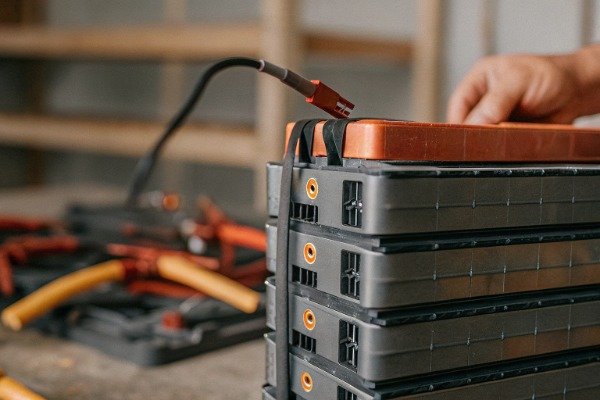
Allocate approximately 20% to 30% of your total hardware budget specifically for power management and spares. This should fund at least three extra sets of flight batteries to ensure continuous rotation, a portable field generator, and a basic crash kit containing propellers and landing gear.
The Logistics of Continuous Flight
One of the most common mistakes we see in procurement orders is underestimating power requirements. A standard industrial drone battery provides about 25 to 40 minutes of flight time. However, in a real fire scenario, you are not flying until 0%. You land at 20% for safety. This gives you roughly 20-30 minutes of effective operational time.
If a fire incident lasts four hours, a single battery set is useless. To maintain a "continuous flight" rotation—where one set is flying, one is cooling, and one is charging—you need a minimum of four battery sets (one in the drone, three spares).
H3 – Field Power Generation
Having batteries is only half the battle; you must charge them. Industrial drone batteries require high-wattage input to charge quickly. The 12V outlet in a fire truck is often insufficient for rapid charging stations that draw 1000W+.
Therefore, your budget must include a portable power station or a gas generator. We recommend a portable battery station with at least 2000Wh capacity or a quiet inverter generator. This ensures that your drone team is self-sufficient and does not drain the fire engine’s power resources.
H3 – The "Crash Kit" and Consumables
Drones are mechanical devices with moving parts that wear out. Propellers are the first to go. They can get chipped by debris, warped by heat, or damaged during rough landings. Flying with a damaged propeller causes vibration that ruins video quality and can lead to motor failure.
We recommend setting aside a "Maintenance Fund" immediately. This is not for major repairs (which should be covered by warranty or insurance), but for field-replaceable units.
| Composant | Fréquence de remplacement | Estimated Cost (USD) | Notes |
|---|---|---|---|
| Propellers (Set of 4) | Every 50-100 flight hours | $50 – $150 | Always keep 2 full sets in the truck. |
| Flight Batteries | Tous les 200-300 cycles | $300 – $800 per battery | Budget for annual replacement. |
| Landing Gear Legs | As needed (impact damage) | $50 – $200 | Vulnerable during rough landings. |
| Gimbal Dampeners | Every 1-2 years | $20 – $50 | Rubber degrades over time. |
Long-Term Battery Health Costs
Batteries are consumables. Unlike the drone airframe, which can last for years, Lithium Polymer (LiPo) batteries degrade with every charge cycle and with age. If you are in a region with cold winters, you may also need self-heating batteries or a battery heating case, which adds to the cost. We advise clients to budget for a full fleet battery replacement every 12 to 18 months depending on usage intensity. This "Obsolescence Reserve" ensures you aren’t caught off guard when flight times start dropping a year after purchase.
Batteries au lithium-polymère (LiPo) 4
Do I Need to Budget Extra for Specialized Pilot Training or Software?
We build stable aircraft, but human error remains the biggest risk. Crashing a new asset due to lack of skill is a costly, avoidable tragedy.
Yes, you must budget $1,500 to $3,000 for specialized training and software. This covers FAA Part 107 certification, emergency response flight courses, and annual subscriptions for fleet management or thermal analysis software, ensuring your team operates legally and effectively under high-pressure conditions.
H3 – Beyond the Basic License
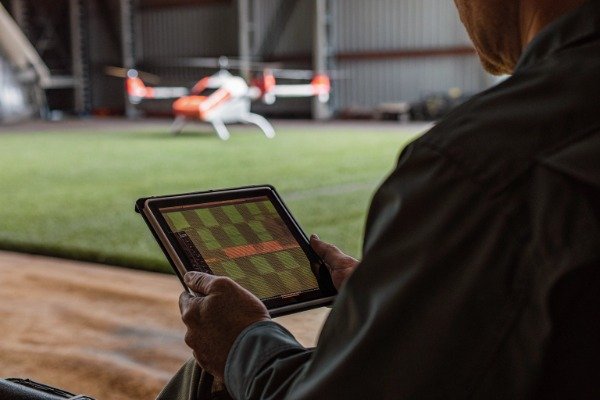
Many beginners assume that passing the FAA Part 107 exam (in the US) is the end of the road. In reality, that is just the learner’s permit. The Part 107 exam covers regulations, weather, and airspace, but it does not teach you how to fly a drone while standing next to a burning building with sirens blaring.
FAA Part 107 exam 5
We strongly recommend budgeting for a specialized "Public Safety Drone Course." These courses teach tactical skills:
- Thermal Interpretation: Understanding what you are looking at on the screen (e.g., distinguishing a person from a heated rock).
- Night Operations: Flying safely when depth perception is compromised.
- Close-Quarters Flight: Maneuvering around trees and power lines near a fire.
H3 – Software: The Recurring Cost
Hardware is a one-time purchase; software is often a subscription. Modern industrial drones generate massive amounts of data. To make this data useful, you need software.
- Fleet Management: If you have more than one drone or pilot, you need software to log flight hours, battery cycles, and maintenance records. This is often required for liability and insurance purposes.
- Live Streaming: In a command center scenario, the incident commander needs to see what the drone sees in real-time. This requires a 4G/5G streaming platform.
- Mapping/Modeling: For post-fire analysis or search and rescue, you might need software to create 2D maps or 3D models.
Cost Analysis for Training and Software
Here is a realistic look at the "intangible" costs you need to prepare for:
| Item | Type | Estimated Cost (USD) | Frequency |
|---|---|---|---|
| FAA Part 107 Exam | Certification | $175 | Per Pilot / Every 2 Years |
| Public Safety Flight Course | Training | $1,000 – $2,500 | One-time (per pilot) |
| Thermal Analysis Software | Logiciel | $300 – $600 | Abonnement annuel |
| Live Streaming Platform | Logiciel | $500 – $1,200 | Abonnement annuel |
| Fleet Management Tool | Logiciel | $0 – $300 | Abonnement annuel |
The Cost of Practice
Finally, budget for "Proficiency Hours." We tell our clients that a pilot should not be learning how to use the zoom function during an actual emergency. You need to budget for pilot wages or overtime to allow them to practice weekly. If you are a volunteer department, this might be time rather than money, but for paid departments, training hours are a significant line item in the operational budget.
What Are the Hidden Costs Regarding Shipping and Customs Clearance?
When exporting to the US, we see shipments delayed by paperwork. Unexpected fees can blow your budget and leave critical equipment stuck at the border.
Hidden logistics costs can add 15% to 25% to the final invoice price. You need to budget for international freight shipping, import duties based on HS codes, customs broker fees, and potential warehousing charges if documentation delays occur during the clearance process.
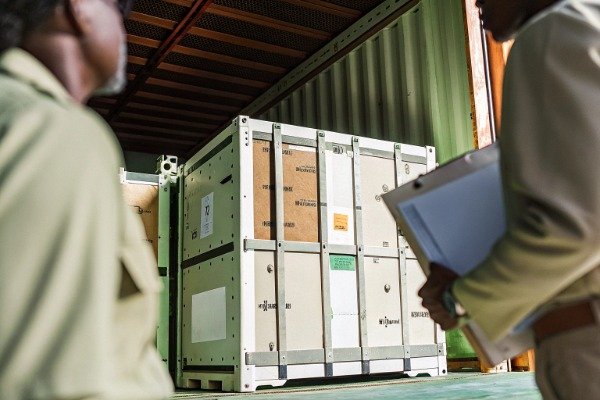
Understanding the Total Landed Cost
As a manufacturer based in China exporting to the US and Europe, we often see customers surprised by the "Landed Cost." The price listed on the website is rarely the price you pay to get the box into your hands. If you are buying directly from a manufacturer or an overseas distributor to save money, you become the importer of record.
Customs Broker 6
H3 – Import Duties and Tariffs
The most significant hidden cost is the import duty. Drones typically fall under specific HS Codes (Harmonized System Codes). In the United States, trade relations can fluctuate, leading to additional tariffs.
- Standard Duty: Usually low (0-5%) for civil aircraft parts.
- Section 301 Tariffs: For products of Chinese origin, there may be an additional punitive tariff (often 25%).
- Merchandise Processing Fee (MPF): A fee charged by US Customs for processing the trade entry.
If you purchase a $20,000 drone package, a 25% tariff adds $5,000 to your bill instantly. It is crucial to ask your supplier for the HS Code and check current tariff rates before finalizing your budget.
use Incoterms 7
H3 – Shipping Terms (Incoterms) Matter
When we negotiate contracts, we use Incoterms to define who pays for what.
- EXW (Ex Works): You pay for everything from the factory door.
- FOB (Free on Board): We pay to get it to the ship/plane; you pay the ocean/air freight and insurance.
- DDP (Delivered Duty Paid): We pay for everything, including duties and delivery to your door.
For beginners, DDP is the safest option, even if the upfront quote looks higher. It eliminates the risk of surprise bills from customs brokers or freight forwarders.
Insurance and Brokerage
Do not rely on the carrier’s basic liability coverage. International freight insurance usually costs about 1-3% of the invoice value. Additionally, if you are not using a DDP service, you will need to hire a Customs Broker to file the paperwork for you. Their fees can range from $100 to $500 per entry, plus any bond fees required to guarantee payment of duties.
Section 301 Tariffs 8
Summary of Logistics Buffer
To be safe, we recommend adding a "Logistics Buffer" to your spreadsheet.
| Cost Head | Estimated Percentage of Hardware Cost |
|---|---|
| International Air Freight | 3% – 8% (Depends on weight/speed) |
| Import Duties (Standard + Tariffs) | 0% – 25% (Highly variable by country) |
| Transit Insurance | 1% – 3% |
| Brokerage & Handling Fees | Flat fee ($150 – $500) |
By factoring these in, you prevent the awkward situation of having a drone sitting at JFK airport that you cannot afford to release from customs.
HS Codes 9
Conclusion
Building a budget requires looking beyond the price tag. By accounting for thermal sensors, battery redundancy, training, and logistics, you ensure your department’s drone program is sustainable, legal, and mission-ready from day one.
Public Safety Drone Course 10
Notes de bas de page
- Authoritative government source defining the role of UAS in emergency response. ︎
- Industry leader explanation of the specific technology required for temperature measurement. ︎
- Official international standard body defining ingress protection ratings. ︎
- Official safety bulletin regarding the hazards and handling of this battery type. ︎
- Official government page for the specific certification mentioned. ︎
- Official Customs and Border Protection page defining the role and requirements. ︎
- The official organization that defines and publishes Incoterms rules. ︎
- Official U.S. Trade Representative page detailing these specific tariffs. ︎
- Official government resource explaining the classification system for imports. ︎
- Government standards body providing context on public safety flight testing. ︎

 English
  Spanish
  German
  French
  Dutch
Dutch  Arabic
