
When our engineering team first shipped drones agricoles 1 to the United States, we quickly learned that certification paperwork matters as much as flight performance. Many importers face rejected shipments, compliance delays, and costly fines because their suppliers cannot provide proper DOT documentation 2.
To evaluate suppliers for US DOT certification when sourcing agricultural drones, verify their certification authenticity through official databases, request complete engineering documentation proving safety compliance, assess their customization capabilities for regulatory requirements, and confirm their logistics expertise for DOT-compliant shipping and customs clearance.
This guide breaks down each evaluation step. We will cover certification verification, documentation requirements, customization capabilities, and shipping compliance. Let’s start with the basics of checking whether your supplier’s certifications are real.
How do I verify if my drone supplier's DOT certifications are authentic and up to date?
In our experience exporting to the US market, we have seen buyers struggle with fake or expired certificates. Some suppliers provide outdated documents. Others present certifications that simply do not exist in official records.
To verify your drone supplier's DOT certifications, cross-check certificate numbers against official FAA and DOT databases, request original documents with visible registration numbers, confirm expiration dates, and contact the issuing authority directly if any details seem inconsistent or unclear.
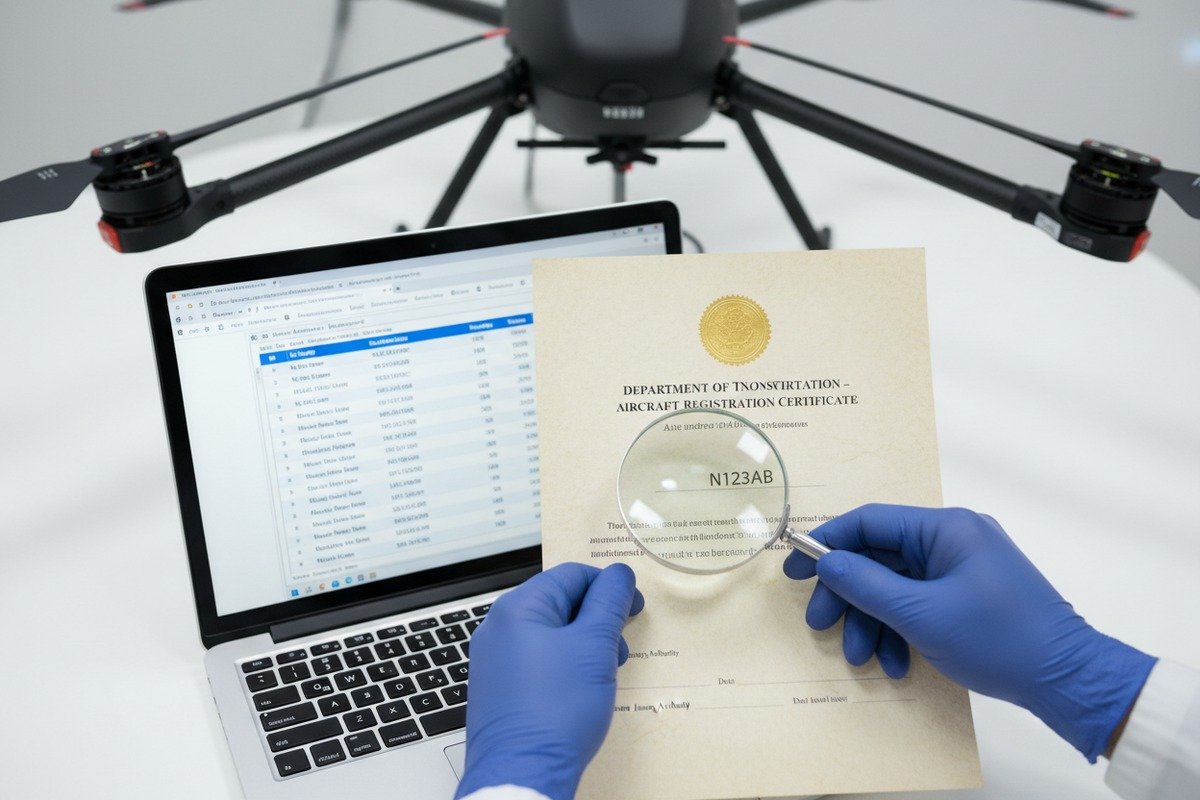
Why Certification Verification Matters
Fake certifications can cause serious problems. Your shipment may be seized at customs. You could face legal penalties. Your business reputation suffers. Worse, non-compliant drones may pose safety risks to operators and the public.
The US regulatory environment is strict. Agricultural drones must meet FAA Part 107 requirements 3 for operation. Heavier drones or spraying operations may need Part 137 exemptions 4. Some components require separate DOT certifications for hazardous materials transport.
Processus de vérification étape par étape
Start with document inspection. Look for these key elements:
| Document Element | Ce qu'il faut vérifier | Drapeaux rouges |
|---|---|---|
| Numéro de certificat | Matches official database | Missing or incomplete numbers |
| Autorité de délivrance | Recognized government body | Unknown or suspicious agencies |
| Date d'expiration | Currently valid | Expired or no date listed |
| Company Name | Exact match to supplier | Slight spelling variations |
| Scope of Certification | Covers your product type | Generic or vague language |
Next, use official databases. The FAA maintains public records of certified aircraft and equipment. The DOT Pipeline and Hazardous Materials Safety Administration tracks certifications for battery transport. Cross-reference every certificate your supplier provides.
NDAA Compliance Considerations
For federally funded projects, NDAA compliance 5 is essential. Our production team ensures all critical components avoid prohibited foreign sources. Ask your supplier directly about component origins. Request written confirmation of NDAA compliance status.
The "Blue UAS" list provides approved drones for government use. Blue UAS list 6 If your end customers include government agencies, prioritize suppliers with Blue UAS approval. This simplifies procurement for your buyers downstream.
Direct Contact Verification
When documents check out but you still have doubts, contact the issuing authority. A quick email or phone call can confirm certificate validity. Keep records of these verification steps. They protect you if problems arise later.
What specific engineering documentation should I request to prove my agricultural drones meet DOT safety standards?
When we prepare shipments for our US partners, documentation packages often exceed fifty pages per model. This is not bureaucracy for its own sake. Each document proves a specific safety requirement is met.
Request complete engineering documentation including technical specifications, material certifications, battery safety test reports, electromagnetic compatibility test results, structural integrity analyses, and quality control records that demonstrate your agricultural drones meet all applicable DOT and FAA safety standards.
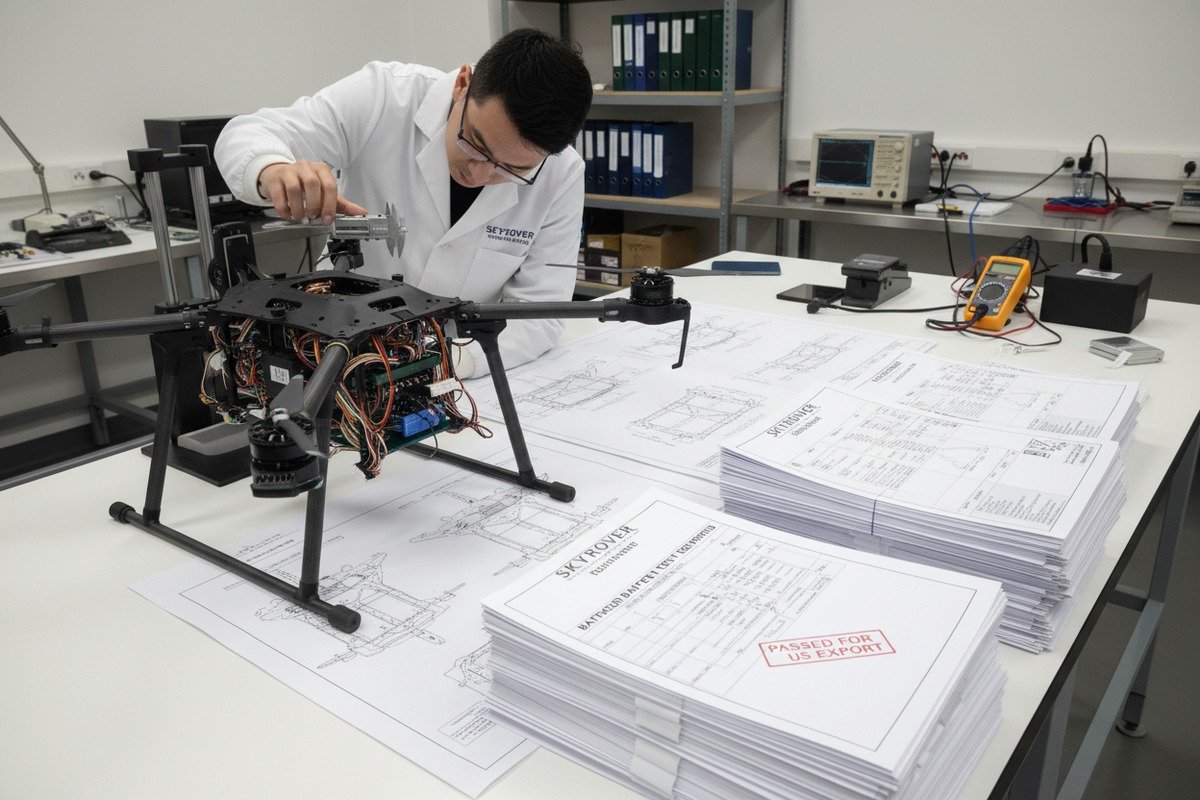
Core Documentation Categories
Engineering documentation falls into several categories. Each serves a specific compliance purpose. Missing any category can delay or block your import.
| Documentation Category | Key Documents | Objectif |
|---|---|---|
| Design Specifications | Technical drawings, CAD files, component lists | Proves design meets safety parameters |
| Material Certifications | Carbon fiber specs, metal alloy certificates | Verifies material quality and origin |
| Safety Testing | Battery UN38.3 reports, drop tests, thermal tests | Demonstrates safe operation limits |
| Contrôle de la qualité | Inspection records, calibration certificates | Shows consistent manufacturing standards |
| Compliance Declarations | CE marks, FCC certifications, RoHS compliance | Confirms regulatory adherence |
Battery Documentation Is Critical
Lithium batteries require special attention. UN38.3 testing 7 is mandatory for air transport. This test series includes altitude simulation, thermal cycling, vibration, shock, short circuit, overcharge, and forced discharge tests.
Our battery packs undergo testing at accredited laboratories. We provide full test reports showing pass results for each UN38.3 section. Without these reports, your shipment cannot legally fly on commercial aircraft.
Flight Controller and Software Records
Modern agricultural drones rely heavily on software. Flight controllers manage stability, navigation, and safety features. Request documentation showing:
- Software version control records
- Failsafe system test results
- GPS accuracy verification
- Return-to-home function testing
- Geofencing capability documentation
Our engineers maintain detailed logs of all software testing. This transparency helps our partners demonstrate compliance to their own customers and regulators.
Structural Integrity Evidence
Agricultural drones face harsh conditions. Dust, moisture, vibration, and chemical exposure challenge every component. Documentation should prove the drone handles these stresses safely.
Look for IP ratings documentation. Our hexacopter models carry IP54 or higher ratings, verified by independent testing labs. This proves resistance to dust and water spray. Request the actual test reports, not just a claimed rating.
Quality Management System Records
A reliable supplier maintains rigorous quality control. Ask for ISO 9001 certification 8 or equivalent. Review their inspection protocols. Our factory implements multi-point inspection throughout assembly. Each drone receives individual testing before shipment.
How can I evaluate a supplier's ability to customize drone hardware for strict US regulatory compliance?
Our development team regularly modifies standard models for US-specific requirements. Some changes are minor software adjustments. Others require complete component redesigns. Not every manufacturer can handle this complexity.
Evaluate customization capability by reviewing the supplier's engineering team credentials, past regulatory compliance projects, prototype development timelines, testing infrastructure, and their documented process for implementing hardware modifications that meet specific US regulatory requirements.

Why Customization Capability Matters
US regulations differ from other markets. FAA Part 137 agricultural aircraft operations have specific requirements. State-level regulations vary. Some counties impose additional restrictions. A rigid, off-the-shelf product may not work for all your customers.
Customization capability also future-proofs your investment. Regulations evolve. A supplier who can modify hardware and software keeps your product compliant as rules change.
Assessing Engineering Resources
Start by understanding the supplier's technical team. Key questions include:
| Zone d'évaluation | Questions to Ask | Good Indicators |
|---|---|---|
| Team Size | How many engineers work on R&D? | Dedicated compliance engineers |
| Expérience | What US-specific projects have you completed? | Documented Part 107/137 modifications |
| Facilities | Do you have in-house testing equipment? | Accredited testing laboratory access |
| Chronologie | How long for custom modifications? | Clear milestone schedules |
| Soutien | Who handles post-delivery technical issues? | Named engineering contacts |
Our team includes specialists focused specifically on international compliance. When customers need modifications, we assign dedicated engineers to their projects. This ensures continuity and accountability.
Prototype and Testing Capabilities
Customization means nothing without proper validation. Ask how your supplier tests modified designs. Do they have flight testing facilities? Can they simulate harsh agricultural conditions?
We maintain our own test farm where modified drones undergo real-world trials. Spray patterns are verified. Flight endurance is measured. Control systems are stressed. Only after passing these tests do we approve production.
Modular Design Advantages
The best agricultural drones use modular architecture. Sensors, batteries, tanks, and processors can be swapped without redesigning the entire system. This dramatically reduces customization costs and timelines.
Our hexacopter platform accepts multiple sensor configurations. Multispectral cameras, thermal imagers, and LiDAR units all mount on standardized interfaces. Payload tanks come in different capacities. This modularity lets us respond quickly to specific compliance requirements.
Documentation of Customization Process
Reputable suppliers document every modification. Request change control records, engineering change orders, and updated specifications for any customized components. These records prove the modified drone still meets all safety requirements.
What steps should I take to ensure my supplier provides the necessary support for DOT-compliant shipping and customs clearance?
Our logistics team has handled hundreds of US shipments. We have learned that manufacturing excellence means little if products get stuck at the border. Shipping compliance requires as much attention as product compliance.
Ensure your supplier provides DOT-compliant shipping support by verifying their HazMat certification for battery transport, reviewing their customs documentation accuracy, confirming their experience with US import procedures, and establishing clear communication protocols for resolving any shipping issues quickly.

HazMat Shipping Requirements
Lithium batteries classify as hazardous materials under DOT regulations. Improper packaging or labeling can result in shipment rejection, fines, or even criminal penalties. Your supplier must demonstrate HazMat expertise.
| HazMat Requirement | Supplier Capability Check | Documentation Needed |
|---|---|---|
| Battery Classification | Correctly identifies Section II vs Section I batteries | MSDS sheets, watt-hour calculations |
| Packaging Standards | Uses UN-certified packaging | Packaging certifications, photos |
| Labeling Compliance | Applies correct hazard labels | Sample label images, placement guides |
| Shipping Documents | Prepares accurate dangerous goods declarations | Sample shipping papers |
| Carrier Coordination | Works with HazMat-certified carriers | Carrier agreements, tracking systems |
Our shipping department maintains current IATA dangerous goods certifications. We package all lithium batteries according to the latest requirements. Every shipment includes complete and accurate hazmat documentation.
Customs Documentation Accuracy
Incorrect customs paperwork causes delays. Common problems include wrong HS codes, inaccurate declared values, and missing certificates of origin. Work with suppliers who understand US customs requirements.
Request sample documentation before your first order. Review it carefully. Look for common errors like missing product descriptions, incorrect country of origin statements, or incomplete manufacturer information.
Import Procedure Experience
First-time exporters to the US make costly mistakes. Experienced suppliers anticipate problems and prevent them. Ask about your supplier's US export history:
- How many US shipments per year?
- What common customs issues have they encountered?
- How did they resolve those issues?
- Do they work with US-based customs brokers?
We have exported to the US for years. Our team knows which ports process drone shipments most efficiently. We understand FDA holds on camera equipment, CBP inspections of Chinese electronics, and FAA coordination requirements.
Communication and Problem Resolution
Even well-planned shipments encounter problems. Weather delays cargo flights. Customs officers request additional documentation. Port congestion slows processing. Your supplier needs clear communication protocols for these situations.
Establish primary contacts before shipping. Define response time expectations. Agree on escalation procedures. Our team provides dedicated logistics contacts for every US customer. We commit to same-business-day responses for shipping issues.
Door-to-Door Service Benefits
We offer complete door-to-door delivery for US customers. This means we handle export documentation, freight booking, customs clearance, and final delivery coordination. You receive your drones without managing complex international logistics yourself.
This service level is not standard in the industry. Many manufacturers ship only FOB or CIF, leaving you responsible for US-side logistics. When evaluating suppliers, factor in the true cost of managing customs clearance independently versus paying for comprehensive delivery service.
Conclusion
Evaluating suppliers for US DOT certification requires systematic verification across multiple areas. Check certifications against official databases. Request complete engineering documentation. Assess customization capabilities. Confirm shipping compliance expertise. These steps protect your business and ensure smooth imports of agricultural drones into the US market.
Notes de bas de page
1. Provides a general overview of agricultural drones and their applications. ︎
2. Official source for US Department of Transportation regulations and policies. ︎
3. Official FAA page detailing regulations for small unmanned aircraft systems. ︎
4. Official FAA information on agricultural aircraft operations and related regulations. ︎
5. Explains the National Defense Authorization Act (NDAA) Section 889 prohibition on certain telecommunications equipment. ︎
6. Official site for the Blue UAS program, listing approved drones for government use. ︎
7. Replaced with the official IATA page on lithium battery regulations, which is relevant to UN38.3 testing for transport. ︎
8. Official ISO page detailing the ISO 9001 standard for quality management systems. ︎

 English
  Spanish
  German
  French
  Dutch
Dutch  Arabic
