
When our engineering team began developing custom spraying solutions for overseas partners, we quickly discovered that not all drone SDKs are equal MAVLink or MQTT 1. Some suppliers promised “full openness” but delivered locked firmware and sparse documentation. This frustration costs integrators months of wasted development time.
To evaluate supplier SDK openness, request complete API documentation, test payload control access, verify technical support responsiveness, and confirm compatibility with your existing farm data platforms. A truly open SDK provides full flight control, sensor data streaming, and third-party system integration without hidden restrictions.
Let me walk you through the exact evaluation process our team uses when vetting SDK suppliers for agricultural drone integration projects.
What specific documentation should I request to verify the SDK's ease of integration for my agricultural software?
When we ship agricultural drones to distributors in the US and Europe, their integration teams often struggle with incomplete documentation. This wastes valuable development cycles and delays product launches.
Request API reference guides, code samples with agricultural use cases, hardware interface specifications, protocol documentation for MAVLink or MQTT, and version changelog histories. Complete documentation includes payload SDK guides, cloud API access details, and troubleshooting sections that address common integration errors.

Essential Documentation Categories
Good SDK documentation covers multiple layers. At the foundation, you need hardware interface documents. These explain pin configurations, voltage requirements, and communication protocols for connecting custom payloads like sprayers or multispectral cameras.
Next, software API references must include every available function call. Look for methods that control waypoint navigation, live telemetry streaming, and obstacle avoidance systems. Each function should have clear parameter explanations and return value descriptions.
Documentation Quality Checklist
| Type de document | Must Include | Drapeaux rouges |
|---|---|---|
| API Reference | All functions, parameters, return values | Missing methods, outdated syntax |
| Code Samples | Working agricultural examples | Only basic "hello world" demos |
| Hardware Specs | Pin diagrams, voltage limits, protocols | Vague "contact support" notes |
| Changelog | Version history, breaking changes | No update history available |
| Troubleshooting | Common errors, solutions | Empty or missing section |
Protocol Documentation Matters
Our engineers prioritize suppliers who document their communication protocols thoroughly. MAVLink protocol documentation should specify message types for agricultural operations. MQTT documentation must explain topic structures for telemetry data.
When we evaluate a new supplier, we check if their documentation explains how to stream real-time GNSS positioning data. This matters for precision spraying applications 2 where centimeter-level accuracy determines spray overlap and chemical efficiency.
Version Control and Traceability
Documentation must include version numbers tied to specific firmware releases. Indian regulations for "Kisan Drones" 3 now require software traceability with unique module identifiers. European EN 4709-002 standards 4 push similar requirements. Ask suppliers how they handle documentation updates when APIs change.
Our recommendation: request documentation samples before signing any agreement. If a supplier hesitates to share basic API guides, their "open SDK" claim deserves skepticism.
How can I test if the supplier's SDK provides full control over my drone's payload and spraying systems?
Our production team has seen clients receive drones that looked feature-rich on paper but locked critical payload controls behind proprietary barriers. Testing before commitment prevents expensive integration failures.
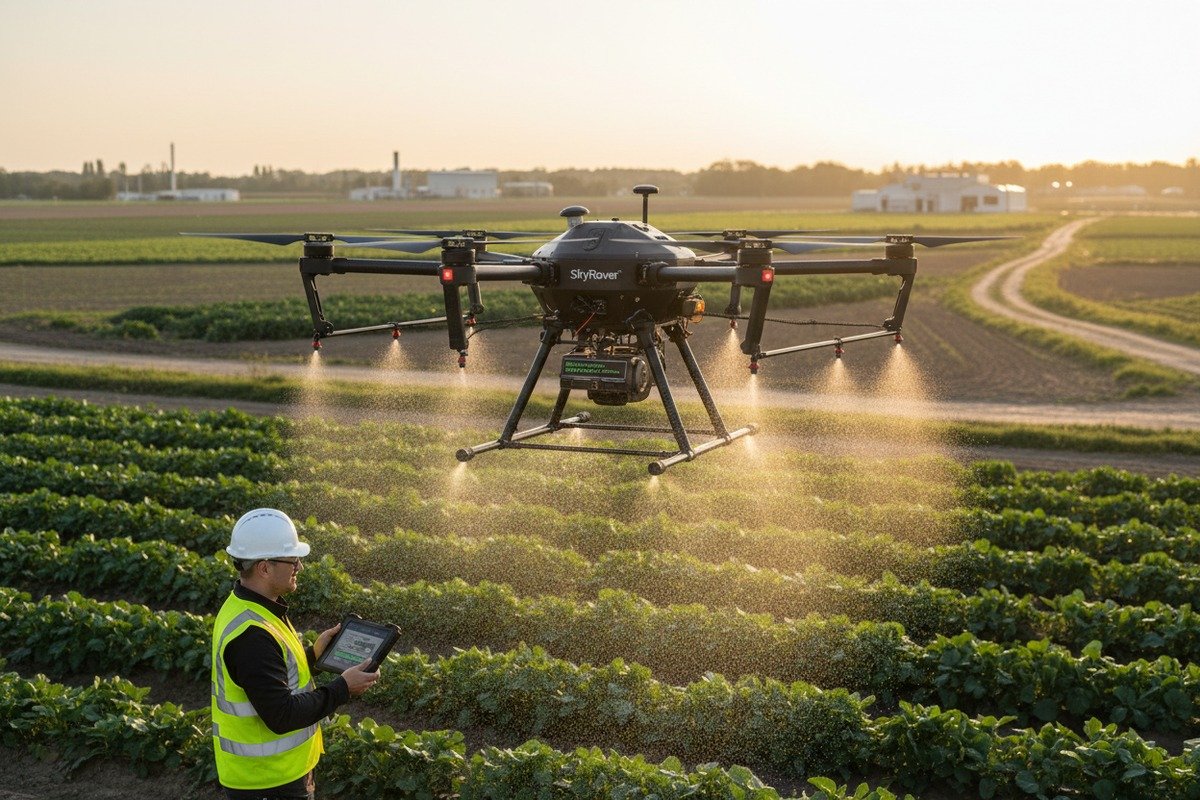
Test payload SDK access by requesting demo units for hands-on evaluation. Verify you can control spray nozzle activation timing, adjust flow rates through API calls, access real-time tank level sensors, and integrate custom multispectral cameras. Run actual spray pattern tests using your software before finalizing purchases.
Hands-On Testing Protocol
Never rely solely on specification sheets. When we validate SDK partners, we follow a structured testing protocol. First, we connect the drone to our development environment. Then we attempt every claimed API function.
Start with basic telemetry access. Can you read GPS coordinates, altitude, and battery status in real-time? Move to flight control tests. Can your software command waypoint missions without using the supplier's proprietary ground station?
Payload Control Testing Matrix
| Catégorie de test | Specific Tests | Pass Criteria |
|---|---|---|
| Spray Activation | Trigger nozzles via API | <100ms response time |
| Flow Rate Control | Adjust spray volume programmatically | 0.1 L/min precision |
| Tank Monitoring | Read liquid level sensors | Real-time updates |
| Camera Control | Capture multispectral images on command | Full parameter access |
| Gimbal Control | Adjust angles for terrain following | 0.1° accuracy |
Real-World Spray Pattern Validation
We always test spray patterns using actual field conditions. Set up a test course with water-sensitive paper strips. Program a spray mission through your SDK integration. Measure droplet distribution across the target area.
This test reveals whether the SDK provides sufficient timing precision. Agricultural spraying demands synchronized nozzle activation with forward flight speed. Delays of 200 milliseconds can create gaps or overlaps costing farmers chemical expenses.
Multispectral Camera Integration Tests
If your system uses NDVI or other vegetation indices 5, test camera trigger synchronization. The SDK should allow precise image capture timing aligned with GPS positions. Our engineers verify that captured images include embedded geotags matching flight logs.
DJI's Payload SDK uses their SkyPort interface for third-party sensors. Test whether you can access raw sensor data or only processed outputs. Raw access enables custom algorithms for crop health analysis.
Integration Solutions Comparison
| Solution Type | Advantages | Disadvantages | Meilleur pour |
|---|---|---|---|
| Direct SDK Control | Real-time data, full access | Requires stable SDK | Custom ag applications |
| Ground Station Proxy | Safer, proven stability | Added latency | Multi-robot farms |
| Onboard App Bridge | Works with closed drones | Limited by device | Legacy fleet integration |
Our testing revealed that direct SDK control adds roughly 20-30% efficiency gains in data flow compared to ground station proxies. However, unstable SDKs risk flight safety. Balance performance against reliability based on your use case.
What technical support and API update frequency should I demand to ensure my integrated system stays stable?
When our clients deploy fleets across multiple US states, a single API breaking change can ground hundreds of drones. We learned this lesson after a supplier pushed an unannounced firmware update that disabled our custom spraying algorithms.
Demand minimum 90-day advance notice for breaking API changes, dedicated technical support contacts with agricultural domain expertise, and documented update schedules. Require suppliers to maintain backward compatibility for at least two major versions and provide sandbox environments for testing updates before production deployment.

Support Response Time Standards
Technical support quality varies dramatically between suppliers. Establish clear service level agreements before signing contracts. Our standard requirements include 24-hour response for critical issues and 72-hour response for general questions.
More importantly, verify that support staff understand agricultural applications. Generic drone support teams often lack farming context. They cannot troubleshoot spray pattern irregularities or crop monitoring data anomalies effectively.
API Stability Requirements
| Exigence | Norme minimale | Norme idéale |
|---|---|---|
| Breaking Change Notice | 60 days | 90+ days |
| Backward Compatibility | 1 major version | 2 major versions |
| Update Documentation | Changelog only | Migration guides |
| Testing Environment | Production only | Sandbox available |
| Rollback Support | Not guaranteed | Firmware rollback enabled |
Update Frequency Considerations
Too few updates signal abandonment. Too many updates signal instability. Look for suppliers who release quarterly feature updates and monthly security patches. Major API revisions should occur no more than annually.
Ask about the supplier's deprecation policy. When they retire old API methods, how long do they maintain support? DJI typically provides 12-18 months of overlap between deprecated and replacement APIs.
Protecting Your Integration Investment
Our engineering team maintains version-locked firmware on production drones. We test updates on dedicated development units first. This practice saved us from three potentially fleet-grounding bugs last year alone.
Request access to beta programs or early release channels. These allow your team to identify integration issues before updates reach your production fleet. DJI enterprise partners often receive 30-day early access to firmware releases.
Building Internal Expertise
Do not rely entirely on supplier support. Train your team to troubleshoot common integration issues. Create internal documentation mapping your custom code to supplier API calls. This speeds resolution when problems arise.
The Guardian Agriculture shutdown in 2024 demonstrated risks of depending on single suppliers. Build relationships with multiple SDK providers where possible. Cross-train your team on alternative platforms.
How do I confirm that the drone's software architecture is open enough to sync with my existing agricultural data platforms?
Our clients frequently operate mixed-technology farms. They use John Deere operations centers, Climate FieldView, or custom ERP systems. Drone data must flow seamlessly into these existing platforms without manual export-import cycles.
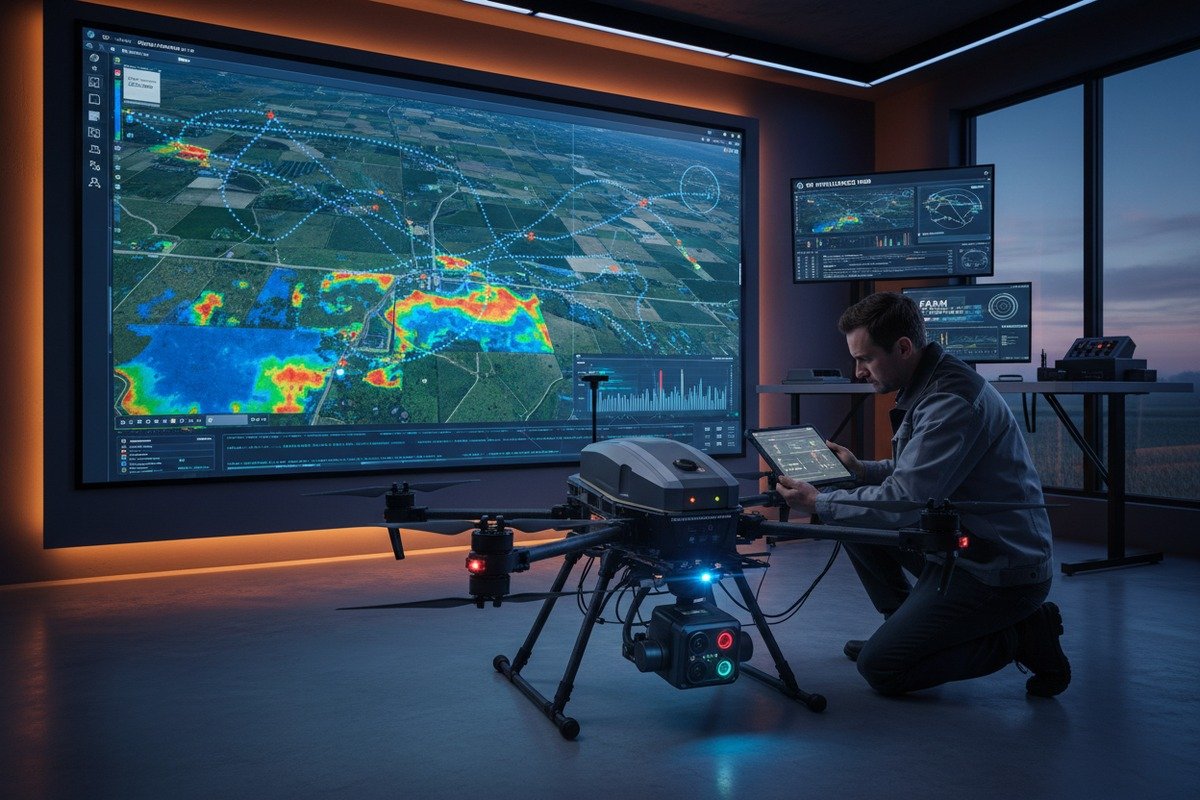
Confirm software architecture openness by testing data export formats, verifying support for agricultural standards like ISOXML and AgGateway ADAPT, checking cloud API availability for automated syncing, and validating real-time streaming capabilities. Request live demonstrations showing your specific platforms receiving drone data directly.
Data Format Compatibility
Agricultural data platforms expect specific formats. ISOXML dominates European farm management systems. AgGateway ADAPT serves North American operations. ISOXML and AgGateway ADAPT 6 Your drone SDK must export data in formats your platforms accept.
Test more than simple file exports. Modern farms need real-time data streaming. Check whether the SDK supports WebSocket connections for live telemetry feeds to your monitoring dashboards.
Cloud API Integration Points
| Integration Method | Data Latency | Complexité | Meilleur cas d'utilisation |
|---|---|---|---|
| Direct SDK Streaming | <1 second | Haut | Real-time monitoring |
| Cloud API Polling | 5-30 seconds | Moyen | Batch processing |
| File Export/Import | Minutes to hours | Faible | Historical analysis |
| MQTT Messaging | <1 second | Moyen | Multi-system farms |
Testing Platform Connectivity
Before committing to a supplier, run actual integration tests with your platforms. Our team creates proof-of-concept connections for every new SDK evaluation. We verify that field boundaries, application maps, and yield data flow correctly.
DJI Cloud APIs support MQTT, HTTPS, and WebSocket protocols. These enable fleet management, live streaming, and firmware updates. However, enterprise features require partnership agreements with validation requirements.
Open Protocol Advantages
Open protocols like MAVLink enable connections beyond single-vendor ecosystems. QGroundControl and other open ground stations can monitor multiple drone brands simultaneously. This matters for farms operating mixed fleets.
We advise clients to prioritize SDKs supporting Open Drone ID compliance 7. Regulatory requirements in the US and EU increasingly mandate remote identification. Open architectures simplify compliance across jurisdictions.
Agricultural Data Standards Support
| Standard | Region | Primary Use | SDK Support Required |
|---|---|---|---|
| ISOXML | Europe | Task files, prescriptions | Export function |
| ADAPT | North America | Cross-platform data sharing | API translation |
| GeoJSON | Mondial | Boundary mapping | Native support |
| Shapefiles | Mondial | Legacy GIS compatibility | Export option |
Future-Proofing Your Integration
The agricultural drone market consolidates rapidly. Acquisitions like Hiphen-Aurea reshape available platforms. Build integrations using standard protocols wherever possible. This protects your investment when suppliers merge or discontinue products.
AI-cloud hybrid architectures 8 represent the 2025-2026 trend direction. SDKs should support edge processing for offline field operations while enabling cloud connectivity for predictive analytics. Verify that your chosen SDK handles both scenarios.
Our team recommends creating abstraction layers between your farm software and drone SDKs. This architectural pattern allows swapping drone platforms without rewriting core application logic.
Conclusion
Evaluating supplier SDK openness requires systematic documentation review, hands-on payload testing, clear support agreements, and verified platform compatibility. Our manufacturing experience shows that thorough upfront evaluation prevents costly integration failures and protects long-term operational stability.
Notes de bas de page
1. Explains a lightweight messaging protocol for IoT and drone communication. ︎
2. Found an authoritative .edu source on agricultural applications of spraying drones. ︎
3. Details government policies and subsidies promoting drone use in Indian agriculture. ︎
4. Defines European standards for direct remote identification of unmanned aircraft systems. ︎
5. Found an authoritative .edu source explaining NDVI and other vegetation indices in precision agriculture. ︎
6. Provides an overview of agricultural data exchange standards, including ISOXML and ADAPT. ︎
7. Outlines the ASTM standard for remote identification of unmanned aircraft systems. ︎
8. Discusses the role of edge computing and AI in real-time drone data analysis for agriculture. ︎

 English
  Spanish
  German
  French
  Dutch
Dutch  Arabic
