
Every year, our engineering team receives dozens of inquiries from US buyers struggling with supplier selection. They face a maze of regulations, security requirements, and technical specifications. The wrong choice means delays, compliance failures, and wasted investment.
To evaluate supplier capability for US 5G firefighting drone development, assess four critical areas: 5G software and hardware customization expertise, proper certifications meeting FAA and FCC standards, proven export experience with secure logistics, and robust long-term technical support infrastructure for industrial drone maintenance.
This guide breaks down each evaluation criterion. You will learn exactly what questions to ask, what documents to request, and what red flags to avoid. Let us walk through the complete supplier assessment framework.
How do I evaluate a manufacturer's ability to customize 5G software and hardware for my firefighting drone project?
When we calibrate our flight controllers for wildfire operations, we see firsthand how critical 5G integration becomes. Poor signal handling means lost drones. Inadequate software customization means crews cannot access real-time thermal data when they need it most.
Evaluate 5G customization capability by examining the supplier's SDK availability, firmware update roadmap, FCC-approved 5GHz module integration, and proven experience with low-latency command links for BVLOS firefighting operations requiring real-time thermal imaging and swarm coordination.
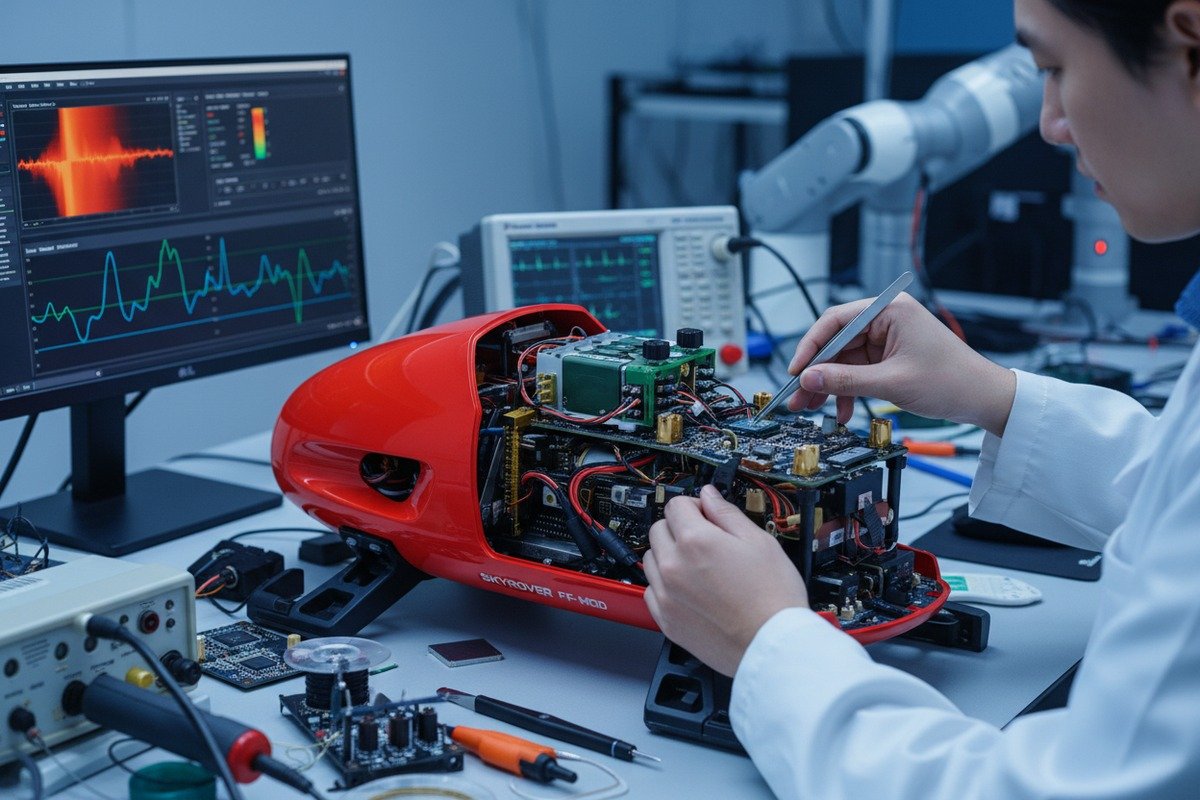
Understanding 5G Requirements for Firefighting Drones
The FCC allocated the 5030-5091 MHz band 1 specifically for non-networked drone control. Your supplier must demonstrate equipment authorization for this spectrum. This is not optional. Without it, your drones cannot legally operate in US airspace for commercial firefighting.
In our production facility, we test every 5G module for interference resistance. Radio altimeter compatibility 2 matters greatly. The FAA has raised concerns about 5G signals disrupting aircraft instruments. Your supplier should provide documentation showing their frequency management systems prevent such conflicts.
Key Technical Capabilities to Verify
| Capability | What to Request | Pourquoi c'est important |
|---|---|---|
| Accès au SDK | Open SDK documentation and API references | Enables custom integrations with your GIS platforms |
| Mises à jour des microprogrammes | Published roadmap for next 24 months | Ensures ongoing feature improvements and security patches |
| 5G Module Certification | FCC equipment authorization certificate | Legal requirement for US commercial operations |
| Latency Performance | Test reports showing sub-100ms C2 link latency | Critical for real-time BVLOS firefighting response |
| Edge Processing | AI/ML on-board analysis specifications | Reduces bandwidth strain during smoke-filled operations |
Software Ecosystem Assessment
Ask your supplier about their software architecture. Can their system integrate with FirstNet communication protocols 3? Fire departments across the US rely on FirstNet for emergency communications. Incompatible drones create operational silos.
Our engineers have found that modular hardware designs save customers significant money over time. When 5G standards evolve, you want to upgrade modules rather than replace entire aircraft. Request the supplier's component modularity documentation.
Check whether the supplier offers custom payload integration. Firefighting drones need thermal cameras, optical sensors, and sometimes water drop systems. The 5G backbone must support data from all these sources simultaneously. We typically recommend payload capacities of 5-10kg for suppressant delivery systems.
Real-Time Data Transmission Standards
Your supplier should demonstrate high-throughput data transmission. Thermal imaging generates large files. Swarm coordination requires constant position updates. The 5G system must handle both without dropping packets.
Request field test results from challenging environments. Smoke, heat, and electromagnetic interference from fire equipment all degrade signals. A supplier who has tested in these conditions provides much greater confidence than one who has only operated in clean laboratory settings.
What specific certifications and engineering standards should I require from a Chinese drone supplier for the US market?
Our compliance team spends considerable time helping customers navigate the 2026 regulatory landscape. The rules have changed dramatically. What worked three years ago may now disqualify your entire fleet from government contracts.
Require FAA Part 107 compliance, Remote ID integration, FCC equipment authorization, and critically, verify the supplier is not on the Covered List. For government contracts, demand Blue UAS Cleared List status or Buy American certification with minimum 60% US-origin components.
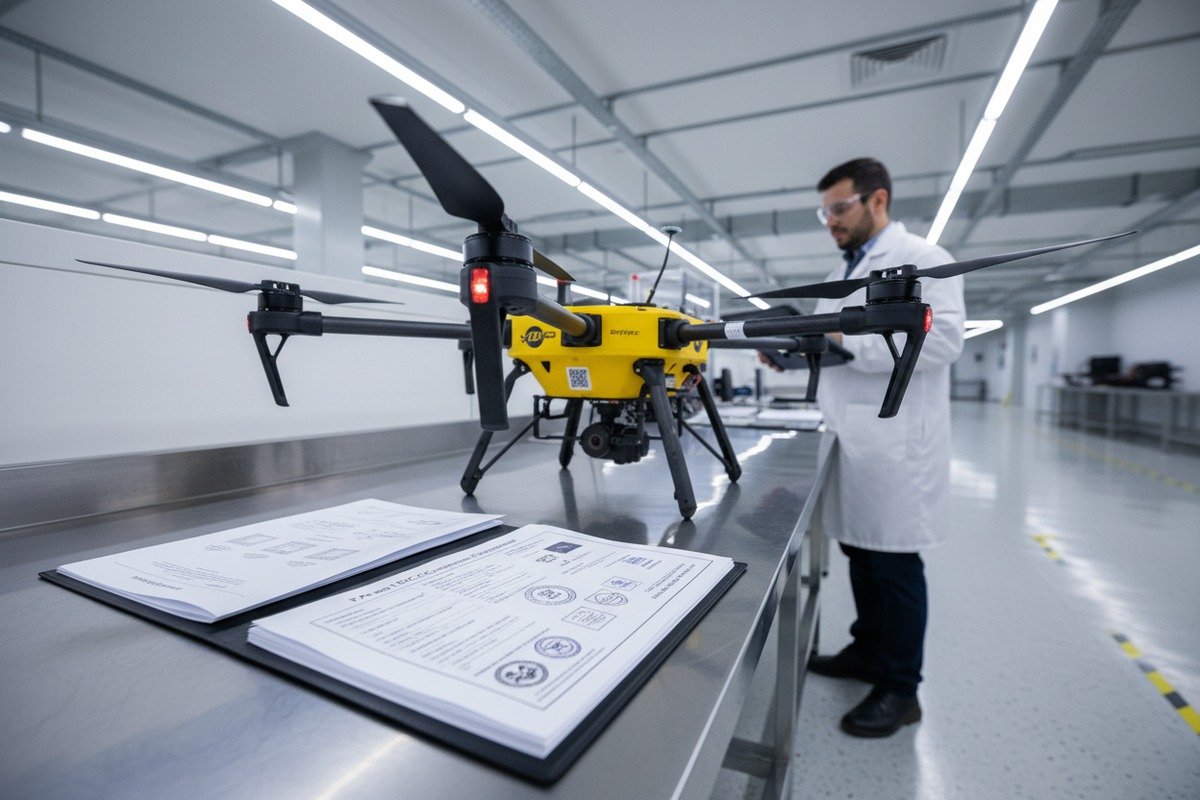
Navigating NDAA Compliance
Le Loi d'autorisation de la défense nationale 4 created significant restrictions effective December 22, 2025. Chinese drone components face import bans for federal projects unless specifically approved by the Department of Defense. This affects motors, GPS units, batteries, and communication modules.
Your supplier must provide complete transparency. Request both Software Bills of Materials and Hardware Bills of Materials. These documents reveal every component's origin. Hidden Chinese components will disqualify your drones from lucrative government firefighting contracts.
| Certification | Issuing Body | Objectif | Chronologie |
|---|---|---|---|
| ID à distance | FAA | Enables identification and tracking | Required since 2023, 95% compliance in high-risk zones |
| Part 107 | FAA | Commercial drone operation license | Required for all commercial firefighting ops |
| Equipment Authorization | FCC | Legal use of radio frequencies | Must be obtained before US market entry |
| Blue UAS Status | DoD | Cleared for government use | Ongoing application process |
| Buy American | DoD | 60%+ US components verified | Required for federal contracts |
Understanding the Blue UAS Framework
Le Blue UAS Cleared List 5 represents DoD-approved drones safe for government use. Getting on this list requires extensive vetting. Your supplier should either hold this status or demonstrate a clear pathway to achieving it.
Some suppliers claim Blue UAS compatibility without actual listing. Verify directly through official DoD channels. We have seen customers face contract cancellations when their "compliant" drones failed verification.
Environmental and Safety Standards
Beyond security certifications, firefighting drones must meet operational standards. Look for IP ratings showing weather resistance. Fire environments involve water, ash, and extreme temperatures. An IP67 rating or higher provides reasonable protection.
Quality control certifications matter too. ISO 9001 demonstrates systematic manufacturing processes. Request audit reports, not just certificates. Some suppliers purchase certificates without implementing actual quality systems.
Our factory maintains ISO 9001 certification 6 with annual third-party audits. We provide customers copies of audit findings, not just the certificate itself. This transparency builds trust and demonstrates genuine compliance.
The BVLOS Certification Path
The FAA's reopened Notice of Proposed Rulemaking signals expanding Beyond Visual Line of Sight operations. Firefighting drones operating over large wildfires absolutely require BVLOS capability. Your supplier should demonstrate readiness for these requirements.
Ask about detect-and-avoid systems. BVLOS approval requires proving your drone can safely navigate without constant human visual contact. This involves radar, ADS-B receivers, and sophisticated autonomous flight software.
How can I verify that my supplier has the export experience to handle secure customs clearance and door-to-door delivery?
In our experience exporting to the US market, we have learned that production capability means nothing without reliable delivery. Customers lose contracts when shipments sit in customs for weeks. Damaged drones arriving without proper documentation create expensive headaches.
Verify export experience by requesting shipping records from previous US deliveries, customs broker relationships, understanding of ITAR and EAR regulations, insurance coverage documentation, and references from American customers who received successful door-to-door shipments.

Documentation Requirements for US Import
Industrial drones face scrutiny at US customs. Your supplier must provide accurate HS codes, proper country of origin declarations, and complete technical specifications. Errors cause delays. Intentional misclassification causes seizures.
| Document | Objectif | Common Errors |
|---|---|---|
| Facture commerciale | Declares value and contents | Undervaluation triggers audits |
| Liste de colisage | Details shipment contents | Missing serial numbers cause delays |
| Certificat d'origine | Proves manufacturing location | Vague descriptions raise suspicions |
| FCC Declaration | Confirms radio equipment compliance | Missing form blocks clearance |
| Technical Specifications | Supports customs classification | Incomplete specs cause misclassification |
Evaluating Logistics Partnerships
Experienced suppliers maintain relationships with freight forwarders who specialize in high-value electronics. Ask who handles their shipments. Request contact information and verify independently.
Our team works with the same logistics partners for over five years. They understand drone shipping requirements. They know which airlines accept lithium batteries. They have established customs broker relationships at major US ports.
Understanding Export Control Regulations
Some drone components fall under Export Administration Regulations 7. Certain sensors, encryption systems, and navigation equipment require export licenses. Your supplier should demonstrate awareness of these controls.
Ask directly: "Has any of your previous shipments required an EAR license?" An honest supplier will explain their compliance process. Evasive answers suggest potential problems.
Insurance and Risk Management
International shipping involves risk. Drones can be damaged, lost, or stolen. Your supplier should offer cargo insurance 8 covering full replacement value. Request certificate copies before shipping.
We provide door-to-door delivery with comprehensive insurance. Every shipment includes tracking. Customers receive updates at each transit point. This transparency eliminates anxiety and builds confidence.
Processus de vérification des références
Ask for three references from US customers who received shipments in the past 12 months. Contact them directly. Ask specific questions: Did shipments arrive on time? Were customs documents accurate? Did any items arrive damaged? How did the supplier handle problems?
Suppliers who refuse references likely have unsatisfied customers. This represents a significant red flag. Quality suppliers proudly share success stories.
What should I look for in a supplier's long-term technical support and maintenance infrastructure for industrial drones?
When our customers call with technical issues at 2 AM during wildfire season, response time matters. A supplier who disappears after payment creates operational disasters. Firefighting drones sitting grounded due to unavailable parts cost lives and property.
Look for 24/7 technical support availability, spare parts inventory in US or short shipping times, comprehensive training programs, multi-year warranty terms, remote diagnostics capability, and clear escalation procedures for critical failures during emergency operations.

Support Infrastructure Assessment
Technical support requires more than a phone number. Your supplier needs trained engineers who understand your specific configuration. They need access to diagnostic tools. They need authority to approve warranty claims quickly.
Request the support team organization chart. Identify who handles first-level calls. Understand the escalation path for complex issues. Know the response time commitments in writing.
| Élément de soutien | Norme minimale | Norme préférée |
|---|---|---|
| Temps de réponse | 24 hours | 4 hours for critical issues |
| Disponibilité | Business hours in supplier timezone | 24/7 with US-hours coverage |
| Pièces détachées | 30-day shipping | US warehouse with 5-day delivery |
| Diagnostic à distance | Email-based troubleshooting | Surveillance télémétrique en temps réel |
| On-site Support | Available for fee | Included for major issues |
| Warranty Term | 1 an | 2+ years with extension options |
Training Program Evaluation
Pilots and ground crews need comprehensive training. Your supplier should offer both initial training and ongoing education. New firmware releases require updated procedures. Regulation changes demand operational adjustments.
Our team provides hands-on training at customer locations. We cover pre-flight inspection, emergency procedures, maintenance protocols, and software operation. Customers receive certification upon completion.
Ask about training materials. Are manuals available in English? Do they include troubleshooting guides? Are video tutorials provided? Quality suppliers invest in documentation.
Stratégie en matière de pièces de rechange
Firefighting operations cannot wait weeks for replacement motors. Your supplier must maintain parts inventory accessible to US customers. This means either US-based warehousing or guaranteed expedited shipping.
Request a spare parts price list. Compare prices to original equipment costs. Some suppliers profit excessively from parts, making maintenance uneconomical. Reasonable markup indicates fair partnership approach.
We maintain common spare parts at our partner warehouse in California. Critical components reach US customers within five business days. This investment demonstrates our commitment to customer success.
Warranty Terms Analysis
Read warranty documents carefully. What does the warranty cover? What voids coverage? How are claims processed? Who pays shipping for warranty repairs?
Some warranties exclude crash damage. Others void coverage if non-original parts are installed. Understand these limitations before purchase. Negotiate better terms if possible.
Long-term Relationship Indicators
Quality suppliers think beyond single transactions. They want repeat customers. They want referrals. This mindset shows in their support approach.
Ask about product roadmap access. Will you receive advance notice of new models? Can you participate in beta testing? These opportunities indicate genuine partnership interest.
Inquire about volume discounts for spare parts. As your fleet grows, maintenance costs increase. Suppliers who offer scaling benefits demonstrate long-term thinking.
Conclusion
Selecting the right supplier for your US 5G firefighting drone project requires systematic evaluation. Assess technical capability, verify certifications, confirm export expertise, and ensure long-term support. These four pillars determine project success.
Notes de bas de page
1. Provides official FCC rules for drone frequency allocation. ︎
2. Explains FAA concerns about 5G interference with aircraft altimeters. ︎
3. Details FirstNet’s role as a nationwide public safety network. ︎
4. Explains the NDAA’s impact on drone procurement and restrictions. ︎
5. Provides official information on DoD-approved drones for government use. ︎
6. Links to the international standard for quality management systems. ︎
7. Explains US regulations governing the export of dual-use items. ︎
8. Defines cargo insurance and its importance for international shipments. ︎

 English
  Spanish
  German
  French
  Dutch
Dutch  Arabic
