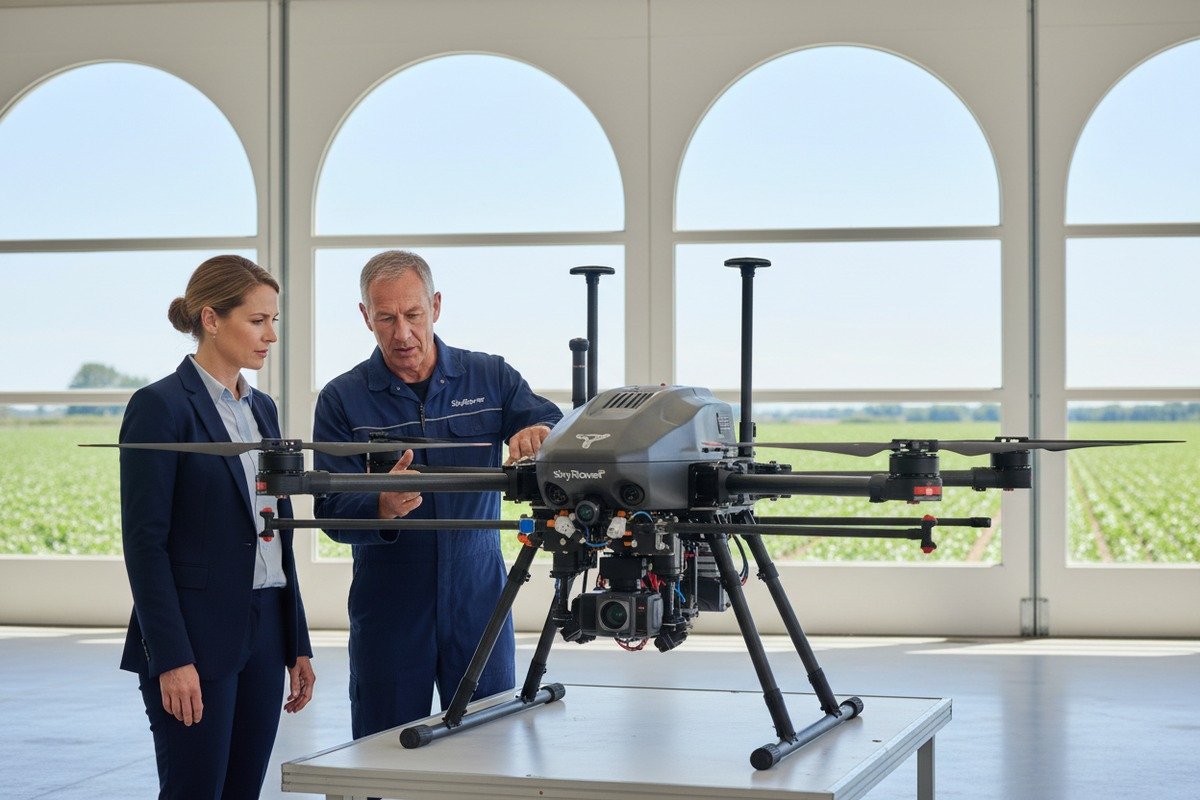
Every growing season, we see procurement managers struggle with the same costly mistake variable-rate application technology 1. They choose drone suppliers based on price alone, then watch helplessly as poor spraying precision damages their clients’ early seedlings or leaves mature crops unprotected during critical pest windows.
To evaluate agricultural drone supplier spraying expertise, verify their variable-rate application technology, request field demonstration data with hydrosensitive cards, assess sensor integration capabilities for crop monitoring, confirm software customization options, and ensure robust technical support with spare parts availability for continuous operation across all growth stages.
Let me walk you through the exact evaluation framework our engineering team developed after years of supporting distributors across the US and Europe. This guide will help you identify suppliers who truly understand crop-stage-specific spraying.
How can I verify that a supplier's drone technology is precise enough to handle the delicate spraying needs of my early-stage crops?
When we calibrate our flight controllers at our Xi'an facility, early-stage crop protection sits at the top of our priority list. Young seedlings face unique risks. Excessive chemical application burns tender leaves. Insufficient coverage leaves them vulnerable to pests. The margin for error is razor-thin.
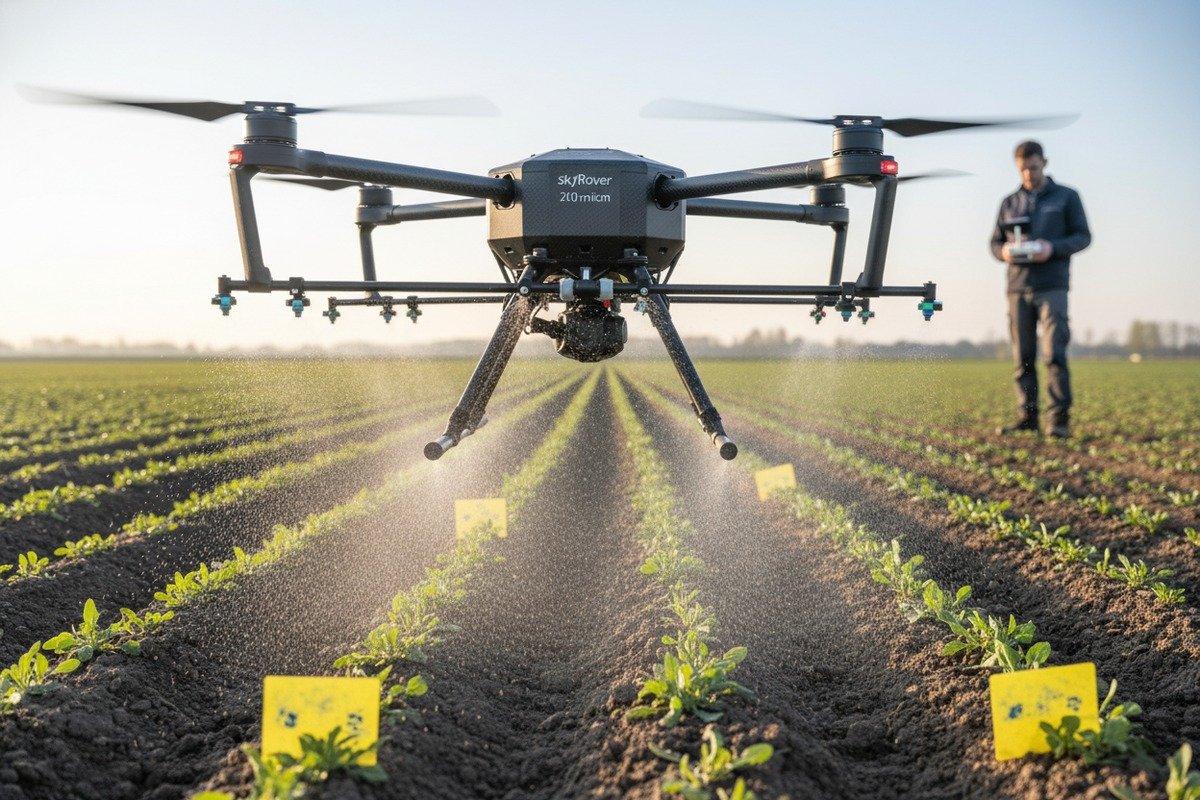
Verify early-stage precision by examining droplet size control (150-300 microns optimal), nozzle pressure consistency, altitude maintenance accuracy within 0.5 meters, and speed control below 5 m/s. Request spray deposition reports using hydrosensitive water-sensitive cards analyzed through ImageJ software to confirm uniform coverage patterns.
Understanding Droplet Science for Seedlings
Early-stage crops need fine droplets that land gently without causing physical damage. Our engineers have found that volume median diameter 2 (VMD) between 150-300 microns works best for vegetative-stage applications. Larger droplets hit young plants too hard. Smaller ones drift away in light wind.
Ask potential suppliers for their droplet size specifications. Reliable manufacturers provide third-party laboratory test results. They should explain how their nozzle systems achieve consistent droplet formation across varying flight speeds.
Critical Technical Specifications to Examine
| Spécifications | Ideal Range for Early-Stage | Pourquoi c'est important |
|---|---|---|
| Flight Altitude | 1.5-2.5 meters | Prevents drift, ensures coverage |
| Flight Speed | 3-5 m/s | Allows proper droplet deposition |
| Droplet VMD | 150-300 microns | Gentle on young tissue |
| Spray Pressure | 2-4 bar | Consistent nozzle performance |
| GPS Accuracy | RTK ±2cm 3 | Prevents overlap damage |
Field Validation Methods You Should Demand
Never trust specifications alone. We always recommend clients request live field demonstrations before signing contracts. Here is what to look for during these tests.
Place hydrosensitive cards 4 at multiple points beneath the spray path. These cards turn blue when contacted by water-based solutions. After the test flight, analyze the cards using ImageJ or similar software. Look for coverage uniformity above 70% and droplet density exceeding 20 droplets per square centimeter.
Professional suppliers welcome this scrutiny. They understand that early-stage spraying failures destroy customer relationships. If a supplier hesitates to provide demonstration data, consider it a red flag.
Sensor Integration for Real-Time Adjustments
Modern agricultural drones should include terrain-following radar or LiDAR systems. These sensors maintain consistent altitude even over uneven ground. For early-stage crops growing at different heights across a field, this capability prevents accidental over-spraying of shorter plants.
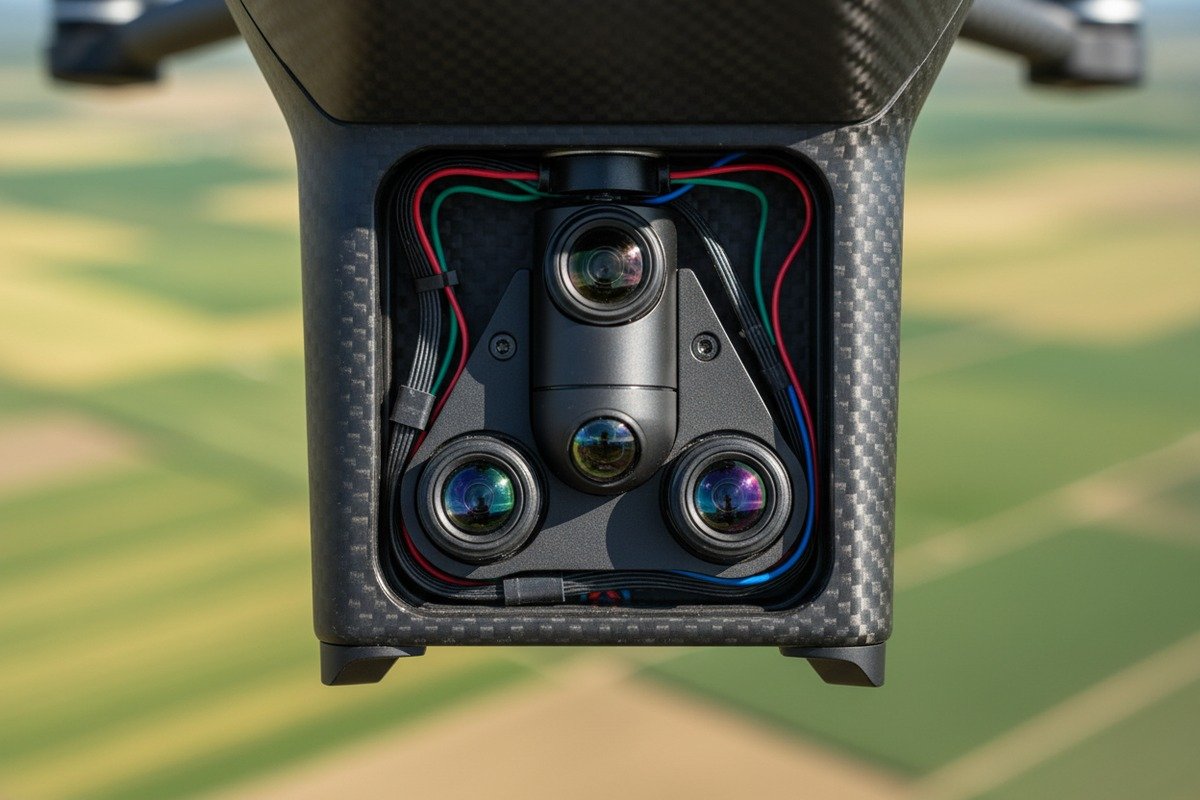
Ask suppliers whether their drones can integrate multispectral cameras 5. These cameras detect plant stress invisible to human eyes. When combined with precision spraying, they enable targeted treatment of problem areas without blanket chemical application.
What should I look for in a supplier's engineering background to ensure their drones support variable-rate application for my mature crops?
Our production line processes hundreds of agricultural drones monthly, and we have learned that mature crop spraying demands completely different engineering priorities. Dense canopies block spray penetration. Tall plants create turbulence. Variable-rate application becomes essential for efficient chemical use.
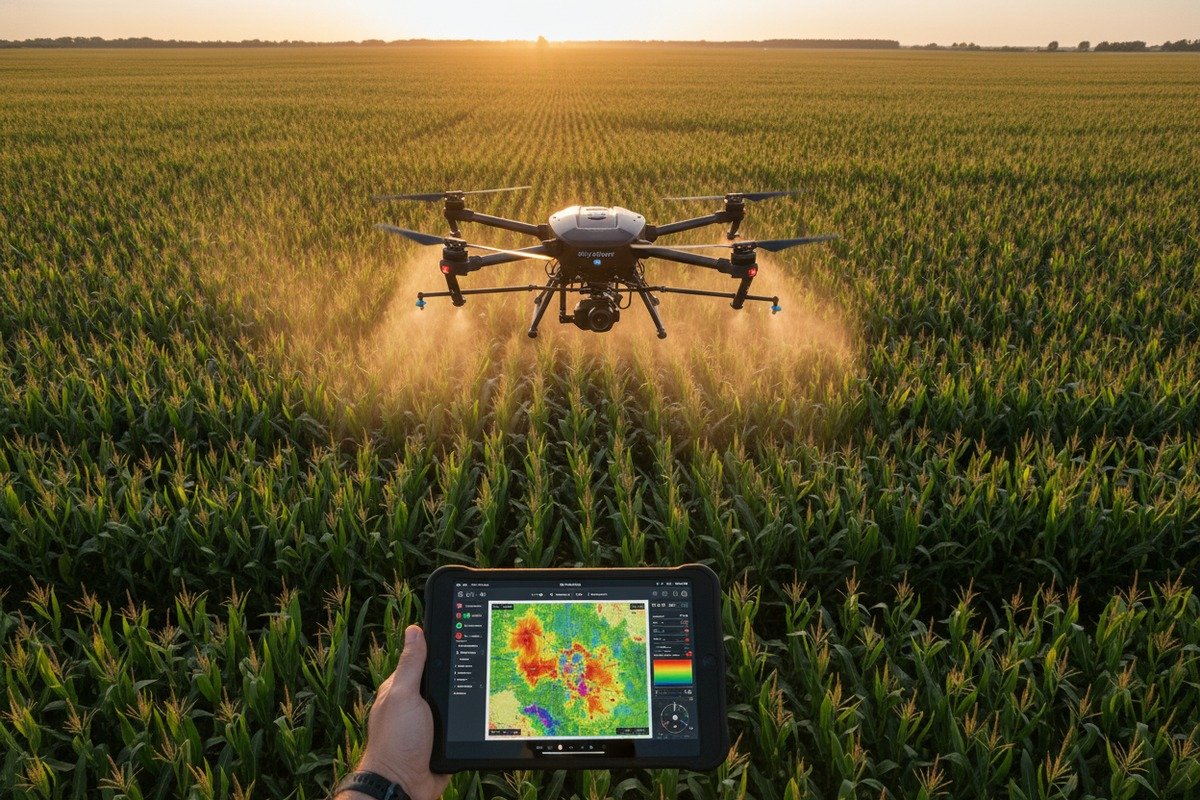
Evaluate engineering capability by reviewing the supplier's VRS (Variable Rate Spraying) system architecture, prescription map compatibility, flow meter accuracy, real-time adjustment response time, and integration with third-party farm management software. Strong suppliers demonstrate 30% chemical reduction through precision zone management in documented field trials.
The Engineering Behind Variable-Rate Systems
Variable-rate application requires sophisticated coordination between multiple drone subsystems. The flight controller must communicate with flow regulators, GPS positioning, and prescription map databases simultaneously. Any lag in this communication chain creates coverage gaps or overlaps.
When we design our VRS systems, response time sits at the center of engineering decisions. Our controllers adjust spray output within 0.3 seconds of crossing zone boundaries. Ask potential suppliers for their response time specifications. Anything slower than 0.5 seconds may create noticeable application inconsistencies.
Key Engineering Qualifications to Verify
| Engineering Aspect | What to Ask | Drapeaux rouges |
|---|---|---|
| Flow Control | Accuracy percentage of flow meters | No third-party calibration data |
| Map Integration | Compatible file formats (Shapefile, GeoTIFF) | Proprietary-only formats |
| Temps de réponse | Milliseconds for rate adjustment | Vague or missing specifications |
| Pump System | Pressure maintenance under variable loads | Single-speed pumps only |
| Software Updates | Firmware update frequency | No update history provided |
Assessing Canopy Penetration Capability
Mature crops present dense foliage that blocks spray from reaching lower leaves and stems. Effective suppliers engineer solutions for this challenge. Look for adjustable nozzle angles, downwash optimization, and multi-tier spray patterns.
Our engineering team discovered that hexacopter configurations generate better downwash than quadcopters for mature crop applications. The six rotors create more consistent airflow that pushes spray droplets through dense canopies. Ask suppliers to explain their rotor configuration choices for different crop scenarios.
Prescription Map Compatibility
Modern precision agriculture 6 relies on prescription maps generated from satellite imagery, soil sampling, or previous yield data. These maps divide fields into management zones with different application requirements.
Your supplier's drones must accept standard prescription map formats. GeoTIFF, Shapefile, and ISO-XML formats 7 represent industry standards. Proprietary-only formats lock you into one ecosystem and limit your agronomic flexibility. Confirm format compatibility before committing to a supplier relationship.
Integration with Farm Management Platforms
Mature crop operations typically involve multiple data streams. Soil moisture sensors, weather stations, and crop scouting apps all feed information into farm management platforms 8 like John Deere Operations Center, Climate FieldView, or Trimble Ag Software.
Test whether potential suppliers can demonstrate working integrations with platforms your customers already use. Seamless data flow between drones and existing systems dramatically increases adoption rates and customer satisfaction.
How do I assess if a manufacturer can provide the software customization I need for specific crop protection protocols?
When we collaborate with distributors on design and development projects, software customization requests arrive weekly. One client needs fungicide application timing linked to humidity sensors. Another requires automatic no-spray buffer zones near waterways. Standard software rarely addresses these specialized needs.
Assess software customization capability by requesting the supplier's API documentation, reviewing previous custom development projects, confirming in-house software engineering team size, evaluating their firmware update deployment process, and testing their responsiveness to feature requests during the evaluation period.

Identifying True Software Development Capability
Many drone suppliers resell products with minimal software access. They cannot modify flight behavior, add new features, or integrate with external systems beyond basic parameters. This limitation becomes critical when your customers need specific crop protection protocols.
True software capability means the supplier employs dedicated software engineers who understand both aviation systems and agricultural requirements. Ask for team composition details. Request examples of custom features developed for previous clients. Verify that modifications came from their internal team rather than third-party contractors.
Software Customization Assessment Framework
| Capability Area | Questions to Ask | Evidence to Request |
|---|---|---|
| Accès à l'API | Is the API documented and accessible? | API documentation samples |
| Custom Features | What custom features have you built? | Case study descriptions |
| Update Process | How are firmware updates deployed? | Update history timeline |
| Temps de réponse | How quickly can you implement changes? | Previous project timelines |
| Integration | Can you connect to external sensors? | Integration specifications |
Critical Software Features for Crop Protection
Crop protection protocols require software features beyond basic flight control. Environmental monitoring integration allows drones to pause operations when wind exceeds safe thresholds. Automatic application rate adjustment compensates for temperature effects on chemical viscosity.
Our software team regularly implements drift management algorithms that respond to real-time wind sensor data. These algorithms adjust droplet size and flight speed dynamically, maintaining effective coverage even as conditions change during long spray sessions.
Regulatory Compliance Through Software
Different regions impose different spraying restrictions. Buffer zones near water bodies, application timing windows, and maximum chemical concentrations all vary by jurisdiction. Software that accommodates these requirements through configurable parameters saves significant compliance headaches.
Ask potential suppliers whether their software supports geofencing for no-spray zones 9, automatic logging for regulatory reporting, and configurable application rate limits. Suppliers serving US and European markets should already have these features developed.
Evaluating Responsiveness to Custom Requests
During your evaluation period, submit a specific custom feature request. Observe how the supplier responds. Do they provide timeline estimates? Do they ask clarifying questions that demonstrate understanding of your application scenario? Do they quote reasonable development costs?
This simple test reveals more about software capability than any marketing materials. Suppliers with genuine development capacity respond professionally with concrete proposals. Those lacking capability offer vague promises or suggest workarounds using existing features.
Can my supplier offer the technical support and spare parts availability I need to keep my agricultural drones running through every growth stage?
In our experience exporting to the US and European markets, after-sale support determines long-term customer relationships more than initial product quality. Agricultural seasons wait for nobody. A drone grounded during critical flowering fungicide windows costs far more than the repair bill.
Ensure operational continuity by verifying the supplier's response time guarantee for technical inquiries, spare parts inventory levels and shipping timelines, availability of remote diagnostics capability, local service partner network, and comprehensive operator training programs covering troubleshooting procedures.
Understanding Support Requirements Across Growth Stages
Each growth stage creates different operational demands. Early vegetative spraying happens frequently but covers smaller areas. Reproductive-stage applications require precise timing within narrow windows. Maturity treatments often involve heavier payloads and longer flight sessions.
Your supplier must understand these varying demands. Support availability matters most during peak seasons when every flying hour counts. Ask potential suppliers about their support team capacity during traditional agricultural busy periods. Inquire about holiday and weekend coverage.
Spare Parts Availability Analysis
| Catégorie de composants | Typical Failure Rate | Acceptable Delivery Time | Critical Season Impact |
|---|---|---|---|
| Hélices | High (contact damage) | 2-3 jours | Minor delays |
| Nozzles | Medium (wear/clog) | 2-3 jours | Coverage inconsistency |
| Pumps | Low-Medium | 5-7 days | Complete grounding |
| Moteurs | Faible | 7-10 days | Complete grounding |
| Flight Controllers | Very Low | 10-14 days | Complete grounding |
| Piles | Medium (degradation) | 5-7 days | Reduced capacity |
Building a Support Evaluation Checklist
Before committing to any supplier, verify these support elements. First, request their spare parts catalog with current stock levels. Second, confirm shipping methods and typical delivery times to your region. Third, ask about emergency expedited shipping options and associated costs.
Our company maintains regional spare parts inventories to minimize delivery delays for our US and European customers. We stock high-wear items like propellers and nozzles in sufficient quantities to handle seasonal demand spikes. Ask your potential suppliers about their inventory management approach.
Remote Diagnostics and Troubleshooting
Modern agricultural drones generate extensive flight data. Sophisticated suppliers can analyze this data remotely to diagnose problems without physical inspection. Remote diagnostics dramatically reduce downtime by identifying issues before they cause failures.
Ask suppliers whether their drones transmit telemetry data for analysis. Inquire about their diagnostic software capabilities. Test their remote support by describing a hypothetical problem scenario. Evaluate whether their response demonstrates genuine diagnostic expertise.
Training Program Quality Assessment
Operator training prevents many support issues before they occur. Comprehensive training programs cover pre-flight inspection procedures, common troubleshooting steps, and emergency protocols. Well-trained operators maintain equipment properly and identify developing problems early.
Evaluate training program duration, content comprehensiveness, and delivery format. Video-only training provides convenience but lacks hands-on skill development. In-person or hybrid programs that include practical exercises produce more capable operators who require less ongoing support.
Local Service Partner Networks
Geographic distance creates support challenges. Shipping damaged drones internationally for repair takes weeks. Local service partners can perform warranty work, calibration services, and emergency repairs with much faster turnaround.
Ask potential suppliers about their service partner network in your sales region. Verify partner locations, capabilities, and parts inventory. Direct communication with service partners during the evaluation period reveals actual support quality better than supplier claims.
Conclusion
Evaluating agricultural drone suppliers requires examining precision technology, engineering depth, software flexibility, and support infrastructure together. The effort invested in thorough evaluation pays dividends through reliable performance across every crop growth stage your customers depend on.
Notes de bas de page
1. Explains VRA as a precision farming technique to optimize input application. ︎
2. Defines Volume Median Diameter (VMD) as a key measure for spray droplet size. ︎
3. Explains RTK GPS technology and its centimeter-level accuracy for precision agriculture. ︎
4. Found an authoritative source explaining water-sensitive paper for spray coverage assessment. ︎
5. Describes how multispectral cameras are used in precision agriculture for crop health monitoring. ︎
6. Provides a comprehensive definition and overview of precision agriculture. ︎
7. Explains ISO-XML as a standard for data exchange in agricultural machinery and software. ︎
8. Describes farm management software as digital tools for optimizing farm operations. ︎
9. Explains geofencing’s role in agriculture, including creating no-spray zones. ︎

 English
  Spanish
  German
  French
  Dutch
Dutch  Arabic
