
Every season, our production floor ships hundreds of agricultural drones worldwide pre-shipment inspection 1. Yet we still hear stories of delayed plantings because a multispectral sensor 2 was missing or an RTK module didn’t match the invoice. These errors cost farmers time, money, and crop yields.
To ensure agricultural drone shipments match packing lists and invoices, you must implement a systematic verification process. This includes pre-shipment factory inspections, serial number cross-referencing, component weight checks, and digital documentation review. Using RFID tracking and AI-powered manifest matching further reduces discrepancies and customs delays.
This guide walks you through every step. We cover factory verification, customs alignment, OEM documentation, and discrepancy resolution. Let’s make sure your next drone shipment arrives exactly as ordered.
How can I verify that my agricultural drone order matches the packing list before it leaves the factory?
When we prepare export orders at our facility, we've learned that catching errors before shipment saves everyone headaches. A single mismatched battery or forgotten GPS module can delay your entire planting schedule. The factory gate is your first and best checkpoint.
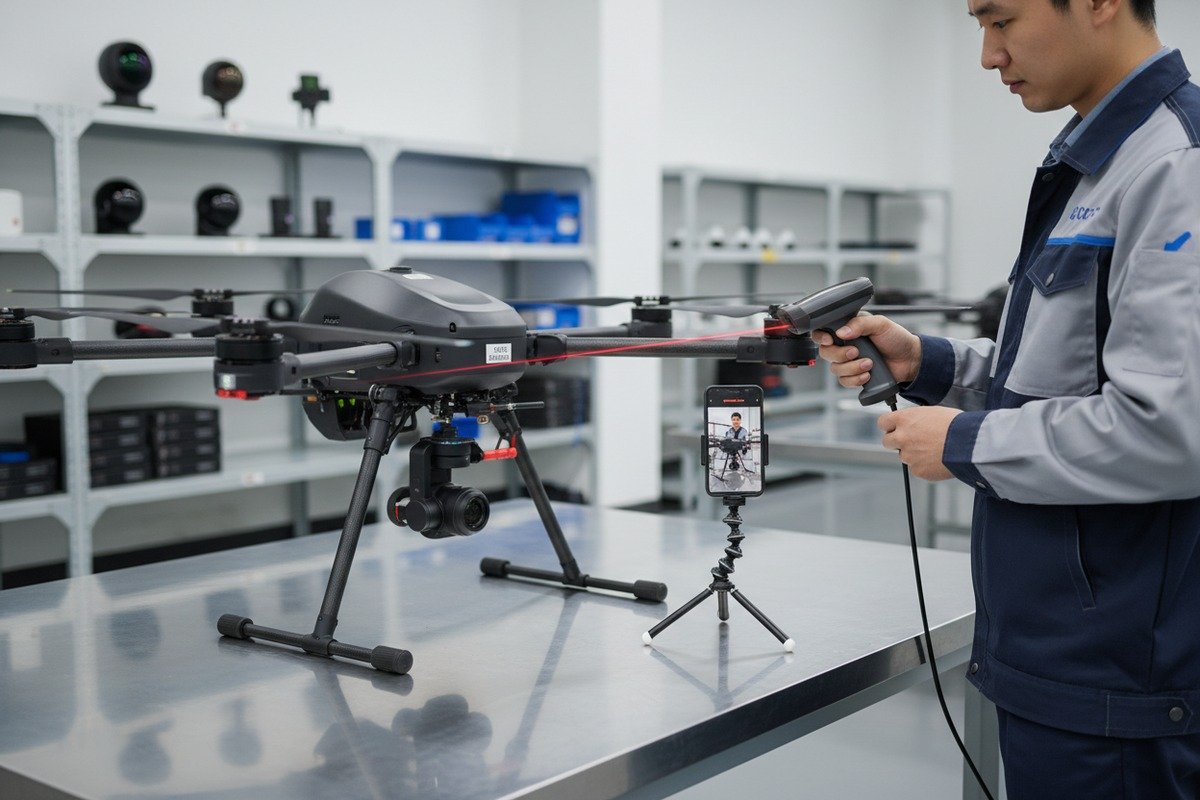
Request a pre-shipment inspection that includes photo documentation, serial number verification, and weight confirmation of all components. Arrange a video call during packing to witness item placement. Require the factory to send scanned copies of the packing list with matching photos before the shipment leaves.
Why Pre-Shipment Verification Matters
Agricultural drones contain many high-value components. A single DJI Matrice 4E unit carries sensors worth thousands of dollars. Our engineers have found that verifying each item against the packing list prevents costly returns and customs holds.
The stakes are high for agriculture de précision 3. If your MicaSense Altum-PT sensor doesn't arrive, your crop health monitoring stops. If the RTK module 4 serial number doesn't match your invoice, customs may hold the entire shipment.
Create a Pre-Shipment Checklist
Before any order leaves our warehouse, we follow a strict checklist. You should request the same from your supplier.
| Étape de vérification | Ce qu'il faut vérifier | Pourquoi c'est important |
|---|---|---|
| Serial Number Scan | Every component's serial matches invoice | Customs compliance, warranty tracking |
| Weight Verification | Total weight matches declared weight | Prevents shipping cost disputes |
| Visual Inspection | No visible damage, correct branding | Catches manufacturing defects early |
| Functional Test | Power on, basic flight check | Confirms operational status |
| Photo Documentation | Timestamped photos of all items | Creates evidence trail |
Request Video Documentation
Many of our clients now ask for live video calls during packing. This simple step has prevented countless errors. You watch as workers place each component in the box. You confirm serial numbers match your order in real time.
This approach works especially well for high-value payloads. When you order a thermal imaging camera or LiDAR sensor, seeing it go into the box gives peace of mind.
Leverage Digital Tools
Modern verification goes beyond paper checklists. We now use barcode scanning systems that automatically compare scanned items against digital packing lists. Any mismatch triggers an immediate alert.
Ask your supplier if they use such systems. If not, request that they implement basic barcode verification for your orders. The technology cost is minimal compared to the savings from prevented errors.
What steps should I take to ensure my invoice details align perfectly with the drone specifications for customs clearance?
Our export team processes dozens of customs declarations weekly. We've seen shipments held for weeks because an invoice listed "camera" instead of "multispectral imaging sensor." Precision in documentation isn't optional—it's essential for smooth customs clearance.
Ensure your commercial invoice includes exact product descriptions, HS codes, serial numbers, country of origin, and accurate declared values. Cross-reference every specification with your order confirmation. Request your supplier provide all required certifications and test reports before shipment to prevent customs delays.

Understanding Customs Requirements
Different countries have different rules for agricultural drone imports. The FAA in the United States requires verified payload information. European customs need CE marking documentation. Your invoice must speak the language of customs officials.
When we prepare invoices for US-bound shipments, we include specific technical details. Flight duration, maximum payload capacity, and sensor specifications all appear on the document. This level of detail speeds clearance.
Critical Invoice Elements
Your facture commerciale 5 needs specific information to pass customs review. Missing any element can cause delays.
| Invoice Element | Required Details | Common Mistakes |
|---|---|---|
| Product Description | Full technical name, not generic terms | Writing "drone" instead of "agricultural UAV sprayer" |
| Code SH | Correct tariff classification | Using outdated or incorrect codes |
| Serial Numbers | Every component's unique identifier | Listing only main unit, forgetting accessories |
| Declared Value | Accurate per-item and total values | Undervaluing to reduce duties (illegal) |
| Country of Origin | Manufacturing location | Confusion with shipping origin |
| Weight/Dimensions | Gross and net weights | Estimating instead of measuring |
Match Specifications Exactly
Every technical specification on your order confirmation should appear on the invoice. If you ordered a drone with 6kg payload capacity, the invoice should state "6kg maximum payload capacity." If your RTK module operates at specific frequencies, include those frequencies.
This precision matters for two reasons. First, it proves the shipment matches what you ordered. Second, it helps customs officials verify the items aren't restricted technology.
Gather Supporting Documents Early
Beyond the invoice, customs requires supporting paperwork. Our shipping department prepares these documents in advance:
- Certificat d'origine
- Manufacturer's declaration of conformity
- Test reports for battery safety
- Technical specifications sheets
- Export license (if required)
Request these documents before your supplier books freight. Chasing paperwork after shipment causes delays and storage fees.
Work With Experienced Freight Forwarders
A good transitaire 6 knows agricultural drone regulations. They'll review your documentation before submission. They'll flag potential problems. They'll know which ports process drone shipments faster.
We maintain relationships with forwarders who specialize in UAV logistics. They understand that agricultural drones are tools, not toys. They know how to present documentation to customs in the most favorable light.
How do I confirm that my OEM branding and custom drone components are correctly documented in the shipment?
When clients send us their logos and branding requirements, we take that responsibility seriously. Your brand represents your reputation. A drone that arrives with the wrong logo placement or missing custom software damages your credibility with customers.
Confirm OEM branding accuracy by requesting pre-production samples, approving digital proofs before mass production, and requiring photos of finished branded products. Ensure all custom components are itemized separately on packing lists with your brand name and unique part numbers to prevent mix-ups with standard inventory.

The OEM Documentation Challenge
OEM orders are more complex than standard purchases. You're not just buying a drone—you're buying your version of that drone. Every customization needs documentation.
Our production team maintains separate SKUs for OEM products. Your branded controller gets a different part number than our standard model. This separation prevents shipping errors.
Create Detailed OEM Specifications
Before production begins, you need a comprehensive specification document. This becomes the reference for all verification.
| OEM Element | Documentation Required | Méthode de vérification |
|---|---|---|
| Logo Placement | Exact coordinates, size, colors (Pantone codes) | Photo approval before mass production |
| Custom Software | Version number, feature list, license keys | Functional test on sample unit |
| Modified Hardware | Engineering drawings, specifications | Physical measurement verification |
| Custom Packaging | Box design, insert layout, materials | Sample box approval |
| Branded Accessories | List of items with your branding | Individual item photography |
Approve Samples Before Mass Production
Never authorize full production without sample approval. We send pre-production units to OEM clients for inspection. You verify logo quality, software functionality, and component fit.
This step costs time but saves money. Catching a logo color mismatch on one sample is cheap. Discovering it on 500 units is expensive.
Require Separate Itemization
Your packing list should clearly identify OEM items. If you ordered 50 drones with your branding and 10 with standard branding, they need separate line items.
Request that your supplier use your part numbers alongside theirs. When the packing list says "Controller Model ABC (YourBrand-CTL-001)," verification becomes simple.
Protect Your Brand Documentation
Custom software and branding files are valuable. Ensure your supplier agreement covers:
- Confidentiality of your brand assets
- Prohibition on using your branding for other clients
- Return or destruction of files after production
- Your right to audit branded inventory
These protections prevent your custom work from ending up on unauthorized products.
Verify Custom Software Integration
Agricultural drones with custom software need extra verification. The software version on the shipped unit must match your specification.
Request that your supplier include software verification in their quality control process. They should boot each unit and confirm the correct firmware version before packing.
What is my best strategy for handling discrepancies between the physical drone delivery and the provided shipping documents?
Despite best efforts, discrepancies happen. A box arrives short one battery. A sensor serial number doesn't match the invoice. How you handle these situations determines whether they become minor inconveniences or major problems.
Handle shipment discrepancies by documenting everything immediately with photos and videos upon receipt. Contact your supplier within 24 hours with specific evidence. Request written acknowledgment of the issue and a clear resolution timeline. For significant discrepancies, file claims with the carrier and involve your customs broker.

Immediate Documentation Is Critical
The moment you notice a discrepancy, start documenting. Take photos of the opened box, the packing materials, and every item inside. Record video if possible. This evidence protects you in disputes.
Our customer service team resolves claims fastest when clients provide clear documentation. Vague complaints take weeks to investigate. Specific evidence with serial numbers gets resolved in days.
Types of Common Discrepancies
Understanding what can go wrong helps you prepare responses.
| Discrepancy Type | Example | Action immédiate |
|---|---|---|
| Quantity Shortage | Ordered 10 batteries, received 8 | Count all items, photograph box interior |
| Serial Mismatch | Invoice shows SN-123, unit shows SN-456 | Photo both the invoice and unit serial plate |
| Wrong Specification | Ordered 6kg payload, received 4kg | Document model number, compare to specs |
| Damage | Cracked propeller, dented frame | Photo damage, keep all packaging materials |
| Missing Components | No charger included | Video unboxing showing all contents |
The 24-Hour Rule
Contact your supplier within 24 hours of delivery. This isn't arbitrary. Carriers and insurers often have strict notification deadlines for claims. Waiting a week may forfeit your rights.
Your initial contact should include:
- Order number and invoice number
- Specific description of the discrepancy
- Photos or video evidence
- Your requested resolution
Escalation Procedures
If your supplier doesn't respond satisfactorily, escalate systematically.
First, request to speak with a supervisor or quality manager. Our management team reviews escalated cases personally. Second, put your complaint in writing via email. This creates a paper trail. Third, involve your freight forwarder or customs broker. They have leverage with carriers for damage claims.
For significant losses, consider hiring a third-party inspection company. Their independent reports carry weight in disputes and insurance claims.
Prevent Future Issues
Every discrepancy teaches a lesson. After resolution, analyze what went wrong.
Was it a factory packing error? Request improved quality control procedures. Was it shipping damage? Upgrade to better packaging or a different carrier. Was it a documentation mistake? Implement additional review steps.
We conduct root cause analysis for every customer complaint. This process has dramatically reduced our error rate over time. Request the same commitment from your supplier.
Know Your Legal Options
For serious discrepancies, understand your legal protections. International trade has established frameworks:
- Incoterms 8 define when risk transfers from seller to buyer
- Letters of credit can include inspection requirements
- Trade insurance covers many types of losses
- Arbitration clauses in contracts specify dispute resolution
Review these elements before placing large orders. Prevention costs less than litigation.
Conclusion
Getting agricultural drone shipments right requires attention at every stage. Verify at the factory, align documents for customs, protect your OEM specifications, and respond quickly to discrepancies. These practices transform shipping from a source of stress into a reliable process that keeps your agricultural operations running smoothly.
Notes de bas de page
1. Details the importance and steps of pre-shipment quality checks for products. ︎
2. Replaced HTTP 404 with a Wikipedia page explaining multispectral imaging. ︎
3. Replaced HTTP 403 with a Wikipedia page explaining precision agriculture. ︎
4. Replaced HTTP 404 with a Wikipedia page explaining Real-time kinematic positioning (RTK). ︎
5. Outlines the essential elements required for a commercial invoice in international shipping. ︎
6. Replaced HTTP unknown with a Wikipedia page explaining freight forwarders. ︎
7. Replaced HTTP 404 with an authoritative .gov page explaining Harmonized System (HS) Codes. ︎
8. Replaced HTTP 404 with a Wikipedia page explaining Incoterms. ︎

 English
  Spanish
  German
  French
  Dutch
Dutch  Arabic
