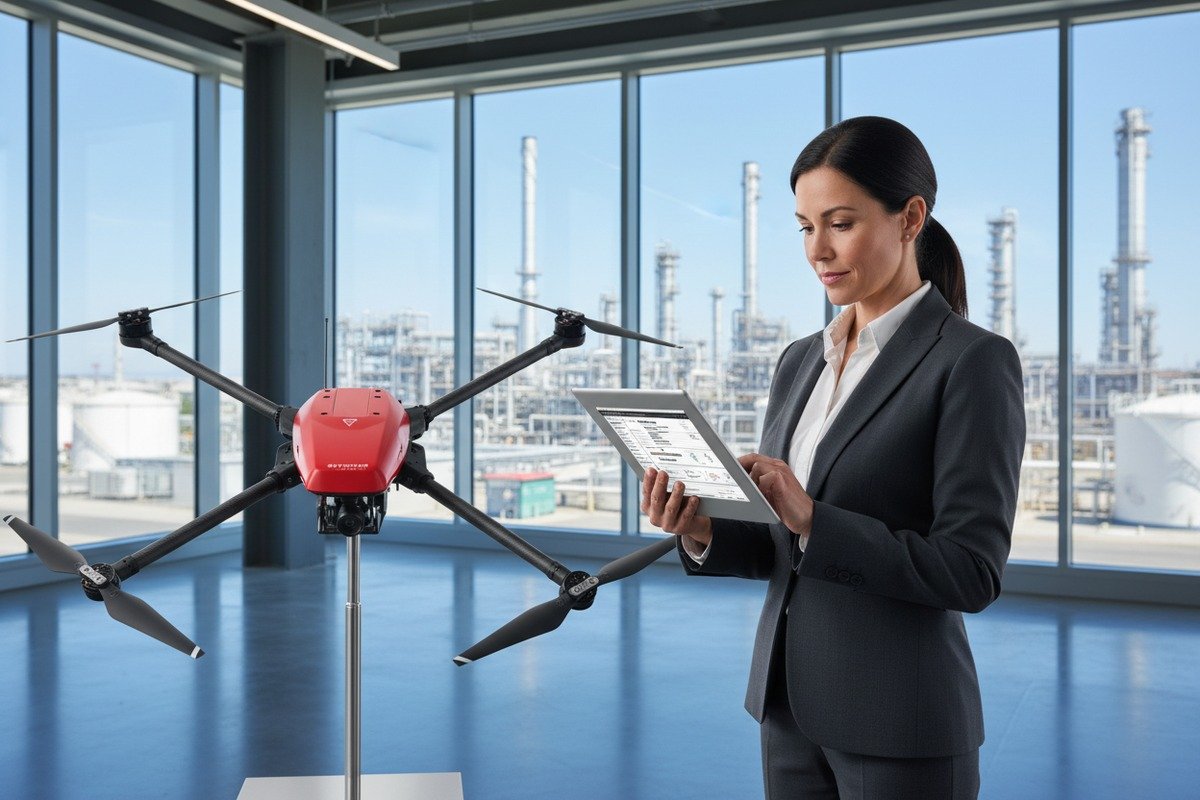
Getting firefighting drone specs wrong costs more than money—it costs time, safety margins, and trust with every stakeholder in the chain fire suppression agent type 1. Our production line in Xi’an has shipped hundreds of industrial drones 2 to US distributors, and the procurement questions we hear most often reveal a painful gap between what buyers think they need and what actually works on an industrial fire scene.
Defining firefighting drone requirements for US industrial MRO procurement means specifying payload capacity, flight endurance, thermal sensor packages, FAA-compliant certifications, spare parts availability, and CMMS integration—all tailored to harsh industrial environments like refineries, chemical plants, and warehouses where rapid, reliable aerial response is critical.
This guide breaks down the core decisions you face when building a firefighting drone fleet for industrial MRO IP55 water resistance rating 3. We cover payload sizing, certifications, custom design collaboration, and long-term supplier evaluation—so you can write procurement specs that hold up in the field, not just on paper.
How do I determine the right payload and flight endurance for my firefighting drone fleet?
Every refinery fire or warehouse blaze demands a different aerial response. When we calibrate our flight controllers and test payload brackets at our facility, we see firsthand how a few hundred grams of extra weight can shave minutes off flight time—and minutes matter when you are tracking a chemical hotspot.
The right payload and flight endurance depend on your fire suppression agent type, delivery distance, and mission duration. Industrial firefighting drones typically need 10–30 kg payload capacity and 25–55 minutes of flight time, with hot-swappable batteries to sustain continuous operations across extended incidents.
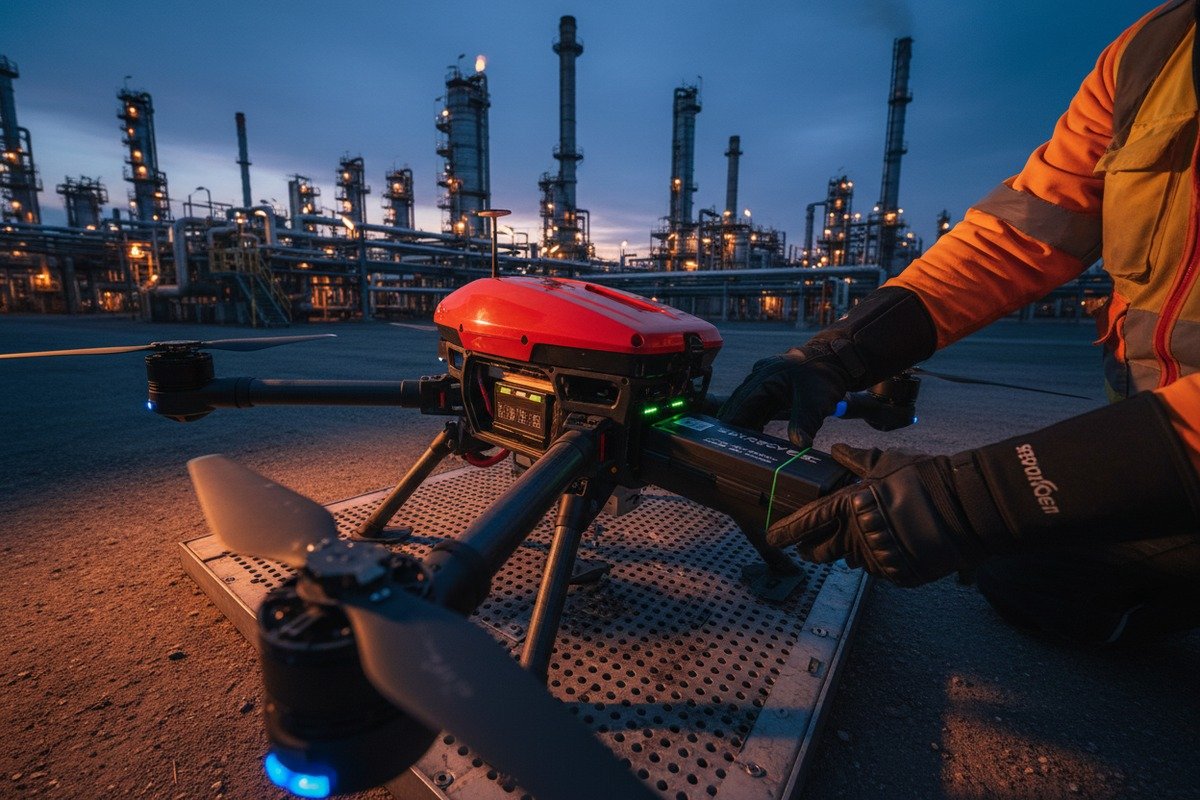
Why Payload Capacity Is Not Just About Weight
Payload capacity defines what your drone can carry. But it is not just about raw kilograms. You must consider the type of suppression agent—water, foam concentrate, dry chemical powder, or fire-extinguishing bombs. Each agent has different density, container requirements, and release mechanisms.
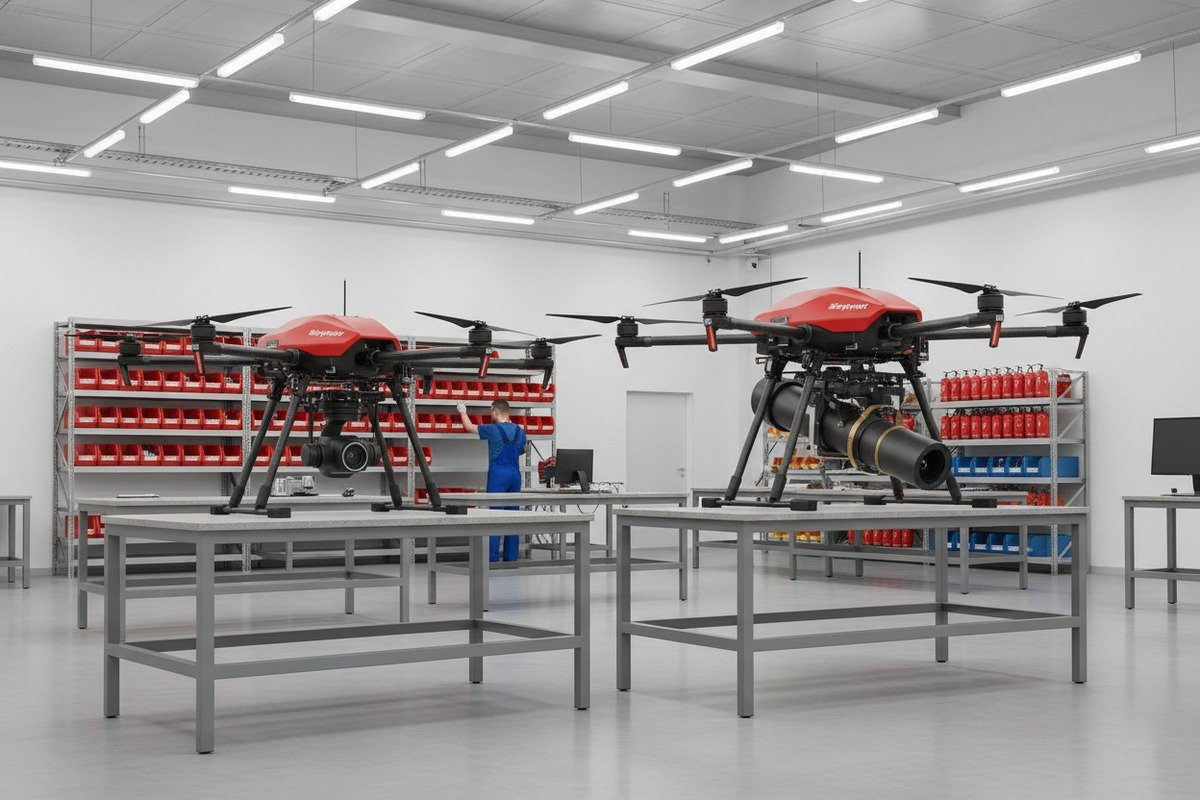
For example, a drone carrying a 10-liter water tank weighs roughly 10 kg in payload. But a drone carrying two fire-extinguishing capsules may weigh only 5 kg yet cover a wider suppression area. Our engineering team designs modular payload rails so you can swap between agent types without changing your airframe.
Flight Endurance: The Hidden Budget Killer
Flight endurance is measured in minutes, but its impact is measured in dollars. A drone with 25 minutes of flight time may need three battery swaps during a single warehouse fire. Each swap means landing, cooling, replacing, and relaunching. That is 10–15 minutes of downtime per cycle.
Hot-swappable battery systems cut this downtime to under 90 seconds. When we design our SkyRover firefighting platforms, we prioritize dual-battery architecture so one cell stays live while the other is replaced.
Payload vs. Endurance Tradeoff Table
| Payload Range | Typical Flight Endurance | Meilleur cas d'utilisation | Système de batterie |
|---|---|---|---|
| 5–10 kg | 40–55 minutes | Thermal recon, small suppression drops | Single battery |
| 10–20 kg | 25–40 minutes | Foam/water delivery, sensor arrays | Dual battery |
| 20–30 kg | 15–25 minutes | Heavy suppression, multi-agent drops | Hot-swappable dual |
| 30+ kg | 10–18 minutes | Cargo resupply, large-scale foam cannons | Multi-cell swappable |
Matching Payload to Industrial Fire Types
Different industrial sites produce different fires. A petrochemical refinery fire involves Class B flammable liquids 4. A grain elevator fire involves combustible dust. Your drone fleet must carry the right agent for the right scenario.
Consider building a tiered fleet. Tier 1 drones handle recon and thermal mapping with lightweight sensor payloads under 5 kg. Tier 2 drones carry 10–20 kg suppression payloads for direct intervention. Tier 3 drones—if your budget allows—carry heavy foam cannons above 20 kg for large-scale incidents.
Our recommendation for most US industrial MRO teams is to start with Tier 1 and Tier 2. This covers 80% of use cases without overloading your maintenance budget. You can always add Tier 3 later once your pilots and maintenance crews are trained.
Key Performance Metrics to Specify
When writing your procurement document, include these measurable requirements:
- Minimum flight time at maximum payload (not just empty weight)
- Maximum operational wind speed (Beaufort 6 5 or 39 km/h is industry standard)
- Battery charge time from 0% to full
- Payload release accuracy at a given altitude
- Plage de température de fonctionnement (ideally –20°C to +60°C for industrial sites)
These numbers give your supplier a clear target. They also give your MRO team a maintenance baseline to track performance degradation over time.
What certifications must I verify to ensure my imported drones comply with US industrial standards?
Navigating US drone regulations from the import side can feel like a maze. When we prepare export documentation for American distributors, our compliance team works through a checklist that has grown significantly since 2020—and it keeps expanding.
To comply with US industrial standards, verify FAA Part 107 certification for commercial operations, Remote ID compliance, NDAA Section 889 adherence for government contracts, FCC radio frequency approval, IP-rated environmental protection, and any state or local fire authority operational waivers required for beyond-visual-line-of-sight flights.
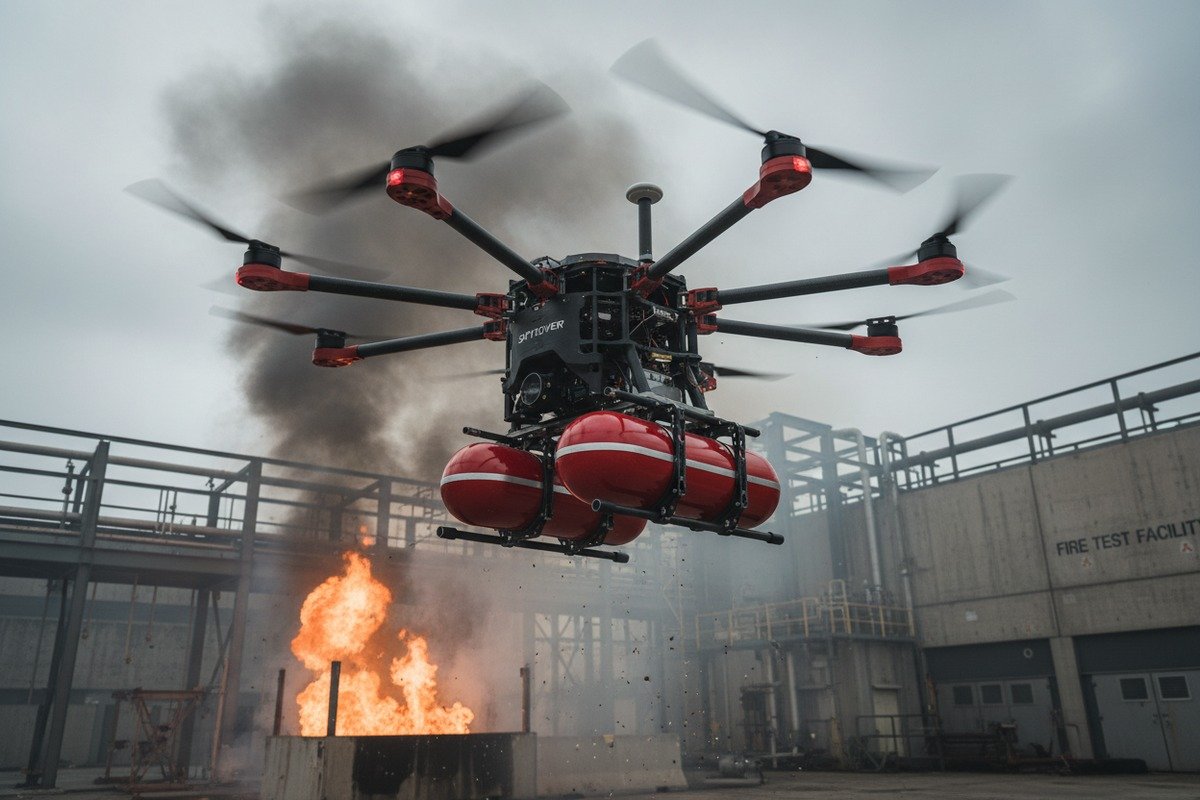
FAA Part 107: The Baseline
Every commercial drone operation in the US requires Part 107 compliance. Conformité FAA Partie 107 6 This means your pilots need a Remote Pilot Certificate. Your drone must weigh under 55 pounds (25 kg) for standard operations—or you need a waiver for heavier platforms.
For firefighting drones, you will almost certainly need additional waivers. Night operations, flights over people, and beyond-visual-line-of-sight (BVLOS) flights all require separate FAA approvals. Factor 60–120 days for waiver processing into your procurement timeline.
Remote ID: Mandatory Since 2024
As of March 2024, all drones operating in US airspace must broadcast ID à distance 7. This means your drone must either have a built-in Remote ID module or carry an external broadcast device. Our SkyRover platforms ship with integrated Remote ID modules that comply with the Standard Remote ID rule.
NDAA Section 889 and the American Security Drone Act
If your end customers include any federal, state, or local government agencies, Conformité à la section 889 de la NDAA 8 is critical. This regulation restricts procurement of drones containing components from certain manufacturers. The American Security Drone Act (ASDA) goes further, potentially banning specific platforms from government use entirely.
As a Chinese manufacturer, we address this proactively. We offer NDAA-compliant configurations using approved components and can provide full bill-of-materials documentation so your compliance team can verify every part in the supply chain.
Certification Checklist Table
| Certification / Norme | Organe directeur | Requis pour | Calendrier type |
|---|---|---|---|
| FAA Part 107 | FAA | All commercial drone ops | Pilot exam: 2–4 weeks |
| ID à distance | FAA | All US airspace operations | Built-in at manufacture |
| NDAA Section 889 | US Congress | Government procurement | Supplier verification: ongoing |
| FCC Part 15 / Part 87 | FCC | Émissions de radiofréquence | Lab testing: 4–8 weeks |
| IP55 / IP67 Rating | CEI | Harsh environment ops | Factory testing: 2–3 weeks |
| BVLOS Waiver | FAA | Beyond visual line of sight | Application: 60–120 days |
| Night Operations Waiver | FAA | Nighttime firefighting | Application: 30–90 days |
| UL 4600 (Emerging) | UL Standards | Autonomous safety evaluation | Varies by scope |
Environmental and Safety Ratings
Industrial firefighting drones face water, heat, smoke, and chemical exposure. Your procurement spec should require a minimum IP55 water resistance rating—meaning protection against low-pressure water jets from any direction. For post-fire overhaul inspections where drones may encounter direct hose spray, IP67 est préférable.
Heat resistance is equally important. Look for magnesium alloy or carbon fiber frames rated for continuous operation above 60°C ambient temperature. Our thermal testing chamber subjects every airframe to 80°C sustained exposure before shipping.
Do Not Overlook State and Local Rules
FAA rules set the floor, not the ceiling. Many states and municipalities add their own drone regulations. California, Texas, and New York have specific rules about drone operations near critical infrastructure. Some fire departments require additional insurance riders. Build a regulatory matrix for every jurisdiction where your fleet will operate.
Can I collaborate with a manufacturer to design custom features for my specific firefighting applications?
Off-the-shelf drones rarely match every requirement on an industrial MRO procurement spec. Over the past three years, our R&D team in Xi'an has completed over 40 custom development projects—from modified gimbal mounts for specialized thermal cameras to entirely new airframe geometries for high-wind refinery environments.
Yes, many manufacturers offer OEM and collaborative design services. You can customize airframe materials, payload mounting systems, sensor packages, flight controller firmware, ground station software, and even livery and branding. The key is choosing a manufacturer with in-house engineering capacity, clear IP agreements, and a structured development timeline.
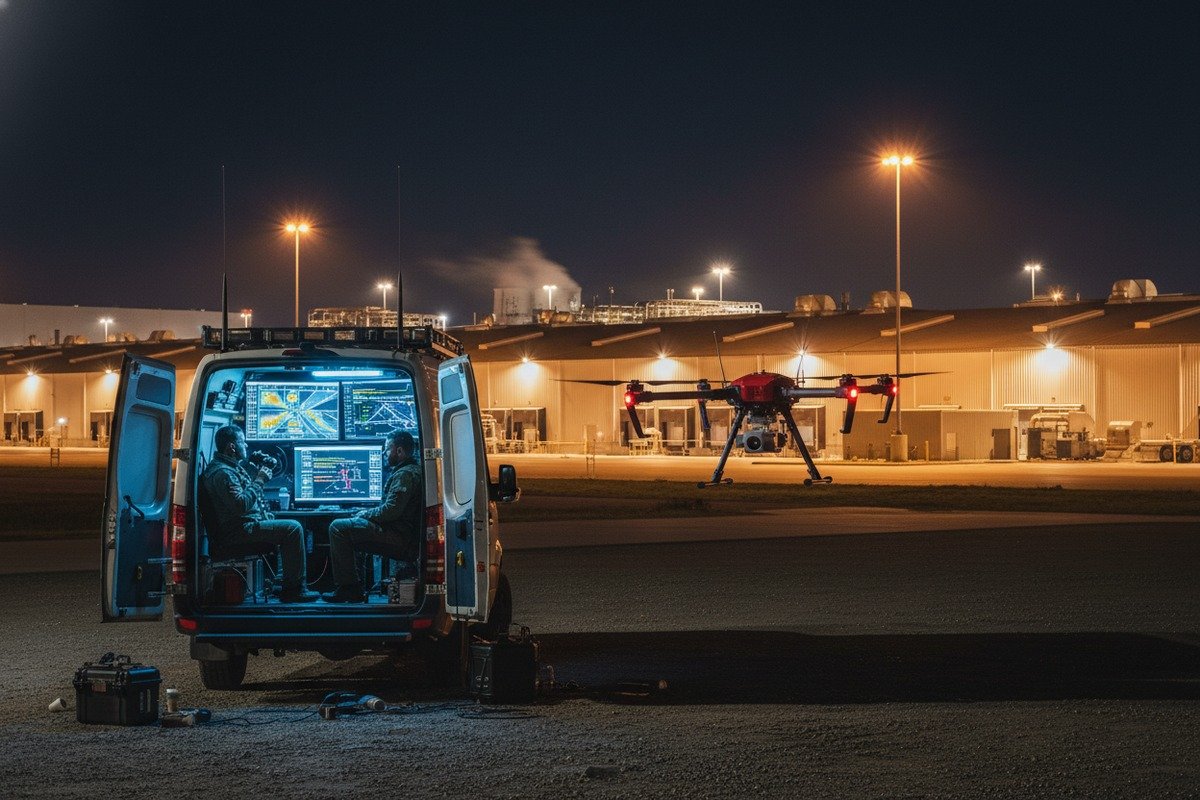
Qu'est-ce qui peut être personnalisé ?
Almost every element of a firefighting drone can be tailored. But customization has layers. Some changes are simple—swapping a camera module or adding a logo. Others require months of engineering.
Customization Complexity Table
| Type de personnalisation | Complexité | Délai d'exécution type | Impact sur les coûts |
|---|---|---|---|
| Branding / livery (OEM labels) | Faible | 1–2 weeks | Minime |
| Payload mounting brackets | Low–Medium | 2–4 semaines | $500–$2,000 |
| Sensor integration (thermal, gas) | Moyen | 4–8 semaines | $3,000–$10,000 |
| Firmware du contrôleur de vol | Medium–High | 6–12 semaines | $5,000–$20,000 |
| Ground station software features | Haut | 8–16 weeks | $10,000–$50,000 |
| New airframe geometry | Très élevé | 16–30 weeks | $50,000+ |
How We Structure Collaborative Development
When a US distributor or government contractor approaches us with a custom requirement, we follow a five-phase process:
- Évaluation des besoins. We review your operational environment, fire types, regulatory constraints, and existing equipment.
- Feasibility study. Our engineers evaluate technical viability and produce a concept document within two weeks.
- Développement de prototypes. We build and test a working prototype—typically within 8–12 weeks for medium-complexity projects.
- Field validation. You test the prototype in your operational environment. We iterate based on your feedback.
- Production release. Final design is locked, quality control procedures are established, and we begin serial production.
Protéger votre propriété intellectuelle
IP ownership is a valid concern in any cross-border development project. We offer clear contractual terms: any feature you fund and co-develop can be assigned exclusively to your brand. We will not replicate proprietary designs for other clients without written consent. Get this in writing before any engineering work begins.
Software Integration Matters
Custom hardware is only half the equation. Many MRO teams need drone data to flow directly into their CMMS (Computerized Maintenance Management System) 9 or SCADA (Supervisory Control and Data Acquisition) platforms. Our software team can develop Intégrations d'API 10, automated alert triggers based on thermal thresholds, and real-time telemetry dashboards that plug into your existing infrastructure.
For example, one of our US partners needed thermal imaging data to automatically generate work orders in their SAP-based CMMS whenever a drone detected a hotspot above 200°C. We built a middleware layer that translates drone telemetry into SAP-compatible data packets. The entire integration took 10 weeks.
When Customization Is Not Worth It
Be honest about your volume. Custom development makes financial sense at 50+ units or when the operational advantage is significant. For orders under 20 units, consider configuring an existing platform with modular accessories rather than commissioning a full custom design. We will tell you this upfront—because a well-configured standard drone often outperforms a rushed custom project.
How can I evaluate a supplier's ability to provide the technical support and spare parts my MRO operations require?
A drone purchase is not a one-time transaction—it is the start of a multi-year maintenance relationship. When we onboard new distribution partners in the US, the first question we ask is: "What does your maintenance workflow look like today?" Because the best drone in the world is useless if you cannot get a replacement motor in five days.
Evaluate suppliers by examining their spare parts inventory depth, average lead time for critical components, availability of 24/7 remote technical support, on-site training programs, warranty terms, and willingness to stock forward-deployed parts at US-based warehouses. A reliable supplier should guarantee critical spare parts delivery within 5–7 business days.
The True Cost of Downtime
When a firefighting drone goes down mid-season, the cost is not just the repair bill. It is the gap in your aerial coverage, the overtime for ground crews who must compensate, and the regulatory risk if your response capability falls below mandated levels.
Industry data shows that unplanned drone downtime costs industrial MRO operations between $500 and $2,000 per day in lost productivity and manual workarounds. Multiply that by a 14-day wait for an overseas motor shipment, and you are looking at $7,000–$28,000 in indirect costs—for a part that might cost $300.
What to Ask Your Supplier
Before signing any procurement contract, request documented answers to these questions:
- Do you maintain a US-based parts warehouse or logistics partner?
- What is your average lead time for the top 10 most-replaced components?
- Do you offer 24/7 remote diagnostic support via video call?
- Can you provide on-site training for our MRO technicians?
- What is your warranty coverage period, and what does it exclude?
- Do you offer annual service contracts with preventive maintenance schedules?
- Can your CMMS integration automatically trigger parts orders when usage thresholds are met?
Supplier Evaluation Scoring Framework
Build a scoring matrix to compare suppliers objectively. Weight each criterion based on your operational priorities.
| Evaluation Criterion | Poids | Excellent (5) | Acceptable (3) | Poor (1) |
|---|---|---|---|---|
| US-based parts inventory | 20% | Full stock of critical parts | Partial stock, 7-day reorder | No US stock |
| Critical parts lead time | 20% | Under 5 business days | 5–10 business days | Over 10 business days |
| 24/7 remote support | 15% | Video + phone + email | Email only, business hours | No remote support |
| On-site training availability | 15% | Annual on-site included | Available at extra cost | Not offered |
| Warranty duration | 15% | 24+ mois | 12 mois | Under 12 months |
| CMMS / software integration | 15% | Full API integration | Exportation de données uniquement | No integration |
Preventive Maintenance: The Overlooked Budget Line
Most procurement managers budget for the drone and maybe one set of spare batteries. They forget about annual maintenance costs, which typically run 10–20% of hardware cost per year. For a $20,000 drone, that is $2,000–$4,000 annually in scheduled maintenance—motor inspections, propeller replacements, firmware updates, and gimbal recalibrations.
We include a detailed preventive maintenance schedule with every SkyRover platform. It specifies inspection intervals by flight hours, lists consumable parts with part numbers and prices, and integrates with your CMMS so nothing gets missed.
Building a Forward Parts Strategy
For fleets of five or more drones, negotiate a forward-stocking agreement. This means your supplier pre-positions a defined set of spare parts at a US warehouse. You pay a modest holding fee, but you gain access to same-week replacements for critical components like motors, ESCs, batteries, and camera modules.
We currently partner with logistics facilities in Los Angeles and Dallas to offer 3–5 day delivery on stocked parts for our US partners. This arrangement has reduced our partners' average downtime from 16 days to 4 days—a 75% improvement.
Training Is Not Optional
Even the most reliable drone requires skilled operators and maintainers. Insist on a training package that includes both pilot certification support (FAA Part 107 prep) and hands-on maintenance training for your MRO technicians. Our standard training program includes 40 hours of combined classroom and flight instruction, plus a maintenance module covering teardown, inspection, and reassembly of all field-replaceable components.
Skill decay is real. If your pilots fly only during fire season, consider requiring annual refresher courses. We offer remote refresher training via live video sessions—a cost-effective way to keep skills sharp without flying trainers across the Pacific.
Conclusion
Defining firefighting drone requirements for US industrial MRO is a multi-layered process. Match payload and endurance to your fire types, verify every certification before import, explore custom design where volume justifies it, and—above all—choose a supplier who will still answer the phone two years after delivery. If you need a manufacturing partner who understands these requirements from the engineering level up, reach out to our team at sridrone.com.
Notes de bas de page
1. Explains different types of fire suppression systems and agents used in firefighting. ︎
2. Provides general information on unmanned aerial vehicles and their industrial applications. ︎
3. Explains the IP Code system, including what an IP55 rating signifies for water resistance. ︎
4. Defines Class B fires and the types of flammable liquids involved. ︎
5. Provides details on the Beaufort scale for measuring wind speed, relevant for drone operations. ︎
6. Outlines the requirements for commercial drone operations under FAA Part 107. ︎
7. Replaced with the current FAA page providing information on Remote ID for drones. ︎
8. Replaced with an authoritative Acquisition.GOV page outlining Section 889 policies. ︎
9. Provides an overview of Computerized Maintenance Management Systems and their functions. ︎
10. Replaced with an authoritative IBM page explaining API integration. ︎

 English
  Español de México
  Deutsch
  Français
  Русский
  العربية
