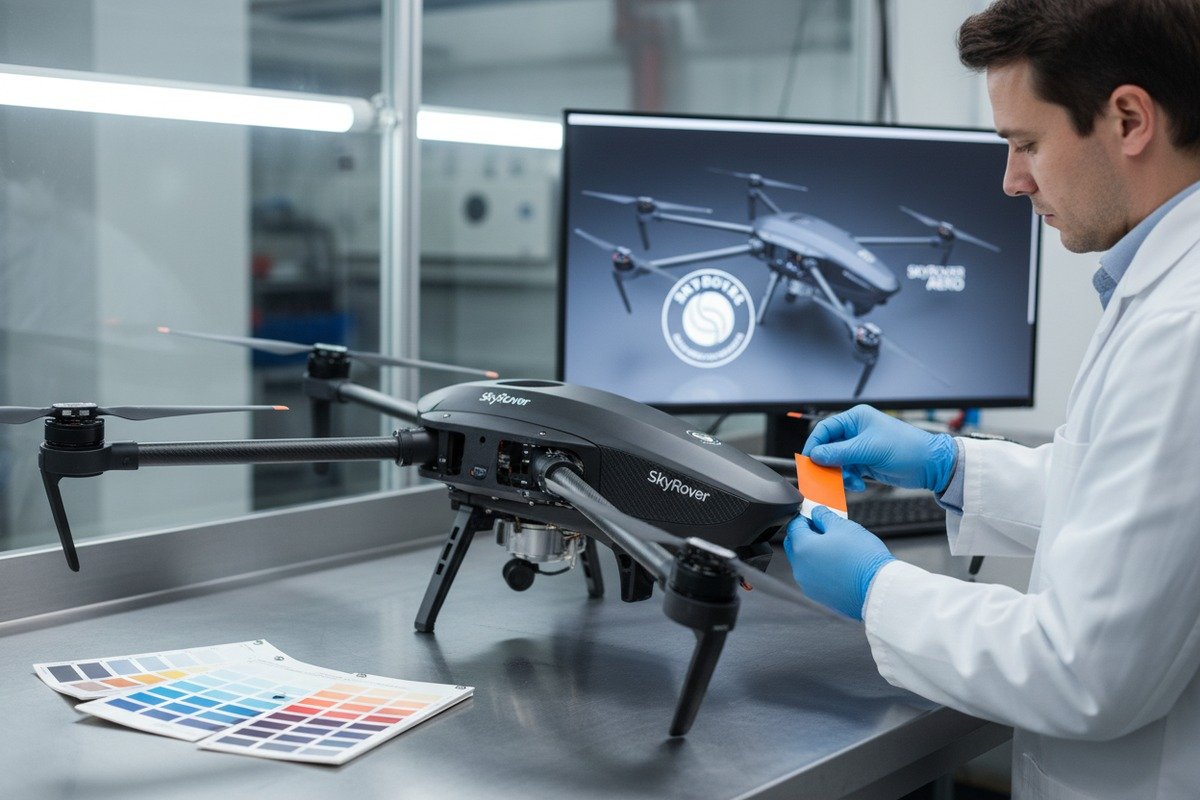
Every week, our production team receives inquiries from importers who want their drones agricoles 1 to carry their own brand identity. The challenge is real. You need paint that survives pesticide exposure 2, UV rays, and daily field abuse.
To confirm custom airframe painting for branding, request manufacturer paint specifications, verify chemical resistance certifications, submit vector design files with Pantone codes, demand physical samples or 3D renderings before production, and confirm the paint process does not void warranties or affect flight performance.
This guide walks you through each critical step UV-resistant polyurethane 3. We will cover paint durability, design file requirements, sample verification, and performance testing. By the end, you will know exactly what to ask your supplier.
How can I ensure the custom airframe paint will withstand harsh agricultural chemicals and UV exposure?
When we test new paint formulations in our facility, we simulate months of pesticide contact in just days ASTM D3359 cross-hatch standards 4. Many importers underestimate how quickly cheap paint fails in real farm conditions. Fading logos and peeling surfaces damage your brand reputation.
Ensure paint durability by requesting UV-resistant polyurethane or epoxy coatings, verifying salt spray test certifications (minimum 500 hours), confirming chemical resistance to common herbicides and fertilizers, and demanding adhesion test results using ASTM D3359 cross-hatch standards.

Understanding Paint Chemistry for Agricultural Use
Agricultural drones face unique challenges. They encounter glyphosate, ammonium sulfate, and other aggressive chemicals daily. Standard automotive paint fails within weeks under these conditions.
Our engineering team recommends two-component polyurethane systems 5. These create a hard, chemical-resistant shell. The paint bonds at a molecular level with proper surface preparation.
The base material matters too. ABS plastic shells require different primers than cadres en fibre de carbone 6. We use plasma treatment on carbon surfaces to improve adhesion by up to 40%.
Key Paint Specifications to Request
| Spécifications | Norme minimale | Pourquoi c'est important |
|---|---|---|
| UV Resistance | 1000+ hours (ASTM G154) | Prevents fading in direct sunlight |
| Salt Spray Test | 500+ hours (ASTM B117) | Indicates corrosion and adhesion durability |
| Chemical Resistance | No degradation after 24-hour exposure | Ensures survival against pesticides |
| Adhesion Rating | 4B or higher (ASTM D3359) | Prevents peeling and chipping |
| Hardness | 2H pencil hardness minimum | Resists scratches during transport |
The Piano Baking Process
Many Chinese manufacturers use piano baking paint processes. This involves multiple layers of primer, base coat, and clear coat. Each layer is baked at controlled temperatures.
The result is a smooth, glossy finish that cleans easily. Field debris and chemical residue wash off without scrubbing. This matters when your drone returns from spraying operations covered in drift.
However, not all baking processes are equal. Ask your supplier about their oven temperatures and curing times. Undercured paint looks fine initially but fails within months.
Testing Protocol Before Approval
Request a test panel before committing to mass production. Apply your intended chemicals directly to this panel. Wait 72 hours. Check for discoloration, bubbling, or softening.
We perform this test for every custom order in our quality control lab. It adds three days to the timeline but prevents costly failures in the field.
What specific design files and color codes should I provide to guarantee my brand logo is accurately applied?
Our graphics department processes hundreds of logo files annually. The most common problem we see is low-resolution artwork. Pixelated logos look unprofessional on any product. Getting this right from the start saves revision cycles.
Provide vector format files (AI, EPS, or PDF), specify exact Pantone or RAL color codes for each brand color, include a brand style guide with minimum size requirements, and submit placement diagrams showing desired logo positions on all visible drone surfaces.
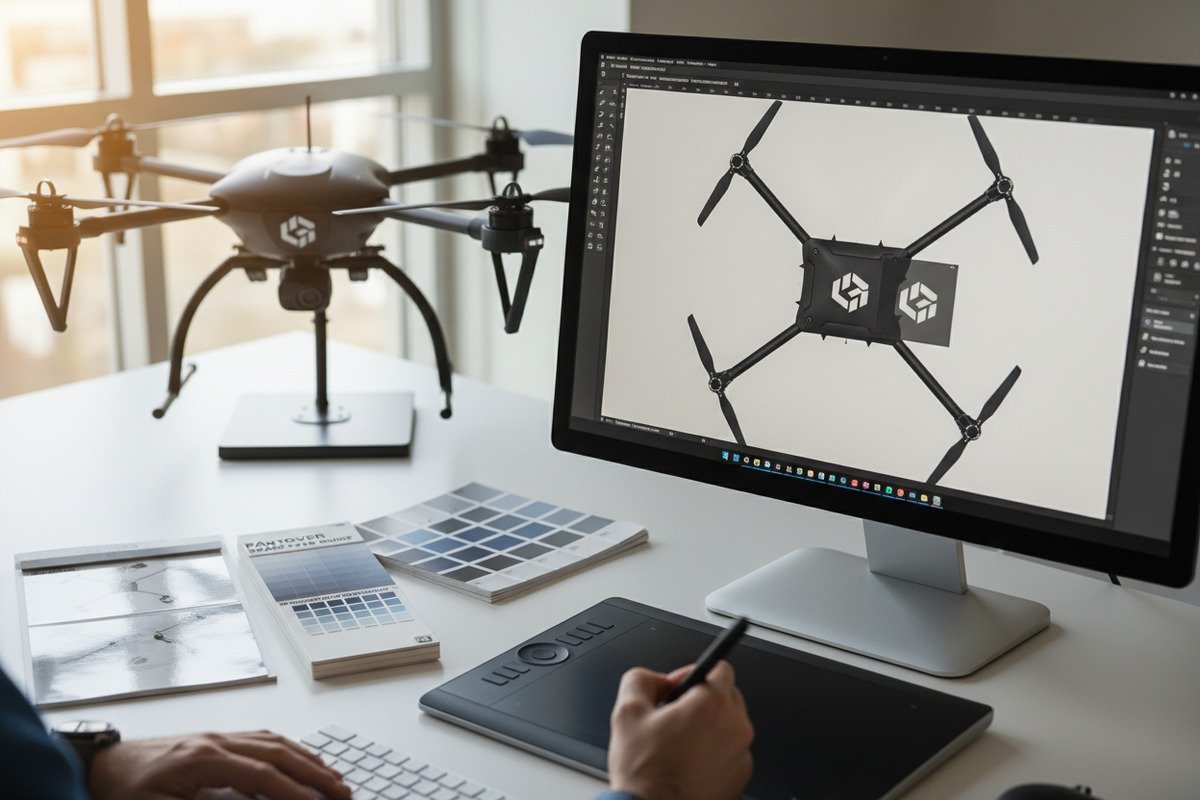
File Format Requirements
Vector files are non-negotiable. They scale infinitely without quality loss. Your logo must look sharp whether printed at 2 inches or 20 inches.
| File Type | Acceptable | Notes |
|---|---|---|
| Adobe Illustrator (.ai) | Oui | Preferred format, preserves layers |
| Encapsulated PostScript (.eps) | Oui | Universal vector format |
| PDF (vector-based) | Oui | Ensure fonts are outlined |
| PNG (300+ DPI) | Conditional | Only for complex gradients, minimum 3000px width |
| JPEG | Non | Compression artifacts cause quality issues |
| Microsoft Word files | Non | Not suitable for production |
Color Specification Standards
Color accuracy depends on standardized references. Monitor colors vary between devices. What looks blue on your screen might appear purple on your supplier's monitor.
Pantone Matching System (PMS) 7 is the global standard for print and paint applications. Each Pantone color has a unique number. When you specify "Pantone 286 C," every manufacturer worldwide sees the same reference.
RAL colors work similarly and are common in European markets. Some suppliers prefer RAL codes for industrial coatings.
Provide both the coated (C) and uncoated (U) Pantone references. Drone surfaces are typically glossy, so coated references apply. But matte finishes may need uncoated specifications.
Creating Effective Placement Diagrams
Your logo position affects visibility and aesthetics. Consider how the drone appears during flight, storage, and transport.
Top surfaces show prominently in promotional photos. Side panels are visible during ground operations. Arm surfaces might display secondary branding or contact information.
Send diagrams showing exact placement coordinates. Measure from fixed reference points like motor mounts or frame corners. Specify dimensions in millimeters for precision.
Brand Consistency Across Units
When ordering fleet quantities, consistency becomes critical. Your twentieth drone should match your first drone exactly.
Submit a comprehensive brand guide. Include acceptable color tolerances. Specify minimum clear space around logos. Define which color variations are acceptable on different background colors.
We maintain digital records of every custom specification. This allows identical reproduction across multiple production batches, even months apart.
Can I request a physical sample or high-resolution rendering to verify the finish before mass production begins?
Before we release any custom order to our assembly line, clients review either a painted component sample or a detailed digital rendering. This step catches misunderstandings early. Color perception varies between individuals, and screen displays differ from physical reality.
Yes, request physical painted samples of actual drone components or high-resolution 3D renderings showing your branding from multiple angles. Physical samples add 7-14 days and $200-500 cost but prevent expensive corrections. Digital renderings can be provided within 3-5 business days at minimal cost.

Physical Sample Options
Physical samples provide the most accurate preview. You can touch the surface, view colors under different lighting, and test durability firsthand.
We offer three sample levels for custom branding projects:
| Sample Type | Délai d'exécution | Coût typique | Meilleur pour |
|---|---|---|---|
| Color swatch panel | 5-7 days | $50-100 | Initial color approval |
| Single component (arm or shell section) | 10-14 days | $200-300 | Texture and finish verification |
| Complete painted airframe | 14-21 days | $400-600 | Full visual approval before fleet orders |
Shipping costs add to these figures. Express international shipping from China to the US typically runs $80-150 for sample components.
Digital Rendering Capabilities
Modern 3D rendering produces photorealistic images. Our design team creates these using actual drone CAD models. The renderings show your logo precisely as it will appear.
Renderings work well for initial concepts and layout approval. They show perspective views that physical samples cannot easily demonstrate. You see how the drone looks from above, from the side, and during flight approach angles.
However, renderings have limitations. Screen colors never perfectly match physical paint. Metallic and pearlescent finishes are difficult to simulate accurately.
The Approval Workflow
A structured approval process prevents miscommunication. Here is the workflow we use with international clients:
First, submit your design files and specifications. Our graphics team creates initial renderings within three business days. You review and request adjustments.
After digital approval, we produce a physical sample if requested. Ship the sample via express courier. You inspect under natural daylight and artificial lighting.
Document your approval in writing. Include the sample identification number. This becomes the reference standard for production.
Making the Most of Sample Reviews
When reviewing samples, check these specific elements:
Color accuracy under multiple light sources. Indoor fluorescent lighting shifts color perception. Check outdoors in daylight and under warehouse lighting.
Surface texture consistency. Run your fingers across the finish. Feel for orange peel texture or dust inclusions that indicate process problems.
Edge coverage quality. Paint tends to thin at corners and edges. Check these areas closely for coverage gaps.
Logo sharpness and alignment. Measure actual placement against your specifications. Verify text readability at intended viewing distances.
How do I confirm that the custom branding process won't compromise the drone's durability or flight performance?
Our flight test engineers measure performance differences with precision instruments. Adding paint weight affects hover efficiency. Improper surface preparation weakens structural bonds. These concerns are valid and deserve serious attention from any buyer.
Confirm performance integrity by requesting weight comparison data (painted versus unpainted), reviewing paint thickness specifications (target 50-80 microns total), verifying the painting process maintains IP67 waterproof ratings, and obtaining written confirmation that custom painting does not void the manufacturer warranty.

Weight Impact Analysis
Every gram affects flight time. Agricultural drones already carry heavy payloads. Additional paint weight reduces operational efficiency.
A complete custom paint job typically adds 80-150 grams to a 20kg drone. This represents less than 1% of total weight. The impact on flight time is negligible, usually under 30 seconds per battery cycle.
| Drone Component | Unpainted Weight | Painted Weight | Différence |
|---|---|---|---|
| Main body shell | 1,200g | 1,280g | +80g |
| Arm covers (6x) | 600g | 660g | +60g |
| Landing gear covers | 200g | 220g | +20g |
| Total | 2,000g | 2,160g | +160g |
Request specific weight data for your configuration. Responsible manufacturers track this information for every model.
Structural Integrity Considerations
Paint adhesion requires surface preparation. Improper techniques can damage underlying materials.
Carbon fiber frames need gentle abrasion or plasma treatment. Aggressive sanding penetrates the protective resin layer, weakening the structure.
ABS plastic shells tolerate more preparation methods. However, certain solvents used in some paint systems can cause micro-cracking in ABS over time.
Our process uses manufacturer-approved preparation methods only. We document each step and can provide process certificates upon request.
Waterproofing Certification
Agricultural drones require IP67 or equivalent waterproofing. IP67 waterproof ratings 8 Custom painting can compromise seals if done carelessly.
Paint buildup near gasket surfaces prevents proper sealing. Overspray inside motor mounts causes bearing contamination. These issues develop slowly and may not appear during initial testing.
Ask your supplier how they protect sealed areas during painting. Request post-painting IP certification testing. This involves submersion testing and spray chamber verification.
Warranty Implications
Custom painting should not void your warranty. However, some manufacturers use this as an excuse to deny claims.
Get warranty terms in writing before ordering. The document should specifically state that custom factory painting is covered. It should list what damage types remain warrantied and which are excluded.
Reputable manufacturers stand behind their custom work. If a supplier refuses to warranty painted units, consider this a warning sign about their confidence in their process quality.
Considérations aérodynamiques
Surface roughness affects aerodynamic drag. Poorly applied paint creates turbulence that reduces efficiency.
Quality finishes are smooth to the touch. Run the orange peel test—if you can feel texture with your fingertips, the finish is too rough.
Glossy finishes generally perform better aerodynamically than matte. If your brand requires matte colors, discuss this with your supplier. Some matte formulations maintain acceptable smoothness.
Conclusion
Custom airframe painting transforms generic agricultural drones into powerful brand ambassadors. The process requires attention to paint chemistry, precise design specifications, thorough sample verification, and performance validation. Work with manufacturers who document their processes and stand behind their quality with clear warranty terms.
Notes de bas de page
1. Provides an overview of drone applications in agriculture, including precision agriculture. ︎
2. Details the potential health effects and risks associated with pesticide exposure. ︎
3. Explains the importance and benefits of UV-resistant polyurethane coatings for durability. ︎
4. Official standard for measuring adhesion of coatings by tape test. ︎
5. Explains the chemistry, uses, and advantages of two-component polyurethane coating systems. ︎
6. Provides an overview of carbon fibers, their properties, and applications. ︎
7. Explains the standardized color matching system for consistent color reproduction. ︎
8. Replaced with an authoritative Wikipedia entry explaining the IP code, including IP67 ratings. ︎

 English
  Spanish
  German
  French
  Dutch
Dutch  Arabic
