
We see profit margins shrink when currency values shift currency values shift 1 between the time our Xi’an factory ships an order and when the final payment arrives.
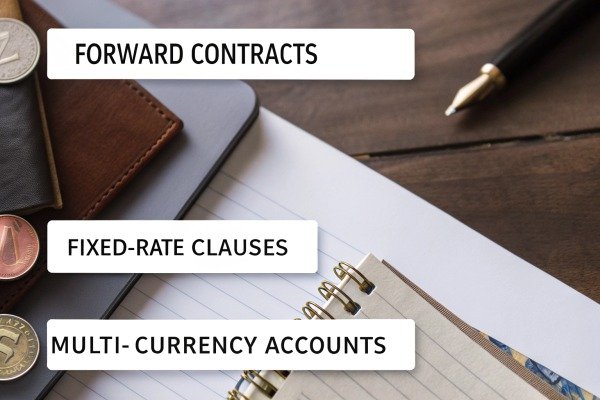
You can mitigate exchange rate risk by using forward contracts to lock in prices, negotiating fixed-rate clauses in your purchase agreement, or maintaining multi-currency accounts to hold funds. These strategies protect your budget against volatility during the weeks it takes to manufacture and deliver high-value agricultural drone fleets.
Here is how to secure your capital during international transactions international transactions 2. exchange rate risk 3
Can I negotiate a fixed exchange rate clause in my purchase contract?
When we draft contracts for large US orders draft contracts 4, we often discuss how to handle the weeks between the initial deposit and the final delivery balance.
Yes, you can negotiate a Currency Adjustment Clause (CAC) that sets a specific exchange rate for the transaction. This clause typically includes a "neutral zone" of fluctuation, meaning the price only changes if the market rate moves beyond an agreed-upon percentage, such as 3% or 5%.

Negotiating a fixed exchange rate clause is one of the most direct ways to handle uncertainty without involving banks or financial derivatives financial derivatives 5. In our dealings with international distributors, we often find that a clear contract prevents disputes later. A Currency Adjustment Clause (CAC) is a mechanism that shares the risk between the buyer and the seller. It does not freeze the market, but it freezes the impact of the market on your specific invoice.
How a Neutral Zone Works
The most common structure uses a "neutral zone" or a "bandwidth." For example, we might agree on a baseline exchange rate of 7.20 CNY/USD. We then set a bandwidth of +/- 3%. If the rate stays between 6.98 and 7.41, the price you pay in USD does not change. This provides stability for both our accounting team and your procurement budget. Neither side has to worry about minor daily fluctuations.
Trigger Points and Renegotiation
If the currency fluctuates wildly and exits this neutral zone, the clause triggers a price adjustment. Usually, we split the difference. If the dollar loses 10% of its value, we might agree that you cover 5% of that loss, and we absorb the other 5%. This prevents one party from taking a catastrophic hit. It is crucial to define the "reference rate" source in the contract central bank's closing rate 6, such as the central bank's closing rate on the day of payment, to avoid confusion.
Risk Allocation Table
The following table illustrates how different contract structures impact who carries the financial burden during a currency swing.
| Contract Type | Who Bears the Risk? | Benefit for Buyer | Benefit for Supplier |
|---|---|---|---|
| Spot Rate Contract | Buyer (100%) | Benefit if USD strengthens. | Zero risk; gets exact local currency amount. |
| Fixed USD Price | Fournisseur (100%) | Total budget certainty. | Can charge a premium to cover risk. |
| Shared Risk (CAC) | Shared (50/50) | Protection from extreme spikes. | Maintains relationship; avoids renegotiation. |
This approach requires trust. We need to be transparent about our costs, and you need to be clear about your payment timeline. It is often the best "non-financial" hedging tool available.
Is it more cost-effective for me to pay in USD or the supplier's local currency?
Our finance team monitors the CNY/USD rates daily, noticing how banks often add hidden markups when international clients pay directly in dollars without checking rates.
Paying in the supplier's local currency often yields better pricing because the supplier does not need to pad the invoice to cover their own risk. However, this requires you to handle the conversion, so compare your bank's spot rate against the supplier's USD quote to find the true lowest cost.

Many of our clients assume that paying in US Dollars (USD) is the standard and safest option. While it is certainly convenient, it is rarely the cheapest. When we issue an invoice in USD, we must protect our margins against the possibility that the dollar will weaken against the Chinese Yuan (CNY) before we receive the funds. To do this, we—and most other exporters—add a buffer to the exchange rate.
The Hidden "Risk Premium"
If the current market rate is 7.20 CNY per USD, we might calculate the invoice at 7.00. This "buffer" ensures that even if the rate drops, we still receive enough Yuan to cover our manufacturing costs in Chengdu. As a buyer, this means you are effectively paying a hidden 2-3% fee for the convenience of paying in dollars. If the market stays stable, that extra margin becomes pure profit for the supplier, and an unnecessary cost for you.
Taking Control of Conversion
When you agree to pay in the supplier's local currency (CNY), we can invoice you the exact amount based on our domestic costs. You then take on the responsibility of converting your USD to CNY. This puts the power in your hands. You can shop around for the best exchange rates using specialized fintech providers rather than accepting the default rate your traditional bank offers.
Provider Comparison
The difference in exchange rates between providers can be significant on a large order. For a $50,000 drone fleet purchase, a small percentage difference adds up.
Cost Breakdown Analysis
Here is how the numbers might look for a hypothetical purchase of our agricultural drones.
| Mode de paiement | Invoice Amount | Exchange Rate Used | Actual Cost to Buyer | Note |
|---|---|---|---|---|
| Supplier Invoices in USD | $51,428 | 7.00 (Supplier Set) | $51,428 | Supplier adds buffer margin. |
| Supplier Invoices in CNY | ¥360,000 | 7.20 (Market Rate) | $50,000 | Buyer pays "real" price. |
| Potential Savings | – | – | $1,428 | ~2.8% Savings |
By asking for a "dual invoice"—one quote in USD and one in CNY—you can do the math yourself. If the gap is significant, it is almost always better to pay in the local currency using a competitive FX broker.
How do forward contracts work to secure the price of my drone order?
We advise clients ordering custom fleets for next season to secure their costs now, ensuring the budget approved today matches the invoice paid later.
Forward contracts allow you to lock in a specific exchange rate for a future payment date, regardless of how the market moves. This is ideal for manufacturing orders with long lead times, ensuring that the cost of your agricultural drones remains exactly what you budgeted when you signed the deal.

In the agricultural drone industry, lead times can be significant. agricultural drone industry 7 If you order a customized fleet for crop spraying in January for a delivery in April, three months of currency volatility can wreck your budget. A forward contract is a financial tool provided by banks and non-bank financial institutions that eliminates this uncertainty. It is essentially a "buy now, pay later" agreement for currency.
The Mechanics of a Forward Contract
When you book a forward contract, you agree to buy a specific amount of foreign currency Forward contracts 8 (e.g., CNY) at a fixed rate, to be delivered on a specific future date. Even if the US Dollar crashes the week before your payment is due, your rate is protected. You are not affected by election results, trade wars, or economic data releases that happen during the production phase. The bank takes on that risk for a small fee or a spread adjustment.
Certainty vs. Opportunity
The main advantage is certainty. You know exactly how much USD will leave your account on the settlement date. This makes financial reporting and cash flow management much easier. However, there is a trade-off. If the exchange rate moves in your favor—meaning the dollar gets stronger—you cannot benefit from it. You are locked into the rate you agreed upon.
Types of Forward Contracts
- Fixed Date Forwards: You must settle the contract on a precise day. This is good if our delivery schedule is rigid.
- Open Window (Flexible) Forwards: You can settle the contract anytime within a specific window (e.g., between March 1st and March 31st). We recommend this for drone shipments because logistics delays can sometimes push the payment date back by a week or two.
When to Use Forwards
We generally recommend using forward contracts when your order value exceeds $50,000 and the payment timeline is longer than 30 days. For smaller, immediate payments, the administrative effort of setting up a forward contract might not be worth it compared to a simple spot transaction.
Does splitting the payment into installments help reduce my currency risk?
Our production cycle involves procurement of sensors and batteries upfront, so we structure payments to match these cash flows while lowering your exposure.
Splitting payments into installments, such as 30% upfront and 70% upon delivery, spreads your risk across different dates, averaging out the exchange rate volatility. This strategy prevents you from converting the entire transaction amount at a single market peak, effectively smoothing out currency spikes over the production period.
Putting all your eggs in one basket is rarely a good idea in agriculture, and the same applies to currency. If you pay 100% of the contract value on a single day, you are gambling that the exchange rate on that specific day is favorable. By breaking the payment into installments, you apply a strategy similar to "dollar-cost averaging" dollar-cost averaging 9 in investing.
Smoothing the Volatility
Standard terms in our industry often involve a 30% deposit to start production and a 70% balance payment before shipment. Some large contracts might even have a 30-30-40 split involving a milestone for successful flight testing. This naturally hedges your risk. If the rate is terrible when you pay the deposit, there is a chance it will improve by the time the final balance is due. You are averaging the exchange rate over the duration of the manufacturing process.
Aligning with Cash Flows
For agricultural businesses, cash flow is seasonal. You might have strong liquidity after harvest but tighter funds during planting. Installment payments allow you to match your currency conversions with your revenue inflows. If you earn revenue in a different currency (e.g., selling crops in Euros but buying drones in Dollars), timing your installments to match your sales can act as a "natural hedge," natural hedge 10 reducing the need for complex financial instruments.
Strategic Payment Timing
You can combine installments with other tools. For example, you might pay the 30% deposit using a "spot" transfer because you need to start production immediately. Then, you could lock in a forward contract for the remaining 70% to secure the budget for the final delivery. This hybrid approach gives you speed at the beginning and security at the end.
Risk Impact Table
The table below compares the risk profile of different payment structures.
| Payment Structure | FX Risk Level | Cash Flow Impact | Description |
|---|---|---|---|
| 100% Upfront | Haut | High (Negative) | You bet on a single day's rate. Ties up cash for months. |
| 100% on Delivery | Haut | Low (Positive) | Supplier rarely agrees. You risk rate spiking before delivery. |
| 30% / 70% Split | Moyen | Moyen | Averages the rate over time. Standard industry practice. |
| Quarterly Installments | Faible | Faible | Best for long-term supply agreements. Smooths volatility best. |
Conclusion
Planning ahead protects your margins. By using forward contracts and smart contract clauses, you ensure your investment in our drone technology remains profitable regardless of global market shifts.
Notes de bas de page
1. Defines the financial risk associated with fluctuating currency values. ︎
2. Official US government guide on managing payments in international trade. ︎
3. Official US government guidance on managing financial risks in international trade transactions. ︎
4. The ICC is the global standard body for international trade contract clauses. ︎
5. Authoritative explanation of financial derivatives from the IMF. ︎
6. Official exchange rate data provided by the US Federal Reserve for contract reference. ︎
7. Product documentation and industry standards from a leading global agricultural drone manufacturer. ︎
8. Technical explanation of forward contracts as a hedging tool for future international payments. ︎
9. Definition of the financial strategy used to mitigate timing risk in currency conversion. ︎
10. Financial news coverage of currency market trends and corporate hedging strategies. ︎

 English
  Spanish
  German
  French
  Dutch
Dutch  Arabic
