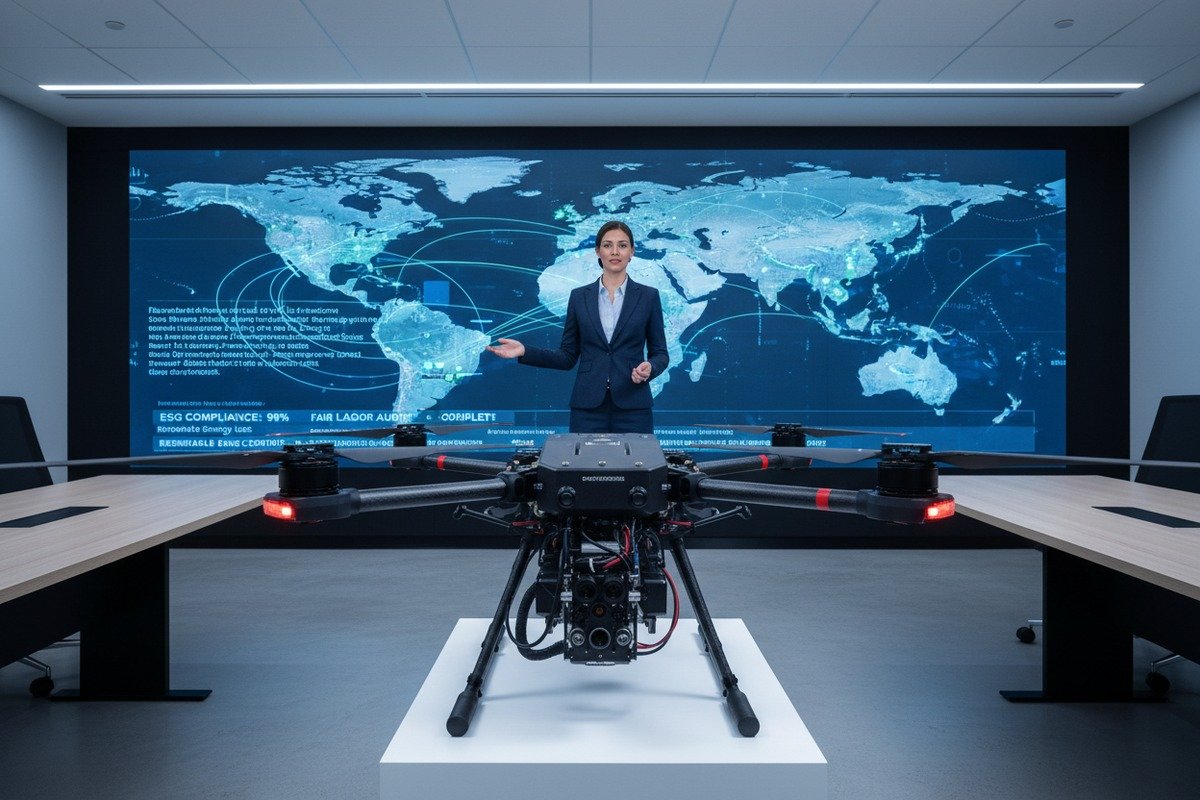
When our engineers first designed firefighting drones for wildfire response, we faced a hard truth ISO 14001 environmental certification 1. Sourcing components ethically was just as important as building durable machines. Without a clean supply chain, even the best drone fails to meet modern standards.
Building an ethical supply chain for firefighting drones requires integrating ESG standards across sourcing, manufacturing, and logistics. This means verifying labor practices, tracking materials via blockchain, auditing suppliers regularly, and partnering with transparent manufacturers who offer long-term technical support and documentation.
This guide walks you through practical steps to build a supply chain you can trust SA8000 labor certification 2. We will cover how to verify manufacturers, source components responsibly, audit production, and find the right drone partner. Let us start with the foundation.
How do I verify that my firefighting drone manufacturer follows ethical labor and environmental standards?
Finding a manufacturer that meets ethical standards is not easy Blockchain traceability systems 3. Many buyers discover problems only after shipments arrive. At our production facility in Xi'an, we have seen distributors struggle with suppliers who lack proper certifications or hide poor labor conditions.
To verify ethical standards, request third-party audit reports, check for ISO 14001 environmental certification and SA8000 labor certification, visit facilities when possible, and ask for transparent documentation of worker conditions, wages, and waste management practices.

Start with Certifications
Certifications provide the first layer of trust. Look for these key standards:
| Certification | Ce qu'il couvre | Pourquoi c'est important |
|---|---|---|
| ISO 14001 | Environmental management systems | Ensures manufacturer reduces waste and emissions |
| SA8000 | Social accountability and labor | Verifies fair wages, safe conditions, no child labor |
| ISO 9001 4 | Quality management | Shows consistent production standards |
| RoHS 5 | Hazardous substances restriction | Confirms electronics avoid toxic materials |
Our team maintains all four certifications. We update them annually because buyers in the US and Europe require proof.
Request Third-Party Audits
Do not rely on manufacturer self-reports alone. Ask for audits from independent bodies like SGS, Bureau Veritas, or Intertek. These audits check:
- Working hours and overtime policies
- Wage documentation
- Fire safety and emergency exits
- Chemical storage and disposal
- Child labor prevention systems
When we export to European distributors, they often request fresh audit reports. We keep these ready because transparency builds long-term partnerships.
Visit the Facility
Nothing replaces an on-site visit. Walk the production floor. Talk to workers if possible. Check the warehouse conditions. Look for posted safety notices. A clean, organized facility usually reflects good management.
If travel is not possible, request a live video tour. Our team offers this to buyers who cannot visit China. We walk them through assembly lines, testing stations, and quality control areas.
Evaluate Environmental Practices
Firefighting drones should not contribute to the climate problems they help fight. Ask your manufacturer:
- How do they handle e-waste from rejected components?
- Do they use renewable energy in production?
- What is their carbon footprint per unit?
We invested in solar panels for our facility last year. This reduced our grid dependency by 30%. Buyers increasingly ask about these details.
What steps can I take to ensure the components in my drone supply chain are responsibly sourced?
Drone components come from many countries. Batteries need cobalt. Motors need rare earths. Each material carries risks. Our procurement team spends significant time mapping origins because one unethical supplier can damage an entire product line.
Ensure responsible sourcing by mapping your supply chain tiers, requiring conflict mineral declarations, using blockchain traceability systems, auditing sub-suppliers, and prioritizing vendors who source from certified ethical mines or recycled materials.

Map Your Supply Chain Tiers
Most buyers only know their Tier 1 supplier. But components pass through multiple hands. A battery cell might involve:
- Tier 1: Battery pack assembler
- Tier 2: Cell manufacturer
- Tier 3: Cathode material supplier
- Tier 4: Cobalt mine operator
We trace our lithium batteries back to Tier 4. This requires persistent documentation requests. Not all suppliers cooperate willingly.
Require Conflict Mineral Declarations
The US Dodd-Frank Act 6 requires disclosure of tin, tantalum, tungsten, and gold origins. Ask for Conflict Minerals Reporting Templates 7 from each supplier. These templates show:
| Mineral | Common Use in Drones | Risk Region | Alternative Source |
|---|---|---|---|
| Cobalt | Lithium batteries | DRC | Australia, recycled |
| Tantalum | Capacitors | Central Africa | Australia, Brazil |
| Tungsten | Motor components | Central Africa | China, recycled |
| Rare earths | Magnets, motors | China (80%+) | Australia, USA |
Our battery suppliers provide updated conflict mineral reports quarterly. We reject components without proper documentation.
Implement Blockchain Traceability
Blockchain creates tamper-proof records of component origins. Several platforms now serve drone supply chains. Each part receives a digital certificate that follows it through production.
When we ship a firefighting drone to a US distributor, they can scan a QR code and see the origin of major components. This transparency builds buyer confidence.
Audit Sub-Suppliers Directly
Do not assume your main supplier audits their own suppliers. Request permission to audit Tier 2 and Tier 3 vendors. Some manufacturers resist this. Their resistance is a red flag.
We allow buyers to audit our sub-suppliers. Last year, a European customer visited our motor vendor's factory. They found everything matched our documentation.
Prioritize Recycled Materials
Recycled cobalt and rare earths reduce mining pressure. Ask suppliers what percentage of materials come from recycled sources. The technology is improving rapidly.
| Material Source | Carbon Footprint | Ethical Risk | Cost |
|---|---|---|---|
| Virgin mining | Haut | Haut | Lower |
| Certified ethical mine | Moyen | Faible | Moyen |
| Recycled material | Faible | Very low | Higher |
We now source 25% of our battery materials from recycled streams. This number grows each year as recycling infrastructure improves.
How can I audit my supplier's production process to guarantee the durability of my firefighting equipment?
Firefighting drones face extreme conditions. Smoke, heat, and high winds destroy weak equipment. Our quality control team tests every unit because one failure during a wildfire costs lives. Buyers need to audit production processes thoroughly.
Audit production durability by reviewing quality management systems, inspecting testing protocols for heat resistance and structural stress, verifying component specification compliance, checking failure rate data, and requiring sample units for independent third-party testing.
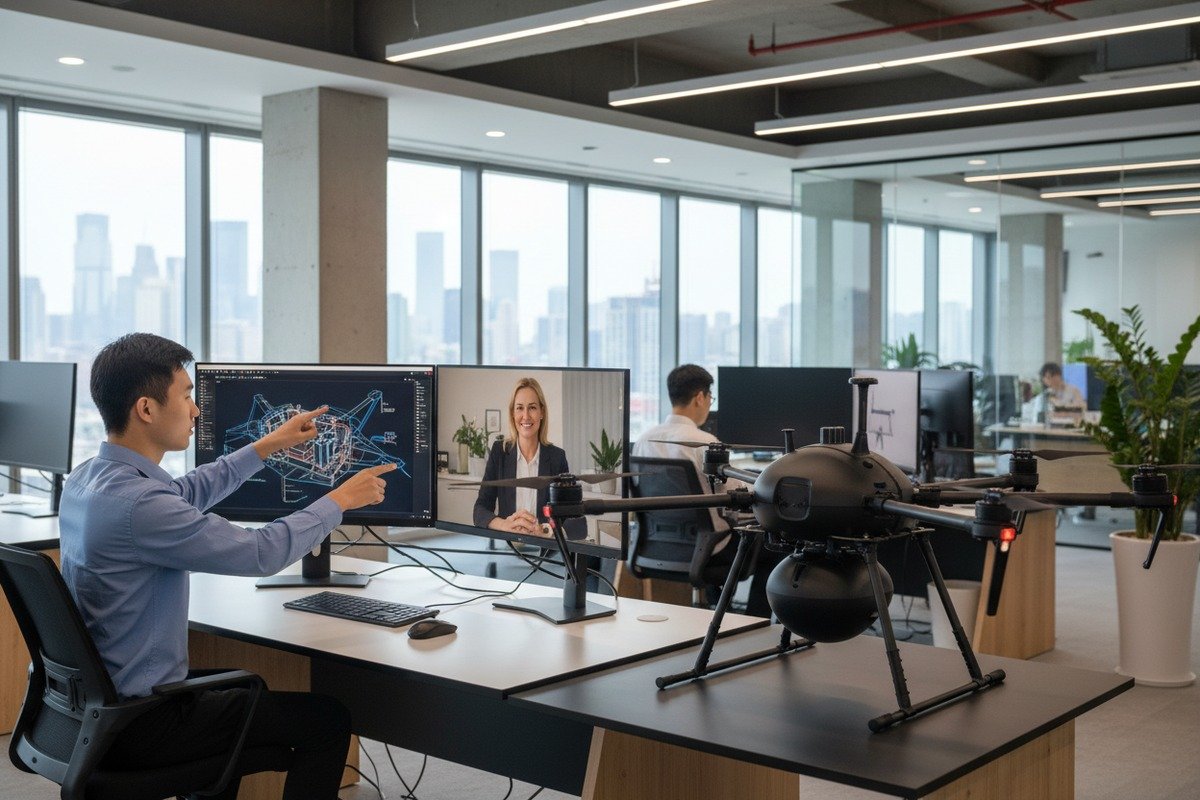
Review Quality Management Systems
A proper QMS documents every production step. Quality Management Systems 8 Ask for process flow charts, inspection checklists, and defect tracking logs. ISO 9001 certification indicates a functioning QMS, but dig deeper.
Our QMS includes 47 inspection points per drone. Each point has pass/fail criteria. Inspectors sign off at each stage. We keep records for five years.
Inspect Testing Protocols
Firefighting drones need specific durability tests:
| Test Type | What It Measures | Pass Criteria |
|---|---|---|
| Thermal chamber | Heat resistance | Operation at 60°C for 2 hours |
| Vibration table | Structural integrity | No loosening at 5G vibration |
| Indice de protection IP | Dust and water resistance | IP54 minimum |
| Drop test | Impact survival | 1-meter drop, no damage |
| Flight endurance | Battery and motor life | Rated flight time ±5% |
When buyers visit our facility, we run live tests. They watch drones operate in our thermal chamber. This proves our claims.
Verify Component Specifications
Request component specification sheets and compare them to actual parts. Some suppliers substitute cheaper components after initial approval. Spot checks catch this.
Our buyers can request random unit inspections. We ship drones to independent labs for verification. The cost is worth the trust it builds.
Check Failure Rate Data
Ask for historical failure rate data. Honest manufacturers track this. Look for:
- First-year failure rate below 2%
- Motor failure rate below 0.5%
- Battery degradation curves
We share our failure data openly. Our first-year failure rate runs at 1.3%. Each failure gets root cause analysis. We feed lessons back into production.
Require Independent Testing
Do not rely only on manufacturer tests. Send sample units to independent labs. Organizations like UL or TÜV offer drone testing services. Their reports carry weight with regulators and end users.
We encourage buyers to test our products independently. Several US distributors have done this. Their results matched our internal data.
How do I find a drone partner that offers transparent documentation and long-term technical support for my fleet?
Documentation and support separate good suppliers from great partners. Our customer service team handles support requests daily. We know buyers fear being abandoned after purchase. Finding a partner who stays engaged requires careful evaluation.
Find a transparent partner by evaluating documentation completeness, verifying support response times, checking spare parts availability and pricing, confirming remote and on-site support capabilities, and requesting references from existing long-term customers.

Evaluate Documentation Completeness
Proper documentation includes:
- User manuals in your language
- Technical specifications with tolerances
- Maintenance schedules and procedures
- Troubleshooting guides
- Compliance certificates for your market
- Import documentation support
Our documentation package runs over 200 pages per model. We update it with each firmware revision. Buyers receive digital and printed copies.
Verify Support Response Times
Ask for service level agreements. Get specific commitments in writing:
| Support Type | Acceptable Response Time | Our Standard |
|---|---|---|
| Email inquiry | 24 hours | 12 hours |
| Technical emergency | 4 hours | 2 hours |
| Spare parts shipment | 7 days | 5 days |
| On-site support | 14 days | 10 days |
We track our response times monthly. Our average email response is 8 hours. We maintain support staff across time zones.
Check Spare Parts Availability
Nothing kills a fleet faster than unavailable parts. Ask:
- What parts do you stock?
- What is your minimum order quantity?
- How long do you guarantee parts availability after purchase?
- What are typical lead times?
We guarantee parts availability for seven years after model discontinuation. Our warehouse stocks common wear items like propellers, batteries, and motors.
Confirm Remote Support Capabilities
Modern drones need firmware updates and remote diagnostics. Ask if your supplier offers:
- Over-the-air firmware updates
- Remote log analysis
- Video call troubleshooting
- Online training resources
Our engineering team can access flight logs remotely with customer permission. This speeds diagnosis significantly. We solve 70% of issues without shipping units back.
Request Customer References
Ask for contacts at existing customers. Call them. Ask about:
- How responsive is the supplier?
- Have they experienced support issues?
- Would they buy again?
- How does the supplier handle warranty claims?
We provide references freely. Our distributors in Texas and Germany speak to prospects regularly. Their honest feedback helps both parties.
Consider OEM and Customization Support
If you need custom branding or features, verify capabilities early. Custom software development requires engineering resources. Not all manufacturers can deliver.
Our OEM services include custom flight controller software, branded housings, and modified payload systems. We assign dedicated engineers to customization projects.
Conclusion
Building an ethical supply chain for firefighting drones takes work, but it protects your business and saves lives. Start by verifying manufacturer standards, trace your components to their origins, audit production rigorously, and choose partners committed to long-term support.
Notes de bas de page
1. Official standard for environmental management systems. ︎
2. Official standard for social accountability and labor practices. ︎
3. Explains how blockchain enhances supply chain traceability. ︎
4. Official standard for quality management systems. ︎
5. EU directive restricting hazardous substances in electronics. ︎
6. SEC rule on conflict minerals under the Dodd-Frank Act. ︎
7. Standardized template for reporting conflict mineral data. ︎
8. Defines and explains the principles of Quality Management Systems. ︎

 English
  Spanish
  German
  French
  Dutch
Dutch  Arabic
