
Wildfire seasons grow more intense each year. Our engineering team faces constant questions from fire departments about emissions Life Cycle Assessment (LCA) data 1. The problem is clear: traditional helicopters burn massive amounts of jet fuel.
To assess life-cycle carbon footprint impact on firefighting drone procurement, evaluate four key stages: manufacturing emissions (especially batteries and sensors), operational energy consumption during flights, maintenance and repair requirements, and end-of-life disposal or recycling. Compare these against replaced alternatives like helicopters to calculate net carbon savings.
This guide walks you through each stage of the assessment process EASA’s Product Environmental Footprint methodology 2. We will cover manufacturing, operations, durability, and shipping. By the end, you will have a clear framework for making carbon-conscious procurement decisions.
How can I evaluate the carbon emissions generated during the manufacturing of my firefighting drones?
When we set up our production lines in Xi'an, energy consumption tracking became essential Durability and repairability 3. Many buyers ask about embodied carbon 4 but struggle to find reliable data. The truth is that manufacturing accounts for over 80% of a drone's total environmental score.
Manufacturing carbon emissions come primarily from battery production, carbon fiber composite fabrication, and sensor assembly. Request Life Cycle Assessment (LCA) data from suppliers covering raw material extraction, component manufacturing, and assembly processes. EASA's Product Environmental Footprint methodology provides standardized benchmarks for comparison.

Breaking Down Manufacturing Emissions
The manufacturing phase includes several distinct stages. Each stage contributes differently to the total carbon footprint. Understanding this breakdown helps you ask the right questions during procurement.
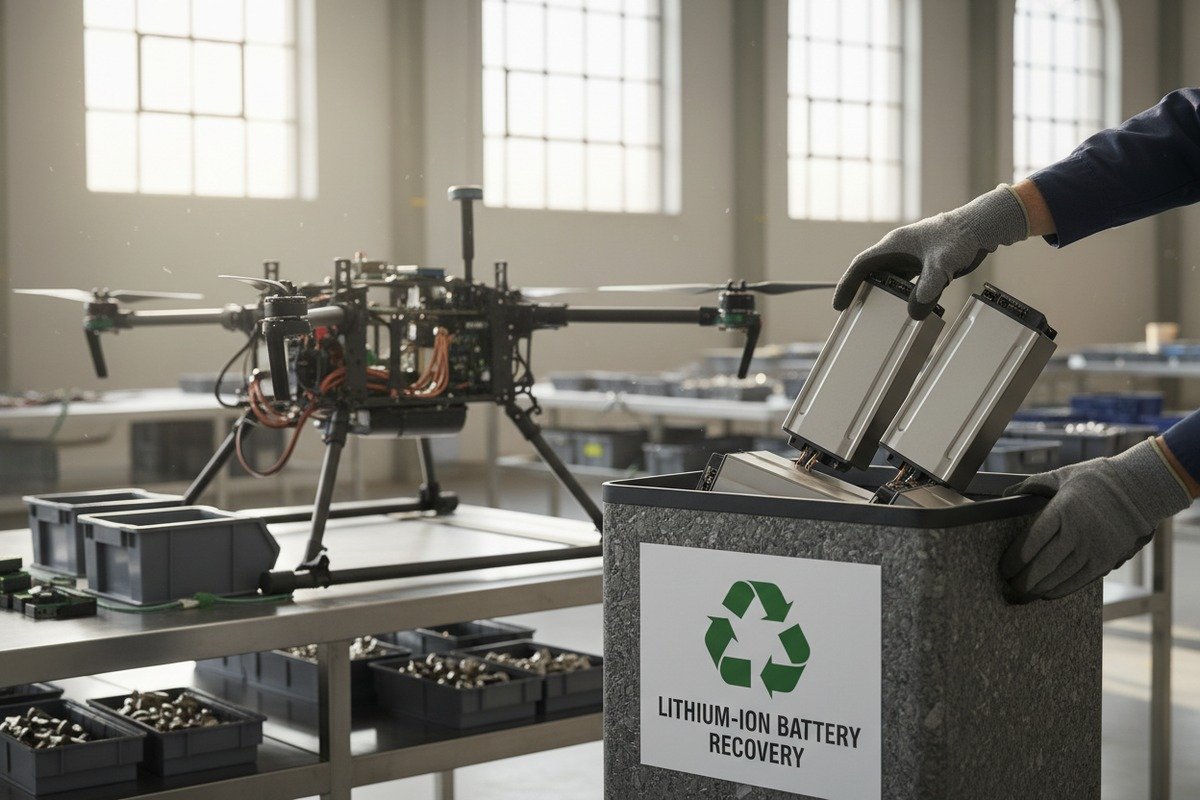
Raw material extraction covers mining lithium, cobalt, and aluminum. These materials form the core of batteries and frames. Processing these raw materials requires significant energy. Our suppliers report that lithium-ion battery production 5 alone can account for 40-60% of manufacturing emissions.
Component fabrication follows extraction. Carbon fiber composites 6 need high-temperature curing. This process consumes substantial electricity. Sensors and cameras require precision manufacturing in controlled environments. Each component adds to the cumulative footprint.
Key Manufacturing Emission Sources
| Composant | Emission Contribution | Primary Energy Source |
|---|---|---|
| Lithium-ion Batteries | 40-60% | Electricity for cell production |
| Carbon Fiber Frame | 15-25% | High-temperature curing ovens |
| Motors and ESCs | 8-12% | Copper processing, magnet production |
| Sensors and Cameras | 10-15% | Semiconductor fabrication |
| Assembly Process | 5-8% | Factory operations |
Questions à poser à votre fournisseur
Request specific documentation from manufacturers. Ask for material composition breakdowns. Inquire about factory energy sources. Our facility uses renewable energy for 35% of operations. This significantly reduces the embodied carbon of our products.
Demand transparency on supply chain practices. Battery cell sourcing matters tremendously. Cobalt from different regions carries different environmental costs. Ethical sourcing certifications provide additional assurance.
Look for manufacturers participating in EASA's Environmental Footprint Aviation framework. This emerging standard creates consistent benchmarks. It prevents greenwashing through verified data. Preliminary results show wide variation between manufacturers.
Comparing Manufacturing Footprints
Different drone configurations carry different manufacturing burdens. A reconnaissance drone with minimal payload has lower embodied carbon than a heavy-lift model designed for water delivery. Match your mission requirements precisely. Oversized equipment wastes resources and increases your footprint unnecessarily.
Our heavy-duty octocopter models require more materials than standard quadcopters. However, they replace helicopter missions that would consume hundreds of gallons of jet fuel. The manufacturing investment pays back through operational savings.
Does the flight endurance and battery efficiency of a drone significantly reduce my operational carbon footprint?
Our flight controller engineers obsess over efficiency metrics. Every extra minute of flight time means fewer battery cycles. Fewer cycles translate directly to reduced lifetime emissions. This connection often surprises procurement managers focused only on upfront costs.
Yes, flight endurance and battery efficiency significantly impact operational carbon footprint. Longer flight times mean fewer required missions and battery charge cycles. Efficient motors and optimized flight controllers reduce energy consumption per hour. Drones replacing helicopter operations can cut mission-related emissions by 50-80% depending on deployment frequency.

Understanding Operational Emissions
Operational emissions depend on two main factors. First is the electricity source for charging. Second is the total energy consumed over the drone's lifetime. Both factors deserve careful analysis.
Grid carbon intensity 7 varies dramatically by region. Charging drones in a coal-dependent region produces more emissions than charging in areas with hydroelectric or solar power. Consider on-site renewable charging stations. Several fire departments we supply have installed solar charging systems.
Flight efficiency determines how much energy each mission requires. Our drones achieve 70-minute flight times on single charges. This extended endurance means completing more tasks per charge cycle. It also means covering larger areas without returning to base.
Flight Efficiency Metrics Comparison
| Performance Factor | Drone standard | High-Efficiency Drone | Impact on Footprint |
|---|---|---|---|
| Temps de vol | 30 minutes | 70 minutes | 57% fewer charge cycles |
| Hover Efficiency | 280W | 220W | 21% energy savings |
| Cruise Speed | 8 m/s | 12 m/s | Faster mission completion |
| Battery Cycles | 300 cycles | 500 cycles | 40% longer battery life |
| Payload Capacity | 5 kg | 15 kg | Fewer trips required |
Calculating Mission-Based Savings
Compare drone operations against the alternatives they replace. A typical firefighting helicopter 8 burns 50-80 gallons of jet fuel per hour. Our thermal imaging drones consume approximately 0.3 kWh per hour of flight. The emission difference is staggering.
For reconnaissance missions, drones offer the most dramatic savings. A single helicopter sortie might release 500+ kg of CO2. The equivalent drone mission produces under 0.5 kg when charged from the average US grid. Even accounting for manufacturing emissions, the payback period is measured in months, not years.
Optimizing Your Fleet Operations
Smart deployment strategies maximize carbon savings. Use smaller reconnaissance drones for initial assessment. Reserve heavy-lift platforms for actual suppression support. This tiered approach matches equipment to mission requirements.
Battery management also affects lifetime emissions. Proper charging protocols extend cycle life. Our batteries maintain 80% capacity after 500 cycles when properly maintained. Premature battery replacement wastes both money and embodied carbon.
Consider autonomous flight patterns for systematic coverage. Programmed "lawnmower" patterns at optimal altitudes maximize data collection efficiency. Our drones can map 2-hectare sites in 15-minute flights at 70m altitude with 5cm resolution. This precision reduces redundant flights.
How does the durability and repairability of a high-end drone impact my life-cycle sustainability assessment?
Our quality control team rejects components that would pass at other factories. This strictness costs more upfront but pays dividends over time. Durability directly connects to sustainability. A drone lasting twice as long has half the manufacturing footprint per year of service.
Durability and repairability fundamentally shape life-cycle sustainability. Drones with longer operational lifespans distribute manufacturing emissions across more missions. Modular designs enabling easy repairs extend useful life and reduce replacement frequency. Prioritize drones with standardized spare parts availability to minimize premature disposal and associated carbon costs.

The Durability-Sustainability Connection
Every replacement drone carries full manufacturing emissions. If a cheap drone lasts two years and a premium drone lasts six years, the premium option produces one-third the manufacturing emissions per year. This simple math transforms procurement calculations.
Our carbon fiber frames withstand impacts that would destroy lesser materials. The vibrant red housing on our quadcopter models protects sensitive electronics from heat and debris. These design choices cost more but prevent premature failures.
Harsh firefighting environments stress equipment severely. Smoke, heat, and ash particles accelerate wear. Drones built for these conditions maintain performance longer. Our octocopter models feature sealed electronics compartments specifically for such demanding applications.
Repair vs. Replace Economics
| Scenario | Impact sur les coûts | Carbon Impact | Recommended Action |
|---|---|---|---|
| Minor motor failure | 5% of unit cost | 3% of embodied carbon | Repair with spare part |
| Battery degradation | 15% of unit cost | 45% of embodied carbon | Replace battery only |
| Frame damage | 25% of unit cost | 20% of embodied carbon | Assess repair feasibility |
| Multiple system failures | 60% of unit cost | 70% of embodied carbon | Consider full replacement |
| Obsolete electronics | Variable | 15% of embodied carbon | Upgrade if compatible |
Designing for Longevity
Modular architecture enables targeted repairs. Our drones feature standardized arm connections. A damaged arm replacement takes 20 minutes without special tools. This accessibility keeps units operational instead of scrapped.
Spare parts availability matters tremendously. We maintain inventory for all components. Delivery times under two weeks prevent extended downtime. Some manufacturers discontinue parts within three years. This forces premature fleet replacement.
Firmware updates extend functional life differently. Our flight controllers accept software upgrades for at least seven years. New features and optimizations arrive without hardware changes. This digital longevity multiplies physical durability benefits.
Building a Sustainable Maintenance Program
Preventive maintenance catches issues before they cause failures. Regular inspections extend operational life. Our service documentation specifies inspection intervals for each component. Following these schedules maximizes lifespan.
Train local technicians when possible. On-site repair capability reduces shipping emissions 9 from sending units back to manufacturers. We offer technical support remotely for most repairs. Video guidance helps local teams complete complex procedures.
Consider refurbishment programs at end of primary service. Drones retired from frontline duty often have years of useful life remaining. Secondary applications in training or backup roles extract additional value. Full recycling should be the final option, not the first.
What carbon costs should I consider when shipping industrial drones from China to my local facility?
Our logistics team ships to fire departments across the United States and Europe weekly. Distance creates real carbon costs that honest assessment cannot ignore. These shipping emissions are often overlooked in procurement decisions but can represent meaningful portions of total lifecycle impact.
Shipping carbon costs include air freight emissions (highest), sea freight (lowest per kg), ground transportation at both ends, and packaging materials. A 25kg industrial drone shipped by air from China to the US generates approximately 100-150kg CO2e. Sea freight reduces this to 5-10kg CO2e but adds 4-6 weeks to delivery time.
Shipping Mode Emission Comparison
Transportation mode selection dramatically affects carbon costs. Air freight offers speed but carries significant environmental burden. Sea freight reduces emissions by 90% or more but requires patience and planning.
Our standard practice offers both options. Urgent deployments can use air shipping. Planned procurement benefits from sea freight economics and sustainability. Most fire departments can plan purchases 6-8 weeks ahead, making sea freight viable.
Shipping Emissions by Mode
| Shipping Mode | CO2e per kg (China to US) | Temps de transit | Meilleur cas d'utilisation |
|---|---|---|---|
| Air Express | 6.0 kg CO2e | 3-5 jours | Emergency replacement |
| Air Standard | 4.5 kg CO2e | 5-7 days | Urgent procurement |
| Sea-Air Hybrid | 1.2 kg CO2e | 14-21 days | Balanced approach |
| Sea Freight (FCL) | 0.3 kg CO2e | 28-35 days | Bulk orders |
| Fret maritime (LCL) | 0.4 kg CO2e | 35-42 days | Standard orders |
Optimizing Shipping Sustainability
Consolidate orders when possible. Shipping multiple units together reduces per-unit emissions. Our door-to-door delivery service handles customs efficiently. This consolidation also reduces packaging waste.
Packaging choices affect total shipping footprint. We use recycled cardboard and minimal foam. Custom-fit cases protect drones without excessive material. Reusable shipping containers make sense for ongoing procurement relationships.
Consider regional distribution points. Some of our US customers maintain small inventories for their dealer networks. This approach converts multiple international shipments into single bulk transfers. Local distribution then uses ground transport with lower emissions.
Total Landed Carbon Calculation
Calculate the complete picture. Add manufacturing emissions to shipping emissions. Include local delivery from port to your facility. Factor in packaging disposal or recycling.
For a typical 25kg firefighting drone, total carbon breakdown might look like this: manufacturing at 150kg CO2e, air shipping at 125kg CO2e, and local delivery at 5kg CO2e. Total equals 280kg CO2e. The same drone shipped by sea: 150kg manufacturing plus 8kg sea freight plus 5kg local delivery equals 163kg CO2e. The 42% reduction is significant.
This calculation influences total cost of ownership decisions. Carbon taxes in some jurisdictions make these emissions financially relevant. Even without carbon pricing, sustainability reporting increasingly requires this granular data.
Conclusion
Life-cycle carbon assessment transforms firefighting drone procurement from simple cost comparison to strategic sustainability planning. Evaluate manufacturing origins, operational efficiency, durability design, and shipping choices together. The right decisions reduce both your carbon footprint and long-term costs.
Notes de bas de page
1. Provides information on Life Cycle Assessment methodology and data. ︎
2. Explains EASA’s framework for environmental footprint assessment. ︎
3. Replaced with a definition from the Sustainability Directory, providing a clear and relevant explanation of product durability and repairability. ︎
4. Explains the concept of embodied carbon in materials and products. ︎
5. Replaced with an authoritative article from the Institute for Energy Research detailing the environmental impacts of lithium-ion battery production. ︎
6. Describes properties and environmental impact of carbon fiber composites. ︎
7. Defines grid carbon intensity and its relevance to electricity. ︎
8. Discusses environmental impacts of helicopters in aerial firefighting. ︎
9. Explains the environmental impact of shipping and logistics. ︎

 English
  Spanish
  German
  French
  Dutch
Dutch  Arabic
