
When we review purchase orders at our Xi’an headquarters, we often see first-time buyers accepting sticker prices without question, missing out on significant savings available through proper negotiation strategies negotiation strategies 1.
Novice buyers can negotiate better prices on agricultural drones by building relationships (guanxi), leveraging potential volume, and understanding component costs. Focus on total value rather than just unit price, offering deposit flexibility or future order forecasts to secure discounts of 15–25% from direct manufacturers.
Let’s break down the exact strategies you need to secure the best deal while ensuring quality.
How do I know if the initial price quote from a Chinese supplier is fair or inflated?
In our engineering meetings, we calculate prices based strictly on raw materials and labor, yet many traders add heavy markups before the quote reaches your inbox.
To determine if a quote is fair, conduct a Bill of Materials (BOM) analysis on key components like motors and flight controllers. Compare prices across multiple platforms like Alibaba and 1688, and insist on a detailed cost breakdown to identify hidden margins added by trading intermediaries.

Understanding the true cost of an agricultural drone requires looking inside the machine. Many novice buyers look at the drone as a single finished product, but manufacturers see it as a collection of components. To know if a price is fair, you must understand the sum of its parts.
A "Bill of Materials" (BOM) analysis is your best tool. Bill of Materials 2 You do not need to be an engineer to do this. Simply research the market price of the main components listed in the drone's specification sheet. Look up the cost of the specific flight controller model, the brushless motors, the radar system, and the battery type. If a supplier quotes you $5,000 for a drone, but the components only total $1,500, the markup is likely too high. A reasonable gross margin for a factory is usually between 15% and 25%. Trading companies will often try to double this.
Another effective method is to compare domestic Chinese prices with export prices. Platforms like 1688.com show the price we sell to local Chinese distributors. While export versions require different software and better packaging, the price gap should not be massive. If the price on Alibaba is 50% higher than on 1688 for the same model, there is significant room to negotiate.
Finally, verify the supplier type. Manufacturers like us have fixed costs but more flexibility on margin. Trading companies have no control over production costs and simply add a fee on top. Always ask for a video call to see the assembly line. If they cannot show you the production floor, you are likely dealing with a middleman who is inflating the price.
Component Cost vs. Quoted Value
The following table estimates the cost ratios for a typical mid-range agricultural drone. This helps you spot when a specific part is overpriced.
| Catégorie de composants | Estimated % of Total BOM Cost | What to Check for Value |
|---|---|---|
| Flight Control System | 15% – 20% | Ensure it includes unlocked software, not subscription-based firmware. |
| Propulsion (Motors/ESCs) | 25% – 30% | Check if motors are branded (e.g., Hobbywing) or generic unbranded copies. Hobbywing 3 |
| Spraying System | 10% – 15% | Nozzles and pumps are cheap; do not let suppliers overcharge here. |
| Battery & Charger | 20% – 25% | The most expensive consumable. Verify cell type and cycle life warranty. |
| Frame & Structure | 15% – 20% | Carbon fiber quality varies. Check arm folding mechanism durability. |
What specific negotiation tactics work best when buying agricultural drones for the first time?
Our sales team in Chengdu is much more likely to approve discounts when a buyer demonstrates professionalism and technical knowledge rather than just aggressively demanding lower numbers.
The most effective negotiation tactics involve sharing a 12-month procurement forecast to leverage future volume and using silence strategically after the first offer. Focus on building “guanxi” via WeChat and avoid aggressive lowballing, which often leads to quality reduction rather than true cost savings.

Negotiating in China is an art form that blends business logic with relationship building. For a novice buyer, the strongest card you can play is "future potential." Manufacturers are often willing to break even on a first sample order if they believe it will lead to a container load later. Do not just ask for a discount on one unit. Instead, present a procurement plan. Tell the supplier, "I need to test 2 units now, but our projection for the next harvest season is 50 units." This gives the sales manager a reason to apply for a "volume tier" price on your small order.
Moving communication off formal email and onto WeChat is also critical. Email is for contracts; WeChat is for deals. By chatting on their preferred platform, you build a faster, more personal connection. This is the beginning of "Guanxi." Once you have established a rapport, you can ask for "friendship pricing" that is not available on public listings.
Silence is another powerful tactic. When you receive the first quote, do not reply immediately. Wait two or three days. In our culture, immediate acceptance signals you are desperate or wealthy. A delay signals that you are comparing options. When you finally reply, state that you like their product quality but have a budget constraint due to shipping or import taxes. Ask them to help import taxes 4 you meet that target.
Be careful with your counter-offer. A common mistake is offering 50% of the quoted price. This is insulting and suggests you do not know the product's value. A realistic target is 10% to 20% below the initial quote. This shows you are serious but looking for a deal.
Negotiation Strategy Checklist
Use this comparison to guide your interaction with sales representatives.
| Stratégie | Wrong Approach (Novice Mistake) | Right Approach (Pro Tactic) |
|---|---|---|
| Volume Leverage | "I only need one drone. Can you give me a discount?" | "I am forecasting 40 units next year. Let's discuss pricing for that volume, applied to this trial." |
| Communication | Sticking strictly to formal emails and Alibaba messenger. | Moving to WeChat/WhatsApp for faster, informal relationship building. |
| Counter-Offer | Demanding 50% off immediately without justification. | Offering 15% below quote, citing specific competitor prices or budget limits. |
| Timing | Rushing the deal because you need it "yesterday." | Negotiating 2-3 months before the season starts, when factories are less busy. |
Will pushing for a lower price negatively impact the quality or after-sales support I receive?
We strictly maintain quality standards, but we have seen competitors swap out high-end batteries for cheaper alternatives when buyers force margins below sustainable levels.
Aggressively pushing for rock-bottom prices often forces suppliers to cut corners, resulting in “quality fade” where inferior components are substituted without notice. This can lead to higher long-term costs due to increased failure rates, lack of spare parts, and poor after-sales technical support.
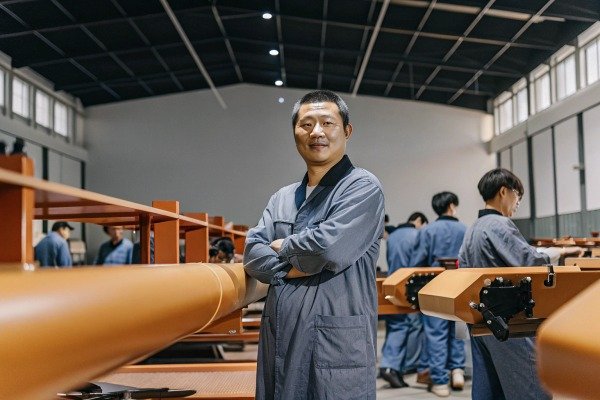
There is a saying in manufacturing: "You get what you pay for." This is especially true with complex electronics like agricultural drones. If you force a supplier to accept a price that eliminates their profit margin, they will find a way to recover that money. This phenomenon is known as "quality fade." quality fade 5
For agricultural drones, this usually happens in components you cannot easily see. A supplier might agree to your low price but switch the internal flight controller from a top-tier brand to a generic clone. They might use recycled battery cells instead of new ones, reducing the flight time from 20 minutes to 12 minutes after just a few months. They could also use lower-grade plastic for the pesticide tank, which may crack under UV exposure.
The impact extends to support. Technical support costs money. We employ engineers who speak English to help customers troubleshoot GPS calibration or pump issues. If a buyer squeezes every dollar out of the deal, the supplier cannot afford to offer this support. When your drone crashes in the middle of the spraying season, you may find your emails go unanswered.
To prevent this, you must link price to specifications. Never negotiate price in isolation. If you agree on a lower price, update the contract to explicitly list the brand and model of every critical component (Motor Brand X, Battery Cell Type Y). Make it clear that you will inspect the goods before final payment. This ensures the supplier maintains the agreed quality even at the discounted rate.
Risks of Over-Negotiation
The table below highlights what typically suffers when prices are pushed too low.
| Risk Area | Potential Consequence of Low Pricing | Impact on Operations |
|---|---|---|
| Battery Life | Substitution with lower energy density cells or Grade B cells. | Drone covers less acreage per charge; productivity drops. |
| GPS/RTK | Use of older generation modules with poor signal shielding. | Drone drifts or crashes; cannot fly autonomous routes accurately. |
| Étanchéité | Cheaper sealants or skipping conformal coating on PCBs. | Water damage from pesticides leads to total system failure. |
| Soutien | Supplier ignores messages after shipment. | Minor software glitches become permanent grounding issues. |
Can I negotiate for included spare parts or better shipping terms to reduce my overall costs?
When we prepare shipments for our US clients, adding a consumables kit into the crate costs us very little but adds immense value and security for your operations.
You can effectively negotiate for “value-adds” like extra propeller kits, spray nozzles, or absorbed dangerous goods certification UN38.3 certification 6 fees instead of a lower unit price. These items have high utility for you but low marginal cost for the factory, creating a win-win scenario that preserves the supplier’s profit margin.

Sometimes a supplier simply cannot lower the unit price of the drone because their margins are already tight. However, this does not mean the negotiation is over. You can shift the conversation to "value-added" items. These are things that are valuable to you as a buyer but relatively cheap for the manufacturer to provide.
Spare parts are the best target for this strategy. Propellers, spray nozzles, landing gear skids, and water pump diaphragms are high-wear items. You will eventually need to buy them. For a factory, a plastic propeller costs just a few dollars to mold. For you, buying it later and shipping it separately could cost ten times that amount. Ask the supplier to include a "maintenance kit" worth $200-$300 at no extra charge. They are likely to say yes because it preserves the headline price of the drone.
Shipping terms are another area to explore. Agricultural drones use large lithium batteries, which are classified as Class 9 Dangerous Goods Classe 9 Marchandises dangereuses 7. Shipping these requires Classe 9 Marchandises dangereuses 8 special UN38.3 certification and expensive hazardous materials packaging. Ask the supplier to cover these certification fees or to upgrade the incoterms to DDP (Delivered Duty Paid) incoterms 9, where they handle the customs risk.
You can also negotiate software terms. Many drones come with software that requires an annual subscription fee for advanced features like obstacle avoidance or RTK mapping. Negotiate for a "lifetime unlock" of these features as part of the initial purchase. This saves you recurring costs for years to come without costing the supplier any physical hardware.
High-Value Negotiable Add-Ons
Focus on requesting these items if the supplier refuses to lower the base unit price.
| Add-On Item | Value to Buyer | Coût pour le fournisseur | Negotiation Success Rate |
|---|---|---|---|
| Consumables Kit (Props, nozzles) | High (Prevents downtime) | Low (Plastic parts are cheap) | Très élevé |
| Extra Battery Charger | Medium (Faster turnaround) | Moyen | Modéré |
| Custom Logo/Branding | High (Professionalism) | Low (Stickers/Screen print) | Haut |
| Lifetime Software License | Very High (No recurring fees) | Zero (Digital switch) | Moderate (Depends on policy) |
| DG Packaging Fees | Medium (Compliance) | Low (Standard procedure) | Haut |
Conclusion
Successful negotiation is about partnership, not war. By understanding our costs, building trust through guanxi, and focusing guanxi 10 on total value rather than just the lowest sticker price, you secure fair prices and reliable drones for the long term.
Notes de bas de page
1. Authoritative resource from Harvard University on business negotiation techniques. ︎
2. Defines the standard manufacturing concept of listing all raw materials and components. ︎
3. Official website of the specific motor brand mentioned as a quality benchmark. ︎
4. Official US government resource explaining tariffs and duties for importers. ︎
5. Academic source defining the phenomenon of gradual quality reduction in manufacturing. ︎
6. Industry standard guidelines for lithium battery testing and transport safety. ︎
7. Official international standards for shipping lithium batteries by air. ︎
8. Official FAA guidance on classifying and shipping lithium batteries as hazardous materials. ︎
9. The official International Chamber of Commerce page defining global trade terms. ︎
10. Explains the essential Chinese cultural concept of relationship-based business networks. ︎

 English
  Spanish
  German
  French
  Dutch
Dutch  Arabic
