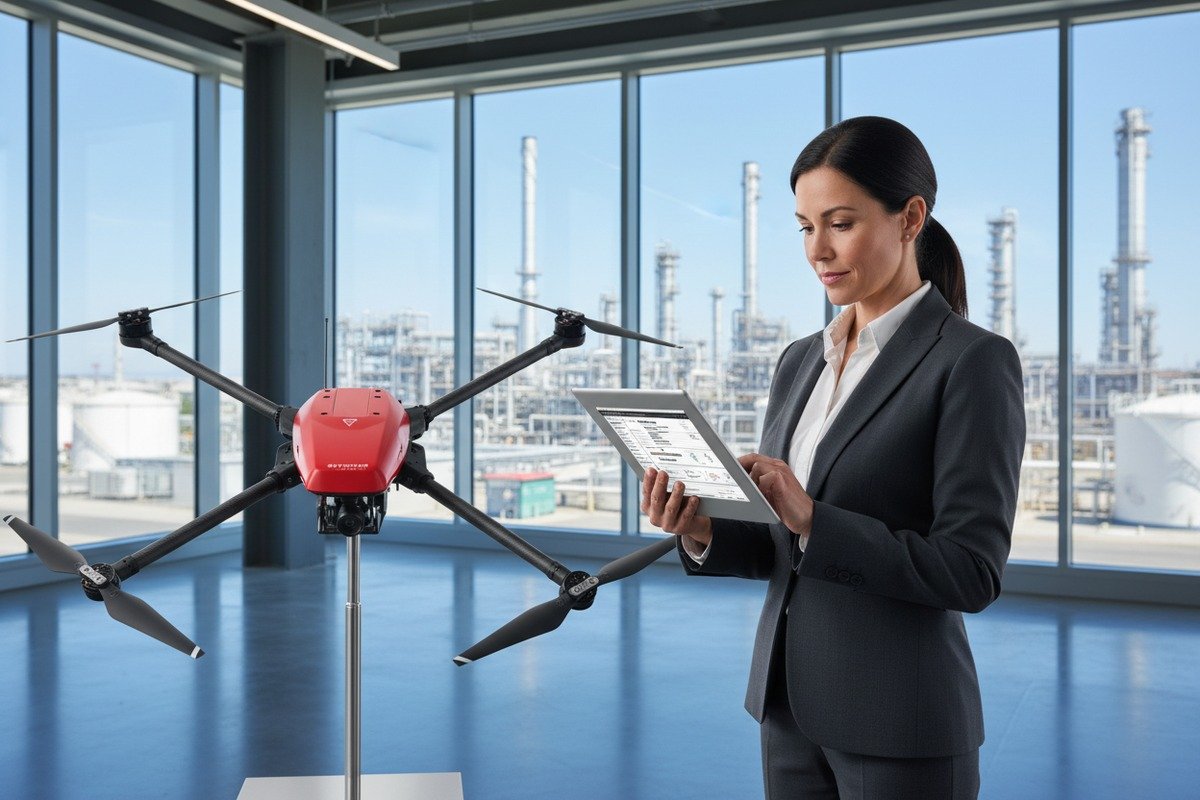
Getting firefighting drone specs wrong costs more than money—it costs time, safety margins, and trust with every stakeholder in the chain fire suppression agent type 1. Our production line in Xi’an has shipped hundreds of industrial drones 2 to US distributors, and the procurement questions we hear most often reveal a painful gap between what buyers think they need and what actually works on an industrial fire scene.
Définir les exigences des drones de lutte contre l'incendie pour l'approvisionnement industriel MRO aux États-Unis signifie spécifier la capacité de charge utile, l'autonomie de vol, les ensembles de capteurs thermiques, les certifications conformes à la FAA, la disponibilité des pièces de rechange et l'intégration CMMS, le tout adapté aux environnements industriels difficiles tels que les raffineries, les usines chimiques et les entrepôts où une réponse aérienne rapide et fiable est essentielle.
This guide breaks down the core decisions you face when building a firefighting drone fleet for industrial MRO IP55 water resistance rating 3. We cover payload sizing, certifications, custom design collaboration, and long-term supplier evaluation—so you can write procurement specs that hold up in the field, not just on paper.
Comment déterminer la bonne charge utile et l'autonomie de vol pour ma flotte de drones de lutte contre les incendies ?
Every refinery fire or warehouse blaze demands a different aerial response. When we calibrate our flight controllers and test payload brackets at our facility, we see firsthand how a few hundred grams of extra weight can shave minutes off flight time—and minutes matter when you are tracking a chemical hotspot.
La charge utile et l'autonomie de vol appropriées dépendent de votre type d'agent extincteur, de la distance de largage et de la durée de la mission. Les drones de lutte contre l'incendie industriels nécessitent généralement une capacité de charge utile de 10 à 30 kg et une autonomie de vol de 25 à 55 minutes, avec des batteries remplaçables à chaud pour soutenir les opérations continues lors d'incidents prolongés.
Why Payload Capacity Is Not Just About Weight
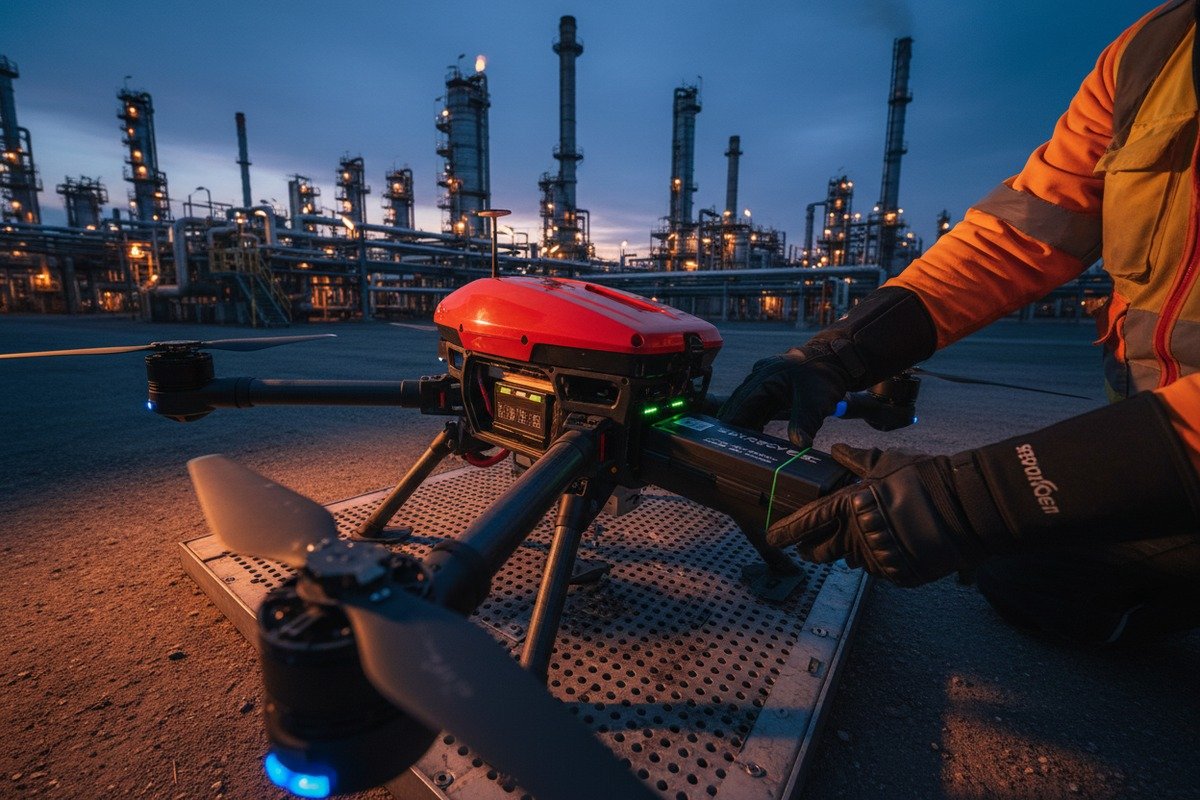
Payload capacity defines what your drone can carry. But it is not just about raw kilograms. You must consider the type of suppression agent—water, foam concentrate, dry chemical powder, or fire-extinguishing bombs. Each agent has different density, container requirements, and release mechanisms.
For example, a drone carrying a 10-liter water tank weighs roughly 10 kg in payload. But a drone carrying two fire-extinguishing capsules may weigh only 5 kg yet cover a wider suppression area. Our engineering team designs modular payload rails so you can swap between agent types without changing your airframe.
Flight Endurance: The Hidden Budget Killer
Flight endurance is measured in minutes, but its impact is measured in dollars. A drone with 25 minutes of flight time may need three battery swaps during a single warehouse fire. Each swap means landing, cooling, replacing, and relaunching. That is 10–15 minutes of downtime per cycle.
Hot-swappable battery systems cut this downtime to under 90 seconds. When we design our SkyRover firefighting platforms, we prioritize dual-battery architecture so one cell stays live while the other is replaced.
Payload vs. Endurance Tradeoff Table
| Portée de la charge utile | Autonomie de vol typique | Meilleur cas d'utilisation | Système de batterie |
|---|---|---|---|
| 5–10 kg | 40–55 minutes | Reconnaissance thermique, petites largages de suppression | Batterie simple |
| 10–20 kg | 25–40 minutes | Livraison de mousse/eau, réseaux de capteurs | Double batterie |
| 20–30 kg | 15–25 minutes | Suppression lourde, largages multi-agents | Double échangeable à chaud |
| 30+ kg | 10–18 minutes | Réapprovisionnement en fret, canons à mousse à grande échelle | Interchanges multiples |
Adaptation de la charge utile aux types d'incendies industriels
Différents sites industriels produisent différents incendies. Un incendie de raffinerie pétrochimique implique des liquides inflammables de classe B 4. Un incendie d'élévateur à grains implique des poussières combustibles. Votre flotte de drones doit transporter l'agent approprié pour le scénario approprié.
Envisagez de construire une flotte à plusieurs niveaux. Les drones de niveau 1 gèrent la reconnaissance et la cartographie thermique avec des charges utiles de capteurs légers de moins de 5 kg. Les drones de niveau 2 transportent des charges utiles de suppression de 10 à 20 kg pour une intervention directe. Les drones de niveau 3, si votre budget le permet, transportent des canons à mousse lourds de plus de 20 kg pour les incidents à grande échelle.
Notre recommandation pour la plupart des équipes de maintenance, réparation et exploitation (MRO) industrielles américaines est de commencer par les niveaux 1 et 2. Cela couvre 80% des cas d'utilisation sans surcharger votre budget de maintenance. Vous pourrez toujours ajouter le niveau 3 une fois que vos pilotes et vos équipes de maintenance seront formés.
Indicateurs clés de performance à spécifier
Lors de la rédaction de votre document d'approvisionnement, incluez ces exigences mesurables :
- Autonomie de vol minimale avec charge utile maximale (pas seulement le poids à vide)
- Vitesse maximale du vent opérationnelle (Force 6 Beaufort 5 ou 39 km/h est la norme de l'industrie)
- Temps de charge de la batterie de 0% à complet
- Précision de largage de la charge utile à une altitude donnée
- Plage de température de fonctionnement (idéalement –20°C à +60°C pour les sites industriels)
Ces chiffres donnent à votre fournisseur un objectif clair. Ils donnent également à votre équipe de maintenance une base de référence pour suivre la dégradation des performances au fil du temps.
Quelles certifications dois-je vérifier pour m'assurer que mes drones importés sont conformes aux normes industrielles américaines ?
Naviguer dans la réglementation américaine sur les drones du côté de l'importation peut ressembler à un labyrinthe. Lorsque nous préparons la documentation d'exportation pour les distributeurs américains, notre équipe de conformité suit une liste de contrôle qui s'est considérablement allongée depuis 2020 et qui continue de s'étendre.
Pour se conformer aux normes industrielles américaines, vérifiez la certification FAA Partie 107 pour les opérations commerciales, la conformité Remote ID, le respect de la section 889 du NDAA pour les contrats gouvernementaux, l'approbation des fréquences radio FCC, la protection environnementale classée IP, et toute dérogation opérationnelle de l'autorité locale ou de l'État requise pour les vols au-delà de la ligne de visée.
FAA Part 107 : La base
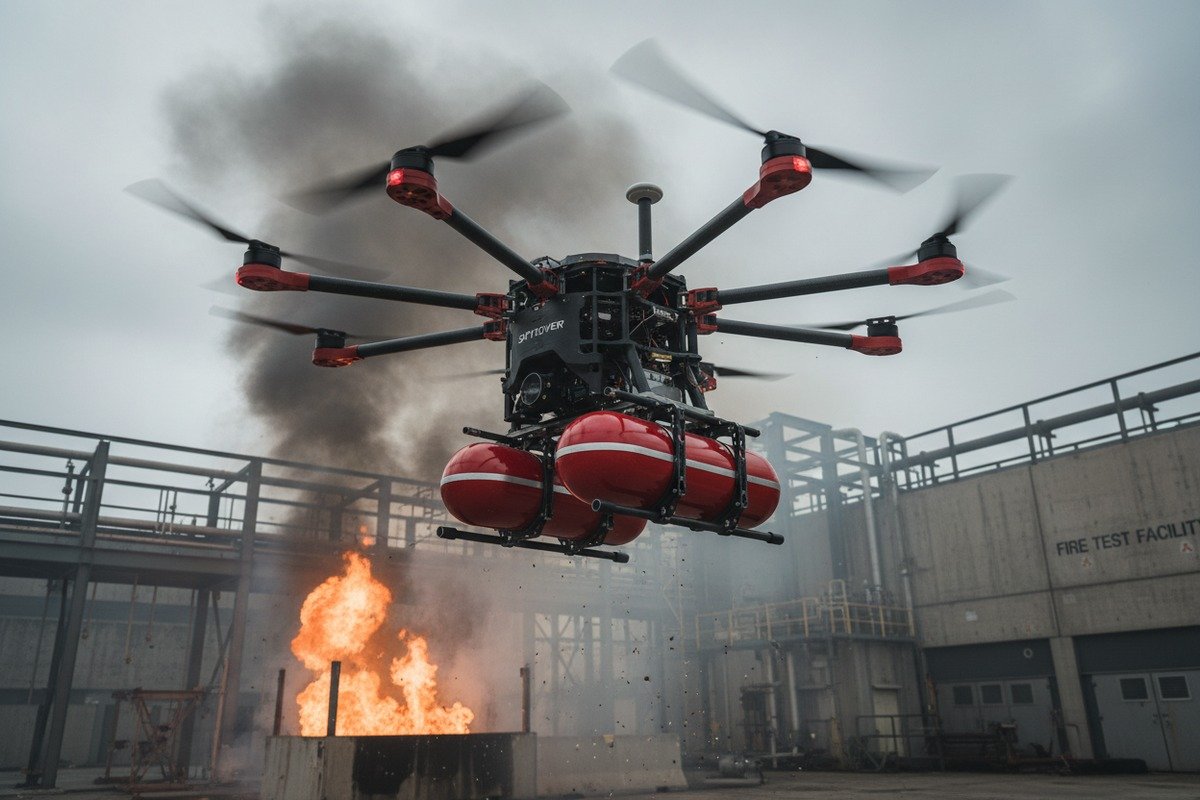
Toutes les opérations de drones commerciaux aux États-Unis nécessitent la conformité à la partie 107. Conformité FAA Partie 107 6 Cela signifie que vos pilotes ont besoin d'un certificat de pilote à distance. Votre drone doit peser moins de 55 livres (25 kg) pour les opérations standard, ou vous avez besoin d'une dérogation pour les plateformes plus lourdes.
Pour les drones de lutte contre les incendies, vous aurez presque certainement besoin de dérogations supplémentaires. Les opérations de nuit, les vols au-dessus des personnes et les vols au-delà de la ligne de visée visuelle (BVLOS) nécessitent tous des approbations distinctes de la FAA. Prévoyez 60 à 120 jours pour le traitement des dérogations dans votre calendrier d'approvisionnement.
Remote ID : Obligatoire depuis 2024
Depuis mars 2024, tous les drones opérant dans l'espace aérien américain doivent diffuser ID à distance 7. Cela signifie que votre drone doit soit avoir un module Remote ID intégré, soit transporter un appareil de diffusion externe. Nos plateformes SkyRover sont livrées avec des modules Remote ID intégrés qui respectent la règle Standard Remote ID.
Section 889 de la NDAA et l'American Security Drone Act
Si vos clients finaux incluent des agences gouvernementales fédérales, étatiques ou locales, Conformité à la section 889 de la NDAA 8 est essentiel. Cette réglementation restreint l'approvisionnement en drones contenant des composants de certains fabricants. L'American Security Drone Act (ASDA) va plus loin, interdisant potentiellement des plateformes spécifiques à l'usage gouvernemental.
En tant que fabricant chinois, nous abordons cela de manière proactive. Nous proposons des configurations conformes à la NDAA utilisant des composants approuvés et pouvons fournir une documentation complète de la nomenclature afin que votre équipe de conformité puisse vérifier chaque pièce de la chaîne d'approvisionnement.
Tableau de la liste de contrôle de certification
| Certification / Norme | Organe directeur | Requis pour | Calendrier type |
|---|---|---|---|
| FAA Part 107 | FAA | Toutes les opérations de drones commerciaux | Examen du pilote : 2–4 semaines |
| ID à distance | FAA | Toutes les opérations dans l'espace aérien américain | Intégré à la fabrication |
| Section 889 de la NDAA | Congrès américain | Approvisionnement gouvernemental | Vérification du fournisseur : en cours |
| FCC Partie 15 / Partie 87 | FCC | Émissions de radiofréquence | Tests en laboratoire : 4–8 semaines |
| Indice de protection IP55 / IP67 | CEI | Opérations en environnement hostile | Tests en usine : 2–3 semaines |
| BVLOS Waiver | FAA | Beyond visual line of sight | Application : 60–120 jours |
| Dérogation pour opérations nocturnes | FAA | Lutte contre l'incendie nocturne | Application : 30–90 jours |
| UL 4600 (Émergent) | Normes UL | Évaluation de la sécurité autonome | Varie selon la portée |
Notes environnementales et de sécurité
Les drones de lutte contre l'incendie industriels sont exposés à l'eau, à la chaleur, à la fumée et aux produits chimiques. Votre cahier des charges d'approvisionnement devrait exiger un minimum d'étanchéité IP55 —ce qui signifie une protection contre les jets d'eau à basse pression de toutes les directions. Pour les inspections de post-incendie où les drones peuvent rencontrer des jets de tuyaux directs, IP67 est préférable.
la résistance à la chaleur est tout aussi importante. Recherchez des cadres en alliage de magnésium ou en fibre de carbone conçus pour un fonctionnement continu au-dessus de 60°C de température ambiante. Notre chambre d'essai thermique soumet chaque cellule à une exposition soutenue de 80°C avant l'expédition.
Ne négligez pas les règles nationales et locales
Les règles de la FAA fixent le minimum, pas le maximum. De nombreux États et municipalités ajoutent leurs propres réglementations sur les drones. La Californie, le Texas et New York ont des règles spécifiques concernant les opérations de drones près des infrastructures critiques. Certains services d'incendie exigent des avenants d'assurance supplémentaires. Établissez une matrice réglementaire pour chaque juridiction où votre flotte opérera.
Puis-je collaborer avec un fabricant pour concevoir des fonctionnalités personnalisées pour mes applications spécifiques de lutte contre les incendies ?
Les drones prêts à l'emploi correspondent rarement à toutes les exigences d'une spécification d'approvisionnement MRO industrielle. Au cours des trois dernières années, notre équipe de R&D à Xi'an a réalisé plus de 40 projets de développement personnalisé, allant de supports de nacelle modifiés pour des caméras thermiques spécialisées à des géométries de cellule entièrement nouvelles pour des environnements de raffinerie soumis à des vents forts.
Oui, de nombreux fabricants proposent des services de conception OEM et collaborative. Vous pouvez personnaliser les matériaux de la cellule, les systèmes de montage de la charge utile, les ensembles de capteurs, le firmware du contrôleur de vol, le logiciel de la station au sol, et même la livrée et la marque. La clé est de choisir un fabricant disposant d'une capacité d'ingénierie interne, d'accords clairs sur la propriété intellectuelle et d'un calendrier de développement structuré.
Qu'est-ce qui peut être personnalisé ?
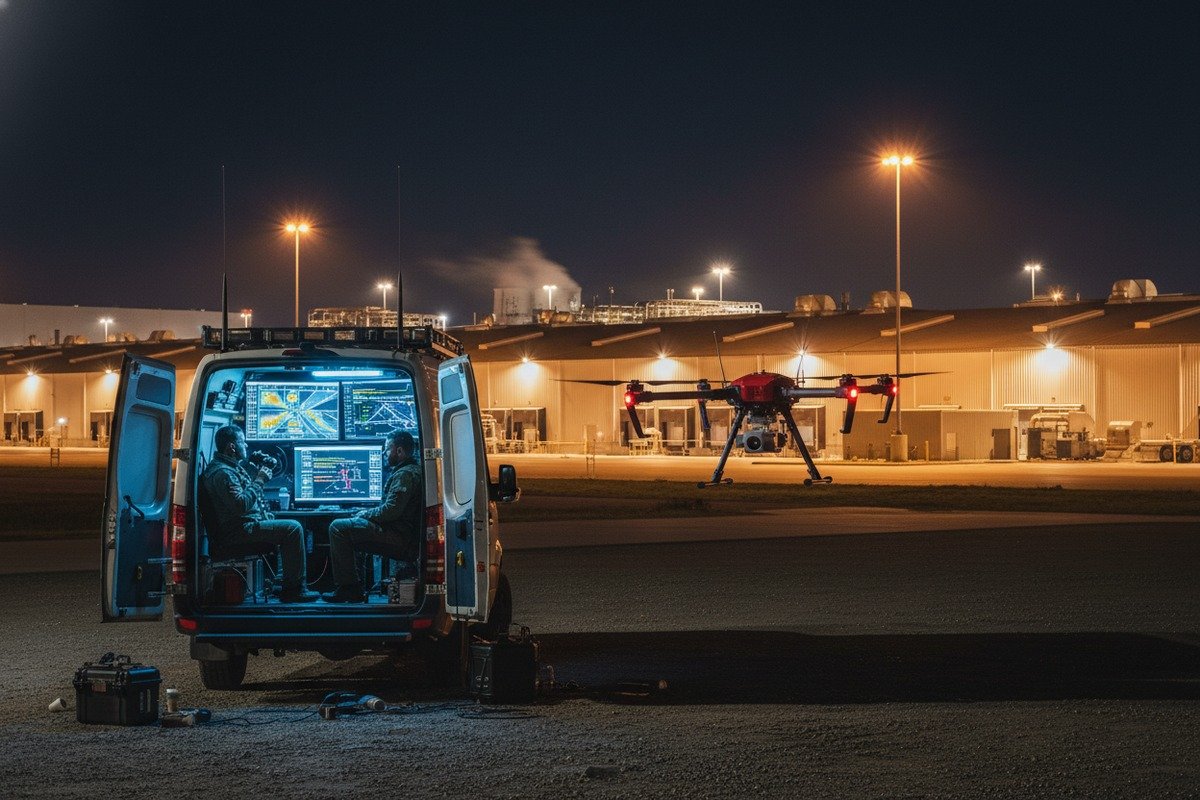
Presque tous les éléments d'un drone de lutte contre les incendies peuvent être personnalisés. Mais la personnalisation a des niveaux. Certains changements sont simples : échanger un module de caméra ou ajouter un logo. D'autres nécessitent des mois d'ingénierie.
Tableau de complexité de la personnalisation
| Type de personnalisation | Complexité | Délai d'exécution type | Impact sur les coûts |
|---|---|---|---|
| Image de marque / livrée (étiquettes OEM) | Faible | 1–2 semaines | Minime |
| Supports de montage de charge utile | Faible–Moyen | 2–4 semaines | $500–$2,000 |
| Intégration de capteurs (thermique, gaz) | Moyen | 4–8 semaines | $3,000–$10,000 |
| Firmware du contrôleur de vol | Moyen–Élevé | 6–12 semaines | $5 000–$20 000 |
| Fonctionnalités du logiciel de station au sol | Haut | 8–16 semaines | $10 000–$50 000 |
| Nouvelle géométrie de cellule | Très élevé | 16–30 semaines | $50,000+ |
Comment nous structurons le développement collaboratif
Lorsqu'un distributeur américain ou un entrepreneur gouvernemental nous contacte avec une exigence personnalisée, nous suivons un processus en cinq phases :
- Évaluation des besoins. Nous examinons votre environnement opérationnel, les types d'incendie, les contraintes réglementaires et l'équipement existant.
- Étude de faisabilité. Nos ingénieurs évaluent la viabilité technique et produisent un document conceptuel dans les deux semaines.
- Développement de prototypes. Nous construisons et testons un prototype fonctionnel, généralement en 8 à 12 semaines pour les projets de complexité moyenne.
- Validation sur le terrain. Vous testez le prototype dans votre environnement opérationnel. Nous itérons en fonction de vos commentaires.
- Mise en production. La conception finale est verrouillée, les procédures de contrôle qualité sont établies et nous commençons la production en série.
Protéger votre propriété intellectuelle
La propriété intellectuelle est une préoccupation légitime dans tout projet de développement transfrontalier. Nous proposons des conditions contractuelles claires : toute fonctionnalité que vous financez et co-développez peut être attribuée exclusivement à votre marque. Nous ne reproduirons pas de conceptions propriétaires pour d'autres clients sans consentement écrit. Obtenez cela par écrit avant le début de tout travail d'ingénierie.
L'intégration logicielle est importante
Le matériel personnalisé n'est que la moitié de l'équation. De nombreuses équipes de MRO ont besoin que les données des drones soient directement intégrées dans leurs CMMS (Système de Gestion de Maintenance Assisté par Ordinateur) 9 ou leurs plateformes SCADA (Supervisory Control and Data Acquisition). Notre équipe logicielle peut développer Intégrations d'API 10, des déclencheurs d'alertes automatisés basés sur des seuils thermiques, et des tableaux de bord de télémétrie en temps réel qui s'intègrent à votre infrastructure existante.
Par exemple, l'un de nos partenaires américains avait besoin que les données d'imagerie thermique génèrent automatiquement des ordres de travail dans leur CMMS basé sur SAP chaque fois qu'un drone détectait un point chaud supérieur à 200°C. Nous avons construit une couche intermédiaire qui traduit la télémétrie du drone en paquets de données compatibles SAP. L'intégration complète a pris 10 semaines.
Quand la personnalisation n'en vaut pas la peine
Soyez honnête quant à votre volume. Le développement personnalisé est financièrement judicieux à partir de 50 unités ou lorsque l'avantage opérationnel est significatif. Pour les commandes de moins de 20 unités, envisagez de configurer une plateforme existante avec des accessoires modulaires plutôt que de commander une conception entièrement personnalisée. Nous vous le dirons d'emblée, car un drone standard bien configuré surpasse souvent un projet personnalisé précipité.
Comment puis-je évaluer la capacité d'un fournisseur à fournir le support technique et les pièces de rechange dont mes opérations de MRO ont besoin ?
L'achat d'un drone n'est pas une transaction unique, c'est le début d'une relation de maintenance pluriannuelle. Lorsque nous intégrons de nouveaux partenaires de distribution aux États-Unis, la première question que nous posons est : " À quoi ressemble votre flux de travail de maintenance aujourd'hui ? " Car le meilleur drone du monde est inutile si vous ne pouvez pas obtenir un moteur de remplacement en cinq jours.
Évaluez les fournisseurs en examinant la profondeur de leur inventaire de pièces de rechange, le délai moyen pour les composants critiques, la disponibilité d'un support technique à distance 24h/24 et 7j/7, les programmes de formation sur site, les conditions de garantie et la volonté de stocker des pièces déployées à l'avance dans des entrepôts basés aux États-Unis. Un fournisseur fiable doit garantir la livraison des pièces de rechange critiques dans un délai de 5 à 7 jours ouvrables.
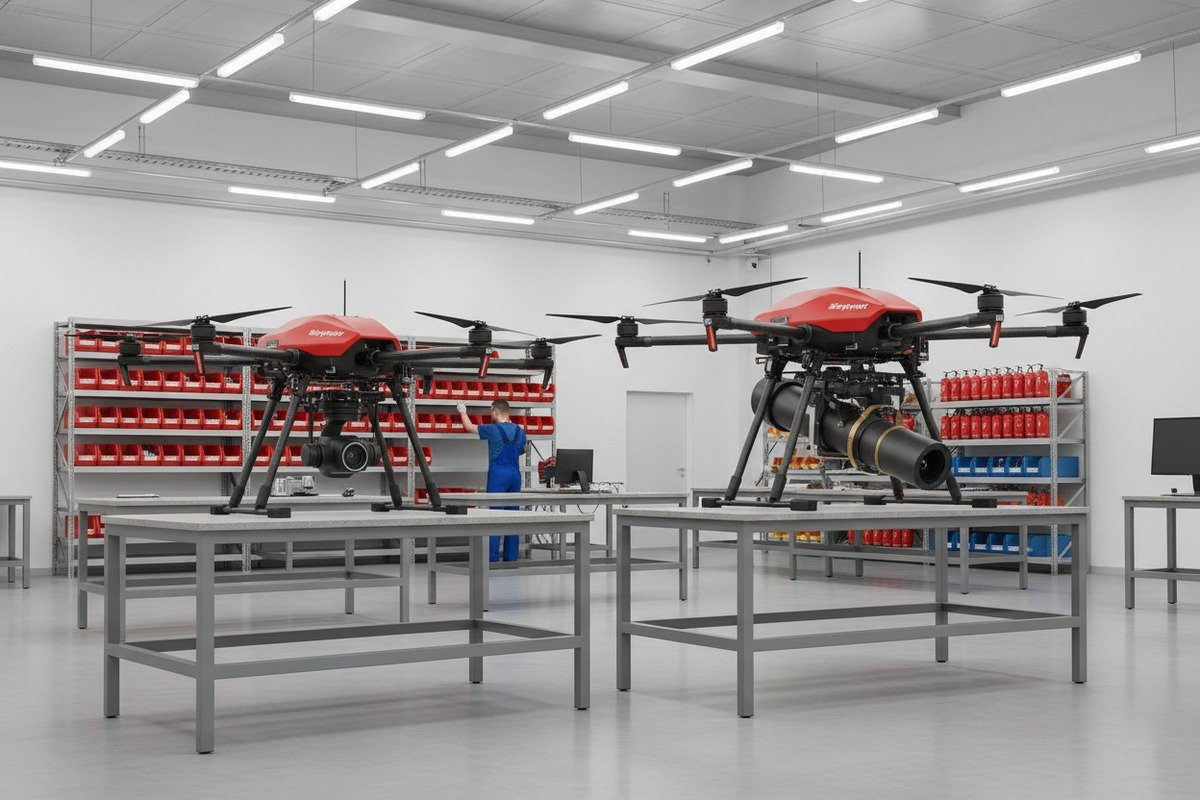
Le véritable coût de l'indisponibilité
Lorsqu'un drone de lutte contre les incendies tombe en panne en milieu de saison, le coût n'est pas seulement la facture de réparation. C'est le manque dans votre couverture aérienne, les heures supplémentaires pour les équipes au sol qui doivent compenser, et le risque réglementaire si votre capacité de réponse tombe en dessous des niveaux réglementaires.
Les données de l'industrie montrent que les temps d'arrêt imprévus des drones coûtent aux opérations de MRO industrielles entre 500 et 2 000 dollars par jour en perte de productivité et en solutions de contournement manuelles. Multipliez cela par un délai d'attente de 14 jours pour une expédition de moteur outre-mer, et vous vous retrouvez avec 7 000 à 28 000 dollars de coûts indirects, pour une pièce qui pourrait coûter 300 dollars.
Que demander à votre fournisseur
Avant de signer tout contrat d'approvisionnement, demandez des réponses documentées à ces questions :
- Maintenez-vous un entrepôt de pièces ou un partenaire logistique basé aux États-Unis ?
- Quel est votre délai moyen pour les 10 composants les plus remplacés ?
- Offrez-vous un support de diagnostic à distance 24h/24 et 7j/7 par appel vidéo ?
- Pouvez-vous fournir une formation sur site à nos techniciens MRO ?
- Quelle est la période de couverture de votre garantie et qu'exclut-elle ?
- Proposez-vous des contrats de service annuels avec des calendriers de maintenance préventive ?
- Votre intégration CMMS peut-elle déclencher automatiquement les commandes de pièces lorsque les seuils d'utilisation sont atteints ?
Cadre de notation de l'évaluation des fournisseurs
Construisez une matrice de notation pour comparer objectivement les fournisseurs. Pondérez chaque critère en fonction de vos priorités opérationnelles.
| Critère d'évaluation | Poids | Excellent (5) | Acceptable (3) | Faible (1) |
|---|---|---|---|---|
| Inventaire de pièces basé aux États-Unis | 20% | Stock complet de pièces critiques | Stock partiel, réapprovisionnement sous 7 jours | Pas de stock aux États-Unis |
| Délai de livraison des pièces critiques | 20% | Moins de 5 jours ouvrables | 5–10 jours ouvrables | Plus de 10 jours ouvrables |
| Support à distance 24h/24 et 7j/7 | 15% | Vidéo + téléphone + e-mail | E-mail uniquement, heures d'ouverture | Pas de support à distance |
| Disponibilité de la formation sur site | 15% | Sur site annuel inclus | Disponible moyennant un coût supplémentaire | Non proposé |
| Durée de la garantie | 15% | 24+ mois | 12 mois | Moins de 12 mois |
| Intégration CMMS / logiciel | 15% | Intégration API complète | Exportation de données uniquement | Aucune intégration |
Maintenance préventive : la ligne budgétaire négligée
La plupart des responsables des achats prévoient le budget pour le drone et peut-être un jeu de batteries de rechange. Ils oublient les coûts de maintenance annuels, qui représentent généralement 10 à 20 % du coût du matériel par an. Pour un drone de 20 000 $, cela représente 2 000 à 4 000 $ par an en maintenance programmée : inspections de moteurs, remplacements d'hélices, mises à jour du firmware et recalibrages de nacelles.
Nous incluons un calendrier de maintenance préventive détaillé avec chaque plateforme SkyRover. Il spécifie les intervalles d'inspection par heures de vol, liste les pièces consommables avec les numéros de pièce et les prix, et s'intègre à votre CMMS pour que rien ne soit oublié.
Élaborer une stratégie de pièces avancées
Pour les flottes de cinq drones ou plus, négociez un accord de stock avancé. Cela signifie que votre fournisseur prépositionne un ensemble défini de pièces de rechange dans un entrepôt américain. Vous payez des frais de stockage modestes, mais vous bénéficiez de remplacements la même semaine pour les composants critiques tels que les moteurs, les ESC, les batteries et les modules de caméra.
Nous travaillons actuellement avec des installations logistiques à Los Angeles et Dallas pour offrir une livraison en 3 à 5 jours sur les pièces en stock pour nos partenaires américains. Cet arrangement a réduit le temps d'arrêt moyen de nos partenaires de 16 jours à 4 jours, soit une amélioration de 75 %.
La formation n'est pas une option
Même le drone le plus fiable nécessite des opérateurs et des techniciens de maintenance qualifiés. Insistez sur un programme de formation qui comprend à la fois le soutien à la certification des pilotes (préparation à la partie 107 de la FAA) et la formation pratique à la maintenance pour vos techniciens de MRO. Notre programme de formation standard comprend 40 heures d'enseignement combiné en classe et en vol, plus un module de maintenance couvrant le démontage, l'inspection et le remontage de tous les composants remplaçables sur le terrain.
La dégradation des compétences est réelle. Si vos pilotes ne volent que pendant la saison des incendies, envisagez d'exiger des cours de recyclage annuels. Nous proposons une formation de recyclage à distance via des sessions vidéo en direct, un moyen rentable de maintenir les compétences aiguisées sans faire voler des formateurs à travers le Pacifique.
Conclusion
La définition des exigences relatives aux drones de lutte contre l'incendie pour la maintenance, réparation et exploitation (MRO) industrielles aux États-Unis est un processus à plusieurs niveaux. Adaptez la charge utile et l'autonomie à vos types d'incendie, vérifiez chaque certification avant l'importation, explorez la conception personnalisée lorsque le volume le justifie, et surtout, choisissez un fournisseur qui répondra encore au téléphone deux ans après la livraison. Si vous avez besoin d'un partenaire de fabrication qui comprend ces exigences dès le niveau d'ingénierie, contactez notre équipe à sridrone.com.
Notes de bas de page
1. Explique les différents types de systèmes et d'agents d'extinction utilisés dans la lutte contre l'incendie. ︎
2. Fournit des informations générales sur les véhicules aériens sans pilote et leurs applications industrielles. ︎
3. Explique le système de code IP, y compris ce qu'une classification IP55 signifie pour la résistance à l'eau. ︎
4. Définit les feux de classe B et les types de liquides inflammables impliqués. ︎
5. Fournit des détails sur l'échelle de Beaufort pour mesurer la vitesse du vent, pertinente pour les opérations de drones. ︎
6. Décrit les exigences pour les opérations de drones commerciaux en vertu de la partie 107 de la FAA. ︎
7. Remplacé par la page actuelle de la FAA fournissant des informations sur l'identification à distance des drones. ︎
8. Remplacé par une page faisant autorité sur Acquisition.GOV décrivant les politiques de la section 889. ︎
9. Fournit un aperçu des systèmes de gestion de la maintenance informatisés et de leurs fonctions. ︎
10. Remplacé par une page faisant autorité d'IBM expliquant l'intégration des API. ︎
 English
  Español de México
  Deutsch
  Français
  Русский
  العربية
Comments
No comments yet. Be the first to share your thoughts!
Leave a Comment