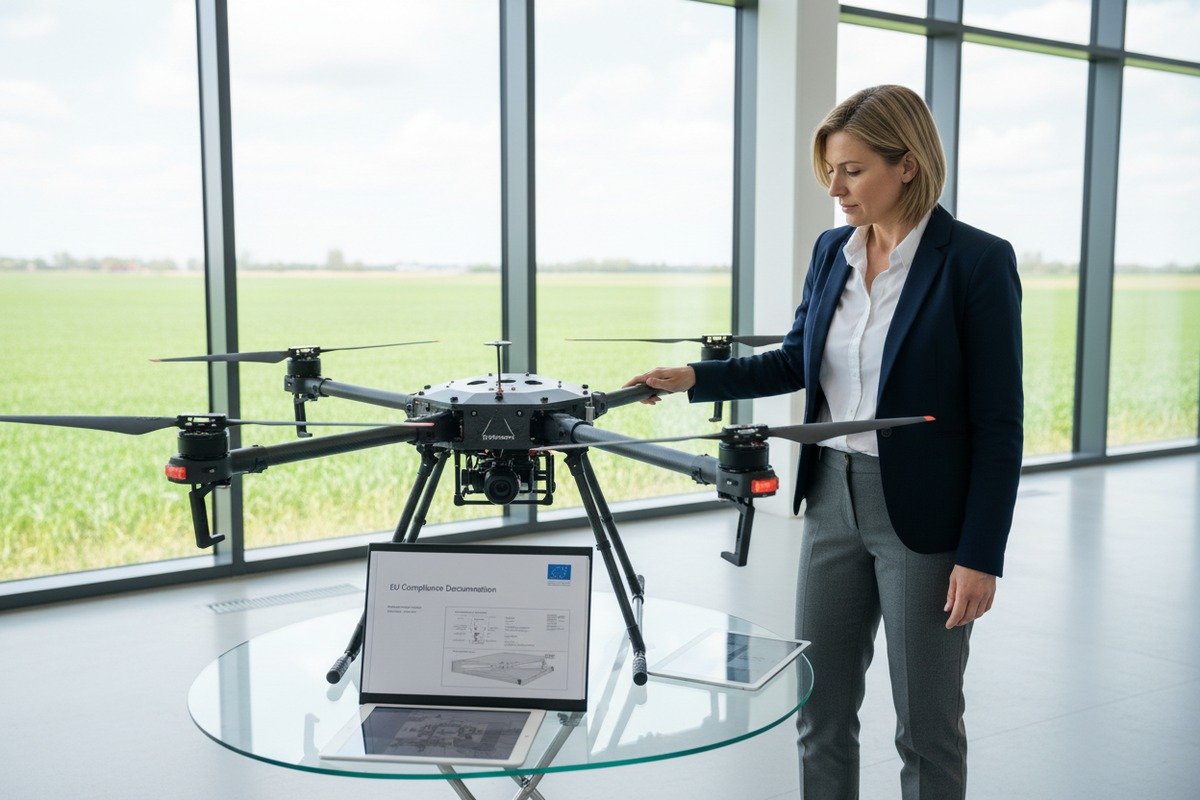
Lorsque nous expédions des drones à des distributeurs européens, une question revient sans cesse Conformité au règlement de l'UE sur la déforestation (EUDR) 1. Les acheteurs veulent savoir comment choisir le bon fournisseur dans un contexte de réglementations strictes de l'UE et d'exigences en matière de durabilité. Un mauvais choix entraîne des maux de tête liés à la conformité et un investissement perdu.
Pour évaluer les fournisseurs de drones agricoles pour l'agriculture durable européenne, vérifiez la conformité de l'aviation de l'UE (règles de l'EASA, marquage CE), vérifiez les certifications de durabilité, évaluez l'intégration logicielle avec les normes AgData, évaluez la durabilité de la construction et confirmez l'expérience d'exportation sur le marché européen. Privilégiez les fournisseurs offrant une documentation transparente et un support technique à long terme.
Ce guide vous accompagne à travers chaque point de contrôle critique Certificats de marquage CE 2. Nous aborderons la conformité réglementaire, les capacités logicielles, la qualité de fabrication et la logistique d'exportation. À la fin, vous disposerez d'un cadre clair pour sélectionner un fournisseur aligné sur les tendances de l'UE pour 2026.
Comment puis-je vérifier qu'un fabricant de drones est conforme aux réglementations européennes en matière d'aviation et de durabilité ?
Les réglementations de l'UE sont complexes et en constante évolution Indices IP 3. Notre équipe de conformité passe des centaines d'heures chaque année à suivre les mises à jour de l'EASA et les exigences numériques CAP. De nombreux acheteurs sous-estiment ce défi jusqu'à ce qu'ils soient confrontés à des retards douaniers ou à des interdictions opérationnelles.
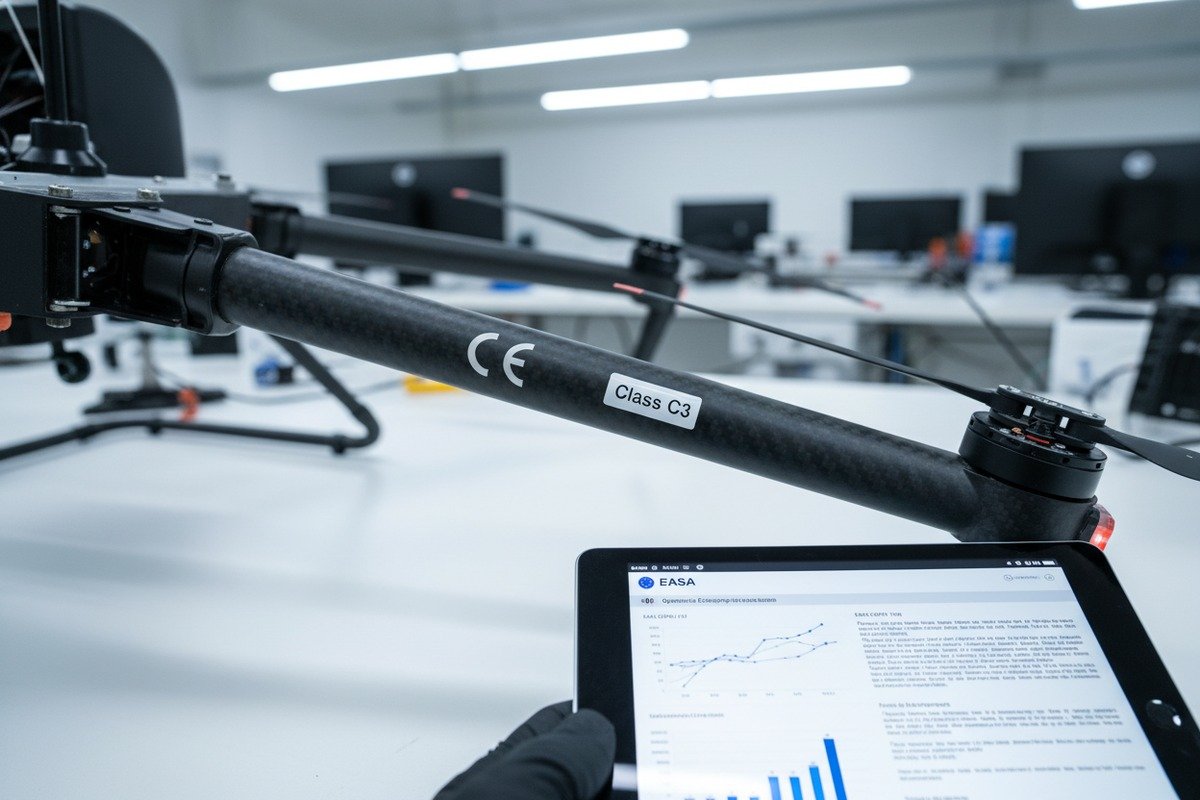
Vérifiez la conformité européenne en demandant les certificats de marquage CE, la documentation de la catégorie opérationnelle EASA, les politiques de traitement des données RGPD et la preuve de conformité au règlement UE sur la déforestation (EUDR) pour l'approvisionnement en matériaux. Vérifiez si les drones du fournisseur répondent aux exigences de classe spécifiques (C0-C6) pour vos opérations prévues.
Comprendre les catégories de drones de l'EASA
Le Agence européenne de la sécurité aérienne (AESA) 4 classe les drones en trois catégories : Ouverte, Spécifique et Certifiée. Les drones agricoles entrent généralement dans la catégorie Spécifique en raison de leur taille et de leur complexité opérationnelle. Ceci est important car chaque catégorie a des exigences différentes en matière de licence de pilote, de manuels d'exploitation et d'évaluations des risques.
Lorsque notre équipe d'ingénierie conçoit des contrôleurs de vol, nous intégrons des fonctions de géorepérage et d'identification à distance. Celles-ci sont obligatoires en vertu des réglementations de l'UE depuis janvier 2024. Sans elles, votre drone ne peut pas opérer légalement dans l'espace aérien de l'UE.
Documents réglementaires clés à demander
| Document | Objectif | Signal d'alarme si absent |
|---|---|---|
| Certificat de marquage CE | Confirme que le produit répond aux normes de sécurité de l'UE | Ne peut pas être vendu légalement dans l'UE |
| Déclaration de conformité | Garantie légale de conformité du fabricant | Aucune responsabilité légale |
| Étiquette d'identification de classe EASA | Indique la classe du drone (C0-C6) | Des restrictions opérationnelles s'appliquent |
| RGPD 5 Déclaration de conformité | Protection des données pour l'analyse agricole | Amendes potentielles jusqu'à 20 millions d'euros |
| Rapport de diligence raisonnable de l'EUDR | Prouve une chaîne d'approvisionnement sans déforestation | L'importation pourrait être bloquée d'ici 2025 |
Les certifications de durabilité qui comptent
La feuille de route de l'UE pour l'agroalimentaire d'ici 2040 met l'accent sur les pratiques à faible émission de carbone. Cela signifie que les fournisseurs de drones doivent démontrer leur responsabilité environnementale. Recherchez des certifications relatives aux programmes de recyclage des batteries, à la fabrication neutre en carbone et à l'approvisionnement en matériaux durables.
Notre usine à Xi'an a investi dans des chaînes d'assemblage alimentées à l'énergie solaire. Nous utilisons également des cadres en fibre de carbone recyclables. Ces choix augmentent les coûts de production de 15%, mais ils satisfont aux exigences des acheteurs européens. Lorsque le Mécanisme d'ajustement carbone aux frontières (MACF) 6 sera pleinement appliqué en janvier 2026, les fournisseurs sans références à faible émission de carbone seront confrontés à des tarifs importants.
Interrogez les fournisseurs potentiels sur leur chimie de batterie. Les batteries lithium-ion contenant des minéraux de conflit présentent des risques de conformité en vertu du Loi sur les matières premières critiques 7. Une documentation d'approvisionnement transparente protège les deux parties.
Mon fournisseur peut-il fournir l'intégration logicielle personnalisée dont j'ai besoin pour les normes européennes d'agriculture de précision ?
L'intégration logicielle est le point où de nombreuses relations fournisseurs échouent. Nous avons vu des distributeurs acheter d'excellent matériel pour découvrir ensuite que le logiciel de planification de vol ne peut pas communiquer avec les systèmes de gestion agricole existants de leurs clients. Cela crée des solutions de contournement coûteuses et des utilisateurs finaux frustrés.
Évaluer l'intégration logicielle en testant la compatibilité AgData, la disponibilité des API pour les connexions aux systèmes de gestion agricole, les capacités d'analyse IA et les politiques de souveraineté des données. Demander un accès de démonstration pour vérifier le traitement en temps réel, les fonctionnalités de modélisation prédictive et la conformité aux normes européennes d'agriculture numérique lancées en 2025-2026.

Le changement de standardisation des données agricoles
L'Europe pousse fortement pour des normes unifiées de données agricoles. Changement de standardisation des données agricoles 8 D'ici 2026, plus de 60% des grandes exploitations agricoles de l'UE utiliseront des systèmes d'IA prédictive. Ces systèmes nécessitent des drones qui produisent des formats de données standardisés. Les silos de données propriétaires deviennent inacceptables.
Lorsque nous développons des logiciels pour nos drones agricoles, l'interopérabilité est la priorité. Nos systèmes exportent des données dans des formats compatibles avec les principales plateformes de gestion agricole telles que John Deere Operations Center, Climate FieldView et Trimble Ag Software. Cette flexibilité coûte plus cher en développement mais augmente considérablement la satisfaction client.
Fonctionnalités logicielles critiques pour l'agriculture de précision dans l'UE
| Fonctionnalité | Alignement avec les tendances de l'UE | Questions à poser au fournisseur |
|---|---|---|
| Traitement d'images multispectrales | Prend en charge la surveillance environnementale CAP | Quels indices de végétation sont calculés ? |
| Cartes d'application à taux variable | Réduit le gaspillage d'intrants de 20-40% | Les cartes peuvent-elles s'intégrer aux pulvérisateurs existants ? |
| Suivi de la séquestration du carbone | Requis pour les crédits de carbone agricole de l'UE | Le logiciel génère-t-il des rapports de vérification ? |
| Analyses prédictives des ravageurs | Conformité à l'agriculture intelligente face au climat | Quel est le taux de précision des prédictions ? |
| Planification de vol autonome | Solutions à la pénurie de main-d'œuvre | Comment le géorepérage s'intègre-t-il aux zones de l'UE ? |
Souveraineté et confidentialité des données
Les agriculteurs de l'UE sont de plus en plus préoccupés par la propriété de leurs données de terrain. En vertu du RGPD, les données agricoles collectées par les drones peuvent constituer des données personnelles si elles permettent d'identifier les propriétaires ou les travailleurs agricoles. Cela crée des obligations légales concernant l'emplacement de stockage des données, les contrôles d'accès et les politiques de suppression.
Notre approche implique des options de traitement sur site. Les agriculteurs peuvent choisir de traiter toutes les données de drones localement sans téléchargement dans le cloud. Pour ceux qui préfèrent l'analyse dans le cloud, nous maintenons des serveurs basés dans l'UE avec une documentation complète de conformité au RGPD. Cette double approche satisfait à la fois les coopératives soucieuses de la confidentialité et les entreprises agroalimentaires avant-gardistes.
Demandez aux fournisseurs où se trouvent leurs serveurs. Les données hébergées en Chine peuvent faire l'objet d'un examen minutieux de la part des régulateurs européens. Demandez des garanties écrites concernant la propriété des données, leur portabilité et les délais de suppression.
Pragmatisme de l'IA plutôt que battage médiatique
Le marché de l'agriculture de précision regorge de promesses d'IA. Toutes ne fournissent pas une valeur réelle. Lors de l'évaluation des fournisseurs, distinguez les véritables capacités d'apprentissage automatique des mots à la mode marketing.
Les fonctionnalités d'IA authentiques comprennent des modèles de détection de maladies entraînés sur des variétés de cultures européennes, des algorithmes de prévision des rendements validés par rapport aux données historiques de récolte et une optimisation adaptative des schémas de pulvérisation. Demandez des métriques de précision et des études de cas. Si les fournisseurs ne peuvent pas fournir de données de performance spécifiques, leurs affirmations concernant l'IA peuvent être exagérées.
Comment évaluer la qualité de fabrication et la durabilité des drones agricoles pour une utilisation durable à long terme ?
Les environnements agricoles détruisent les équipements mal construits. La poussière, l'humidité, l'exposition aux produits chimiques et les températures extrêmes mettent à l'épreuve chaque composant. Lorsque nous soumettons nos châssis d'hexacoptères à des tests de résistance, nous simulons cinq ans de conditions de terrain en trois mois. Cet investissement dans les tests évite les réclamations de garantie et renforce la confiance des distributeurs.
Évaluez la qualité de fabrication en examinant les matériaux du cadre (fibre de carbone vs plastique), les spécifications du moteur (indice KV, type de roulement), les indices IP pour la résistance à la poussière/l'eau, la durée de vie des cycles de la batterie et les données documentées de MTBF (temps moyen entre les pannes). Demandez des unités d'échantillonnage pour des tests sur le terrain avant de vous engager dans de grosses commandes.

Comparaison des matériaux du châssis
Le châssis est le squelette de votre drone. Le choix du matériau détermine le poids, la résistance et la longévité. Les drones agricoles sont soumis à des contraintes uniques, notamment la corrosion chimique due aux engrais et aux pesticides, la dégradation par les UV due à l'exposition au soleil et la fatigue due aux vibrations de milliers d'heures de vol.
| Matériau | Poids | Durabilité | Résistance chimique | Coût | Meilleur pour |
|---|---|---|---|---|---|
| Fibre de carbone | Très léger | Excellent | Bon | Haut | Opérations professionnelles |
| Composite de fibre de verre | Léger | Bon | Excellent | Moyen | Pulvérisation chimique ciblée |
| Alliage d'aluminium | Lourd | Excellent | Modéré | Moyen | Professionnel budgétaire |
| Plastique d'ingénierie | Léger | Pauvre | Variable | Faible | Usage amateur ou léger |
Nos drones agricoles SkyRover utilisent des cadres en fibre de carbone noir mat avec des revêtements protecteurs. Cette combinaison offre des rapports résistance/poids que les concurrents utilisant des cadres en plastique ne peuvent égaler. Le revêtement résiste aux produits chimiques agricoles courants, y compris les formulations de glyphosate et de chlorpyrifos.
Qualité du moteur et du système de propulsion
Les moteurs tombent en panne plus souvent que tout autre composant de drone. Dans les applications agricoles, les moteurs supportent des charges utiles lourdes, des cycles de démarrage/arrêt fréquents et la contamination environnementale. Les indicateurs de qualité comprennent le type de roulement (les roulements étanches durent plus longtemps), la qualité du bobinage (une teneur plus élevée en cuivre améliore l'efficacité) et la conception de la gestion thermique.
Demandez les fiches techniques des moteurs indiquant les plages de température de fonctionnement continu. Les drones agricoles en Europe du Sud rencontrent régulièrement des températures ambiantes supérieures à 35°C. Les moteurs non conçus pour ces conditions tomberont en panne prématurément.
Considérations sur les batteries pour des opérations durables
Les batteries représentent à la fois le coût récurrent le plus élevé et la plus grande préoccupation environnementale pour les drones agricoles. Les tendances de durabilité de l'UE poussent vers les principes de l'économie circulaire. Cela signifie évaluer la recyclabilité des batteries, la durée de vie attendue des cycles et les programmes de reprise des fournisseurs.
Les batteries de drones agricoles de haute qualité devraient fournir 300 à 500 cycles de charge avant une dégradation significative de la capacité. Demandez aux fournisseurs des données de test de durée de vie des cycles à des taux de décharge réalistes. Une batterie testée à des taux de décharge doux peut afficher des chiffres impressionnants qui ne reflètent pas les performances réelles sur le terrain sous de lourdes charges de pulvérisation.
Garantie et disponibilité des pièces de rechange
La qualité de fabrication se reflète finalement dans les conditions de garantie. Les fournisseurs confiants dans leurs produits offrent des garanties plus longues et des processus de réclamation raisonnables. Notre garantie standard couvre les défauts de fabrication pendant 24 mois. Nous maintenons également des entrepôts de pièces en Europe pour garantir que les composants de remplacement arrivent dans la semaine.
Avant de commander, renseignez-vous sur le prix et la disponibilité des pièces de rechange. Certains fournisseurs proposent des prix initiaux bas mais facturent des majorations excessives pour les moteurs, les ESC et les hélices de remplacement. Calculez le coût total de possession sur trois à cinq ans, pas seulement le prix d'achat.
Que dois-je rechercher dans l'expérience d'exportation d'un fournisseur pour garantir une livraison fluide vers le marché européen ?
La logistique d'exportation peut faire ou défaire une relation fournisseur. Nous avons investi des années à construire des canaux d'expédition fiables vers l'Europe. Lorsque les documents douaniers sont erronés, vos drones restent dans les entrepôts pendant que vos clients attendent. Cela nuit à votre réputation et coûte de l'argent en frais de stockage.
Évaluer l'expérience d'exportation en demandant des références à des clients européens existants, en examinant des exemples de documentation douanière, en confirmant la familiarité avec les Incoterms, en vérifiant l'existence de relations avec des transitaires établis et en s'assurant que le fournisseur peut fournir tous les certificats requis pour le dédouanement à l'importation dans l'UE, y compris les documents d'origine et les déclarations de technologies à double usage.

Documentation d'exportation essentielle
Les exportateurs expérimentés préparent la documentation de manière proactive. Les novices créent des documents uniquement lorsque les agents des douanes les demandent, ce qui entraîne des retards. Les documents suivants doivent être disponibles pour chaque expédition sans qu'on ait à les demander.
| Document | Objectif | Problèmes courants |
|---|---|---|
| Facture commerciale | Déclare la valeur et le contenu | La sous-évaluation déclenche des audits |
| Liste de colisage | Détails du contenu du colis | Les numéros de série manquants causent des retards |
| Certificat d'origine | Confirme le pays de fabrication | Le format incorrect est rejeté par les douanes |
| Connaissement/Lettre de transport aérien | Contrat d'expédition | Informations sur le destinataire non concordantes |
| Licence d'exportation (si nécessaire) | Autorisation pour les technologies à double usage | Manquant pour les systèmes d'imagerie avancés |
| Documentation de sécurité des batteries | Rapports de test UN38.3 | Requis pour les expéditions de batteries au lithium |
Comprendre les restrictions sur les technologies à double usage
Certains composants de drones agricoles relèvent des contrôles d'exportation à double usage. Les caméras haute résolution, les systèmes GPS avancés et certains contrôleurs de vol peuvent nécessiter des licences d'exportation en fonction des spécifications. Les fournisseurs peu familiers avec ces réglementations risquent la saisie des expéditions.
Lorsque nous exportons vers l'Europe, notre équipe de conformité examine chaque commande par rapport au règlement de l'UE sur les biens à double usage. Nous fournissons aux clients des confirmations écrites que les expéditions sont correctement classées. Cette documentation protège votre processus d'importation et démontre le professionnalisme du fournisseur.
Incoterms et gestion des risques
Incoterms 9 définissent qui assume la responsabilité des marchandises à chaque étape de l'expédition. Pour les importations de drones, le DDP (Delivered Duty Paid) offre aux acheteurs la plus grande protection. Le fournisseur prend en charge toutes les formalités douanières et le paiement des droits. Le DAP (Delivered at Place) laisse le dédouanement à l'acheteur mais comprend la livraison à un endroit spécifié.
Nos conditions standard offrent des options DDP et DAP. Le DDP coûte plus cher mais élimine la complexité douanière pour les acheteurs. Ceci est particulièrement important pour les importateurs novices qui ne connaissent pas les codes tarifaires des équipements agricoles de l'UE.
Références du fournisseur et antécédents
Le meilleur indicateur de performance future est la performance passée. Demandez aux fournisseurs potentiels les coordonnées de clients européens disposés à fournir des références. Les fournisseurs réputés vous mettent volontiers en contact avec des partenaires satisfaits.
Les questions pour les références devraient inclure la précision des délais de livraison, l'exhaustivité de la documentation, la réactivité aux problèmes et l'état du produit à l'arrivée. Renseignez-vous également sur le support après-vente. Lorsque des problèmes surviennent des mois après la livraison, le fournisseur répond-il toujours rapidement ?
Considérations géopolitiques
Les discussions actuelles de l'UE sur la diversification des chaînes d'approvisionnement affectent les décisions d'approvisionnement en drones. La dépendance à l'égard de fournisseurs d'un seul pays crée une exposition au risque. Nous y remédions en maintenant des stocks de composants en Europe et en offrant des délais de livraison prolongés lorsque les clients préfèrent éviter les expéditions urgentes pendant les périodes incertaines.
La loi sur les matières premières critiques pousse à la transparence des chaînes d'approvisionnement. Interrogez les fournisseurs sur leur approvisionnement en composants. Peuvent-ils documenter l'origine des batteries, des moteurs et des composants électroniques ? Les fournisseurs ayant des chaînes d'approvisionnement diversifiées offrent plus de résilience.
Conclusion
L'évaluation des fournisseurs de drones agricoles pour l'Europe nécessite une évaluation systématique dans quatre domaines : conformité réglementaire, intégration logicielle, qualité de fabrication et expérience d'exportation. Utilisez les listes de contrôle et les tableaux de ce guide pour évaluer objectivement les fournisseurs potentiels. Le bon partenaire fournit non seulement du matériel, mais aussi un soutien à long terme aligné sur les objectifs de durabilité de l'UE pour 2026 et au-delà.
Notes de bas de page
1. Texte juridique officiel du règlement de l'UE sur la déforestation. ︎
2. Explique le but et les exigences du marquage CE pour les produits dans l'UE. ︎
3. Explique la norme internationale pour les indices de protection contre l'intrusion (IP). ︎
4. Site officiel de l'autorité européenne principale en matière de sécurité aérienne. ︎
5. Règlement officiel sur la protection des données et la vie privée dans l'Union européenne. ︎
6. Page officielle de la Commission européenne sur le mécanisme d'ajustement carbone aux frontières (CBAM), remplaçant directement l'erreur 403. ︎
7. Texte juridique officiel de la loi européenne sur les matières premières critiques. ︎
8. Page officielle de la Commission européenne détaillant la numérisation du secteur agricole de l'UE, y compris l'Espace commun européen des données agricoles (CEADS) et le Data Act, qui traitent de la normalisation et du partage des données. ︎
9. Règles officielles pour l'interprétation des termes commerciaux dans les transactions internationales. ︎

 English
  Español de México
  Deutsch
  Français
  Русский
  العربية
