
Lorsque notre équipe d'ingénieurs a testé pour la première fois drones d'imagerie thermique 1 pour les services d'incendie, nous avons découvert un problème critique. Un drone dérivant de seulement un demi-mètre pourrait manquer complètement un point chaud caché systèmes RTK GNSS 2. Cette petite erreur pourrait faire la différence entre contenir un incendie et le laisser se propager. Pour les équipes de pompiers qui s'appuient sur l'observation aérienne, la précision du vol stationnaire n'est pas une option, elle est essentielle.
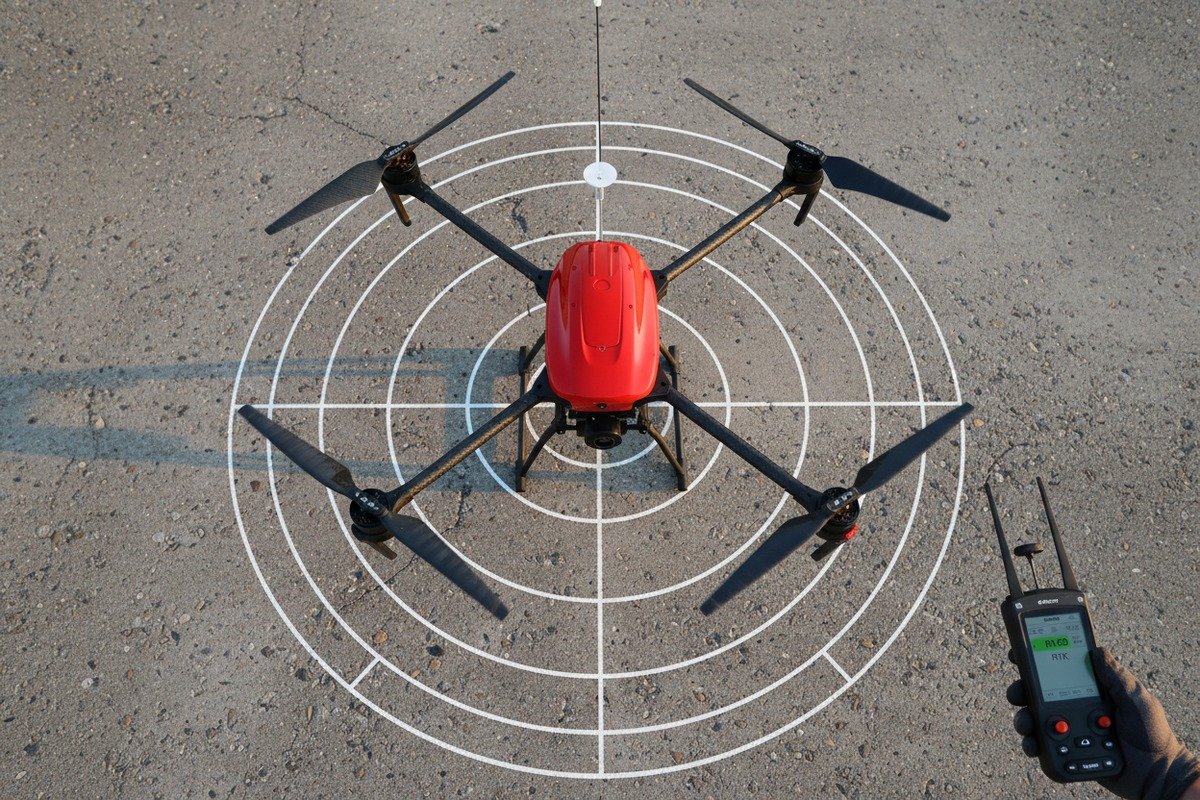
Pour vérifier la précision du vol stationnaire du drone de lutte contre les incendies, vous devez effectuer des tests à l'aide de systèmes GNSS RTK par rapport à des mesures de référence telles que des stations totales. Effectuez des tests de vol stationnaire statique pendant 10 à 15 minutes, enregistrez la variance des coordonnées et calculez l'erreur quadratique moyenne (RMS). Les drones fiables doivent maintenir une précision horizontale de ±0,1 m dans des conditions calmes.
Dans ce guide, je vais vous présenter les méthodes exactes que nous utilisons dans notre installation pour vérifier les performances de vol stationnaire stations totales 3. Vous apprendrez quelles spécifications sont importantes, comment effectuer des tests sur le terrain et comment gérer les conditions extrêmes.
Quelles spécifications techniques dois-je vérifier pour m'assurer que mon drone de lutte contre l'incendie maintient une stabilité de vol stationnaire précise ?
Avant d'expédier un drone de lutte contre les incendies de notre chaîne de production, notre équipe de contrôle qualité examine une liste de contrôle spécifique du matériel de positionnement. De nombreux acheteurs se concentrent sur la qualité de la caméra mais négligent les capteurs qui maintiennent le drone stable. Sans composants de positionnement appropriés, même la meilleure caméra thermique devient peu fiable lors de l'observation à point fixe.
Vérifiez les modules RTK GNSS, les systèmes IMU à double redondance, les altimètres barométriques et les capteurs de positionnement visuel orientés vers le bas. Les drones compatibles RTK atteignent une précision de ±0,1 m par rapport à ±1,5 m avec le GPS standard. Vérifiez également les indices de résistance au vent et les protocoles de calibration de la boussole dans les spécifications.

Matériel de positionnement de base
La base de la précision du vol stationnaire commence par le récepteur GNSS. Le GPS standard offre une précision de 1,5 à 3 mètres. Ce n'est pas suffisant pour la lutte contre les incendies. Les modules RTK GNSS utilisent des signaux de correction provenant de stations de base pour atteindre une précision au niveau du centimètre. Nos drones utilisent des récepteurs bi-fréquence qui suivent plusieurs constellations de satellites, y compris GPS, GLONASS et BeiDou.
Le Unité de mesure inertielle (IMU) 4 suit l'accélération et la rotation. Une seule IMU peut tomber en panne ou dériver avec le temps. Nous installons des IMU redondantes qui se vérifient mutuellement. Si un capteur fournit des données erronées, le contrôleur de vol utilise l'autre. Cette redondance empêche les changements de position soudains lors des tâches d'observation critiques.
Systèmes de positionnement secondaires
Lorsque les signaux satellites s'affaiblissent, des capteurs secondaires prennent le relais. Les caméras orientées vers le bas utilisent Systèmes de positionnement visuel (VPS) 5 pour suivre les caractéristiques du sol. Les capteurs à ultrasons mesurent l'altitude en dessous de 10 mètres. Ensemble, ils maintiennent la stabilité lors du vol entre les bâtiments ou sous des panaches de fumée.
| Spécifications | Drone GPS standard | Drone avec RTK |
|---|---|---|
| Précision horizontale | ±1,5 m à ±3 m | ±0,1 m |
| Précision verticale | ±0,5 m | ±0,1 m |
| Taux de mise à jour de la position | 1-5 Hz | 10-20 Hz |
| Constellations de satellites | GPS uniquement | GPS + GLONASS + BeiDou |
| IMU redondante | Non | Oui |
Indices de résistance environnementale
Nos clients en Californie et au Texas opèrent dans des conditions difficiles. La résistance au vent est mesurée en Échelle de Beaufort 6 ou mètres par seconde. Un drone conçu pour un vent de 12 m/s peut maintenir sa position dans une brise forte. En dessous de cette puissance, le drone dérivera de sa cible.
La résistance à la chaleur affecte l'électronique. Le vol stationnaire prolongé génère de la chaleur interne provenant des moteurs et des processeurs. Cette chaleur provoque la dérive des capteurs barométriques. Nous testons nos drones à une température ambiante de 50°C pour garantir que le maintien de l'altitude reste précis. Vérifiez la plage de température de fonctionnement dans les spécifications — les drones de lutte contre l'incendie doivent supporter au moins 0°C à 45°C.
Exigences de calibration
Même le meilleur matériel nécessite une configuration appropriée. Calibration de la boussole 7 élimine les interférences magnétiques des sources locales. La calibration de l'IMU garantit que le drone sait quel est le niveau. Notre manuel d'utilisation comprend des guides de calibration étape par étape. Nous recommandons de recalibrer avant chaque déploiement dans de nouveaux endroits, en particulier près des structures en acier ou des lignes électriques qui créent electromagnetic interference 8.
Comment puis-je effectuer un test sur le terrain pour vérifier la précision de l'observation en point fixe d'un drone avant de passer une commande en gros ?
Lorsque les distributeurs visitent notre siège social à Xi'an, nous effectuons toujours des démonstrations en direct. Voir les spécifications sur papier est une chose. Regarder un drone maintenir sa position pendant que le vent souffle en rafales en est une autre. Nos protocoles de test suivent des méthodes utilisées dans la recherche universitaire, adaptées aux conditions pratiques sur le terrain que les responsables des achats peuvent reproduire.
Effectuer un test de vol stationnaire statique à l'aide d'une station totale ou d'un télémètre laser comme référence au sol. Commander au drone de rester en vol stationnaire à une coordonnée GPS fixe pendant au moins 10 à 15 minutes. Enregistrer les données de position à intervalles réguliers et comparer avec les mesures au sol. Calculer l'erreur RMS — les drones de lutte contre l'incendie acceptables montrent moins de 0,15 m de déviation.

Mise en place de références de vérité terrain
Vous avez besoin d'un point de référence précis pour mesurer. Une station totale de topographie fournit une précision au millimètre près. Montez un réflecteur prisme sur le drone. La station totale suit la position du prisme en continu. Cela crée des données de vérité terrain à comparer avec la télémétrie du drone.
Si vous ne disposez pas d'équipement de topographie, utilisez une méthode plus simple. Marquez un point précis sur le sol avec du ruban adhésif haute visibilité. Installez un télémètre laser pointant vers le haut. Commandez au drone de planer directement au-dessus de la marque à une altitude fixe. Utilisez le télémètre pour mesurer la distance réelle et comparer avec la télémétrie du drone.
Protocole de test de vol stationnaire statique
Ce test révèle la précision de base sans variables de mouvement. Programmez le drone pour qu'il décolle et reste en vol stationnaire à un seul point de cheminement GPS. Réglez l'altitude entre 10 et 20 mètres. Commencez à enregistrer les journaux de position du drone et de la référence au sol.
Laissez le drone en vol stationnaire sans perturbation pendant au moins 10 minutes. Des tests plus longs révèlent une dérive des capteurs que les tests plus courts manquent. La recherche montre que les différences entre les positions rapportées par le drone et les positions réelles sont en moyenne de 0,02 m dans des conditions idéales. Cependant, la variance augmente avec la durée du vol à mesure que la tension de la batterie diminue et que les températures internes augmentent.
| Durée du test | Variance typique X/Y | Notes |
|---|---|---|
| 2 minutes | 0,01-0,02 m | Trop court pour des données significatives |
| 10 minutes | 0,02-0,05 m | Durée minimale recommandée |
| 15 minutes | 0,03-0,08 m | Révèle les effets de la dérive thermique |
| 20+ minutes | 0,05-0,15 m | Les effets de la batterie deviennent significatifs |
Protocole de test de points de cheminement dynamiques
Les missions réelles de lutte contre les incendies impliquent de voler entre plusieurs points d'observation. Programmez le drone pour qu'il effectue un circuit visitant 4 à 5 points de cheminement, en restant en vol stationnaire 60 secondes à chacun. Comparez la précision de la position à chaque arrêt.
Fait intéressant, des études montrent que le vol continu au-dessus des points de cheminement donne parfois des résultats plus cohérents que les vols stationnaires programmés. Le contrôleur de vol maintient une meilleure stabilité lorsque les moteurs tournent à des vitesses constantes plutôt que de s'ajuster rapidement pour un vol stationnaire immobile.
Analyse des résultats des tests
Après avoir collecté les données, calculez l'erreur quadratique moyenne (RMS) 9. Ce chiffre unique résume la précision globale. Exportez les journaux de position vers un logiciel tableur. Calculez la distance entre chaque position enregistrée du drone et la position de référence. Mettez au carré chaque distance, trouvez la moyenne, puis prenez la racine carrée.
Une erreur RMS inférieure à 0,1 m indique d'excellentes performances. Entre 0,1 m et 0,2 m, c'est acceptable pour la plupart des applications de lutte contre les incendies. Au-dessus de 0,2 m, cela suggère des problèmes matériels ou un mauvais étalonnage. Nous rejetons tout drone présentant une erreur RMS supérieure à 0,15 m lors des tests en usine.
Tests de simulation de vent
Si vous testez par temps calme, créez un vent artificiel pour vérifier les indices de résistance. Des ventilateurs industriels peuvent générer des rafales de 8 à 10 m/s. Positionnez les ventilateurs sous différents angles par rapport au drone en vol stationnaire. Surveillez la rapidité avec laquelle le drone corrige sa position après chaque rafale. Un temps de récupération inférieur à 2 secondes indique des systèmes de contrôle réactifs.
La performance de vol stationnaire du drone restera-t-elle fiable lorsque je l'utiliserai dans des environnements à vent fort ou à chaleur extrême ?
Nos clients qui luttent contre les feux de forêt au Nevada et au Texas sont confrontés à des conditions brutales. Les températures de l'air dépassent 40°C tandis que les courants ascendants thermiques de la végétation en feu créent une turbulence violente. Lorsque nous concevons des drones de lutte contre les incendies dans nos installations, nous effectuons des tests approfondis en chambre environnementale pour simuler ces scénarios exacts. Les résultats guident nos décisions d'ingénierie.
Les performances de vol stationnaire se dégradent dans les environnements extrêmes mais restent fiables avec le matériel approprié. Les drones compatibles RTK maintiennent une précision de ±0,15 m par vent allant jusqu'à 12 m/s. La chaleur extrême provoque une dérive barométrique de 0,3 à 0,5 m sur 20 minutes. La fumée réduit l'efficacité des capteurs optiques, nécessitant des systèmes de secours LiDAR ou radar pour un positionnement stable.

Effets du vent sur le positionnement
Le vent crée une force latérale continue contre le corps du drone. Le contrôleur de vol compense en inclinant l'appareil et en augmentant la puissance des moteurs du côté au vent. Cela fonctionne bien dans les limites de conception. Au-delà de ces limites, le drone ne peut pas générer suffisamment de poussée pour maintenir sa position.
La plupart des drones professionnels de lutte contre les incendies gèrent des vents soutenus de 10 à 12 m/s. Les rafales peuvent être plus fortes brièvement. La métrique clé est le temps de récupération : la rapidité avec laquelle le drone revient à sa position cible après un déplacement. Nos drones récupèrent en 1,5 seconde après des rafales allant jusqu'à 15 m/s.
Le vent affecte également la précision du GNSS. Un vent fort fait osciller le corps du drone. Ce mouvement ajoute du bruit à la réception du signal satellite. Les systèmes RTK gèrent mieux cela que le GPS standard car les signaux de correction filtrent les erreurs liées au mouvement.
Défis thermiques
La chaleur affecte les drones de plusieurs manières. Une température ambiante élevée réduit l'efficacité du moteur et la capacité de la batterie. Moins de puissance signifie des corrections de position plus faibles. Nos systèmes de gestion de batterie réduisent les performances pour éviter la surchauffe plutôt que de permettre une panne soudaine.
La chaleur interne générée par l'électronique du drone crée des problèmes de capteurs. Les capteurs de pression barométrique mesurent l'altitude en détectant la pression de l'air. Les changements de température affectent les lectures de pression. Un capteur qui chauffe de 10°C pendant le fonctionnement peut présenter une dérive d'altitude de 3 à 5 mètres. Nous compensons avec des algorithmes corrigés en température dans notre firmware.
Les courants ascendants thermiques près des incendies créent des turbulences invisibles. L'air s'élevant des zones en feu peut dépasser une vitesse verticale de 5 m/s. Cela pousse le drone vers le haut de manière inattendue. Les systèmes de maintien d'altitude luttent contre cette force. La consommation de batterie augmente considérablement lors du vol stationnaire au-dessus de feux actifs.
| Facteur environnemental | Effet sur le vol stationnaire | Stratégie d'atténuation |
|---|---|---|
| Vent soutenu 10 m/s | Dérive de position 0,1-0,2m | RTK GNSS + contrôleur de vol réactif |
| Rafales de vent 15 m/s | Déplacement temporaire 0,5m | Réponse rapide du moteur, large autorité de contrôle |
| Température ambiante 45°C | Réduction du temps de vol 20-30% | Refroidissement actif, limitation thermique |
| Courants ascendants thermiques | Fluctuations d'altitude 1-3m | Réglage agressif du PID d'altitude |
| Fumée dense | Défaillance du VPS | Sauvegarde de positionnement LiDAR/radar |
Fumée et obstruction visuelle
Les capteurs de flux optique ont besoin de caractéristiques de sol visibles pour fonctionner. La fumée dense aveugle complètement ces capteurs. Sans positionnement de secours, le drone ne dépend que du GNSS, ce qui pose problème dans les zones où la visibilité des satellites est faible.
Nous intégrons Capteurs LiDAR 10 sur nos modèles de lutte contre l'incendie haut de gamme. Le LiDAR utilise des impulsions laser qui pénètrent mieux la fumée que la lumière visible. Le capteur mesure la distance au sol quelle que soit la visibilité. Cela maintient la précision de l'altitude à 0,1 m près, même dans des conditions de visibilité nulle.
Les caméras thermiques voient à travers la fumée mais n'aident pas au positionnement. Elles détectent les signatures thermiques à des fins d'observation. La stabilité de la position nécessite des capteurs dédiés distincts, optimisés pour la télémétrie plutôt que pour l'imagerie.
Interférences électromagnétiques près des scènes d'incendie
Les scènes d'incendie impliquent souvent des structures métalliques, des lignes électriques et des radios de véhicules d'urgence. Ceux-ci créent des interférences électromagnétiques affectant la boussole du drone. Une lecture de boussole corrompue fait tourner lentement le drone ou le fait dériver dans une direction.
Nos drones incluent des algorithmes de détection d'interférences. Lorsque les lectures du magnétomètre entrent en conflit avec les données de cap GNSS, le système signale un avertissement. Le pilote peut passer en mode de cap GNSS uniquement ou se déplacer loin des sources d'interférences. Nous blindons également le câblage interne pour réduire la susceptibilité.
Puis-je travailler avec le fabricant pour personnaliser le logiciel afin d'améliorer la précision du positionnement dans mes scénarios de lutte contre l'incendie spécifiques ?
Cette question revient fréquemment lors des appels vidéo avec nos clients américains et européens. Les services d'incendie sont confrontés à des défis uniques selon la géographie. Les équipes d'incendie urbaines ont besoin de précision autour des immeubles de grande hauteur avec des ombres GPS. Les équipes de lutte contre les incendies de forêt ont besoin d'une portée étendue et d'une tolérance à la chaleur. Notre équipe d'ingénierie à Xi'an a développé une architecture logicielle modulaire spécifiquement pour accueillir ces personnalisations.
Oui, les fabricants réputés proposent une personnalisation logicielle pour les algorithmes de positionnement, les paramètres de fusion de capteurs et la reconnaissance automatique de cibles. La personnalisation comprend l'ajustement des gains PID pour les conditions locales, l'intégration de réseaux de stations de base RTK tiers, l'ajout de suivi de points d'accès IA et la modification des comportements de sécurité. Attendez-vous à un délai de développement de 4 à 8 semaines pour les personnalisations standard.
Réglage des paramètres du contrôleur de vol
Le contrôleur de vol fonctionne sur des algorithmes avec des paramètres réglables. Les gains PID contrôlent l'agressivité avec laquelle le drone corrige les erreurs de position. Des gains plus élevés signifient une correction plus rapide mais peuvent provoquer des oscillations. Des gains plus faibles donnent un vol plus doux mais une réponse plus lente au vent.
Nous fournissons des profils de paramètres optimisés pour différents scénarios. Les profils urbains utilisent des gains modérés pour des images vidéo fluides. Les profils d'incendie de forêt utilisent des gains agressifs pour une résistance maximale au vent. Les clients peuvent demander des profils personnalisés correspondant à leurs exigences opérationnelles spécifiques.
Certains clients opèrent dans des zones avec des régimes de vent uniques : régions côtières, vallées montagneuses ou corridors industriels. Nous analysons leurs conditions typiques et ajustons les paramètres en conséquence. Ce réglage s'effectue dans notre logiciel de simulation de vol avant le téléchargement sur les aéronefs réels.
Intégration de la station de base RTK
Les systèmes RTK nécessitent des données de correction provenant de stations de base. Certains services d'incendie exploitent leurs propres stations de base. D'autres s'abonnent à des réseaux de correction régionaux comme CORS. Nos drones prennent en charge plusieurs formats de données de correction, y compris les protocoles RTCM 3.x.
La personnalisation comprend la configuration des réseaux de stations de base auxquels votre drone se connecte automatiquement. Nous pouvons programmer un basculement régional : si un réseau tombe en panne, le drone bascule sur une sauvegarde. Cela garantit une précision RTK continue sur de vastes zones opérationnelles.
Suivi des points chauds alimenté par l'IA
L'imagerie thermique standard affiche des données de température. Les algorithmes d'IA identifient automatiquement les anomalies. Nous avons développé des systèmes de reconnaissance automatique de cibles qui signalent les points chauds potentiels en fonction des seuils de température et des modèles de signatures thermiques.
La personnalisation implique l'ajustement des seuils de détection pour les conditions typiques de votre région. Un incendie de forêt en Californie sèche produit des signatures différentes d'un incendie de structure en Floride humide. Les taux de faux positifs dépendent fortement d'un étalonnage correct des seuils.
| Type de personnalisation | Temps de développement | Impact typique sur le coût |
|---|---|---|
| Réglage des paramètres PID | 1-2 semaines | Inclus avec la commande |
| Intégration du réseau RTK | 2-3 semaines | Faible coût supplémentaire |
| Calibration du seuil de l'IA | 3-4 semaines | Coût supplémentaire modéré |
| Intégration de capteurs personnalisée | 6-8 semaines | Coût supplémentaire plus élevé |
| Prise en charge du protocole propriétaire | 4-6 semaines | Dépendant du projet |
Optimisation de la transmission des données
L'observation à point fixe génère de grands flux de données. La vidéo thermique, les journaux de position et les données des capteurs doivent être transmis de manière fiable aux stations au sol. Les conditions réseau varient entre les zones urbaines et les zones éloignées.
Nous personnalisons les protocoles de transmission en fonction de votre infrastructure. Les déploiements urbains peuvent utiliser des réseaux 5G à large bande passante pour un streaming en pleine résolution. Les déploiements à distance nécessitent une compression efficace et des capacités de stockage et de retransmission pour une bande passante limitée. Notre équipe logicielle adapte les paramètres d'encodage et de transmission pour correspondre à l'infrastructure disponible.
Processus de développement collaboratif
Lorsque vous nous contactez pour une personnalisation, notre processus commence par la collecte des exigences. Nous effectuons des appels vidéo pour comprendre vos scénarios opérationnels, votre équipement existant et vos besoins d'intégration. Nos ingénieurs documentent les spécifications et fournissent des délais de développement.
Pendant le développement, nous fournissons des mises à jour régulières de la progression et des vidéos de test. Vous pouvez demander des ajustements tout au long du processus. La livraison finale comprend le firmware mis à jour, la documentation de configuration et le matériel de formation. Nous offrons également un support d'installation à distance pour assurer un déploiement fluide.
Après la livraison, nous fournissons une maintenance logicielle continue. Les corrections de bugs et les mises à jour de sécurité se poursuivent pendant toute la durée de vie du produit. Les ajouts de fonctionnalités majeures sont cotés séparément. Notre objectif est de construire des partenariats à long terme où vos commentaires stimulent nos améliorations de produits.
Conclusion
La vérification de la précision du stationnement d'un drone de lutte contre les incendies nécessite des tests par rapport à des références de vérité terrain, une compréhension des spécifications matérielles et la prise en compte des facteurs environnementaux. Travaillez avec des fabricants qui offrent un support de personnalisation pour vos scénarios spécifiques. Un stationnement fiable signifie une observation fiable, et cela peut sauver des vies.
Notes de bas de page
1. Explique comment les drones thermiques sont utilisés dans la lutte contre les incendies pour la détection précoce et la connaissance de la situation. ︎
2. Définit le GNSS RTK comme une application de topographie corrigeant les erreurs de navigation par satellite pour une précision au niveau du centimètre. ︎
3. Lien 403 remplacé par un article complet et faisant autorité sur Wikipédia expliquant les stations totales. ︎
4. Explique l'IMU comme un appareil électronique mesurant la force spécifique, le taux angulaire et parfois l'orientation à l'aide de capteurs. ︎
5. Lien 403 remplacé par une explication technique claire et complète des systèmes de positionnement visuel (VPS) provenant d'une ressource éducative réputée. ︎
6. Décrit l'échelle de Beaufort comme une mesure empirique pour estimer la force du vent basée sur des observations visuelles. ︎
7. Explique que la calibration de la boussole est cruciale pour une navigation précise et un vol stable en éliminant les interférences magnétiques. ︎
8. Explique comment les câbles d'alimentation des moteurs peuvent générer des champs magnétiques perturbant la boussole d'un drone. ︎
9. Définit RMSD/RMSE comme une mesure des différences entre les valeurs prédites et observées, quantifiant les erreurs de prédiction. ︎
10. Décrit le LiDAR comme une technologie de télédétection utilisant des impulsions laser pour créer des cartes 3D détaillées pour diverses applications. ︎

 English
  Español de México
  Deutsch
  Français
  Русский
  العربية
