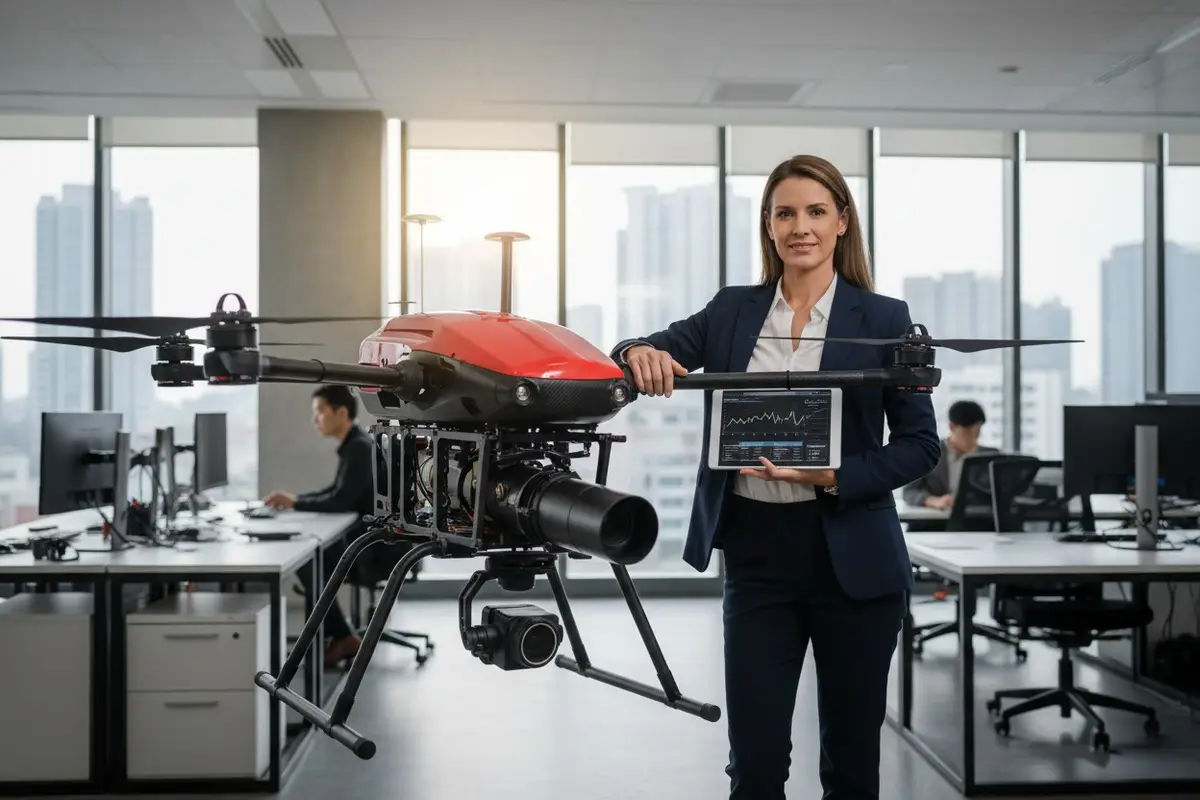

Lorsque notre équipe d'ingénierie a commencé la conception drones de lutte contre les incendies 1, nous avons rapidement appris que les défaillances de moteurs dans des environnements à chaleur extrême pouvaient faire la différence entre le succès d'une mission et une perte catastrophique. Les services d'incendie ne peuvent pas se permettre d'immobiliser leur équipement lorsque des vies sont en jeu Lignes directrices de la NFPA 2. Pourtant, de nombreuses équipes d'approvisionnement ont du mal à identifier les métriques de fiabilité des moteurs qui comptent vraiment.
Lors de la recherche de drones de lutte contre l'incendie, demandez les indices MTBF dans des conditions thermiques extrêmes, les données de test de contrainte du moteur pour des températures supérieures à 60°C, les spécifications des roulements, les courbes de détarage thermique, les indices de cycle de service et la documentation sur les modes de défaillance. Ces métriques prédisent les performances réelles et les coûts de maintenance à long terme.
Ce guide vous présente les points de données spécifiques de fiabilité des moteurs qui distinguent les drones prêts pour la mission des équipements peu fiables Rapports d'analyse de Weibull 3. Examinons chaque domaine critique.
Comment évaluer les indices MTBF pour m'assurer que les moteurs de mon drone de lutte contre l'incendie ne tomberont pas en panne pendant une mission ?
Notre chaîne de production teste chaque lot de moteurs avant l'assemblage. Pourtant, nous constatons que les acheteurs sont confus par les chiffres de MTBF 4 qui semblent impressionnants sur le papier mais échouent sur le terrain. Le problème est le contexte. Un moteur évalué pour 10 000 heures en laboratoire peut durer seulement 2 000 heures dans des conditions de lutte contre l'incendie enfumées et à haute température.
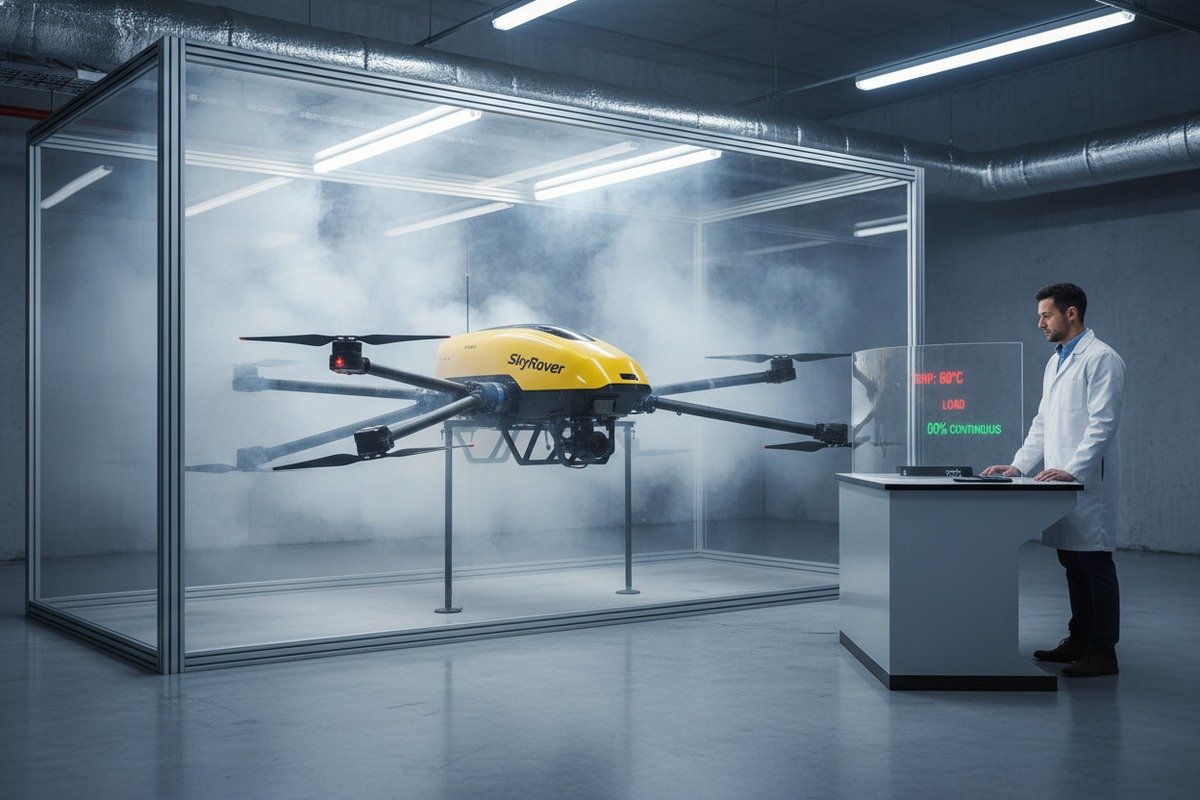
Pour évaluer efficacement les indices MTBF, demandez des données spécifiant les conditions de test, y compris la température ambiante, le pourcentage de charge, les niveaux de vibration et l'exposition à la contamination. Comparez les indices dans des conditions standard par rapport aux pires scénarios. Les véritables moteurs de qualité incendie doivent maintenir au moins 5 000 heures MTBF à 60°C avec une charge continue de 80%.
Comprendre le MTBF dans son contexte
MTBF signifie Mean Time Between Failures (Temps Moyen Entre les Pannes). Il représente le temps de fonctionnement moyen avant qu'un moteur ne tombe en panne. Cependant, ce chiffre ne signifie rien sans connaître les conditions de test.
Un fabricant de moteurs pourrait indiquer un MTBF de 15 000 heures. Mais a-t-il été testé à température ambiante avec une charge minimale ? Ou dans des conditions réalistes de lutte contre l'incendie ?
Lorsque nous calibrons nos chambres d'essai, nous simulons les conditions réelles d'une scène d'incendie. Cela comprend des températures allant de -20°C à +60°C, une contamination par des particules et une puissance soutenue élevée. Les chiffres de MTBF de ces tests sont toujours inférieurs à ceux des conditions idéales de laboratoire.
Questions clés à poser aux fabricants
Demandez les données MTBF à plusieurs points de fonctionnement. Demandez la documentation montrant :
- MTBF à 25°C ambiant avec une charge de 50%
- MTBF à 45°C ambiant avec une charge de 75%
- MTBF à 60°C ambiant avec une charge de 100%
La différence entre ces chiffres révèle la qualité du moteur. Les moteurs haut de gamme montrent une dégradation modeste. Les moteurs économiques montrent des baisses spectaculaires.
Cadre de comparaison MTBF
| Condition d'essai | MTBF des moteurs économiques | MTBF des moteurs milieu de gamme | MTBF des moteurs haut de gamme |
|---|---|---|---|
| 25°C, charge 50% | 12 000 heures | 15 000 heures | 18 000 heures |
| 45°C, charge 75% | 5 000 heures | 9 000 heures | 14 000 heures |
| 60°C, charge de 100% | 1 500 heures | 4 500 heures | 10 000 heures |
Remarquez comment les moteurs économiques perdent 87% de leur durée de vie nominale dans des conditions extrêmes. Les moteurs haut de gamme n'en perdent que 44%. Cette différence détermine si votre drone termine une mission ou tombe du ciel.
Taux de défaillance en cours de fonctionnement
Au-delà du MTBF, demandez les taux FIT (Failure In Time). Le FIT mesure les défaillances par milliard d'heures de fonctionnement. Plus le chiffre est bas, mieux c'est.
Pour les applications de lutte contre les incendies, ciblez les moteurs avec des taux FIT inférieurs à 500 à la température de fonctionnement. Notre équipe de contrôle qualité rejette tout lot de moteurs dépassant ce seuil.
Quelles données spécifiques de test de stress moteur dois-je demander pour vérifier la durabilité dans des environnements à haute température ?
Lors du développement de drones de lutte contre les incendies à forte charge, nous avons découvert que les spécifications standard des moteurs masquent des faiblesses critiques. Un moteur qui fonctionne bien dans des conditions normales peut tomber en panne de manière catastrophique lorsqu'il est exposé à la chaleur radiante des incendies actifs. Les tests de résistance révèlent ces vulnérabilités cachées.
Demander les courbes de dérating thermique, les puissances nominales en cycle de service continu à des températures élevées, les données de constante de temps thermique et les résultats des tests de durée de vie accélérée. Plus précisément, demander les données de performance du moteur à une température ambiante de 70°C et la documentation des seuils d'emballement thermique. Ces tests prédisent si les moteurs survivent à une exposition prolongée à proximité d'incendies actifs.

Courbes de détarage thermique
Détarage thermique 5 montre comment les performances du moteur diminuent à mesure que la température augmente. Chaque moteur perd de son efficacité dans la chaleur. La question est de savoir dans quelle mesure.
Demande des graphiques montrant :
- Puissance continue maximale vs. température ambiante
- Pourcentage d'efficacité vs. température de bobinage
- Capacité de courant vs. température du carter moteur
Notre équipe d'ingénierie utilise ces courbes pour déterminer les marges de fonctionnement sûres. Pour les drones de lutte contre l'incendie opérant près des flammes, nous réduisons la puissance des moteurs de 30% par rapport à leur puissance nominale maximale pour garantir la fiabilité.
Paramètres critiques du test de résistance
| Type de test | Ce qu'il mesure | Spécification cible |
|---|---|---|
| Cyclage thermique | Résistance au chauffage/refroidissement répété | 1 000 cycles, de -20°C à +70°C |
| Service continu | Capacité de fonctionnement soutenu | 60 minutes à 85% de puissance, 50°C ambiant |
| Pénétration de particules | Résistance à la contamination | IP55 minimum avec roulements étanches |
| Endurance aux vibrations | Intégrité structurelle | Accélération de 10g, balayage de 20 à 2000 Hz |
| Performance en altitude | Efficacité de refroidissement à faible densité d'air | Pleine puissance à 3 000 m d'altitude |
Classe d'isolation des enroulements
Les enroulements du moteur utilisent une isolation classée pour des limites de température spécifiques 6. Les classes courantes comprennent :
- Classe B : 130°C maximum
- Classe F : 155°C maximum
- Classe H : 180°C maximum
Pour les applications de lutte contre l'incendie, exigez une isolation de classe H minimum. Les classes inférieures se dégradent rapidement lorsque les températures ambiantes se combinent au chauffage interne du moteur.
Lorsque nous bobinons nos moteurs, nous utilisons des matériaux de classe H avec une marge thermique supplémentaire. Cela coûte plus cher mais empêche la rupture de l'isolation lors d'opérations prolongées à haute température.
Spécifications des roulements
Les roulements tombent en panne avant les enroulements dans la plupart des moteurs de drones de lutte contre l'incendie. La chaleur dégrade le lubrifiant. La contamination accélère l'usure.
Demander les spécifications des roulements, notamment :
- Type de roulement (hybride céramique préféré pour les hautes températures)
- Plage de température du lubrifiant
- Type de joint (à contact vs sans contact)
- Durée de vie nominale du roulement à température de fonctionnement maximale
Notre processus d'assemblage utilise des roulements hybrides céramiques 7 avec un lubrifiant synthétique haute température. Ceux-ci maintiennent leur fonction jusqu'à 150°C, bien au-dessus des conditions ambiantes près des incendies.
Constantes de temps thermiques
La constante de temps thermique indique la rapidité avec laquelle un moteur chauffe sous charge. Des constantes de temps plus courtes signifient un chauffage plus rapide et moins de temps avant l'activation de la protection thermique.
Pour les missions de lutte contre l'incendie d'une durée de 45 à 55 minutes, les moteurs ont besoin de constantes de temps thermiques suffisamment longues pour éviter les arrêts en milieu de mission. Demandez des données sur la constante de temps indiquant que le moteur peut maintenir la puissance requise pendant toute la durée de votre mission.
Comment puis-je confirmer que les données de fiabilité du moteur sont conformes aux normes de sécurité requises pour mes contrats gouvernementaux ?
D'après notre expérience d'exportation vers des sous-traitants du gouvernement américain, nous avons appris que les spécifications des moteurs doivent répondre à des cadres réglementaires spécifiques. De nombreux fabricants fournissent des données techniques impressionnantes mais manquent des certifications requises par les acheteurs gouvernementaux. Cela entraîne des retards d'approvisionnement et des risques de non-conformité des contrats.
Pour confirmer que les données de fiabilité du moteur respectent les normes gouvernementales, demandez la documentation montrant la conformité aux exigences opérationnelles de la partie 107 de la FAA, aux directives d'équipement de la NFPA, à la conformité de la section 889 du NDAA pour les composants non interdits et à la certification de gestion de la qualité ISO 9001. Pour les contrats militaires ou de sécurité intérieure, vérifiez également la conformité ITAR et EAR.
Comprendre les exigences réglementaires
Les contrats gouvernementaux imposent plusieurs niveaux de conformité. La documentation sur la fiabilité des moteurs doit satisfaire plusieurs agences simultanément.
Pour les contrats fédéraux américains, les normes critiques comprennent :
Exigences de la FAA: Partie 107 8 régit les opérations de drones commerciaux. Bien que la FAA ne spécifie pas la MTBF des moteurs, les exigences de sécurité opérationnelle impliquent que les moteurs doivent supporter un vol contrôlé fiable.
Lignes directrices de la NFPA: La National Fire Protection Association publie des normes d'équipement pour les services d'incendie. La NFPA 1901 et les normes connexes traitent de la durabilité et de la fiabilité de l'équipement pour les interventions d'urgence.
Conformité avec le NDAA: La section 889 interdit aux agences fédérales d'acheter des équipements contenant des composants de certaines entités étrangères. Les fabricants de moteurs doivent documenter leur chaîne d'approvisionnement pour prouver leur conformité.
Liste de contrôle de la documentation de certification
| Certification | Organisme émetteur | Ce qu'elle valide |
|---|---|---|
| ISO 9001 | Organisation Internationale de Normalisation | Systèmes de gestion de la qualité |
| CEI 60034 | Commission électrotechnique internationale | Sécurité et performance des moteurs électriques |
| Marquage CE | Union européenne | Sécurité des produits pour les marchés de l'UE |
| FCC Partie 15 | Commission fédérale des communications | Limites d'interférences électromagnétiques |
| Lettre de conformité NDAA | Auto-certification du fabricant | Chaîne d'approvisionnement exempte de composants interdits |
Validation des tests par des tiers
Les marchés publics exigent souvent une vérification des tests par des tiers. Les données internes du fabricant peuvent être remises en question. Les résultats de laboratoire indépendants ont plus de poids.
Demandez les rapports de test de laboratoires reconnus tels que :
- UL (Underwriters Laboratories)
- TÜV Rheinland
- Intertek
- SGS
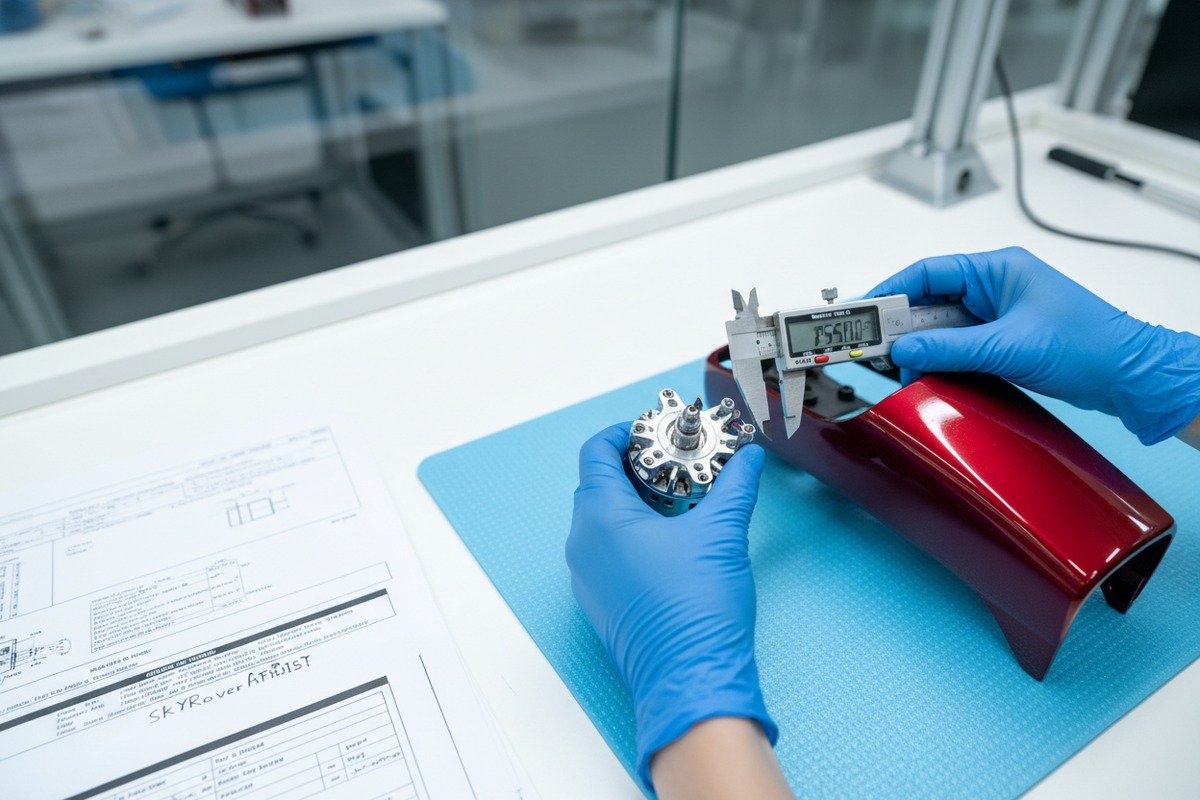
Nos moteurs sont soumis à des tests par des tiers dans les installations d'Intertek. Nous fournissons ces rapports aux sous-traitants gouvernementaux comme documentation standard.
Exigences de traçabilité
Les contrats gouvernementaux exigent souvent la traçabilité des composants. Cela signifie documenter l'origine et l'historique des tests de chaque composant du moteur.
Demandez aux fabricants :
- Certificat de conformité pour chaque moteur
- Documentation de traçabilité des lots
- Déclarations d'origine des composants
- Données de test liées à des numéros de série spécifiques
Nous maintenons des registres de traçabilité complets pour chaque moteur que nous produisons. Cette documentation soutient les audits gouvernementaux et les enquêtes de qualité.
Preuve du système de management de la qualité
Au-delà des certifications individuelles de moteurs, demandez des preuves du système de management de la qualité du fabricant. Certification ISO 9001 9 démontre un contrôle qualité systématique.
Les indicateurs clés de qualité comprennent :
- Procédures d'inspection à réception des composants de moteur
- Protocoles de test en cours de fabrication
- Critères de test d'acceptation finale
- Dossiers d'étalonnage des équipements de test
- Procédures d'action corrective pour les défauts
Notre usine maintient la certification ISO 9001 avec des audits annuels. Nous fournissons la documentation du système qualité aux équipes d'approvisionnement sur demande.
Quelle documentation dois-je demander pour comprendre comment les taux de défaillance des moteurs auront un impact sur mes coûts de maintenance à long terme ?
Lorsque nous consultons des gestionnaires de flotte achetant plusieurs drones, le coût de maintenance est toujours une préoccupation. Le prix initial du moteur n'est que le début. La fréquence de remplacement, la disponibilité des pièces de rechange et la main-d'œuvre de réparation déterminent les coûts de possession réels. Sans documentation appropriée, les acheteurs ne peuvent pas calculer le coût total de possession.
Demander des rapports d'analyse de Weibull montrant la distribution du taux de défaillance sur la durée de vie du moteur, la tarification des pièces de rechange avec garanties de disponibilité, les intervalles de maintenance recommandés, les coûts et procédures de remplacement des roulements, et les conditions de garantie couvrant les défauts par rapport à l'usure. Cette documentation permet des calculs précis du coût total de possession.

Comprendre le coût total de possession
La défaillance d'un moteur a un impact sur les coûts au-delà des pièces de rechange. Considérez ces catégories de coûts :
Coûts directs: Remplacement du moteur, kits de roulements, lubrifiant, heures de main-d'œuvre
Coûts indirects: Temps d'arrêt du drone, missions manquées, primes d'approvisionnement d'urgence, formation des techniciens
Coûts de risque: Responsabilité en cas d'échec de mission, dommages matériels dus à une défaillance en vol, primes d'assurance
Notre équipe de support client aide les acheteurs à modéliser ces coûts en utilisant des données de terrain réelles provenant de déploiements similaires.
Documentation des intervalles de maintenance
Demandez les calendriers de maintenance recommandés, y compris :
- Intervalles d'inspection (heures de vol ou temps calendaire)
- Intervalles de remplacement des roulements
- Exigences de service de lubrification
- Critères d'inspection du bobinage du moteur
- Procédures de vérification de l'équilibrage
Structure des coûts des pièces de rechange
| Composant | Intervalle de remplacement typique | Fourchette de coûts estimée | Délai d'exécution |
|---|---|---|---|
| Ensemble complet du moteur | 3 000-8 000 heures de vol | $400-$1,200 | 2-4 semaines |
| Kit de roulements | 1 000-2 000 heures de vol | $50-$150 | 1-2 semaines |
| Ensemble du moyeu d'hélice | 500-1 000 heures de vol | $80-$200 | 1-2 semaines |
| Contrôleur moteur (ESC) | 2 000-5 000 heures de vol | $150-$400 | 2-3 semaines |
| Faisceau de câblage | Selon les besoins (basé sur les dommages) | $30-$80 | 1 semaine |
Analyse des conditions de garantie
Les garanties moteur varient considérablement. Examinez attentivement ces conditions :
Durée de couverture: Quelle est la durée de la garantie ? Est-elle mesurée en temps calendaire ou en heures de vol ?
Défaillances couvertes: La garantie couvre-t-elle uniquement les défauts de fabrication, ou aussi l'usure prématurée ?
Exclusions: Quelles conditions annulent la garantie ? Fonctionnement à haute température ? Exposition aux particules ?
Processus de réclamation: Quelle est la rapidité de traitement des demandes de garantie ? Quels documents sont requis ?
Nous offrons des garanties de 24 mois couvrant les défauts de fabrication et les défaillances prématurées dans des conditions d'exploitation documentées. Notre équipe de garantie traite la plupart des demandes dans les 5 jours ouvrables.
Intégration de la maintenance prédictive
Les moteurs modernes peuvent s'intégrer aux systèmes de gestion de flotte pour la maintenance prédictive. Demandez des informations sur :
- Compatibilité des capteurs de surveillance des vibrations
- Capacités de télémétrie de température
- Détection d'anomalies de consommation de courant
- Algorithmes de notation de l'état du moteur
Cette technologie permet de prédire les défaillances avant qu'elles ne surviennent, réduisant ainsi les temps d'arrêt imprévus et les coûts d'urgence.
Modélisation des coûts du cycle de vie
Demandez aux fabricants des estimations des coûts du cycle de vie basées sur votre utilisation prévue. Un fabricant responsable devrait fournir :
- Coûts de maintenance projetés sur des périodes de 3, 5 et 10 ans
- Fréquence de remplacement prévue des moteurs
- Recommandations d'inventaire de pièces de rechange
- Besoins de formation pour le personnel de maintenance
Notre équipe commerciale fournit des modèles détaillés de coûts du cycle de vie personnalisés au profil opérationnel de chaque client.
Conclusion
La documentation sur la fiabilité des moteurs distingue les drones de lutte contre les incendies prêts pour la mission des équipements qui tombent en panne lorsqu'ils sont le plus nécessaires. Demandez des données spécifiques sur la MTBF, les résultats des tests de résistance, les certifications de conformité et les projections de coûts de maintenance. Ces documents protègent votre investissement et garantissent la préparation opérationnelle.
Notes de bas de page
1. Fournit des informations générales sur l'application des drones dans la surveillance et la suppression des feux de forêt. ︎
2. Donne accès à la liste complète des codes et normes de sécurité de la National Fire Protection Association. ︎
3. Remplacé le lien HTTP 403 par une page Wikipedia faisant autorité expliquant la distribution de Weibull, qui est fondamentale pour l'analyse de Weibull. ︎
4. Remplacé le lien HTTP 403 par une page Wikipedia faisant autorité expliquant le Temps Moyen Entre Pannes (MTBF). ︎
5. Lien HTTP inconnu remplacé par une page Wikipedia faisant autorité expliquant le dérating en électronique, qui comprend le dérating thermique. ︎
6. Explique la classification de l'isolation électrique basée sur les températures de fonctionnement maximales. ︎
7. Décrit les avantages et les applications des roulements hybrides en céramique dans les environnements exigeants. ︎
8. Réglementations officielles de la FAA pour les opérations commerciales de petits systèmes d'aéronefs sans pilote aux États-Unis. ︎
9. Informations officielles sur la norme internationale des systèmes de management de la qualité. ︎

 English
  Español de México
  Deutsch
  Français
  Русский
  العربية
Comments
No comments yet. Be the first to share your thoughts!
Leave a Comment