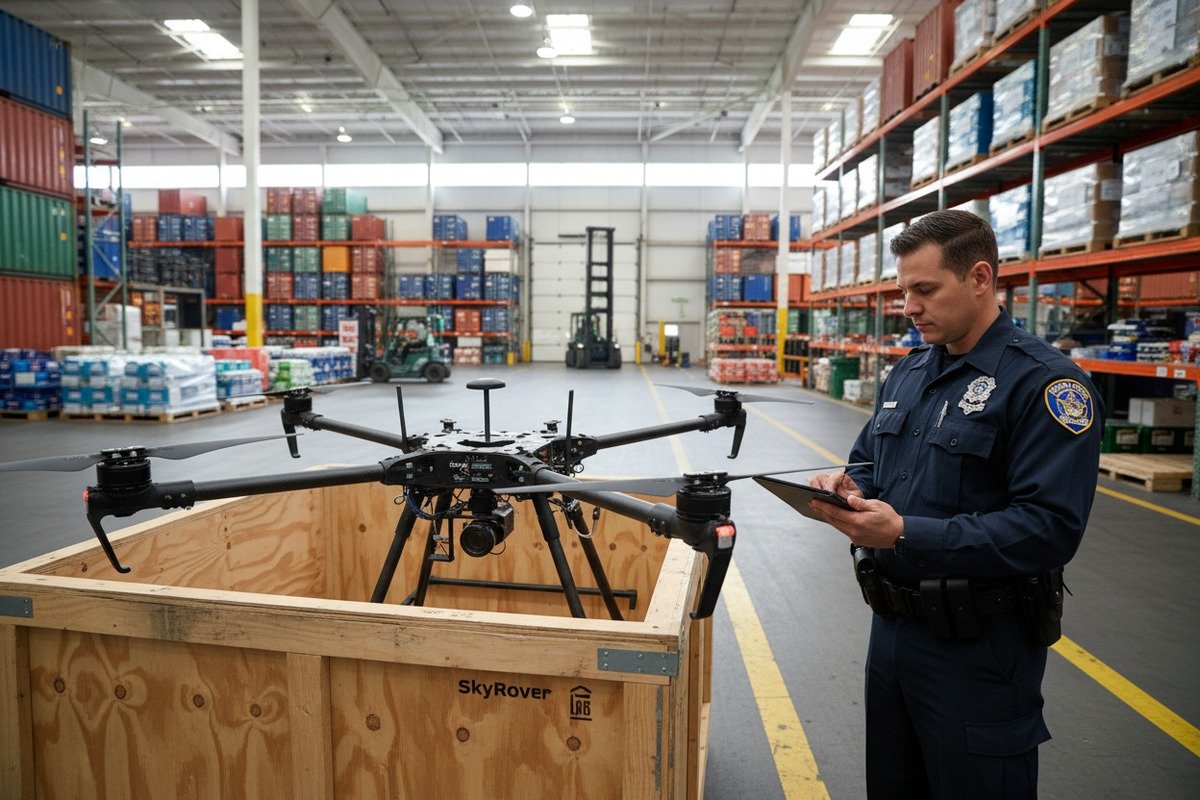
Chaque semaine, notre équipe d'expédition traite des dizaines de commandes de drones agricoles à destination des ports américains. Le processus douanier peut sembler décourageant. Un document manquant ou un code de classification erroné peut retarder votre expédition de plusieurs semaines.
Les points clés d'inspection des douanes américaines pour les drones agricoles comprennent la classification HTSUS précise sous le code 8806.21.00, la vérification du pays d'origine, la conformité aux certifications FCC et FAA, les réglementations sur le transport des batteries au lithium, les contrôles de prévention du travail forcé et la documentation complète, y compris les factures commerciales et les certificats d'origine.
Comprendre ces points d'inspection avant de passer une commande vous fait gagner du temps, de l'argent et évite les frustrations. Classification HTSUS 1. Laissez-moi vous guider à travers chaque point de contrôle critique, basé sur nos années d'expérience à l'exportation.
Comment puis-je m'assurer que l'expédition de mon drone agricole est conforme aux exigences de certification de la FCC et de la FAA ?
Lorsque notre équipe d'ingénierie développe un nouveau modèle de drone agricole, la conformité de la certification est intégrée dès la phase de conception. De nombreux importateurs ne découvrent les lacunes de conformité qu'après que leur expédition soit retenue à la douane. Cela entraîne des retards coûteux et des saisies potentielles.
Pour garantir la conformité FCC et FAA, vérifiez que votre drone dispose d'une autorisation d'équipement FCC valide pour les émissions de radiofréquence, confirmez l'éligibilité à l'enregistrement FAA et vérifiez la capacité de Remote ID. Demandez les numéros d'identification FCC et les rapports de test à votre fournisseur avant l'expédition.
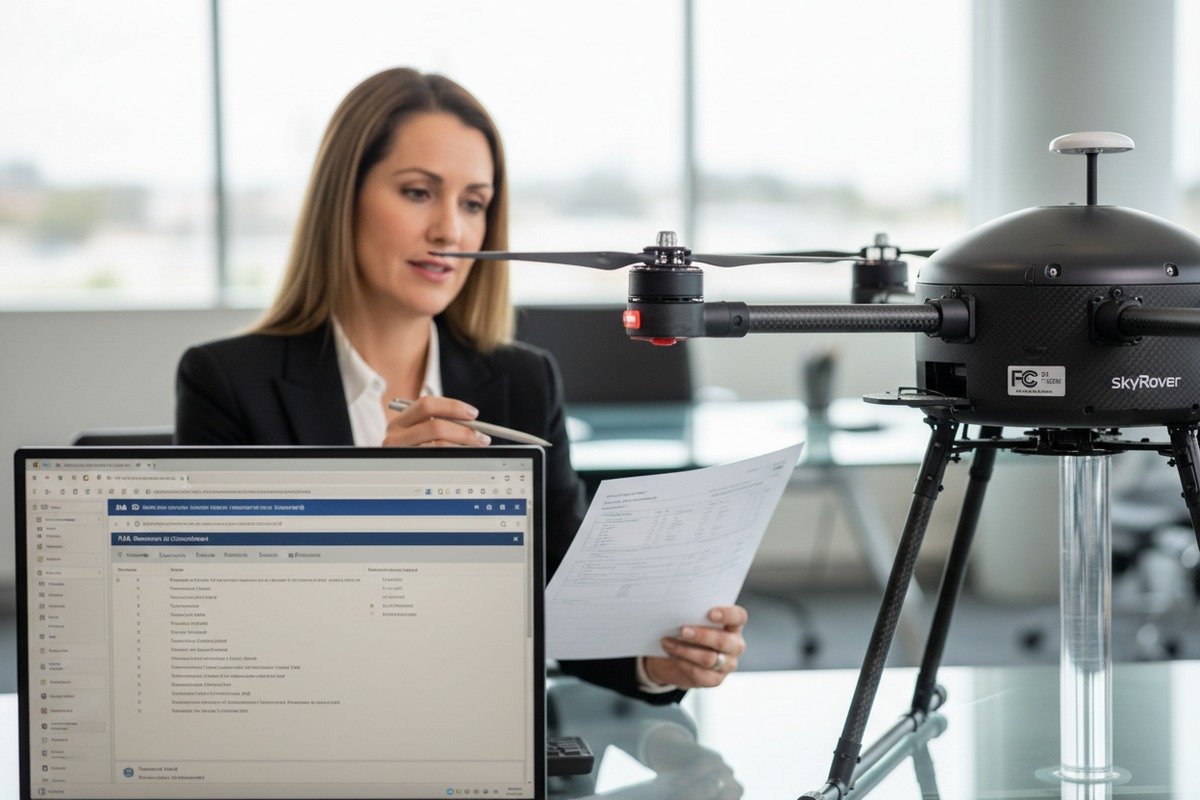
Comprendre l'autorisation d'équipement de la FCC
La FCC réglemente tous les appareils qui émettent des fréquences radio. Les drones agricoles utilisent le GPS, les signaux de télécommande et souvent les systèmes de transmission de caméra. Chacun de ces éléments nécessite une autorisation de la FCC.
Notre usine de production teste chaque modèle de drone dans des laboratoires accrédités avant l'exportation. L'identifiant FCC apparaît sur le corps du drone et sur l'emballage. Vous pouvez vérifier tout identifiant FCC via la base de données en ligne de la FCC.
Sans autorisation FCC appropriée, les agents des douanes peuvent saisir l'intégralité de votre expédition. La FCC maintient une application stricte car les appareils non autorisés peuvent interférer avec les communications d'urgence et les fréquences aéronautiques.
Exigences de la FAA pour les drones importés
La FAA n'inspecte pas directement les drones à la douane. Cependant, les agents de la CBP vérifient que les drones importés peuvent répondre aux exigences opérationnelles de la FAA. Les drones pesant plus de 0,55 lb (250 g) doivent être enregistrés auprès de la FAA avant le vol.
Depuis 2023, tous les drones doivent avoir Capacité d'identification à distance 2. Ce système diffuse l'identification et la localisation du drone pendant le vol. Les drones agricoles sans Remote ID ne peuvent pas opérer légalement aux États-Unis.
| Type de certification | Agence émettrice | Quand requis | Méthode de vérification |
|---|---|---|---|
| Autorisation d'équipement | FCC | Avant l'importation | Recherche dans la base de données FCC ID |
| Enregistrement du drone | FAA | Avant l'opération | Portail FAA DroneZone |
| Conformité de l'identification à distance | FAA | Avant l'opération | Déclaration du fabricant |
| Certification Partie 137 | FAA | Pour application aérienne | Processus de certification FAA |
Opérations de pulvérisation agricole
Si vos drones pulvériseront des pesticides ou des engrais, l'opérateur a besoin d'un FAA Certificat d'opérateur d'aéronefs agricoles de la partie 137 3. Ceci est distinct des exigences d'importation, mais les importateurs avisés vérifient que leurs drones respectent les normes d'équipement de la Partie 137.
Nos drones de pulvérisation agricole sont livrés avec une documentation montrant la capacité du réservoir, l'étalonnage du débit de pulvérisation et les caractéristiques de réduction de la dérive. Cela aide vos clients à obtenir plus rapidement leurs certificats de la Partie 137.
Quelle documentation spécifique dois-je préparer pour éviter les retards des douanes américaines pour ma commande de drone ?
Dans notre département d'exportation, nous avons vu des expéditions retardées pendant des mois en raison de documents manquants. Un client a perdu une saison agricole parce que son courtier en douane a soumis une facture incomplète. Une documentation appropriée est votre première ligne de défense contre les retards.
Les documents essentiels comprennent la facture commerciale avec des descriptions détaillées des produits, la liste de colisage, le connaissement ou la lettre de transport aérien, le certificat d'origine, la déclaration de conformité FCC, le permis d'importation si nécessaire et la preuve de classification HTSUS. L'absence de tout document peut entraîner des retards d'inspection.
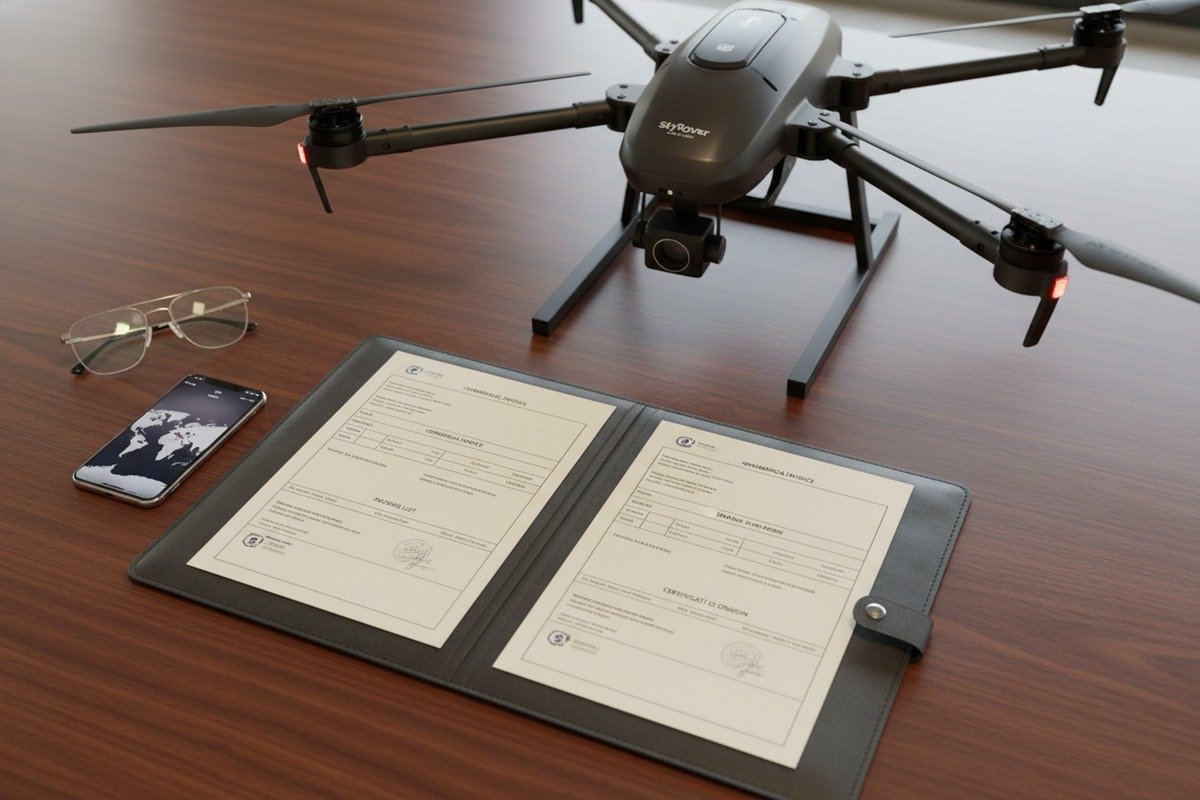
Exigences relatives à la facture commerciale
Votre facture commerciale doit inclure des descriptions complètes des produits. Les descriptions génériques comme "drone" ou "UAV" déclenchent des drapeaux d'inspection automatiques. Les agents du CBP ont besoin de détails spécifiques pour vérifier la classification et la valeur.
Nous préparons des factures commerciales qui répertorient les numéros de modèle, les matériaux des composants, les spécifications de poids et les valeurs unitaires. Ce niveau de détail accélère considérablement le traitement douanier.
Liste de contrôle des documents essentiels
| Document | Objectif | Qui le fournit |
|---|---|---|
| Facture commerciale | Déclaration de valeur et identification du produit | Fournisseur |
| Liste de colisage | Vérification de la quantité et du poids | Fournisseur |
| Connaissement/Lettre de transport aérien | Contrat d'expédition et suivi | Transitaire |
| Certificat d'origine 5 | Vérification du pays de fabrication | Fournisseur ou Chambre de Commerce |
| Déclaration de conformité FCC | Conformité aux radiofréquences | Fournisseur |
| FDS pour batteries | Conformité aux matières dangereuses | Fabricant de batteries |
| Caution d'importation | Garantie des droits de douane | Courtier en douane |
Documentation du pays d'origine
Le CBP accorde une attention particulière aux déclarations de pays d'origine. Le certificat d'origine doit refléter avec précision où vos drones ont été fabriqués. Cela affecte les taux de droits de douane, l'éligibilité aux accords commerciaux et les restrictions potentielles.
Nos certificats indiquent clairement le lieu de fabrication, l'origine des composants et les détails d'assemblage. Nous fournissons également des documents justificatifs montrant l'adresse de notre installation et les enregistrements de production sur demande.
Travailler avec des courtiers en douane
A courtier en douane agréé 6 s'occupe des exigences techniques de déclaration. Ils soumettent vos documents d'entrée, calculent les droits de douane et communiquent avec le CBP en votre nom.
Lorsque nous expédions à des clients américains, nous coordonnons directement avec leurs courtiers en douane. Nous envoyons des dossiers avant l'arrivée de l'expédition. Cela donne aux courtiers le temps de tout examiner et de poser des questions.
Une bonne documentation réduit les taux d'inspection. Le CBP utilise des algorithmes d'évaluation des risques. Des documents complets et précis signalent une expédition légitime et conforme.
Comment gérer le processus d'inspection douanière pour les batteries de grande capacité de mes drones ?
Nos drones agricoles utilisent des batteries lithium-polymère de grande capacité pour des durées de vol prolongées. Ces batteries alimentent les opérations de pulvérisation sur de vastes champs. Mais les batteries au lithium sont classées comme marchandises dangereuses. Une manipulation inappropriée peut entraîner le rejet ou la destruction de l'expédition.
Gérez l'inspection douanière des batteries en vous assurant de la certification UN38.3, d'un emballage approprié selon le DGR de l'IATA ou le Code IMDG, d'une documentation MSDS précise, d'étiquettes de danger correctes et de puissances en wattheures des batteries inférieures aux limites de transport. Les expéditions de batteries séparées peuvent nécessiter une manipulation différente de celle des batteries intégrées aux drones.
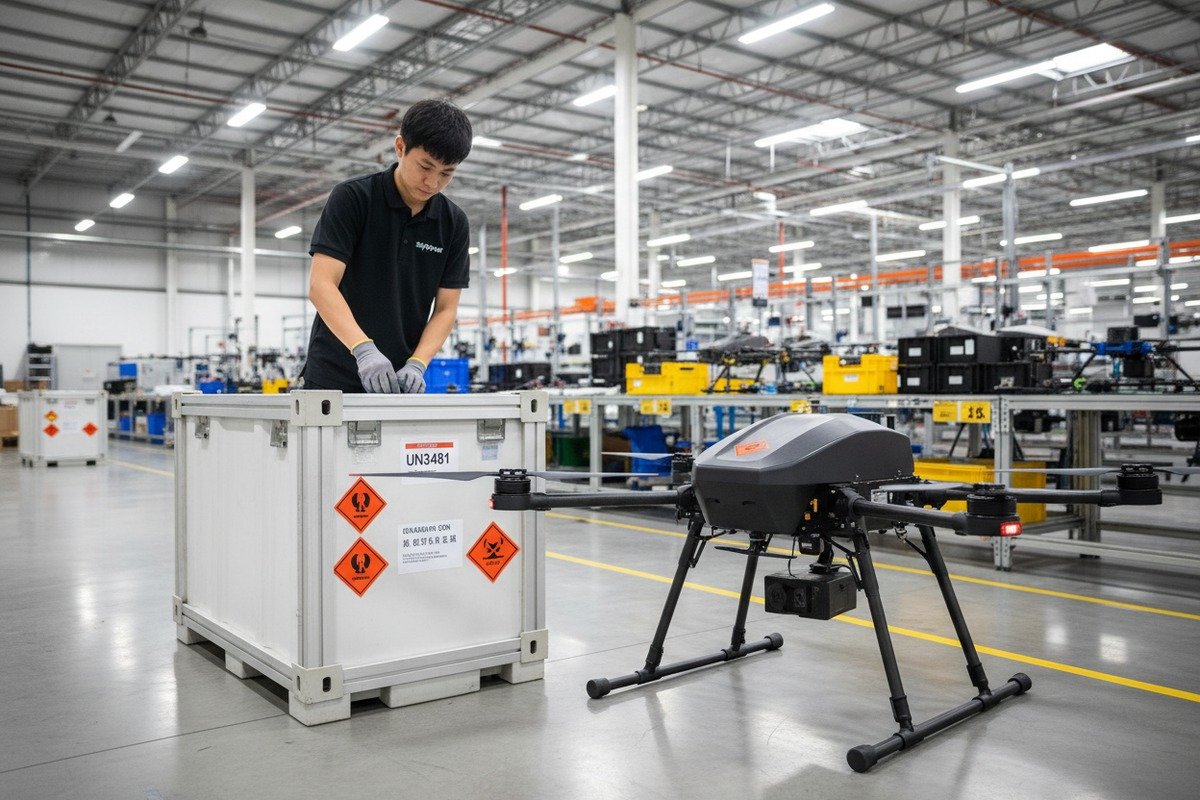
Classification des batteries au lithium
Les batteries au lithium entrent dans la catégorie des marchandises dangereuses de classe 9. La classification dépend de la puissance nominale en wattheures et si les batteries sont emballées avec l'équipement, dans l'équipement ou expédiées seules.
Nos batteries de drones agricoles ont généralement une capacité comprise entre 15 000 et 30 000 mAh. Ces cellules de grande capacité nécessitent une classification minutieuse. Nous calculons les puissances nominales en wattheures et fournissons ces informations sur tous les documents d'expédition.
Exigences de test UN38.3
Toutes les batteries au lithium doivent passer les tests de sécurité UN38.3 avant le transport international. Cette série de tests comprend la simulation d'altitude, le cyclage thermique, les vibrations, les chocs et les courts-circuits.
Nous conservons les rapports de test UN38.3 pour chaque modèle de batterie que nous expédions. Ces rapports prouvent que nos batteries répondent aux normes de sécurité internationales. Le CBP et les autorités de transport peuvent demander ces documents à tout moment.
| Spécifications de la batterie | Limite de fret aérien | Limite de fret maritime | Documentation requise |
|---|---|---|---|
| Watt-heures par cellule | 100 Wh max | 100 Wh max | résumé des tests UN38.3 |
| Teneur en lithium | 2g max par cellule | 2g max par cellule | Fiche MSDS |
| Marquage du colis | Étiquette UN3481 | Étiquette UN3481 | Déclaration de l'expéditeur |
| État de charge | 30% maximum | Aucune limite spécifique | Certificat du fabricant |
Normes d'emballage et d'étiquetage
Un emballage approprié évite les dommages et satisfait aux exigences réglementaires. Les batteries doivent être protégées contre les courts-circuits. Cela implique une protection des bornes, une séparation des cellules individuelles et un emballage extérieur robuste.
Notre équipe d'expédition utilise des matériaux d'emballage certifiés UN. Chaque colis porte les étiquettes de danger appropriées, les marques de manutention et les déclarations de l'expéditeur. Nous incluons le numéro de contact d'urgence et le nom d'expédition correct sur toute la documentation.
Considérations sur le fret aérien et maritime
Le fret aérien a des réglementations plus strictes concernant les batteries que le fret maritime. Les compagnies aériennes limitent l'état de charge des batteries à 30 % pour les expéditions de fret. Certains transporteurs refusent totalement les expéditions de batteries au lithium.
Le fret maritime offre plus de flexibilité mais prend plus de temps. Bon nombre de nos clients choisissent le transport maritime pour les grosses commandes de batteries. Le coût inférieur et les restrictions moins nombreuses compensent le temps de transit plus long.
Pour les commandes urgentes, nous pouvons expédier les drones et les batteries séparément. Les drones voyagent par avion tandis que les batteries viennent par mer. Cette approche hybride équilibre vitesse et conformité.
Comment puis-je vérifier que mon fournisseur chinois possède les qualifications d'exportation nécessaires pour éviter les saisies douanières ?
Avant d'expédier toute commande, nous fournissons à nos clients notre dossier complet de qualification à l'exportation. Certains importateurs apprennent trop tard que leur fournisseur manque des qualifications appropriées. Cela entraîne des saisies de marchandises, des pertes d'investissements et des relations commerciales endommagées.
Vérifiez les qualifications du fournisseur en examinant l'enregistrement de l'entreprise, la validité de la licence d'exportation, les rapports d'audit d'usine, les certifications FCC/CE, la documentation de conformité au travail forcé et la propriété intellectuelle. Demandez ces documents avant de passer commande et vérifiez-les via les bases de données officielles.
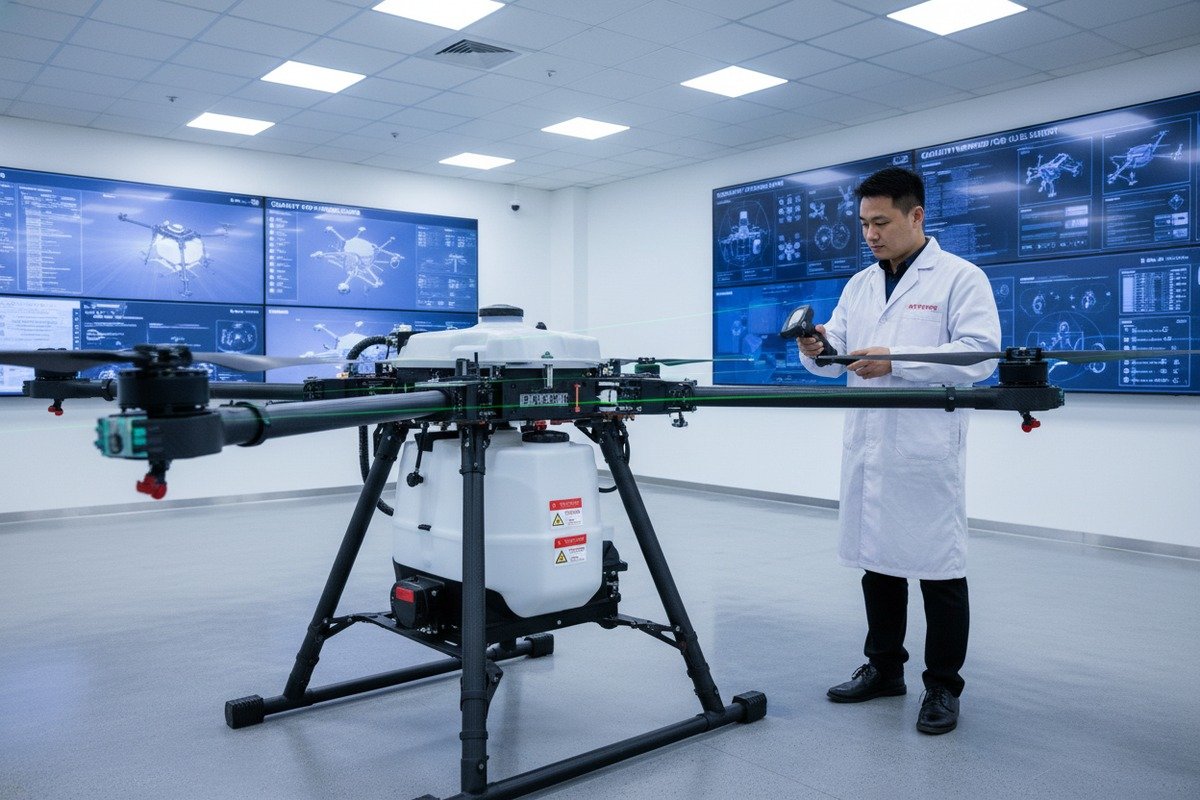
Vérification de l'enregistrement de l'entreprise
Chaque fabricant chinois légitime possède une licence commerciale délivrée par les autorités locales. Cette licence indique le nom de l'entreprise, le numéro d'enregistrement, le représentant légal et le champ d'activité.
Notre licence commerciale autorise la fabrication et l'exportation de drones. Vous pouvez vérifier les enregistrements commerciaux chinois via le Système national de publicité de l'information sur le crédit d'entreprise. Cette base de données gratuite confirme la légitimité de l'entreprise.
Licence d'exportation et enregistrement douanier
Les exportateurs chinois ont besoin d'un enregistrement douanier pour expédier des marchandises à l'international. Ce numéro d'enregistrement apparaît sur tous les documents d'exportation. Sans lui, les expéditions ne peuvent pas quitter légalement la Chine.
Nous maintenons des certificats d'enregistrement douanier et d'inspection de quarantaine à jour. Ces qualifications prouvent notre autorité pour exporter des biens manufacturés. Nous partageons ces documents avec les clients lors du processus de qualification.
Conformité au travail forcé
Le CBP applique la Loi sur la prévention du travail forcé des Ouïghours 8 strictement. Les expéditions liées au travail forcé sont passibles de saisie et de sanctions. Cette application affecte particulièrement les fabricants chinois.
| Élément de vérification | Comment vérifier | Drapeaux rouges |
|---|---|---|
| Licence commerciale | Système national d'information sur le crédit des entreprises | Licence expirée, portée commerciale non conforme |
| Enregistrement douanier | Demander une copie du certificat | Enregistrement manquant ou expiré |
| Emplacement de l'usine | Imagerie satellite, rapports d'audit | Emplacements non divulgués, changements d'adresse fréquents |
| Documentation de la chaîne d'approvisionnement | Certificats d'origine des composants | Informations vagues sur l'approvisionnement |
| Conformité au travail forcé | Rapports d'audit de conformité sociale | Pas d'audits, audits refusés |
| Certification FCC | Base de données des identifiants FCC | Identifiant FCC invalide ou manquant |
Notre installation à Xi'an conserve les rapports d'audit de conformité sociale tiers. Ces audits vérifient les conditions de travail, le traitement des employés et les pratiques d'approvisionnement éthiques. Nous fournissons des rapports d'audit aux clients préoccupés par la conformité de la chaîne d'approvisionnement.
Considérations relatives à la propriété intellectuelle
Le CBP saisit les marchandises qui enfreignent des brevets, des marques ou des droits d'auteur. Votre fournisseur doit posséder ou détenir une licence pour toute la propriété intellectuelle de ses produits.
Nous détenons des brevets pour nos conceptions de drones et nos systèmes logiciels. Nous pouvons fournir la documentation des brevets et les accords de licence. Cela vous protège des saisies de propriété intellectuelle à la douane.
Options d'audit d'usine
De nombreux importateurs effectuent des audits d'usine avant de passer de grosses commandes. Les sociétés d'audit tierces vérifient les capacités de fabrication, les systèmes de qualité et les pratiques de conformité.
Nous accueillons les audits d'usine. Notre installation a passé des audits de clients aux États-Unis, en Europe et en Asie. Les rapports d'audit vous donnent confiance en nos capacités et notre statut de conformité.
Services d'inspection avant expédition
Avant l'expédition, vous pouvez engager des sociétés d'inspection pour vérifier la qualité des produits et l'exhaustivité de la documentation. Des entreprises comme SGS, Bureau Veritas et Intertek proposent ces services en Chine.
Nous coordonnons régulièrement avec les sociétés d'inspection. Une inspection avant expédition détecte les problèmes avant que vos produits ne quittent la Chine. Cela évite les retards douaniers et les litiges de qualité.
Conclusion
La navigation dans les douanes américaines pour les drones agricoles nécessite une attention particulière aux certifications FCC/FAA, à la documentation complète, à la conformité des batteries et à la vérification des fournisseurs. Collaborez avec des fabricants qualifiés qui comprennent ces exigences. Votre dédouanement sans encombre commence par une préparation adéquate.
Notes de bas de page
1. Remplacement du HTTP 403 par le portail de recherche officiel du Système Harmonisé de Tarification des États-Unis (HTS). ︎
2. Remplacement du HTTP 404 par la page officielle actuelle de la FAA sur l'identification à distance des drones. ︎
3. Remplacement du HTTP 404 par la page officielle de la FAA sur la distribution de produits chimiques et agricoles (Partie 137) avec les UAS. ︎
4. Détaille le processus de la FCC pour l'approbation des appareils à radiofréquence. ︎
5. Explique le but et l'importance d'un certificat d'origine dans le commerce international. ︎
6. Explique le rôle et les responsabilités d'un courtier en douane agréé. ︎
7. Détaille les exigences internationales en matière de tests de sécurité pour les batteries au lithium. ︎
8. Fournit des informations officielles sur l'UFLPA et son application par le CBP. ︎

 English
  Español de México
  Deutsch
  Français
  Русский
  العربية
