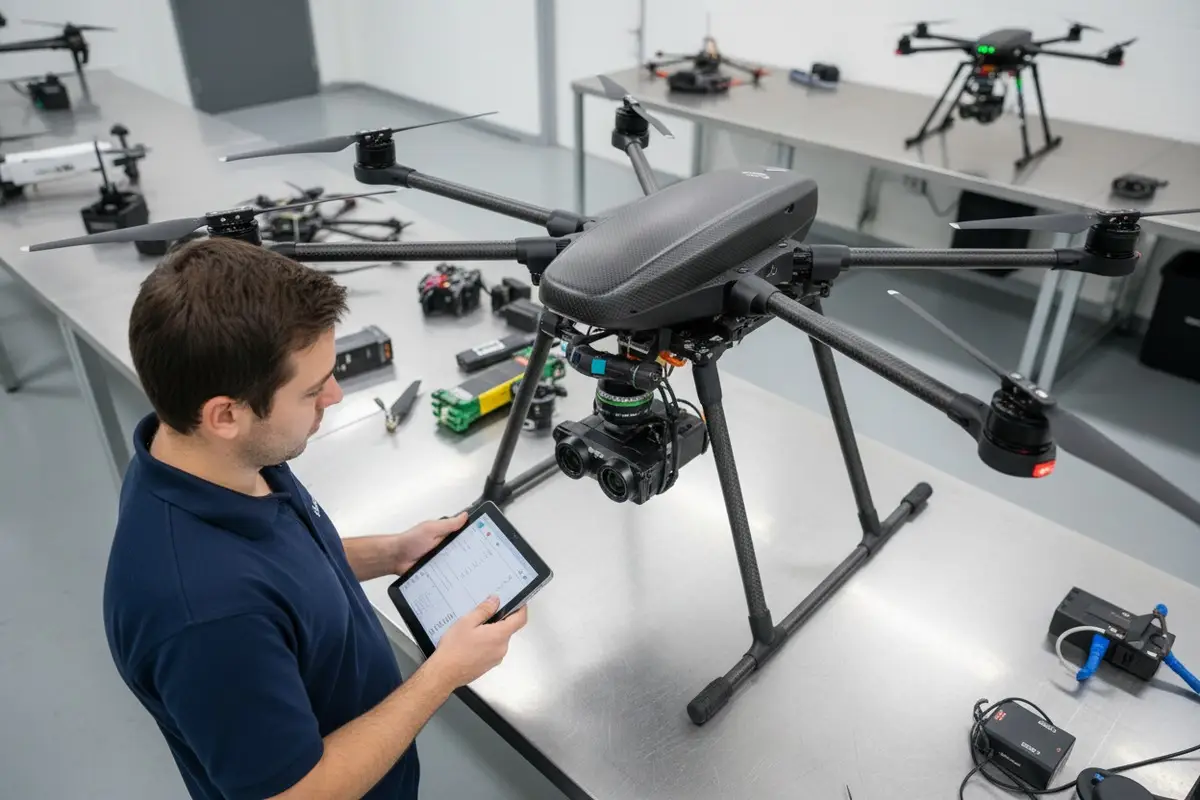

Chaque semaine, notre équipe d'ingénieurs reçoit des appels de distributeurs frustrés par des drones de cartographie qui promettent une précision centimétrique mais livrent des résultats au niveau du mètre. capteurs LiDAR ou multispectraux 1. Ces incohérences coûtent aux exploitations agricoles des milliers en intrants gaspillés et en rendements perdus. Le problème n'est pas la technologie elle-même, c'est de savoir quoi évaluer avant d'acheter.
Pour évaluer efficacement les modules de cartographie par drone agricole, évaluez cinq domaines clés : type et résolution du capteur, précision du positionnement RTK/PPK, compatibilité logicielle, durabilité de la construction et support du fournisseur. Privilégiez les modules dotés de capteurs LiDAR ou multispectraux, d'une précision vérifiée inférieure au centimètre et d'une intégration éprouvée avec des plateformes telles que Pix4D ou DJI Terra.
Dans ce guide, je vais vous présenter les critères exacts que nous utilisons lors des tests des modules de cartographie sur notre chaîne de production. Indice de protection (IP) 2. Que vous importiez des drones pour des clients agricoles à grande échelle ou que vous dirigiez une entreprise de services agricoles, ces étapes d'évaluation vous aideront à éviter des erreurs coûteuses.
Comment choisir un module de cartographie qui garantit la précision centimétrique dont mes clients en agriculture à grande échelle ont besoin ?
Lorsque nous calibrons nos contrôleurs de vol et testons les modules RTK sur le terrain, les affirmations de précision sont soit validées, soit exposées. De nombreux distributeurs nous ont dit que leurs fournisseurs précédents promettaient une précision centimétrique mais n'expliquaient jamais comment la vérifier. Cela crée de réels problèmes lorsque vos clients agricoles dépendent de données précises pour les applications à taux variable 3.
Choisissez un module de cartographie avec positionnement RTK ou PPK intégré, un minimum de 240 000 points par seconde pour le LiDAR, et un RMSE vérifié inférieur à 2 centimètres. Testez la précision à l'aide de points de contrôle au sol avant l'achat, et confirmez que le module prend en charge les flux de travail de post-traitement pour la correction du terrain.

Comprendre la pile de précision
La précision centimétrique ne provient pas d'un seul composant. Elle résulte de la combinaison des systèmes de positionnement, de la calibration des capteurs et des flux de traitement. Laissez-moi décomposer chaque couche.
Premièrement, le système de positionnement constitue la base. Cinématique en temps réel (RTK) 4 et Cinématique post-traitée (PPK) corrigent les signaux GPS à l'aide de données de station de base. Le RTK fournit des corrections pendant le vol, tandis que le PPK les applique après l'atterrissage. Les deux peuvent atteindre une précision horizontale sub-centimétrique lorsqu'ils sont correctement configurés.
Deuxièmement, le capteur lui-même doit capturer suffisamment de détails. Pour les modules LiDAR, la densité de points est importante. Un capteur générant 240 000 points par seconde avec jusqu'à cinq retours peut pénétrer la canopée des cultures et cartographier avec précision les surfaces du sol. Pour la photogrammétrie, un chevauchement d'images de 80 % ou plus assure un bon assemblage.
Troisièmement, le logiciel de traitement doit gérer la correction du terrain. Les modèles numériques de surface (MNS) montrent tout, y compris les cultures, tandis que Modèles Numériques de Terrain (MNT) 5 révèlent le sol nu. Vos clients ont besoin des deux pour la planification de l'irrigation et l'analyse du drainage.
Spécifications clés à comparer
| Spécifications | Module d'entrée de gamme | Module milieu de gamme | Module haut de gamme |
|---|---|---|---|
| Positionnement | GPS uniquement (2-5m) | RTK (1-3cm) | RTK + PPK (< 1cm) |
| Densité de points | 50 000 pts/sec | 150 000 pts/sec | 240 000+ pts/sec |
| Retours | Simple | Triple | Jusqu'à 5 |
| Gamme | 100m | 180m | 250 m |
| Couverture/Vol | 0,5 km² | 1,5 km² | 2,5 km² |
Testez avant de vous engager
Avant de passer une grosse commande, demandez une démonstration sur le terrain. Installez au moins cinq points de contrôle au sol 6 sur la zone de test. Effectuez la mission de cartographie et traitez les données. Comparez ensuite les coordonnées de la carte générée avec vos positions GCP connues. L'erreur quadratique moyenne doit rester inférieure à 2 centimètres pour les applications de haute précision.
Nos ingénieurs recommandent toujours de tester sur des terrains variés. Les champs plats sont faciles. Les terrains en pente avec une couverture végétale révèlent la véritable capacité d'un module de cartographie. Si le fournisseur ne peut pas fournir de données de test ou refuse une démonstration, considérez cela comme un signe d'alerte.
Puis-je personnaliser les fonctionnalités logicielles et matérielles du logiciel de cartographie pour qu'elles correspondent aux exigences spécifiques de ma marque ?
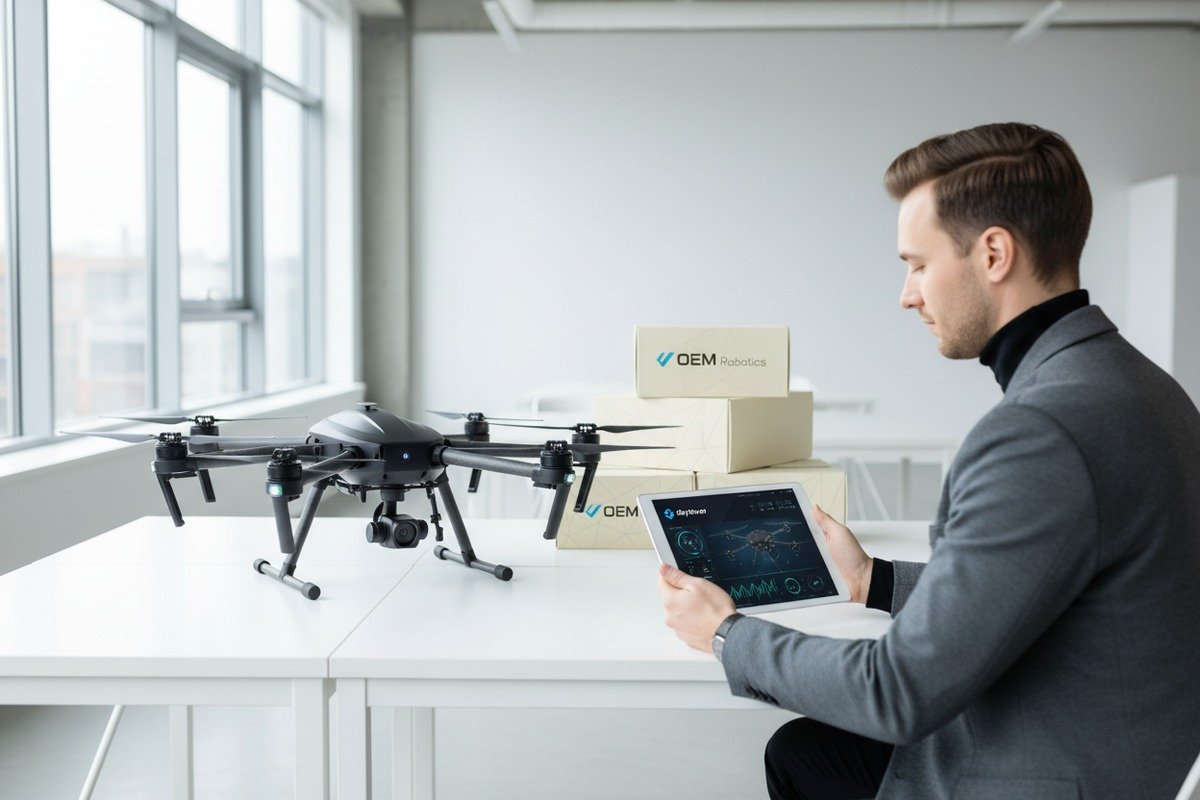
D'après notre expérience d'exportation sur les marchés américain et européen, la cohérence de la marque est très importante pour nos partenaires de distribution. Lorsque votre drone arrive sur le site d'un client, chaque élément, de l'interface de l'application de vol au boîtier imprimé, doit refléter l'identité de votre entreprise. Un matériel générique sape le positionnement haut de gamme que vous avez construit.
Oui, les fabricants réputés proposent une personnalisation OEM, y compris des applications de vol personnalisées, des configurations de capteurs personnalisées, des supports de charge utile modifiés et des emballages en marque blanche. Attendez-vous à des quantités minimales de commande comprises entre 20 et 100 unités pour les modifications matérielles et à des délais de livraison de 3 à 6 mois pour les modifications logicielles nécessitant un accès au code source.
Options de personnalisation du logiciel
La personnalisation du logiciel va du branding de surface à des changements fonctionnels profonds. Voici ce que la plupart des fabricants peuvent offrir :
Niveau 1 : Branding visuel. Cela inclut votre logo sur l'application de planification de vol, des schémas de couleurs personnalisés et des rapports personnalisés. Ces changements nécessitent un temps de développement minimal et peuvent généralement être réalisés en 4 à 6 semaines.
Niveau 2 : Modifications de l'interface. Cela implique l'ajout ou la suppression de fonctionnalités de l'interface utilisateur, la modification des paramètres par défaut pour votre marché cible et l'intégration de la plateforme cloud de votre entreprise pour le stockage des données. Prévoyez 2 à 4 mois de développement.
Niveau 3 : Fonctionnalités de base. Cela couvre l'ajout d'algorithmes propriétaires, l'intégration de capteurs personnalisés ou la modification du comportement de vol. Ce niveau nécessite un accès au code source et une collaboration étroite avec les ingénieurs. Délai : 4 à 6 mois minimum.
Possibilités de personnalisation matérielle
| Type de personnalisation | Complexité | Fourchette de MOQ | Délai d'exécution |
|---|---|---|---|
| Marquage externe (autocollants, couleurs) | Faible | 10-20 unités | 2-4 semaines |
| Modifications du support de charge utile | Moyen | 50-100 unités | 6-8 semaines |
| Intégration de capteurs personnalisée | Haut | 100+ unités | 3-4 mois |
| Modifications de la géométrie du cadre | Très élevé | 200+ unités | 6+ mois |
| Firmware du contrôleur de vol personnalisé | Très élevé | 100+ unités | 4-6 mois |
Questions à poser à votre fournisseur
Avant de vous engager dans la personnalisation, clarifiez ces points :
- Qui est propriétaire du code logiciel modifié ?
- Pouvez-vous recevoir des mises à jour du firmware indépendamment après la personnalisation ?
- Quelle documentation recevrez-vous pour le support après-vente ?
- La personnalisation affecte-t-elle les certifications réglementaires ?
- Quel est le processus pour demander des modifications après la livraison initiale ?
Dans nos installations, nous maintenons des branches de développement séparées pour chaque partenaire OEM majeur. Cela nous permet de pousser des mises à jour sans casser les fonctionnalités personnalisées. Tous les fabricants ne travaillent pas de cette façon, alors confirmez l'accord avant de signer des contrats.
Éviter le verrouillage propriétaire
Une préoccupation courante parmi nos partenaires de distribution est de devenir dépendant d'un seul fournisseur. Pour vous protéger, négociez un accès API ouvert et des formats de données standard. Votre module de cartographie devrait exporter des données compatibles avec Pix4D, DJI Terra, DroneDeploy et d'autres plateformes majeures. Les formats propriétaires piègent vos clients et limitent votre flexibilité.
Quelles normes de durabilité dois-je attendre d'un drone de cartographie haut de gamme pour minimiser mes coûts de maintenance ?
Notre chaîne de production teste chaque drone par cyclage thermique, exposition aux vibrations et impacts de crash simulés avant l'expédition. Nous avons appris très tôt que les défaillances sur le terrain détruisent les relations avec les distributeurs plus rapidement que tout autre problème. Lorsqu'un drone de cartographie tombe en panne en milieu de saison, votre client agricole perd des fenêtres de données critiques et vous blâme, pas le fabricant.
Attendez-vous à ce que les drones de cartographie haut de gamme répondent à un indice de protection IP43 ou supérieur, résistent à des températures de fonctionnement comprises entre -20°C et 50°C, soient dotés de cadres en fibre de carbone ou en polymère renforcé, et incluent des composants modulaires pour un remplacement sur le terrain. Le temps moyen entre les pannes des moteurs et des ESC devrait dépasser 500 heures de vol.

Spécifications critiques de durabilité
La durabilité n'est pas une note unique. Elle englobe plusieurs facteurs qui déterminent ensemble la durée pendant laquelle votre drone fonctionnera de manière fiable dans les environnements agricoles.
Indice de Protection (IP). Les environnements agricoles impliquent de la poussière, du pollen, de la pluie légère et des éclaboussures occasionnelles. L'IP43 offre une protection de base contre les grosses particules et les jets d'eau. L'IP54 ou supérieur est préférable pour les drones opérant dans des conditions météorologiques variables.
Plage de température. Les vols tôt le matin pendant la plantation de printemps peuvent rencontrer des températures proches du gel. Les opérations de midi en été peuvent dépasser 45°C en plein soleil. Les performances de la batterie et la fiabilité électronique se dégradent en dehors des plages spécifiées.
Matériaux du cadre. La fibre de carbone offre le meilleur rapport résistance/poids mais coûte plus cher. Les polymères renforcés offrent une bonne durabilité à moindre coût. Les cadres en aluminium ajoutent du poids mais simplifient les réparations. Pour les drones de cartographie, l'intégrité du support de charge utile est la plus importante : un support fissuré désaligne les capteurs et ruine la qualité des données.
Coûts de maintenance
| Composant | Durée de vie typique | Coût de remplacement | Remplaçable sur site ? |
|---|---|---|---|
| Hélices | 50-100 heures | $20-50/set | Oui |
| Moteurs | 300-500 heures | $80-150/each | Oui |
| CSE | 400-600 heures | $60-100/each | Modéré |
| Piles | 200-400 cycles | $200-500/each | Oui |
| Amortisseurs de cardan | 150-250 heures | $30-60/set | Oui |
| Capteurs de caméra | 1000+ heures | $500-2000 | Non |
| Contrôleur de vol | 1000+ heures | $300-600 | Non |
Réduire le coût total de possession
Des décisions d'achat intelligentes réduisent les coûts à long terme. Voici les stratégies utilisées par nos partenaires de distribution les plus performants :
Achetez des pièces de rechange lors des commandes initiales. Un inventaire de pièces de 10% (moteurs, hélices, batteries) évite les temps d'arrêt en attendant les remplacements.
Choisissez des conceptions modulaires. Lorsqu'un moteur tombe en panne, vous ne devez remplacer que le moteur, pas l'ensemble du bras. Notre conception d'hexacoptère permet le remplacement individuel des bras en moins de 15 minutes.
Demandez des données de fiabilité. Demandez aux fabricants des données sur les taux de défaillance sur le terrain et le temps moyen entre les pannes. S'ils ne peuvent pas fournir cela, leur contrôle qualité peut être insuffisant.
Négociez les conditions de garantie. Les garanties standard couvrent 12 mois. Pour les partenariats à gros volume, négociez une couverture étendue ou des programmes de réparation à prix réduit.
Comment m'assurer que mon fournisseur fournit le support technique et la documentation d'exportation nécessaires à l'importation de modules de cartographie ?
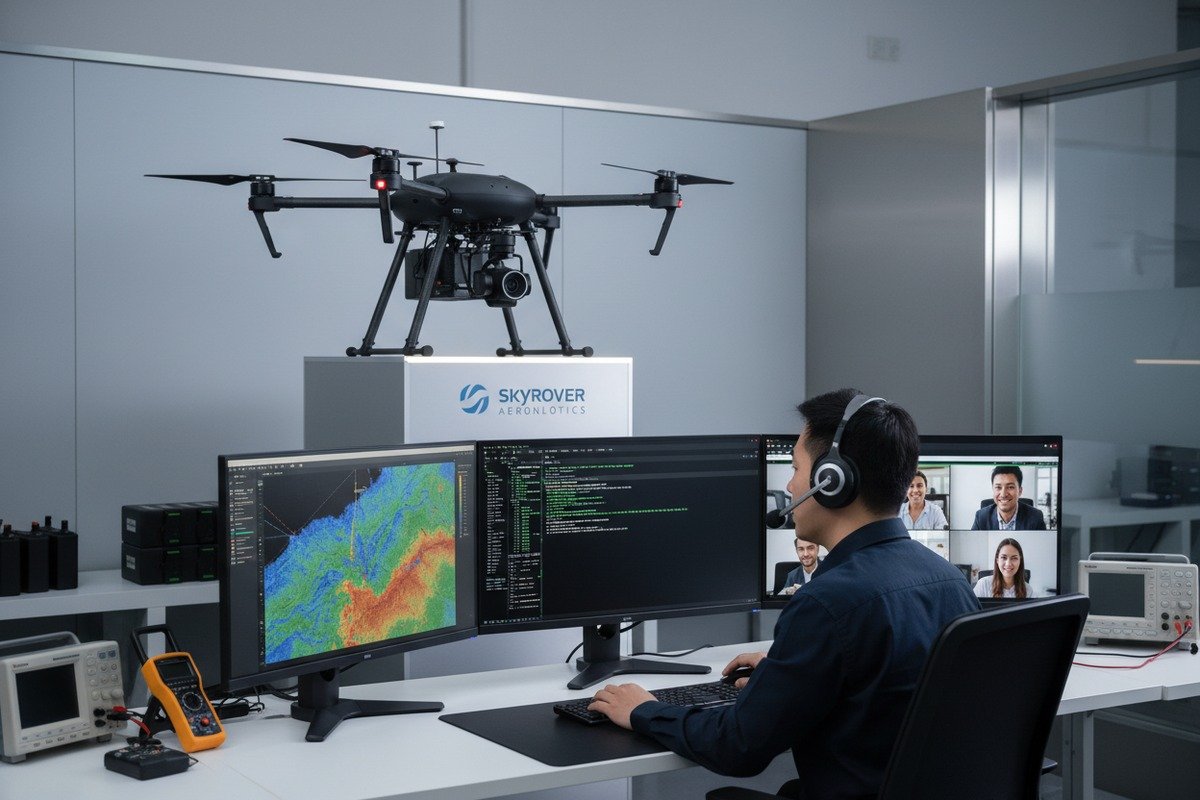
Lorsque nous préparons les expéditions pour nos partenaires américains, la documentation demande presque autant d'attention que le contrôle qualité. Les certificats manquants, les codes HS incorrects ou les dossiers techniques inadéquats créent des retards douaniers qui se transforment en fenêtres de livraison manquées. Votre réputation dépend de fournisseurs qui comprennent la conformité à l'exportation aussi bien qu'ils comprennent l'ingénierie des drones.
Vérifiez que votre fournisseur fournit les certifications CE/FCC, des dossiers de documentation technique complets, une classification précise des codes SH, des factures commerciales avec déclarations de l'utilisateur final et un support technique réactif par e-mail ou appel vidéo. Demandez un échantillon de documentation avant de passer commande et confirmez des délais de réponse de 24 à 48 heures pour les questions techniques.
Documentation d'exportation essentielle
L'importation de drones de cartographie aux États-Unis et en Europe nécessite une documentation spécifique. Les articles manquants entraînent des retards et des saisies potentielles.
Certifications réglementaires. Pour le marché américain, la certification FCC 7 confirme la conformité des fréquences radio. Pour l'Europe, Marquage CE 8 démontre la conformité avec les directives applicables. Celles-ci sont non négociables pour la vente commerciale.
Dossiers Techniques. La documentation technique complète comprend les schémas de circuits, la nomenclature, les rapports de test et les manuels d'utilisation. Les autorités douanières peuvent les demander pour vérifier les spécifications déclarées.
Documentation Commerciale. Chaque expédition nécessite des factures commerciales, des listes de colisage et des certificats d'origine. Pour les drones, inclure des déclarations de l'utilisateur final confirmant que l'équipement sera utilisé à des fins agricoles et non militaires.
Liste de contrôle des documents
| Type de document | Importation aux États-Unis | Importation dans l'UE | Notes |
|---|---|---|---|
| Certificat FCC | Exigée | Non requis | 47 CFR Partie 15 |
| Déclaration CE | Non requis | Exigée | Directive RED 2014/53/UE |
| Rapports de test (CEM) | Recommandé | Exigée | Série EN 301 489 |
| Manuel d'utilisation (anglais) | Exigée | Exigée | Inclure les avertissements de sécurité |
| Certificat d'origine | Exigée | Exigée | Formulaire A pour les tarifs préférentiels |
| FDS (pour les batteries) | Exigée | Exigée | Expédition de batteries au lithium |
| Déclaration de l'utilisateur final | Souvent requis | Parfois requis | Conformité des biens à double usage |
Attentes en matière de support technique
La capacité de support technique distingue les fabricants professionnels des sociétés commerciales. Avant de signer des accords, évaluez ces dimensions de support :
Temps de réponse. Pour les projets en cours, attendez-vous à des réponses par e-mail dans les 24 à 48 heures ouvrables. Les problèmes critiques doivent avoir des voies d'escalade vers des ingénieurs seniors.
Canaux de communication. L'e-mail convient à la documentation. Les appels vidéo conviennent au dépannage. Certains partenaires ont besoin d'un support sur site pour les déploiements initiaux - confirmez la disponibilité et les coûts.
Qualité de la documentation. Demandez des guides d'intégration d'échantillons, la documentation API et des organigrammes de dépannage. Une documentation médiocre indique une mauvaise discipline d'ingénierie dans l'ensemble.
Programmes de formation. Votre équipe a besoin de connaissances sur les produits pour soutenir vos clients. Renseignez-vous sur les options de formation - sessions à distance, formation sur site à l'usine ou programmes de techniciens certifiés.
Signaux d'alerte lors de l'évaluation des fournisseurs
Surveillez ces signes avant-coureurs :
- Impossible de fournir les documents de certification dans les 48 heures suivant la demande
- Les certifications montrent des noms ou des adresses d'entreprises différents
- Les questions techniques reçoivent des réponses vagues ou retardées
- Pas de personnel dédié à l'exportation ou à la conformité
- Refus de fournir des références clients
Dans notre entreprise, nous attribuons des coordinateurs d'exportation dédiés à chaque marché majeur. Ces spécialistes comprennent la réglementation locale et maintiennent des modèles de documentation à jour. Cette structure garantit que vos expéditions passent la douane sans surprises.
Conclusion
L'évaluation des modules de cartographie pour drones agricoles nécessite une évaluation systématique de la précision, de la personnalisation, de la durabilité et du support du fournisseur. Utilisez les cadres et les listes de contrôle de ce guide pour comparer objectivement les options. Lorsque vous trouvez un fabricant répondant à ces normes, vous jetez les bases d'un partenariat rentable et à long terme au service de vos clients agriculteurs.
Notes de bas de page
1. Trouvé un article pertinent et faisant autorité discutant des avantages des données LiDAR et multispectrales pour l'agriculture. ︎
2. Remplacé par un article qui explique clairement les indices de protection (IP) et fait référence à la norme CEI. ︎
3. Fournit un aperçu académique de la technologie à taux variable et de son application dans l'agriculture de précision. ︎
4. Explique le positionnement cinématique en temps réel (RTK) et ses applications de haute précision dans l'agriculture et les drones. ︎
5. Définit les modèles numériques de terrain (MNT) comme des représentations 3D du sol nu, cruciales pour l'analyse géospatiale. ︎
6. Remplacé par une source très faisant autorité du U.S. Geological Survey expliquant les points de contrôle au sol. ︎
7. Explique le processus de certification FCC obligatoire pour les drones afin d'assurer la conformité et l'accès au marché aux États-Unis. ︎
8. Fournit un guide complet des exigences et réglementations du marquage CE pour les drones sur le marché européen. ︎

 English
  Español de México
  Deutsch
  Français
  Русский
  العربية
Comments
No comments yet. Be the first to share your thoughts!
Leave a Comment