
Chaque fois que notre équipe de production expédie un drone de lutte contre les incendies à l'étranger, nous retenons notre souffle Exigences NFPA 2400 1. Une solution d'emballage mal conçue peut transformer un drone industriel de $15 000 en ferraille coûteuse. Le problème s'aggrave lorsque les fournisseurs manquent d'expertise dans l'industrie de la lutte contre les incendies.
Pour évaluer la coopération des fournisseurs dans la conception d'emballages pour drones de lutte contre les incendies, évaluez leur expertise en ingénierie, leur conformité aux normes internationales de durabilité telles que les indices MIL-STAN et IP55, leurs capacités de marque OEM et leur support de documentation logistique. Un fournisseur solide démontre une expérience éprouvée avec les matériaux résistants à la chaleur et les solutions d'emballage à déploiement rapide.
Laissez-moi vous présenter le cadre d'évaluation exact que notre équipe utilise lors de la sélection de partenaires d'emballage pour nos drones industriels, y compris les quadricoptères et octocoptères de lutte contre les incendies.
Comment puis-je évaluer l'expertise en ingénierie d'un fournisseur lors du co-développement de mon emballage de drone personnalisé ?
Lorsque nos ingénieurs collaborent avec des fournisseurs d'emballage, nous découvrons souvent que l'expérience générale en emballage industriel ne se traduit pas par des exigences spécifiques aux drones. Les caméras thermiques, les nacelles stabilisées et les hélices en fibre de carbone exigent chacune des solutions de protection uniques.
Évaluez l'expertise en ingénierie d'un fournisseur en examinant sa compréhension des composants spécifiques aux drones, ses capacités de prototypage, ses connaissances en science des matériaux pour la résistance thermique (-20°C à +60°C) et sa volonté de mener des essais sur le terrain avec des professionnels de la lutte contre les incendies. Demandez des dessins techniques détaillés et une documentation de tests de résistance avant de vous engager.

Comprendre les exigences de protection des composants de drone
Nos drones de lutte contre les incendies comportent des composants sensibles qui nécessitent des inserts en mousse spécialisés. Le cadre en fibre de carbone noir mat de notre quadricoptère a besoin d'une protection contre les chocs et les vibrations. Le boîtier supérieur rouge vif contient des composants électroniques critiques qui ne tolèrent pas l'exposition à l'humidité.
Un fournisseur d'emballage compétent doit démontrer sa connaissance de ces vulnérabilités spécifiques :
| Composant | Priorité de protection | Matériau recommandé |
|---|---|---|
| Cadre en fibre de carbone | Absorption des chocs | Mousse de polyéthylène haute densité |
| Caméra nacelle 3 axes | Isolation vibratoire | Mousse antistatique découpée sur mesure |
| Piles au lithium 2 | Contrôle de la température | Barrières thermiques |
| Hélices (8 pales) | Protection contre les rayures | Compartiments souples individuels |
| Contrôleurs de vol | Protection contre l'humidité | Doublure résistante à l'humidité |
Processus de prototypage et d'itération
Des fournisseurs solides offrent des capacités de prototypage rapide. Notre expérience montre que les conceptions d'emballage fonctionnent rarement parfaitement du premier coup. Nous passons généralement par trois à quatre itérations avant de finaliser une conception.
Posez ces questions aux fournisseurs potentiels :
- Combien de cycles de prototypage incluent-ils dans leur service standard ?
- Quel est leur délai de livraison pour les modifications de prototypes ?
- Peuvent-ils accueillir des visites sur site dans vos locaux pour des tests d'ajustement ?
Normes de documentation technique
Demandez un échantillon de documentation technique de projets précédents. Un fournisseur d'emballage professionnel fournit des dessins détaillés avec des mesures précises. Ils doivent spécifier les indices de densité de la mousse, l'épaisseur du matériau du boîtier et les spécifications du mécanisme de fermeture.
Notre équipe d'ingénierie examine la documentation du fournisseur pour ces éléments :
- Spécifications de tolérance pour les compartiments internes
- Calculs de répartition du poids
- Indices de résistance à l'empilage pour le stockage en entrepôt
- Paramètres et résultats des tests de chute
Collaboration pour les tests sur le terrain
Les meilleurs fournisseurs d'emballages accueillent favorablement la collaboration avec les utilisateurs finaux. Pour les drones de lutte contre l'incendie, cela signifie impliquer les chefs des pompiers et les premiers intervenants dans le processus d'évaluation. Ils fournissent des retours du monde réel que les ingénieurs ne peuvent pas simuler en laboratoire.
Nous avons travaillé une fois avec un fournisseur qui a refusé de participer à des essais sur le terrain. Leur emballage semblait parfait sur le papier mais a échoué lors d'un scénario de déploiement d'urgence simulé. Le mécanisme de libération rapide s'est bloqué sous pression.
Quels critères dois-je utiliser pour m'assurer que l'emballage de mon drone respecte les normes internationales de durabilité et de sécurité ?
Notre équipe d'exportation a appris cette leçon à ses dépens lorsqu'une expédition vers l'Europe a été retenue à la douane pendant trois semaines. L'emballage ne comportait pas l'étiquetage approprié des batteries au lithium UN3480. Le retard a coûté à notre client un contrat critique pour la saison de lutte contre les incendies.
Assurez-vous que l'emballage du drone respecte les normes internationales en vérifiant la conformité avec les normes UN3480/3481 pour les batteries au lithium, les spécifications MIL-STAN pour le transport de qualité militaire, les indices IP54/IP55 pour la résistance à la poussière et à l'eau, et les exigences NFPA 2400 pour les petits UAS. Demandez des documents de certification par des tiers et effectuez des tests de vérification indépendants avant la production de masse.

Normes de température et environnementales
Les drones de lutte contre l'incendie fonctionnent dans des conditions extrêmes. L'emballage doit protéger l'équipement pendant le transport et le stockage dans des climats variés. Nos drones sont conçus pour fonctionner entre -25°C et 45°C, et l'emballage doit maintenir son intégrité sur une plage encore plus large.
| Type standard | Plage de température | Application |
|---|---|---|
| Transport de drones commerciaux | De -20°C à +60°C | Routes maritimes standard |
| MIL-STAN 3 qualité militaire | -40°C à +70°C | Contrats gouvernementaux |
| Compatibilité DJI Dock 3 | -25°C à +45°C | Systèmes de déploiement autonomes |
| Stockage prolongé | -30°C à +50°C | Conditions d'entrepôt |
Protocoles de tests de durabilité
Des fournisseurs fiables effectuent des tests de durabilité complets avant d'approuver toute conception d'emballage. Ces tests simulent les conditions d'expédition réelles que rencontre le matériel de lutte contre l'incendie.
Les tests essentiels comprennent :
- Tests de chute à différentes hauteurs et angles
- Tests de vibration simulant le transport par camion et par avion
- Tests de compression pour le stockage empilé
- Tests d'exposition à l'humidité pour les routes maritimes côtières
Conformité des batteries au lithium
Cette exigence est non négociable. Nos drones utilisent des batteries au lithium de grande capacité qui sont soumises à des réglementations internationales strictes en matière d'expédition. L'UN3480 couvre les batteries lithium-ion expédiées seules. L'UN3481 couvre les batteries conditionnées avec l'équipement.
Les fournisseurs d'emballages doivent démontrer :
- Isolation adéquate du compartiment batterie
- Matériaux de barrière ignifuges
- Zones d'étiquetage externes claires
- Documentation pour l'approbation du fret aérien
IP Rating Verification
L'emballage lui-même doit offrir une protection environnementale lors d'une brève exposition aux éléments. Bien que nos drones soient dotés d'indices IP55 4 pour la résistance à la poussière et à l'eau, l'emballage nécessite une protection similaire lors des opérations de chargement et de déchargement.
| Indice IP | Protection contre la poussière | Protection contre l'eau | Cas d'utilisation |
|---|---|---|---|
| IP54 | Protégé contre la pénétration de poussière | Résistant aux éclaboussures | Transport standard |
| IP55 | Protégé contre la pénétration de poussière | Jets d'eau à basse pression | Déploiement sur le terrain |
| IP65 | Étanche à la poussière | Jets d'eau à basse pression | Stockage en environnement hostile |
| IP67 | Étanche à la poussière | Immersion jusqu'à 1 mètre | Situations d'urgence |
Valeur de certification par un tiers
Ne vous fiez pas uniquement aux affirmations des fournisseurs. Demandez des certificats auprès de laboratoires d'essais reconnus. Notre équipe de contrôle qualité vérifie les certifications directement auprès des organismes émetteurs lorsqu'elle traite avec de nouveaux fournisseurs.
Les organismes de certification acceptables comprennent :
- Intertek (marque ETL)
- TÜV Rheinland
- SGS
- Bureau Veritas
Comment évaluer la capacité d'un fabricant à gérer mes exigences spécifiques en matière de marque et d'étiquetage OEM ?
Nos distributeurs aux États-Unis et en Europe exigent une image de marque spécifique sur les emballages. Lorsque nous expédions nos octocoptères industriels avec le boîtier aérodynamique jaune, nos partenaires s'attendent à ce que leur logo d'entreprise soit bien visible. Une mauvaise exécution de la marque nuit à leur image professionnelle.
Évaluer les capacités de marque des OEM en examinant les projets de marque précédents, en demandant des échantillons d'impression sur les matériaux d'emballage réels, en confirmant leur capacité à faire correspondre les couleurs Pantone avec précision et en vérifiant qu'ils comprennent les exigences d'étiquetage réglementaire pour les marchés de destination. Les fournisseurs solides maintiennent des processus de contrôle qualité spécifiquement pour la cohérence de l'impression sur les séries de production.
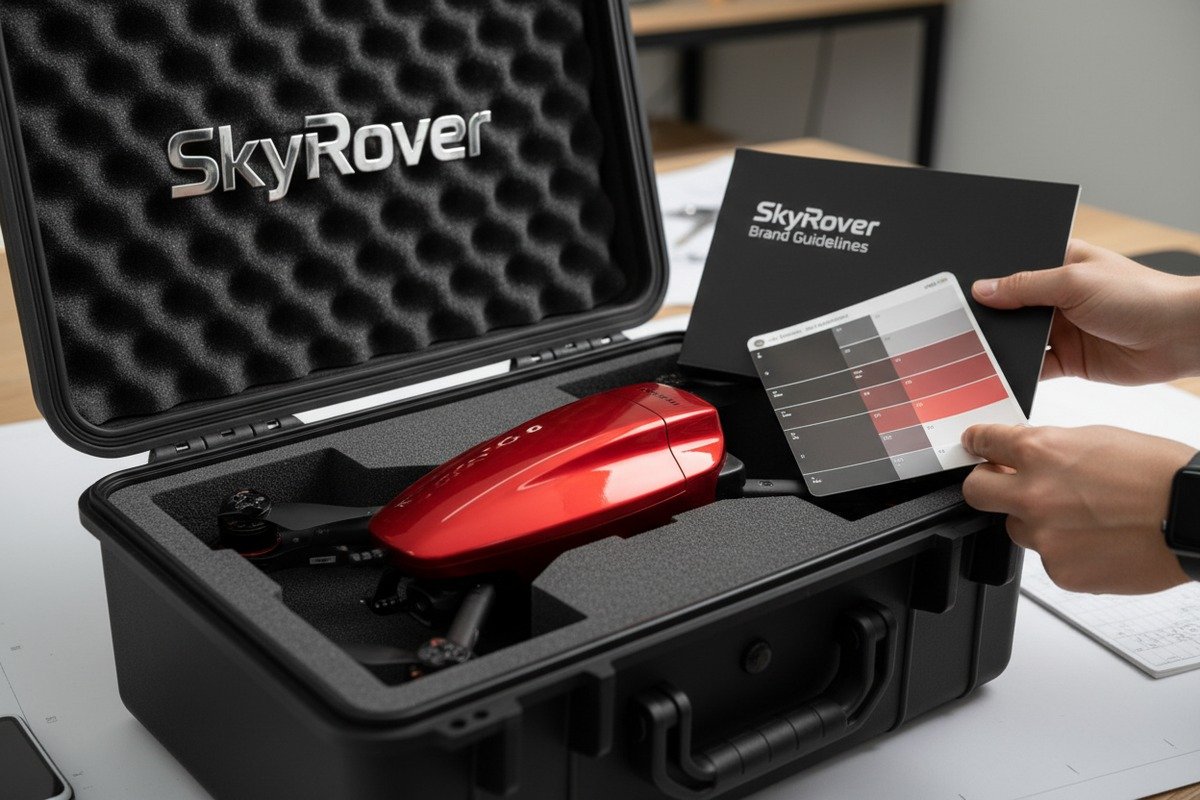
Cohérence de l'identité de marque
Votre marque représente la qualité pour les clients finaux. Les pompiers qui achètent du matériel s'attendent à une présentation professionnelle. Des couleurs incohérentes ou des logos flous suggèrent des produits de faible qualité à l'intérieur.
Nous évaluons les fournisseurs de marque selon ces critères spécifiques :
- Précision de la correspondance des couleurs aux spécifications Pantone
- Résolution d'impression sur surfaces en mousse et en plastique
- Durabilité des logos imprimés sous contrainte de manipulation
- Cohérence entre plusieurs lots de production
Exigences d'étiquetage réglementaire
Les différents marchés ont des exigences d'étiquetage différentes. Les États-Unis exigent des avertissements de sécurité et des marques de certification spécifiques. Les marchés de l'Union européenne ont besoin Marquage CE 5 et les symboles DEEE. Votre fournisseur d'emballage doit comprendre ces différences régionales.
| Marché | Étiquettes requises | Exigences de placement |
|---|---|---|
| États-Unis | Marque FCC, certification UL, avertissement de batterie au lithium | Visible sur le boîtier extérieur |
| Union européenne | Marquage CE, symbole DEEE, pays d'origine | Emballage extérieur et intérieur |
| Canada | Certification IC, texte de sécurité bilingue | Surface externe |
| Australie | Marquage RCM, déclaration de conformité | Panneau d'affichage principal |
Processus d'évaluation d'échantillons
N'approuvez jamais le marquage OEM sur la base de maquettes numériques seules. Demandez des échantillons physiques imprimés sur les matériaux d'emballage réels. Notre équipe d'approvisionnement commande des échantillons en petites quantités pour les tester dans des conditions réalistes.
Vérifiez ces éléments sur les échantillons physiques :
- Précision des couleurs dans différentes conditions d'éclairage
- Adhérence de l'impression après exposition aux changements de température
- Lisibilité du texte aux distances de visualisation typiques
- Alignement du placement du logo avec les spécifications de conception
Coordination du marquage multi-composants
Les emballages de drones de lutte contre l'incendie contiennent plusieurs éléments. Le boîtier principal, les inserts en mousse, les pochettes d'accessoires et les dossiers de documentation nécessitent tous un marquage coordonné. Les fournisseurs doivent démontrer leur capacité à maintenir la cohérence sur tous les composants.
Notre forfait standard pour les drones industriels comprend :
- Étui rigide extérieur avec logo principal
- Découpes en mousse intérieure avec image de marque secondaire
- Étiquettes du compartiment accessoires
- Guide de démarrage rapide avec identité de marque complète
- Boîtier de rangement pour batterie avec étiquetage de sécurité
Contrôle qualité de la série de production
Interrogez les fournisseurs sur leurs processus de contrôle qualité pour la cohérence de l'impression. Les commandes importantes couvrant plusieurs séries de production peuvent présenter des variations sans contrôles appropriés. Demandez une documentation de leurs points de contrôle qualité et des tolérances de variation acceptables.
Les fournisseurs professionnels fournissent :
- Rapports d'inspection de premier article
- Photographies de qualité en cours de processus
- Listes de contrôle d'inspection finale
- Suivi par lot pour la traçabilité
Mon fournisseur peut-il fournir le soutien logistique et la documentation nécessaires à l'emballage de mon drone pour le dédouanement ?
Nous expédions des drones de lutte contre les incendies aux services d'incendie à travers les États-Unis et l'Europe. Chaque expédition nécessite une documentation précise. Un formulaire manquant peut retarder la livraison de plusieurs semaines. Pour l'équipement d'intervention d'urgence, les retards ont de graves conséquences.
Évaluez le soutien logistique en confirmant que votre fournisseur fournit une documentation complète d'exportation, y compris les factures commerciales, les listes de colisage, les certificats d'origine, les déclarations de batteries au lithium et les codes de classification douanière. Les fournisseurs solides offrent des services de livraison porte-à-porte et entretiennent des relations avec des transitaires expérimentés dans le transport d'équipements de drones.

Liste de contrôle des documents essentiels
Notre équipe logistique maintient une liste de contrôle standard pour chaque expédition internationale. L'absence d'un seul document peut entraîner des blocages douaniers. Les fournisseurs d'emballages professionnels comprennent ces exigences et intègrent la préparation de la documentation dans leur service.
Les documents essentiels comprennent :
- Facture commerciale avec descriptions précises des produits
- Liste de colisage avec répartition détaillée du contenu
- Certificat d'origine pour les avantages des accords commerciaux
- Déclaration de batterie au lithium pour le transport aérien
- Fiches de données de sécurité des matériaux le cas échéant
Classification du Système Harmonisé
Des codes SH corrects déterminent les droits d'importation et le traitement réglementaire. Classification du Système Harmonisé 6 Les drones et leur emballage relèvent de classifications spécifiques qui varient selon les composants. Une classification incorrecte peut entraîner des pénalités ou la saisie de l'expédition.
| Type de produit | Code SH | Description |
|---|---|---|
| Drone complet | 8806.10 | Aéronef sans pilote, piloté à distance |
| Pièces détachées pour drones | 8806.91 | Pièces d'aéronefs sans pilote |
| Piles au lithium | 8507.60 | Accumulateurs lithium-ion |
| Systèmes de caméra | 8525.80 | Caméras de télévision, caméras numériques |
| Étuis de protection | 4202.12 | Étuis avec surface extérieure en plastique |
Conformité NDAA pour les ventes gouvernementales
Les services d'incendie et les agences gouvernementales aux États-Unis exigent de plus en plus d'équipements conformes à la NDAA. Cela affecte à la fois le drone et sa chaîne d'approvisionnement en emballage. Votre fournisseur doit démontrer que les matériaux et composants d'emballage ne proviennent pas de sources interdites.
Nous conservons la documentation prouvant :
- Vérification de la source des matériaux
- Certification du lieu de fabrication
- Transparence de la chaîne d'approvisionnement des composants
- Conformité aux exigences de la section 889
Freight Forwarder Relationships
Les fournisseurs expérimentés entretiennent des relations avec des transitaires 7 spécialisés dans le matériel technique. Ces transitaires comprennent les exigences spécifiques aux drones et gèrent efficacement les complexités réglementaires.
Demandez aux fournisseurs potentiels :
- Avec quels transitaires travaillent-ils régulièrement ?
- Offrent-ils des services de livraison porte-à-porte ?
- Quel est leur historique en matière de délais de dédouanement ?
- Peuvent-ils fournir des références d'expéditions de drones précédentes ?
Assurance et couverture de responsabilité
Un soutien logistique professionnel comprend une couverture d'assurance appropriée. Nos drones de lutte contre les incendies représentent un investissement important. Les fournisseurs d'emballages doivent proposer ou coordonner une assurance cargo couvrant la pleine valeur du contenu.
Les considérations de couverture comprennent :
- Protection contre les dommages de transit
- Couverture des retards douaniers
- Protection contre le vol et la perte
- Dommages dus aux excursions de température
Suivi des expéditions en temps réel
La logistique moderne nécessite de la visibilité. Votre fournisseur d'emballages doit fournir ou faciliter des capacités de suivi en temps réel. Pour les équipements de lutte contre les incendies sensibles au temps, connaître l'emplacement exact de l'expédition permet une meilleure planification.
Les fournisseurs avancés proposent :
- Intégration du suivi GPS
- Capteurs d'emballage intelligents pour la surveillance de la température
- Mises à jour automatisées du statut douanier
- Systèmes de confirmation de livraison
Conclusion
L'évaluation de la coopération des fournisseurs pour l'emballage de drones de lutte contre les incendies nécessite une évaluation systématique de l'expertise en ingénierie, des capacités de conformité, de la qualité de la marque et du soutien logistique. Utilisez les cadres et les listes de contrôle partagés ici pour prendre des décisions éclairées qui protègent votre investissement et servent efficacement vos clients.
Notes de bas de page
1. Norme officielle de la NFPA pour les petits systèmes d'aéronefs sans pilote dans les opérations de sécurité publique. ︎
2. Directives officielles de l'IATA sur l'expédition de batteries au lithium par avion, y compris la réglementation. ︎
3. Explique les normes d'emballage militaires, les méthodes de conservation et les niveaux (A/B). ︎
4. Remplacement de HTTP 404 par une page Wikipedia faisant autorité sur le code IP, qui explique les notations IP55. ︎
5. Explique ce qu'est le marquage CE, ses exigences et comment l'appliquer pour l'accès au marché de l'UE. ︎
6. Explique les codes SH, leur structure et leur importance pour le commerce international et les douanes. ︎
7. Fournit une définition complète et les fonctions des transitaires en logistique. ︎
8. Politique gouvernementale officielle sur la section 889 du NDAA, interdisant certains équipements de télécommunication. ︎

 English
  Español de México
  Deutsch
  Français
  Русский
  العربية
