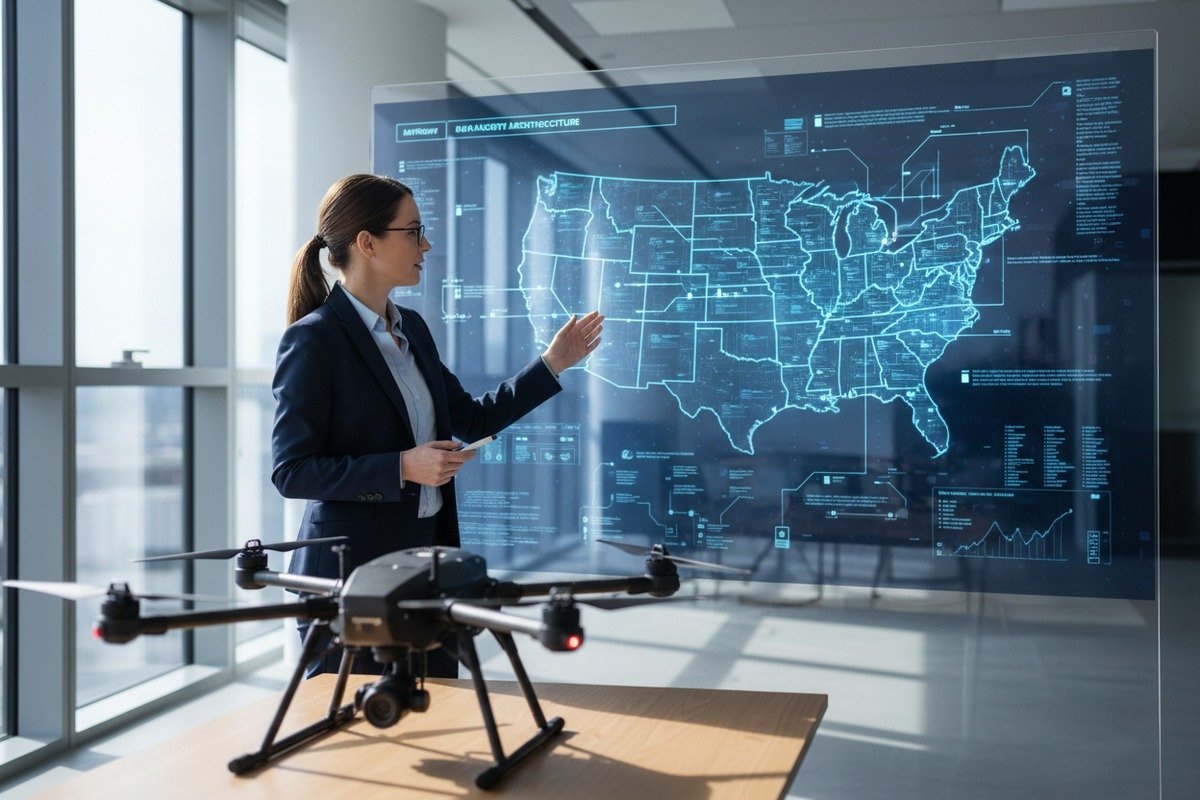
Lorsque notre équipe d'ingénierie a développé des fonctionnalités de connectivité cloud pour les drones agricoles SkyRover, nous avons découvert que de nombreux acheteurs ont du mal à vérifier où résident réellement leurs données agricoles sensibles Microsoft Azure 1. Cette incertitude crée de réels risques de conformité et des maux de tête opérationnels pour les exploitations agricoles américaines.
Pour vérifier le déploiement de serveurs locaux aux États-Unis, demandez des accords de traitement des données avec des garanties explicites de localisation des serveurs, des certifications SOC 2 Type II et ISO 27001, des diagrammes détaillés de l'architecture des flux de données et des clauses contractuelles prévoyant des pénalités en cas de violation de la résidence des données. Confirmez toujours que les serveurs de sauvegarde sont également basés aux États-Unis.
Laissez-moi vous présenter les étapes de vérification exactes que nos partenaires de distribution américains utilisent pour s'assurer que les données de leurs drones restent à l'intérieur des frontières américaines.
Comment puis-je confirmer que mes données de drone agricole sont bien stockées sur un serveur basé aux États-Unis ?
Lorsque nous expédions des drones agricoles à nos partenaires américains, la première question qu'ils posent concerne souveraineté des données 2. De nombreux acheteurs sont confus par les affirmations marketing vagues sur le "stockage cloud sécurisé" sans preuve concrète de l'emplacement des serveurs.
Vous pouvez confirmer le stockage basé aux États-Unis en demandant des accords de traitement des données officiels indiquant les emplacements exacts des serveurs, en exigeant des rapports d'audit SOC 2 Type II, en demandant des diagrammes d'architecture montrant les chemins de flux de données et en vérifiant via vos propres tableaux de bord de compte cloud si la plateforme s'intègre à AWS ou Azure.

Commencez par la documentation officielle
La méthode de vérification la plus fiable commence par des documents juridiques. Demandez à votre fournisseur de plateforme cloud un Accord de traitement des données 3 qui nomme explicitement les centres de données américains. Ce document doit spécifier les villes ou les régions, pas seulement "Amérique du Nord"."
Notre expérience d'exportation sur le marché américain montre que les fournisseurs sérieux fournissent ces informations facilement. Si un fournisseur hésite ou donne des réponses vagues, considérez cela comme un signal d'alarme.
Demandez des rapports d'audit tiers
Les certifications SOC 2 Type II 4 fournissent une vérification indépendante des pratiques de sécurité des données. Ces audits examinent où les données sont stockées et comment elles circulent dans le système. Les certifications ISO 27001 5 offrir une assurance similaire.
| Type de certification | Ce qu'il vérifie | Demande du fournisseur |
|---|---|---|
| SOC 2 Type II | Contrôles de sécurité des données, infrastructure serveur | Rapport d'audit complet, pas seulement un certificat |
| ISO 27001 | Systèmes de gestion de la sécurité de l'information | Document de certification avec détails de la portée |
| Conformité avec le NDAA 6 | Normes fédérales de sécurité | Déclaration de conformité avec des dispositions spécifiques |
Utiliser les tableaux de bord des fournisseurs de cloud
Certaines plateformes de drones agricoles s'intègrent directement aux comptes cloud contrôlés par l'agriculteur, tels que Amazon S3 7 ou Microsoft Azure. Cette approche vous donne une visibilité directe sur les destinations des données.
Lorsque notre équipe teste les intégrations cloud, nous recommandons aux acheteurs de créer leurs propres comptes AWS ou Azure. Configurez ensuite la plateforme de drones pour y déposer les données. Vous pouvez vérifier la région de stockage directement via votre console cloud.
Vérifier par analyse réseau
Les acheteurs techniques peuvent utiliser des outils de surveillance réseau pour suivre le trajet des paquets de données. Cette méthode nécessite plus d'expertise mais fournit des preuves concrètes.
| Méthode de vérification | Compétences techniques requises | Niveau de fiabilité |
|---|---|---|
| Examen de l'accord de traitement des données | Faible | Élevé (si contractuel) |
| Vérification du tableau de bord cloud | Moyen | Très élevé |
| Analyse des paquets réseau | Haut | Très élevé |
| Audit de sécurité par un tiers | Faible | Haut |
Attention aux pièges courants
Certains fournisseurs affirment un déploiement aux États-Unis mais acheminent les données via des serveurs internationaux pendant le traitement. D'autres peuvent stocker les données primaires aux États-Unis tout en effectuant des sauvegardes dans des lieux à l'étranger. Posez des questions spécifiques sur les chemins de traitement et les lieux de sauvegarde.
Le déploiement d'un serveur local aux États-Unis réduira-t-il considérablement la latence de la plateforme cloud de mon drone ?
De notre usine à Xi'an, nous calibrons les contrôleurs de vol pour divers marchés mondiaux. Latence réseau 8 affecte les opérations de drones en temps réel plus que ce que la plupart des acheteurs réalisent. Ceci devient critique pour la gestion de flotte et le streaming de données en direct.
Oui, le déploiement de serveurs locaux aux États-Unis réduit considérablement la latence pour les opérations basées aux États-Unis. La latence typique passe de 150 à 300 ms avec des serveurs à l'étranger à 20 à 50 ms avec des serveurs nationaux. Cette amélioration permet une surveillance de flotte en temps réel, un traitement d'images plus rapide et des outils de planification de mission plus réactifs.
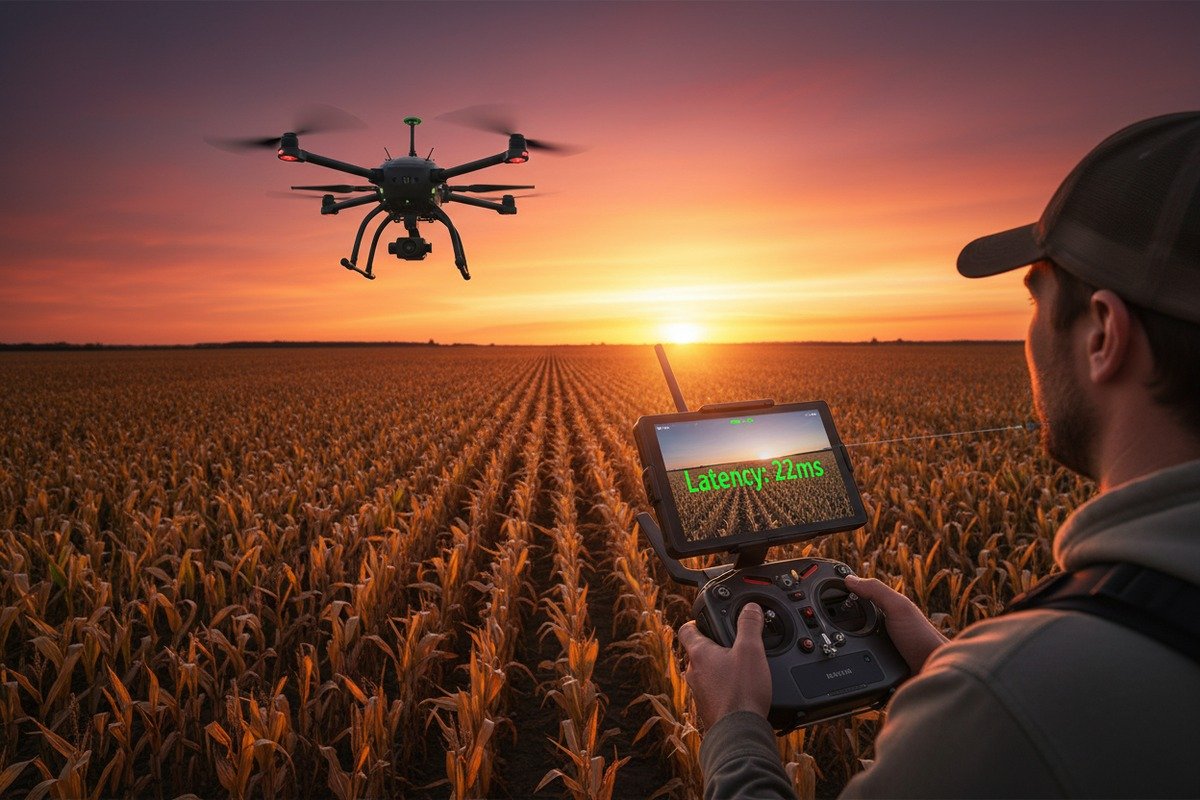
Comprendre la latence dans les opérations agricoles
La latence mesure le délai entre l'envoi des données et la réception d'une réponse. Pour les drones agricoles, cela affecte plusieurs opérations : flux vidéo en direct, télémétrie en temps réel, mises à jour de mission et téléchargements de données.
Lorsque nos ingénieurs testent les connexions cloud depuis des lieux aux États-Unis, nous observons systématiquement des différences de latence spectaculaires en fonction de la géographie des serveurs.
| Emplacement du serveur | Latence typique depuis le Midwest américain | Impact sur les opérations |
|---|---|---|
| États-Unis (côte Est) | 20-40 ms | Excellente performance en temps réel |
| États-Unis (côte Ouest) | 30-50ms | Très bonnes performances |
| Europe | 80-150 ms | Délais perceptibles dans les flux en direct |
| Asie | 150-300ms | Impact significatif sur les fonctions en temps réel |
Quand la latence est le plus importante
Toutes les opérations de drones agricoles ne nécessitent pas une faible latence. Le téléchargement d'images de terrain pour une analyse ultérieure fonctionne bien avec une latence plus élevée. Mais certaines fonctions en souffrent notablement.
Les tableaux de bord de gestion de flotte en temps réel nécessitent des mises à jour rapides. Si vous gérez plusieurs drones sur de grandes exploitations, des informations de statut retardées créent de la confusion. Le streaming vidéo en direct devient saccadé avec une latence élevée. Les outils de planification de mission semblent lents lorsque chaque clic nécessite un aller-retour vers des serveurs distants.
La question du compromis
Certaines plateformes soutiennent que la distribution mondiale de serveurs offre une meilleure redondance. Ils ont peut-être raison en matière de reprise après sinistre. Mais pour les opérations quotidiennes, les serveurs locaux surpassent toujours les serveurs distants.
Nos partenaires de distribution américains signalent systématiquement des opérations plus fluides après être passés à des plateformes avec un déploiement de serveurs américains vérifié. L'amélioration est particulièrement notable pendant les saisons agricoles de pointe lorsque plusieurs drones fonctionnent simultanément.
Tester la latence avant l'achat
Demandez une période d'essai avec la plateforme cloud avant de vous engager. Pendant l'essai, utilisez des outils de diagnostic réseau pour mesurer la latence réelle. Comparez ces mesures aux affirmations du fournisseur.
Certaines plateformes offrent des statistiques de latence dans leurs tableaux de bord. Vérifiez que ces chiffres correspondent à vos mesures indépendantes.
Quelle documentation spécifique dois-je demander pour prouver que la plateforme cloud respecte les normes américaines de confidentialité des données ?
Lorsque nous préparons la documentation d'exportation pour les expéditions de drones à destination des États-Unis, nous travaillons en étroite collaboration avec nos partenaires sur les exigences de conformité. La documentation sur la confidentialité des données est devenue essentielle pour les opérations agricoles recherchant des contrats fédéraux ou traitant des données agricoles sensibles.
Demander des accords de traitement des données avec des clauses explicites de résidence aux États-Unis, des rapports de certification SOC 2 Type II et ISO 27001, une documentation de conformité NDAA, des cartes détaillées des flux de données montrant tous les points de terminaison de traitement, des listes de divulgation des sous-traitants et des accords de niveau de service avec des garanties de résidence des données et des pénalités en cas de violation.

Liste de contrôle des documents essentiels
Établissez une demande de documentation complète avant de solliciter les fournisseurs. Cela démontre votre sérieux et aide à identifier les fournisseurs qui ne peuvent pas répondre à vos exigences.
| Type de document | Objectif | Éléments clés à vérifier |
|---|---|---|
| Accord de traitement des données | Garantie légale de traitement des données | Emplacements explicites des serveurs américains, restrictions sur le flux de données |
| Rapport SOC 2 Type II | Audit de sécurité par un tiers | Portée de l'audit, conclusions, état de la remédiation |
| Certificat ISO 27001 | Gestion de la sécurité de l'information | Validité du certificat, couverture de la portée |
| Architecture du flux de données | Transparence technique | Lieux de traitement, destinations de sauvegarde |
| Liste des sous-traitants | Visibilité de la chaîne d'approvisionnement | Fournisseurs tiers, leurs emplacements |
| SLA avec clause de résidence | Garantie contractuelle | Pénalités en cas de violation, droits d'audit |
Comprendre le cadre réglementaire
Les opérations agricoles américaines sont soumises à de multiples réglementations qui se chevauchent. Les normes de l'USDA régissent certains types de données. Les exigences de l'EPA s'appliquent aux enregistrements d'application de produits chimiques. La conformité NDAA est importante pour les opérations adjacentes au gouvernement.
Votre demande de documentation doit aborder tous les cadres applicables. Demandez aux fournisseurs quelles réglementations spécifiques leur plateforme aborde et comment ils démontrent leur conformité.
Creusez dans les détails des sous-traitants
Les plateformes cloud s'appuient souvent sur des fournisseurs d'infrastructure sous-jacents tels qu'AWS, Google Cloud ou Azure. Ces sous-traitants traitent vos données même si vous n'interagissez jamais directement avec eux.
Demandez une liste complète des sous-traitants. Vérifiez les pratiques de résidence des données de chaque sous-traitant. Certaines plateformes utilisent une infrastructure principale basée aux États-Unis mais acheminent certaines fonctions via des services internationaux.
Langage contractuel qui vous protège
Les politiques de confidentialité génériques offrent peu de protection. Vous avez besoin d'un langage contractuel spécifique qui :
- Nomme les emplacements exacts des centres de données
- Interdit le transfert de données en dehors des États-Unis sans consentement écrit
- Établit des sanctions en cas de violation
- Vous accorde des droits d'audit
- Exige la notification des changements d'infrastructure
Notre équipe juridique recommande de revoir la formulation du contrat avec un avocat familier avec les réglementations sur la protection des données. Cet investissement permet d'éviter des litiges coûteux plus tard.
Drapeaux rouges dans la documentation
Méfiez-vous des formulations vagues comme " principalement basé aux États-Unis " ou " région nord-américaine ". Ces expressions laissent la porte ouverte au routage international des données. Les fournisseurs qui résistent à fournir une documentation spécifique ont souvent quelque chose à cacher.
Si un fournisseur prétend avoir des certifications mais ne peut pas produire de rapports d'audit réels, procédez avec prudence. Les supports marketing mentionnant des certifications diffèrent de la documentation vérifiée.
Mon fabricant de drones peut-il fournir une instance cloud locale dédiée pour mes besoins de gestion de flotte ?
Notre usine de production traite de nombreuses demandes de personnalisation de la part des acheteurs américains. Les exigences de gestion de flotte varient considérablement en fonction de la taille de l'exploitation, de la sensibilité des données et des besoins de conformité. Les instances cloud dédiées représentent une solution pour les applications exigeantes.
Oui, de nombreux fabricants de drones peuvent fournir des instances cloud locales dédiées. Les options incluent le déploiement de cloud privé dans des centres de données américains, des serveurs sur site dans vos installations, des systèmes isolés pour une sécurité maximale et des configurations hybrides. Demandez des propositions détaillées comparant les options de déploiement, les coûts et les exigences de support continu.

Options de déploiement expliquées
Les plateformes modernes de drones agricoles offrent plusieurs modèles de déploiement. Chacun équilibre différemment la sécurité, le coût et la complexité opérationnelle.
| Modèle de déploiement | Niveau de sécurité | Fourchette de coûts | Exigences techniques |
|---|---|---|---|
| Cloud partagé (région US) | Bon | Faible | Minime |
| Instance cloud dédiée | Très bon | Moyen | Faible à moyen |
| Serveur sur site | Excellent | Haut | Important |
| Système isolé | Maximum | Très élevé | Étendu |
Quand les instances dédiées sont pertinentes
Les opérateurs de flottes importantes bénéficient le plus des instances dédiées. Si vous gérez des dizaines de drones dans plusieurs endroits, une infrastructure partagée peut créer des goulots d'étranglement pendant les opérations de pointe.
Les opérations traitant des données sensibles en bénéficient également. Les sous-traitants gouvernementaux, les institutions de recherche et les opérations à proximité d'installations sensibles exigent souvent une infrastructure dédiée pour des raisons de conformité.
Évaluation des capacités des fabricants
Tous les fabricants de drones n'offrent pas d'options cloud dédiées. Lorsque nous discutons de personnalisation avec des partenaires potentiels, nous évaluons leur infrastructure technique et leurs capacités de support.
Posez ces questions lors de l'évaluation des fabricants :
- Exploitez-vous votre propre infrastructure de centre de données ou travaillez-vous avec des fournisseurs de cloud ?
- Quelles options de déploiement proposez-vous pour les clients basés aux États-Unis ?
- Pouvez-vous fournir des références de déploiements dédiés similaires ?
- Quel support et quelle maintenance continus sont inclus ?
- Comment gérez-vous les mises à jour logicielles pour les instances dédiées ?
Considérations sur les coûts
Les instances dédiées coûtent plus cher que les services cloud partagés. Mais le supplément offre l'isolement, des ressources garanties et souvent de meilleures performances.
Calculez le coût total de possession, pas seulement les frais mensuels. Incluez les coûts de configuration, les dépenses de migration, la maintenance continue et les coûts éventuels de mise à niveau ou de migration.
Approches hybrides
Certaines opérations bénéficient de configurations hybrides. Stockez les données sensibles sur une infrastructure dédiée tout en utilisant des ressources cloud partagées pour le traitement non sensible. Cela équilibre la sécurité avec l'efficacité des coûts.
Notre équipe d'ingénierie recommande souvent des approches hybrides pour les opérations de taille moyenne. Vous bénéficiez d'un stockage dédié pour les données de terrain tout en tirant parti des ressources informatiques partagées pour l'analyse qui ne nécessite pas d'isolation des données.
Considérations pour un partenariat à long terme
Une infrastructure dédiée crée des relations plus solides avec les fabricants. Assurez-vous que votre partenaire choisi a la stabilité et l'engagement nécessaires pour soutenir votre déploiement à long terme.
Évaluez les antécédents du fabricant, sa stabilité financière et sa direction stratégique. Une instance cloud dédiée représente un engagement important des deux parties.
Conclusion
La vérification du déploiement de serveurs aux États-Unis nécessite un examen diligent de la documentation, une vérification de certification par des tiers et des protections contractuelles claires. Prenez le temps de demander les accords appropriés, de tester les affirmations de latence et d'évaluer les options d'instances dédiées avant de vous engager sur une plateforme cloud de drones agricoles.
Notes de bas de page
1. Page produit officielle des services cloud Microsoft Azure. ︎
2. Fournit une définition complète de la souveraineté des données. ︎
3. Remplacé par une source faisant autorité sur le RGPD et les accords de traitement des données. ︎
4. Explication officielle du SOC 2 Type II par l'AICPA. ︎
5. Page de norme officielle pour la gestion de la sécurité de l'information ISO 27001. ︎
6. Fournit des informations officielles du gouvernement américain sur la conformité à la section 889 de la NDAA. ︎
7. Page produit officielle du service de stockage cloud Amazon S3. ︎
8. Explique le concept de latence en ingénierie et en informatique. ︎

 English
  Español de México
  Deutsch
  Français
  Русский
  العربية
