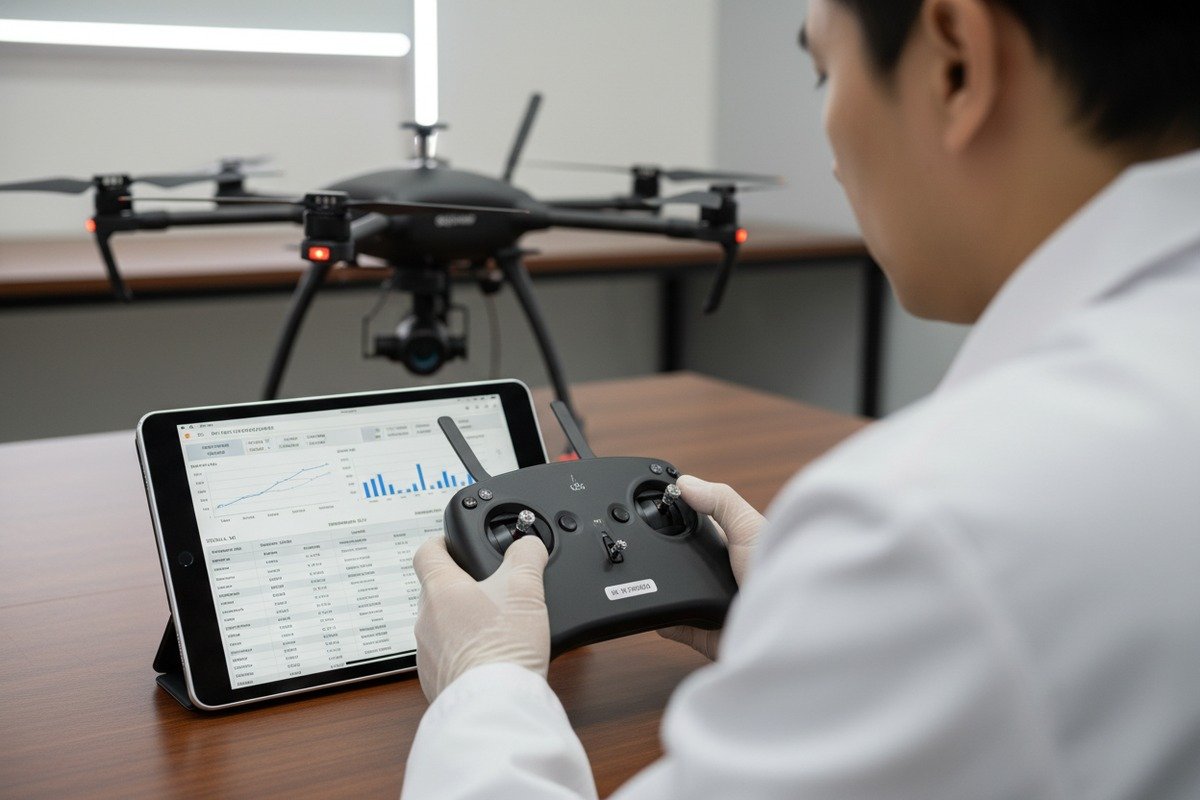
Every week, our quality control team handles dozens of shipments containing flight controllers, GPS modules, and battery systems IPC-A-610 1. We know the frustration buyers face when components fail in the field. One bad batch can ruin an entire harvest season.
To check incoming inspection records for agricultural drone electronic components, request the supplier’s quality control documentation including visual inspection reports, electrical test results, functional verification data, and calibration certificates. Cross-reference component serial numbers with test records and verify compliance with industry standards like IPC-A-610 or ISO 9001.
This guide walks you through the exact steps our procurement partners use to verify component quality before deploying their agricultural drone fleets component traceability report 2. Let’s break down each critical checkpoint.
How can I verify the incoming inspection reports for the electronic components in my agricultural drones?
When our engineers prepare export shipments to the US, we compile comprehensive documentation packages. Many buyers struggle to interpret these reports. The problem grows worse when language barriers exist between Chinese suppliers and international clients.
To verify incoming inspection reports, match each component's serial number against the test record database. Check that visual inspection notes, electrical measurement values, and functional test results fall within specified tolerances. Confirm the inspection date, technician signature, and quality seal appear on all documents.

Understanding the Structure of Inspection Reports
A proper incoming inspection report contains multiple sections. Each section serves a specific purpose. Our quality team organizes reports into three main categories: visual assessment, electrical testing 3, and functional verification.
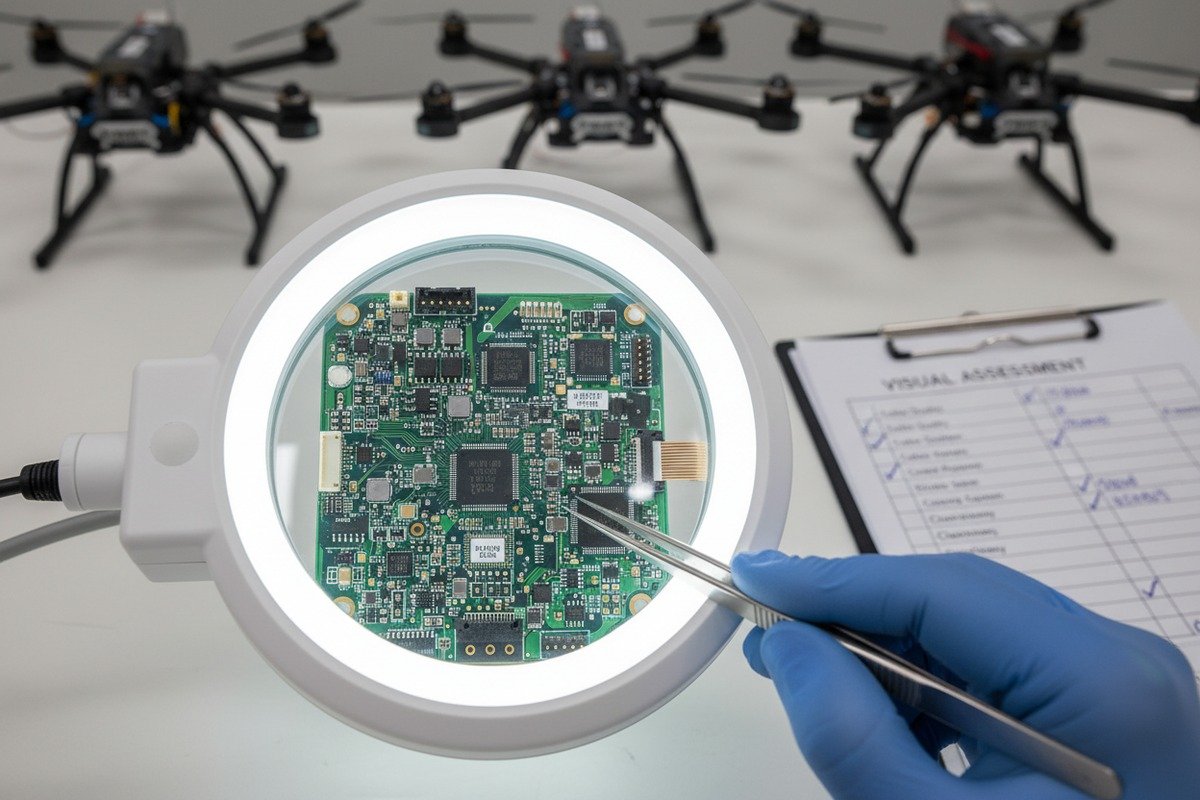
Visual inspection 4 comes first. Inspectors examine components for physical damage, corrosion, and incorrect labeling. They check solder joints, connector pins, and housing integrity. Any defect gets photographed and documented.
Electrical testing measures actual performance against specifications. Voltage readings, current draw, and resistance values must match datasheet parameters. Deviations beyond acceptable ranges trigger rejection.
Key Data Points to Review
| Document Section | Ce qu'il faut vérifier | Fourchette acceptable |
|---|---|---|
| Visual Inspection | Surface defects, labeling accuracy | Zero critical defects |
| Electrical Test | Voltage, current, resistance | Within ±5% of specification |
| Functional Test | Operation under load | 100% pass rate required |
| Test environnemental | Temperature cycling results | Per component rating |
| Calibrage | Sensor accuracy verification | Within manufacturer tolerance |
Cross-Referencing Documentation
Start by matching purchase order numbers to inspection reports. Every component should trace back to a specific order. Check that quantities match between the packing list and inspection log.
Next, verify the inspection date falls between the manufacturing date and shipping date. Gaps longer than 30 days may indicate improper storage. Our warehouse team re-tests components stored beyond this window.
Review the technician credentials section. Certified inspectors should have training documentation on file. Ask your supplier to provide inspector qualification records if missing.
Common Red Flags in Reports
Watch for these warning signs. Generic test values repeated across multiple components suggest falsified data. Missing signatures indicate incomplete review processes. Handwritten corrections without countersignatures raise authenticity concerns.
Inconsistent date formats across documents may signal combined reports from different batches. Request clarification immediately when you spot these issues.
What specific quality metrics should I look for in my supplier's component testing records?
Our production line tests over 5,000 components monthly. We track specific metrics because vague quality claims mean nothing without numbers. Buyers who understand these metrics negotiate better and receive better products.
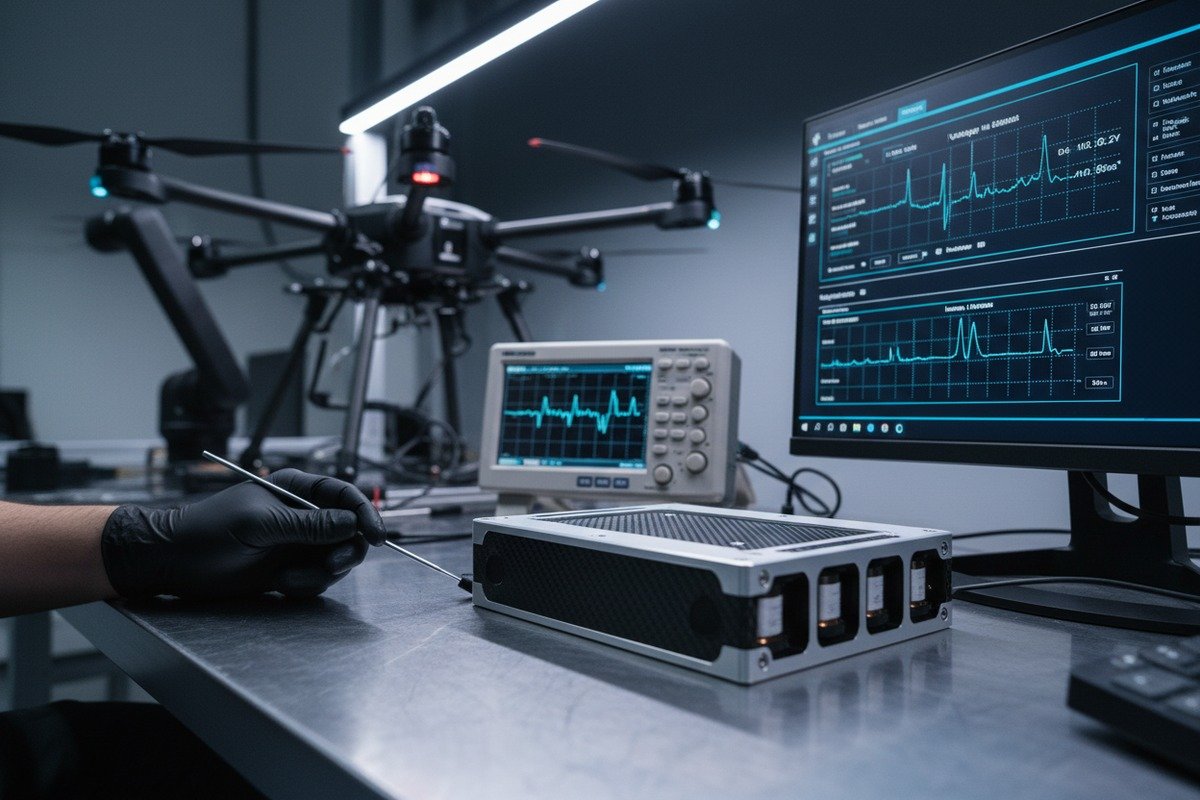
Key quality metrics include motor throttle deviation below 10%, GPS signal acquisition time under 45 seconds, battery cell voltage variance under 0.05V, sensor calibration accuracy within 2%, and data transmission latency below 100 milliseconds. These benchmarks indicate components ready for agricultural deployment.
Critical Metrics by Component Type
Different components require different tests. Flight controllers need response time measurements. GPS modules require satellite lock speed verification. Battery systems demand cycle testing and thermal analysis.
| Type de composant | Primary Metric | Target Value | Test Method |
|---|---|---|---|
| Contrôleur de vol | Response latency | <20ms | Signal injection test |
| Module GPS | Cold start acquisition | <45 seconds | Open sky test |
| ESC (Speed Controller) | Throttle accuracy | ±3% | Load bank test |
| Battery Pack | Cell balance | <0.05V variance | Individual cell measurement |
| Motor | Thrust consistency | ±5% across units | Dyno testing |
| Camera/Sensor | Calibration drift | <2% over 100 hours | Reference target comparison |
Motor and Propulsion Metrics
Motor performance directly affects flight stability. When we test motors at our facility, we measure thrust output, current draw, and temperature rise. Throttle value deviation should remain below 10% to indicate normal flight readiness.
Listen for abnormal noise during rotation tests. Grinding or clicking sounds suggest bearing problems. Our technicians run each motor for 60 seconds minimum before clearing it for shipment.
RPM consistency matters for hexacopter configurations like our agricultural spraying drones. All six motors must produce similar thrust. Otherwise, the flight controller compensates constantly, draining battery life faster.
Battery System Metrics
Battery health determines operational endurance. Check the Battery Management System 6 records for these values:
- Initial capacity versus rated capacity
- Internal resistance measurements
- Charge/discharge cycle count
- Storage temperature history
- Cell voltage balance after charging
Manufacturing date matters significantly. Lithium batteries degrade during storage. Records should show storage conditions remained between 15-25°C with 40-60% charge level.
Sensor and Payload Verification
Agricultural drones carry specialized sensors. Multispectral cameras need calibration verification against known targets. Thermal sensors require accuracy testing across their operating temperature range.
Check that spectral sunlight sensor documentation exists for multispectral systems. This sensor calibrates readings throughout the day. Without proper calibration data, NDVI analysis becomes unreliable.
Data Transmission Quality
Telemetry systems connect the drone to ground stations. Test records should show successful data transmission at maximum rated distance. Packet loss rates above 1% indicate potential communication problems during critical operations.
Our engineers test data links in both clear and interference-heavy environments. Agricultural operations often occur near power lines and cellular towers. Components must perform reliably in these conditions.
How do I ensure the electronic parts used in my OEM drone order have passed rigorous durability checks?
Our OEM clients demand extra assurance. They put their brand name on products containing our components. When we calibrate flight controllers for custom orders, we run extended stress tests beyond standard protocols. Agricultural environments punish weak components quickly.
Ensure durability by requesting environmental stress testing records showing resistance to temperature extremes (-20°C to 50°C), vibration endurance tests exceeding 10 hours, IP65 or higher ingress protection certification, chemical resistance documentation for agricultural sprays, and accelerated life testing simulating three years of field operation.
Environmental Stress Testing Requirements
Agricultural drones face harsh conditions. Hot summer fields, cold early morning flights, dust, and chemical exposure all attack electronic components. Standard consumer-grade testing fails to simulate these challenges.
Temperature cycling tests expose components to rapid changes. Our test chamber cycles between -20°C and 50°C repeatedly. Components must function normally after 100 cycles minimum. Records should show specific temperature profiles used.
| Durability Test | Standard Requirement | Agricultural Requirement | Pourquoi c'est important |
|---|---|---|---|
| Plage de température | -10°C to 40°C | -20°C to 50°C | Early morning/midday operations |
| Vibrations | 2 hours | 10+ hours | Extended flight operations |
| Dust Ingress | IP54 | IP65 7 minimum | Field conditions |
| Chemical Exposure | Aucun | Pesticide resistance | Spray operations |
| Humidity | 85% RH | 95% RH | Tropical climates |
Vibration and Mechanical Stress
Agricultural drones vibrate constantly during operation. Motors, propellers, and wind create mechanical stress. Solder joints crack. Connectors loosen. Wire insulation wears.
Request vibration test reports showing frequency range and duration. Components should survive at least 10 hours of random vibration testing. Check that post-test inspection found no mechanical failures.
Our carbon fiber frames on hexacopter models reduce transmitted vibration. But internal components still experience stress. We pot critical connections with flexible sealant for additional protection.
Chemical and Moisture Resistance
Spraying drones contact agricultural chemicals directly. Pesticides, herbicides, and fertilizers corrode exposed electronics. Standard conformal coatings provide inadequate protection.
Ask for chemical resistance test documentation. The report should list specific chemicals tested and exposure duration. Components must maintain function after exposure. Look for IP65 or higher ratings for full protection against dust and water jets.
Accelerated Life Testing
Some suppliers perform accelerated life testing 8. These tests compress years of operation into weeks. Temperature stress, vibration, and electrical cycling combine to simulate aging.
Review reports for the equivalent operational hours simulated. Quality manufacturers test critical components for at least 3,000 equivalent flight hours. This represents approximately three years of normal agricultural use.
Counterfeit Component Prevention
Counterfeit electronic components plague the industry. Fake parts look genuine but fail prematurely. OEM buyers face reputation damage when counterfeits enter their supply chain.
Request supplier authentication procedures. Legitimate suppliers verify component sources through authorized distribution channels. They maintain chain of custody documentation from manufacturer to final assembly.
Check for remarking indicators. Suspicious surface finish, inconsistent font styles, and incorrect date codes suggest counterfeits. Our quality team uses x-ray inspection for high-value components.
How do I request a detailed component traceability report from my Chinese drone manufacturer?
In our experience exporting to the US, American distributors increasingly require complete traceability documentation. Their customers demand it. Insurance companies require it. Regulations mandate it for commercial operations.
Request a component traceability report by specifying serial number tracking requirements, manufacturing lot identification, supplier certificates of conformity, test data linkage, and assembly records in your purchase contract. Include report format specifications compatible with your fleet management system and require digital delivery within 48 hours of shipment.

Elements of a Complete Traceability Report
Traceability connects each finished drone to every component inside it. When problems occur, traceability identifies affected units quickly. This limits recall scope and speeds corrective action.
A proper report includes manufacturing lot numbers for each component. It links these to incoming inspection records. Assembly records show which components went into which drones. Final test documentation completes the chain.
Standard Report Sections
| Report Section | Contents | Objectif |
|---|---|---|
| Component Registry | Serial numbers, part numbers, descriptions | Identify each part |
| Supplier Records | Certificates of conformity, test reports | Verify origin and quality |
| Incoming Inspection | Test results, acceptance status | Confirm receiving checks |
| Assembly Log | Build dates, technician IDs, station records | Track production process |
| Final Test | Flight test results, calibration data | Validate finished product |
| Shipping Records | Packaging details, environmental conditions | Document delivery chain |
How to Specify Requirements in Purchase Contracts
Include traceability requirements in your purchase agreement. Vague requests produce inadequate reports. Specify exactly what you need.
Define the data format. Many buyers need information compatible with their fleet management software. XML, CSV, or API integration options should be discussed before ordering. Our team works with clients to match their system requirements.
Set delivery timelines. Reports should arrive with or before physical shipments. Last-minute document requests delay customs clearance. Specify 48-hour advance delivery for digital documentation.
Digital Integration Requirements
Modern agricultural operations use fleet management platforms. Traceability data must integrate with these systems. Paper reports create manual entry burdens and error opportunities.
Request digital delivery in structured formats. Specify field names and data types. Include sample files in your contract for clarity. Our engineering team provides integration support for major platforms including DroneDeploy and Pix4D compatible systems.
Verification and Audit Procedures
Trust but verify. Random audits maintain supplier accountability. Visit manufacturing facilities when possible. Review actual inspection processes against documented procedures.
Request video documentation of critical tests. Many suppliers now provide this service. Videos of vibration tests, thermal cycling, and functional verification 9 provide additional assurance beyond paper records.
Establish escalation procedures for discrepancies. Define response timelines when report errors appear. Our customer service team resolves documentation issues within 24 hours for priority accounts.
Maintaining Records for Regulatory Compliance
Commercial agricultural drone operators face increasing regulatory requirements. Complete traceability supports compliance demonstrations. Records may be required for insurance claims, accident investigations, or regulatory audits.
Store reports for at least five years beyond the component's expected service life. Organize archives by drone serial number for quick retrieval. Cloud backup protects against local data loss.
Conclusion
Checking incoming inspection records protects your investment and reputation. Focus on verifiable metrics, demand complete traceability, and integrate documentation into your quality management system. Your agricultural drone fleet depends on component quality verified before deployment.
Notes de bas de page
1. Details the acceptability criteria for electronic assemblies. ︎
2. Details the importance and elements of tracking components throughout the supply chain. ︎
3. Found an overview of various testing methods for electronic components, including electrical testing. ︎
4. Replaced with a comprehensive guide on PCB visual inspection methods and importance. ︎
5. Provides information on the international quality management standard. ︎
6. Provides information on the role and functions of a BMS in battery packs. ︎
7. Defines the ingress protection standard for dust and water resistance. ︎
8. Replaced with a Wikipedia page providing a general and authoritative explanation of accelerated life testing. ︎
9. Clarifies the process of confirming component operation under specified conditions. ︎

 English
  Spanish
  German
  French
  Dutch
Dutch  Arabic
