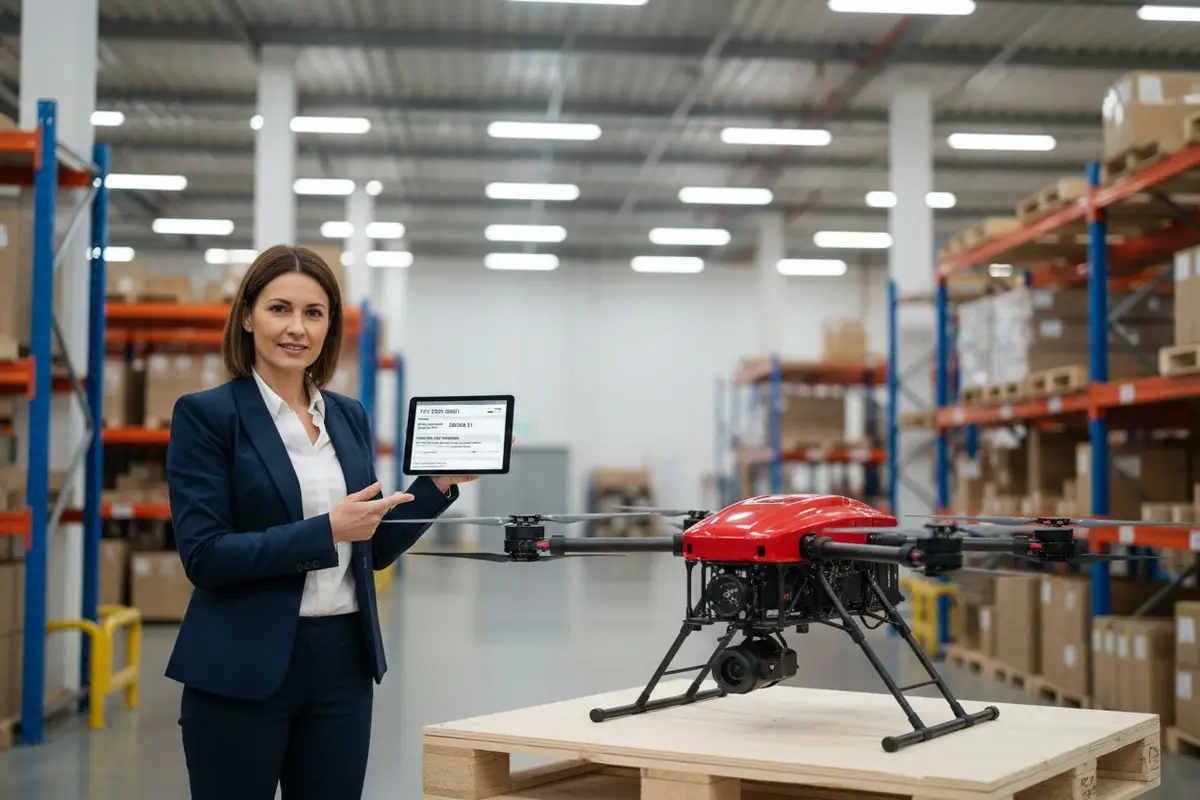
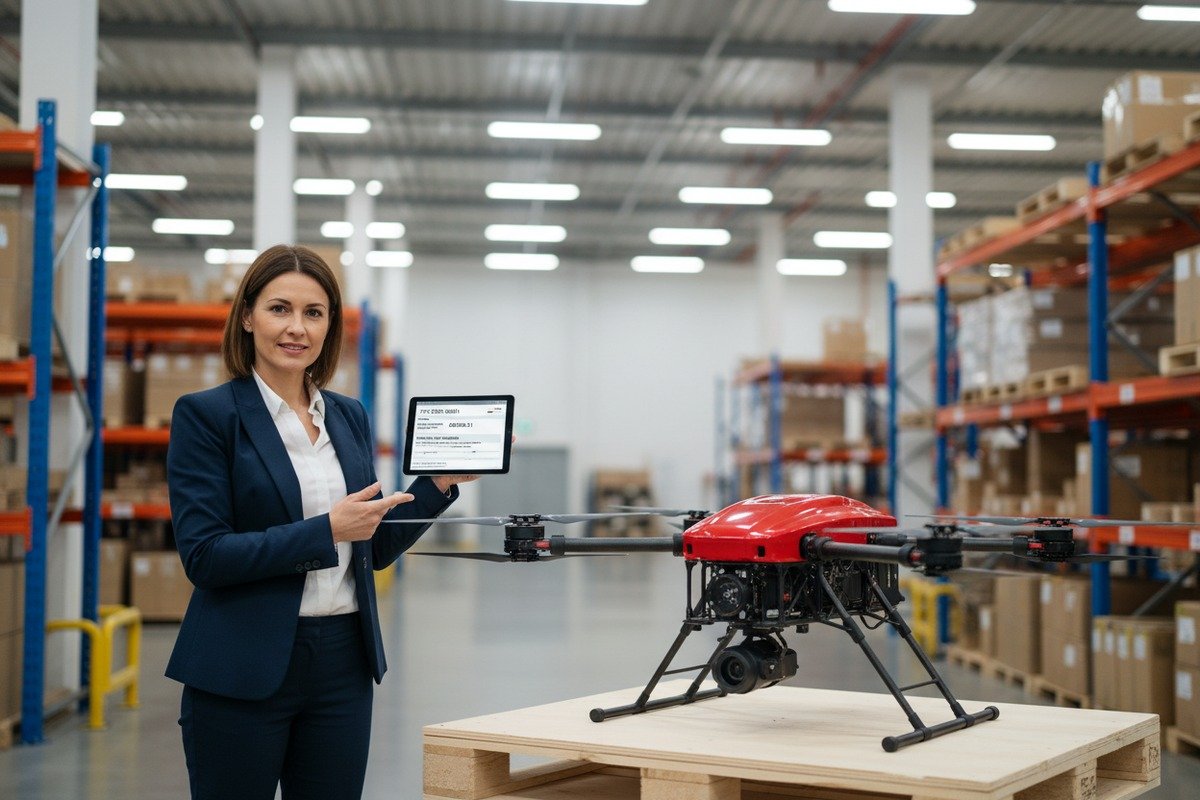
Lorsque notre équipe d'ingénierie expédie des drones de lutte contre les incendies à des acheteurs américains, une question revient à chaque fois Tarifs douaniers MFN 1. Combien les droits de douane ajouteront-ils au coût final ? La réponse n'est plus simple.
Les droits d'importation américains sur les drones de lutte contre les incendies en provenance de Chine s'élèvent actuellement à 25 % en vertu de la section 301. Cependant, les droits cumulés peuvent atteindre jusqu'à 170 % lorsqu'ils sont combinés à d'autres frais d'importation. Ces drones relèvent du code SH 8806.21 pour les véhicules aériens sans pilote. Il n'existe pas d'exemptions spéciales pour la lutte contre les incendies, ce qui signifie que tous les drones industriels sont soumis aux mêmes taux.
Le paysage tarifaire a radicalement changé depuis 2018 des zones de commerce extérieur 2. Comprendre ces changements vous aidera à planifier votre budget d'approvisionnement. Laissez-moi vous expliquer tout ce que vous devez savoir.
Combien vais-je payer au total en droits d'importation pour mes drones de lutte contre l'incendie en provenance de Chine ?
Lorsque nous préparons les factures commerciales pour les expéditions à destination des États-Unis, les clients sous-estiment souvent le fardeau total des droits de douane. Le choc de la facture est réel. Ce qui commence comme un devis compétitif peut gonfler de 30 à 50 % à la douane.
Pour un drone de lutte contre les incendies en provenance de Chine, attendez-vous à payer des droits de douane de la section 301 de 25 % plus des droits du traitement de la nation la plus favorisée (NPF) standard de 0 à 6,61 % selon la classification. Ajoutez les frais d'entretien du port (0,125 %), les frais de traitement des marchandises (0,3464 %) et les taxes d'État. Le coût total débarqué représente généralement 35 à 50 % au-dessus du prix FOB.

Décomposition des couches de droits de douane
Les États-Unis appliquent plusieurs couches de droits de douane aux drones chinois. Chaque couche sert un objectif différent. Voici comment elles s'empilent :
| Type de droit de douane | Taux | S'applique à |
|---|---|---|
| Section 301 3 Tarif douanier | 25% | Tous les drones d'origine chinoise |
| Droit MFN (code SH 8806.21) | 0-6.6% | Aéronefs sans pilote par poids |
| Frais de traitement des marchandises 4 | 0.3464% | Toutes les importations commerciales |
| Frais d'entretien du port | 0.125% | Expéditions par fret maritime |
| Taxes d'État/locales | Variable | Dépendant de la destination |
Un exemple de coût réel
Laissez-moi vous montrer un exemple pratique tiré de nos récents registres d'expédition. Un corps de pompiers a commandé deux drones de lutte contre l'incendie à grande capacité. Le prix FOB était de 28 000 $ par unité.
Le tarif de la section 301 a ajouté 7 000 $ par drone. Les droits de la nation la plus favorisée (NPF) ont ajouté 1 680 $ supplémentaires. Les frais de traitement se sont élevés à environ 200 $. Le fret et l'assurance ont coûté 1 200 $. Le coût final débarqué par unité a atteint 38 080 $. Cela représente une augmentation de 36 % par rapport au prix de base.
Les classifications de poids sont importantes
Le poids du drone affecte votre taux de droit de base. Le code SH 8806.21 5 se décompose par poids maximum au décollage. Nos modèles de lutte contre l'incendie entrent généralement dans les catégories les plus lourdes.
| Catégorie de poids | Code HTS | Taux NPF de base |
|---|---|---|
| Moins de 250g | 8806.21.10 | Gratuit |
| 250g à 7kg | 8806.21.30 | 4.4% |
| 7kg à 25kg | 8806.21.50 | 6.6% |
| Plus de 25 kg | 8806.21.70 | 6.6% |
La plupart des drones industriels de lutte contre l'incendie pèsent entre 15 et 35 kg. Cela les place dans les tranches de droits les plus élevées. Nos modèles octocoptères avec charges utiles de suppression d'incendie dépassent 25 kg entièrement chargés.
Considérations sur la devise et le calendrier
Les douanes calculent les droits sur la valeur transactionnelle 6 en dollars américains. Les fluctuations des taux de change affectent votre coût final. Nous recommandons de fixer les taux lors de la passation des commandes. Certains importateurs utilisent des contrats à terme pour se couvrir contre les fluctuations monétaires.
Le moment du paiement est également important. Les droits sont dus avant la libération. Prévoyez des besoins de trésorerie au moins 30 jours avant l'arrivée prévue.
Dois-je m'attendre à des droits de douane supplémentaires au titre de la Section 301 sur mon envoi de drones industriels ?
Notre équipe de documentation d'exportation suit quotidiennement les changements de tarifs. Le cadre de la section 301 est plus complexe qu'un simple chiffre de 25% ne le suggère. Il existe plusieurs tranches, et chacune a une couverture de produits différente.
Oui, des droits de douane supplémentaires peuvent s'appliquer au-delà du taux de base de 25% de la section 301. Les composants de drones, les batteries, les caméras et les capteurs peuvent faire l'objet de lignes tarifaires distinctes. Certains importateurs signalent des taux cumulatifs atteignant 100-170% sur les systèmes complets lorsque tous les composants sont évalués individuellement aux taux maximum.

Comprendre les quatre tranches
Les droits de douane de la section 301 ont été déployés par étapes entre 2018 et 2019. Chaque tranche ciblait différentes catégories de produits. Les drones apparaissent dans les tranches 3 et 4.
| Tranche | Date de mise en œuvre | Taux d'origine | Taux actuel |
|---|---|---|---|
| Tranche 1 | Juillet 2018 | 25% | 25% |
| Tranche 2 | Août 2018 | 25% | 25% |
| Tranche 3 | Septembre 2018 | 10%→25% | 25% |
| Tranche 4A | Septembre 2019 | 15%→25% | 25% |
Évaluations au niveau des composants
Lorsque les douanes inspectent une expédition, elles peuvent évaluer les composants séparément. Cela se produit en particulier avec les kits ou les unités partiellement assemblées. Nos drones entièrement intégrés sont généralement dédouanés comme des marchandises complètes. Mais certains acheteurs demandent des expéditions de composants pour un assemblage local.
Voici à quoi pourrait ressembler une évaluation au niveau des composants :
- Cadre et moteurs de drone : 25% Section 301
- Batteries au lithium : 25% Section 301 + 3.4% NPF
- Caméras thermiques : 25% Section 301 + varie selon le type
- Contrôleurs de vol : 25% Section 301 + examen potentiel des biens à double usage
- Modules d'extinction d'incendie : Peuvent bénéficier d'une classification différente
L'extension des 178 exclusions
L'USTR a prolongé les exclusions de 178 produits jusqu'au 10 novembre 2026. Ces exclusions suppriment le tarif de la Section 301 pour des articles spécifiques. Malheureusement, les drones complets ne sont pas actuellement répertoriés. Certains composants pourraient être éligibles.
Pour vérifier si vos produits sont éligibles :
- Visitez le portail des exclusions de l'USTR
- Rechercher par code SH ou description du produit
- Vérifier que l'exclusion est active et non expirée
- Documenter tout pour le dépôt en douane
Les demandes de nouvelles exclusions font face à des arriérés importants. Les taux d'approbation restent faibles. Nous avons aidé des clients à soumettre des demandes, mais le succès n'est pas garanti.
La complication de la FCC
Au-delà des tarifs, le Liste couverte par la FCC 7 crée une autre barrière. Depuis le 22 décembre 2025, les nouveaux modèles de drones chinois ne peuvent pas recevoir d'autorisation de la FCC. Cela bloque effectivement les importations, quelle que soit la volonté de payer les tarifs.
Les modèles autorisés avant cette date restent acquis. Nos gammes de produits établies comme la série industrielle SkyRover ont reçu l'autorisation en 2024. Les nouvelles conceptions nécessitent une planification minutieuse du calendrier et de la conformité.
Comment puis-je calculer le coût total débarqué, y compris les frais de douane, pour ma commande ?
Notre équipe commerciale intègre les estimations de coûts débarqués dans chaque devis. Les surprises à la douane nuisent aux relations. Nous voulons que les acheteurs sachent exactement ce qu'ils paieront avant de signer les bons de commande.
Pour calculer le coût total rendu : commencez par le prix FOB, ajoutez le fret et l'assurance (généralement 3-5%), appliquez tous les droits de douane applicables (25-50%), incluez les frais de douane (0,5%), et ajoutez les frais de courtage (1-150-500). Pour un drone de lutte contre les incendies de 30 000 $, attendez-vous à un coût total rendu entre 42 000 $ et 48 000 $ selon le port de destination.

La formule du coût débarqué
Voici le calcul étape par étape que nous utilisons :
Étape 1 : Coûts de base
- Prix FOB (Prix usine + transport intérieur jusqu'au port)
- Fret international
- Assurance maritime (généralement 0,3-0,5 % de la valeur de la cargaison)
Étape 2 : Droits et Tarifs
- Tarif de la Section 301 : 25 % de (FOB + Fret + Assurance)
- Droit NPF : 0-6,6 % de (FOB + Fret + Assurance)
- Frais de traitement des marchandises : 0,34641 % (min 29,66 $, max 575,35 $)
- Frais d'entretien du port 8: 0,125 % (expéditions maritimes uniquement)
Étape 3 : Frais supplémentaires
- Frais de courtier en douane : 150-500 $ par déclaration
- Manutention portuaire : 200-400 $
- Livraison intérieure : Varie selon la destination
- Stockage (si applicable) : 50-150 $ par jour
Feuille de calcul d'exemple
Laissez-moi vous présenter un exemple concret avec notre drone de lutte contre l'incendie de milieu de gamme :
| Élément de coût | Calcul | Montant |
|---|---|---|
| Prix FOB | Prix de base | $25,000 |
| Fret maritime | Shanghai à LA | $1,800 |
| Assurance | 0,4 % de 26 800 $ | $107 |
| Valeur en douane | Total pour droits | $26,907 |
| Section 301 (25 %) | $26 907 × 0,25 | $6,727 |
| Droit PFN (6,6%) | $26 907 × 0,066 | $1,776 |
| MPF | $26 907 × 0,003464 | $93 |
| HMF | $26 907 × 0,00125 | $34 |
| Frais de courtage | Forfait | $250 |
| Manutention portuaire | Estimation | $350 |
| Expédition intérieure | LA à Denver | $600 |
| Coût débarqué total | $37,637 |
Cela représente une augmentation de 50,5% par rapport au prix FOB.
Stratégies de réduction des coûts
Sur la base de notre expérience, voici des moyens de minimiser les coûts d'atterrissage :
Optimiser les itinéraires d'expédition. Les ports de la côte Ouest ont des temps de transit plus courts mais des frais de congestion plus élevés. L'acheminement par la côte Est via le canal de Panama prend plus de temps mais coûte parfois moins cher.
Consolider les expéditions. Plusieurs unités dans un seul conteneur réduisent les coûts de fret et de manutention par unité. Nous recommandons de commander par paires ou par multiples lorsque cela est possible.
Utiliser les zones de commerce extérieur. Les ZCE diffèrent les paiements des droits de douane jusqu'à ce que les marchandises entrent dans le commerce américain. Certains acheteurs utilisent cela pour les opérations d'assemblage.
Vérifier les classifications HTS. Une classification incorrecte entraîne un surpaiement ou des pénalités. Travaillez avec un courtier expérimenté pour optimiser votre position tarifaire.
Envisager les conditions DDP. Lorsque nous proposons un prix rendu droits acquittés, nous absorbons la complexité douanière. Vous payez un prix prévisible sans surprises.
Quelle documentation ai-je besoin de la part de mon fournisseur pour assurer un dédouanement américain sans heurts ?
Lorsque notre service logistique prépare les documents d'exportation, l'exhaustivité prime sur tout le reste. Les documents manquants entraînent des retards. Les retards coûtent cher. Notre objectif est des expéditions sans aucune retenue.
Les documents essentiels comprennent : la facture commerciale avec descriptions détaillées des produits et codes SH, la liste de colisage avec poids et dimensions, le connaissement, le certificat d'origine, les certificats de conformité FCC pour les modèles pré-autorisés, et toute documentation d'exclusion de la Section 301 applicable. Demandez ces documents au moins deux semaines avant l'expédition.

La liste de contrôle complète des documents
Voici ce que nous incluons dans chaque dossier de documentation d'expédition :
| Document | Objectif | Exigée par |
|---|---|---|
| Facture commerciale | Déclaration de valeur et description du produit | CBP obligatoire |
| Liste de colisage | Spécifications physiques | CBP obligatoire |
| Lettre de voiture | Contrat d'expédition | Transporteur/CBP |
| Certificat d'origine | Détermination du pays pour les tarifs douaniers | CBP pour 301 |
| Autorisation d'équipement accordée par la FCC | Conformité aux radiofréquences | FCC/CBP |
| Certificats CE/Sécurité | Vérification de la sécurité du produit | Recommandé |
| Manuel de l'utilisateur | Documentation d'utilisation finale | Utile pour la classification |
| Spécifications techniques | Prend en charge la classification HTS | Utile |
Exigences relatives à la facture commerciale
La facture commerciale est votre document le plus important. Elle doit inclure :
- Nom, adresse, coordonnées du vendeur
- Nom, adresse, coordonnées de l'acheteur
- Numéro et date de la facture
- Descriptions détaillées du produit (pas seulement "drone")
- Codes SH (suggérez votre classification)
- Quantité, prix unitaire, valeur totale
- Conditions de devise et de paiement
- Déclaration du pays d'origine
- Incoterms (FOB, CIF, DDP, etc.)
Nos factures comprennent : "Véhicule aérien sans pilote pour la lutte contre les incendies industriels, code SH 8806.21.50, équipé d'une caméra thermique et d'un système de charge utile d'extinction d'incendie, poids maximum au décollage de 22 kg, fabriqué en Chine."
Spécificités de la documentation FCC
Pour les appareils émettant des radiofréquences comme les drones, la conformité FCC est essentielle. Vous avez besoin de :
Numéro d'identification FCC: Chaque appareil sans fil a besoin d'un identifiant FCC. Nos produits portent des identifiants valides issus d'une autorisation antérieure à décembre 2025.
Autorisation d'équipement: Ce document prouve l'approbation FCC. Nous fournissons des copies avec chaque expédition.
Condition d'importation: Les appareils doivent être étiquetés avec l'identifiant FCC, ou vous avez besoin d'un permis temporaire pour les tests/expositions.
Détails du certificat d'origine
Le certificat d'origine prouve où votre drone a été fabriqué. Cela détermine le traitement tarifaire. Nous fournissons :
- Déclaration de l'origine par le fabricant
- Détails du lieu de production
- Informations sur l'approvisionnement des composants (sur demande)
Certains acheteurs demandent une certification de la Chambre de commerce pour une crédibilité accrue. Nous pouvons organiser cela avec un préavis.
Conseils pour un dédouanement sans problème
Travaillez avec un courtier en douane expérimenté. L'importation de drones nécessite une expertise. Les courtiers familiers avec les classifications HTS 8806 évitent les erreurs coûteuses.
Pré-déposez la documentation d'entrée. Soumettez les documents avant l'arrivée du navire. Cela réduit le temps passé au port et les frais de stockage.
Conservez les registres pendant cinq ans. Le CBP peut auditer les entrées passées. Gardez la documentation complète accessible.
Connaissez le statut de la caution de votre courtier. Les cautions continues accélèrent le dédouanement. Les cautions à entrée unique conviennent aux expéditions occasionnelles mais coûtent plus cher par transaction.
Demandez tous les documents avant le paiement. Nous libérons les documents d'expédition après confirmation du paiement. Examinez tout avant le virement bancaire.
Conclusion
Comprendre les droits de douane américains sur les drones de lutte contre les incendies importés de Chine nécessite une attention particulière à plusieurs niveaux de droits, aux exigences de documentation et à l'évolution de la réglementation. Prévoyez des coûts débarqués de 35 à 50 % supérieurs aux prix FOB. Demandez une documentation complète à votre fournisseur à l'avance. Travaillez avec des courtiers en douane expérimentés pour naviguer avec succès dans ce paysage complexe.
Notes de bas de page
1. Explique les taux de droits de la nation la plus favorisée, qui sont les tarifs standard appliqués aux importations de la plupart des pays. ︎
2. Décrit les zones de libre-échange, qui permettent le report des droits jusqu'à ce que les marchandises entrent dans le commerce américain. ︎
3. Explique la loi commerciale américaine autorisant des droits de douane sur les marchandises provenant de pays comme la Chine. ︎
4. Détaille les frais de traitement des marchandises, des frais d'utilisation facturés par la CBP sur la plupart des marchandises importées. ︎
5. Fournit la classification officielle des aéronefs sans pilote, y compris les drones, dans le tarif douanier harmonisé. ︎
6. Définit la valeur transactionnelle, la méthode principale pour déterminer la valeur en douane des marchandises importées. ︎
7. Explique la liste de la FCC des équipements et services de communication jugés présentant des risques pour la sécurité nationale. ︎
8. Décrit les frais d'entretien du port, une taxe ad valorem sur les importations arrivant par fret maritime. ︎
 English
  Español de México
  Deutsch
  Français
  Русский
  العربية
Comments
No comments yet. Be the first to share your thoughts!
Leave a Comment