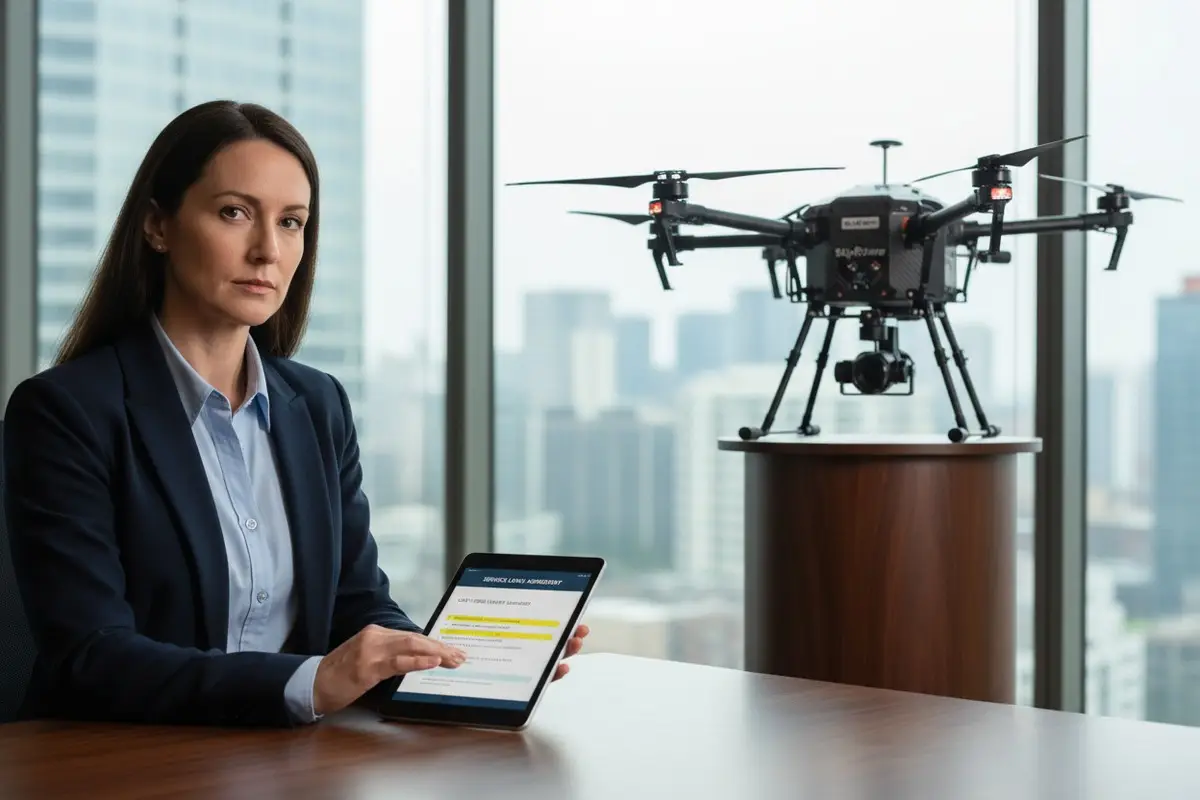

Lorsque notre équipe de production expédie drones agricoles 1 aux fermes américaines, nous entendons la même préoccupation de manière répétée. Les agriculteurs s'inquiètent d'obtenir un support technique pendant leurs périodes de récolte chargées Exigences de la partie 107 2. Le timing est essentiel en agriculture, et un drone en panne pendant la saison de pulvérisation des cultures peut coûter des milliers en rendement perdu.
Pour confirmer le support technique dans le fuseau horaire américain lors de l'achat de drones agricoles, demandez une documentation explicite sur les heures de support, vérifiez que le fournisseur dispose de techniciens ou de partenaires basés aux États-Unis, négociez un accord de niveau de service (SLA) garantissant des temps de réponse, et testez leurs canaux de support avant de finaliser votre achat.
Ce guide vous accompagne à chaque étape de la vérification de la disponibilité du support technique. Nous aborderons les méthodes de vérification, les garanties de support, les accords de service et l'évaluation de l'expertise à distance. Assurons-nous que votre investissement reste opérationnel lorsque vous en avez le plus besoin.
Comment puis-je vérifier que mon fabricant de drones offre une assistance technique en temps réel pendant les heures d'ouverture américaines ?
Notre équipe d'exportation a appris que les acheteurs américains ont besoin de plus que des promesses. Ils ont besoin de preuves. Lorsque nous calibrons nos contrôleurs de vol 3 et préparons les expéditions pour les distributeurs américains, nous comprenons que les décalages horaires créent de réels risques opérationnels pour les agriculteurs confrontés à des fenêtres de pulvérisation serrées.
Vérifiez l'assistance technique américaine en temps réel en demandant des calendriers de support écrits indiquant les heures de couverture dans votre fuseau horaire, en demandant des numéros de contact basés aux États-Unis, en testant les temps de réponse avec des demandes avant l'achat et en confirmant si le personnel de support parle couramment l'anglais et comprend les pratiques agricoles américaines.

Commencez par la documentation écrite
Avant de signer tout accord d'achat, demandez à votre fournisseur une documentation officielle de ses heures de support. Ce document doit indiquer clairement les fuseaux horaires couverts. De nombreux fournisseurs indiquent leurs heures dans leur heure locale, ce qui crée de la confusion. Insistez sur un horaire converti en heure de l'Est, du Centre, des Rocheuses ou du Pacifique.
À notre siège social à Xi'an, nous maintenons des équipes de support qui chevauchent les heures d'ouverture américaines spécifiquement parce que nous savons que les agriculteurs ne peuvent pas attendre 12 heures pour un rappel. Votre fournisseur devrait fournir une clarté similaire.
Testez avant d'acheter
Envoyez un e-mail ou passez un appel téléphonique pendant vos heures de travail normales. Notez le temps de réponse. Ce simple test révèle plus que n'importe quel argumentaire de vente. Si un fournisseur met 48 heures pour répondre à une question avant-vente, attendez-vous à une performance pire après qu'il ait votre argent.
| Méthode de vérification | Ce qu'il faut vérifier | Drapeaux rouges |
|---|---|---|
| Test par e-mail | Temps de réponse inférieur à 4 heures | Aucune réponse dans les 24 heures |
| Appel téléphonique | Une personne réelle répond | Messagerie vocale uniquement, pas de rappel |
| Démonstration vidéo | Partage d'écran disponible | Refuse la démonstration à distance |
| Documentation | Heures indiquées dans votre fuseau horaire | Horaires vagues ou manquants |
| Vérification des références | Contacter les clients américains existants | Aucune référence fournie |
Confirmer l'emplacement et la langue du personnel
Demandez directement où se trouve le personnel de support. Certaines entreprises acheminent les appels vers des centres à l'étranger où le personnel peut manquer de connaissances agricoles. Vérifiez que les techniciens comprennent la terminologie agricole américaine et les réglementations de la FAA 4. Un agent de support qui ne peut pas expliquer les exigences de la partie 107 aura du mal à aider avec les questions de conformité.
Examiner les options multicanaux
Les fournisseurs solides offrent un support téléphonique, par e-mail, des diagnostics vidéo et un accès à la télémétrie à distance. Cette variété garantit que vous pouvez obtenir de l'aide quelle que soit votre situation. Si vous êtes debout dans un champ boueux avec un drone au sol, le support vidéo est préférable à l'e-mail. Vérifiez que tous les canaux fonctionnent pendant vos heures d'ouverture locales.
Quelles garanties spécifiques de support technique devrais-je demander pour m'assurer que mes drones agricoles restent opérationnels ?
D'après notre expérience dans le développement de micrologiciels personnalisés pour différents types de cultures, nous avons constaté à quelle vitesse les problèmes opérationnels s'aggravent sans une infrastructure de support adéquate. Notre équipe d'ingénieurs conçoit des drones pour la fiabilité, mais les applications agricoles complexes nécessitent un soutien technique continu.
Demandez des garanties pour les engagements de temps de réponse maximum, l'accès à des techniciens de réparation certifiés, la disponibilité des pièces de rechange avec les délais d'expédition, les capacités de diagnostic à distance, la prise en charge des mises à jour du firmware et l'assistance à l'intégration avec vos systèmes de logiciels de gestion agricole existants.

Garanties de temps de réponse
Exigez des chiffres précis. Des promesses vagues comme "réponse rapide" ne signifient rien. Demandez des temps de réponse garantis de 4 heures ou moins pour les problèmes critiques pendant la haute saison. Votre fournisseur doit faire la distinction entre les demandes standard et les situations d'urgence où votre flotte de drones est immobilisée.
Disponibilité des pièces de rechange
La disponibilité des pièces a un impact direct sur votre temps d'arrêt. Demandez des informations sur l'inventaire des pièces basé aux États-Unis. Si les moteurs ou les hélices de remplacement doivent être expédiés depuis l'étranger, attendez-vous à des retards de 2 à 3 semaines. Les meilleurs fournisseurs maintiennent des entrepôts de distribution aux États-Unis.
| Composant | Disponibilité idéale aux États-Unis | Délai d'attente acceptable | Délai d'attente inacceptable |
|---|---|---|---|
| Hélices | Expédition le jour même | 3 jours ouvrables | Plus d'une semaine |
| Piles | Expédition en 2 jours | 5 business days | Plus de 2 semaines |
| Moteurs | Expédition en 3 jours | 1 semaine | Plus de 3 semaines |
| Contrôleurs de vol | 1 semaine | 2 semaines | Plus d'un mois |
| Spray Nozzles | Expédition le jour même | 3 jours ouvrables | Plus d'une semaine |
| Modules GPS | 1 semaine | 2 semaines | Plus d'un mois |
Capacités de diagnostic à distance
Les drones agricoles modernes génèrent d'énormes quantités de données de télémétrie. Votre fournisseur doit proposer des outils de diagnostic à distance qui permettent aux techniciens d'analyser les journaux de vol, d'identifier les codes d'erreur et de résoudre les problèmes sans avoir besoin d'un accès physique à votre appareil. Cette capacité réduit considérablement le temps de résolution.
Lorsque nous développons nos systèmes de contrôle de vol, nous intégrons des rapports de diagnostic spécifiquement pour permettre le dépannage à distance. Demandez aux fournisseurs potentiels de démontrer leur interface de diagnostic avant l'achat.
Mises à jour du micrologiciel et du logiciel
Les logiciels de drones agricoles évoluent constamment. De nouveaux algorithmes de cartographie des cultures, des modèles de pulvérisation améliorés et des mises à jour de conformité réglementaire nécessitent un support continu du micrologiciel. Confirmez que votre fournisseur fournit des mises à jour régulières et que l'installation ne nécessite pas le renvoi des unités à l'usine.
Support d'intégration
Vos drones doivent fonctionner avec les systèmes existants plateformes de gestion agricole 5. Demandez si le support technique comprend l'aide à la connexion des données de drones à des logiciels tels que Climate FieldView, Granular ou John Deere Operations Center. Le personnel de support doit comprendre les formats de données agricoles et les défis d'intégration courants.
Puis-je obtenir un accord de niveau de service qui correspond à mon fuseau horaire local pour le dépannage urgent ?
Notre équipe contractuelle travaille régulièrement avec des distributeurs américains, et nous savons que les accords verbaux n'offrent aucune protection lorsque l'équipement tombe en panne en milieu de saison. Les accords formels Accord de niveau de service 6créent des engagements exécutoires qui protègent votre investissement et votre calendrier de récolte.
Oui, vous pouvez obtenir un SLA aligné sur le fuseau horaire en négociant des conditions spécifiques pour les heures de support, les temps de réponse, les procédures d'escalade et les pénalités en cas de non-respect des engagements. Demandez le SLA par écrit avant de finaliser le paiement, et assurez-vous qu'il couvre explicitement les saisons agricoles de pointe.

Composants essentiels du SLA
Votre SLA doit couvrir plus que les temps de réponse de base. Incluez les heures spécifiques de disponibilité, les voies d'escalade pour les problèmes non résolus et les fenêtres de priorité saisonnières. Pendant la plantation et la récolte, vos besoins s'intensifient considérablement. L'accord doit reconnaître cette réalité.
Négocier la couverture des fuseaux horaires
Demandez des heures de support qui correspondent à votre calendrier opérationnel. Si votre ferme fonctionne de 5h à 21h pendant la haute saison, votre SLA doit garantir une couverture pendant ces heures. Certains fournisseurs proposent des modèles "follow-the-sun" avec des équipes tournantes dans des bureaux mondiaux. D'autres maintiennent du personnel dédié basé aux États-Unis.
| Élément du SLA | Conditions solides | Conditions faibles |
|---|---|---|
| Temps de réponse | 2 heures maximum pour les problèmes critiques | "Réponse "au mieux de nos capacités" |
| Disponibilité | 6h – 22h, heure locale | "Heures d'ouverture" non définies |
| Escalade | Contact ingénierie sous 4 heures | Aucun parcours d'escalade indiqué |
| Saison de pointe | File d'attente prioritaire Mai-Octobre | Service standard toute l'année |
| Sanctions | Crédits de service pour les objectifs manqués | Aucune mesure de responsabilisation |
| Couverture | Téléphone, e-mail, vidéo, accès à distance | Email only |
Pénalités et responsabilisation
Un SLA sans pénalités n'est qu'une liste de souhaits. Négociez des crédits de service, des périodes de garantie prolongées ou d'autres compensations en cas d'échec du support. Ces pénalités incitent votre fournisseur à respecter réellement les niveaux de service promis plutôt qu'à considérer les engagements comme des suggestions.
Dispositions de priorité saisonnière
Les opérations agricoles se concentrent sur des fenêtres étroites. Votre SLA devrait inclure des dispositions pour un support prioritaire pendant les périodes critiques. Lorsque vous pulvérisez 100 acres par jour pendant une fenêtre de deux semaines, attendre dans une file d'attente de support standard est inacceptable.
Documentez tout
Conservez des enregistrements de toutes les interactions de support. Lorsque des problèmes surviennent, cette documentation prouve si votre fournisseur a respecté les engagements du SLA. S'il manque systématiquement des objectifs, vous avez des motifs de renégociation ou de résiliation.
Comment évaluer si l'équipe technique à distance d'un fournisseur possède l'expertise nécessaire pour répondre à mes besoins en logiciels et matériel personnalisés ?
Lorsque nos ingénieurs développent des schémas de pulvérisation personnalisés pour des cultures spécialisées ou intègrent des capteurs tiers, nous reconnaissons que les applications agricoles exigent des connaissances spécialisées. Le support technique générique formé sur les produits de consommation ne peut pas résoudre les défis complexes des drones agricoles.
Évaluez l'expertise de l'équipe à distance en demandant les références du personnel et les certifications agricoles, en vous renseignant sur leur expérience avec vos types de cultures et vos applications spécifiques, en testant leurs connaissances de la réglementation FAA Part 107, en demandant des études de cas de projets personnalisés similaires et en vérifiant leur familiarité avec l'intégration de logiciels de gestion agricole.

Vérifier les connaissances agricoles
L'expertise en technologie des drones seule est insuffisante. Votre équipe de support doit comprendre les contextes agricoles. Testez leurs connaissances en posant des questions sur les heures de vol optimales pour différentes tâches de cartographie, les taux d'application de produits chimiques, ou l'interprétation de l'analyse NDVI 7. Le personnel qualifié devrait répondre avec confiance.
La cartographie optimale se déroule entre 10h et 14h, heure locale, pour minimiser les ombres. Si un technicien de support ne peut pas expliquer ce principe de base, ses connaissances agricoles font défaut.
Évaluer l'expérience en développement personnalisé
Si vous avez besoin de schémas de pulvérisation personnalisés, de capteurs spécialisés ou d'intégration avec des systèmes propriétaires, renseignez-vous sur les projets personnalisés précédents. Demandez des références de clients ayant des exigences similaires. Notre équipe de développement maintient des études de cas détaillées spécifiquement pour démontrer ses capacités aux clients potentiels.
Compétence réglementaire de la FAA
Les opérations de drones agricoles aux États-Unis nécessitent la conformité avec les réglementations de la FAA Partie 107 et potentiellement la certification d'opérateur d'aéronefs agricoles Partie 137. Votre équipe de support devrait comprendre ces exigences et fournir des conseils sur la conformité. Posez des questions spécifiques sur les processus de dérogation, les limitations opérationnelles et les restrictions d'espace aérien.
Compétences en intégration logicielle
Les drones agricoles modernes doivent se connecter aux écosystèmes de gestion agricole. Évaluez si le personnel de support comprend les API, les formats d'exportation de données et les plateformes d'intégration courantes. Demandez-leur d'expliquer comment les données des drones circulent dans les outils de prise de décision. Les équipes compétentes fournissent des réponses claires.
Capacités de maintenance proactive
Le support avancé comprend la maintenance prédictive utilisant des données de télémétrie. Demandez si le fournisseur surveille la santé de la flotte et vous alerte sur les pannes potentielles avant qu'elles ne causent des temps d'arrêt. Cette capacité distingue le support réactif d'un véritable partenariat technique.
Conclusion
La confirmation d'un support technique dans le fuseau horaire américain nécessite de la diligence avant l'achat. Demandez de la documentation, testez les temps de réponse, négociez des SLA solides et vérifiez l'expertise agricole. Ces étapes protègent votre investissement et garantissent que vos drones fonctionnent lorsque les cultures en ont le plus besoin.
Notes de bas de page
1. Fournit un aperçu de l'utilisation des drones dans l'agriculture provenant d'une source gouvernementale. ︎
2. Résume les exigences clés pour les opérations de drones commerciaux en vertu de la partie 107. ︎
3. Décrit la fonction et l'importance des contrôleurs de vol de drones. ︎
4. Détaille les réglementations de la FAA relatives à l'utilisation des drones agricoles. ︎
5. Discute des logiciels de gestion agricole et de leur rôle dans l'agriculture. ︎
6. Explique la définition et les composantes d'un accord de niveau de service. ︎
7. Explique le concept et l'application du NDVI dans l'agriculture. ︎

 English
  Español de México
  Deutsch
  Français
  Русский
  العربية
Comments
No comments yet. Be the first to share your thoughts!
Leave a Comment