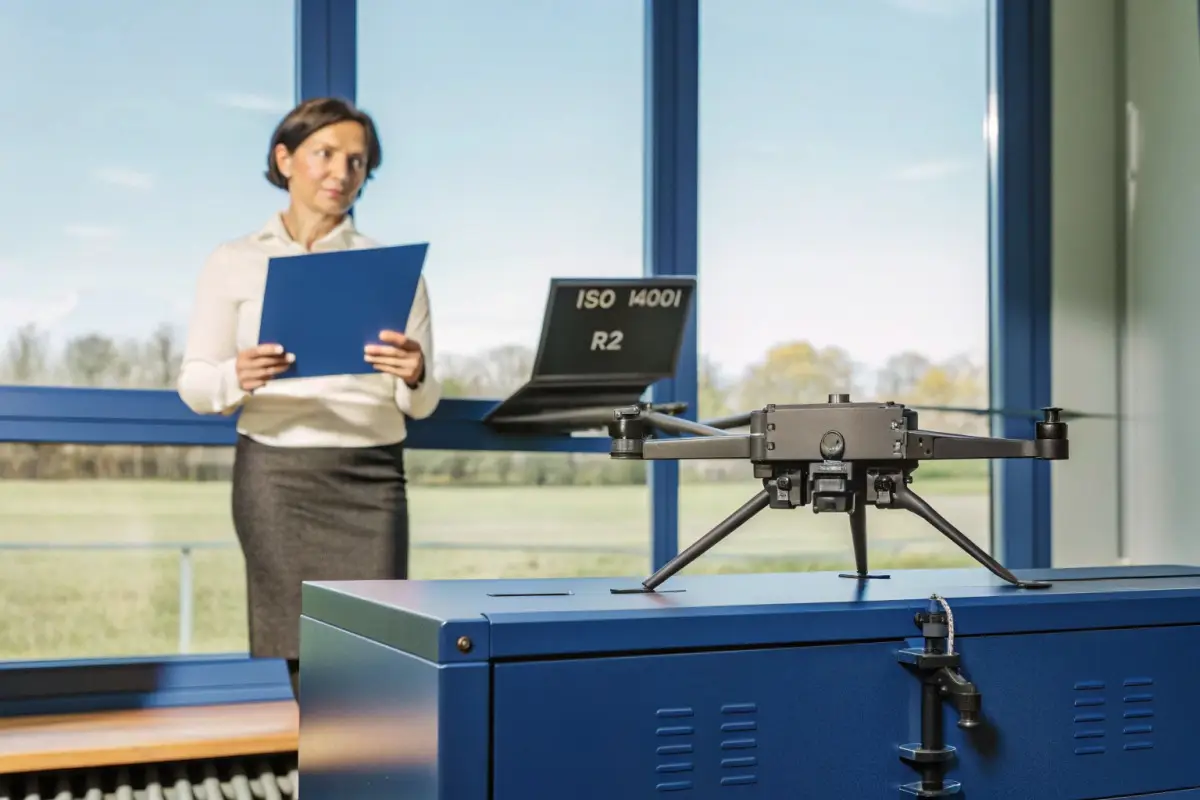

Lorsque notre équipe de production reçoit des drones de lutte contre les incendies retournés de clients étrangers, nous constatons de première main à quel point le processus de reprise peut être déroutant. Certifications R2 et e-Stewards 1. De nombreux acheteurs ont du mal à vérifier si les programmes de recyclage respectent les normes environnementales ou protègent les données sensibles.
Pour confirmer les services de reprise et de recyclage, vérifiez les critères d'évaluation de l'équipement du fournisseur, les protocoles d'effacement des données, les certifications environnementales telles que l'ISO 14001 ou R2, et la conformité à vos réglementations locales sur les déchets dangereux. Demandez une documentation sur les partenariats de recyclage et confirmez les coûts logistiques à l'avance avant de vous engager.
Ce guide vous accompagne à travers chaque étape critique Exigences RCRA et HMTA 2. Nous couvrons la qualification des équipements, la conformité réglementaire, la planification logistique et les accords à long terme. Plongeons dans les détails.
Comment puis-je évaluer si mes drones de lutte contre les incendies actuels sont éligibles à une remise de reprise sur de nouveaux modèles haut de gamme ?
Notre équipe d'ingénierie reçoit souvent des questions de la part des distributeurs concernant l'éligibilité à la reprise. Beaucoup pensent que seuls les drones d'apparence neuve sont éligibles. Ce n'est pas vrai. Les véritables facteurs sont la fonctionnalité, l'état des composants et la documentation.
Vos drones de lutte contre les incendies sont susceptibles d'être éligibles à la reprise s'ils s'allument, ont des contrôleurs de vol fonctionnels et incluent les accessoires d'origine. La plupart des programmes évaluent l'intégrité de la cellule, l'état des moteurs, la fonctionnalité des capteurs et la santé de la batterie. Même les drones présentant des dommages cosmétiques dus aux opérations d'incendie peuvent obtenir un crédit partiel pour de nouveaux achats.
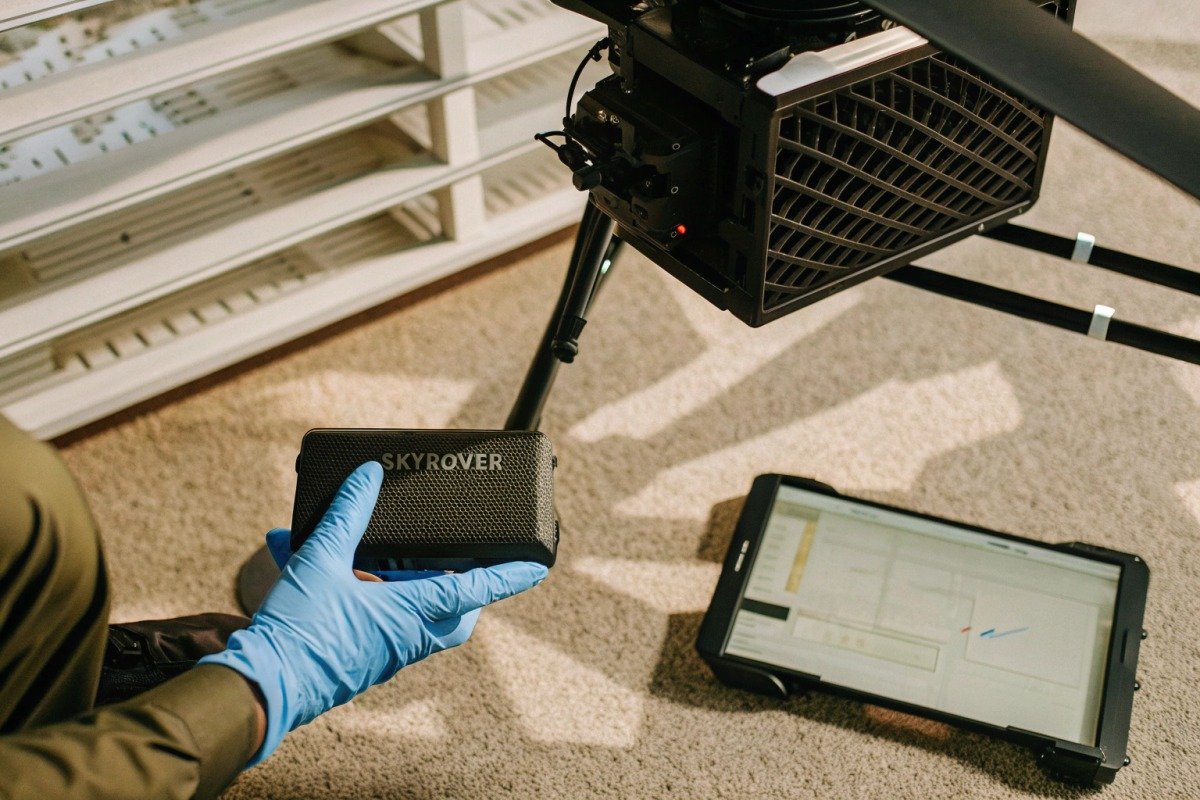
Comprendre les critères d'évaluation de la reprise
Les programmes de reprise utilisent différentes méthodes d'évaluation. Certains se concentrent sur l'apparence cosmétique. D'autres privilégient les tests fonctionnels. Pour les drones de lutte contre les incendies, la fonctionnalité est primordiale.
Lorsque nous aidons les clients à évaluer leurs flottes, nous examinons trois domaines principaux. Premièrement, la cellule. Le fibre de carbone est-elle fissurée ? Les points de montage sont-ils intacts ? Deuxièmement, l'électronique. Les moteurs tournent-ils librement ? Le contrôleur de vol répond-il ? Troisièmement, les capteurs. Les caméras thermiques et les détecteurs de gaz sont des composants précieux.
| Facteur d'évaluation | Ce que les évaluateurs vérifient | Impact sur la valeur de reprise |
|---|---|---|
| Intégrité de la cellule | Fissures, déformations, dommages de montage | Élevé – les problèmes structurels réduisent considérablement la valeur |
| Contrôleur de vol | Temps de réponse, état de calibration | Élevé – le système central doit fonctionner |
| Moteurs et ESC | Test de rotation, dommages dus à la chaleur, usure des roulements | Moyen – remplaçable mais coûteux |
| Capteurs thermiques | Clarté de l'image, précision de la calibration | Élevé – coûteux à remplacer |
| Piles | Nombre de cycles, gonflement, capacité | Faible – généralement exclu de la reprise |
Exigences en matière de documentation
Conservez vos reçus d'achat, vos journaux de maintenance et les détails d'enregistrement FAA 3 prêts. Les programmes gérés par des techniciens certifiés, comme ceux de RMUS, exigent une preuve de propriété. Certains fournisseurs souhaitent également les relevés d'heures de vol. Cela les aide à déterminer le potentiel de remise à neuf.
L'équipement spécialisé ajoute de la valeur
Les drones de lutte contre les incendies équipés de systèmes d'imagerie thermique ont une valeur de reprise plus élevée que les modèles de base. Nos unités haut de gamme avec capteurs de gaz et supports de charge utiles personnalisés se qualifient généralement pour de meilleurs crédits. Assurez-vous de lister tout l'équipement intégré lors de la demande de devis.
Obtenir des estimations avant expédition
Avant d'expédier quoi que ce soit, demandez une estimation détaillée. Des programmes réputés comme Urban Drones et Cloud City Drones proposent des évaluations avant expédition. Cela vous protège des surprises. Partagez des photos, des journaux de vol et une liste d'accessoires. Plus vous fournissez d'informations, plus l'estimation sera précise.
Quelles mesures dois-je prendre pour confirmer que le processus de recyclage du fournisseur respecte mes réglementations locales en matière d'environnement et de sécurité des données ?
Lors de nos opérations d'exportation vers les États-Unis et l'Europe, nous avons appris que la conformité au recyclage varie considérablement selon les régions. Ce qui fonctionne dans un État peut enfreindre les réglementations dans un autre. Vous devez vérifier chaque détail avant de vous engager.
Commencez par demander les certifications environnementales du fournisseur telles que ISO 14001, R2 ou e-Stewards. Confirmez que leur effacement de données respecte les normes NIST 800-88. Vérifiez que l'élimination des batteries au lithium suit les exigences RCRA et HMTA. Demandez une documentation des partenariats avec des installations de recyclage certifiées dans votre juridiction.

Normes de certification environnementale
Tous les programmes de recyclage ne répondent pas aux normes professionnelles. Recherchez des certifications spécifiques. ISO 14001 4 couvre les systèmes de management environnemental. Les certifications R2 et e-Stewards traitent spécifiquement du recyclage des appareils électroniques. Ces certifications signifient que des auditeurs tiers ont vérifié le processus de recyclage.
| Certification | Ce qu'il couvre | L'importance des drones pour la lutte contre les incendies |
|---|---|---|
| ISO 14001 | Systèmes de gestion de l'environnement | Confirme une approche systématique de la réduction des déchets |
| R2 (Recyclage Responsable) | Normes de recyclage des appareils électroniques | Assure une manipulation correcte des composants de drones |
| e-Stewards | Manipulation stricte des déchets électroniques | Interdit l'exportation de matières dangereuses 5 vers les pays en développement |
| NIST 800-88 | Assainissement des données | Garantit la suppression sécurisée des données opérationnelles |
Exigences de sécurité des données
Les drones de lutte contre les incendies capturent des informations sensibles. Les images thermiques des scènes d'urgence, les coordonnées GPS des incidents et les schémas de vol tactiques se trouvent tous sur la mémoire de votre drone. Avant tout échange, ces données doivent être supprimées de manière certifiée.
Cloud City Drones efface explicitement les données et réinitialise les appareils aux paramètres d'usine. Nous recommandons d'exiger une confirmation écrite de ce processus. Pour les services de police ou les départements de pompiers gouvernementaux, vous pourriez avoir besoin d'une documentation de suppression certifiée qui répond aux exigences de la chaîne de possession.
Manipulation des matières dangereuses
Les drones de lutte contre les incendies contiennent des matières dangereuses. Le plomb, le mercure et le cadmium se trouvent dans les composants électroniques. Les batteries au lithium nécessitent une élimination spéciale. Les résidus de retardateur de flamme sur les drones peuvent également être considérés comme des matériaux contaminés.
Posez ces questions à votre fournisseur :
- Avez-vous des protocoles pour le matériel contaminé provenant de scènes d'incendie ?
- Comment éliminez-vous les batteries lithium-ion ?
- Pouvez-vous fournir des rapports de récupération de matériaux ?
Conformité aux réglementations locales
Vos réglementations locales peuvent dépasser les normes des fournisseurs. La Californie a des règles plus strictes sur les déchets électroniques que le Texas. Directives européennes DEEE 6 diffèrent des exigences de l'EPA américaine. Contactez votre agence environnementale locale avant de finaliser tout accord de recyclage. Obtenez leurs exigences par écrit. Ensuite, confirmez que votre fournisseur les respecte ou les dépasse.
Lorsque nous expédions des drones à des distributeurs nord-américains, nous traitons la documentation douanière quotidiennement. Le processus inverse, l'expédition d'équipements usagés en Chine, présente des défis différents. Les batteries, les déclarations de matières dangereuses et les droits d'importation peuvent entraîner des coûts imprévus.
Pour éviter les coûts logistiques cachés, demandez un détail des coûts incluant l'expédition, l'assurance, les droits de douane et la manutention des matières dangereuses avant de vous engager. Confirmez si les batteries peuvent être expédiées ou si elles doivent être éliminées localement. Vérifiez que le fournisseur s'occupe de la documentation d'importation et choisissez des programmes offrant des étiquettes d'expédition prépayées avec suivi.

Restrictions d'expédition des batteries
C'est le plus grand piège de coûts cachés. La plupart des programmes, y compris RMUS, interdisent les batteries dans les expéditions. Les batteries lithium-ion nécessitent un emballage spécial, un étiquetage et l'approbation du transporteur pour le transport international. Si votre fournisseur ne mentionne pas cela, demandez directement.
Vous avez deux options. Premièrement, expédiez les batteries séparément via un transporteur de matières dangereuses. Cela coûte plus cher mais permet de compléter la reprise. Deuxièmement, éliminez les batteries localement dans des installations certifiées et expédiez uniquement les corps de drones. Cela réduit les coûts d'expédition mais peut diminuer la valeur de reprise.
Liste de contrôle des coûts
Avant d'accepter toute logistique de retour, obtenez des devis écrits pour chaque frais. Utilisez cette liste de contrôle :
| Catégorie de coût | Questions à poser | Gamme typique |
|---|---|---|
| Expédition (Drone uniquement) | L'expédition est-elle prépayée ou à la charge du client ? | $50-200 par unité |
| Expédition (Avec batteries) | L'expédition de matières dangereuses est-elle disponible ? Quel transporteur ? | $150-400 par unité |
| Assurance | Quelle couverture est incluse ? Qu'est-ce qui est exclu ? | 1-3% de valeur déclarée |
| Droits de douane | Qui paie les droits d'importation ? Quelle classification ? | Varie selon le pays |
| Frais de dossier | Les certificats d'exportation sont-ils inclus ? | $0-100 par expédition |
| Élimination locale des batteries | Avez-vous des installations d'élimination partenaires ? | $10-50 par batterie |
Problèmes de classification douanière
L'équipement électronique usagé entrant en Chine nécessite une classification appropriée. Des codes tarifaires incorrects entraînent des retards. Certaines classifications nécessitent des certificats d'inspection environnementale. Notre équipe logistique a vu des expéditions retenues pendant des semaines en raison d'erreurs de documentation.
Demandez à votre fournisseur s'il fournit la documentation d'importation. Des programmes professionnels s'en chargent pour vous. Ils connaissent les codes HS corrects et les certificats requis. Si un fournisseur ne peut pas répondre à ces questions, envisagez un programme différent.
Attentes en matière de calendrier
Prévoyez des délais plus longs que pour l'expédition nationale. Cloud City Drones signale des périodes d'évaluation d'environ deux semaines. Ajoutez le temps d'expédition internationale, généralement 2 à 4 semaines par voie maritime, 5 à 10 jours par voie aérienne. Tenez compte du traitement douanier. Un délai réaliste est de 6 à 8 semaines, de l'expédition à l'émission du crédit.
Assurance et responsabilité
Qui assume le risque pendant l'expédition ? Confirmez la couverture d'assurance avant que vos drones ne quittent vos installations. Certains programmes incluent l'assurance dans l'expédition prépayée. D'autres exigent que vous organisiez la couverture. Obtenez les détails de la police par écrit. Vérifiez qu'elle couvre le matériel endommagé par le feu et les capteurs spécialisés.
Puis-je obtenir un accord de recyclage à long terme qui soutient le cycle de vie de ma flotte et les futures exigences de mise à niveau ?
Dans le cadre de nos partenariats avec des distributeurs européens, nous avons développé des accords pluriannuels qui couvrent à la fois la fourniture de nouveaux équipements et la gestion de fin de vie. Ces arrangements offrent une prévisibilité budgétaire et garantissent une qualité de service constante dans le temps.
Oui, des accords de recyclage à long terme sont disponibles auprès de fournisseurs axés sur les entreprises. Négociez des contrats couvrant les valeurs de reprise garanties, les renouvellements de flotte programmés, le traitement prioritaire et les frais de recyclage fixes. Incluez des dispositions pour les mises à niveau technologiques, les dons de drones de formation et les rapports de durabilité afin de maximiser la valeur du cycle de vie.

Avantages des accords à long terme
Les reprises ponctuelles conviennent aux petites opérations. Mais les opérateurs de flotte bénéficient d'accords structurés. Voici pourquoi :
Premièrement, la prévisibilité budgétaire. Connaître vos crédits de reprise à l'avance facilite la planification des achats. Deuxièmement, le traitement prioritaire. Les partenaires à long terme bénéficient souvent d'évaluations et de paiements plus rapides. Troisièmement, les avantages relationnels. Les fournisseurs investissent davantage dans les partenaires qui s'engagent dans une relation commerciale continue.
Conditions contractuelles clés à négocier
Lors de la structuration d'un accord à long terme, incluez ces éléments :
| Élément du contrat | Ce qu'il faut inclure | Pourquoi c'est important |
|---|---|---|
| Crédits minimums garantis | Valeur plancher pour chaque modèle de drone | Protège contre les fluctuations du marché |
| Calendrier de renouvellement | Calendrier de remplacement planifié (par exemple, cycles de 3 ans) | Aligne les achats et le recyclage |
| Chemin de mise à niveau technologique | Crédits applicables aux modèles plus récents | Garantit l'accès aux dernières capacités |
| Traitement prioritaire | Délai d'évaluation maximal | Réduit les temps d'arrêt entre les flottes |
| Frais de recyclage garantis | Coûts d'élimination fixes pour la durée du contrat | Empêche les augmentations de prix surprises |
| Rapports de durabilité | Indicateurs annuels d'impact environnemental | Soutient les objectifs ESG de l'organisation |
Options d'économie circulaire
Les meilleurs accords incluent économie circulaire 8 dispositions. Renseignez-vous sur les programmes de remise à neuf. RMUS fait don d'équipements et de pièces de rechange remis à neuf à des programmes d'éducation UAS. Vos anciens drones de lutte contre les incendies pourraient former la prochaine génération de pilotes.
Cela crée une valeur secondaire au-delà des crédits financiers. Votre organisation gagne en bonne réputation. Les académies de formation reçoivent du matériel fonctionnel. Moins de drones finissent dans les décharges. Certains services d'incendie trouvent cet avantage communautaire précieux pour les relations publiques.
Opportunités de flotte de formation
Voici une stratégie que de nombreux responsables des achats négligent. Négociez pour recevoir des modèles plus anciens remis à neuf à des fins de formation. Vos crédits de reprise peuvent être utilisés pour de nouveaux drones de première ligne ainsi que pour des unités plus anciennes remises à neuf pour la formation des pilotes. Cela maximise l'efficacité du budget tout en maintenant la préparation opérationnelle.
Préparer votre accord pour l'avenir
La technologie évolue rapidement. Un accord rédigé aujourd'hui doit tenir compte des drones qui n'existent pas encore. Inclure des dispositions pour :
- Éligibilité aux nouveaux modèles sans renégociation
- Clauses d'ajustement pour les changements technologiques majeurs
- Conditions de sortie si le fournisseur ne peut pas prendre en charge les nouveaux types d'équipement
Notre équipe d'ingénierie développe constamment de nouvelles capacités de lutte contre l'incendie. Les partenaires de longue date bénéficient d'un accès anticipé à ces innovations car nous valorisons la relation continue.
Continuité de la conformité environnementale
Les réglementations évoluent. Un bon accord aborde ce point. Inclure une clause exigeant que le fournisseur maintienne ses certifications pendant toute la durée du contrat. Spécifier ce qui se passe si les certifications expirent. Protégez-vous contre les lacunes de conformité qui pourraient exposer votre organisation à des responsabilités.
Conclusion
La confirmation des services de reprise et de recyclage nécessite une vérification approfondie des critères d'évaluation, des certifications environnementales, des coûts logistiques et du potentiel de partenariat à long terme. Prenez le temps de tout documenter avant de vous engager dans un programme.
Notes de bas de page
1. Détaille la norme Responsible Recycling (R2) pour les appareils électroniques. ︎
2. Remplacé HTTP 404 par une page faisant autorité de l'EPA sur la réglementation des batteries lithium-ion en vertu du RCRA, qui mentionne également les réglementations sur les matières dangereuses (HMR) du DOT, les réglementations d'application pour le HMTA. ︎
3. Fournit des directives officielles sur l'enregistrement des drones auprès de la FAA. ︎
4. Explique la norme internationale relative aux systèmes de management environnemental. ︎
5. Remplacement de la page HTTP 404 par la page directe de l'OSHA pour la sous-partie H – Matières dangereuses, qui liste les réglementations pertinentes. ︎
6. Décrit la directive de l'Union européenne sur les déchets d'équipements électriques et électroniques. ︎
7. Fournit des directives pour la désinfection des médias et l'effacement des données. ︎
8. Définit le concept d'économie circulaire pour la gestion des ressources. ︎
 English
  Español de México
  Deutsch
  Français
  Русский
  العربية
Comments
No comments yet. Be the first to share your thoughts!
Leave a Comment