
Nous savons que voir une image brillante sur un site Web est très différent de voir cet équipement sur notre chaîne de montage à Xi'an. Données EXIF 1. Vous avez besoin de certitude avant de dépenser des milliers de dollars en équipement de sécurité. équipement de sécurité 2
Pour vérifier l'authenticité, effectuez une recherche d'images inversée à l'aide de Google Lens pour repérer les photos de stock dupliquées. Demandez des fichiers bruts non modifiés avec les métadonnées (EXIF) intactes pour vérifier les dates de création. Enfin, demandez une photo “ preuve de vie ” présentant le drone à côté d'une note manuscrite avec la date du jour.
Ces simples étapes de vérification peuvent vous éviter des fraudes coûteuses et garantir que le matériel existe réellement.
Quels signes visuels indiquent qu'un fournisseur utilise des images de stock ou volées pour ses drones de lutte contre les incendies ?
Nous voyons souvent des concurrents utiliser des rendus 3D qui semblent parfaits mais qui manquent de la réalité désordonnée de la fabrication authentique. Ne vous laissez pas tromper par des images qui semblent trop propres pour être vraies.
Les principaux indicateurs d'images falsifiées comprennent des directions d'éclairage incohérentes, un manque de câblage visible pour les charges utiles complexes et des textures anormalement lisses. De plus, vérifiez les logos floutés ou les numéros de modèle incohérents sur la cellule qui contredisent la description du produit ou les spécifications techniques répertoriées sur la page.
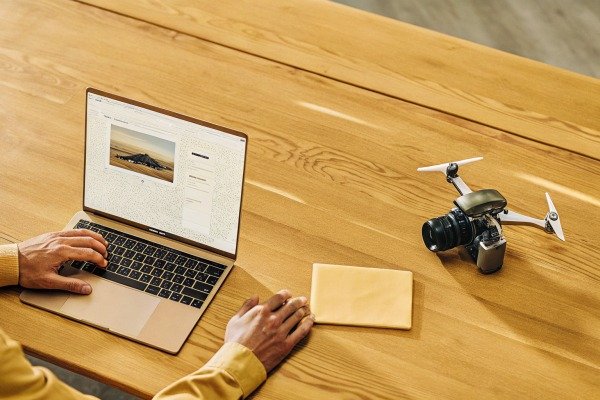
Lorsque nous construisons des drones à charge utile lourde dans notre usine, le produit fini ressemble rarement à une maquette de film générée par ordinateur. Les machines industrielles réelles présentent de petites imperfections, des têtes de vis visibles et des chemins de câblage spécifiques que les artistes 3D oublient souvent d'inclure. Si vous regardez une page produit pour un article de grande valeur comme le Matrice 350 RTK ou un appareil personnalisé à charge utile lourde Matrice 350 RTK 3, vous devez analyser l'image comme un détective.
Le piège du rendu " parfait "
L'un des plus grands signaux d'alarme est un éclairage "parfait". Dans un rendu 3D, la lumière provient souvent de plusieurs angles impossibles pour mettre en évidence chaque courbe du drone. En photographie réelle, même les prises de vue professionnelles en studio ont des ombres. Si le drone semble flotter dans le vide sans aucune ombre au sol ou sur le train d'atterrissage, il s'agit probablement d'un rendu. De plus, regardez les textures. La fibre de carbone a un motif de tissage spécifique qui réfléchit la lumière d'une manière unique. Fibre de carbone 4 Les rendus donnent souvent à la fibre de carbone l'apparence d'un motif gris plat et imprimé.
Charge utile et logique de câblage
Lutte contre les incendies marché des drones de lutte contre les incendies 5 les drones sont des outils complexes. drones de lutte contre les incendies 6 Ils nécessitent une distribution d'énergie importante pour soulever des tuyaux ou larguer des extincteurs. Lorsque nous concevons ces systèmes, le câblage est substantiel et visible. Les rendus omettent fréquemment le câblage complexe requis pour les caméras cardan et les mécanismes de largage. Si la caméra montée en dessous ne se connecte à rien, ou si les fils des moteurs sont complètement absents des bras, l'image est fausse.
Liste de contrôle des signaux d'alarme visuels
Vous pouvez utiliser le tableau suivant pour évaluer rapidement si une image est probablement réelle ou fausse en fonction d'indices visuels.
| Fonctionnalité | Photo d'usine réelle | Rendu/Image d'archive suspect(e) |
|---|---|---|
| Câblage | Fils visibles connectant les moteurs, les ESC et les charges utiles. | Aspect propre et sans fil; points de connexion manquants. |
| Éclairage | Ombres naturelles; la source lumineuse se reflète de manière cohérente. | "Lueurs" de tous les côtés; pas d'ombres sous le train d'atterrissage. |
| Usure | Minuscules traces de poussière, légère graisse sur les articulations, empreintes digitales. | Surfaces 100% immaculées ; finition mate ou brillante parfaite. |
| Hélices | La direction du pas varie (horaire et antihoraire). | Toutes les hélices sont souvent orientées dans la même direction. |
| Arrière-plan | Fond blanc imparfait ou sol d'usine visible. | Code hexadécimal pur #FFFFFF blanc ou arrière-plan générique de science-fiction. |
Puis-je demander une visite vidéo en direct pour vérifier que l'inventaire des drones correspond aux photos du site Web ?
Les e-mails peuvent être falsifiés, mais un appel vidéo en direct depuis notre centre de test à Chengdu est impossible à simuler. Voir, c'est croire pour les actifs de grande valeur, alors n'hésitez jamais à demander.
Oui, les fournisseurs légitimes devraient accepter volontiers une visite vidéo en direct via Zoom ou WhatsApp. Cela vous permet de voir l'inventaire spécifique en temps réel, de vérifier les numéros de série et d'assister à la séquence de mise sous tension du drone, garantissant ainsi que le matériel existe et fonctionne comme annoncé.
Une photo statique prouve qu'un drone a existé à un moment donné, mais elle ne prouve pas que le fournisseur le possède actuellement. Sur le marché des drones de lutte contre l'incendie $800M+, les escroqueries impliquant des "inventaires fantômes" sont réelles. Un appel vidéo en direct est le filtre ultime. Si un fournisseur refuse un appel vidéo en invoquant des "raisons de sécurité" ou des "secrets d'usine", procédez avec une extrême prudence. Nous effectuons régulièrement ces appels pour établir la confiance avec nos partenaires américains et européens.
Structurer l'appel vidéo
Ne laissez pas simplement le vendeur tenir le téléphone et parler. Vous devez diriger l'action. Demandez-leur de se déplacer vers une unité spécifique. Demandez à voir l'autocollant du numéro de série sur le châssis. Crucialement, demandez-leur de mesurer une pièce spécifique, comme la longueur du bras ou la taille de l'hélice, pendant que vous regardez. Cela prouve que la taille du drone correspond aux spécifications. Les annonces frauduleuses utilisent souvent des photos de grands drones mais expédient de petits jouets de qualité grand public.
Le test de mise sous tension
La partie la plus critique de la visite est le test de mise sous tension. Demandez au fournisseur d'allumer le drone et la station de contrôle au sol (GCS). Vous devriez voir les lumières s'allumer et la caméra cardan se stabiliser. S'ils disent que la batterie est morte ou que le contrôleur n'est pas chargé, reprogrammez. Vous devez voir l'interface. Les vrais drones industriels exécutent des logiciels complexes pour les données thermiques et la planification de mission. données thermiques 7, pas des applications génériques de vol grand public.
Plan d'action de vérification vidéo
Utilisez cette liste de contrôle pendant votre appel pour vous assurer de couvrir toutes les bases nécessaires.
| Point d'action | Ce qu'il faut rechercher | Pourquoi c'est important |
|---|---|---|
| Afficher le numéro de série | Un autocollant unique ou une plaque gravée. | Vérifie qu'il ne s'agit pas d'une unité de photo de stock. |
| Allumer le drone | Voyants clignotants, bruit de ventilateur, mouvement du cardan. | Prouve que l'unité est fonctionnelle, pas une coque factice. |
| Interface GCS | Chargement de la carte, flux de la caméra thermique visible. | Confirme que le logiciel correspond aux affirmations matérielles. |
| Date manuscrite | Note avec votre nom et la date du jour. | "Preuve de vie" pour empêcher l'utilisation de vidéos pré-enregistrées. |
Les détails de l'arrière-plan dans les images du produit prouvent-ils que l'équipement est situé dans l'usine du fournisseur ?
En me promenant dans notre usine, je remarque des détails d'arrière-plan – outils, étagères, personnel – que les photos en studio manquent. Ces éléments sont les empreintes digitales involontaires d'un véritable fabricant.
Les détails de l'arrière-plan sont une preuve essentielle de l'origine. Les photos authentiques d'usine montrent généralement des établis d'assemblage, des postes de soudure ou des bancs d'essai à la périphérie. Inversement, des arrière-plans blancs génériques ou des photos de stock industrielles floues suggèrent que le fournisseur pourrait faire du dropshipping ou ne pas posséder physiquement l'inventaire montré.
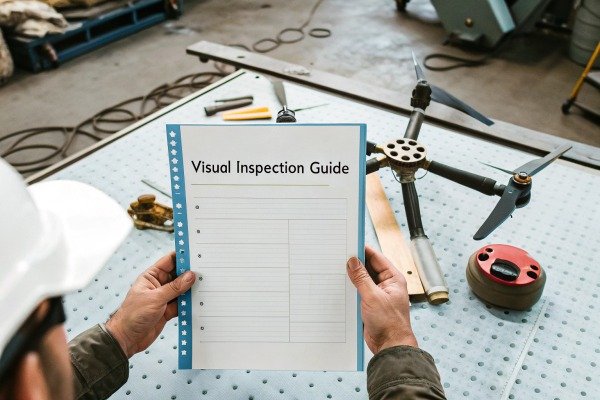
L'environnement qui entoure le drone raconte une histoire aussi importante que le drone lui-même. Lorsque nous prenons des photos de nos unités SkyRover pour une mise à jour client, nous n'utilisons pas toujours une boîte blanche. Souvent, vous verrez un établi, un fer à souder ou un banc d'essai à l'arrière-plan. Ce sont des signes de vie. Si chaque image sur le site d'un fournisseur a l'arrière-plan supprimé ou remplacé par un bureau flou générique "high-tech", vous devez vous demander où se trouve réellement le drone.
Analyse de l'environnement
Regardez attentivement les bords de la photo. Si le fournisseur prétend être un fabricant en Chine, comme nous, mais que les prises de courant visibles à l'arrière-plan sont de style européen ou américain, il utilise des images volées. Recherchez des étagères avec des étiquettes chinoises ou des équipements de test spécifiques comme des oscilloscopes. équipement de test 8 Une vraie usine est un endroit animé. Si le reflet dans la verrière brillante du drone montre une pièce désordonnée avec des boîtes, c'est en fait un bon signe. Cela signifie que la photo a été prise sur place.
La cohérence est la clé
Les escrocs volent souvent des photos de cinq sources différentes. Cela se traduit par une galerie de produits où le sol passe du béton à la moquette au bois sur trois photos différentes du "même" produit. Dans notre chaîne de production, le sol est cohérent. L'éclairage est cohérent. Si l'environnement change radicalement entre les prises de vue, le fournisseur assemble probablement des images provenant d'Internet plutôt que de photographier son propre inventaire.
Indices environnementaux à surveiller
- Prises de courant : Correspondent-elles au pays où le fournisseur prétend se trouver ?
- Reflets : Zoomez sur l'objectif de l'appareil photo ou sur le plastique brillant. Que voyez-vous se refléter ? Un photographe ? Un studio ? Un sol d'usine ?
- Équipement périphérique : Des hélices, batteries ou outils de rechange sont-ils visibles sur la table ? Les photos marketing mises en scène contiennent rarement du désordre, mais les vraies photos de vérification en contiennent.
Le fabricant fournira-t-il des photos spécifiques et non modifiées des composants du drone si je les demande ?
Lorsque les clients nous demandent les fichiers bruts, nous respectons leur diligence car nous n'avons rien à cacher. Nous savons que les JPEG fortement édités peuvent masquer des défauts ou fabriquer complètement des caractéristiques.
Un fabricant digne de confiance fournira des photos originales non retouchées et en haute résolution sur demande. Ces fichiers contiennent des métadonnées EXIF prouvant le modèle de l'appareil photo et la date de capture. Méfiez-vous des fournisseurs qui n'offrent que des images compressées en basse résolution ou qui prétendent que des conceptions propriétaires les empêchent de partager des photos de composants en gros plan.
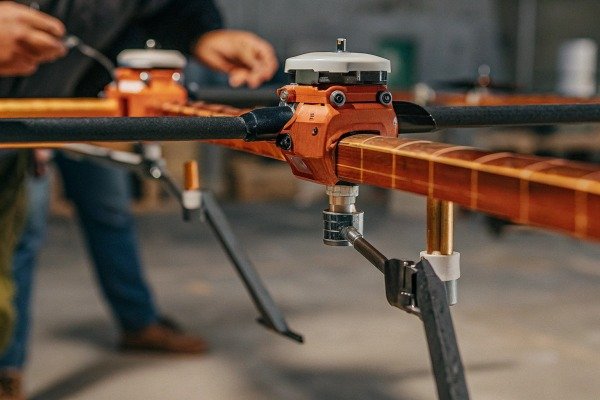
À l'ère numérique, un JPEG n'est pas seulement une image ; c'est un conteneur de données. Lorsque nous prenons une photo d'un support moteur ou d'une connexion de caméra thermique à envoyer à un acheteur caméra thermique 9, ce fichier contient des informations cachées appelées métadonnées. Ces données sont votre meilleur allié pour la vérification. Un fournisseur qui refuse d'envoyer des photos "brutes" ou non retouchées essaie souvent de cacher le fait qu'il édite le logo d'une autre entreprise ou que la photo a été prise il y a cinq ans.
Comprendre les métadonnées (EXIF)
Vous n'avez pas besoin d'être un hacker pour vérifier cela. Des outils comme Jeffrey's Image Metadata Viewer ou simplement l'onglet "Propriétés" sous Windows peuvent vous montrer les données EXIF. Vous voulez rechercher le champ "Date prise". Si le fournisseur prétend qu'il s'agit d'un tout nouveau modèle 2025, mais que les métadonnées de la photo indiquent 2018, vous avez un problème. Vérifiez également le champ "Logiciel". S'il indique "Adobe Adobe Photoshop 10 Photoshop" ou "Canva", l'image a été manipulée. Bien que le recadrage simple soit normal, un montage important sur une photo de vérification de produit est suspect.
Noms de fichiers séquentiels
C'est un petit détail que les escrocs manquent. Lorsque nous faisons une séance photo d'un drone, notre appareil photo nomme les fichiers séquentiellement : DSC_0455, DSC_0456, DSC_0457. Si un fournisseur vous envoie un fichier zip d'images et que les noms de fichiers sont des caractères aléatoires (comme "wx_992_image.jpg" mélangé avec "photo-2.png"), ils les ont probablement téléchargés à partir de différentes sources comme l'historique WhatsApp ou WeChat. Une dénomination cohérente et séquentielle suggère une séance photo unique et authentique d'un produit réel.
Guide d'analyse de fichiers
Voici comment interpréter les fichiers qu'un fournisseur vous envoie.
| Attribut de fichier | Bon signe (authentique) | Signe d'avertissement (fraude potentielle) |
|---|---|---|
| Résolution | Élevée (4000×3000+ px) ; zoomable. | Basse (800×600 px) ; pixellise lors du zoom. |
| Nom de fichier | Séquentiel (IMG_001, IMG_002). | Alphanumérique aléatoire (a8f33d.jpg) ou "Capture d'écran". |
| Données EXIF | Modèle de caméra visible ; date récente. | Métadonnées supprimées/vides ; le logiciel indique "Photoshop". |
| Focus | Mise au point nette sur les points de connexion techniques. | Flou sur les zones critiques comme les logos de marque ou les ports. |
Conclusion
L'achat de drones de lutte contre les incendies implique des enjeux élevés, tant sur le plan financier qu'opérationnel. En examinant attentivement les détails visuels, en exigeant une vérification vidéo en direct, en analysant la cohérence de l'arrière-plan et en vérifiant les métadonnées des fichiers, vous pouvez écarter les fournisseurs frauduleux. Nous pensons que la transparence est le fondement de la sécurité, et tout fabricant légitime vous fournira volontiers les preuves dont vous avez besoin pour acheter en toute confiance.
Notes de bas de page
1. Normes techniques pour les métadonnées du format de fichier image échangeable utilisées dans la vérification de photos. ︎
2. Directives officielles de l'OSHA concernant la vérification et les normes des équipements de sécurité industrielle. ︎
3. Documentation officielle du produit pour le modèle de drone industriel référencé dans l'article. ︎
4. Informations de fond sur les propriétés des matériaux et les caractéristiques visuelles des composants en fibre de carbone. ︎
5. Rapport d'actualité détaillant la croissance et le déploiement opérationnel des drones dans le secteur de la lutte contre les incendies. ︎
6. Recherches du NIST sur les systèmes aériens sans pilote spécifiquement conçus pour les opérations et la sécurité des services d'incendie. ︎
7. Recherche universitaire concernant l'intégration des données d'imagerie thermique dans les drones d'intervention d'urgence. ︎
8. Normes internationales pour les tests et l'assurance qualité des systèmes d'aéronefs sans pilote. ︎
9. Spécifications du fabricant pour les capteurs thermiques de qualité professionnelle utilisés dans les drones de lutte contre l'incendie industriels. ︎
10. Site officiel du logiciel couramment utilisé pour manipuler ou éditer les images de produits. ︎
 English
  Español de México
  Deutsch
  Français
  Русский
  العربية
Comments
No comments yet. Be the first to share your thoughts!
Leave a Comment